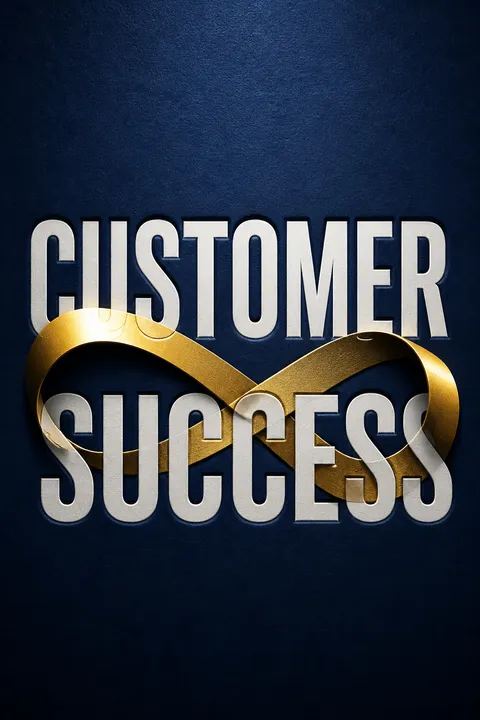


Key Takeaways
In subscriptions, retention matters more than the celebratory first sale
The economics flipped. In the old software model, a large upfront license payment captured much of a customer’s value. With software as a service, or SaaS, customers pay repeatedly and can stop renewing. The vendor’s return depends on keeping them and growing their spend, not simply winning the initial deal.
Growth can conceal leakage. At a 2005 Salesforce offsite, renewals leader David Dempsey warned that the company was losing customers at a rate of 8 percent per month. New sales made the business look strong, but churn threatened its foundation. His warning helped trigger a companywide effort to retain customers. Customer Success means organizing people and practices to help customers gain value, so they renew and expand. It is not merely a friendlier name for customer support.
The key shift is from treating a sale as an outcome to treating it as the start of an ongoing exchange. That changes what counts as growth: acquisition without retention is a leaky investment, while expansion among existing customers can compound the value of prior sales effort. The logic is especially powerful where customers can switch readily. It is less automatic when a firm has monopoly power or long contractual lock-in, so leaders should distinguish genuine loyalty from customers who simply lack alternatives.
Decline customers your product cannot reliably make successful
Fit is a financial decision. Product-market fit, or PMF, means that a product reliably serves a defined customer need and market. A prospect outside that fit may bring impressive revenue or a famous logo, yet consume disproportionate effort in onboarding, product changes, support, and renewal rescues. The cost includes not only acquisition spending but also the opportunity to help better-fit customers.
Qualify beyond the deal. Define the industries, use cases, company sizes, and internal conditions associated with successful customers. Track outcomes by segment, then feed the evidence back to marketing, sales, services, and product. The book cites Host Analytics CEO Dave Kellogg’s estimate that 90 percent of churn in his business began at the sale. A customer success leader can help flag or veto poor-fit deals, while sales incentives can include retention as well as bookings.
This principle reframes qualification as product strategy, not merely sales hygiene. A company that studies which customers succeed is learning where its product actually works, rather than where its pitch sounds persuasive. The difficult edge is that early customers can reveal promising adjacent markets. Refusing every unconventional account can prevent discovery. The useful distinction is whether an exception produces reusable learning or demands bespoke work that cannot be repeated profitably.
Measure success in customer outcomes, not in product activity
Start with the customer’s goal. Customers buy a solution to improve a business result, not to accumulate logins or admire features. Ask what measurable change would count as value, whether progress is on track, and how the experience feels along the way. A digital marketing customer, for example, needs help becoming more effective at marketing, not merely instructions for sending emails.
Make the value concrete. The book calls the customer’s relevant outcome its unit of measure. It might be reduced costs, more revenue, faster employee onboarding, or improved quality. Agree on a baseline and target with the customer, then review progress together. CSMs should also be willing to challenge a customer’s approach when it undermines the agreed goal. Expertise and candid advice are part of the value being purchased.
This distinction protects companies from confusing measurable activity with meaningful impact. Usage data can show whether a tool is being used, but not necessarily whether the customer’s organization is better off. The strongest approach combines behavioral evidence with the customer’s own outcome measures. There is also a shared-responsibility question: a vendor can guide and enable, but a customer’s choices and implementation capacity affect results. Clear agreements make that partnership more honest.
Deliver one measurable win before the customer loses momentum
The renewal clock starts early. If onboarding consumes 11 months of a 12-month subscription, the customer has little time to experience value before renewal. Reaching a working solution in 60 days gives the customer a much stronger reason to continue. The book therefore argues for improving time-to-value, the time it takes a customer to realize useful results.
Build value in stages. Agree on success measures before implementation, confirm that they still matter, and begin with the quickest important outcome rather than attempting the entire transformation at once. For a sales productivity product, an initial phase might shorten the time needed to onboard new representatives, while a later phase improves prospect engagement. Track value after launch, too. Project completion is a milestone, not proof that the business result has arrived.
Early wins function as evidence that a purchase decision was sound. They also create organizational momentum: a sponsor can point to a result when later phases encounter competing priorities or resistance. This is a useful antidote to oversized implementations that delay feedback. Yet speed should not become a vanity target. A fast launch that fails to address the customer’s core need merely moves disappointment forward, so the first win must be both quick and relevant.
Treat customer health as a forecast, not a dashboard decoration
Look for changing signals. Customer health is an estimate of how likely an account is to renew, expand, or struggle. A useful assessment can combine product adoption, support activity, survey responses, invoice history, executive relationships, and contract growth. Falling usage, repeated support problems, an overdue invoice, or the departure of a project sponsor can warn of trouble before a renewal conversation begins.
Turn scores into action. A single overall score is not enough. If an account’s score is low because only 13 of 100 purchased licenses are active, a CSM has a specific adoption problem to address. Monitor health regularly, identify the component that changed, assign a response, and check whether it worked. The book compares health management to a sales pipeline: both help leaders anticipate outcomes and focus team effort before results are final.
The useful feature of a health score is not its apparent precision, but its ability to direct attention. Breaking the score into causes makes intervention more practical and makes the reasoning visible to the team. The risk is that a composite number can conceal disagreement among signals or reflect what is easy to measure rather than what matters. Health scores should therefore support informed judgment, not replace conversations with customers.
Make the product easy enough to carry value at scale
Design reduces service burden. A product that is intuitive, reliable, and useful helps customers succeed without requiring constant assistance. That makes it easier to retain customers and serve many of them. The book argues that the product is a company’s most scalable differentiator: people can improve a customer experience one conversation at a time, but a product improvement can benefit many users at once.
Build feedback into the work. CSMs hear where customers struggle, but that knowledge must reach product teams. Product advisory councils, or PACs, bring selected customers into strategic product discussions. Communities of practice, or COPs, let customers share ways to handle common work challenges. Both can reveal the business problem behind a feature request. Measure usability and customer effort, and use feedback to improve the product rather than relying on heroic support to compensate for avoidable friction.
A usable product is a form of prevention: it removes recurring obstacles before they become support cases or renewal risks. That makes product design part of customer success, not a separate technical concern. The challenge is that the largest customers can dominate advisory channels, even when smaller segments represent more of the business. Feedback systems need representative participation and a way to distinguish broadly shared needs from costly, one-off requests.
Match human attention to account value, then automate the rest
Different customers need different coverage. High-touch service uses frequent, personal guidance for valuable or complex accounts. Low-touch service combines limited individual contact with packaged help. Tech-touch service uses scalable channels such as email, webinars, in-product guidance, and customer communities instead of routine one-to-one contact. The model should fit both customer value and the cost of serving that customer.
Make every tier intentional. A Workday-size enterprise customer may justify substantial expert involvement. A Netflix customer base requires automated service. Customers in between may receive just-in-time help, delivered when usage data or a support issue signals a need. The book gives indicative caseloads of 5 to 15 high-touch accounts and 20 to 50 or more low-touch accounts per CSM, while emphasizing that complexity and contract value change the ratio. Define what each tier receives, then monitor whether the coverage works.
Segmentation makes customer care economically possible without pretending that every account can receive the same degree of attention. The ethical and strategic test is whether lower-cost coverage still helps customers reach value, rather than quietly making lower-value customers disposable. Automation can provide relevance at scale, but it can also multiply irrelevant messages. The design goal is not maximum contact. It is appropriate help at the moment it can matter.
Track churn by dollars, customers, products, segments, and causes
A headline rate hides the mechanism. Committed monthly recurring revenue, or CMRR, is the monthly value of recurring subscriptions, including signed commitments moving into production and subtracting churn. Track both customer counts and revenue: losing one large account differs from losing many small ones. Break renewal changes into cancellations, downgrades, upgrades, and add-ons. A contract that rises from $50,000 to $55,000 could still conceal a lost product, new licenses, and reduced discounts.
Make definitions consistent. Decide how to count renewals, how often to report them, and which reasons qualify as avoidable churn. Separate customer losses caused by product problems from those caused by events such as bankruptcy or acquisition. Analyze results by product, industry, customer size, geography, tenure, and sales channel. This detail helps leaders identify where to improve, where to invest, and which customer profiles may be poor fits.
Detailed measurement turns retention from a sentiment into an operational diagnosis. It can expose a product problem that an aggregate renewal rate would hide, or reveal that a seemingly strong customer count masks declining contract value. Definitions matter because teams can produce different answers from the same account base. Metrics should inform decisions, but targets can distort behavior if teams are rewarded for the number alone and not for durable customer value.
Give retention an executive owner and the power to change priorities
A department cannot do it alone. Customer Success is both a dedicated function and a companywide commitment. Sales must qualify and set expectations accurately. Product must prioritize adoption and customer value, not only features that impress prospects. Services and support must understand that their work affects renewal. Leaders should align incentives around both new bookings and retention, and give one executive clear ownership of the retention result.
Authority should match accountability. In the book’s illustrative company, the customer success leader owns $145 million in renewals and expansion, while the sales leader owns $73 million in new bookings. The figures show why the installed base can become central to company performance. A chief customer officer, or CCO, can coordinate onboarding, support, training, professional services, and customer success, while representing customer evidence in executive decisions.
Accountability without influence turns customer success into an internal complaint desk. A leader responsible for retention needs access to product priorities, sales decisions, and executive forums. At the same time, organizational consolidation is not a cure by itself. Functions such as support and customer success have different purposes and measures, so coordination should not erase their distinct expertise. The deeper change is that customer outcomes must carry weight when departments negotiate scarce resources.
Use customer data to make every interaction timely and genuinely useful
Connect information to action. Customer systems can combine product usage, support history, invoices, surveys, and contract data into a shared view. That view helps teams prioritize accounts, identify risks, coordinate responses, and send relevant automated guidance. A drop in use of a key feature might trigger a targeted tutorial; repeated support cases might prompt a personal follow-up. Technology is valuable when it improves the timing and usefulness of a touch, not simply when it produces more dashboards.
Loyalty can be emotional. The book’s Starbucks example shows how consistent stores, Wi-Fi, familiar service, a mobile payment and rewards app, and small conveniences can make customers feel attached, not merely locked in. Behavioral loyalty means staying because it is convenient or costly to switch. Attitudinal loyalty means preferring and advocating for a brand. Both can help retention, but the second depends on customers believing the relationship is worth choosing.
The strongest technology use here is not automation for its own sake. It is the ability to notice a meaningful signal and respond with an action that feels relevant to the customer. Starbucks illustrates how repeated convenience and a coherent experience can build familiarity and preference across many interactions. Loyalty programs also gather customer information and can encourage habitual spending, so companies should earn trust through transparent value rather than treating personalization as permission to manipulate.
Analysis
The book’s central argument is economic before it is sentimental. Subscription businesses collect much of a customer’s value over time, while customers can increasingly stop paying or switch. That makes retention a condition of growth and pushes customer care from an admirable value into an operating requirement. The narrative of Salesforce’s early churn crisis gives this shift a memorable origin: strong sales can disguise a fragile business when customers are leaving quickly.
The framework’s practical strength is that it connects several organizational levels. Customer fit begins before the sale. A defined customer outcome guides onboarding. Health signals direct intervention. Product design and service processes determine whether value can be delivered repeatedly. Metrics then reveal which parts of the system are failing. The executive role matters because these activities compete with short-term bookings, and no customer success team can independently repair a product, a misleading sales promise, or a badly designed implementation.
The most useful conceptual distinction is between customer activity and customer value. Logins, survey scores, and support cases are evidence, not outcomes. A company can improve those indicators while failing to improve the customer’s business. Similarly, retention is a powerful commercial result but not proof by itself that the customer prospered. Customers can renew because switching is painful, while satisfied customers may leave because of acquisition, changed strategy, or budget constraints. Strong practice therefore combines leading signals with direct discussion of customer goals and the reasons behind churn.
The book’s advice is most persuasive when it treats customer success as a learning system, not a rescue department. Fit data should refine acquisition; customer feedback should alter the product; and measured interventions should improve the next customer’s experience. That process creates a demanding standard: preserve commercial discipline while refusing to confuse a renewal with the customer’s success. Done well, the company earns recurring revenue because it keeps delivering value, not because the contract happens to recur.
Review Summary
Customer Success receives mixed reviews, with an average rating of 4 out of 5. Positive reviews praise its comprehensive overview of customer success principles, practical insights, and valuable "10 Laws" framework. Critics find it repetitive, unfocused, and potentially condensable. Many readers appreciate its relevance to SaaS and subscription-based businesses, while others note its applicability across industries. The book is seen as essential reading for those in customer success roles, though some find it lacks concrete examples and could benefit from a more concise presentation.
People Also Read






Glossary
Customer Success
Ongoing customer valueA company philosophy, discipline, and organizational function focused on helping customers achieve value from a product or service. In recurring-revenue businesses, the work supports adoption, retention, and growth of customer spending. It is proactive and outcome-oriented, unlike customer support’s central role in resolving problems raised by customers.
SaaS
Browser-based subscription softwareSoftware as a Service is a delivery model in which customers use software hosted by the vendor, commonly through a web browser, rather than installing and operating it on their own infrastructure. The book distinguishes SaaS as the delivery method from subscriptions as a payment method, though the terms are often used together.
Annual recurring revenue (ARR)
Annualized recurring contract valueARR is the annualized value of recurring revenue from a company’s customer base. For example, 20 customers each paying $1,000 per month represent $240,000 in ARR. The measure reflects recurring commitments rather than one-time services revenue and helps companies assess the value and changes in their installed base.
Lifetime value (LTV)
Expected customer relationship revenueLTV is the total revenue a customer spends, or is expected to spend, with a vendor over the course of their relationship. In subscription businesses, the initial contract may represent only a small portion of this value. Retention, renewals, price changes, and additional products or licenses affect the total.
Churn
Lost recurring customers or revenueChurn is the loss of recurring customers or recurring contract value over a defined period. It can mean a customer ends a subscription, or that an existing customer reduces spend by returning licenses, dropping products, or negotiating a lower price. The book distinguishes preventable losses from events such as bankruptcy or acquisition.
Net retention
Revenue change within existing accountsNet retention measures how recurring revenue from an existing customer base changes after accounting for renewals, cancellations, downgrades, and expansion. A rate above 100 percent means the base grew despite customer losses or reductions. It captures both retention and increased spending, making it a central measure for customer success.
Customer health score
Estimate of account conditionA customer health score combines selected signals to estimate an account’s likelihood of success, renewal, or expansion. Possible inputs include product adoption, support patterns, survey results, invoice payment, executive relationships, and contract growth. Its purpose is to identify actionable risks and opportunities, not merely assign a numerical label.
High touch
Frequent personal account guidanceA customer coverage model using frequent one-to-one contact, expert help, and planned business reviews. It is generally reserved for high-value or complex customers because it requires significant employee time. The model aims to protect important relationships and help customers achieve value through tailored guidance.
Low touch
Limited personal, partly automated guidanceA customer coverage model combining some individual contact with packaged services, automated health checks, and one-to-many resources. It serves customers who merit more than fully automated support but cannot economically receive intensive account management. The aim is to deliver appropriate help with a controlled investment of staff time.
Tech touch
Technology-led customer guidanceA customer coverage model that delivers customer success through scalable channels rather than routine one-to-one contact. Examples include targeted email, webinars, communities, in-product instruction, and automated responses to customer behavior. It is common for large customer populations or lower-value accounts, where personalized human outreach is not affordable.
Time-to-value
Time until useful resultsTime-to-value is the period between a customer’s purchase and the point at which the customer experiences meaningful benefit. It is not identical to implementation time: a product can be installed without producing the intended business result. Companies can shorten it through clear success measures, phased implementations, and early proof of value.
Committed monthly recurring revenue (CMRR)
Monthly recurring revenue commitmentsCMRR is the combined monthly value of recognized recurring subscription revenue and signed contracts committed to enter production, adjusted for churn. Companies use it to understand changes in recurring business. Its usefulness depends on consistent definitions, accurate transaction data, and clear treatment of renewals, add-ons, cancellations, and reductions.
Product-market fit (PMF)
Product fit with target needsProduct-market fit describes how well a product serves the needs of a defined customer market. In the book, fit is assessed through the customers, use cases, and business contexts in which the product can reliably deliver value. Poor-fit sales can consume disproportionate resources and produce churn, even when the initial contract is large.
Attitudinal loyalty
Preference beyond convenienceAttitudinal loyalty is a customer’s emotional or considered preference for a brand or product. It differs from behavioral loyalty, in which customers remain primarily because of convenience, habit, or a lack of alternatives. The book presents it as more resilient to competition and more likely to produce advocacy, while acknowledging that it takes investment to build.
Product advisory council (PAC)
Customer input on product directionA product advisory council is a structured forum in which selected customers discuss business needs, market trends, product strategy, and feature priorities with a vendor’s product team. Clear membership criteria and a regular cadence help the group represent broader customer needs. The council should inform decisions rather than serve as a promise that every request will be built.
FAQ
What is Customer Success: How Innovative Companies Are Reducing Churn and Growing Recurring Revenue by Nick Mehta about?
- Focus on subscription economy: The book explores how the rise of subscription-based business models, especially in SaaS, has made customer success essential for company survival and growth.
- Customer success as a philosophy: It defines customer success as both a discipline and a company-wide mindset focused on ensuring customers achieve their desired outcomes.
- Historical context: The book traces the evolution of customer success, highlighting its roots in early SaaS companies and the challenges of managing churn.
- Practical guidance: Readers receive actionable advice on structuring customer success teams, managing customer health, and aligning the entire organization around customer retention and growth.
Why should I read Customer Success by Nick Mehta?
- Understand churn’s impact: The book reveals how unchecked churn can undermine recurring revenue businesses and why proactive customer success is vital for sustainable growth.
- Comprehensive framework: It offers a detailed, practical framework for building and scaling customer success organizations, relevant to SaaS and other subscription-based businesses.
- Cross-functional insights: Readers learn how customer success influences sales, product, marketing, and services, and how to align these functions for maximum customer lifetime value.
- Future-proof your business: The book prepares leaders for the demands of the subscription economy, emphasizing that customer success is now a business imperative.
What are the key takeaways and concepts from Customer Success by Nick Mehta?
- Subscription economy shift: The move from one-time sales to recurring revenue models puts power in the hands of customers, making retention and customer success critical.
- Proactive vs. reactive: Customer success is about proactively ensuring customers achieve value, not just reacting to problems.
- Attitudinal vs. behavioral loyalty: The book distinguishes between customers who stay because they love the product and those who stay due to lack of alternatives, aiming to foster true loyalty.
- The Ten Laws of Customer Success: Mehta introduces ten foundational principles for effective customer success, such as selling to the right customer and relentlessly managing customer health.
How does Nick Mehta define and differentiate customer success from customer support in Customer Success?
- Revenue-driven vs. cost center: Customer success teams focus on renewals and upsells, directly impacting revenue, while support is typically a cost center handling reactive problem resolution.
- Proactive vs. reactive: Customer success proactively monitors customer health and intervenes before issues arise; support responds to incoming problems.
- Different metrics: Customer success is measured by retention and growth, while support is measured by efficiency metrics like case resolution time.
- Organizational separation: The book recommends keeping customer success and support as separate organizations to maintain focus and clarity.
What is the "subscription tsunami" described in Customer Success by Nick Mehta, and why does it matter?
- Industry-wide shift: The "subscription tsunami" refers to the rapid movement of industries toward subscription and pay-as-you-go models, driven by technology and customer demand for flexibility.
- Recurring revenue focus: This shift changes how companies generate revenue, emphasizing long-term relationships over one-time sales.
- Customer empowerment: Customers can easily switch providers, making retention and customer success more important than ever.
- Broad applicability: While SaaS led the way, these principles now apply across many industries adopting subscription models.
What are the "Ten Laws of Customer Success" outlined by Nick Mehta, and why are they important?
- Strategic framework: The Ten Laws provide a blueprint for excelling in customer success, covering everything from customer selection to organizational commitment.
- Examples of laws: Key laws include selling to the right customer, proactively managing customer health, and making customers wildly successful.
- Cross-industry relevance: While some laws are SaaS-specific, most apply to any business with recurring revenue or customer relationships.
- Execution guidance: The laws stress data-driven decisions, proactive engagement, and company-wide alignment to reduce churn and drive growth.
How does Customer Success by Nick Mehta explain and manage the concept of customer health?
- Predictive health scores: Customer health is measured using a composite score based on product usage, support interactions, survey results, and contract growth.
- Continuous monitoring: The book emphasizes relentless, proactive monitoring to identify risks early and take corrective action.
- Actionable insights: Health scores should be broken down into components, allowing customer success managers to target specific areas for improvement.
- Role of technology: Automated systems and analytics are essential for scalable, effective customer health management.
What are the different customer success engagement models described in Customer Success by Nick Mehta?
- High-touch model: Personalized, frequent, and often face-to-face engagement for high-value customers, with dedicated managers and tailored interactions.
- Low-touch model: A hybrid approach combining some personal interaction with automated or group communications, suitable for mid-tier customers.
- Tech-touch model: Scalable, technology-driven engagement using automated emails, webinars, and self-service resources for large volumes of low-value customers.
- Tailored approach: The book stresses matching the engagement model to customer value and needs for optimal resource allocation and retention.
How does Nick Mehta’s Customer Success address the challenge of selling to the right customer?
- Product-market fit alignment: Selling to customers who fit the ideal profile ensures higher retention and better long-term value.
- Data-driven qualification: The book advocates using data to identify successful customer characteristics and disqualify likely churners.
- Cross-functional collaboration: Sales, marketing, and customer success must work together to focus on the right customers and avoid resource drain.
- Leadership commitment: Executive support is crucial, including giving customer success veto power over risky deals.
What is the role of the Chief Customer Officer (CCO) according to Customer Success by Nick Mehta?
- Evolving executive role: The CCO is responsible for the total customer relationship, a role that has grown with the rise of subscription and SaaS models.
- Cross-functional leadership: The CCO often oversees post-sales functions like professional services, training, support, onboarding, and customer success.
- Strategic impact: The CCO drives retention, renewal, and upsell, integrating sales consulting and customer marketing to align the entire customer journey.
- Company-wide influence: The CCO ensures that customer success is a top-down, organization-wide priority.
How does Customer Success by Nick Mehta recommend measuring churn, retention, and customer success outcomes?
- Clear metric definitions: The book stresses the importance of defining churn and retention metrics by customer or contract, including new CMRR, add-ons, renewals, and churn.
- Granular tracking: Break down renewals into cancellations, downgrades, upgrades, and archives to identify issues and opportunities.
- Forecasting and alignment: Use expected CMRR and at-risk churn indicators for accurate forecasting and executive alignment.
- Three metric categories: Measure customer/user behavior, CSM activities, and business outcomes to manage and optimize customer success.
What does an ideal modern customer success experience look like according to Nick Mehta’s Customer Success?
- Automated and personalized: The best experience combines automated triggers (welcome emails, surveys, usage alerts) with personalized outreach from customer success managers.
- Proactive risk management: Early identification of risks, such as delayed onboarding or low product usage, enables timely interventions.
- Customer delight: Moments of delight, like personalized gifts and rewards for milestones, help build loyalty and ensure renewal.
- Continuous engagement: Regular business reviews and evolving objectives keep the customer relationship strong and value-driven.
About the Author
Other books by Nick Mehta
Download PDF
Download EPUB
.epub digital book format is ideal for reading ebooks on phones, tablets, and e-readers.








