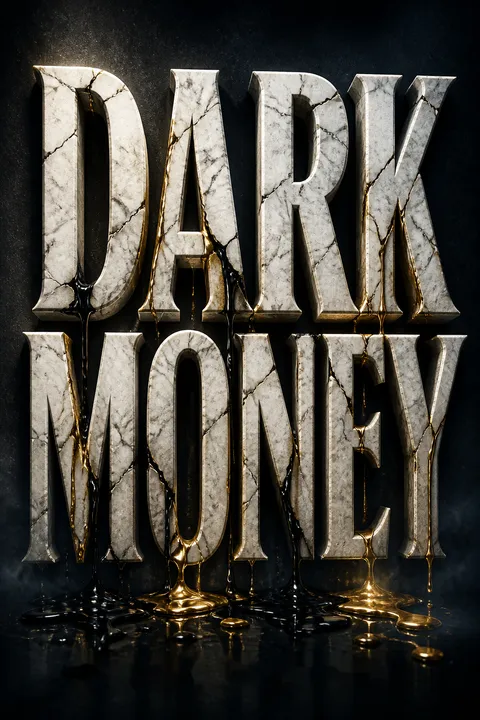


Key Takeaways
Build institutions before elections, and a minority can reshape what elections mean.
The long game began early. In January 2009, as Barack Obama celebrated his inauguration, Charles Koch convened wealthy conservative donors at a California resort to organize opposition to his agenda. The gathering was not a sudden response to one election. Since the 1970s, the Kochs and allied fortunes had financed think tanks, academic programs, advocacy groups, legal campaigns, and political operatives. In 1980, David Koch’s Libertarian Party ticket won only 1 percent of the vote. The family’s response was not to abandon its ideas, but to build institutions that could make them influential without first winning a majority.
The book’s central insight is organizational: political influence can accumulate outside the familiar contest between candidates. Institutions train experts, supply arguments, recruit activists, and shape which proposals seem realistic. This resembles infrastructure in other domains: the visible event matters, but the systems that prepare people and distribute resources often determine its boundaries. The account is strongest when it shows the links among these institutions. Still, influence is not the same as control. Voters, economic shocks, and opponents retain agency, as the network’s failed effort to elect Mitt Romney demonstrates.
Use philanthropy to make partisan ideas look like neutral expertise.
Foundations became political tools. Richard Mellon Scaife, John M. Olin, and other wealthy conservatives directed private foundation money toward think tanks and universities, often presenting ideological projects as scholarship or public service. A key blueprint was a 1971 memorandum by corporate lawyer Lewis Powell, which urged business leaders to organize for influence in universities, media, courts, and politics. The Olin Foundation then funded conservative programs at elite universities, including Law and Economics centers. That field studies the economic effects of legal rules. Its advocates described it as neutral analysis, while strategists saw it as a way to strengthen market-oriented arguments and limit regulation.
This strategy works because expertise has institutional credentials. A paper produced at a respected university can travel farther than a campaign ad, even when the funding and intellectual assumptions deserve scrutiny. The same tension exists in medical research and technology policy: private money can support valuable inquiry while also influencing which questions get asked. The relevant test is not whether a donor has a viewpoint, since all funding has priorities, but whether funding terms, conflicts, and methods are visible enough for readers to judge the work.
Follow the money where free-market principle meets corporate self-interest.
The overlap is hard to ignore. Charles Koch described regulation as an assault on liberty, while Koch Industries repeatedly faced allegations and penalties involving pollution, worker safety, and oil measurement. A refinery worker, Donald Carlson, died of leukemia after years of benzene exposure; his family said the company failed to alert him to abnormal blood tests. In Texas, Koch Industries pleaded guilty to concealing benzene emissions and paid fines. In a separate case, a jury found the company liable for a corroded pipeline explosion that killed two teenagers. These episodes do not prove every libertarian argument is insincere, but they show why the company had a material stake in weakening oversight.
The useful question is not whether an advocate benefits from a policy, but whether the benefit is disclosed and the argument survives independent examination. Political economy calls this a problem of regulatory capture: regulated industries can shape the rules meant to constrain them. Yet self-interest alone does not invalidate a claim, just as a public agency can be mistaken without being corrupt. The account gains force by pairing ideological language with concrete cases, while readers should distinguish documented penalties and verdicts from allegations that were disputed or never adjudicated.
Treat politics as a production system, not a campaign.
Ideas need a delivery chain. Koch strategist Richard Fink described political change as a sequence: support intellectuals to generate ideas, fund think tanks to turn them into policy proposals, then mobilize advocacy groups and citizens to pressure elected officials. The approach connected academic fellowships, the Mercatus Center, Americans for Prosperity, lobbying, and electoral spending. The book calls the wider, many-branched network the Kochtopus. Its components could reinforce one another: a policy paper supplied an argument, an advocacy group popularized it, and political pressure made it costly for lawmakers to resist.
The production-line model explains why isolated donations may matter less than coordinated capacity. Organizational research often finds that durable movements need both specialists who formulate ideas and local groups that make those ideas socially visible. The network’s advantage was the ability to connect both. But a factory metaphor can overstate precision: political messages do not produce uniform responses, and activists may pursue their own goals. The model is best read as a strategy for increasing the odds that certain ideas reach decision-makers, not as proof that donors can dictate outcomes.
Create grassroots pressure, but do not mistake staging for public consensus.
The Tea Party had organizers behind it. After CNBC commentator Rick Santelli attacked a proposed mortgage-relief plan in February 2009, existing conservative organizations rapidly supplied websites, staff, talking points, rally logistics, and media attention. Americans for Prosperity and FreedomWorks helped turn anger over spending and health care into coordinated protests. The book uses Astroturf for campaigns that simulate grassroots support while being organized or funded by powerful interests. This does not mean every Tea Party participant was insincere. Many joined from genuine conviction, but a developed political network helped channel their energy toward a defined agenda.
Movements often combine authentic grievance with professional organization. That combination is not inherently deceptive: labor, civil-rights, and environmental campaigns also use staff, strategy, and funding. The key distinction is whether participants know who is shaping the message and whose interests the campaign advances. Calling a movement entirely fabricated erases the agency of its supporters; calling it wholly spontaneous hides the role of organizers. The book’s more persuasive point is that infrastructure can direct public anger without inventing the anger itself.
When regulation threatens profits, attacking scientific credibility can beat debating policy.
Doubt became a political strategy. Climate legislation threatened fossil-fuel companies with limits on carbon emissions. The book reports that conservative foundations gave $558 million to climate-countermovement organizations between 2003 and 2010, often through channels that obscured original donors. The strategy echoed tobacco-industry campaigns that emphasized scientific uncertainty to delay regulation. When leaked emails from climate researchers were branded Climategate, conservative groups amplified the scandal before seven independent inquiries found no basis for overturning the broader scientific consensus. The controversy nevertheless damaged public confidence and helped sink climate legislation in the Senate.
Scientific debate depends on uncertainty, but public communication often treats any uncertainty as evidence that nothing is known. That gap is exploitable: a narrow dispute about data handling can be made to stand in for an entire field of evidence. The book shows how organized repetition can turn that confusion into political delay. At the same time, scrutiny of researchers is legitimate, and institutions should make methods and data accessible. The crucial distinction is between testing a claim and manufacturing the impression that all evidence is equally unsettled.
Unlimited spending plus donor secrecy turns wealth into political infrastructure.
The rules changed in 2010. In Citizens United, the Supreme Court allowed corporations and unions to spend unlimited sums independently of candidates. A related ruling removed limits on individual donations to certain outside groups. Social-welfare nonprofits could also conceal donors while engaging in some political activity. The result was dark money: political spending whose original source is hidden from voters. In the 2010 midterms, such groups financed attack ads and campaigns against Democrats. The Koch network routed funds through organizations such as the Center to Protect Patient Rights, which distributed money to other groups, making the path difficult to trace.
Disclosure is not a technical footnote. It lets voters connect political claims to the interests financing them, and it helps researchers detect conflicts. The Court’s theory that independent spending would remain distinguishable from candidate corruption also depends on meaningful independence and public visibility. The book shows how layers of nonprofits can weaken both assumptions. Still, unlimited spending does not guarantee electoral victory, and disclosure rules raise real questions about donor privacy and retaliation. A sound debate has to weigh transparency against those risks rather than pretend either is negligible.
Invest in state races, where small sums can redraw national power.
Local victories changed the map. Republican strategist Ed Gillespie’s REDMAP project targeted state legislatures before the once-a-decade redistricting that follows the census. In North Carolina, Republican donors and operatives helped win legislative races, then consultants drew congressional boundaries that favored Republicans. Art Pope, a wealthy donor and policy activist, also supported a network of state think tanks that supplied proposals for tax, education, and voting policy. Across the country, Republicans gained 675 state legislative seats in 2010. Those state victories shaped congressional districts and state laws long after the election-night headlines faded.
This is a case of leverage through overlooked institutions. National attention tends to focus on presidential races, while state legislatures control district maps, election administration, and many policies affecting daily life. Small investments can therefore have durable effects when directed at low-salience contests. The strategic insight is powerful, but gerrymandering is not a uniquely partisan invention, and the book’s account centers on one party’s network more than on every comparable tactic. That asymmetry should sharpen, not erase, the central question: who gets to draw the rules, and under what constraints?
Judge political power by the rules and agenda, not one election.
A loss can still change the system. The Koch network spent at least $407 million in 2012, yet Barack Obama won reelection. The donors had also helped push Republican candidates toward positions that proved unpopular, while wealthy allies such as Sheldon Adelson prolonged the primaries by backing favored contenders. Afterward, the network invested in voter data, field staff, and a broader political operation. By 2014, Republicans had won control of the Senate, and the Koch-backed network had become a rival center of power within the party. Its influence was visible in which policies Congress debated, blocked, or treated as beyond compromise.
Election results are an imperfect measure of political power. Agenda-setting, candidate recruitment, voter data, and veto capacity can matter even when a preferred candidate loses. This resembles institutional power in business: control over platforms and standards can shape behavior without issuing direct commands. The 2012 loss also cautions against portraying the network as omnipotent. Voters rejected its presidential preference, and public opinion remains a force. The sharper conclusion is that electoral defeat and structural influence can coexist, so both outcomes deserve examination.
Analysis
Dark Money is best understood not as a story of a secret committee controlling American politics, but as an account of how concentrated wealth can build durable political capacity. Its narrative follows money across foundations, universities, think tanks, advocacy groups, campaigns, and state legislatures. The revealing unit is the connection among these institutions, not any single donor or election. This is a form of institutional power: it shapes who produces policy ideas, which ideas appear respectable, and what political costs lawmakers face for opposing them.
The book’s strongest contribution is its attention to channels that conventional campaign coverage can miss. A candidate’s spending report captures only one visible slice of influence. Tax-exempt foundations can support research, nonprofits can mobilize voters, and state-level campaigns can reshape districts. By tracing these paths, Mayer shows why political effects can persist after a donor’s favored candidate loses. The account also makes an important distinction between direct command and agenda-setting, although its rhetoric sometimes encourages readers to blur them.
A careful reader should separate three claims: that wealthy donors funded organizations, that those organizations advanced policies aligned with donors’ interests, and that the spending caused particular political outcomes. The first is often documented through records; the second is supported by recurring overlaps and organizational links; the third is harder to establish, since elections also respond to economic conditions, party strategy, candidates, and public beliefs. The book persuasively describes a system that amplifies concentrated interests, but it cannot prove that every aligned policy was purchased or every participant acted cynically.
Its broader lesson concerns democratic accountability. Private funding can enrich debate by supporting neglected arguments, but secrecy and unequal resources make it difficult for citizens to assess who benefits. Transparency alone cannot resolve the underlying inequality, yet without it the public cannot even see the terms of influence. The book’s most durable question is therefore not whether wealthy people may participate in politics, but whether a democratic system can remain meaningfully answerable to citizens when a small number of funders can sustain political infrastructure at a scale ordinary voters cannot match.
Review Summary
Dark Money exposes how wealthy billionaires, particularly the Koch brothers, have used their fortunes to influence American politics through a network of think tanks, academic programs, and political organizations. Readers found the book eye-opening, well-researched, and disturbing, revealing the extent of dark money's impact on democracy. Many praised Mayer's investigative journalism and felt the book explained current political trends. While some found it depressing, most considered it essential reading for understanding the power dynamics shaping American politics.
People Also Read


Glossary
Dark money
Hidden political fundingPolitical spending routed through organizations that do not publicly identify their original donors. In the book, the term especially describes money moving through tax-exempt social-welfare groups and other nonprofits, sometimes passing through several organizations before financing political ads or advocacy. The opacity makes it difficult for voters to identify the interests behind a campaign.
Astroturf
Manufactured grassroots appearanceA political campaign that presents itself as a spontaneous movement of ordinary citizens while being organized, funded, or guided by businesses, political operatives, or wealthy interests. The term contrasts synthetic grassroots activity with locally initiated organizing. Mayer applies it to groups and protests that concealed their sponsors while creating visible public pressure.
The Structure of Social Change
Three-stage political strategyRichard Fink’s model for turning libertarian ideas into political influence. It begins by funding intellectuals to develop ideas, supports think tanks to convert those ideas into policy proposals, and then backs citizen or advocacy groups that pressure elected officials. The framework treats political change as a connected process rather than a campaign-season activity.
Kochtopus
Koch-linked political networkA nickname for the broad network of organizations, institutions, and political operations supported or connected to Charles and David Koch. Its reach included think tanks, academic programs, legal groups, advocacy organizations, lobbying, and electoral work. The term conveys the network’s many branches, while not implying that every affiliated organization was under direct day-to-day control.
Law and Economics
Economic analysis of lawAn approach to legal scholarship that evaluates laws and regulations partly by their economic consequences, including efficiency and effects on markets. Conservative donors supported its expansion in law schools and judicial education. Strategists valued it because its technical, seemingly nonpartisan framing could encourage market-oriented reasoning and skepticism toward regulation without explicitly presenting itself as ideological.
REDMAP
Republican redistricting strategyThe Redistricting Majority Project, an effort led by Republican political operatives to win state legislative races before congressional district lines were redrawn after the 2010 census. The strategy focused money and organizing on state contests where relatively small victories could give Republicans control of redistricting and influence congressional representation for years.
DonorsTrust
Anonymous conservative grant channelA donor-advised fund that receives charitable contributions and distributes grants to other organizations. Donors can request anonymity, making the original source of a grant difficult for the public to trace. Mayer describes DonorsTrust as a significant channel for conservative funding, including support for advocacy groups and organizations challenging climate policy.
FAQ
What's Dark Money about?
- Focus on Political Influence: Dark Money by Jane Mayer examines how billionaires, especially the Koch brothers, use their wealth to influence U.S. politics and public policy. It reveals the secretive networks and strategies they employ to promote libertarian ideals.
- Historical Context: The book spans several decades, detailing the rise of radical right-wing movements and the role of philanthropy in advancing their agendas. It highlights key events and figures that have transformed American political discourse.
- Impact on Democracy: Mayer argues that the concentration of wealth undermines democratic processes, as a few individuals can exert disproportionate influence over elections and policy decisions.
Why should I read Dark Money?
- Insight into Political Dynamics: The book provides a comprehensive understanding of how money shapes politics in the U.S., revealing the mechanisms through which wealthy donors manipulate the political landscape.
- Awareness of Philanthropic Strategies: It uncovers tactics used by billionaires to disguise political motives under philanthropy, crucial for recognizing their impact on public policy and governance.
- Engaging Storytelling: Mayer combines investigative journalism with compelling narratives, making complex political issues accessible and engaging through thorough research and vivid storytelling.
What are the key takeaways of Dark Money?
- Wealth and Power Dynamics: A small group of wealthy individuals can significantly alter the political landscape, often at the expense of the broader public interest.
- Secrecy in Political Donations: The book highlights the lack of transparency in political donations, particularly through nonprofits that obscure donor identities, allowing unchecked influence.
- Long-term Strategy: The Koch brothers and allies use a long-term strategy to shift public opinion and policy, funding think tanks, advocacy groups, and campaigns to reshape conservatism.
What are the best quotes from Dark Money and what do they mean?
- "Our movement must destroy the prevalent statist paradigm.": Reflects the Koch brothers' radical libertarian ideology, emphasizing their goal to dismantle government intervention in the economy.
- "The Kochs are on a whole different level.": Highlights the unprecedented scale of the Kochs' financial influence in politics, setting them apart in political philanthropy.
- "There is anonymity that we can protect.": Reveals efforts to conceal donor identities, pointing to accountability issues in political financing and implications for democracy.
Who are the Koch brothers, and what role do they play in Dark Money?
- Wealthy Industrialists: Charles and David Koch are billionaire industrialists who own Koch Industries, a major player in U.S. politics, promoting libertarian ideals.
- Political Activism: They fund a vast network of political organizations, think tanks, and advocacy groups to advance their agenda, focusing on reducing government regulation and taxes.
- Controversial Figures: Their significant financial contributions to political campaigns and policies that critics argue benefit the wealthy have sparked debate about money's role in politics.
What is the "Kochtopus" as described in Dark Money?
- Definition of Kochtopus: Refers to the extensive network of organizations funded by the Koch brothers to promote their libertarian agenda, symbolizing their multifaceted influence.
- Integration of Efforts: The Kochtopus integrates think tanks, advocacy groups, and grassroots organizations to create a cohesive strategy for political change.
- Long-term Vision: Represents a long-term vision for reshaping American politics, focusing on dismantling government regulations and promoting free-market principles.
What is the significance of the Citizens United decision in Dark Money?
- Legal Framework for Dark Money: The 2010 decision allowed unlimited corporate and union spending on political campaigns, changing campaign finance.
- Empowerment of Wealthy Donors: Enabled wealthy individuals and corporations to exert greater influence over elections and policy decisions without disclosing donors.
- Impact on Democracy: Mayer argues it undermines democratic principles by allowing a few wealthy donors to dominate political discourse, increasing polarization.
How do the Koch brothers use their wealth to influence education and academia?
- Funding Think Tanks and Programs: They invest in think tanks like the Mercatus Center to promote free-market ideas, shaping academic discourse and future policymakers.
- Creating a Network of Scholars: Through initiatives like the Institute for Humane Studies, they cultivate scholars who share their beliefs, ensuring representation in policy debates.
- Controversy Over Independence: Critics argue their financial support compromises academic independence, prioritizing research aligning with their interests, raising questions about scholarship integrity.
How does Dark Money address the issue of transparency in political donations?
- Lack of Accountability: Highlights challenges of transparency with dark money groups operating without disclosing funding sources, raising integrity concerns.
- Anonymity of Donors: Discusses organizations facilitating anonymous donations, allowing influence without scrutiny, leading to potential corruption and distrust.
- Calls for Reform: Mayer advocates for reforms to increase transparency in campaign financing, emphasizing the need for regulations requiring full disclosure to protect democracy.
What strategies do the Koch brothers employ to mobilize public support?
- Astroturf Campaigns: They create campaigns mimicking grassroots movements but funded by wealthy interests, creating the illusion of widespread support.
- Leveraging Media and Messaging: Utilize media outlets and commentators to disseminate messages, funding organizations producing favorable research and PR campaigns.
- Building Coalitions: Collaborate with other wealthy donors and organizations to amplify influence, pooling resources for a formidable political force.
How does Dark Money illustrate the relationship between philanthropy and politics?
- Philanthropic Funding: Discusses how the Kochs and others use philanthropy to advance political agendas, funding think tanks and advocacy groups to shape discourse.
- Strategic Investments: Highlights donations tied to specific political goals, allowing influence while maintaining a veneer of altruism.
- Impact on Democracy: Argues this relationship can undermine public interest, leading to policies favoring the wealthy, raising questions about money's role in democracy.
What are the implications of the findings in Dark Money for American democracy?
- Threat to Democratic Integrity: Suggests dark money poses a significant threat to democracy, as wealthy individuals exert disproportionate control, marginalizing ordinary citizens.
- Need for Reform: Calls for reforms addressing campaign finance and transparency issues, warning democracy may be undermined by wealthy elite interests.
- Awareness and Activism: Encourages readers to become aware of money's role in politics, advocating for changes promoting a more equitable political landscape.
Download PDF
Download EPUB
.epub digital book format is ideal for reading ebooks on phones, tablets, and e-readers.








