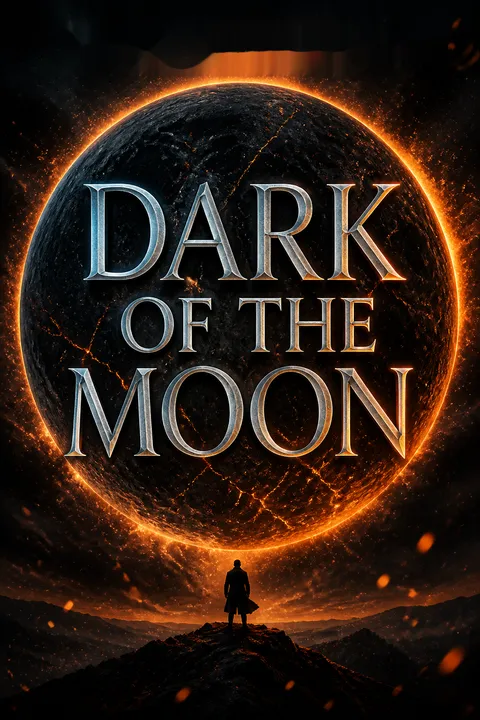


Plot Summary
Buffalo Ridge Burns
During a violent storm, an unknown killer drags elderly Bill Judd into his basement, covers him with wood shavings, and sets the mansion ablaze. The fire consumes nearly everything, leaving Sheriff Jim Stryker unable to tell whether Judd died inside or escaped. Minnesota investigator Virgil Flowers is driving toward Bluestem when the blaze rises above Buffalo Ridge.
He recognizes Judd's house and stops at the scene, where a witness reports a fast-moving truck fleeing the area. Judd's son, Bill Jr., angrily demands action, but the fire is too intense to fight. Virgil has come to town for another case, yet the unexplained fire, the missing body, and the fleeing vehicle immediately give him a second murder to consider.
The fire begins as both a crime and a problem of knowledge. It destroys the physical evidence that might settle whether Judd is dead, while the storm obscures the killer's escape. Virgil enters the story not as an all-knowing avenger but as an investigator arriving amid uncertainty. Judd's wealth has made him a local legend, and his disappearance lets the town's accumulated suspicions rush into the evidentiary gap. The scene establishes a central tension: public hatred can suggest motive, but it cannot identify a murderer.
Two Bodies Facing East
Stryker explains why Virgil was summoned: three weeks earlier, someone shot retired doctor Russell Gleason and his wife, Anna, in their home. Anna was killed on her couch; Russell was shot as he tried to run, then shot through both eyes. The killer dragged him outside and positioned him beneath the yard lights, facing east.
Virgil studies the untouched money and medicine, the lack of forced entry, and Anna's relaxed place on the couch. The couple likely welcomed someone they knew. The carefully placed body suggests a ritual, but Virgil cannot yet say what it means. Stryker admits that the unsolved murders threaten his standing as sheriff, so Virgil takes the files and begins rebuilding a case that has produced no clear suspect.
The Gleason scene turns familiarity into the first credible investigative lead. The killer does not break in or search for valuables, and Anna's posture implies that the visit began as an ordinary encounter. The violence then converts domestic trust into a trap. Russell's display makes the murders feel communicative, though the message remains unreadable. Stryker's political vulnerability adds pressure without making his fear proof of incompetence: in a county where people know one another, failing to name a killer can look like failing to understand the community itself.
A County's Old Wound
Virgil learns why Judd remained both rich and hated. In the 1980s, Judd promoted Jerusalem artichokes as a miracle crop for food and fuel, drawing farmers into a speculative chain that collapsed before an ethanol market existed. Many families lost land and savings; Judd emerged wealthier.
Virgil also meets Stryker's sister, Joan Carson, a capable farmer whose father lost half his acreage in the scheme and later died by suicide. Joan describes the injury Judd left behind, while Virgil's easy flirtation develops into a wary partnership.
The old fraud offers an obvious motive for revenge, but no one can connect it directly to the Gleasons. Virgil keeps returning to a more troubling possibility: the killings may arise from a private crime buried beneath the public scandal.
The artichoke scheme gives the mystery a collective grievance, but the narrative resists treating resentment as a solution. Judd harmed many people, which makes the field of suspects enormous rather than useful. Joan's family history gives the financial scandal intimate cost: economic ruin is followed by her father's suicide and the family's lasting grief. Virgil's attraction to Joan introduces a counterweight to his professional detachment. He is drawn into the town through personal ties, even as he must treat those ties as possible sources of information, conflict, and bias.
Revelation and Inheritance
At the Gleasons' house, Virgil notices a copy of Revelation near Anna's hand, then learns that the preacher George Feur had been trying to convert Judd. Feur runs a guarded religious compound and preaches racist, apocalyptic beliefs, making him an unnerving possible link.
Meanwhile, Margaret Laymon tells Stryker that her daughter, Jesse, is Judd's natural child and may claim part of his estate. At the bank, investigators find cash and papers in Judd's safe-deposit box, but not the will he apparently removed shortly before his death.
Bill Jr. stands to inherit, yet his distress over the delay and his financial dependence on his father sharpen Virgil's questions. Feur, the inheritance, and the missing will each offer a lead, but none yet explains the staged killings.
The section layers competing explanations without allowing any one to dominate. Feur's apocalyptic faith makes the ritual imagery legible in one way, while the inheritance offers a conventional financial motive. Jesse's claim also unsettles the Judds' apparent family structure: money can expose relationships that wealth had kept unofficial. The missing will adds uncertainty, but the lack of an immediate payoff warns against assuming that every suspicious detail is a key. Virgil's task is to hold incompatible possibilities open while the town tries to convert them into a story it already believes.
The Schmidts Are Silenced
Before dawn, the killer drives to the home of Roman Schmidt, a former Stark County sheriff. Schmidt opens the door to a familiar visitor and is shot; his wife, Gloria, is killed moments later. The murderer fires again through Schmidt's eyes, drags him outside, and props him upright with a forked branch.
Virgil reaches the scene to find the same deliberate display as at the Gleasons'. The killings make five victims across three households, and Stryker fears the town will turn against him.
Virgil reasons that Schmidt probably opened the door without dressing because he recognized the visitor, strengthening the case that the murderer belongs to the community. He also notices the possibility of an insider's knowledge and begins searching the victims' records for an older connection.
The repeated staging changes the east-facing bodies from an isolated oddity into a system. Yet the clue remains ambiguous: ritual can reveal an offender's private logic without making that logic intelligible to investigators. Schmidt's former office deepens the implication of local access, while the familiar visitor turns recognition into a lethal vulnerability. Virgil's reasoning stays concrete, grounded in how an elderly man might respond at his own door. The scene also raises the cost of delay: every new murder erodes Stryker's authority and gives the town more reason to demand a simple answer.
A Photograph in the Box
Searching Roman's safe-deposit box, Virgil finds a carefully preserved photograph of a battered, nude woman on a funeral home's preparation table. He also finds an old mortgage from Bill Judd to Schmidt, but no record of the payments that supposedly cleared it.
The image suggests a death concealed behind ordinary paperwork. Virgil takes a copy to Gerald and Carol Johnstone, elderly owners of Bluestem's funeral home. Carol identifies their old equipment, while Gerald claims not to remember the woman. Virgil recognizes the evasion.
Earlier clues have led him to Feur, but the photograph redirects him toward people who handled deaths in the county decades ago. When the Johnstones leave town with luggage and their house lights running on timers, Virgil knows Gerald has reason to fear what he knows.
The photograph turns archival research into a confrontation with the body that official records have erased. The suspicious mortgage suggests that money may have purchased silence, while the Johnstones' differing reactions distinguish uncertainty from concealment. Their flight does not prove guilt in the murders, but it shows that the past is still active enough to frighten witnesses. The scene's method is important: Virgil does not solve the case through a dramatic confession at first. He notices the mismatch between a physical artifact and a man's account, then follows the mismatch toward a suppressed history.
Shots Above the Dell
As Virgil and Joan swim at the secluded Stryker Dell, a flash from the hillside reveals someone watching through a scope. Virgil pulls Joan beneath the rock wall just as a rifle round strikes nearby. He dives for his pistol and fires toward the shooter, who escapes into the dark.
The pair leave the pool by staying close to the canyon wall, then drive away without knowing who attacked them or whether the shooter meant to kill them both. Virgil later finds the shooter's concealed position but no shell casing. The attack makes his investigation personal and confirms that someone is tracking his movements. Joan's fear does not end their intimacy, but it makes the relationship part of the danger Virgil must manage.
The ambush strips away the comfort of Virgil's conversational style. His relaxed courtship with Joan becomes a tactical problem in seconds, and his outdoor skills matter as much as his investigative judgment. The attack also changes the meaning of his broad, informal inquiries: a killer who has remained hidden now sees Virgil's curiosity as a threat. Joan is not merely a romantic subplot or a source of local color; her knowledge of the landscape helps them escape, while their closeness gives the offender another way to pressure Virgil.
Meth Behind the Gospel
An anonymous typed note directs Virgil toward Bill Jr.'s debt and Florence Mills, an ethanol company tied to Judd and Feur. Searching the Judd offices, Virgil finds invoices for large quantities of anhydrous ammonia, a chemical used in methamphetamine production.
Accountant Chris Olafson explains how Junior might be laundering hidden money through the ethanol business and his Subway restaurants. Federal investigators confirm that Feur has connections to violent antigovernment networks, then track a driver carrying gas cans from the South Dakota plant to Feur's farm.
Virgil and Stryker watch the compound and see men move the cans into a locked shed. Their evidence turns an eccentric preacher into the center of a major drug investigation, though Virgil still doubts Feur explains the earlier murders.
The anonymous note behaves like a useful clue and a possible act of manipulation at once. It leads to genuine criminal evidence, but its source remains unknown, preventing the investigators from treating discovery as proof of motive. The ethanol plant also echoes Judd's old scheme: a respectable promise of rural prosperity conceals a second economy. Virgil and Stryker must separate what they can substantiate, chemical purchases and suspicious movement, from what they merely suspect about the killings. The distinction between a real criminal enterprise and the murderer becomes crucial as the investigation branches.
The Raid Goes Wrong
A DEA team moves on Feur's farm as a driver arrives with the suspected meth shipment. Dogs attack the agents, gunmen fire from the house, and the locked shed proves part of a fortified compound.
Virgil drags wounded agents behind cover and drives them out of the yard under fire; Sheriff Stryker and DEA supervisor Ronald Pirelli are also hit. Agents pound the house with heavy weapons, and Virgil recognizes the smell of propane just before the damaged building explodes. The team discovers meth concealed in glass tubes inside the gas cans.
Feur and an accomplice escape through a hidden culvert, but when they emerge, officers order them to surrender. They raise their weapons, and the DEA kills them. The drug network is destroyed, but the murders remain unexplained.
The raid makes the cost of acting on incomplete intelligence brutally visible. Virgil's rescue of the wounded is courageous, but the firefight is not a clean triumph: agents die or suffer severe injuries, and a mistaken assumption about Feur's role could leave the original murderer free. The hidden culvert embodies Feur's practical intelligence beneath his public religious performance. His escape route also literalizes the story's recurring problem: dangerous truths have been buried, but they can surface in unexpected places. The meth case is real and consequential, yet solving it does not solve the case that brought Virgil to Bluestem.
Another Judd Lies Dead
After the raid, deputies find Bill Jr. dead on Buffalo Ridge, his skull crushed with a piece of rebar. Feur's men can no longer be blamed automatically, and Virgil suspects the killer has used the drug investigation as cover.
He revisits Todd Williamson, the newspaper editor who appeared at key scenes and whose account of arriving in Bluestem through Judd Senior is unusually convenient. Records reveal that Williamson was born William Lane, the child delivered after his mother, Maggie Lane, died in a 1969 car crash.
He had a violent record under that name before becoming a journalist. Virgil also learns that the Johnstones fled to their daughter's home, so he drives to confront them. Williamson's hidden identity now links him to Judd, but Virgil still needs to understand the old death.
The murder of Bill Jr. collapses the comforting theory that the raid has ended the danger. The discovery of Williamson's birth name gives Virgil a viable suspect, but not yet a complete motive; identity is evidence of connection, not proof of action. The narrative carefully places his troubled past beside his later respectability, resisting the easy assumption that a record determines a person. Virgil's attention shifts from the town's visible disputes to the older event that might bind its central figures together. The fleeing Johnstones become essential because they may hold the missing bridge between those periods.
The Moon Landing Coverup
Virgil corners Gerald Johnstone at his daughter's house and forces him to explain the old photograph. Johnstone recalls a 1969 party at Judd's mansion, held as people watched the moon landing. Maggie Lane, heavily pregnant, had argued with Judd; later her car went over Buffalo Jump.
Russell Gleason delivered her baby, a boy who survived, while Sheriff Roman Schmidt treated her death as an accident. The funeral photograph shows bruises that an examiner now identifies as injuries inflicted before the crash, supporting Virgil's conclusion that Judd beat Maggie and concealed the crime with help from the town's powerful men.
The boy was adopted and became Todd Williamson. Virgil realizes that the staged bodies and moon imagery belong to Williamson's private history, not Feur's religion.
The reveal reframes the town's past as a coordinated act of self-protection. The men who once controlled medicine, law enforcement, and funeral arrangements could make a violent death look accidental, while the surviving child was sent away without the truth. The moon landing gives the coverup a date and a public spectacle large enough to bury a local tragedy in plain sight. Williamson's vengeance becomes psychologically legible without becoming morally defensible: discovering that a parent was murdered can explain his fixation, but cannot excuse the deliberate killing of others.
Buffalo Jump Reckoning
Virgil arranges for Jesse to meet Williamson while officers watch, expecting the questions about his birth and the moon tattoo to provoke him. Williamson instead attacks Virgil's parked truck, shoots Margo Carr when she intercepts him, steals her vehicle, and races toward Buffalo Ridge.
He drives toward the same bluff where his mother died, bails out, and crawls through the grass. Virgil tracks him in the dark and wounds him with a rifle shot; Williamson bleeds to death before help can save him. Before the chase, he confirms that a young woman told him Judd was his father.
Joan later admits she found Williamson and contacted him, hoping to unsettle the estate and expose another Judd scheme, not knowing he would become a killer. Virgil leaves Bluestem with the case closed and his trust in Joan unsettled.
The final pursuit binds the killer's present violence to the landscape of his mother's death. Williamson returns to the bluff that once carried Maggie's car over the edge, but this time his own choices lead him there. Virgil's shot ends the threat while leaving him shaken: he has never killed before, and Margo's serious wounds prevent any easy celebration. Joan's disclosure complicates the resolution without overturning it. Her intervention helped bring Williamson back, but she did not direct his murders. The ending leaves justice achieved, grief intact, and Virgil alert to the damage caused by motives that seem harmless to the person acting on them.
Analysis
Dark of the Moon makes the past materially present. It survives in a faded photograph, a missing microfilm reel, an old mortgage with no matching payments, and the fragments of a witness's memory. These objects matter because Bluestem's most powerful residents once controlled the institutions that could declare what had happened: the doctor's diagnosis, the sheriff's inquiry, the mortician's record, and the newspaper's account. Their collusion did not erase the truth so much as scatter it among people who hoped time would make it harmless.
Virgil's investigation is therefore an exercise in epistemic discipline. He encounters a genuine meth enterprise, a plausible religious fanatic, a financially strained heir, and a town full of people with grievances. The danger is not simply choosing the wrong suspect, but allowing a complete explanation of one crime to substitute for evidence about another. The planted clues exploit precisely that desire for coherence. Virgil succeeds when he notices where details came from and asks who had access to them.
The novel also resists making vengeance morally simple. Williamson's history gives his rage an intelligible source: his mother was beaten, her death was disguised, and he was sent away without the truth. Yet he turns a grievance against the guilty into murder of people who helped conceal the crime, and then into a wider campaign that threatens anyone who investigates him. The explanation enlarges the tragedy without absolving the killer.
Joan's role sharpens that ambiguity. She brings Williamson back to Bluestem hoping to unsettle Judd's estate and expose the possibility of another financial scheme. Her intervention is consequential, but she does not control what Williamson does with the information. Virgil's decision not to pursue her legally recognizes the difference between provoking a discovery and directing a crime. The closing unease belongs to him: solving the case ends the immediate danger, but does not restore the trust that secrecy, violence, and self-serving motives have damaged.
Review Summary
Dark of the Moon introduces Virgil Flowers, a laid-back Minnesota detective with a penchant for rock band t-shirts and women. Readers appreciate Flowers' unique personality and investigative style, finding him a refreshing contrast to Sandford's other protagonist, Lucas Davenport. The plot, involving murders in a small town, is generally praised for its complexity and pacing. While some criticize dated attitudes and character development, most reviewers found it an enjoyable start to the series, noting Sandford's skillful writing and engaging mysteries.
People Also Read




Characters
Virgil Flowers
Reluctant field detectiveA Minnesota Bureau of Criminal Apprehension investigator, Virgil arrives in Bluestem with an informal manner, a sharp eye for physical detail, and a habit of talking his way into people's confidence. His interests in outdoor writing, music, faith, and women make him less guarded than many cops, but his humor does not soften his professional persistence. He reconstructs scenes from small inconsistencies, tests theories rather than marrying them, and remains alert to the possibility that a helpful clue has been planted. His attraction to Joan draws him into the town's emotional life, even as he must investigate people he likes. Virgil's strongest conflict is between his easygoing self-image and the moral weight of violence he cannot prevent.
Todd Williamson
Small-town newspaper editorThe editor of the Bluestem Record, Todd is a prickly, ambitious journalist who has made a place for himself in a small community despite arriving from elsewhere. He knows how local reputation works and understands that a newspaper can shape an election as powerfully as a campaign. His curiosity about other people's histories sits beside a fierce protectiveness about his own. Todd's guardedness makes him difficult to read, and his presence at important public events gives him unusual access to information. He represents the distance between a respectable public role and a past that a person may prefer to keep unexamined.
Jim Stryker
Pressured prairie sheriffBluestem's sheriff is a longtime local who knows the people and terrain but has little experience with a murder case of this scale. The killings put his reelection and his professional confidence under pressure. Jim is capable and fair-minded, though his contained manner can make his feelings difficult to see. He works closely with Virgil even when their judgments differ, and he is protective of his sister Joan. His growing interest in Jesse reveals a more vulnerable side beneath his lawman's discipline. Jim's central tension is between public responsibility, private loyalty, and the fear that a single failure will define his service.
Joan Carson
Farmer with a long memoryJoan runs her family's substantial farm and carries a clear-eyed understanding of Bluestem's relationships, grudges, and political currents. Her father was ruined by Judd's Jerusalem artichoke venture, leaving her with a personal history inside the investigation's central economic wound. Joan is witty, sexually confident, and more perceptive than Virgil first assumes. Her connection with him is warm but deliberately limited; she recognizes his tendency to manipulate a conversation and refuses to mistake attraction for a promise of permanence. She also wants a life beyond inherited grief and farm work. Joan's knowledge makes her a valuable guide to the town, while her own agenda complicates the boundary between helping and interfering.
Jesse Laymon
Restless local claimantJesse is Margaret Laymon's daughter, a spirited musician and farm-town outsider in temperament, whose claim to a connection with Bill Judd makes her part of the estate dispute. She uses humor and provocation to test people, but she is not merely reckless; she notices emotional vulnerabilities and knows what she wants from a relationship. Her interest in Jim Stryker opens a tender counterpoint to the town's suspicion and violence. Jesse's mixed feelings about Judd's legacy reflect the awkwardness of inheriting a family history one never chose.
George Feur
Militant revival preacherFeur leads a small religious compound near the South Dakota line and combines apocalyptic preaching with racist extremism and a history of criminal violence. He speaks with the certainty of someone who believes he has escaped ordinary moral limits, while also understanding how to attract money and people to his cause. His guarded followers and armed defenses make his operation feel dangerous before investigators understand its business. Feur is a genuine threat, but his presence also demonstrates how a real criminal can distract investigators from another crime.
Bill Judd Sr.
Feared local magnateJudd is a wealthy lawyer, investor, and landowner whose success outlasted the ruin of farmers drawn into his Jerusalem artichoke venture. He is remembered as ambitious, sexually predatory, and contemptuous of people who lost money through schemes he promoted. His private appetites and public influence made him a source of fascination as well as hatred. Judd's long residence in Bluestem suggests a man unwilling to surrender the territory where he built his power, even when the community despised him.
Bill Judd Jr.
Impatient family heirJudd's adult son has inherited his father's name and proximity to wealth, but not his father's reputation for financial success. He is blunt, touchy about money, and accustomed to pressing local officials for action. His businesses and debts make him a natural focus of suspicion when the estate becomes uncertain. Junior's relationship with his father appears familiar enough to resist a simple portrait of pure hatred, which keeps his motives open to investigation.
Russell Gleason
Retired town doctorRussell spent decades treating Bluestem's residents and also served as county coroner, placing him close to many private tragedies. He and Anna are well established and comfortable, their home a sign of professional success in a shrinking rural county. His medical history gives Virgil a reason to examine old deaths and the way official explanations were made. Russell represents the town's trusted institutions, whose authority can protect people but can also help conceal what happened.
Anna Gleason
Civic-minded county leaderAnna served on the county commission and remained active in local groups after retiring. Her public role and long marriage to Russell placed her within Bluestem's close network of influential families. She is remembered as a practical, socially connected woman, not simply as a victim in a crime scene. The details of her ordinary evening at home help Virgil infer that the killer was likely someone she knew and accepted inside.
Roman Schmidt
Former county sheriffRoman once led the Stark County sheriff's office and remained a familiar presence in the community long after leaving the job. His history with local investigations gives him an important place in the county's institutional memory. He and Gloria live quietly, but their past professional connections make their household relevant to Virgil's search through old records. Roman's authority is a reminder that a town's public history is often carried by the same few people for decades.
Gloria Schmidt
Former sheriff's wifeGloria shared a long life with Roman and built a career as an elementary-school teacher. She is part of Bluestem's older civic generation, connected to its schools, families, and social circles. Her presence in Roman's home gives the investigation a domestic dimension: the people Virgil questions are not only officeholders and businessmen, but couples whose private lives were interwoven with the town.
Margaret Laymon
Mother guarding old secretsMargaret raised Jesse in Roche and once had a relationship with Bill Judd. She is practical, candid about the past, and protective of both her daughter and other people's private lives. Her account of Judd's appetites gives Virgil leads, but she withholds information when she thinks disclosure could harm an innocent household. Margaret's guardedness is not simple evasiveness; it reflects the compromises women made in a community where powerful men could shape the story afterward.
Betsy Carlson
Keeper of broken memoriesBetsy is Bill Judd's sister-in-law, now living in a Sioux Falls care home with a memory that shifts between confusion and startling clarity. Her early memories of Bluestem contain fragments other witnesses have forgotten, though she cannot reliably arrange them into a complete account. She is vulnerable to distress, and Virgil must balance the urgency of questioning her against the harm it may cause. Betsy embodies the difference between possessing a memory and being able to make others understand it.
Gerald Johnstone
Evasive local morticianGerald has spent much of his life handling the dead in and around Bluestem. His long experience gives him knowledge of old cases that never made it into the newspaper, but age and fear make him reluctant to share what he remembers. His wife Carol is more direct, and their contrasting responses help Virgil judge when Gerald is concealing something. He represents the quiet custodians of local history, people whose work puts them near the facts that official accounts may leave out.
Maggie Lane
Woman from Bluestem's pastMaggie is a young Minneapolis woman whose visit to Bluestem becomes central to Virgil's reconstruction of an old event. The little that is known about her comes through other people's memories and newspaper accounts, each shaped by the interests of those who survived her. Her story exposes how easily a woman without local power can be reduced to a convenient explanation. Maggie's presence gives the present murders a human origin beyond money or abstract revenge.
Laura Stryker
Mother with buried griefLaura is Jim and Joan's mother, a careful, composed woman who has lived through the family's financial ruin and her husband's death. Her perspective on Bluestem's past is valuable because she remembers the social world behind the newspaper clippings. She remains protective of her children and sensitive to the way old rumors can damage a family. Laura's wish for a lasting family future contrasts with the instability that the murders bring into her children's lives.
Larry Jensen
Sheriff's lead investigatorJensen led the initial investigation into the Gleason murders and provides Virgil with a careful reconstruction of the scene. He is competent and thoughtful, willing to consider a broad field of suspects even when that makes the case seem impossible. His loyalty to the sheriff's office does not prevent him from helping Virgil test uncomfortable theories. Jensen's ordinary family life and practical concerns keep the investigation grounded in the costs borne by local officers.
Margo Carr
County crime-scene specialistCarr processes scenes for Stryker's department and notices physical evidence others might overlook. Her work supplies Virgil with the cigarette butt and other small traces that can redirect an investigation. She is capable, direct, and comfortable around grim evidence, qualities that make her a valuable partner to the investigators. Carr's professional precision stands against the disorder of the murders, where a single misplaced object can distinguish an authentic clue from a staged one.
Ronald Pirelli
DEA raid commanderPirelli leads the federal investigation into Feur's meth operation and coordinates the raid with Virgil and Stryker. He is experienced enough to recognize the danger but cannot make the operation risk-free. His confidence in the team's planning is tested by the violence at the compound. Pirelli's presence broadens the story from small-town murder to a criminal network reaching beyond Minnesota, while keeping the consequences of federal action personal and immediate.
Lucas Davenport
Virgil's distant supervisorDavenport directs Virgil from St. Paul, supplies investigative support, and reminds him that a case must eventually stand up in court. Their familiar, blunt working relationship gives Virgil room to operate while keeping him accountable to the larger agency.
Big Curly Anderson
Veteran county deputyBig Curly is an older deputy whose family has deep roots in Stark County. He knows the roads, the residents, and the local political machinery, making him useful in a crisis and potentially influential in the sheriff's future.
Little Curly
Deputy with local reachThe younger Curly works in Stryker's office and moves easily through the county's social networks. His access to residents and local gossip makes him part of the informal information system Virgil must assess carefully.
Michelle Garber
Former Judd acquaintanceA schoolteacher who once belonged to Judd's social circle, Michelle remembers the sexual culture around his house with both embarrassment and nostalgia. Her recollections give Virgil a different view of Judd's private life and help him test whether old relationships could explain the murders.
Chris Olafson
Confidential town accountantOlafson runs a local accounting practice and can read the financial patterns that overwhelm Virgil and Stryker. She is discreet, brisk, and willing to work through the night when the murders touch her community. Her financial analysis turns vague suspicions about Judd Jr.'s businesses into a plausible account of money laundering.
Plot Devices
The man in the moon
Connects past and presentThe moon image begins as a baffling phrase in Betsy Carlson's broken recollections and as a tattoo on Todd Williamson's arm. Its meaning deepens when Virgil uncovers the 1969 party held during the moon landing, the night Maggie Lane died. The motif binds memory, concealment, and identity: a public event becomes the setting for a private crime, and a fragment of an old witness's memory helps direct Virgil toward the killer.
Staged crime scenes
Makes violence into a messageThe killer shoots victims through the eyes and positions bodies facing east, making each scene look like a ritual. The repeated arrangement draws investigators toward George Feur's apocalyptic beliefs, but it ultimately reflects the killer's private logic and fixation on people connected to an old coverup. The displays also create investigative pressure: each repetition promises a pattern, while the wrong interpretation risks letting the murderer operate behind a more visible criminal suspect.
The planted trail
Directs suspicion toward FeurThe copy of Revelation at the Gleasons' home, the cigarette butt near the Schmidts' house, and evidence linking Judd to Feur make the preacher appear tied to the murders. Some clues are genuine indicators of Feur's criminal operation, while others are staged to steer Virgil toward him. The distinction forces the investigator to test the origin of each discovery instead of treating a coherent theory as proof.
The ethanol front
Hides a second economyFlorence Mills presents itself as an ethanol venture connected to Judd and Feur, echoing the region's earlier enthusiasm for alternative crops. In practice, the enterprise conceals industrial meth production and provides a way to move money and chemicals. The operation is real, but it is not the explanation for the murders, allowing the book to distinguish a major criminal conspiracy from the personal history driving the killings.
Virgil Flowers Series
About the Author


Download PDF
Download EPUB
.epub digital book format is ideal for reading ebooks on phones, tablets, and e-readers.








