


Plot Summary
The Stormfield Assignment
Mickey Gibson has traded police work for remote asset searches, raising two toddlers alone after her husband abandoned the family. A supposed ProEye colleague offers her a field assignment: inventory an estate near Smithfield, Virginia, recently bought by the vanished businessman Rutger Novak.
The story sounds plausible, and a bonus would help, so Mickey asks her parents to watch the children and drives to Stormfield. Inside, she records the neglected furnishings, then discovers a concealed passage behind the library shelves.
A battery fan pushes air through the opening, and an elderly man sits dead in the dark beyond it. Mickey calls the police, expecting a strange but ordinary workday to end there. Instead, the assignment has placed her at the center of a murder investigation.
The opening makes Mickey's vulnerability practical rather than abstract. Childcare, money, and a job she cannot afford to lose shape the decision that carries her into danger. Her competence is already visible in the way she inventories the house and finds the hidden passage, but the same professional confidence makes her susceptible to a lie tailored to her work. The body disrupts not merely a quiet routine but a life Mickey had deliberately arranged to avoid street-level risk. Her first step back into investigation comes through necessity, not nostalgia.
The Caller in the Dark
Virginia State Police investigator Wilson Sullivan quickly establishes that ProEye never sent Mickey to Stormfield, and that no employee named Arlene Robinson exists. The dead owner was Daniel Pottinger, not Rutger Novak, while the estate's history had also been fabricated.
The caller, who now uses a phone left on Mickey's porch, admits she staged the discovery so Mickey would find the body. She asks Mickey to identify the killer, claiming Pottinger was her friend, but withholds her own name and the reason for her fear.
Mickey secretly returns to Stormfield and lifts fingerprints from the mailbox. A former police contact agrees to search them, giving Mickey a lead Sullivan does not yet have. With the caller watching her family from a distance, Mickey begins investigating on her own terms.
The caller's deception works because it borrows the language of Mickey's real life: a familiar company, a known supervisor, and a credible financial assignment. This is not a random scam but an intimate use of personal information to direct Mickey's skills. Mickey answers the violation with a familiar professional method, collecting evidence even as she knows she may be interfering with the police. The burner phone turns private space into contested territory. Her decision to keep speaking with the caller is therefore both a bid for control and a new exposure of the children she is trying to protect.
The Mob Accountant's Face
The fingerprints identify the dead man as Harry Langhorne, a former accountant for the Giordano crime family who helped federal investigators dismantle the mob decades earlier. Mickey's father, retired officer Rick Rogers, recognizes the name and warns that old criminal networks can outlive their famous leaders.
Sullivan independently confirms Langhorne's identity and tells Mickey that he died from botulinum toxin while restrained. The medical examiner also finds terminal brain cancer and morphine in his system, suggesting Langhorne went to Stormfield expecting death.
Mickey earns a place beside Sullivan by offering useful New Jersey contacts. U.S. Marshal Earl Beckett then explains that Langhorne entered witness protection with his wife and children, but later vanished alone. His family disappeared after him, leaving Mickey with a murdered informant and a missing fortune.
Langhorne's identity changes the meaning of the mansion. What looked like the retreat of a wealthy recluse becomes the final address of a man who survived the consequences of informing on organized crime. His terminal illness complicates the murder: the killer inflicted a slow death on someone already dying, turning revenge into a deliberate performance. The witness protection history also places the family inside a system designed to save informants, not necessarily to repair the lives they leave behind. Mickey's old police knowledge is again valuable, but the new case asks her to read not only evidence, but the damage preserved by secrecy.
The Second Wall Message
Mickey searches a law enforcement database for the unusual warning found in Stormfield's secret room and finds a similar message in a murder bulletin from The Plains, Virginia. The victim, Daryl Oxblood, is a reclusive mechanic whose neighbor says a survey taker called Julia Frazier was present when his body was discovered.
Mickey and Sullivan travel there and find the message in Oxblood's house, along with a comic book marked by initials and a heart. Mickey suspects the visitor knew the victim, though she conceals the comic from Sullivan.
Fingerprint checks later reveal Oxblood's identity as Bruce Hall, a former witness protection resident, and federal records provide his real name, Bruce Dixon. The repeated message makes the two deaths look connected, while Julia Frazier's unexplained presence points back toward Mickey's elusive caller.
The second murder expands the case from one old score to a pattern involving people whose identities were deliberately hidden. A repeated phrase is useful precisely because it can mean different things to different participants: an old command, a signature, or a warning. The comic book offers a more intimate clue than the wall, linking a private attachment to a killing staged in public view. Mickey's decision to pocket it shows how fear reshapes her ethics. She wants the truth quickly enough to protect her children, but that urgency tempts her to become the kind of investigator who controls evidence instead of sharing it.
Trask's Five Percent
Mickey follows a lead to Sam Trask, a retired federal investigator and father of the feared Virginia criminal Nathan Trask. Sam confirms that his son is dangerous and that Harry Langhorne's old business may connect to him.
Before Mickey can get far, Nathan's men abduct her, bind her to a chair, and threaten her children unless she finds Langhorne's missing money. They promise her five percent if she cooperates. Mickey returns home shaken, then faces another blow when ProEye fires her after someone influential intervenes.
FBI agent Cary Pinker questions her about what she has concealed, while Mickey tries to keep her children safe and her investigation alive. She now has no reliable employer, no official protection, and a criminal organization treating her asset-finding skills as its own tool.
This turn converts Mickey's voluntary curiosity into coercion. Her talent for tracing hidden wealth, once a source of independence, becomes the reason a violent organization can threaten her family and conscript her. The lost job intensifies that pressure by removing the ordinary safety net she was trying to preserve. Her agreement to search for the money is not consent in a meaningful sense; it is a survival response under explicit threat. The scene also tests Mickey's self-conception as a former cop. She knows the law, but knowing it cannot shield her when the danger reaches her home.
Francine Steps Forward
Mickey connects the caller's references to parental care with a report that Agnes Leland has disappeared from a South Carolina assisted living facility. When Mickey confronts her, the caller stops hiding behind aliases and identifies herself as Francine Langhorne, Harry's daughter.
Francine says her mother was taken by Rochelle Enders, a former witness protection neighbor, and admits she had been searching for Harry before his death. She explains that Harry and Rochelle's father exploited the girls in New Mexico, forcing them into sexual abuse and blackmail schemes while the marshals failed to protect them.
Francine had recruited Mickey partly to find the fortune, partly to prove herself against the woman she once admired. The confession gives their partnership a painful foundation: Mickey was targeted for her skills, but also for her past kindness to Francine.
Francine's confession reframes the caller's manipulation without absolving it. Her history explains why control, aliases, and careful planning feel safer than trust, while her fixation on Mickey grows from the contrast between the life she imagined and the life Mickey actually chose. The revelation is psychologically complicated because admiration has curdled into competition: Francine both wants Mickey's help and wants to defeat her. Her account also exposes a second institutional failure. Witness protection concealed identities successfully, yet its authority did not prevent the abuse happening inside protected households.
The Albuquerque Survivors
Francine follows the trail of the rented van to an isolated, abandoned house and finds her brother Doug with Rochelle, who has taken Agnes there. Doug is diminished by years of control, but he remains attached to Rochelle.
She admits that Doug killed Bruce Dixon after Bruce attacked him with a machete, and explains that Bruce had sexually assaulted her and stolen a necklace. Rochelle had once taken abuse meant for Francine, protecting her in the only way she could. Francine does not try to force her mother home or separate the couple.
She leaves Agnes alive with them, promising to return when the money is found. The meeting reveals that the repeated deaths are tangled in old loyalties and injuries, not a simple contest between a killer and innocent targets.
The reunion refuses the comforting idea that discovering the truth automatically restores a family. Doug's bond with Rochelle survives despite the violence surrounding them, while Francine recognizes that rescuing her mother cannot mean reclaiming her brother. Rochelle's account complicates the role Francine assigned her: an apparent rival was also once a protector. Trauma has produced different adaptations in the siblings, and neither can be judged by a simple measure of courage or damage. Francine's choice to leave Agnes with them is an uneasy act of restraint, showing how care can require surrendering control.
Langhorne's Paper Trail
Mickey searches Langhorne's scattered companies and closed accounts, while Francine learns from a former Stormfield housekeeper that Langhorne rarely stayed at the estate. He had dismissed his staff shortly before dying, after a visit from a thin, fair-haired man accompanied by a woman.
Mickey also finds a note aboard Langhorne's boat urging a more careful search. A registered agent in South Dakota supplies another message: a magician's familiar phrase altered by an added conjunction, a direction to remove the eighth letter, and a reference to a children's television program.
Separately, Mickey discovers that Langhorne bought expensive digital artworks in the metaverse, but their limited value cannot explain the missing fortune. The clues suggest that the apparent digital treasure may be camouflage for something physical.
Langhorne's clues turn concealment into an authored game. He anticipated not only that people would search, but that they would misunderstand what kind of search mattered. The distinction between digital representations and physical property mirrors the characters' shifting identities: a convincing copy can distract from the thing itself. Mickey's professional methods and Francine's knowledge of Langhorne's habits complement one another, but neither is sufficient alone. The coded messages also reveal the dead man's continued power over the living. Even after his death, he dictates the order in which they must think.
Seventy Million in Bitcoin
Francine persuades Nathan Trask that she has located a large Bitcoin account containing more than he believes Langhorne stole from him. She arranges to redirect a scheduled transaction through Trask's own computer, while secretly enabling federal agents to track his keystrokes and access to his records.
Trask's men assault Francine when she resists handing over control, but she completes the transfer and takes her commission. The exposed digital activity gives the FBI evidence of Trask's wider crimes, and agents arrest him and several associates.
Mickey and Francine survive the operation, though the fortune Langhorne hid remains undiscovered. Removing Trask does not end their danger: they still have a missing mother, an unexplained murder, and a witness protection marshal who may know more than he admits.
Francine wins by entering the system that has long protected Nathan: money, secrecy, and the assumption that other people can be bought or frightened. Her computer operation is not merely a theft but a trap that turns his demand for repayment into evidence. The physical assault makes the cost visible, while the federal surveillance gives the women's work a public consequence. Yet the victory is partial. Nathan's arrest removes one threat without resolving the older history that brought Mickey and Francine together. The plot resists the fantasy that defeating one powerful criminal repairs every broken relationship.
Sullivan's Other Name
Mickey secretly lifts a fingerprint from Wilson Sullivan's pen and learns that he is Mark Gosling, not a former WITSEC resident but the brother of Helen Gosling, a protected witness who died by suicide. His police career has shadowed Earl Beckett's postings across several states.
Mickey and Francine conclude that Mark may have followed Beckett for years, seeking evidence of what he did to his sister and other women under his authority. They confront him, and he agrees to help them expose Beckett. Together they suspect the marshal killed Langhorne while pursuing the same fortune, perhaps with Darren Enders as an accomplice.
The alliance gives their investigation an official route into Beckett's conduct, but the evidence is still circumstantial. Mickey's distrust of Sullivan has delayed the partnership, yet it also uncovers the personal grief behind his pursuit.
Sullivan's hidden identity changes suspicion into a recognizable form of grief. His movements across jurisdictions are not random career restlessness but a private pursuit of accountability for his sister. Mickey reaches this truth through the same illicit tactic that has compromised her elsewhere, taking a print without permission. The moral line remains unstable: her methods violate procedure, but they expose a man whose own authority may have concealed abuse. The case's central institutional question sharpens here. When the system protects its own, justice may depend on people who are willing to work outside its formal channels.
The Paper Fortune
Mickey and Francine decide to exploit Beckett's hunger for Langhorne's money. Mickey tells him she has found the hiding place in Stormfield's wine cellar, and Beckett believes her because her reputation as an asset tracker is now useful to him.
He arrives at night and leads her to a concealed room, where trunks appear to contain hundreds of millions in cash. When Mickey begins documenting the find, Beckett draws his gun and admits he helped Langhorne escape witness protection in exchange for a share.
Langhorne never paid him, so Beckett says he poisoned him. The trunks are a police-prepared decoy, but Beckett believes he has finally secured his reward. Mickey's attempt to spring the trap succeeds in exposing his confession, although Beckett has brought armed help.
The false treasure is a carefully constructed mirror of the real one: convincing enough to reveal what Beckett values, but empty of the wealth he imagines. Mickey turns her professional skill into bait, allowing Beckett's greed to make him speak. His confession also links public duty to private extraction. He did not merely fail to protect Langhorne's family; he treated the protection system as a source of profit. The staged discovery shows Mickey reclaiming agency, but the trap's success is fragile. Beckett's willingness to kill means that truth, once spoken, still has to survive the violence meant to suppress it.
Stormfield's Last Gunfight
Beckett's accomplice fires from the entrance, killing one officer and wounding Sullivan. Beckett drags Francine away as a hostage, while Mickey shoots out the tires of his truck and damages its radiator. In the storm, she confronts Beckett and the other gunman, but Doug arrives and tackles the gunman holding Francine.
Mickey wounds Beckett, and FBI agent Cary Pinker arrests him. Doug identifies the accomplice as Darren Enders, Rochelle's father, and Pinker takes him into custody as well. Enders's shots have also struck Rochelle.
She dies as Doug reaches her, leaving him devastated despite the violence and betrayal surrounding their relationship. The ambush ends Beckett's immediate threat, but it exacts a life and leaves Mickey, Francine, and Doug to face the cost of their shared history.
The climax makes the old trauma physically present in the same room as the attempted recovery of stolen wealth. Doug's intervention is an act of loyalty, but it cannot save Rochelle from the violence set in motion by her own father. Mickey's tactical choices prevent Beckett from escaping, yet the dead officer and Rochelle's death deny the scene a clean triumph. The storm intensifies the uncertainty without replacing the human causes: Beckett's greed, Enders's violence, and the long consequences of protection withheld. Justice arrives, but it cannot restore those already lost.
The House at 199
After Beckett's arrest, Mickey returns to Langhorne's messages and notices that his altered magician's phrase can be read as a street name when the eighth letter is removed. The remaining initials become a numerical code, and the children's television clue points them toward an alarm sequence.
It opens Langhorne's childhood home in Yarden, New York, where Mickey and Francine find famous paintings stolen from museums and private collections. The metaverse artworks were digital copies, a distraction from the originals hidden in the house.
The works are returned, and generous finder fees let Mickey support her children and Francine help her family and Beckett's victims. Francine's mother and brother settle near Mickey, while Mickey invites Francine into the children's lives. Their uneasy partnership becomes a chosen bond, built on honesty neither woman could offer at the beginning.
The final puzzle rewards collaborative interpretation rather than brute force. Mickey supplies the technical pattern recognition, while Francine understands the habits of a man who built his life around misdirection. The recovered paintings restore objects to their owners, but the more consequential recovery is relational: Francine begins to imagine a life not organized entirely around hiding and competition. Mickey, meanwhile, accepts that choosing motherhood did not mean wasting her former abilities. Their closing bond does not erase criminal choices or trauma; it offers a future in which neither woman must turn another person into a rival in order to feel real.
Analysis
Simply Lies makes deception both a survival skill and a moral hazard. Mickey begins as someone whose professional competence has been relocated from streets to screens, and the false assignment thrusts that competence back into physical danger. She wants to protect her children by avoiding risk, yet each attempt to regain control pulls her deeper into the case. Her arc is not a return to her old self so much as a revision of what her old skills can mean in a life organized around care.
Francine offers a sharper counterpoint. She treats identity as something to edit and relationships as contests because her childhood taught her that dependence invited exploitation. Her deception is not excused by her trauma, but the history behind it makes the impulse legible. Mickey's response matters because she does not confuse understanding with acquittal. She can condemn Francine's choices while still recognizing her capacity to change.
The book also distrusts institutions that claim to protect. Witness protection gives families new lives but leaves space for abuse; law enforcement contains honest investigators and people who misuse authority; corporate employment can discard Mickey precisely when she becomes a liability. Against those structures, the novel places imperfect alliances: father and daughter, old colleagues, and eventually two women who have reasons not to trust each other. Their cooperation succeeds because neither has complete knowledge or power alone.
The treasure plot turns this argument into form. Langhorne's clues make greed the bait, while the real discovery restores stolen art to the people from whom it was taken. Money can compensate the investigators and help repair practical damage, but it cannot undo exploitation or death. The ending instead offers a smaller, more credible measure of justice: evidence reaches the law, family members choose care where they can, and Mickey and Francine begin a relationship not founded on competition. Their second chance is not innocence restored. It is the possibility of making different choices with the knowledge they now possess.
Review Summary
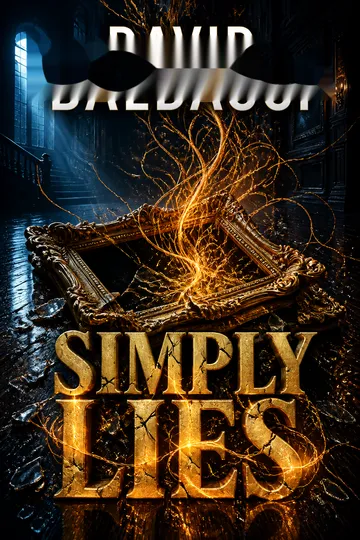
Simply Lies received mixed reviews, with an average rating of 3.96/5. Many readers enjoyed the fast-paced thriller featuring strong female leads, Mickey Gibson and Clarisse. The plot was described as twisty and engaging, with interesting elements like cryptocurrency and NFTs. However, some critics found the story convoluted and the characters' motivations unrealistic. While some longtime Baldacci fans were disappointed, others appreciated the new direction and hoped for a series continuation. The book's pacing and action were generally praised, though dialogue and character development received criticism from some reviewers.
People Also Read






Characters
Mickey Gibson
The resourceful investigatorA former Jersey City detective, now a remote asset investigator and single mother, Mickey is quick with technology, forensic procedure, and the practical judgments that come from police work. Her days are governed by her children's needs and the financial pressure of supporting them, yet her former instincts remain sharp. Betrayal by her ex-husband has made trust difficult, and she often tries to manage risk by keeping information to herself. That strategy protects her in the short term but can isolate her from allies. Mickey's defining tension is not whether she still has courage, but whether she can use it without sacrificing the ordinary life she built for her children.
Clarisse
The shifting strategistAn elusive woman who contacts Mickey under false identities, Clarisse survives by studying people, controlling information, and preparing for several outcomes at once. She is an accomplished digital operator and con artist, skilled at manipulating wealthy marks and at changing her appearance. Her notebooks and aliases help her impose order on a past she does not easily discuss. Beneath her deliberate confidence lies a deep fear of dependence and exposure. She is drawn to Mickey for reasons that mix practical need with personal fixation, and she often treats collaboration as a contest. Her intelligence makes her formidable, but her habit of turning every relationship into leverage limits the trust she claims to want.
Wilson Sullivan
The watchful state detectiveA Virginia State Police investigator, Sullivan approaches the Stormfield death with the alertness of a seasoned officer and a suspicion that does not soften easily. He recognizes Mickey's competence but must balance her help against the rules and responsibilities of an official investigation. His career has taken him through several states, and he carries personal history beneath a disciplined professional manner. Sullivan can be guarded, but he is not indifferent to the victims or to abuses of authority. His relationship with Mickey grows through shared evidence and mutual testing, as each must decide how much of the truth the other can be trusted to hold.
Earl Beckett
The veteran marshalA long-serving U.S. marshal, Beckett knows the mechanics of witness protection and the human cost of uprooting families. His authority rests on experience, confidence, and a practiced understanding of how informants and their relatives adapt to danger. He can appear paternal toward the people he once guarded, though his certainty about what is best for them leaves little room for their own perspectives. Beckett's history with the Langhorne family makes him an important source of knowledge for Mickey and Sullivan. He embodies the protective power of government, along with the risks that arise when that power is trusted without question.
Sam Trask
The retired federal hunterNathan Trask's elderly father, Sam is a retired federal investigator living with serious health problems. He remains intellectually active, tracking criminal networks from his room and retaining a clear sense of how evidence can be turned into action. His history with law enforcement gives Mickey a valuable perspective on both Harry Langhorne and Nathan's world. Sam is more reflective than his son, and he recognizes that protecting people sometimes requires trusting them with difficult information. His care for justice is not detached from personal feeling: he wants to see consequences for wrongdoing, but also understands that the people caught in such cases have lives beyond the investigation.
Nathan Trask
The untouchable crime bossA wealthy Virginia businessman with a formidable criminal reputation, Nathan Trask has built a world in which guards, lawyers, and compromised allies keep ordinary scrutiny at a distance. He treats vulnerability as a threat to status as much as a threat to money. His confidence comes from years of avoiding consequences, and he assumes that people can be pressured into serving his interests. The strained relationship with his father reveals a more personal source of resentment beneath his empire. Nathan's power is real, but it depends on believing himself beyond the reach of institutions and on making others believe the same.
Rick Rogers
Mickey's cop fatherMickey's retired police officer father is blunt, protective, and accustomed to weighing danger without romanticizing it. He understands the work his daughter has left behind and recognizes the stubbornness that keeps drawing her toward investigations. Rick wants Mickey to protect her children first, but his advice is complicated by pride in her abilities and their close bond. He offers information from his years in New Jersey law enforcement while making clear that knowledge does not make a dangerous case safe. His concern gives Mickey a domestic counterweight to the lure of returning to police work.
Doug Langhorne
The quiet older brotherDoug grew up in the shadow of an overbearing father and learned to retreat into silence and physical labor. He is strong, observant, and more intelligent than people who judge him by his withdrawn manner assume. His loyalty to his sister and his attachment to the few people he trusts shape his choices. Years of upheaval have left him cautious about belonging anywhere, yet he retains an emotional capacity that his father's cruelty could not erase. Doug's life shows how witness protection can preserve physical safety while leaving children with a fractured sense of home and future.
Rochelle Enders
The guarded survivorRochelle is a former witness protection resident whose history intersects with the Langhorne family. Fiercely self-reliant, she copes with danger by refusing to show vulnerability and by controlling the terms of every encounter. Her bond with Doug is deep, though her relationship with his sister is marked by old rivalry and mistrust. Rochelle's bluntness can conceal the difference between cruelty and defense; she has learned to treat both as tools in a world that offered her few safe choices. She is difficult to read because survival has taught her to make tenderness private and force public.
Agnes Langhorne
The fragile family matriarchAgnes is an elderly woman whose health and memory have declined after a life shaped by poverty, addiction, and an abusive household. Her relationship with her daughter holds anger and care at the same time. She was often unable to protect her children, yet she also made choices that, in her view, kept worse harm at bay. Her moments of clarity are unpredictable, which makes conversations with her emotionally precarious. Agnes represents the difficulty of judging a parent whose failures were real but whose own capacity for resistance was constrained by fear and illness.
Cary Pinker
The probing FBI agentPinker is an FBI agent who arrives with a tightly controlled manner and a direct interest in what Mickey has withheld from the police. He approaches her as both a potential source and a possible liability, asking what she has done and why she remains involved. His questions can feel prosecutorial, but his focus on abuse within witness protection gives him a larger purpose than simply taking control of the case. Pinker works through official channels while recognizing that evidence may come from unconventional sources. He is wary of Mickey's methods, but capable of respecting the skill behind them.
Daryl Oxblood
The solitary mechanicA withdrawn local mechanic in The Plains, Daryl repairs farm equipment and avoids drawing attention to himself. His modest home contains few clues to a wider past, and neighbors know him mainly through practical favors and routine sightings. His isolation makes him an easy person to overlook, which is precisely what gives his story weight in a case built around concealed identities. The contrast between his quiet life and the violence surrounding him forces Mickey to look beyond first impressions.
Art Collin
The retired Jersey detectiveA former Newark detective who worked on the old mob investigation, Collin speaks plainly about the people he encountered and the compromises required to bring major criminals down. His memories help Mickey understand Langhorne's role and the unusual family around him. Collin is not a neutral historian: his disgust for the old accountant shapes his interpretation, while his instincts remain those of a veteran investigator. His recollections give Mickey leads that formal records and official summaries have left out.
Zeb Brown
Mickey's ProEye supervisorBrown supervises Mickey's remote investigative work at ProEye and values her ability to trace assets others miss. He initially reacts to the Stormfield incident as a professional liability, then recognizes that she has been drawn into a situation beyond ordinary workplace procedure. His concern for the firm's reputation can make him seem unsympathetic, but he also knows Mickey's record and wants her to remain safe. His presence represents the precarious support supplied by a job that offers flexibility without protection from the consequences of crime.
Plot Devices
The forged assignment
A trap disguised as workA caller impersonates a ProEye employee, uses details from Mickey's real conversation with her supervisor, and invents a familiar asset-recovery job. The false assignment gets Mickey to Stormfield, where the caller has prepared the discovery of Langhorne's body with a partly opened hidden wall and a battery fan. The deception both implicates Mickey in the investigation and recruits her as a useful investigator. Later disguises and burner phones extend the same principle: information and identity can be manufactured well enough to move people into danger before they know they have been manipulated.
Witness protection identities
A past hidden in plain sightThe witness protection program gives former informants and their families new surnames, locations, and routines, allowing them to disappear from the people they betrayed. The system supplies the investigation with a trail of aliases, relocations, and old records, but those same protections leave gaps that Mickey must fill through fingerprints, family histories, and personal testimony. The program's secrecy also creates a moral complication: it can protect witnesses while isolating children and obscuring abuse inside protected households. In the story, hidden identities are not merely a mystery mechanism. They shape what characters can remember, disclose, and trust.
The repeated wall message
A shared history becomes evidenceA maxim about the gap between what someone demands and what they practice appears at two murder scenes. Its recurrence sends Mickey toward the relationship between Langhorne and the people who once lived near his family. Differences in handwriting suggest that more than one person wrote the Stormfield version, complicating the assumption that a single killer left a signature. The phrase functions simultaneously as a clue, a private reference, and a record of the coercive household in which it was repeated. It exposes how a sentence can become a weapon when a parent treats advice as a command for everyone else.
Langhorne's coded trail
Clues conceal a second treasureLanghorne leaves fragments across a boat, a registered agent's message, a wine bottle label, and a childhood address. The clues encourage searches for buried cash or ordinary financial accounts, while their language points toward a modern code and a specific place. Mickey's digital expertise and Francine's knowledge of Langhorne's habits allow them to combine number patterns, wordplay, and research into a usable location. The metaverse artworks add another layer of misdirection: digital versions appear valuable, but they are not the central hoard. The trail rewards attention to the difference between a representation and the object it represents.
Mickey Gibson Series Series
About the Author
Other books by David Baldacci








Download PDF
Download EPUB
.epub digital book format is ideal for reading ebooks on phones, tablets, and e-readers.








