


Plot Summary
The Dancer in the Gazebo
At a birthday gathering on Bratva leader Alexei Koslov's3 estate, Irish enforcer Lachlan O'Rourke1 arrives to confront Maksim8 about a lethal drug formula linked to an ally's overdose and a pair of deaths. The dispute is postponed to spare the celebration. On his way out, Lachlan1 sees Katya,2 Alexei's3 overlooked daughter,2 dancing alone in a cold gazebo while her half-sister4 Stasia4 enjoys the party.
Katya2 asks him not to leave, and he tells her the dance is beautiful, then urges her back inside. Her quiet claim that dancing belongs only to her unsettles the man1 who has trained himself to treat desire as a distraction. He leaves without learning that she will soon become central to a much larger conflict.
The first meeting is built from asymmetry. Lachlan enters as a feared operator, yet the attention that arrests him is not political leverage but a young woman's private practice. Katya's dance matters because it is one possession her father cannot convert into an alliance. Lachlan recognizes that kind of shadowed existence in her, even as his instinct is to claim rather than simply witness. The poison dispute establishes the world as one where family loyalty can turn ordinary wrongdoing into lethal business, while the gazebo briefly offers a different measure of value: the ability to make something for oneself.
A Sister Vanishes in Snow
After Alexei3 announces that Stasia4 must marry Luka Gideon, a powerful Boston Bratva leader, Stasia4 packs to escape rather than become a political bride. Katya2 helps disguise the departure as a kidnapping, wrecking the bedroom and giving her sister4 a secret school mailbox for future letters.
Alexei3 finds Stasia4 missing and answers the deception with terror: he kills housekeeper11 Yulia11 and the guards who were on duty, then warns Katya2 to report any contact. Katya2 survives by concealing her part in the escape.
She searches the story of a priest15 Lachlan1 was rumored to have killed, then spends the following years missing Stasia4 and receiving postcards whose handwriting does not seem to be hers. The apparent abduction leaves both sisters isolated.
Katya's first consequential act is compassionate and strategically imperfect. She helps Stasia escape because she understands the threat of a forced marriage, but cannot predict how Alexei will punish the people left behind. The deaths turn secrecy from a shared plan into a burden Katya carries alone. Her father's power depends on making every household member answerable for another's choices, while Katya's small act of resistance preserves the possibility of a private bond. The postcards later complicate grief without resolving it: they offer contact, but their uncertain handwriting makes hope feel almost as dangerous as silence.
The Church Reopens the Past
Two years later, Lachlan1 is praying at St. Agatha's when Katya2 sees him and approaches. She tells him that Stasia4 fled an arranged marriage, that Katya2 made the room look ransacked, and that postcards have arrived from different states in handwriting she cannot trust.
She also plans to audition for a London dance conservatory, which may separate her from any future message. Lachlan1 recognizes that the missing princess may have left voluntarily, not been abducted, and promises to examine the postcards.
Their trust is interrupted when Katya's2 driver returns. Lachlan1 places a knife at her throat to frighten the negligent man into taking her safety seriously, then releases her. Katya2 leaves shaken, but the confession binds Lachlan1 to the mystery.
The church gives these two characters a rare setting where violence is not the only language available. Katya approaches Lachlan because his visible devotion suggests a moral interior beneath his reputation, and he responds by taking her worry seriously rather than dismissing it. Yet his staged threat shows how instinctive coercion remains for him: protection and intimidation occupy the same gesture. Katya's London plan introduces a competing claim on her future, one she has made for herself. The scene's emotional tension comes from her need for help and her refusal to surrender authorship of her life in exchange for it.
A Bride Chosen for Moscow
Back at the Koslov estate, Alexei3 learns Katya2 wants to audition in London and announces that she will instead marry Rahil Nikitin,9 a wealthy Russian political candidate. After Stasia's4 escape, Alexei3 keeps Katya2 under constant guard and takes her phone and computer, leaving her no opening to run.
At the engagement party, Katya2 discovers Rahil's9 pregnant mistress, Nadia,10 and learns he intends to use a young American wife to deflect attention from their affair while Alexei3 funds his campaign. When Katya2 questions her future husband,9 Rahil9 drags her away, strikes her, and knocks her unconscious. Nadia10 explains the arrangement and the flight to Moscow scheduled for the following night. Katya2 wakes bruised, trapped, and resolved not to board.
The engagement exposes the transactional logic beneath Alexei's paternal authority. Katya is valuable to him not as a daughter with preferences, but as a credential that can advance another man's public career. Rahil's violence makes that bargain bodily, while Nadia's presence reveals that the marriage is also a cover story designed to protect a powerful man's existing relationship. Katya's resistance does not yet take the form of a successful escape. It begins with her recognition that obedience will not keep her safe, and that the danger of acting may be less than the certainty of surrender.
The Wedding Turns to Blood
Lachlan1 learns that Katya2 is marrying Rahil9 the next morning and arrives with armed O'Rourke men to stop the wedding. A staged road closure delays Alexei's3 car, but Katya2 still reaches St. Agatha's in a bruised face and a heavy dress chosen by her father.3 When the ceremony stalls, Katya2 rejects the authority being imposed on her.
Lachlan1 enters with his men, confronts Rahil,9 and shoots him after Rahil9 shoves Katya2 to the floor. He asks Katya2 to marry him instead, and she accepts, choosing the dangerous man1 who has given her a way out over the one who beat her.9 The priest completes the ceremony amid armed guards and a blood-spattered wedding dress, turning rescue into a binding marriage.
The wedding is both an escape and a transfer of power, so the scene refuses a simple division between captivity and freedom. Lachlan ends Rahil's immediate control through force, but his claim to Katya begins inside the same criminal system that treated her as a bargaining asset. The crucial difference is that he asks for her consent after creating the opening to refuse. Katya's answer is not proof that danger has disappeared; it is an active choice made under pressure, grounded in the alternative she has just experienced. Her stained dress makes the cost of that choice impossible to romanticize away.
A Bratva Truce Breaks
At O'Rourke headquarters, Alexei3 demands that Lachlan1 annul the marriage, while Lachlan1 refuses to return Katya2 to the father3 who arranged her wedding. Maksim8 escalates the standoff by aiming a gun at Kieran,5 the O'Rourke leader. Priscilla,7 Riordan's6 wife,7 reveals that she once worked undercover as an FBI agent and claims to possess evidence connecting Alexei3 to attacks on federal agents.
Her bluff helps keep Alexei3 from pressing his claim. Lachlan1 shoots Maksim8 in the knee when he lunges at Priscilla,7 then agrees to cover for the injury rather than kill him. Balor19 offers to search for Stasia.4 Alexei3 leaves without Katya,2 and Lachlan1 takes his new wife2 to his secluded glass house, where she can begin to feel safe.
The room's power shifts through competing forms of credibility. Lachlan's gun can stop an immediate attack, but Priscilla's intelligence gives Alexei a reason to hesitate without provoking a larger war. Her bluff works because the criminal code depends as much on what leaders believe can be proven as on what is true. Katya also crosses a threshold here: the O'Rourkes name her part of their family, but the welcome arrives in a room full of weapons and unfamiliar faces. Safety is not merely a locked door; it must become a relationship she can trust.
Glass Walls, Open Doors
At Lachlan's1 house, Katya2 discovers that the feared enforcer1 will let her sleep separately, keep rehearsing, and audition for London if she earns a place. He replaces the lost access to her phone and drives her to school, while she cooks and shares the routines that once helped her feel at home.
Their first kisses and sexual encounters grow slowly around her bruises and her inexperience; Lachlan1 stops when he fears hurting her, and Katya2 tells him when she wants more.
When her old dance studio closes, he uses his hacker brother Balor19 to learn that the teacher has moved to the Hamptons. Katya2 dances alone in the empty studio for Lachlan,1 and he admits that he once wanted a religious life. Their home becomes a fragile refuge where neither has to perform a role.
The glass house literalizes a contradiction in Lachlan's protection: it is exposed to view but defended by cameras, guards, and bulletproof walls. Katya's freedom inside it depends not on privacy alone, but on her ability to negotiate. She can choose a room, a rehearsal schedule, and the pace of intimacy. Lachlan's restraint is unfamiliar to him, while Katya's directness challenges the idea that a rescued woman must remain passive. Dance links their inner lives: she uses it to reclaim agency, and he learns to look without immediately turning desire into possession.
Maksim Makes His Bid
At a formal O'Rourke fundraiser, Alexei3 criticizes Katya's2 cocktail dress and grabs her arm, prompting Lachlan1 to block him from touching her again. Later, Maksim8 approaches Katya2 while Lachlan1 is away from their table. He claims Stasia4 is probably dead and offers to take Katya2 back to Alexei3 if she agrees to marry him, a move meant to secure his rise to underboss.
Lachlan1 returns before she can be forced to decide and pins Maksim8 with a knife, but Katya2 clearly rejects the offer herself. He takes her home. In the men's room, Riordan6 confronts Lachlan1 about the political danger of keeping Alexei's3 daughter,2 and Lachlan1 finally admits he is falling for her. The public threat has made his private attachment impossible to deny.
Maksim's proposal reproduces Alexei's original violence in a new political arrangement: Katya is again imagined as the price of a man's advancement. Her refusal matters because Lachlan does not have to speak for her; she identifies the manipulation and chooses him openly. At the same time, the scene makes romance politically consequential. Riordan understands that Lachlan's attachment can expose the family to retaliation, while Lachlan recognizes that his wife is no longer simply someone to protect until she leaves. Love begins not as escape from power, but as a reason to question how power is used.
Blood, Needles, and Diamonds
A man slices Lachlan's1 upper arm during an interrogation, and Lachlan1 dismisses the wound until blood loss makes him collapse in the bathroom. Katya2 calls Griffin,12 who brings his nurse sister-in-law Darcy17 to stitch the injury at home.
Watching Darcy17 work, Katya2 asks to learn how to treat wounds, refusing to remain helpless while the men around her absorb violence. Lachlan1 is ordered to rest, but soon attends Katya's2 rehearsal. When he sees her dance with a male partner, jealousy makes him interrupt before learning she was only filling in for an injured dancer.
He apologizes through action: he buys Katya2 an engagement ring and tattoos her name on his hand and body. Katya2 tells him she wants to remain his wife, though London still hangs over them.
The wound temporarily reverses the roles that have organized their marriage. Lachlan cannot protect Katya by force when he is unconscious, and she becomes the person who summons help and insists on learning practical care. His resistance to recovery reveals how thoroughly he equates usefulness with violence. The ring and tattoos answer that vulnerability with public permanence, but they also risk making commitment look like ownership. Katya's response holds both truths: she wants the marriage, yet has not settled what it means for her ambitions. Their intimacy deepens most when neither pretends the future is already decided.
Gunfire at East Side
While Lachlan1 and Priscilla7 investigate a man trafficking a teenage boy, an emergency alert reports an active shooter at Katya's2 performing arts school. Traffic traps Griffin's12 car, so Lachlan1 runs through the tunnel and reaches the campus ahead of the police response.
He follows bloody footprints to a dressing room, where the gunman has trapped Katya2 and another dancer. Lachlan's1 ammunition runs out during the gunman's burst of fire, so he tackles and beats the attacker until officers intervene.
Katya2 is alive but bleeding from a blow to the head and shaken by the shooting. Lachlan1 carries her to medical staff, then refuses to take her back to his isolated house while she remains distressed. He brings her to East Hampton instead, where she can recover near the ocean and meet his sister.1
The shooting strips away the distance between Lachlan's private devotion and his public violence. He abandons traffic, police procedure, and personal safety because Katya's absence turns every delay into an intolerable uncertainty. His rescue is effective but not clean: he reaches her only after she has been injured, and his reliance on violence leaves both of them with the aftermath. Katya's panic after the danger has passed is equally important. The narrative treats survival as more than escaping the gunman; safety also requires time, care, and a place where her body can stop bracing for the next threat.
The Priest's Last Confession
At the Hamptons beach house, Katya2 struggles with ringing ears and the memory of the shooting. Lachlan1 takes her to see his sister Shea and her former dance teacher, Miss Theresa,16 whose new studio gives Katya2 a glimpse of a life built around dance.
Back at the house, Katya2 asks about the scar on Lachlan's1 face and the priest15 he killed. Lachlan1 explains that, at eighteen, he admired Father Eamon15 and hoped to enter the priesthood. When altar boy Michael Foster's father confronted the priest,15 Lachlan1 was cut and accidentally caused the man's fatal fall.
Later, after learning Father Eamon15 had abused boys, Lachlan1 tracked him down and killed him deliberately. His father13 then sent him to a brutal training camp, ending his religious plans. Katya2 listens without recoiling, and Lachlan1 shares what he has concealed for years.
Lachlan's confession separates two deaths he has fused into one identity. The first grows from rage and a fatal mistake; the second is deliberate punishment for a trusted priest's abuse. Neither action is offered as uncomplicated justice. What changes is that Katya receives the story without reducing him to either monster or hero. Her listening gives him a witness outside the family hierarchy that trained him to suppress feeling. The beach house and dance studio provide a counterpoint to the confession: they suggest that a future can be built from attention and care, not only from inherited violence.
The Audition Falls Apart
After a few days in East Hampton, Katya2 returns for her conservatory audition, determined to finish despite the shooting and her head injury. The other dancers perform cleanly, but when Katya2 reaches the final section of her routine, dizziness and unstable balance overtake her.
She falls across the stage. Lachlan1 rushes to lift her, while Katya2 stops him from blaming the staff for what happened. The audition is compromised, but she refuses to accept a place she has not earned simply because he could influence the judges.
In the car, she assumes Lachlan1 wants her gone and tells him to secure her acceptance if that is his wish. Instead, he tells her he loves her. Katya2 admits she loves him too, and the failed audition forces them to face a future not dictated by London.
The fall gives physical form to a conflict Katya has tried to manage through discipline. Ballet taught her to continue through pain, but the shooting has made that discipline insufficient, and her body refuses the performance her ambition demands. Her insistence on merit is not merely pride; it protects her from becoming another person whose future is arranged by someone else's power. Lachlan's declaration answers her fear that he values her only while she is convenient. Their mutual admission does not erase the lost opportunity, but changes the question from whether she can escape to what she actually wants to build.
A Family Learns Her Name
Rather than take Katya2 back to her father,3 Lachlan1 brings her to meet his parents. His mother,14 Clara,14 is seriously ill, and Katya2 offers to help maintain her strength through massage and movement. Lachlan's1 father,13 Fergus,13 recognizes how deeply the couple care for each other and tells Lachlan1 that Katya2 is pregnant.
He also reveals that Katya's2 mother is dead, murdered by Alexei,3 and that Katya's2 maternal grandfather left her a French royal title, a pension, and an independent inheritance. The news gives Katya2 financial choices beyond dependence on either father3 or husband.1 Lachlan1 asks her to remain his wife forever, and she accepts. The couple agree that her future should include the work she wants, not simply the life he can provide.
The visit brings family history into the marriage without allowing inheritance to replace intimacy. Katya's pregnancy makes their bond consequential in a new way, while her mother's murder exposes the violence beneath Alexei's claim to family authority. The royal lineage and money could merely exchange one status for another, but their significance is practical: Katya can act without being financially trapped. Clara's illness also gives her a way to enter Lachlan's family through care rather than spectacle. The promise of permanence works because it follows a choice, not a bargain imposed by either household.
The Studio Becomes Home
Three months later, Katya2 has bought the Astoria building that once housed Miss Theresa's16 dance studio and opened her own school for young girls. Her inheritance lets her invest independently, while the O'Rourke family helps with the legal work.
Lachlan1 visits between assignments, plays the monster for the children, and wears her name tattooed on his neck; Katya2 has chosen a matching declaration of her own. She is pregnant, and the couple have settled on a future that includes her teaching rather than a touring career.
The new routine is interrupted when Lachlan's1 brothers Eoghan18 and Balor19 arrive with news about Stasia.4 They have found Katya's2 missing sister4 alive in Seattle, pregnant, and connected to one of Lachlan's1 twin brothers. Their guarded reaction suggests the discovery may endanger both families.
Katya's school resolves the opening image of dance as the one thing that belonged only to her. She turns that private refuge into an institution where other children can learn, making independence communal rather than solitary. Her choice to stay in Astoria is therefore not a return to her father's terms; she has money, work, and a family she has chosen. The final news reopens the unanswered mystery that began with Stasia's flight. The book ends with security achieved but not sealed, as Katya's sister may draw the O'Rourkes and Koslovs into a new conflict.
Analysis
Deal with the Devil makes protection morally complicated by placing it inside a world where nearly every relationship carries political value. Alexei's3 arrangement for Katya2 and Rahil,9 Lachlan's1 intervention, and Maksim's8 later offer all treat marriage as a means of controlling territory through a woman's body. The story distinguishes them through consent, but does not pretend consent is simple when Katya2 is bruised, isolated, and dependent on the man who rescues her.1 Her agency grows through repeated, concrete choices: hiding Stasia's4 address, insisting on her audition, refusing an unearned place, and buying the building where she once learned to dance.
Lachlan's1 arc is less a conversion from violence than a struggle to keep violence from becoming his only form of relation. He already has a conscience, visible in prayer and in his horror at abuse, but his learned response to danger is to dominate it. Katya2 does not cure that impulse. She makes him answer for how he uses it, especially when she asks to be cared for without being treated as fragile. The shooting intensifies that conflict: his willingness to risk himself proves devotion, yet the aftermath requires more than another act of force.
Dance supplies the book's clearest image of self-authorship. At first, it is Katya's2 private possession, a discipline she can claim in a house where others decide her future. By opening a school, she turns that possession into work and community. The ending with Stasia4 unsettles the domestic resolution, reminding the reader that family loyalty can reopen old political wounds. Katya's2 new life is not safe because danger has vanished. It is safer because she has resources, a chosen family, and a purpose that cannot be reduced to someone else's alliance.
Review Summary
Deal with the Devil receives mostly positive reviews, averaging 4.01/5 stars. Readers praise the intense chemistry between Irish mob enforcer Lachlan and Bratva ballerina Katya, the marriage of convenience trope, and the age-gap romance. The audiobook narration, particularly Troy Duran's Irish accent, earns high marks. Critics cite inconsistent character naming, plot holes, pregnancy timeline errors, and inaccurate Irish cultural representations as weaknesses. Some found the pacing slow and the relationship underdeveloped, while others felt the writing lacked depth despite the compelling premise.
People Also Read








Characters
Lachlan O'Rourke
Irish mob's enforcerThe third O'Rourke brother is a towering, scarred enforcer who treats danger as a job and discipline as armor. He is fiercely loyal to his family, but his private rituals of prayer and confession reveal a conscience that his public reputation conceals. Lachlan tends to translate care into protection, often through force, because violence is the skill his family cultivated in him. Katya2 unsettles that arrangement: she asks for respect as well as safety, and she has ambitions that cannot be reduced to his plans for her. His central tension is whether a man trained to act without hesitation can learn to let another person choose.
Katya Koslov
Dancer seeking authorshipKatya is Alexei Koslov's3 illegitimate daughter, a French-Russian ballet student raised amid the Bratva's wealth and threats but denied the attention given to her half-sister4. Dance gives her a discipline and identity that do not belong to her father3. She is observant, compassionate, and more resilient than the sheltered life others assume she has led. Her courage rarely looks like physical dominance; it appears in clear refusals, practical improvisation, and her insistence on earning her own future. Katya wants to belong, especially to her sister4, but she also resists the idea that belonging requires obedience. Her relationship with Lachlan1 tests whether care can coexist with independence.
Alexei Koslov
The Bratva's iron patriarchAlexei is the powerful Bratva leader and father of Katya2 and Anastasia4. He thinks in alliances, succession, and visible authority, treating family ties as instruments of political survival. His grief and fear do not soften his control; they intensify it. Katya's2 experience of him is shaped by emotional neglect and sudden demands, while the men around him must continually assess whether his decisions are strategic or driven by obsession.
Anastasia Koslov
The absent elder sisterAnastasia, usually called Stasia, is Katya's2 older half-sister and Alexei's3 legitimate daughter. More visible and favored in their father's3 household, she nevertheless resists having her life arranged as a political asset. Her bond with Katya2 is protective and affectionate, offering the younger girl a model of loyalty that differs from Alexei's3 possessive version. Her disappearance casts a long shadow over the family and over Katya's2 understanding of what escape can cost.
Kieran O'Rourke
The O'Rourke kingLachlan's1 eldest brother and head of the Irish family, Kieran carries authority inherited from their father13. He balances family loyalty with the practical need to prevent a war between Astoria's crime houses. His marriage has brought him into a more settled domestic life, but he remains responsible for the decisions that affect every O'Rourke. He respects Lachlan's1 force while worrying about the political consequences of his brother's impulsive choices.
Riordan O'Rourke
The family's strategistRiordan is Lachlan's1 brother and the O'Rourke underboss, a negotiator who sees how a personal decision can alter the balance of power. He often translates Kieran's5 authority into practical plans and challenges Lachlan1 when emotion threatens to endanger the family. His own marriage has changed the brothers' routines, making him both a strategic adviser and an example of how domestic commitments reshape their lives.
Priscilla O'Rourke
The undercover survivorPriscilla is Riordan's6 wife7, a formidable woman with a past in law enforcement and a capacity for dangerous work. Her intelligence allows her to read people as carefully as the men read threats. She refuses to be treated as fragile, even when others want to protect her, and she makes loyalty an active choice rather than a role assigned by marriage. Her composure in tense rooms gives the O'Rourkes a kind of leverage that weapons alone cannot provide.
Maksim
The volatile enforcerMaksim is Alexei's3 enforcer, a volatile and ambitious operator whose appetite for power makes him difficult to trust. Where Lachlan1 relies on controlled intimidation, Maksim's behavior suggests a man increasingly governed by anger and impulse. He wants greater authority within the Bratva and views family relationships through the same political lens as his leader3.
Rahil Nikitin
The political bridegroomRahil is a wealthy Russian political candidate whose marriage plans are closely tied to public image and influence. He treats intimacy as entitlement and expects other people to accommodate his ambitions. His polished status disguises a brutal sense of possession, making him a threat precisely because his power is respectable in the circles that matter to him.
Nadia
The compromised confidanteNadia is Rahil's9 assistant and mistress, carrying his child while remaining trapped in a marriage she cannot dissolve. She understands the political purpose of Katya's2 engagement and explains the arrangement when no one else will. Her help is constrained by her own dependence and danger, making her neither a simple ally nor a free agent.
Yulia
The household's refugeYulia is the Koslov3 household's longtime housekeeper and the closest thing Katya2 has to a maternal protector after arriving from France. She offers practical kindness, teaches Katya2 domestic skills, and preserves pieces of family history that Alexei3 does not share. Her warmth makes the estate feel briefly inhabitable to a child who has been uprooted.
Griffin Quinlan
Lachlan's loyal lieutenantGriffin is Lachlan's1 trusted lieutenant and friend, a capable operator who can move between family business and personal crisis. His humor eases the tension around Lachlan1, but he understands the danger beneath it. He provides backup without mistaking loyalty for blind agreement.
Fergus O'Rourke
The old Irish kingFergus is Lachlan's1 father, a former head of the O'Rourke family who raised his children within a strict code of loyalty and command. He can be protective and loving, but he also makes decisions for his sons that leave little room for their wishes. His relationship with Lachlan1 carries the weight of both gratitude and resentment.
Clara O'Rourke
The O'Rourke matriarchClara is Lachlan's1 mother, a loving presence at the heart of a large family. Her illness has altered the family's rhythms and sharpened the sons' awareness of how much they depend on her. Lachlan's1 tenderness toward her stands apart from the brutality of his work, revealing the family devotion beneath his fearsome reputation.
Father Eamon
The admired priestFather Eamon is a young priest at St. Agatha's who once serves as a powerful spiritual influence in Lachlan's1 life. His role connects Lachlan's1 religious hopes to the violence and moral uncertainty of the world around him. The trust Lachlan1 places in him makes the priest a defining presence in the enforcer's1 private history.
Miss Theresa
Katya's dance mentorMiss Theresa is Katya's2 former ballet teacher, someone who recognizes her dedication and gives her chances to perform. Her studio offers Katya2 a rare space where effort, not family status, determines what she can do. She represents the kind of adult attention that helps a young artist imagine a life beyond her household.
Darcy Quinlan
The family's nurseDarcy is Griffin's12 sister-in-law and a nurse who tends to injuries the O'Rourkes cannot take to a hospital. Practical and composed, she treats dangerous work as a medical reality rather than a spectacle.
Eoghan O'Rourke
The legal-minded brotherEoghan is one of Lachlan's1 brothers, a lawyer whose measured manner contrasts with the family's more openly forceful members. He handles complex family business and approaches problems with a careful eye for consequence.
Balor O'Rourke
The O'Rourke hackerBalor is Lachlan's1 younger brother and the family's gifted hacker. He tracks information, security systems, and people who would otherwise remain unreachable. His technical skill makes him a quiet but crucial part of the family's power, while his loyalty gives his work a personal purpose.
Plot Devices
Marriage as protection
A vow becomes a shieldKatya's2 father3 treats marriage as a means of securing alliances, first by arranging her future with Rahil9 and then by trying to reclaim her after the wedding. Lachlan's1 sudden marriage interrupts that transaction, but it does not instantly make their relationship equal. The device creates forced proximity and a legal bond while leaving the couple to decide what the bond means. Its dramatic force comes from the difference between being assigned to a husband and choosing one, even when the choice is made in the shadow of immediate danger.
The doubtful postcards
Hope without proofAfter Stasia4 disappears, Katya2 receives postcards from several states, but the handwriting does not match her sister's4. Their existence keeps the missing woman emotionally present while giving no reliable answer about whether she is safe or where she has gone. Katya's2 hidden school mailbox protects the messages from Alexei's3 surveillance, and her decision to share the postcards with Lachlan1 draws him into the search. The device sustains both a family mystery and a painful uncertainty that the final pages only partly resolve.
The dance audition
A future of her ownKatya's2 plan to audition for the London Conservatory gives her a goal outside the rival families' arrangements. Rehearsals structure her days after the wedding and provide a space where skill and persistence matter more than her father's3 status. Lachlan's1 promise to support the audition becomes a test of whether his protection can leave room for her independence. The audition also keeps the marriage's future unsettled until Katya2 can distinguish the life she once planned from the life she now wants.
The family code
Violence with boundariesAstoria's Irish, Russian, and Italian crime families operate under rules that limit who may be killed and how conflicts are handled. The code prevents some disputes from becoming immediate wars, but it also protects powerful men and makes violence part of ordinary negotiation. Lachlan1 knows when he can exploit the rules, as when he harms Maksim8 without killing him, and when he is willing to break expectations to protect Katya2. The code makes every private choice public: a marriage or a bullet can shift the balance among entire families.
Confession and prayer
A conscience kept aliveLachlan's1 visits to St. Agatha's, his rosary, and his repeated confessions show how he tries to live with work that violates his religious ideals. Prayer does not absolve him automatically or prevent him from using violence; it gives him a private language for guilt, grief, and accountability. The church also brings him back into contact with Katya2 and later becomes the setting for their hurried wedding. Its role is therefore both spiritual and practical, connecting the life Lachlan1 imagined with the choices he actually makes.
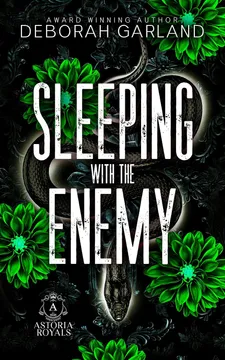
Astoria Royals Series



About the Author




Download PDF
Download EPUB
.epub digital book format is ideal for reading ebooks on phones, tablets, and e-readers.








