



Plot Summary
Ashes and an Irish Offer
After an explosion destroys Gabriel Parisi’s3 mansion and kills his wife,20 Irish crime boss Kieran O’Rourke1 attends her funeral beside his brothers and the Russian Koslov family. The blast has strained Astoria’s uneasy peace: Alexei Koslov’s5 daughter Stasia has been missing for months, and the Russians suspect Gabriel.3
Kieran1 sees Isabella,2 Gabriel’s daughter,2 and his attraction joins a political calculation. He offers Gabriel3 money to retaliate against the Russians, then demands Isabella2 as his bride.
He intends to give Gabriel3 resources for a war that may weaken both rival families while securing an alliance for the O’Rourkes. Kieran’s grief for his dead fiancée, Norah,19 has taught him to distrust love, so he treats marriage as a tool of power.
Kieran’s proposal makes the novel’s power structure intimate from the outset: a woman’s marriage becomes currency in a conflict between men who control families, money, and territory. Yet his motive is not purely strategic. He has already singled Isabella out, so the transaction gives personal desire the cover of political necessity. His unresolved grief helps explain why he chooses possession over vulnerability. Isabella’s absence from his negotiations is significant too: the men bargain over her future before she knows a bargain exists. The resulting marriage begins as a collision between her agency and a system that assumes it can be purchased.
A Bride Taken From Home
Isabella,2 still grieving her mother20 and preparing to return to college, has privately considered marrying Ivan Petrov,6 a low-ranking Russian connected to Alexei.5 She believes the match could protect her from her father’s3 control.
Instead, Lachlan O’Rourke9 barges into her bedroom and forces her downstairs, where Kieran1 finalizes the deal with Gabriel3 for thirty million dollars. Gabriel3 tells Isabella2 she must marry Kieran1 and dismisses her plans for school. When Gabriel3 strikes her, Kieran1 restrains him and takes Isabella2 to his fortified family home.
He promises new clothes and protection but imposes surveillance and confinement. Isabella2 sees the O’Rourke brothers’ loyalty to one another and begins online coursework, while keeping her hopes of independence alive.
Isabella’s competing plans show that she is not simply resisting a forced marriage; she has already been trying to negotiate safety through the choices available to her. Her trust in Ivan is partly romantic, partly practical, and shaped by the absence of her mother, who had once helped her imagine a different future. Kieran’s intervention against Gabriel’s violence distinguishes him from her father, but it does not erase the coercion of his bargain. Safety arrives with surveillance attached. The house therefore offers a real refuge and a real cage at once, leaving Isabella to judge Kieran by what he does after gaining control.
The Knife at the Salon
Kieran1 learns that Isabella2 was involved with Ivan,6 the nephew of the Russian leader he may soon face. He orders his brother Balor10 to investigate Ivan6 and restricts Isabella’s contact with the outside world, while she bargains to keep studying and develops a plan to escape. Their forced wedding begins to acquire personal details: Kieran’s sister Shea12 offers their mother’s13 gown, and Isabella2 insists Kieran1 wear a ring.
During a dress appointment, an armed man disguised as a photographer attacks Isabella.2 Kieran1 shoots him before he can reach her. The killing makes the planned showpiece wedding too dangerous, so Kieran1 and Isabella2 marry the next day at a courthouse. Gabriel3 attends, but Isabella2 has little support beyond Kieran’s1 family.
The attack makes the couple’s private arrangement publicly dangerous, converting marriage from a financial maneuver into a security problem with immediate consequences. Isabella’s ring demand is a small but telling act of authorship: she cannot choose the marriage, but she can shape its visible terms. Kieran’s decision to replace the grand ceremony with a courthouse wedding protects them while depriving Isabella of the celebration she had begun to imagine. The episode also sharpens the story’s contrast between spectacle and safety. Their public image is being constructed for political reasons, even as the violence behind that image forces them to improvise.
A Wedding Without a Bed
On their wedding night, Kieran1 tells Isabella2 that his marriage does not end his visits to a Manhattan sex club. He removes his wedding ring and leaves, while Isabella2 stays behind, unsure whether he has rejected her or simply kept their deal impersonal.
At the club, Kieran’s1 usual partner arrives, but he cannot bring himself to sleep with her. He pays her and sends her away, then returns home. Isabella2 has burned her hand while trying to make warm milk, and Kieran1 cools the burn and treats her gently.
They speak more honestly about their expectations. He still refuses intercourse, fearing he will hurt her, but kisses and touches her until she finds pleasure. The marriage remains unconsummated, yet Kieran’s1 practiced distance has begun to fail.
The club scene exposes the difference between Kieran’s declared rules and his actual capacity to live by them. He claims sexual freedom as part of a business marriage, but cannot perform the separation once Isabella becomes a person rather than a title. His refusal to sleep with her is not yet a declaration of love; it is an attempt to control his own violence and grief. Isabella, meanwhile, learns that care can coexist with domination, a contradiction she neither fully trusts nor dismisses. Their first intimacy matters because Kieran offers pleasure without taking the final step, letting restraint become an unexpected form of attention.
Solo Becomes a Rescue
Isabella2 slips away from her bodyguard18 to attend Samantha’s15 birthday at Solo, a Manhattan club, after Kieran1 has refused permission. A man corners her on the dance floor and raises a hand to strike her. Kieran1 arrives, breaks the man’s face, and takes Isabella2 home.
Anger turns into their first sexual encounter: he spanks her for frightening him, checks that she wants to continue, and then binds and pleasures her before they have intercourse.
Isabella2 discovers that Kieran’s1 roughness can be negotiated rather than merely endured, and Kieran1 finds that he wants her pleasure as much as his own. The night changes the arrangement. Isabella2 moves into his bed, and Kieran1 begins to treat her as a wife he must protect, not only an heir he expects.
The rescue does not make Kieran’s control harmless, but it reveals what drives it: fear of losing Isabella has become more immediate than the political logic that first justified taking her. The club also stages the danger of her partial freedom. She seeks an ordinary night with friends and instead encounters sexual threat, while Kieran’s response both protects her and asserts ownership. Their intimacy becomes a negotiation conducted through clear limits and mutual desire, though it remains entangled with punishment and power. For Isabella, choosing to stay in his bed is not surrendering all agency; it is testing whether she can shape the terms of life inside the arrangement.
A Date Among the Graves
After a Russian attacker kills Kieran’s guard Waylon,22 Kieran1 withdraws into work and violence. When he takes Isabella2 on their first real date, he brings her to a restaurant with photographers, publicly presenting her as his wife, then flies her over the city in his helicopter. The tenderness of the evening is cut short when they return to find Waylon22 has been shot dead.
A week later, Kieran1 takes Isabella2 to her mother’s20 grave, despite his own distress around funerals and burial. Isabella2 finally breaks down, and Kieran1 arranges pink chrysanthemums for the grave and plants the same flowers in their garden. His gestures turn the house into a place that can hold her grief, even as the surrounding war continues.
Kieran’s care becomes most legible when it costs him something. He chooses the cemetery despite the memories it awakens, then attends to the specific rituals Isabella’s father neglected. The flowers carry grief from the grave into the home, transforming remembrance into a shared practice rather than an isolated wound. The date, by contrast, makes their marriage visible to the public, using affection as both personal pleasure and political display. Waylon’s death interrupts that romance with the reminder that violence is not a backdrop Kieran can simply leave outside. The couple’s domestic closeness grows inside, not beyond, the risks of his world.
Friends Turn Into Threats
At a later club outing, Isabella’s friend Ginna16 sits on Kieran’s1 lap and propositions him, assuming his marriage is only a business arrangement. Kieran1 refuses her and tells Isabella2 what happened; Isabella2 ends the friendship. Soon after, Ivan6 appears at the O’Rourke gate carrying rope, a knife, and a drug meant to incapacitate Isabella.2
Kieran’s1 men seize him, but Ivan6 escapes before Kieran1 can question him. The failed intrusion confirms that Isabella2 remains a target and leaves Kieran1 suspicious of the people around her. It also unsettles the couple: Ivan’s6 return revives Isabella’s2 old plans, while Kieran’s1 refusal to name his feelings makes her uncertain whether their growing intimacy means anything beyond sex and possession.
These threats expose how little Isabella can rely on the social world she thought she understood. Ginna treats her marriage as a loophole, while Ivan’s attempt to enter the compound turns an earlier courtship into a physical danger. Kieran’s refusal of Ginna signals loyalty, but his possessive language cannot answer Isabella’s deeper question about whether she is loved. The distinction between protection and emotional commitment grows sharper here. Isabella is increasingly integrated into the O’Rourke household, yet she still has to infer her status from gestures and security decisions rather than from honest conversation.
The Pills Break the Marriage
Isabella2 has secretly continued taking birth control because she wants to finish college before becoming a mother. When Kieran1 finds the pill pack in her purse, he sees the concealment as a betrayal of their original bargain and asks whether she wants to remain married. Isabella2 asks whether he can love her. Still grieving Norah, he says he cannot love anyone, though he cares for Isabella2 and wants an heir.
She hears the future her mother20 feared and chooses to leave rather than live as a valued possession without love. She leaves her rings behind and goes to Samantha’s15 Brooklyn loft. Kieran1 lets her go, then retreats into work instead of asking her to stay. His family realizes how thoroughly her absence has hollowed out the house.
The pills make the couple confront the unequal assumptions beneath their intimacy. Kieran has treated an heir as the purpose of the marriage; Isabella has been trying to preserve time in which she can become a person beyond that role. Her deception is real, but so is the coercive structure that makes her feel unable to state her wishes openly. The argument turns on love because neither can reduce the marriage to its original terms anymore. Kieran’s honesty about grief is also a failure of imagination: he mistakes his present incapacity for a permanent fact, leaving Isabella to protect herself from a future she fears.
Dante’s Basement Coup
While Isabella2 is staying with Samantha,15 her uncle Dante4 lures her outside and drugs her. He holds her in a basement with Ivan,6 intending to force a pregnancy that will secure Ivan’s6 place among the Russians and help Dante4 seize power.
Under pressure, the plan unravels: Dante4 admits he arranged the mansion explosion to kill Gabriel,3 his brother-in-law, and used Stasia’s disappearance to misdirect suspicion. He shoots Ivan,6 then attacks Isabella.2 Kieran1 tracks her to the house with his brothers and rescues her, arriving before Dante4 can rape her.
He kills Dante4 after learning Gabriel3 is dead, and Isabella2 asserts her claim as the remaining Parisi heir. At the hospital, doctors tell them Isabella was pregnant and has miscarried during her captivity.
The conspiracy ties the novel’s political violence directly to Isabella’s body: Dante treats her fertility as a means to transfer power and her disappearance as a way to erase resistance. The revelation also recasts the opening explosion. The apparent conflict between Russians and Italians was manipulated by a family insider seeking the Cosa Nostra throne. Isabella’s survival depends not on being a passive prize but on reading the men around her, resisting, and claiming political authority when the old order collapses. The miscarriage complicates rescue with real loss, preventing the reunion from functioning as a clean return to safety.
A Queen Chooses Home
At the hospital, Kieran1 tells Isabella2 he loves her and apologizes for driving her away; she admits she loves him and chooses to return. They grieve the miscarriage together, and Kieran1 promises that children will remain her choice.
Isabella2 becomes the leading Parisi heir and helps the council appoint Salvatore Gallo as the new don. She continues her education and begins planning a foundation for women affected by domestic violence. Four months later, Kieran1 has added her to the house deed, and she has helped redesign their shared bedroom.
She surprises him with a nursery and ultrasound images showing twins. Their future is no longer defined only by the bargain that began their marriage: Isabella2 has political standing, work of her own, and a family she chose with Kieran.1
The resolution changes the terms of the original bargain rather than pretending it never existed. Kieran’s apology matters because he stops treating Isabella’s consent as already secured by marriage, while her return is presented as a choice rather than a transfer back into custody. Her political role and foundation project extend that choice beyond the bedroom: she can inherit authority and build something directed toward people harmed by the same kind of domestic power she witnessed growing up. The twins offer hope after miscarriage, but the deeper resolution is structural. Isabella’s future is no longer purchased on her behalf; she helps decide what it will contain.
Analysis
Savage King joins a crime-family power struggle to a romance that begins with a transaction. The arrangement is not merely a premise for attraction; it is the mechanism that repeatedly tests whether either character can distinguish care from control. Kieran1 can protect Isabella,2 provide for her education, and take her wishes seriously, yet he initially assumes those acts entitle him to decide her future. Isabella’s2 central resistance is not a simple refusal of intimacy. She desires Kieran,1 but also wants the ability to finish school, choose when to have children, and be loved as a person rather than valued as a bride or future mother.
The novel’s treatment of security keeps that conflict concrete. A bodyguard18 and monitored phone are not abstract symbols of oppression when a real attacker has already reached Isabella.2 The same measures that protect her also limit her, giving Kieran1 persuasive reasons to tighten his control. The tension only changes when protection becomes reciprocal trust rather than unilateral authority. Isabella’s2 skills in negotiating, observing, and making decisions eventually matter within the political world that once treated her as a bargaining chip.
The family plot mirrors this intimate struggle. The mansion explosion appears to start a war between the Russians and Italians, but the hidden plot reveals violence being used to redirect suspicion and capture leadership. That reversal makes the conflict less a clash of fixed factions than a contest over who can manipulate loyalties. Isabella’s2 claim to the Parisi legacy therefore has political weight, not just symbolic value.
The ending does not erase coercion, grief, or loss. Kieran1 must acknowledge the harm caused by his assumptions, and Isabella’s2 miscarriage remains painful even as the couple chooses a future together. Their resolution rests on changed terms: she has a voice in motherhood, a place in leadership, and work of her own. The novel’s strongest version of romance is not that desire cures violence, but that intimacy becomes more credible when the powerful person learns to accept another person’s no, timing, and ambitions.
Review Summary
Savage King receives mixed reviews, averaging 4.05 stars. Many readers praise the steamy chemistry between Irish mafia king Kieran and Italian princess Isabella, enjoying the arranged marriage and age-gap tropes. The audiobook narration by Lexi Evans and Tyler Griffin receives consistent praise. Common criticisms include repetitive references to Kieran's preference for rough sex, the dead fiancée trope, and Isabella's perceived lack of backbone. Some readers found the pacing rushed, while others appreciated the fast-moving plot and the couple's push-pull dynamic.
Characters
Kieran O’Rourke
Grieving Irish kingKieran leads the Irish crime family in Astoria, where he balances legitimate businesses, criminal operations, and the safety of his brothers. After losing his fiancée Norah19, he has treated sex as an outlet and marriage as a political instrument. His authority depends on control, but Isabella2 challenges his belief that tenderness and power cannot coexist. He is protective and often domineering, capable of both real care and serious harm. His central struggle is not simply whether he can love again; it is whether he can stop using grief as proof that intimacy is impossible, and make room for Isabella’s2 choices within a life built around command.
Isabella Parisi
Italian heiress and studentIsabella is the daughter of Cosa Nostra don Gabriel Parisi3 and a college senior studying women’s issues and finance. Her mother’s20 experience in a violent marriage has taught Isabella to value safety, education, and the possibility of leaving an abusive home. She is sheltered but not naïve: she makes plans, negotiates for school and social contact, and learns to read power without surrendering her judgment. Her attraction to Kieran1 complicates her wish for independence, but does not erase it. She wants a life that includes affection and pleasure without reducing her to a wife or mother, and her practical intelligence becomes as important as her courage.
Gabriel Parisi
Cosa Nostra donGabriel is Isabella’s father2 and the head of Astoria’s Italian crime family. He treats family as a political resource and expects Isabella2 to obey, even when his decisions make her life more dangerous. His conduct toward his daughter2 reflects the controlling household she grew up in. He is under pressure from debt, internal loyalties, and the threat of conflict with the Russians, but his authority does not make him a reliable protector.
Dante Caruso
Parisi underbossDante is Gabriel’s3 brother-in-law and underboss, and Isabella’s uncle2. He stands close to the center of the Parisi family’s power, where ambition can be disguised as loyalty. His blunt manner and capacity for violence make him feared, while his relationship to Isabella2 places family obligations beside the criminal world’s calculations. He represents the danger of assuming that shared blood makes a person safe.
Alexei Koslov
Bratva patriarchAlexei is the leader of Astoria’s Russian crime family and the father of Stasia7. Her disappearance has made him volatile and suspicious of Gabriel3. He commands loyalty through power, but the missing-person crisis exposes how fear for a child can distort even a seasoned leader’s judgment. His family’s conflict with the Parisis forms the pressure point Kieran1 tries to exploit.
Ivan Petrov
Russian suitorIvan is Alexei’s nephew5 and a low-ranking member of the Bratva who courts Isabella2 before her marriage to Kieran1. He presents himself as a gentler alternative to the powerful men surrounding her, and Isabella2 considers him a possible route to safety. His position makes him both attractive as a match and vulnerable to the ambitions of older, more powerful figures. Isabella2 must decide whether his kindness is enough to trust him.
Stasia Koslov
Missing Russian heiressStasia is Alexei Koslov’s5 oldest daughter, missing for months before the story begins. Her absence drives the suspicion between the Russian and Italian families and shapes Alexei’s5 behavior. Though she is not present for most of the narrative, her position as a daughter within a criminal dynasty shows how a woman’s safety and whereabouts can become inseparable from political power.
Riordan O’Rourke
Kieran’s strategic underbossRiordan is Kieran’s younger brother1 and underboss, trusted to negotiate, assess threats, and speak plainly when Kieran’s1 judgment is clouded. His education and strategic instincts complement Lachlan’s9 physical force. He is loyal without being merely obedient, and his ability to challenge Kieran1 helps the family function as more than one man’s will.
Lachlan O’Rourke
The family enforcerLachlan is Kieran’s brother1 and the O’Rourkes’ feared enforcer. He acts quickly, enjoys intimidation, and treats violence as a tool of the family’s survival. His roughness can make him alarming, especially to Isabella2, yet his loyalty to his siblings is unquestioned. He represents the blunt force that Kieran’s1 more polished public role tries to contain.
Balor O’Rourke
The family intelligence expertBalor is one of Kieran’s brothers1 and the family’s surveillance and technology specialist. He tracks communications, searches for threats, and turns information into a strategic advantage. His easier manner contrasts with the brothers who handle violence directly, but his work can be just as consequential. He helps reveal how closely the O’Rourkes monitor the people and territory around them.
Eoghan O’Rourke
The family lawyerEoghan is Kieran’s brother1, a highly educated lawyer who manages legal and financial matters for the family. His expertise gives the O’Rourkes a respectable structure around their criminal empire. He prepares the marriage agreement and handles the money involved in Kieran’s deal with Gabriel, showing how paperwork can formalize power as efficiently as a threat.
Shea O’Rourke
The wedding-planning sisterShea is Kieran’s sister1, a party planner who lives in the Hamptons and remains beloved by her brothers. She brings warmth and practical skill to Isabella’s2 rushed wedding, offering family traditions without treating the bride as a mere political asset. Her romantic outlook sometimes clashes with Kieran’s1 guardedness, but her welcome helps Isabella2 imagine a place within the O’Rourke family.
Clara O’Rourke
Kieran’s steadfast motherClara is Kieran’s mother1 and the emotional center of the O’Rourke family. Living with multiple sclerosis, she relies on her family’s care while maintaining a clear sense of what they owe one another. Her own arranged marriage became a model of lasting partnership for Kieran1, even if he has struggled to understand what made it work. She welcomes Isabella2 as family rather than as a transaction.
Fergus O’Rourke
Retired Irish patriarchFergus is Kieran’s father1 and the former head of the O’Rourke family. He handed leadership to Kieran1 but remains a respected source of advice. His marriage to Clara13 began in difficult circumstances and developed into a close partnership, giving Kieran1 a complicated example of what an arranged union might become.
Samantha
Isabella’s loyal friendSamantha is one of Isabella’s oldest friends2, the daughter of a union leader connected to Gabriel’s3 world. She offers Isabella2 a familiar place beyond the O’Rourke compound and remains willing to help when Isabella2 needs support. Their friendship is imperfect, shaped by the danger and divided loyalties of Astoria, but Samantha gives Isabella2 a link to the ordinary young adulthood she is trying to preserve.
Ginna
The jealous childhood friendGinna is one of Isabella’s longtime friends2, raised in the same circle of wealthy and connected families. Her social confidence often shades into entitlement, and she can be dismissive of Isabella2. Her presence shows how old friendships may survive out of habit even after trust has eroded, especially in a world where status and access are treated as prizes.
Patricia
The household’s steady handPatricia manages the O’Rourke household and has cared for the family for decades. She understands its routines and notices the emotional weather that Kieran1 tries to conceal. Her kindness toward Isabella2 is practical, not sentimental: she makes the house livable and offers quiet counsel while respecting the danger surrounding the family.
Christian
Isabella’s assigned guardChristian is assigned to protect Isabella2 as she begins living under Kieran’s1 roof. His role places him between her wish for independence and Kieran’s1 insistence on security. He is caught in the difficult position of guarding someone who resents being watched but faces real threats.
Norah
Kieran’s lost fiancéeNorah was Kieran’s fiancée1, whose death years before the story began reshaped his emotional life. Her memory is not simply an obstacle to a new romance; it is the standard by which Kieran1 judges his capacity to feel. His grief has become part of his identity and his justification for keeping intimacy at a distance.
Maria Parisi
Isabella’s protective motherMaria is Isabella’s mother2, whose hopes for her daughter’s2 education and future continue to guide Isabella2 after she is gone. She understands the constraints of her marriage and tries to prepare Isabella2 for a life with more choices. Her memory links Isabella’s2 ambition to the difficult lessons of the family home.
Ewan Quinlan
The family’s investigatorEwan is a private investigator whose firm provides intelligence and security support to the O’Rourkes. His professional relationship with Kieran’s1 family gives them access to information beyond their own network. He is a trusted ally during the investigation and the effort to protect Isabella2.
Waylon
Kieran’s fallen bodyguardWaylon is one of Kieran’s guards1, responsible for protecting the family and its household. His work places him in the same violence that threatens the O’Rourkes, and his presence reminds Kieran1 that security has a human cost.
Plot Devices
The marriage bargain
Power exchanged for a brideKieran1 offers Gabriel3 money to strengthen the Parisis family against the Russians, but makes Isabella2 part of the deal. The bargain gives the O’Rourkes a political alliance and places Isabella2 inside Kieran’s1 household, where the romance develops under unequal conditions. It also establishes the central conflict between a marriage arranged to serve dynastic interests and Isabella’s2 demand to shape her own life. As Kieran1 and Isabella2 grow closer, the original terms become increasingly inadequate to describe their relationship.
Stasia’s disappearance
A missing heir fuels suspicionThe absence of Alexei Koslov’s daughter7 creates a vacuum of information that the Russian and Italian families fill with accusation. Kieran1 exploits the resulting tension, believing Gabriel3 may be implicated and hoping the rivals will weaken each other. The disappearance gives the crime plot its public mystery and pressures the central marriage from outside. Its deeper role becomes clear only as hidden ambitions and the mansion explosion are investigated.
The guarded household
Safety that resembles captivityBodyguards, tracked phones, cameras, and restricted movement protect Isabella2 from credible threats, but they also give Kieran1 power over her daily life. The security system is both practical and psychologically charged: Isabella’s2 home was destroyed, a man attacks her, and later someone attempts to abduct her. Each new danger strengthens Kieran’s1 case for control, while Isabella’s2 insistence on education and social freedom tests how much trust the marriage can bear.
The birth-control secret
A private choice tests consentIsabella2 continues taking birth control because she wants to finish college before having a child, while Kieran1 believes an heir is part of their agreement. Her concealment gives her time and a measure of control over her body, but the discovery becomes the breaking point in their marriage. It exposes the gap between consent to intimacy and consent to motherhood, then contributes to their separation. The story later complicates the secret with an unplanned pregnancy and miscarriage.
Norah’s memory
Grief blocks new attachmentKieran’s1 loss of Norah19 shapes his expectations of love, sex, and marriage. He treats rough encounters as a way to manage pain and assumes that a later marriage can only be political. Isabella’s2 closeness makes those assumptions harder to maintain, but he repeatedly uses his grief to deny her the emotional commitment she asks for. The memory functions as an interior obstacle, not a rival for affection, forcing Kieran1 to distinguish honoring the past from refusing a future.
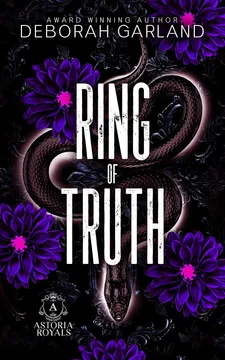
Astoria Royals Series



About the Author
Other books by Deborah Garland




Download PDF
Download EPUB
.epub digital book format is ideal for reading ebooks on phones, tablets, and e-readers.








