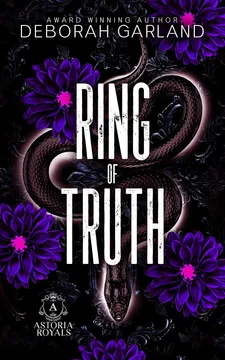


Plot Summary
A Princess Runs
At twenty-one, Anastasia Koslov1 learns her father, Alexei,6 intends to marry her to Luka Gideon, a powerful Boston Bratva leader, to gain soldiers for a war against the Irish and Italian mobs. Dante Caruso,13 an Italian underboss, secretly gives her cash, a burner phone, and false identification, though he threatens her when she refuses his sexual demand.
Her half-sister Katya5 helps stage a struggle in Anastasia’s bedroom so Alexei6 will suspect a kidnapping, then watches her slip out through a window. Anastasia1 flies to Las Vegas under the name Ana.1 There, after losing her money to pickpockets, she meets Cormac O’Rourke,3 an Irish doctor and twin to Darragh.2 A lucky roulette win gives her a place beside him.
Anastasia’s escape begins as an act of self-preservation, but the staged kidnapping shows how thoroughly her choices have been shaped by the world she is fleeing. Even her sister’s help must take the form of a useful lie. The roulette win offers a fleeting fantasy that luck can replace protection, while Cormac appears safe because he is a doctor who has also left his family’s criminal life. That first impression matters: Anastasia is not simply reckless. She is reaching for ordinary freedom with the limited tools her upbringing has allowed her.
The Crash Ends the Run
The first months with Cormac3 feel exciting, but gambling debts, alcohol, and drugs turn their life into a cycle of poverty and control. He loses his medical career, sells Anastasia’s1 possessions, keeps her in a cheap motel, and leaves her without a phone or access to care. When she discovers she is pregnant, he refuses to take her to a doctor.
She stops using drugs, but Cormac3 continues, sometimes tying her to the bed while he leaves to deal drugs. At eight months pregnant, Anastasia1 steals their car to escape, though she cannot drive. Cormac3 jumps onto the hood and forces his way inside; their struggle sends the car rolling. Police find drugs and arrest them both, while Anastasia1 fears the baby may be hurt.
The car crash makes visible what the motel years have concealed: Cormac’s dependence is not private weakness but a system that controls Anastasia’s body, movement, and access to help. Her escape attempt is compromised by the very deprivation that has kept her trapped; she has no phone, no medical support, and no driving skill. The pregnancy intensifies the stakes without instantly turning her into a confident mother. She remains frightened and emotionally detached from the baby, a credible response to coercion and survival stress rather than a lack of care.
The Other O’Rourke
A Las Vegas detective contacts Darragh O’Rourke,2 Cormac’s3 identical twin, a pediatric surgeon raising his seven-year-old daughter, Sophie,4 alone. Darragh2 flies in expecting to retrieve his brother, but at the arraignment he learns the pregnant woman beside Cormac3 is Anastasia,1 missing from Astoria for more than two years.
Her lawyer describes a woman held against her will. Darragh2 recognizes her, pays her bail, and leaves Cormac3 in custody. Outside the courthouse, Anastasia1 panics when Darragh2 takes her from the motel toward the airport.
He explains that he is bringing her to Seattle, not Astoria, and argues that the baby shares his identical twin’s DNA. He takes responsibility for her care, though he initially intends to claim the child and send Anastasia1 away afterward.
Darragh’s choice is both rescue and appropriation. He sees the coercion Cormac inflicted, yet immediately frames the child as his family’s responsibility and assumes he can decide where Anastasia belongs. His medical training and paternal devotion make him attentive to physical danger, but they do not erase the power imbalance between a wealthy man with legal connections and a woman who has lost nearly every resource. Anastasia’s fear of the airport is therefore essential: being helped does not yet feel different from being controlled.
Sophie’s Emergency
Darragh2 brings Anastasia1 to his Seattle home, where Sophie4 is confused by the stranger staying upstairs and distressed that her nanny, Olivia,19 has been fired. Darragh2 tells Anastasia1 to keep away from his daughter, while Anastasia1 tries to recover her strength and understand her new confinement.
At Sophie’s4 birthday party, Darragh2 forgets the child’s emergency allergy medication and rushes home for it. Anastasia,1 realizing the EpiPen is still in the house, takes Sophie’s4 phone and an Uber to bring it.
She arrives as Sophie4 is choking after eating the wrong cupcake. Darragh2 freezes, unable to work the injector; Anastasia1 takes it from him and gives Sophie4 the shot, then calms her breathing. Sophie4 recovers, and Darragh’s2 distrust begins to give way.
The crisis reverses the household’s assigned roles. Darragh has the expertise and authority, but fear for his daughter disables him; Anastasia, treated as a risk, becomes the person who acts. Her competence is not abstract proof of goodness. It is a precise intervention, followed by the steady emotional work of helping Sophie breathe and feel safe. The rescue also gives Anastasia a place in the family through care rather than lineage. Darragh’s dependence on her begins before either of them is ready to name what it means.
A Letter to Katya
As Anastasia1 regains her appetite and begins helping with Sophie,4 she and Darragh2 circle between attraction and distrust. She learns that Dante Caruso,13 who helped her flee, has been killed by Darragh’s brother7 Kieran,7 and that the old Italian leadership has changed.
Desperate to know whether Katya5 is safe, she writes to her sister’s hidden college mailbox. Darragh2 catches her trying to mail the letter and removes the stamp, arguing that contact could expose them and put Katya5 at risk.
He then reveals that Katya5 married Lachlan,8 the feared Irish enforcer, after he intervened when her arranged groom beat her. Anastasia1 is shaken by how much life continued without her. Darragh2 says Katya5 is safe, but Anastasia1 still feels trapped and wants access to her trust fund.
The letter is a small object carrying a large conflict: Anastasia needs a witness to her survival, while Darragh believes secrecy is the only protection available. His refusal echoes the control she escaped, even when his motives are protective. The revelation about Katya also unsettles Anastasia’s assumption that leaving preserved her sister from the family’s violence. Both women have been forced to negotiate safety through powerful men, but Anastasia’s longing to reconnect makes clear that survival without relationships has become another form of isolation.
A Family Takes Shape
Darragh2 takes Anastasia1 to the hospital, where an ultrasound confirms she is carrying a boy, then buys her maternity clothes and includes Sophie4 in the appointment. Sophie4 asks who the baby’s father3 is, and Anastasia1 gives a protective lie rather than naming Cormac.3
Later, Darragh2 kisses her, and their attraction becomes a relationship through prenatal classes, private tenderness, and sex. Anastasia1 begins caring for Sophie4 while Darragh2 works, and Sophie4 grows attached to her.
The couple discuss Anastasia’s1 wish to flee to Canada and Darragh’s2 desire to raise the baby; he offers access to his resources, while she insists on keeping her son. Darragh2 starts divorce proceedings with his absent wife, Ginnifer,12 and asks Anastasia1 to stay, not merely until birth but as part of their family.
Domestic routines do more than soften the romance; they let Anastasia test whether care can be reciprocal rather than conditional. She cooks, tends Sophie, and makes plans, while Darragh shares decisions and begins disentangling himself from a marriage that has long existed only on paper. Yet the central question remains unresolved: he initially treats the baby as his because of shared DNA, while she insists motherhood does not cancel her autonomy. Their intimacy becomes meaningful when it grows alongside negotiation, not when desire alone is mistaken for consent.
Cormac Comes Back
Before the baby arrives, Cormac3 breaks into Darragh’s2 house and reaches Anastasia’s1 bedroom in the dark. He restrains her, presses a knife to her throat, and accuses her of becoming pregnant deliberately to make him keep her. Darragh2 enters with a gun, but Anastasia1 warns him that Cormac3 may overpower him. She elbows Cormac,3 strikes him, and takes the knife before a sudden abdominal pain drops her to the floor.
Darragh2 checks her and finds no bleeding, but the attack leaves her cramping and frightened. Cormac3 escapes through the window after saying he fears Alexei6 will kill him. Darragh2 secures the house, checks Sophie,4 and calls his brother Riordan,11 finally admitting he will no longer protect Cormac3 from consequences.
Cormac’s return destroys the fragile belief that distance alone can keep the past contained. He recasts his own abuse as Anastasia’s manipulation, an inversion that protects him from recognizing the damage he has done. Yet Anastasia is no longer only fleeing: she fights back and takes the weapon, even as her body’s pain reveals the cost of the struggle. Darragh’s decisive break with his twin is also a break with his old role as enabler. Protecting Anastasia now requires refusing to confuse loyalty with concealment.
James Patrick Arrives
A few days later, Anastasia1 goes to Darragh’s2 hospital after Sophie4 visits a friend, hoping to find comfort after Cormac’s3 attack. She sees Darragh2 speaking warmly with a female colleague and assumes he has already replaced her; before she can leave, her water breaks. At the maternity unit, she is frightened by the pain and asks for Darragh,2 who has gone home and missed the first calls.
He rushes back when the hospital reaches him and takes charge as the baby crowns. Darragh2 delivers a healthy boy himself, then places him on Anastasia’s1 chest. She asks for his grandfather’s name, and they name him James Patrick O’Rourke. Darragh2 puts his own name on the birth certificate, making a public commitment to raise the child as his son.
Anastasia’s mistaken reading of Darragh’s conversation shows how abuse leaves suspicion ready to fill every gap. The misunderstanding is resolved not by a romantic explanation but by the urgency of labor and Darragh’s physical presence at the birth. His role as surgeon makes him capable, but his emotional response is that of a father claiming responsibility. Naming the child after Darragh’s grandfather joins two family histories in a moment that is intimate and politically charged, even before either family has formally accepted the baby.
The Safe Room Opens
One week after James Patrick’s birth, Ana1 and Darragh2 spend Thanksgiving with Sophie4 and the newborn. Several black SUVs arrive outside, and armed men step out. Darragh2 orders Sophie4 to the safe room he built for emergencies and sends Ana1 with her and the baby, promising to protect them.
He arms himself downstairs and calls his brothers through a secure family phone. They identify the attackers as likely mercenaries rather than Alexei’s6 usual Bratva men; police arrive, and the SUVs withdraw.
Darragh2 remains alone in the house while his family prepares to fly from New York. Inside the safe room, Sophie4 reveals she has lost her EpiPen. Then Ana1 realizes the Thanksgiving stuffing may have contained pecans, a dangerous possibility because Sophie4 has a severe nut allergy.
The safe room, introduced earlier as a precaution Darragh hoped never to use, turns the family’s domestic shelter into a site of confinement. Darragh’s instinct is to divide protection by gender and age, placing himself outside with the danger, while Ana has to manage the emotional consequences inside. The missing injector and possible nut exposure give the siege a second, intimate threat: even if the armed men stay outside, Sophie may still need urgent care. The scene makes safety depend on both security planning and the small details of ordinary caregiving.
Cormac Chooses His Twin
While Darragh2 searches the house for supplies, a masked gunman smashes through the kitchen door and asks for Anastasia.1 Cormac3 appears behind him and shoots the intruder before the man can attack Darragh.2
He explains that the Las Vegas Cosa Nostra discovered Anastasia’s1 identity and hired an extraction team to claim the bounty Alexei6 had placed on finding her. Cormac3 had escaped rehabilitation with their help, intending to warn Darragh2 rather than hand Anastasia1 over. More attackers fire through the windows.
Cormac3 shields his twin and shoots back, but Darragh2 is hit in the arm. In the safe room, Cormac3 tends the wound while Ana1 worries that Sophie’s emergency medicine is missing. She decides she must leave the room to retrieve another EpiPen from the child’s4 bag.
Cormac’s return complicates the simple division between dangerous brother and reliable brother. He has made a choice that costs him standing with the mob and risks his life, though it cannot undo his captivity of Anastasia. His explanation exposes how the original disappearance became valuable to criminal outsiders: a frightened escape was converted into a bounty opportunity. Meanwhile, the wound to Darragh strips the protector role of its invulnerability. Ana’s decision to leave the safe room is not a romantic gesture; it is the necessary, risky action of someone responsible for a child.
The O’Rourkes Arrive
Before Ana1 can go for the medicine, Darragh’s2 family reaches the house and opens the safe room. Lachlan,8 the Irish enforcer, arrives with Katya,5 and Anastasia’s1 relief at seeing her sister breaks through the fear of the siege.
Katya5 confirms she is happy with Lachlan8 and expecting a child, easing Anastasia’s1 guilt over leaving her behind. Darragh’s2 brothers secure the property, and the surviving attackers are no longer a threat. Ana1 also learns the Vegas syndicate had offered Cormac3 money to retrieve her, while Cormac3 says he acted to survive and to warn them.
The family recognizes that Seattle cannot protect them from the continuing pursuit. Darragh2 agrees to return to Astoria, where they must face Alexei6 and settle the conflict before more people are targeted.
Katya’s arrival answers Anastasia’s private fear that escape had abandoned her sister to a worse fate. Their reunion offers proof of survival, but not proof that the family system has become harmless; Katya’s safety depends partly on Lachlan’s protection. The broader O’Rourke family also changes Darragh’s isolation into collective responsibility. He had tried to keep his daughter and partner outside the criminal world, yet the siege demonstrates that distance cannot neutralize inherited alliances. Returning to Astoria becomes a chosen confrontation rather than a surrender to the past.
A Family Makes Terms
At a family meeting, Kieran,7 head of the O’Rourkes, declares that the conflict with Alexei6 must end. Anastasia1 and Katya5 decide to tell their father the truth about their departures, while Darragh2 insists he will stand beside Ana1 and claim James Patrick as his own. Eoghan9 reveals that Balor10 has accessed Anastasia’s1 trust fund, but she rejects the money as blood-tainted.
Cormac3 accepts responsibility for his actions and admits that saving Darragh2 does not erase what he did. His family sends him to Las Vegas with Eoghan9 to resolve his outstanding case, then onward to a harsh training program in Ireland. Darragh2 signs a marriage license for Anastasia1 on the flight east. At the O’Rourke home, the family welcomes Ana,1 Sophie,4 and the baby.
The family meeting turns private choices into explicit terms. Anastasia refuses to let money become the price of her freedom, while Darragh’s marriage offer links love to public protection in a world where kinship is political. Cormac’s accountability matters because his twin stops making excuses for him; rescue is not treated as absolution. At the same time, the O’Rourkes’ response remains recognizably coercive, assigning discipline through their own institutions rather than ordinary law. The family can protect, but it also expects obedience.
Ana Faces Alexei
At Alexei’s6 estate, Anastasia1 admits she ran away and staged her kidnapping to escape the marriage he planned. She reveals that Dante13 helped her, that she had left before, and that Darragh2 is now her husband; she presents James Patrick as their son, though Alexei6 has evidence that Cormac3 fathered him.
Lachlan8 blocks Alexei6 from punishing Cormac3 without O’Rourke consent. Anastasia1 then offers a path forward: she wants the child recognized as Alexei’s heir, but only if Alexei6 earns a relationship with him, and she asks to become underboss rather than remain a decorative princess.
She supports Sergei for enforcer and agrees that Maksim16 must be removed. Alexei6 accepts the baby as his heir and agrees to train Anastasia,1 opening the way to a new leadership arrangement.
Anastasia’s return is not a simple reconciliation. She tells the truth about her deception while refusing to surrender the authority she has gained through surviving its consequences. Her proposal to become underboss transforms inheritance from a passive birthright into a responsibility she intends to learn. Alexei’s acceptance of the baby cracks his fixation on male lineage, but his willingness to teach Anastasia remains conditional and politically strategic. The scene’s emotional force comes from her ability to address her father without returning to the obedient role he designed for her.
A Different Kind of Queen
A month later, Anastasia1 is training in Krav Maga with Lachlan8 and serving as Alexei’s6 underboss. After Maksim16 and his loyalists are removed, Sergei leads the Bratva alongside her, and Alexei6 begins repairing his relationship with his daughter.
Anastasia1 and Darragh2 have settled into a guarded home in Astoria with Sophie4 and James Patrick. Darragh2 works as a pediatrician, while Anastasia1 balances family life with her new responsibilities; Sophie4 attends school and looks forward to Anastasia1 becoming her Brownie troop leader.
Darragh2 and Anastasia1 marry and raise the children together, though their criminal families remain part of their daily reality. The final scene brings a call about Eoghan’s9 growing trouble in Las Vegas, suggesting that the family’s peace is real but never entirely secure.
The ending refuses the easy equation of freedom with escape. Anastasia returns to the place she fled, but now she has a chosen partner, a role with authority, and the skills to defend herself. Her underboss position does not cleanse the Bratva; it gives her a chance to redirect an institution built around male succession and coercive marriage. Darragh’s life also changes through integration rather than retreat: he keeps his medical vocation while accepting family obligations he once rejected. Their household offers care and routine, but the final warning about Eoghan preserves the story’s central tension between domestic attachment and inherited violence.
Analysis
Ring of Truth makes safety a contested form of power. Alexei6 calls an arranged marriage protection for his daughter and a strategy for his organization; Cormac3 offers Anastasia1 escape from Astoria, then controls her money, movement, and medical care; Darragh2 rescues her but initially assumes he can decide where she lives and who raises her child. The novel distinguishes care from possession not by making its protective men harmless, but by showing whether they can listen, share authority, and accept consequences. Anastasia’s1 growth is therefore not a retreat from family or danger. She returns to the Bratva, asks to lead it, and accepts training because she wants influence over the system that once treated her as a bargaining chip.
The story’s romance depends on an unstable resemblance. Darragh2 looks like Cormac,3 and the baby’s identical-twin parentage makes the brothers biologically difficult to separate. Yet the novel insists that identity is also conduct. Cormac’s3 history of neglect cannot be erased by DNA, while Darragh’s2 claim becomes emotionally persuasive through feeding Anastasia,1 caring for Sophie,4 and remaining present at the birth. This does not make Darragh’s2 early control benign. His development requires moving from claiming the child as an heir to building a family through responsibility and commitment.
Children sharpen the ethical stakes. Sophie’s4 allergy forces adults to act precisely, and her fear that a new baby will replace her demands reassurance rather than strategic silence. James Patrick’s dual inheritance could renew the feud between the Irish and Russian families, but Ana1 and Darragh2 try to make kinship a bridge instead of a weapon. Their eventual household is not outside organized crime; it is an attempt to create tenderness and choice inside it. The ending offers no fantasy that violence has vanished. Instead, it gives Anastasia1 a voice in the structure that shaped her life, and makes that agency the condition of a more durable peace.
Review Summary
Ring of Truth receives predominantly positive reviews, averaging 4.24/5 stars. Readers praise the chemistry between Darragh and Ana, the heartwarming dynamic with Sophie, and the blend of mafia suspense with tender romance. Many highlight the audiobook's exceptional full-cast narration as elevating the experience. Critical reviews note pacing issues, underdeveloped character growth, and insta-love elements feeling rushed within an accelerated timeline. The pregnancy and single-father tropes resonate strongly with fans, while Lachlan and the broader O'Rourke family are frequently celebrated as compelling supporting characters.
Characters
Anastasia Koslov
Runaway Bratva princessAnastasia, often called Ana, is the daughter of Alexei Koslov6, the Bratva pakhan of Astoria. Raised as a protected showpiece rather than prepared for independent life, she is clever, restless, and acutely aware of the difference between affection and possession. Her wish to choose her own future drives her to flee an arranged marriage, but her limited experience makes her vulnerable to people who offer escape without respecting her agency. Under pressure, she can be impulsive and evasive; beneath that, she is observant, resourceful, and capable of practical courage. Her relationships with her younger half-sister Katya5 and with Darragh2 reveal her longing for a family that does not treat love as a transaction.
Darragh O’Rourke
Surgeon outside the mobDarragh is an Irish American pediatric surgeon and the identical twin of Cormac3. He has built a life in Seattle far from his brothers’ criminal organization, raising his daughter Sophie4 after his wife leaves the country. Responsible, controlled, and deeply protective, he often mistakes careful planning for emotional security. His devotion to Sophie4 is genuine, but it can make him overprotective and slow to recognize when another person needs choice as well as shelter. Anastasia1 unsettles his carefully managed solitude. His medical vocation, paternal instincts, and family loyalty pull him in different directions, making him a man who wants to help without becoming the kind of captor he despises.
Cormac O’Rourke
Darragh’s troubled twinCormac is Darragh’s2 identical twin, a former doctor whose gambling, alcohol use, and drug addiction erode his career and judgment. Where Darragh2 relies on routines and restraint, Cormac seeks excitement and immediate escape, often leaving others to absorb the consequences. His charm initially makes him seem like a fellow outsider to the family business, and that resemblance to Darragh2 complicates Anastasia’s1 ability to judge him. He remains tied to his twin by shared history and instinctive loyalty, even as shame and fear distort his decisions. Cormac’s medical training and his criminal inheritance coexist uneasily, exposing how ability does not guarantee self-control or compassion.
Sophie O’Rourke
Darragh’s watchful daughterSophie is Darragh’s2 seven-year-old daughter, a bright child who loves games, parties, Brownies, and time with her father. Her severe nut allergy requires adults to plan carefully around food, but she is more than a reason for Darragh’s2 vigilance. Sophie notices changes in her household and asks direct questions when adults conceal what is happening. Her mother’s12 absence has made her sensitive to the possibility of being displaced, particularly when new people enter her father’s life. She responds to Anastasia1 through concrete signs of care, from help with a crisis to shared routines, while retaining a child’s need to know that her father’s love is not being divided away.
Katya
Ana’s younger half-sisterKatya is Alexei’s6 younger daughter, born to another woman and brought into the Koslov household as a child. She is a talented dancer who studies at a performing arts school and shares a close, confidential bond with Anastasia1. More practical than her sheltered upbringing might suggest, Katya recognizes that her sister’s choices are narrowing and helps her create an escape plan. Her tenderness does not make her passive: she can read danger, make decisions quickly, and preserve hope through small acts of connection. Her relationship with Anastasia1 gives the story an emotional counterweight to its rival families, showing how sisterhood can offer loyalty without demanding obedience.
Alexei Koslov
Bratva father and pakhanAlexei is Anastasia1 and Katya’s5 father and the pakhan of the Astoria Bratva. He treats marriage and family ties as instruments of power, carrying forward a tradition in which children are expected to serve alliances. The deaths of his sons and the loss of his wife have left him with a severe, controlling manner, though he presents control as care. He is proud of bloodlines and expects loyalty, but his daughters’ lives do not fit neatly into his calculations. Alexei’s authority is sustained by fear and by the discipline of his organization; his emotional reserve makes it difficult for his children to know whether love will ever outweigh political usefulness.
Kieran O’Rourke
Irish family kingKieran is Darragh2 and Cormac’s3 older brother and the head of the O’Rourke organization. He is a decisive leader who treats family protection as an absolute obligation, though his authority can become intimidating. He weighs personal loyalty against the danger one person’s actions create for the whole family. Darragh’s2 distance from the criminal world does not erase their bond, and Kieran’s response to a crisis shows the weight he gives to kinship. His domestic happiness sits beside a capacity for violence, making him a figure who embodies the family’s promise of safety and the cost of belonging to it.
Lachlan O’Rourke
Feared Irish enforcerLachlan is a powerful O’Rourke enforcer whose reputation makes him frightening to rivals and difficult for outsiders to approach. He is physically imposing and accustomed to solving problems through force, yet he is also alert to the people he considers family. His presence links the Irish organization to the Koslov household, and his choices carry consequences well beyond his own loyalties. Lachlan’s bluntness can conceal a more attentive nature, especially around children and vulnerable relatives. He represents the kind of protection Anastasia1 once feared and now has to assess on its actual conduct.
Eoghan O’Rourke
Family lawyer and strategistEoghan is one of Darragh’s2 older brothers, a Harvard-trained lawyer who handles legal and financial problems for the family. He is strategic, direct, and far less harmless than his professional polish suggests. Eoghan sees family trouble as something to contain before it becomes public, and his decisions often turn on what will protect the O’Rourkes in the long term. He respects loyalty but does not confuse it with indulgence. For Darragh2, Eoghan is both a resource and a reminder that his family’s legal solutions rarely resemble ordinary justice.
Balor O’Rourke
Family security architectBalor is Darragh’s2 brother and a technically skilled member of the O’Rourke family. He handles surveillance, security systems, and the discreet information networks that help the family anticipate threats. His work is often invisible, but it shapes what the others know and how quickly they can respond. Balor’s calm, methodical approach contrasts with the more physical forms of protection used by his brothers. He embodies the family’s modern reach, where information can be as consequential as weapons.
Riordan O’Rourke
Family underbossRiordan is one of Darragh’s2 older brothers and serves as underboss within the O’Rourke organization. He is a practical decision-maker who helps turn Kieran’s7 authority into action, managing crises and negotiations across the family’s network. His loyalty is firm, but he understands that protecting relatives requires planning rather than impulse alone. Riordan’s presence gives Darragh2 a direct connection to the world he has tried to leave behind, even when Darragh2 would rather handle matters himself.
Ginnifer O’Rourke
Darragh’s absent wifeGinnifer, usually called Ginny, is Darragh’s2 wife and Sophie’s4 mother. She left the United States for a Red Cross assignment and remained away, creating a family arrangement that Darragh2 continued to treat as temporary long after hope had faded. Ginny’s absence shapes Darragh’s2 loneliness and his intense investment in being a dependable father. Her choices expose the difference between formal marriage and a functioning relationship, a distinction Darragh2 must confront before building a new life.
Dante Caruso
Italian underboss and escape brokerDante is an underboss in the Italian Cosa Nostra and a political rival of the Koslov6 Bratva. He helps Anastasia1 escape because her disappearance weakens Alexei’s6 plans, not because he is a trustworthy ally. His offer of money and false documents comes with a degrading demand, revealing the transactional limits of his assistance. Dante’s role shows that Anastasia’s1 freedom is useful to other people’s power struggles, even when she believes she is acting independently.
Taryn O’Leary
Las Vegas police contactTaryn is a Las Vegas detective with Irish roots and a professional connection to Darragh2. He alerts Darragh2 when Cormac3 is arrested and helps him understand the charges and the local case. Taryn’s access to police information gives Darragh2 a route into a crisis unfolding far from Seattle.
Yulia
Koslov household protectorYulia is the Koslov household’s housekeeper and a steady, protective presence in the sisters’1 childhood. Anastasia1 trusts her to look after Katya5 when she flees. Her quiet care provides the sisters with a glimpse of maternal tenderness in a home otherwise governed by power and fear.
Maksim
Koslov enforcerMaksim is Alexei’s6 enforcer and a senior figure in the Bratva’s operations. His presence represents the hard-edged authority surrounding the Koslov family, as well as the influence Anastasia1 will need to understand if she is to participate in its leadership.
Isabella
Italian mafia daughterIsabella is the daughter of an Italian mafia leader and is connected to the O’Rourke family through marriage. Her history helps establish how the Italian and Irish organizations are bound together by alliances as well as rivalries. She is also part of the wider family circle Anastasia1 encounters after returning to Astoria.
Priscilla O’Rourke
Surveillance specialistPriscilla is Riordan’s11 wife and a capable member of the O’Rourke network. She works in surveillance while managing her own family life, demonstrating that the women around the brothers contribute expertise rather than simply standing outside the organization’s affairs.
Olivia
Sophie’s former nannyOlivia is Sophie’s4 nanny in Seattle. She provides routine childcare while Darragh2 works and is familiar with Sophie’s4 schedule, food needs, and school life. Her departure leaves Darragh2 without the buffer that has helped him manage work and fatherhood.
Plot Devices
The Staged Kidnapping
A cover for escapeAnastasia1 and Katya5 overturn furniture and break a mirror so Alexei6 will believe Anastasia1 was abducted rather than choosing to leave. The false story gives Anastasia1 a head start and protects Katya5 from immediate suspicion, but it also makes Anastasia’s1 disappearance a mystery in Astoria. Later, the staged kidnapping feeds rumors, complicates the O’Rourkes’ understanding of her past, and allows criminal rivals to treat her as a valuable missing heiress. A practical deception meant to prevent one forced marriage grows into a danger that follows Anastasia1 across the country.
Identical Twin DNA
Kinship blurs paternityBecause Darragh2 and Cormac3 are identical twins, their genetic material is effectively indistinguishable in the way that matters to the family’s claim on the baby. Darragh2 uses this biological fact to justify treating the unborn child as his responsibility, even though Cormac3 fathered him. The device creates a conflict between genetic evidence and lived parenthood: Darragh2 can plausibly claim the child, but Anastasia1 remains the child’s mother1 and resists being separated from him. The shared DNA makes the brothers’ rivalry intimate and makes the baby a focus of both personal love and criminal succession.
The Koslov Heir
A baby becomes political leverageAnastasia’s son carries both O’Rourke and Koslov6 blood, making his birth a private family event with public consequences. Alexei6 values male heirs as successors to the Bratva, while the O’Rourkes see the child as part of their own family. The threatened marriage to Luka Gideon, the bounty surrounding Anastasia1, and Darragh’s2 wish to claim the baby all converge on this bloodline. Anastasia1 eventually tries to change the meaning of inheritance by seeking leadership herself and insisting that Alexei6 must earn a relationship with his grandson rather than simply claim him.
Darragh’s Safe Room
Shelter becomes a crucibleDarragh2 built a secure room in his Seattle home and taught Sophie4 to use it, presenting it to her as protection from severe weather. Its hidden entrance, reinforced door, supplies, and escape route make it a practical defense against attack. When armed men surround the house, the room gathers Anastasia1, Sophie4, and the newborn in one place while Darragh2 stays outside to protect them. The secure enclosure also exposes the limits of Darragh’s2 plans: a missing EpiPen and possible food allergy threaten Sophie4 from within, and the family must decide when someone should risk leaving the room.
Sophie’s EpiPen
Care becomes decisive actionSophie’s4 severe nut allergy requires Darragh2 to pack and monitor an emergency injector. Its first major use shows Anastasia1 taking control when Darragh2 freezes during Sophie’s4 reaction at a birthday party. Later, forgetting or losing an injector raises the stakes inside the safe room, where food may have exposed Sophie4 to pecans. The device is not merely a medical prop: it measures how much trust Darragh2 places in Anastasia1 and gives her concrete responsibility for his daughter. It also shows that a family can face danger through ordinary oversights as well as armed enemies.
Astoria Royals Series


About the Author





Download PDF
Download EPUB
.epub digital book format is ideal for reading ebooks on phones, tablets, and e-readers.








