

Plot Summary
Prologue
In therapy thirteen months after leaving New York, Shana Merchant tries to explain why a new murder case has reopened an old wound. A serial killer using the name Blake Bram has killed three women, each linked to him through a dating app. His profile says he came from Swanton, Vermont, Shana’s hometown.
The moment she sees his face, she knows she has seen him before, though she keeps that recognition to herself. The case will force her to confront what happened when Bram took her, and why she still cannot separate the investigation from her own survival.
The frame makes investigation inseparable from memory: Shana is not simply recounting a case but choosing how close she can come to a trauma she has spent months containing. Her withheld recognition establishes a gap between what she knows and what she can bear to say. That gap will matter again on Tern Island, where she must decide whether to trust her instincts or distrust them as symptoms. The prologue also links the novel’s two mysteries through Shana’s hometown, suggesting that the past is not safely distant just because she has changed where she lives.
The Island Without a Body
Thirteen months after the Bram case drove her from New York, Shana is working for the New York State Park Police near Alexandria Bay. A storm-bound call reports Jasper Sinclair missing from his family’s private island, Tern. His grandmother and relatives insist he was murdered, though no body has been found.
Shana and local investigator Tim Wellington cross the flooding St. Lawrence in a small police boat, risking shoals and waves to reach the island. The caretaker, Philip Norton, says Jasper’s girlfriend found his bed soaked in blood, then the family searched without success. The storm has blocked backup officers, leaving Shana and Tim alone with a wealthy household, a missing man, and evidence that cannot yet explain how he vanished.
The island turns a routine jurisdictional boundary into physical confinement. Shana cannot summon the resources she expects, and the weather makes every delay consequential. Her return to investigative work is therefore tested before she has time to feel ready. The absence of a body also withholds the certainty that ordinarily anchors a homicide inquiry. The family’s insistence that Jasper is dead competes with the official uncertainty, while Shana’s experience makes her read the blood as proof. The case begins in precisely the space where procedure and instinct should correct one another, but neither has enough support to do so.
The Room Above the River
In Jasper’s bedroom, Shana finds a large bloodstain on the bed, a smear on the pillow, two phones left charging, and a faint water ring on a nightstand. The windows are shut, the balcony offers no easy descent, and Jasper’s body is nowhere in the house.
His ninety-one-year-old grandmother, Camilla, refuses to leave the room until Shana promises to protect his belongings. Downstairs, the family waits with Jasper’s bloodied girlfriend, Abella Beaudry, while his brother Flynn remains behind a locked door.
Shana notices that several relatives seem more irritated than devastated. Tim tries to reassure them, but the arrival of state police is delayed by a boating rescue. With the scene secured and the witnesses separated, Shana begins individual interviews.
The house’s polished order sharpens rather than softens the violence: pristine rooms surround a bed that refuses to fit the family’s carefully managed image. Shana reads objects as small breaches in that image, especially the unexplained water ring and abandoned phones. Camilla’s insistence on preserving Jasper’s possessions hints at a family in which inheritance and intimacy are already entangled. Meanwhile, the relatives’ restrained reactions unsettle Shana, but they are not reliable evidence by themselves. The scene establishes a central tension of the investigation: observable details matter, yet Shana’s trauma makes it dangerous for her to mistake suspicion for certainty.
A Coat in the Shed
Flynn describes Jasper’s arrival with Abella, whom he dismisses as a temporary girlfriend, and claims he barely saw his brother afterward. His account of the family dinner reveals tension around Ned Yeboah, his boyfriend and a paid spokesperson for Sinclair Fabrics.
Abella gives Shana a different picture: Flynn bullied Jasper, and the siblings were not close. She also admits she went looking for Ned during the afternoon and saw him having sex with Jasper’s sister, Bebe, in a shed. Wearing Jasper’s raincoat, Abella fled before they could identify her.
She feared exposing the affair would make the family turn against her, so she hid what she knew. Flynn’s bruised knuckles and Abella’s fear leave Shana with conflicting accounts and a secret capable of driving several people to panic.
The shed transforms family gossip into a dangerous witness problem. Abella’s silence is not simple deception: she believes her place in the household depends on being accepted, and disclosure could destroy her relationship with Jasper before she has secured any independent footing. Flynn, by contrast, uses his account to define Abella as disposable and himself as a concerned brother. Both narratives are self-protective, but the bruised knuckles give Flynn’s version a physical contradiction. The scene shows how status shapes credibility: Abella has little power in this family, while Flynn can make his suspicion sound like authority.
The Family’s False Front
Shana takes fourteen-year-old Jade’s phone after the girl evades supervision and burns Shana’s hand with hot water. The photographs show Jade secretly documenting Jasper, including an image of him arguing with Abella.
While Shana questions Bebe and her estranged husband, Miles Byrd, Miles reveals that Bebe is having an affair with Ned. He also admits the marriage is ending. The family’s polished wealth proves fragile: Sinclair Fabrics is nearing bankruptcy, and Jasper’s marketing work has only slowed the decline.
Camilla is terminally ill, so her remaining fortune will soon pass to someone. Bebe and Flynn have financial reasons to resent Jasper, who has money of his own. Jade’s fixation on Jasper and her appetite for secrets complicate the household’s already crowded motives.
Jade’s phone converts private observation into evidence, but it also reveals the difference between watching and understanding. Her photographs preserve an argument without explaining it, and her closeness to Jasper may be affection, obsession, or both. The adults similarly treat information as leverage: Miles exposes Bebe’s affair, while Bebe resists scrutiny and dismisses Jasper’s danger. Their financial crisis gives the family’s resentment a concrete shape, but motive still does not prove murder. The section strips away the house’s image of inherited security, showing how quickly wealth becomes a performance when a business, a marriage, and an inheritance are all failing at once.
The Bruise Beneath the Story
Ned finally tells Shana that Flynn attacked Jasper outside after dinner, during a dispute about money, Abella, and the failing company. Ned stepped between the brothers and saw Flynn split Jasper’s lip. The blood on the pillow now has an explanation, but the much larger stain on the bed does not.
Ned says Flynn opposed hiring Abella and wanted Jasper to contribute more money, while Jasper planned to leave the company. He then reveals that Camilla had already lent Flynn and Bebe five million dollars, and refused their later request for more.
Ned’s account gives the siblings a powerful motive. He delays revealing it because he is entangled with Bebe and desperate to escape Flynn. Shana’s pressure nearly makes her draw her gun on him, exposing how badly her judgment is fraying.
The bruise provides a credible explanation for one clue while making the central mystery more frightening: the evidence has a partial cause, but not a complete one. Ned’s delayed disclosure is shaped by divided loyalties, not merely a wish to mislead. He wants out of Flynn’s control and is involved with Bebe, yet he remains attached to Jasper and Abella. Shana’s near-draw of her weapon marks a serious break between professional vigilance and trauma-driven threat perception. She can extract useful information, but the method risks turning an interview into a confrontation. Facts accumulate while her confidence in her ability to interpret them diminishes.
A Shot in the Hall
As the family demands drinks and freedom to move around the house, Shana loses control of the confrontation. She accuses Flynn and Bebe of killing Jasper, then fires when Flynn lunges toward her. The bullet only grazes his shoulder, but Shana believes she has killed him and runs into the storm.
Tim catches her in the boathouse and tells her that Carson, her fiancé and former therapist, once manipulated Tim as a boy and left him blamed for their misdeeds. Shana begins to question Carson’s warnings about Tim. Their argument ends when they discover both the police boat and the family’s skiff have vanished. Someone on Tern has deliberately removed the only escape routes, trapping investigators and suspects together as the storm worsens.
Shana’s shot is both an immediate danger and a rupture in her self-conception. She has relied on discipline to distinguish herself from the violence she investigates, but fear has made her act before evidence can catch up. Tim’s defense of her complicates the simple division between reliable colleague and suspicious witness. His story about Carson offers a counterhistory to the version Shana has trusted, while the missing boats make their disagreement less important than their shared danger. The storm has become an active constraint, and the island’s apparent isolation is now clearly being used by someone inside the household.
Abella’s Last Chance
Shana and Tim return to the house after discovering the boats are gone and find Abella strangled in an upstairs bathroom. She had tried to speak privately with Shana earlier, but Shana let Tim interrupt and never returned to hear her out.
The guilt sharpens when Shana realizes Abella may have recognized something about Jasper’s disappearance. With no reliable rescue coming, Tim asks why Shana’s behavior has become so erratic. She tells him that serial killer Bram abducted her, killed three women and rookie officer Jay Lopez, and held her captive for eight days.
Shana also admits she failed to stop Bram when she had a chance. Tim listens without withdrawing his trust. Their partnership changes from cautious cooperation into a deliberate choice to rely on each other.
Abella’s death converts Shana’s missed interview into a moral injury: not because she caused the murder, but because she recognizes that her own distrust and distraction helped leave Abella exposed. Her confession to Tim reverses the usual investigative arrangement. She becomes the witness whose reliability is in question, and Tim must decide whether her history disqualifies her or helps explain her behavior. His response offers support without pretending the trauma is irrelevant. Their trust is not restored by reassurance alone; it becomes useful because Shana gives him information she has kept private, allowing them to work with the actual limits of her judgment.
The Fiancé’s Other Face
Once Shana tells Carson about the case, he tries again to convince her that she is too damaged to work. She challenges him about his past dealings with Norton, the local caretaker he once called Moonshine Phil, and realizes Carson has hidden his own manipulative history.
Shana ends their engagement. Before she can rejoin Tim, the island loses power and someone attacks her in the kitchen. Ned pins her in Norton’s room and accuses her of abandoning Abella.
Shana persuades him to explain his movements: he went upstairs around three in the morning hoping to speak with Abella, but Jasper was already gone. Ned admits he wanted a future with Abella, yet insists he did not kill Jasper. His account clears him of the central murder and gives Shana a crucial time marker.
Carson’s attempt to define Shana’s mental state echoes the control he once exercised as her therapist, but she now recognizes the pattern and acts against it. Ending the engagement is not a cure for trauma; it is a refusal to let care become ownership. The blackout then strips away the remaining protections of procedure and light. Ned’s attack is fueled by grief and misplaced blame, yet his account provides a fact Shana can test: Jasper had disappeared before three in the morning. Her ability to hear that fact through the violence signals a return to investigative attention, not a return to effortless certainty.
The Family Turns Violent
Back in the parlor, Shana assembles the competing accounts and separates motive from proof. Flynn admits he released the boats to keep Ned on the island, then reveals that he and Bebe concealed major tax fraud while trying to save Sinclair Fabrics.
He insists he was not responsible for Jasper’s disappearance. The family’s argument turns physical when Flynn strikes Ned with a candlestick, leaving him badly injured. Shana and Tim restrain Flynn, while Bebe helps stop Ned’s bleeding. In the confusion, Norton escapes with Jade.
Shana understands that Norton has been using the supposed mink problem and the trapper, Billy Bloom, to distract attention. She also suspects Norton knows more about Jasper’s disappearance than he has admitted, and follows them into the storm.
The parlor’s collapse exposes how many people have been using family loyalty as a shield. Flynn confesses to a serious crime, but not the one Shana needs solved; Bebe protects Ned only after years of conflict have made trust between them nearly impossible. The candlestick attack confirms that the family’s violence is not merely historical. Norton’s escape matters because his apparent domestic role has given him freedom to move through the house without attracting suspicion. The planted mink story and hired trapper show that misdirection can look like ordinary household business. Shana must now follow the person least likely to have been treated as a suspect.
The River Keeps Its Dead
Shana catches Norton trying to launch a canoe with Jade. He admits Jasper is dead and in the river, and that he drugged him and Abella. Norton had expected to inherit Tern Island from Camilla, whose will had been changed, but Shana realizes he did not act alone.
Miles arrives with a knife and threatens Norton. Shana identifies Miles as Norton’s estranged son, and learns Miles used Bebe’s marriage and Jade’s closeness to Jasper to gain access to the Sinclair family.
When Jade discovers the truth and runs into the flooded river, Miles follows; Shana dives after her, and Sheriff Maureen McIntyre rescues them. Later, Norton is imprisoned and Miles is found dead. Shana is suspended pending review, ends her engagement to Carson, and leaves Bram’s deepest secret unspoken even to Tim.
The final revelation turns the case’s family drama into an engineered conspiracy. Miles exploits Norton’s longing for belonging and the island, while Norton’s complicity grows from a desire to secure a home and protect a granddaughter. Their motives do not lessen the cost: Jasper and Abella are dead, and Jade is pulled into the consequences of adult schemes she could not understand. Shana’s rescue of Jade is a physical answer to her earlier fear that she cannot protect anyone. Yet the ending resists uncomplicated recovery. She has broken with Carson and gained Tim’s trust, but still guards a secret about Bram, preserving the tension between survival, guilt, and self-knowledge.
Analysis
The mystery is built from competing performances of family. The Sinclairs present wealth as continuity, Norton presents service as belonging, and Miles presents protection as devotion. Each role contains a genuine need, which makes the lies more persuasive than simple villainy would. Shana’s investigation succeeds not because she finds one flawless clue, but because she learns to connect partial truths: a pillow stain, a water ring, a misleading story about mink, a sleeping arrangement, and the motives created by inheritance. The novel treats evidence as relational. A fact changes meaning when placed beside another fact, and a witness changes meaning when Shana understands what that person risks by speaking. Shana’s trauma sharpens her attention but also threatens to collapse suspicion into certainty. Her reckless shooting shows the real cost of confusing vigilance with knowledge. Tim’s trust helps her disclose the past without surrendering her judgment, while her break with Carson marks a separate recovery: she can accept care without allowing another person to define her as permanently damaged. The storm makes these psychological pressures physical. It traps the characters together, removes ordinary safeguards, and lets concealed histories become immediate dangers. By the end, Shana has solved the island’s crimes, but she has not achieved perfect self-knowledge. Her unresolved silence about Bram preserves the distinction between surviving a trauma and fully understanding what it made of her.
Review Summary
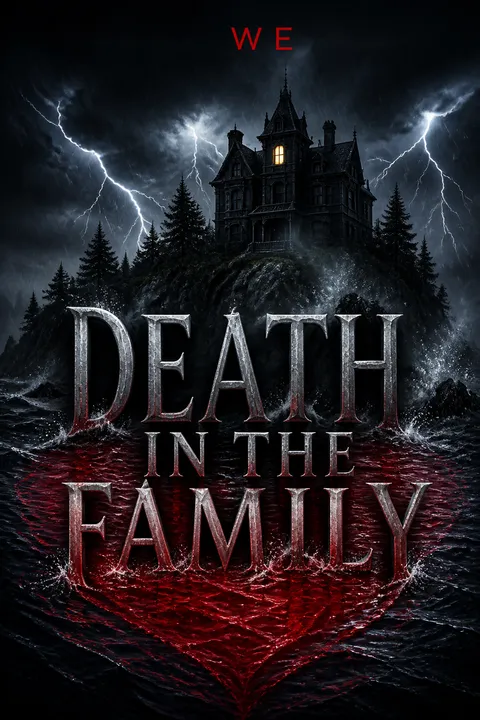
Death in the Family receives praise as a modern take on the classic locked-room mystery with strong Agatha Christie vibes. Readers appreciate protagonist Shana Merchant, a former NYPD detective with PTSD investigating a disappearance on a private island during a storm. Most reviewers loved the atmospheric setting, character development, and slow-burn suspense. Some noted pacing issues in the middle sections and too many characters. The mystery kept readers guessing with multiple suspects from a dysfunctional wealthy family. Many expressed excitement for this series debut, eagerly anticipating future installments to learn more about Shana's backstory.
People Also Read








Characters
Shana Merchant
Traumatized homicide investigatorA former New York City investigator who has moved to the Thousand Islands after surviving a serial killer’s abduction. Shana is observant, procedural, and willing to press witnesses hard, but trauma has unsettled her confidence in her own perceptions. She wants to return to meaningful police work without being reduced to what happened to her. Her scar and guardedness shape how others read her, while her attention to small inconsistencies helps her see what polished stories conceal. Shana’s central struggle is not whether she can investigate, but how to exercise judgment while acknowledging that fear and memory can distort it.
Tim Wellington
Local investigator and allyA state investigator rooted in Alexandria Bay, Tim knows the river, its residents, and the local habits that an outsider like Shana is still learning. His humor softens tense rooms, and his instinct is to expect a survivable explanation rather than the worst one. That optimism can frustrate Shana, but it also keeps him steady when her trauma sharpens into suspicion. Tim values loyalty and fairness, though his history with Carson complicates his ability to remain detached. His developing partnership with Shana depends on candid trust rather than hierarchy alone.
Jasper Sinclair
Missing family golden boyThe youngest Sinclair sibling, Jasper works in marketing and public relations for the family textile business. His grandmother sees him as attentive and responsible, while others describe him as charming, accomplished, and unusually capable. He has built friendships beyond his family, including with Ned and Abella, and is trying to shape a life not wholly governed by the Sinclair name. His success and independence unsettle siblings who feel overlooked or trapped by the company. Though absent from much of the present action, Jasper’s relationships and choices drive nearly every suspicion on Tern Island.
Abella Beaudry
Outsider with fragile footingJasper’s new girlfriend, Abella is a Montreal native whose work visa and recent job loss make her future in the United States uncertain. She is perceptive about the family’s tensions but anxious to be accepted, especially by Jasper’s relatives. Her affection for Jasper is genuine, while her insecurity encourages her to hide information that might threaten the relationship. Abella wants work and independence, not simply access to wealth, but she has little power in a household where she is the newcomer. Her fear of being blamed shapes what she reveals and when.
Flynn Sinclair
Volatile elder brotherJasper’s older brother and a leader in Sinclair Fabrics, Flynn is forceful, proud, and sensitive to the ways his younger sibling outshines him. He has a history of aggression and a habit of treating disagreement as a contest for control. His relationship with Ned is complicated by fear of abandonment, while his business responsibilities leave him carrying pressures he does not readily admit. Flynn is quick to assign blame to outsiders and slow to acknowledge his own failures. His anger makes him an intimidating presence during the investigation, even when it obscures what he actually knows.
Bebe Sinclair
Image-conscious family executiveJasper and Flynn’s sister, Bebe is the chief executive of the family business and is accustomed to protecting its image. She is sharp, dismissive, and skilled at turning personal questions back on the questioner. Her marriage to Miles is deteriorating, and her connection to Ned complicates her relationships with both brothers. Bebe wants to retain influence and financial security, but she is also bound to a family legacy that is increasingly difficult to maintain. Her composure often looks like indifference, leaving others to wonder whether she is concealing fear or simply refusing vulnerability.
Ned Yeboah
Influencer caught between loversA Ghanaian-born fashion influencer from the Bronx, Ned works under contract as the public face of Sinclair Fabrics. His professional opportunities are growing, and he resents being treated as someone whose future can be managed by Flynn. Ned is affectionate toward Jasper and Abella, yet his romantic entanglements place him inside the family’s rivalries. He wants economic independence and a life of his own, but fear of Flynn’s temper and his own divided loyalties keep him from making clean choices. His charm and careful presentation can hide how anxious he is beneath pressure.
Camilla Sinclair
Ailing family matriarchJasper’s grandmother and owner of Tern Island, Camilla is a formidable older woman who takes pride in hospitality, family tradition, and the estate she has maintained for decades. She expects her relatives to work hard, but she also sees that money has damaged their relationships. Her affection for Jasper is especially strong because he makes time for her when others do not. Camilla’s age and illness make the family’s future feel urgent, while her authority continues to shape the choices of people around her. She seeks to preserve both the island and some version of family unity.
Philip Norton
Longtime island caretakerNorton cooks, cleans, maintains Tern Island, and has served the Sinclair household for nearly twenty years. His plain manner and deep familiarity with the estate make him easy to overlook, even as he moves freely through every room and outdoor space. He feels a strong attachment to the island and a lasting connection to Camilla, who treats him as more than an employee. His past contains regrets, and he is drawn to the possibility of belonging somewhere. Norton’s practical knowledge of the island gives him an unusual position within the family’s private world.
Miles Byrd
Lawyer and Jade’s fatherA practicing lawyer, Miles is married to Bebe and is devoted to his teenage daughter, Jade. He presents himself as rational and measured, but his marriage is ending amid conflict over money and infidelity. Having raised Jade largely on his own, he is protective of her and attentive to how the adults’ decisions affect her. Miles is an outsider to the Sinclair bloodline, yet he has been part of the household long enough to know its habits and vulnerabilities. His insistence on keeping Jade safe can make him persuasive in a crisis.
Jade Byrd
Teenage watcher with a cameraMiles’s fourteen-year-old daughter, Jade is sharp, rebellious, and more comfortable observing people than explaining herself. She takes photographs of architecture and family members, using her phone to build a private record of the adults around her. Her closeness to Jasper and her appetite for secrets complicate how she understands boundaries. Jade is old enough to test authority but still a child caught among adults who hide their motives. She wants attention, independence, and a secure place in a household whose relationships are coming apart.
Carson Gates
Shana’s psychologist fiancéA psychologist who treated Shana after her abduction, Carson is also her fiancé. His professional knowledge gives him unusual influence over how she understands her trauma, and he often frames caution as protection. He has left his former work in New York to build a life near his hometown, though the transition has not gone as smoothly as he hoped. Carson wants stability and closeness with Shana, but his concern can become entangled with her need to reclaim independence. Their relationship raises difficult questions about care, authority, and whether support can become a form of control.
Maureen McIntyre
Sheriff and trusted mentorThe elected sheriff of Jefferson County, McIntyre is an experienced investigator who gave Shana a chance to return to police work. She is managing widespread storm damage while keeping an eye on Shana’s well-being. Their relationship blends professional respect with frank personal concern. McIntyre believes Shana is capable, but she understands that capability does not erase the effects of trauma.
Blake Bram
Serial killer from Shana’s pastA serial killer who used a dating app to approach women, Bram is linked to the three murders that Shana investigated in New York. His connection to Swanton makes the case intensely personal for her. He is patient and manipulative, able to present himself as harmless while studying a target’s weaknesses. The memory of Bram continues to shape Shana’s expectations of danger and her fear that she may misread people again.
Jay Lopez
Rookie officer in Shana’s pastA young police officer who responds to a lead during the search for Bram, Lopez represents the colleagues and families affected by Shana’s old case. His actions bring him into direct danger while trying to locate the missing detective.
Billy Bloom
Local mink trapperA local trapper hired to deal with a supposed mink problem on Tern Island, Bloom spends several hours searching the grounds before leaving. His brief visit becomes important because it complicates the question of whether an outsider had access to the island.
Plot Devices
The Nor’easter
Isolation by weatherThe storm makes travel dangerous, delays police backup, and leaves the people on Tern Island dependent on the boats kept at its flooded dock. Once those boats disappear, the weather turns an already remote estate into a sealed environment. The storm also disrupts visibility, damages communications and power, and makes outdoor searches hazardous. It is not just atmosphere: it restricts what Shana can do, increases the cost of delay, and gives anyone on the island time to manipulate the scene.
The Bloodied Bed
A bodyless homicide clueThe blood on Jasper’s bed supplies evidence of a violent attack without showing where he went or who moved him. The blood on the pillow later connects to the fight with Flynn, while the much larger stain still demands another explanation. Jasper’s abandoned phones, shut windows, and unexplained water ring add separate questions rather than an immediate solution. Together, the clues force Shana to distinguish what each object proves from what the family wants it to mean.
The Sinclair Inheritance
Money shapes every motiveThe declining family business, Camilla’s illness, Jasper’s personal savings, and the future ownership of Tern Island make money a source of pressure throughout the investigation. Each character has a different relationship to the family’s wealth: some depend on it, some want independence from it, and some fear losing it. The financial strain gives the relatives reasons to conceal their choices, but it also encourages Shana to test motives against physical evidence rather than treating greed as proof.
Shana’s Trauma
Unstable investigative lensShana’s memories of being abducted by Bram shape her response to blood, confinement, and sudden movement. Flashbacks and stress reactions complicate her trust in her own perceptions, while her training keeps her attentive to details others dismiss. The case repeatedly tests whether she can use experience without mistaking an old threat for a present one. Her history is not an incidental backstory: it changes her working relationships, her willingness to disclose vulnerability, and the risk attached to every decision she makes.
Shana Merchant Series
Download PDF
Download EPUB
.epub digital book format is ideal for reading ebooks on phones, tablets, and e-readers.








