

Key Takeaways
Treat food as biological information, not merely fuel or calories
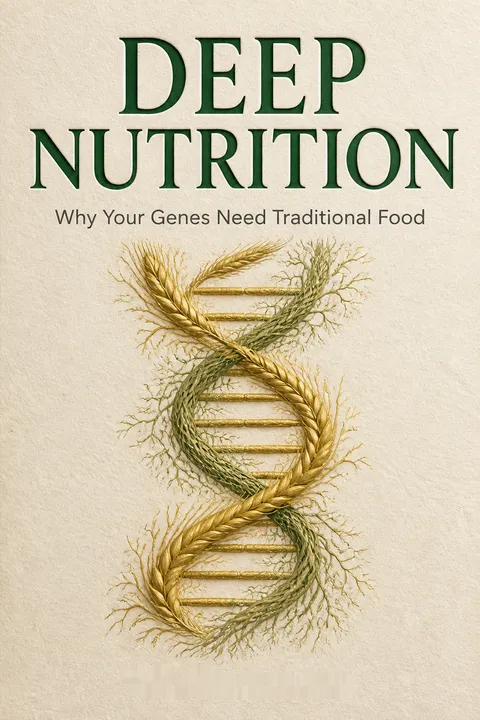
The central claim. Catherine Shanahan argues that food does more than supply energy and isolated nutrients: its source and preparation shape the chemical signals reaching the body. She calls the pattern she sees across nourishing cuisines the Human Diet. Her motivating example is a family she cared for: John Doyle suffered cascading medical problems after surgery, while his granddaughter later developed serious illness. Shanahan sees these tragedies as reasons to invest in prevention through food, not as proof that diet caused each condition. Her broader point is that healthcare often has little time for nutrition education, while everyday eating is a repeated opportunity to support health.
A useful lens. Instead of asking only how many calories a meal contains, ask what foods it is made from, how they were raised, and what processing they underwent. The book’s language analogy makes this intuitive: a food’s origins and handling affect the information it carries.
The information metaphor usefully pushes past calorie arithmetic toward food quality, dietary patterns, and the food environment. It also makes culinary knowledge feel practical rather than nostalgic. Yet the metaphor can overstate how precisely individual foods instruct genes or predict health. Food effects depend on dose, the whole diet, a person’s health, and social conditions. The Doyle family story supplies emotional urgency, not a controlled comparison. Its strongest lesson is institutional: dietary guidance deserves more space in routine care, while personal case histories should not be mistaken for causal evidence.
Recognize that genes respond to life, without assuming diet can rewrite destiny
Genes are regulated. Epigenetics is the study of chemical and structural changes that influence whether genes are active, without changing the DNA sequence itself. Shanahan uses this idea to challenge the notion that inherited genes alone determine health. She points to studies in which identical twins accumulated different epigenetic patterns over time, and to agouti mice whose coat color and weight differed after maternal diets were supplemented with nutrients involved in gene regulation.
Flexibility has limits. These examples support the idea that environment and biology interact. They do not show that a particular diet can reliably prevent disease or pass a chosen trait to descendants. The book sometimes describes gene regulation as if DNA were a purposeful learner. That is a metaphor for complex biological responses, not evidence that genes make conscious decisions.
The distinction between DNA sequence and gene regulation is valuable: inherited risk is not always a fixed prediction, and environments can alter biological pathways. The agouti mouse work is especially memorable because it connects maternal nutrition to visible offspring traits. But results in a special mouse model do not translate directly into a human dietary prescription. Human epigenetic effects vary, and many marks are not passed across generations. The sensible implication is neither genetic fatalism nor total dietary control. It is that nutrition is one influence among many, with effects that require careful study.
Build meals from the four food traditions Shanahan finds across cuisines
A cross-cultural pattern. The Four Pillars of the Human Diet is Shanahan’s framework for common features of traditional cuisines. It groups foods and techniques that she argues deliver a broad range of nutrients:
1. Meat cooked with bones, skin, or connective tissue.
2. Organ meats and other less familiar animal parts.
3. Fresh, minimally processed plant and animal foods.
4. Fermented or sprouted foods.
Tradition as a guide. Filipino neighbors’ potluck dishes, including liver, gizzards, and pork knuckles, unsettled Shanahan’s assumptions about what counts as food. The experience helped her notice how modern diets often reduce animals to lean muscle meat and plants to convenient, refined ingredients. The framework is meant to compare cuisines by their methods, rather than declare one region’s menu universally best.
The framework’s strength is that it shifts attention from competing diet labels to recurring practices: using more of an animal, preserving food through fermentation, and eating foods with less processing. This also gives readers concrete ways to diversify meals. Traditional cuisines, however, are not uniform, and survival of a custom does not establish that every version is optimal. Religious, economic, and ecological factors shape what communities eat. The pillars work best as prompts for variety and culinary exploration, not as a test of whether a diet is authentic or medically complete.
Choose foods for their source, flavor, and preparation, not their health halo
A dentist’s field notes. Shanahan draws heavily on dentist Weston Price, who visited communities in eleven countries during the 1930s. He compared people maintaining local food traditions with neighbors eating more commercial products. He reported differences in tooth decay and dental-arch development, and tested samples of staple foods for nutrients. Shanahan interprets his observations as evidence that culinary traditions preserve practical nutritional knowledge.
Flavor as a clue. She also argues that slow cooking, moisture, and using bones and connective tissue can make meat tender and flavorful, while fermentation and sprouting can change how foods taste and digest. Her advice is to seek foods with recognizable origins and preparation methods, rather than trusting labels such as natural, low-fat, or healthy. Price’s observations are historically influential, but they cannot isolate diet from other differences between communities.
Price’s work offers a striking historical counterpoint to nutrition studies focused only on disease markers: he looked at populations whose health appeared robust. The book is also right that processing, soil, animal feed, freshness, and cooking can matter beyond a food’s nutrient label. Still, Price’s comparisons were observational, often involved small or culturally distinct populations, and could not control for sanitation, infections, income, or genetics. The practical takeaway is to ask better questions about food production, while treating historical comparisons as clues that require modern testing.
Cut added sugar and question heavily processed oils, without calling them universal toxins
The author’s warning. Shanahan identifies added sugar and refined vegetable oils as central hazards of the modern diet. She argues that excess sugar can form advanced glycation end products, or AGEs: compounds produced when sugars react with proteins or fats, especially under conditions that promote oxidation. She also argues that industrial processing and repeated heating can damage polyunsaturated fats. Her label MegaTrans refers to a group of oxidized or distorted fats, not one single chemical.
A specific example. The book cites a small study in which eating fries cooked in reused oil was followed by reduced blood-vessel dilation in participants. That finding supports concern about a meal’s short-term effects, but cannot establish that ordinary seed oils cause dementia, autism, or most heart disease. Reducing added sugar and limiting deep-fried and ultra-processed foods are more defensible steps than treating every vegetable oil as poison.
The book makes an important case for scrutinizing the food industry’s processing and marketing, particularly when products combine refined starch, added sugar, and repeated frying. The reused-oil study offers a testable mechanism, not a verdict on all cooking oils. Its wider claims often outrun the evidence presented: seed oils are not a single substance, and health effects depend on what replaces them and the broader dietary pattern. A careful reader can take the caution about heavily processed foods seriously without accepting the book’s strongest claims about universal toxicity.
Prepare for pregnancy with nutrition, while separating sound advice from speculation
The developmental argument. Shanahan emphasizes that pregnancy and breastfeeding place substantial nutritional demands on a parent. She recommends improving diet before conception, and suggests leaving three to four years between pregnancies so maternal reserves can recover. She also urges attention to the father’s health, since sperm are continually produced and can be affected by age and environment. The book connects these concerns to epigenetics and fetal development.
Do not overread the examples. The author’s proposed Sibling Symmetry Shift is the claim that younger siblings may show predictable facial changes because of maternal nutrient depletion or differences in the womb. This is not established clinical guidance. Birth spacing, prenatal nutrition, and prenatal care matter, but families should not interpret a child’s appearance as evidence of parental failure. Decisions about pregnancy timing, supplements, and diet should be individualized with qualified clinicians.
The section’s strongest contribution is widening the frame from pregnancy alone to preconception health and the resources required to support a developing fetus. It also resists treating fathers as irrelevant to reproductive biology. The risk is turning a plausible general principle into a precise prescription: the book’s exact spacing recommendation and facial-development theory are not demonstrated by the evidence it describes. Good prenatal care should support parents without making them feel responsible for every outcome. Birth spacing is shaped by health, personal choice, access to care, and circumstance.
Treat facial symmetry as a clue, not a reliable measure of health or worth
Beauty and proportion. Shanahan describes dynamic symmetry as proportional balance found in living forms, and discusses surgeon Stephen Marquardt’s attempt to map facial proportions using the golden ratio. She argues that development and nutrition influence both appearance and function. Weston Price’s observations of dental arches and Shanahan’s comparisons of nearly four hundred sibling groups provide the book’s main examples.
A contested leap. The Sibling Symmetry Shift is Shanahan’s proposed pattern: first-born children may show more left-right asymmetry, while later-born siblings may have narrower or less proportionate features. The book’s photo comparisons are exploratory, not controlled clinical evidence. Facial appearance is shaped by many factors, and it cannot reliably diagnose nutritional status, intelligence, or future health. The useful question is whether development is functioning well, not whether a face matches a mathematical ideal.
The chapter asks readers to notice that physical development can have functional consequences, such as how jaw structure relates to chewing or airway space. That is a worthwhile clinical perspective. But the move from geometry to a universal beauty standard is much less secure. The golden ratio’s presence in nature does not prove that one facial template measures health, and attractiveness judgments are shaped by culture as well as perception. The sibling observations could generate research questions, but they should not be used to rank children or infer a parent’s dietary history.
Pair food quality with movement, sleep, and realistic expectations about weight
Beyond calorie arithmetic. Shanahan argues that foods affect hunger, hormones, and metabolism, so calories alone do not explain every person’s experience of weight change. She emphasizes reducing highly processed foods, eating more nutrient-dense meals, and combining food changes with sleep and activity. Exercise, in her account, is not merely a way to burn calories: it signals the body to maintain or build muscle and other working tissues. She distinguishes sustained aerobic activity from short, intense anaerobic effort.
Keep the energy balance. The book’s proposed plan is unusually restrictive for many people, recommending low carbohydrate intake and a high proportion of calories from fat. Those figures are the author’s approach, not universal medical advice. Weight change still involves energy intake and expenditure, alongside appetite, health, medication, and environment. Readers with medical conditions or a history of disordered eating should seek professional guidance before major dietary changes.
The book usefully treats weight as a biological and behavioral problem rather than a simple referendum on willpower. Food quality can affect satiety, and activity supports strength, function, and health even when the scale changes slowly. Yet the claim that calories are secondary can be misread as denying energy balance, which remains relevant to body weight. The more complete account includes both: food composition shapes appetite and adherence, while sustained energy intake and expenditure shape weight over time. The author’s low-carbohydrate template should be considered one approach, not a default for everyone.
Use bone broth as food, not as a guaranteed cure for joints or aging
The connective-tissue case. Shanahan describes collagen as a structural protein found in skin, tendons, ligaments, and other tissues. She recommends slow-cooked stocks made from bones and joint material, reasoning that they supply gelatin and glycosaminoglycans, molecules associated with connective tissue. In the book, broth is also a practical way to make soups, sauces, and vegetables more flavorful. A cited rabbit study found denser healing bone in animals given broth alongside regular chow.
What the evidence can say. An animal study and the presence of relevant compounds do not establish that broth prevents arthritis, reverses aging, or repairs human joints. Broth can be a nourishing, enjoyable ingredient, but it is not a substitute for medical evaluation or a balanced diet. The book’s strongest practical point is culinary: stock makes it easier to use bones and tougher cuts rather than discarding them.
Bone broth turns an abstract nutrition argument into a memorable kitchen practice: extracting flavor from bones and connective tissue while wasting less of an animal. It can also help readers reconnect cooking with skill and resourcefulness. The leap from molecular ingredients to broad claims about skin, height, or arthritis deserves restraint. Digestion changes food compounds, and a compound’s role in tissue does not guarantee a matching benefit when eaten. Broth can be part of a varied diet; claims of therapeutic effect require human evidence, not analogy alone.
Make the transition durable with planned meals and small, repeatable changes
Start with routines. The final practical section turns the book’s philosophy into a gradual plan. Shanahan describes changing her own diet by first reducing sugar, adding natural fats to familiar meals, and buying fresher vegetables. The book then offers meal templates, shopping lists, and suggestions for breakfast, lunch, dinner, travel, and children’s meals. A central tactic is to select a few reliable base foods and vary their accompaniments, rather than reinventing every meal.
Make it workable. Planning ahead can reduce reliance on convenience foods and make unfamiliar ingredients less intimidating. Readers can begin with one meal, learn a few cooking methods, and build from there. The book also recommends avoiding snacks and setting specific carbohydrate and supplement targets, but those are not universal requirements. Its lasting practical insight is simpler: routines, access, budget, and preference determine whether a food plan survives ordinary life.
The implementation section recognizes a truth often missing from nutrition advice: a recommendation is only useful if it fits someone’s schedule, kitchen, budget, and household. Meal templates and repeatable combinations reduce decision fatigue, while gradual changes can make new foods less alien. The book’s more rigid rules, especially around snacking and supplements, should not be confused with necessities for every reader. Flexible planning is more robust than purity. The goal is not to reproduce an idealized ancestral menu, but to build a sustainable pattern that is nourishing and livable.
Analysis
Deep Nutrition is part medical memoir, part culinary history, and part prescriptive nutrition program. Its narrative begins with Shanahan’s clinical frustration and personal health problems, then moves outward through Weston Price’s field observations, epigenetics, critiques of industrial food, and finally a detailed cooking plan. That structure gives the book momentum: the reader is invited to see a family meal not as a private preference but as a link between ecology, development, and health.
Its most persuasive contribution is practical and cultural. Traditional cuisines preserve techniques that a nutrient table cannot fully capture: using bones and organs, fermenting foods, cooking slowly, and adapting meals to local ingredients. The Four Pillars framework makes those practices memorable. The book also rightly challenges the assumption that low-fat labels, calorie counts, or added vitamins tell the whole story of a food.
Its scientific argument is less reliable when it turns plausible mechanisms into sweeping conclusions. Epigenetic regulation is real, but that does not establish that ordinary dietary changes can predictably shape grandchildren’s bodies. Price’s population observations cannot distinguish diet from sanitation, infectious exposure, poverty, or other cultural differences. The author’s sibling photo survey is hypothesis-generating, not proof. Most concerning, claims that processed vegetable oils cause autism, Alzheimer’s, or most cardiovascular disease are stronger than the evidence described. The cited mechanisms and animal studies do not establish those human causal effects. Nor does the book’s strong dismissal of energy balance reflect the full complexity of weight regulation.
The fairest reading preserves its useful questions while rejecting certainty it has not earned. How processed is a food? What replaces it? Which traditional techniques improve flavor and make home cooking easier? Those questions can guide reasonable choices. Restrictive carbohydrate targets, raw dairy, and supplement regimens require more caution and personal medical context. The book is most valuable as a case for culinary attention, not as a definitive account of genetic control or disease prevention.
Review Summary
Deep Nutrition receives mixed reviews, with many praising its in-depth exploration of nutrition's impact on health and genetics. Readers appreciate the author's scientific approach and focus on traditional foods. Critics note the book's length and sometimes repetitive content. Key takeaways include avoiding processed foods, vegetable oils, and excess sugar while emphasizing whole, nutrient-dense foods. Some readers find the beauty-focused sections controversial. Despite its flaws, many consider it a life-changing read that challenges conventional nutritional wisdom and promotes a return to traditional eating habits.
People Also Read





Glossary
Human Diet
Traditional-food patternShanahan’s name for a broad eating pattern she believes appears across long-standing cuisines. Rather than prescribe one region’s menu, the concept emphasizes recurring food categories and preparation methods, including bone-in animal foods, organ meats, fresh foods, and fermentation or sprouting. The book presents it as a framework for building meals, not as a formally validated clinical diet.
Epigenetics
Gene activity regulationThe study of mechanisms that affect how genes are used without changing the underlying DNA sequence. Shanahan emphasizes that environmental conditions, including nutrition, can influence gene expression. This is an established area of biology, but the book’s stronger suggestions about reliably directing inherited traits through diet go beyond what its examples demonstrate.
Four Pillars of the Human Diet
Four traditional food strategiesShanahan’s organizing framework for features she sees across traditional cuisines: meat cooked with bones or connective tissue, organ meats and other animal parts, fresh minimally processed foods, and fermented or sprouted foods. The framework encourages culinary variety and whole-food preparation. It is the author’s synthesis, not a consensus nutrition standard.
Genetic wealth
Inherited developmental potentialShanahan’s metaphor for the biological resources passed through a family line, including DNA and the conditions that influence gene regulation. In the book, good nutrition is presented as helping preserve this inheritance, while poor nutrition may diminish it. The metaphor is useful for thinking across generations, but it should not be read as a measurable medical quantity.
Dynamic symmetry
Proportional living-form balanceA term the book uses for proportional relationships associated with growth in living organisms, contrasted with simple mirror symmetry between left and right sides. Shanahan connects it to the golden ratio and to facial development, arguing that proportion can reflect both function and attractiveness. Its proposed use as a general measure of health is not established.
Sibling Symmetry Shift
Proposed birth-order appearance patternShanahan’s hypothesis that siblings may show different facial proportions associated with birth order, maternal nutrient reserves, and uterine conditions. She describes a self-assembled comparison of sibling photographs and proposes distinct patterns for first-born and later-born children. The observation is exploratory and should not be treated as a diagnosis or established developmental rule.
MegaTrans
Author’s label for damaged fatsShanahan’s umbrella term for oxidized or otherwise altered fats that she argues can form during industrial processing, storage, or repeated heating of polyunsaturated oils. It is not the name of one specific molecule or accepted chemical class. The book uses it to explain proposed effects on inflammation and cell function, claims that require evidence beyond the term itself.
Lipid cycle
Fat transport and recyclingShanahan’s model of how fats travel through the body inside lipoproteins, are delivered to tissues, and are eventually returned to the liver for reuse or disposal. She uses the model to argue that damaged lipoprotein particles may contribute to arterial disease. Lipoprotein transport is real; her particular interpretation of heart disease and cholesterol is not a substitute for established clinical assessment.
Advanced glycation end products (AGEs)
Sugar-linked molecular compoundsA group of compounds formed through reactions between sugars and proteins or fats. The book explains that these reactions can become more consequential under conditions such as elevated blood sugar and oxidation, and links them to tissue stiffening and aging. AGEs are a legitimate subject of biomedical research, but the book’s claims about their role in specific diseases should be distinguished from proven dietary outcomes.
FAQ
What's Deep Nutrition: Why Your Genes Need Traditional Food about?
- Focus on Traditional Diets: The book emphasizes the importance of traditional diets in optimizing health and genetic expression, arguing that modern diets have led to a decline in health.
- Genetic Health Connection: It explores the relationship between nutrition and genetics, introducing epigenetics to show how diet influences gene expression and health outcomes.
- Four Pillars of Nutrition: The authors present the "Four Pillars of World Cuisine" as essential components of a healthy diet, including meat on the bone, organ meats, fresh produce, and fermented foods.
Why should I read Deep Nutrition?
- Preventative Health Insights: The book offers insights into how dietary choices can prevent chronic diseases and improve overall health.
- Scientific Backing: Catherine Shanahan, M.D., and Luke Shanahan provide scientific evidence and personal anecdotes to support their claims, enhancing credibility.
- Practical Guidance: It includes practical advice on implementing traditional dietary practices, with meal plans and recipes for modern life.
What are the key takeaways of Deep Nutrition?
- Diet as a Tool: The book emphasizes diet as a powerful tool for optimizing health and unlocking genetic potential.
- Impact of Modern Diets: It discusses how modern diets high in sugar and vegetable oils contribute to chronic diseases and health decline.
- Generational Health: The importance of nutrition for future generations is highlighted, advocating for maternal nutrition during pregnancy.
What are the Four Pillars of the Human Diet according to Deep Nutrition?
- Meat Cooked on the Bone: Emphasizes the nutritional benefits of consuming meat with bones, providing essential minerals and collagen.
- Organs and Offal: Advocates for organ meats, which are nutrient-dense and provide vitamins and minerals often lacking in muscle meats.
- Fresh Plant and Animal Products: Highlights the importance of consuming fresh, whole foods that are minimally processed.
- Fermented and Sprouted Foods: Focuses on the benefits of fermentation and sprouting, enhancing nutrient bioavailability and promoting gut health.
How does Deep Nutrition address the modern diet's impact on health?
- Critique of Processed Foods: The book critiques the high consumption of processed foods, sugars, and vegetable oils, linking them to chronic diseases.
- Emphasis on Nutrient Density: It stresses the importance of nutrient-dense foods, arguing that traditional diets provide essential nutrients for optimal health.
- Call for Dietary Change: Encourages readers to reconsider their dietary choices and return to traditional eating practices.
What is the role of epigenetics in Deep Nutrition?
- Understanding Gene Expression: Introduces epigenetics as the study of how diet influences gene expression, affecting health across generations.
- Nutritional Influence on Health: Proper nutrition can optimize genetic function, potentially reversing negative health outcomes.
- Generational Impact: Emphasizes that parental dietary habits can have lasting effects on children's health and appearance.
What are the dangers of vegetable oils and sugar according to Deep Nutrition?
- Health Risks of Vegetable Oils: Argues that vegetable oils contain harmful trans fats that damage cell membranes and contribute to chronic diseases.
- Sugar's Negative Impact: Presents sugar as a major contributor to obesity, diabetes, and heart disease, advocating for reduced intake.
- Combined Effects: Highlights the toxic combination of vegetable oils and sugar, leading to inflammation and health problems.
How does Deep Nutrition suggest we can improve our health?
- Focus on Traditional Foods: Advocates for a return to traditional dietary practices that prioritize nutrient-dense foods.
- Avoid Processed Ingredients: Encourages eliminating processed foods high in sugar and vegetable oils for health improvements.
- Emphasize Nutrient Density: Stresses the importance of eating foods rich in vitamins and minerals to optimize health and prevent diseases.
How can I implement the principles of Deep Nutrition in my daily life?
- Start with Whole Foods: Incorporate more whole, unprocessed foods, focusing on the Four Pillars of the Human Diet.
- Meal Planning: Use meal plans and recipes from the book to create a structured approach to healthy eating.
- Educate Yourself: Learn about food sources and nutritional value to make informed dietary choices.
What are the health benefits of bone broth as discussed in Deep Nutrition?
- Rich in Nutrients: Bone broth is a powerhouse of nutrients, including collagen and minerals, supporting joint health and skin elasticity.
- Supports Digestion: The gelatin in bone broth benefits gut health, soothing the digestive tract and improving nutrient absorption.
- Hydration and Electrolytes: Provides hydration and electrolytes, making it a great addition to a balanced diet.
How does Deep Nutrition explain the lipid cycle?
- Lipoprotein Function: Describes how lipoproteins transport fats and nutrients, acting like delivery trucks needing proper labeling.
- Role of LDL and HDL: Clarifies that LDL and HDL are not simply "good" or "bad" but essential for nutrient distribution and metabolism.
- Impact of Diet on Lipoproteins: Explains how diets high in vegetable oils and sugars can damage lipoproteins, leading to health issues.
What are the best quotes from Deep Nutrition and what do they mean?
- “The narrative of this entire family would have played out differently had they benefited from preventative intervention.”: Highlights the importance of early dietary education and intervention in preventing health issues.
- “You can think of diet as a strategy, a tool—the most powerful of all tools—to accomplish the task of optimizing your health.”: Emphasizes diet's role in enhancing overall health and well-being.
- “The foods parents eat can change the way their future children look.”: Introduces epigenetics, suggesting maternal nutrition affects children's physical and health outcomes.
Download PDF
Download EPUB
.epub digital book format is ideal for reading ebooks on phones, tablets, and e-readers.








