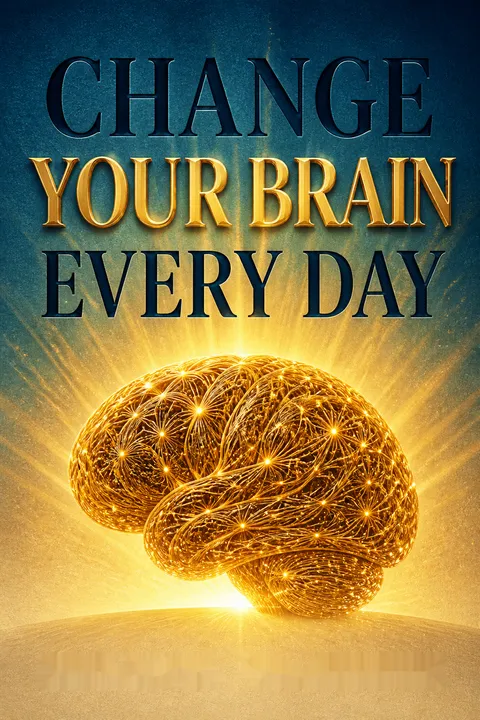


Key Takeaways
Treat brain health as a daily practice, not a crisis response
Daily care changes the trajectory. The book’s central claim is that the brain is changeable, and daily choices can support or undermine its function. Amen tells the story of journalist Leeza Gibbons, whose family history of Alzheimer’s led her to seek a SPECT scan, an imaging method that measures patterns of blood flow and activity. Her first scan showed areas of low blood flow; after years of lifestyle changes, a later scan looked healthier. The story frames brain care as prevention, not just treatment after symptoms appear.
Start with a reason. The book proposes three broad moves: care about your brain, reduce things that harm it, and build habits that support it. A practical entry point is to name why a healthier brain matters, such as clearer thinking, steadier moods, or more independence.
The preventive frame is compelling because it gives ordinary routines a longer horizon: a walk or an earlier bedtime becomes an investment in future capacity. Neuroscience broadly supports the idea that experience and behavior can affect brain function, but one person’s before-and-after scan cannot establish which changes caused the improvement or predict another person’s outcome. That distinction matters. The story is most useful as motivation to pursue evidence-based care and sustainable habits, rather than as proof that a particular scan or regimen can reverse disease.
Replace moral judgment with curiosity about what drives behavior
Look beneath the label. Amen argues that depression, impulsivity, memory trouble, and aggression can have multiple contributing causes. His Four Circles framework asks readers to consider biological factors, psychological patterns, social conditions, and spiritual meaning rather than treating a symptom or diagnosis as a complete explanation. Sleep problems, head injuries, infections, grief, stress, and medication effects are among the possibilities discussed.
Ask why before condemning. One story concerns a nine-year-old boy whose violent behavior was traced to a large cyst affecting his brain; treatment changed his behavior. Another describes an older woman whose apparent dementia symptoms improved after her depression was treated. These cases illustrate the book’s central invitation: investigate what may be shaping behavior, while still taking its consequences seriously.
This approach echoes the biopsychosocial model, which treats health as an interaction among the body, mind, and social setting. It can reduce stigma and widen the search for treatable causes. Curiosity, however, should not become an excuse to assume every troubling action has a hidden medical explanation. A balanced response holds two truths at once: behavior may have causes outside conscious control, and people still need appropriate boundaries, safety measures, and accountability.
Build brain reserve before stress tests it
Create a buffer. Brain reserve is Amen’s term for the brain capacity available to handle stress, injury, illness, or aging. He uses the example of two soldiers exposed to the same explosion who experience different outcomes, suggesting that prior health may affect resilience. The book describes reserve as something influenced across life by health habits, opportunities to learn, stress, and risk factors.
Map the risks. Amen groups eleven areas under BRIGHT MINDS: blood flow, retirement and aging, inflammation, genetics, head trauma, toxins, mental health, immunity and infections, neurohormones, diabesity, and sleep. Some are not fully controllable, but the book emphasizes prevention and treatment where possible. It recommends reviewing family history, tracking relevant health measures with a clinician, and choosing practical steps that address personal vulnerabilities.
The reserve metaphor helps explain why the same stressor can affect people differently, and it connects naturally to the broader concept of resilience: capacity is shaped by accumulated resources, not just by the event itself. The framework is valuable as a prompt for a wide-ranging health review. It should not be read as a precise measure of an individual’s brain capacity, nor as a promise that lifestyle choices can prevent every condition. Its practical strength lies in organizing questions for a qualified clinician.
Make healthy choices small enough to repeat on ordinary days
Begin below your threshold. The book’s tiny habits are small actions attached to familiar moments, designed to make a desired behavior easier to remember. Instead of attempting a complete life overhaul, a reader might add a brief period of learning to an established routine or put a glass of water near a place they pass each morning. The point is repetition, not heroic effort.
Let progress accumulate. Nancy, an 83-year-old patient, began with simple changes such as drinking more water, then gradually added supplements, movement, healthier food, and new learning. She lost weight, felt better, and had a scan the author described as unusually healthy for her age. The book also describes a progression from getting started, to finding a rhythm, to making habits feel more automatic. A lapse is a reason to restart, not abandon the practice.
This is a strong application of behavior design: linking a new action to an existing cue reduces the amount of planning required at the moment of choice. Small steps can also protect motivation by making success visible. Yet tiny habits are not magic, and a very small action only matters if it supports a meaningful behavior over time. The useful question is not whether a habit feels effortless, but whether it reliably moves the person toward a health goal they actually value.
Protect the brain’s basics: movement, sleep, circulation, and nourishment
Support the hardware. The book presents brain health as closely tied to physical health. Amen emphasizes blood flow, regular movement, adequate sleep, nutritious food, and attention to conditions such as high blood pressure, diabetes, sleep apnea, and inflammation. He also warns about head injuries, excess alcohol, nicotine, and environmental exposures. These factors are collected in BRIGHT MINDS, but the practical message is to notice which risks apply to an individual rather than attempt every intervention at once.
Make the fundamentals visible. The author recommends discussing health measurements and symptoms with a health-care provider, including sleep quality and signs of vascular or metabolic problems. He describes sleep as a period when the brain repairs and clears waste, and notes that poor sleep can affect attention, mood, and judgment. Food advice favors whole foods, fiber, vegetables, and healthy fats over highly processed, sugary options.
The emphasis on basics is the book’s most broadly usable health guidance: sleep, activity, and cardiometabolic health influence both physical and cognitive functioning. The message also counters the temptation to seek a single supplement or procedure as a shortcut. Some of the book’s specific dietary, toxin, and supplement claims are stated more confidently than the evidence described can support. Readers should distinguish sound general habits from individualized treatment advice and discuss medical conditions or supplements with a clinician.
Examine automatic thoughts instead of treating them as facts
Name the mental habit. Amen calls automatic negative thoughts ANTs: quick, discouraging interpretations that can shape mood and behavior. He describes patterns such as all-or-nothing judgments, harsh comparisons, predicting disaster, assuming knowledge of another person’s thoughts, and blaming. The book’s answer is not forced cheerfulness. It is more accurate thinking.
Put a thought on trial. When upset, write down the thought, identify its pattern, and examine whether it is true, absolutely certain, helpful, and consistent with the evidence. One patient believed losing a job meant she would never work again. Looking at the evidence revealed that she already had part-time work and could take steps toward another job. The exercise creates a pause between an upsetting thought and a reaction, making room for a more useful response.
This resembles cognitive behavioral therapy, which helps people identify interpretations that intensify distress and test them against evidence. The method is strongest when it encourages flexible, realistic appraisal, not when it pressures someone to replace pain with optimism. Some thoughts reflect genuine danger or injustice and deserve action rather than reframing. The key skill is discrimination: notice the story the mind supplies, then decide whether it is accurate, useful, or a cue to seek support.
Match treatment to causes, while keeping diagnostic tools in perspective
Symptoms can have different roots. The book argues that people with the same diagnosis may have different contributing factors and may respond differently to treatment. Amen describes five broad brain types: balanced, spontaneous, persistent, sensitive, and cautious. These are presented as patterns that may help explain tendencies such as distractibility, rigidity, emotional sensitivity, or anxiety. He also gives examples of conditions that can resemble one another, including depression and dementia, or bipolar symptoms and effects of head injuries or infections.
Use professional judgment. Amen favors examining biological factors, reviewing history, and tailoring care, which may include lifestyle changes, therapy, medication, or supplements. SPECT scans are a major tool in his clinics, but the book itself notes that general advice is not a substitute for medical evaluation. The practical lesson is to ask whether an unsuccessful treatment calls for reassessment, not simply more of the same.
Personalized care is a sound goal: diagnosis should guide treatment without erasing individual history, preferences, or medical context. At the same time, a useful typology is not automatically a validated clinical diagnosis. The author’s reliance on SPECT to classify psychiatric patterns is more controversial than the general case for careful assessment, and the anecdotes presented cannot establish its accuracy or superiority. A prudent reader can advocate for a thorough evaluation without assuming that imaging is necessary or definitive.
Treat relationships as part of brain health, not background scenery
Connection changes behavior. The book’s RELATING framework gathers practical skills for relationships: responsibility, empathy, listening, assertiveness, time, inquiry, noticing what is positive, and grace. Its central idea is that people respond better when they feel heard and respected. Amen recommends active listening, clear requests, calm boundaries, and focused time together. He also describes a penguin trainer who rewarded the behavior she wanted to see, inspiring him to praise his son more often instead of reacting mainly to mistakes.
Shape the social environment. The book presents friends and family as influences on habits, mood, and health. It recommends spending more time with people who support healthy choices and less time with those who undermine them. In parenting, Amen emphasizes clear expectations, warmth, attention, and noticing constructive behavior rather than relying on criticism or permissiveness.
The connection between attention and behavior is central to learning theory: actions that reliably receive positive attention are more likely to be repeated. The relationship guidance also fits research and practice that treat communication as a skill rather than a personality trait. Praise should be specific and sincere, not a tactic for controlling another person. And in unsafe or abusive relationships, better listening or forgiveness is not a substitute for protection, boundaries, and outside help.
Separate what you crave from what genuinely gives you pleasure
Wanting is not liking. The book distinguishes wanting, the pull toward an expected reward, from liking, the pleasure of experiencing it. Amen links wanting to dopamine and argues that intense, repeated rewards can make ordinary pleasures feel less satisfying. He applies this idea to substances, gambling, pornography, highly processed foods, and digital products designed to keep users engaged.
Reduce the traps. The book recommends identifying triggers, planning for vulnerable moments, and changing access to tempting behaviors. One patient in long-term recovery handed a prescribed pain medication to her husband to manage after surgery because she knew a single dose might reactivate old cravings. For digital habits, Amen suggests turning off alerts, setting limits, and keeping devices out of spaces meant for sleep or conversation. The broader goal is to preserve choice before an urge becomes automatic.
The wanting and liking distinction offers a useful lens on compulsive behavior: people can pursue a reward even when the experience has stopped feeling good. That pattern appears in substance use and in ordinary digital routines, where variable rewards can make checking feel hard to resist. Still, not every frequent use is an addiction, and dopamine is not simply a pleasure chemical. The distinction helps identify a problem, but it should not turn normal enjoyment into a reason for shame.
Use setbacks to discover triggers instead of declaring yourself a failure
Treat a lapse as evidence. Amen describes improvement as uneven: progress can be followed by setbacks, and the useful response is to investigate what happened. A patient named Sherry, who struggled with anxiety and binge eating, skipped lunch before a stressful presentation, drank alcohol, and later overate. Reviewing the sequence revealed several preventable vulnerabilities: hunger, anxiety, alcohol, and an easily reached fast-food option.
Check HALT. The book uses this acronym for hungry, angry or anxious, lonely, and tired, states that can weaken judgment and increase the chance of acting on an impulse. The same curiosity applies to emotional pain. Amen’s Dragons from the Past name recurring stories and memories that can intensify present reactions. Trauma, grief, and persistent symptoms may need professional care; self-reflection is not a substitute for treatment.
This approach resembles functional analysis in psychology: identify what happened before a behavior, what the behavior accomplished in the moment, and what followed. It turns relapse from a verdict on character into information that can guide prevention. The caution is that not every setback has a neat, controllable trigger, particularly when trauma, illness, or structural stress is involved. Curiosity works best alongside self-compassion and access to appropriate professional support.
Let purpose connect brain care to the people and values you serve
Give health a reason. The book connects well-being with meaning, service, faith, and relationships. Amen offers a short purpose exercise: identify what a person enjoys doing, whom it helps, what those people need, and how the work changes their lives. He argues that health practices become more compelling when they support something beyond appearance or short-term comfort.
Build reminders into the day. The book suggests writing down goals, reviewing them regularly, recording what went well, noticing small moments of happiness, and doing useful things for others. It also recounts the Daniel Plan, a church-based health program developed by Amen with Rick Warren and Mark Hyman. The lesson is not that purpose removes hardship, but that it can help people choose actions consistent with the life and relationships they want to protect.
Purpose can make long-term behavior feel less like restriction and more like alignment with valued roles. This connects with motivational approaches that emphasize autonomy and personally meaningful goals over external pressure. Gratitude and positive attention can broaden a person’s view of daily experience, but they should not be used to silence grief or legitimate dissatisfaction. Purpose is most durable when it leaves room for difficulty and helps translate values into specific, sustainable actions.
Analysis
Change Your Brain Every Day is a yearlong self-help guide built from short essays, patient stories, health advice, psychological exercises, and repeated prompts to take one small action. Its main thread is clear: brain function influences mood, attention, judgment, habits, and relationships, so caring for the brain is a practical foundation for caring for a life. The book’s range is both its advantage and its challenge. Readers encounter nutrition, sleep, trauma, parenting, relationships, addiction, attention, purpose, and medical conditions, all organized around the idea of daily brain care. A concise adaptation therefore needs to preserve the operating principles rather than reproduce the daily calendar.
The most useful principles are the ones that translate into action without demanding belief in every neuroscientific claim: investigate causes instead of shaming symptoms, build habits gradually, protect sleep and physical health, question automatic thoughts, and enlist supportive relationships. The patient stories make abstract ideas vivid, especially the cases where behavior changed after an overlooked medical or environmental factor was identified. They also create a risk of overgeneralization. A memorable case can show what may be possible, but it cannot show how often that outcome occurs or prove which part of treatment caused it.
The strongest point requiring caution is the book’s confidence in SPECT imaging and its brain-type classifications as guides to psychiatric treatment. The presented clinic anecdotes and observational findings do not establish that SPECT is a validated or necessary routine test for diagnosing common psychiatric conditions. The same caution applies to broad claims about foods, toxins, supplements, and rapid changes in scans. The book includes a medical disclaimer, and readers should use it. Its lifestyle suggestions can prompt useful questions, but medication changes, supplement protocols, and evaluation of serious symptoms belong in conversations with qualified clinicians.
Read as a menu rather than a mandate, the book is most valuable. Select a small number of feasible habits, track whether they help, and seek individualized care when symptoms persist or worsen. Its memorable message is not that every problem can be solved by lifestyle, but that daily choices and good assessment can improve the odds of thinking, feeling, and relating well.
Review Summary
Change Your Brain Every Day receives mixed reviews. Many readers appreciate the daily brain health tips and practical advice, finding the information valuable for improving cognitive function and overall wellbeing. Some praise Dr. Amen's expertise and personal approach. However, others find the content repetitive, oversimplified, or too focused on promoting brain scans and supplements. Critics argue some claims lack scientific backing. The book's daily format is seen as both a strength and weakness, with some preferring to read it all at once rather than over a year.
People Also Read








Glossary
BRIGHT MINDS
Brain risk checklistA mnemonic for eleven risk areas that Amen associates with brain health and cognitive decline: blood flow, retirement and aging, inflammation, genetics, head trauma, toxins, mental health, immunity and infections, neurohormone issues, diabesity, and sleep. The book uses it to prompt prevention and review of potentially modifiable risks. It is an organizing tool, not a diagnosis.
brain reserve
Capacity to withstand stressAmen’s term for the additional brain tissue or function available to help a person manage stress, injury, illness, or other challenges. The book presents reserve as influenced by health, learning, habits, and life experiences across time. It is a metaphor for resilience and capacity, not a precise clinical measurement of an individual’s brain.
Four Circles
Whole-person health frameworkA framework for considering four interacting dimensions of a person’s health: biological, psychological, social, and spiritual. Biological factors include brain and body function; psychological factors include thought patterns; social factors include relationships and current stresses; spiritual factors include meaning and purpose. The framework encourages broader assessment than symptoms alone.
ANTs
Automatic negative thoughtsAmen’s shorthand for fast, negative thoughts that can influence mood and behavior. He describes patterns such as catastrophizing, all-or-nothing judgments, unfavorable comparisons, mind-reading, blame, and rigid should statements. His suggested exercise is to write down a thought, examine its evidence and effects, and consider a more accurate interpretation.
Dragons from the Past
Past stories driving reactionsA metaphor for emotionally charged experiences and beliefs from earlier life that can shape reactions in the present. The book groups recurring themes such as abandonment, shame, anxiety, anger, grief, and helplessness under this name. Recognizing a trigger may help a person respond more deliberately, though serious trauma may require professional treatment.
RELATING
Relationship skills mnemonicA mnemonic for skills Amen recommends for healthier relationships: responsibility, empathy, listening, assertiveness, time, inquiry, noticing what is positive, and grace or forgiveness. It turns broad advice about communication into a set of behaviors to practice, including active listening, clear requests, focused time, and checking assumptions.
HALT
Vulnerability checkAn acronym for hungry, angry or anxious, lonely, and tired. The book uses these states as a quick check for conditions that may make cravings or impulsive decisions harder to manage. The method encourages identifying vulnerability and addressing the underlying need before acting on an urge.
One Page Miracle (OPM)
Written life-goal mapA goal-setting exercise in which a person writes desired outcomes across areas such as relationships, work, money, physical health, emotional health, and spiritual life. The page is reviewed regularly to compare actions with goals and identify steps or habits that support them. It is intended to give attention and decision-making a clear direction.
brain types
Five behavioral brain patternsAmen’s five broad categories are balanced, spontaneous, persistent, sensitive, and cautious. The book associates each with tendencies such as emotional steadiness, distractibility, rigidity, sensitivity to mood, or anxiety. The categories are presented as ways to think about individual differences and possible treatment responses, not as universally established diagnostic labels.
SPECT
Functional brain imagingSingle-photon emission computed tomography, an imaging technique that uses a radioactive tracer to produce pictures of blood flow and activity patterns. Amen describes using SPECT scans in his clinics to inform assessments and treatment planning. The book’s clinical examples should not be taken to establish that SPECT is necessary or definitive for routine psychiatric diagnosis.
FAQ
What's Change Your Brain Every Day about?
- Daily Practices for Brain Health: The book offers neuroscience-backed strategies to enhance mental health through simple, consistent daily practices.
- Holistic Health Approach: Dr. Amen integrates physical, psychological, social, and spiritual aspects, promoting a comprehensive view of brain wellness.
- Empowerment Through Knowledge: With insights from over 225,000 brain scans, the book empowers readers to take charge of their brain health.
Why should I read Change Your Brain Every Day?
- Practical and Accessible: The book provides easy-to-implement tips that can be integrated into daily life, regardless of current mental health status.
- Evidence-Based Insights: Dr. Amen's recommendations are grounded in extensive clinical research, enhancing the book's credibility.
- Transformative Potential: Following the daily practices can lead to improvements in mood, memory, focus, and overall mental well-being.
What are the key takeaways of Change Your Brain Every Day?
- Daily Practices Matter: Brain health is dynamic and can be improved through consistent, healthy habits.
- BRIGHT MINDS Framework: This acronym covers critical factors affecting brain health, such as Blood flow, Inflammation, and Sleep.
- Tiny Habits for Change: Small, manageable changes can lead to significant results over time, making brain health improvements achievable.
What is the BRIGHT MINDS framework in Change Your Brain Every Day?
- Comprehensive Health Factors: BRIGHT MINDS stands for Blood flow, Retirement/Aging, Inflammation, Genetics, Head trauma, Toxins, Mental health, Immunity/Infections, Neurohormone issues, Diabesity, and Sleep.
- Preventive Focus: Encourages readers to assess and mitigate their risk factors for better brain health.
- Interconnectedness of Factors: Illustrates how these factors compound each other’s effects on brain health.
How does Change Your Brain Every Day address mental health issues?
- Holistic Approach: Mental health is viewed through biological, psychological, social, and spiritual lenses for effective treatment.
- Focus on Brain Health: Reframes mental health discussions around brain health to reduce stigma and encourage help-seeking.
- Practical Strategies: Offers actionable strategies like dietary changes and mindfulness practices for managing mental health.
What are the types of ANTs mentioned in Change Your Brain Every Day?
- All-or-Nothing ANTs: Involves extreme thinking, leading to unnecessary stress.
- Fortune-Telling ANTs: Predicts negative outcomes without evidence, causing anxiety.
- Blaming ANTs: Attributes personal problems to others, hindering personal growth.
How can I kill the ANTs according to Change Your Brain Every Day?
- Identify and Write Them Down: Recognize and document ANTs to understand their impact.
- Ask Key Questions: Use Byron Katie's questions to challenge and reframe negative thoughts.
- Practice Mindfulness: Regular mindfulness reduces the frequency and intensity of ANTs.
What are some daily practices suggested in Change Your Brain Every Day?
- Engage in Regular Exercise: Physical activity boosts brain health by improving blood flow and cognitive function.
- Optimize Nutrition: Incorporate brain-healthy foods like omega-3s and colorful fruits to reduce inflammation.
- Practice Mindfulness and Meditation: Daily mindfulness practices reduce stress and enhance emotional well-being.
How does Change Your Brain Every Day address food and diet?
- Impact of Diet on Mood: Emphasizes the importance of a balanced diet rich in nutrients for mental health.
- Avoiding Processed Foods: Advises against high-sugar and unhealthy fats that lead to inflammation.
- Brain-Healthy Foods: Highlights foods like berries and omega-3 rich fish for their positive effects on brain function.
What are the "Dragons from the Past" mentioned in Change Your Brain Every Day?
- Emotional Triggers: Refers to unresolved emotional issues impacting mental health.
- Identifying Patterns: Encourages recognizing these "Dragons" to understand their influence on current behavior.
- Taming Techniques: Provides strategies like mindfulness and cognitive reframing to manage emotional triggers.
What are the best quotes from Change Your Brain Every Day and what do they mean?
- "You are not stuck with the brain you have.": Empowers readers to improve brain health through daily practices.
- "Every single day our brains are changing.": Highlights the dynamic nature of the brain and the impact of daily habits.
- "Tiny habits are the smallest things you can do that will make the biggest difference.": Emphasizes the power of incremental changes for significant improvements.
How can I implement the daily practices suggested in Change Your Brain Every Day?
- Start Small: Begin with one practice at a time to gradually incorporate more habits.
- Consistency is Key: Daily practice leads to significant changes in brain health.
- Reflect on Progress: Keep a journal to track experiences and reinforce positive changes.
About the Author
Other books by Daniel G. Amen



Download PDF
Download EPUB
.epub digital book format is ideal for reading ebooks on phones, tablets, and e-readers.








