

Key Takeaways
Treat emotional flare-ups as signals from a story, not proof of present danger.
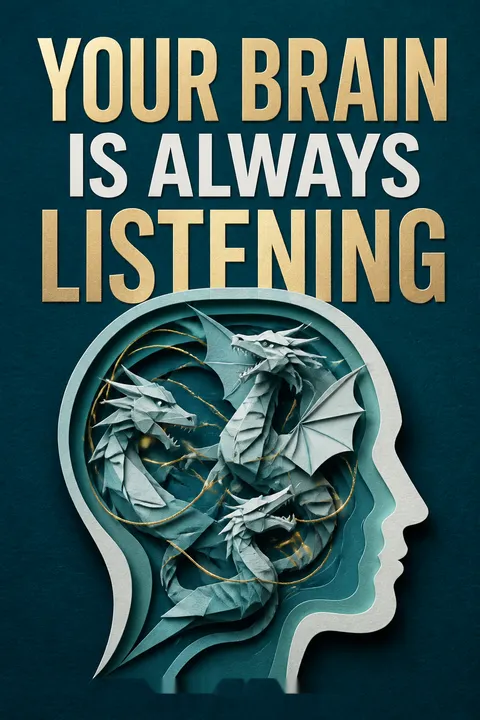
A useful metaphor. Amen uses “dragons” to describe influences that shape mood and behavior: painful memories, other people’s reactions, automatic thoughts, habits, commercial pressures, and addictive urges. The brain is “always listening” in the sense that it continually responds to what it perceives, including reminders of past threat. Stress can make old reactions feel like accurate readings of the present.
Notice before reacting. During the first months of COVID-19, Amen’s patient Miley Cyrus became overwhelmed by fears about the virus. He helped her pause, breathe, and identify the anxiety as an old pattern being reactivated by new uncertainty. The point is not to dismiss real danger. It is to ask whether the intensity of a reaction fits what is happening now, or whether an older story is adding fuel.
The dragon image gives diffuse experiences a name, which can create a small but valuable gap between feeling and action. That gap resembles a core move in cognitive behavioral therapy: notice an interpretation before treating it as fact. The metaphor works best as a prompt for curiosity, not as a literal brain mechanism. A racing heart may reflect memory, present danger, illness, or several things at once. The practical question is not simply “Which dragon is this?” but “What evidence would help distinguish an old alarm from a current problem?”
Trace today's panic to its first wound, then update the story with adult facts.
Past meets present. Jimmy, a business executive, became terrified of public speaking after being asked to testify at age 12 in his father’s murder trial. As an adult, a work presentation stirred the same fear and catastrophic thoughts, even though the situation was different. Mapping the feeling back to its origin helped him understand why the reaction was so powerful and consider a less punishing account of himself.
Work with care. Amen suggests identifying triggers, writing the story of what happened, and viewing it from an adult perspective. He also describes trauma-focused cognitive behavioral therapy and EMDR, a therapist-guided approach that uses alternating eye movements or taps while a person recalls distressing material. Reframing does not erase harm. It helps separate what happened then from what is happening now.
The central insight is that a present cue can inherit emotional force from an earlier experience. This is consistent with how learned threat responses can generalize beyond the original setting. But searching for a first memory is not a reliable truth test: recollection is reconstructive, and suggestive questioning can distort it. Trauma processing is safest with a qualified clinician, especially when memories are unclear or symptoms are severe. The strongest version of the advice is therefore not “find the hidden cause,” but “notice patterns, stay grounded in what is known, and seek skilled help when needed.”
Interrogate automatic negative thoughts before letting them write your next move.
Thoughts are not evidence. Amen calls automatic negative thoughts, or ANTs, recurring interpretations that intensify distress. He groups them into patterns such as all-or-nothing judgments, unfavorable comparisons, selective attention to bad news, guilt, harsh labels, worst-case predictions, assumed mind-reading, regretful “if only” thinking, and blame. His aim is accurate thinking, not forced optimism.
Put a thought on trial. Write down a distressing belief, ask whether it is true and absolutely certain, notice what believing it does to your feelings, imagine how you might feel without it, and test a more balanced alternative. A patient who lost a job believed she would never work again. She recognized that the prediction was not certain and recalled that she already had some work lined up. The exercise shifted her from panic toward problem-solving.
This is the book’s most portable mental tool: convert a vague emotional certainty into a claim that can be examined. It aligns with cognitive therapy’s emphasis on identifying distortions and testing interpretations against evidence. The goal is not to replace every painful thought with a reassuring one. Some thoughts accurately name loss, injustice, or danger. A useful challenge is to ask what the thought leaves out, what remains uncertain, and which next action is available even if the worst outcome cannot be ruled out.
Treat other people's reactions as history-informed, not as verdicts on you.
Relationships carry history. Amen calls the lingering influence of parents, siblings, children, teachers, friends, partners, and online critics “They, Them, and Other Dragons.” Their words can trigger old feelings, while their own histories shape what they say and do. A mother who felt unseen as a child, for instance, may experience a teenager’s ordinary push for independence as rejection. Recognizing that developmental distance can reduce the sting without requiring her to take it personally.
Listen, then set limits. The same principle applies at work and online: other people may be reacting from fear, anger, or insecurity, but that does not make hurtful behavior acceptable. Amen recommends listening carefully, checking assumptions instead of guessing what someone thinks, and limiting exposure to abusive online comments. Understanding can lower conflict; boundaries protect against repeated harm.
This approach counters a common social error: interpreting another person’s behavior as a direct statement about one’s worth. Seeing context can make people less reactive and more curious. It also guards against the opposite mistake, excusing mistreatment because someone has a painful past. Explanation and accountability can coexist. In practice, empathy is most useful when paired with observable standards: what was said, what effect it had, and what needs to change for the relationship to remain safe and workable.
Change the cue and reward, not just your promises to behave better.
Habits run on context. Amen treats habits as learned routines that can become automatic. Instead of relying on a fresh burst of willpower each time, notice when and where the behavior happens, who is present, how you feel, and what reward you seek. Then test a different routine that meets the same need with fewer costs.
Make one decision. At restaurants, Amen asks the waiter to remove the bread rather than repeatedly resisting it throughout the meal. For people who reflexively agree to every request, he suggests pausing before answering, checking the request against personal goals, and declining when it does not fit. He recommends tracking one unwanted habit at a time and practicing a replacement for about 30 days. The aim is to change the path around the behavior, not merely to scold yourself after it happens.
This is a strong behavioral-design principle: repeated decisions become easier when the environment stops presenting the same temptation or social pressure. It shifts attention from character to conditions, a move that can reduce shame and improve follow-through. Yet habit systems are not a universal fix. Persistent procrastination, disorganization, overeating, or impulsivity can involve ADHD, depression, trauma, or other health concerns. Environmental redesign is valuable, but it should not become a reason to blame people when a deeper assessment or treatment is needed.
Protect executive control with clear goals, sleep, and fewer brain-draining inputs.
Strengthen the Dragon Tamer. Amen’s “Dragon Tamer” is the prefrontal cortex, which supports planning, focus, judgment, and impulse control. He describes health through four interacting circles: biological, psychological, social, and spiritual. Problems in one area can make it harder to manage the others; poor sleep, for example, can weaken concentration and make emotional reactions harder to regulate.
Give attention a direction. The “One Page Miracle” is a written plan for goals in relationships, work or school, finances, and personal health. Review it regularly and ask whether current choices serve those priorities. Amen also stresses sleep, exercise, stable eating habits, and avoiding brain injuries and intoxicants. These are practical foundations, not a guarantee that every emotional problem has a single biological explanation.
The framework is useful because it resists reducing well-being to either mindset or biology alone. Sleep, stress, relationships, and personal aims shape one another, and a written goal can make priorities easier to retrieve under pressure. The book also gives brain imaging a prominent role in explaining behavior. That claim needs careful boundaries: SPECT scans do not establish a simple cause for complex symptoms, and they are not a routine diagnostic requirement for most psychiatric conditions. Brain-health habits can complement, but should not replace, evidence-based clinical assessment.
Assume your attention is being engineered, and make manipulation harder to reach.
Some temptations are designed. Amen’s “Scheming Dragons” are companies and media systems that profit when people repeatedly use a product or service. Ads, alerts, attractive packaging, and unpredictable rewards can turn an occasional action into a routine. A phone notification may answer boredom with a quick reward; an endless feed makes it easy to continue before deciding whether the activity is worthwhile.
Add friction deliberately. Before buying, clicking, or subscribing, ask who benefits and whether the choice supports your goals. Read food labels rather than trusting health claims, disable nonessential notifications, set limits on news and social media, and keep devices away from bedtime. The purpose is not to reject technology or convenience wholesale. It is to make room for a conscious choice before a company’s cue becomes your automatic response.
This section connects personal self-control to product design and business incentives. That is an important correction to advice that treats every lapse as an individual failure: some systems are built to capture attention and encourage repeat use. At the same time, users are not powerless, and digital tools can sustain relationships, learning, and access to support. A useful test is functional rather than moral: does this service help meet a chosen need, or is its design consuming time without delivering the value expected?
Treat addiction as a brain, behavior, and relationship problem, not a character flaw.
Look beyond resolve. Amen’s “Addicted Dragon” describes a repeated behavior that continues despite damage to health, relationships, work, money, or safety. His recovery model combines recognizing the problem, naming what life should look like, caring for brain health, managing cravings and triggers, seeking support, and making amends where appropriate. He presents this as a brain-based companion to established 12-step groups, not a reason to dismiss them.
Connect recovery to purpose. Jerry Garcia, the Grateful Dead musician, reportedly entered treatment after bandmates made clear that they would not tour with him unless he sought help. The prospect of losing the work and music he valued helped make change meaningful. Amen also emphasizes supportive peers, sleep, nutrition, exercise, and reducing exposure to people or settings that invite relapse. Professional treatment may be essential, especially when withdrawal or serious harm is possible.
The strongest contribution here is replacing moral condemnation with a wider map of vulnerability and support. Addiction can involve learned habits, distress, social context, and changes in reward and self-control, so a single appeal to willpower is often inadequate. The book’s brain language should not be mistaken for proof that a scan can determine the right treatment or excuse harmful conduct. Effective care can include peer support, therapy, medical treatment, and practical changes, chosen to fit the person and the specific addiction.
Let grief be honest, active, and supported rather than a test of toughness.
Loss touches more than one life. After Amen’s father died during the COVID-19 pandemic, he recognized that his grief could reactivate earlier losses. He began speaking openly about it, including through online conversations, and described remembering his father with affection while also acknowledging their difficult years. That mixed account helped him preserve the relationship as it was, rather than turning it into an unrealistically perfect memory.
Begin with one step. The book encourages talking with trusted people, writing about both the painful and positive parts of a loss, honoring the person, and maintaining basic routines such as sleep and movement. It does not promise a quick recovery. It argues against treating silence or prolonged suffering as proof of love. When grief becomes overwhelming, persistent, or dangerous, professional support is appropriate.
The account is persuasive because it makes grief specific and morally complicated: love can coexist with anger, regret, and relief. That complexity can keep mourning from becoming either idealization or self-reproach. Writing and social support may help people organize experience, but no single practice fits every culture, relationship, or loss. Grief also does not follow a tidy sequence or deadline. Support should make room for the mourner’s pace while taking seriously signs of severe depression, traumatic stress, or risk of self-harm.
Analysis
The book turns a wide range of problems into one memorable picture: a person is influenced by old emotional learning, other people, self-talk, habits, commercial systems, and the current condition of the brain. Its best organizing move is not the dragon inventory itself, but the insistence that reactions have contexts. That perspective can soften shame without denying agency. A memory may explain why a presentation feels terrifying; it does not prove that the presentation is dangerous. A craving may be shaped by stress and cues; it can still be met with planning, support, and treatment.
The structure moves from naming emotional patterns to examining thoughts, habits, external pressures, addiction, and executive control. This makes the advice usable: readers can identify a trigger, test a thought, alter a routine, or seek support. Jimmy’s story supplies the emotional arc, while Amen’s bereavement gives the material a personal stake. The book is strongest when it offers low-risk practices such as breathing, writing, active listening, and clarifying goals.
Its neuroscience requires more caution than its metaphors. The author presents SPECT imaging and clinic observations as powerful guides to mental-health treatment, but brain images alone cannot establish why an individual behaves a certain way or prove a specific intervention is effective. Claims about supplements, toxins, and food effects also vary in evidential strength and may depend on a person’s health and medications. Readers should not use this summary or the book as a substitute for clinical care, especially for trauma, addiction, suicidal thoughts, or medication decisions.
A final tension gives the book its useful edge: it asks readers to take responsibility while recognizing that responsibility is not the same as blame. The practical measure of a “dragon” is whether naming it helps someone respond more wisely. If the label instead hardens into a diagnosis or oversimplifies a person’s experience, it has stopped helping. The image is a map, not the territory.
Review Summary
Your Brain Is Always Listening receives mixed reviews, with ratings ranging from 1 to 5 stars. Positive reviews praise its accessible language, practical advice, and brain health insights. Critics find it repetitive, oversimplified, and too focused on celebrity name-dropping and supplement sales. Some readers appreciate the use of "dragons" to represent emotional issues, while others find it childish. The book's approach to mental health and brain science is both lauded and criticized, with some questioning the scientific validity of Dr. Amen's claims.
People Also Read




Glossary
Dragons from the Past
Old experiences shaping present reactionsA metaphor for memories and earlier experiences that continue to influence present emotions and behavior. A cue in the present can reactivate fear, shame, anger, grief, or a sense of being unwanted. The term encourages readers to notice when a reaction may be intensified by personal history, while distinguishing that possibility from proof about what caused a particular symptom.
ANTs (automatic negative thoughts)
Recurring negative interpretationsThe author’s term for automatic thoughts that tend to interpret events negatively and can reinforce distress. He identifies patterns including black-and-white judgments, comparison, selective focus on bad outcomes, guilt, labeling, fortune-telling, mind-reading, regret, and blame. His exercise asks readers to test whether a thought is true, examine its effects, and consider a more accurate alternative.
Dragon Tamer
Prefrontal executive controlAmen’s name for the prefrontal cortex and its roles in planning, focus, judgment, organization, and impulse control. In the book’s metaphor, it helps manage emotional reactions and align behavior with goals. The author describes it as weakened by factors such as poor sleep, head injury, intoxicants, and stress, and supported by brain-healthy routines.
Four Circles of Health and Illness
Four interacting health domainsA model that organizes well-being into biological, psychological, social, and spiritual domains. Biological includes brain and body function; psychological includes thoughts, emotions, and personal history; social includes relationships and life circumstances; spiritual concerns meaning and purpose. The model emphasizes that strain in one domain can affect the others rather than treating mental health as isolated from the rest of life.
BRIGHT MINDS
Brain-health risk-factor mnemonicA mnemonic the author uses for factors that may threaten brain health: blood flow, retirement or aging, inflammation, genetics, head trauma, toxins, mind storms, immunity and infections, neurohormones, diabesity, and sleep disturbances. It is intended as a checklist of possible risks to consider, not as a stand-alone diagnostic test or a guarantee that addressing a factor will resolve a specific condition.
One Page Miracle
Written goals across life areasA planning exercise in which a person records goals and current efforts in relationships, work or school, finances, and personal health. The page is reviewed regularly to help connect daily choices to longer-term priorities. Its purpose is to make desired outcomes easier to keep in view, rather than letting immediate impulses or outside pressures set the agenda.
Addicted Dragons
Compulsive behavior despite harmThe book’s metaphor for addictive or compulsive behaviors that continue even after causing problems in health, relationships, work, finances, or safety. The recovery approach combines recognizing consequences, clarifying what matters, addressing triggers and cravings, improving health habits, seeking supportive people and professional help, and repairing harm when possible.
Dopamine drip and dump
Small rewards versus intense stimulationAmen’s distinction between modest rewards from ordinary pleasures and large surges associated with highly stimulating activities or substances. He argues that repeated intense stimulation can make ordinary rewards feel less compelling and increase cravings. The practical advice is to reduce compulsive high-intensity rewards and cultivate meaningful, lower-risk pleasures, while recognizing that this metaphor simplifies a complex reward system.
FAQ
What is Your Brain Is Always Listening by Daniel G. Amen about?
- Hidden dragons concept: The book explores how unconscious emotional influences—called "dragons"—constantly affect your brain, happiness, habits, and mental health.
- Brain-based recovery: Dr. Amen presents a neuroscience-driven program to identify and tame these dragons, using brain imaging, psychology, and lifestyle changes.
- Holistic health approach: The book integrates biological, psychological, social, and spiritual health, emphasizing that brain health is foundational to overall well-being.
- Practical strategies: Readers are given actionable tools to manage negative thoughts, bad habits, and external influences that hijack their brain.
Why should I read Your Brain Is Always Listening by Daniel G. Amen?
- Empowering mental health: The book provides actionable strategies to manage anxiety, depression, trauma, grief, and addiction by understanding how your brain listens to hidden influences.
- Unique neuroscience insights: Dr. Amen uses decades of brain imaging research to explain how different brain areas and patterns relate to emotional and behavioral challenges.
- Comprehensive and relatable: Real-life stories and personal disclosures make complex neuroscience accessible and practical for everyday life.
- Foundation for change: The book empowers readers to recognize and tame their dragons, leading to better decision-making, emotional resilience, and healthier relationships.
What are the key takeaways from Your Brain Is Always Listening by Daniel G. Amen?
- Dragons influence everything: Unconscious emotional patterns from the past, bad habits, and external pressures shape your thoughts, feelings, and behaviors.
- Brain health is central: Many mental health issues are actually brain health issues, and improving brain function can dramatically enhance mood, habits, and relationships.
- Taming dragons is possible: With the right strategies—like challenging negative thoughts, strengthening the prefrontal cortex, and adopting brain-healthy habits—you can regain control over your life.
- Holistic, actionable advice: The book offers a blend of neuroscience, psychology, and practical steps for lasting change.
What are the main types of "dragons" described in Your Brain Is Always Listening by Daniel G. Amen?
- Dragons from the Past: Emotional wounds and negative beliefs formed early in life, such as Abandoned, Invisible, or Insignificant Dragons, that continue to influence your thoughts and feelings.
- Bad Habit Dragons: Automatic behaviors that harm your health, relationships, or finances, like procrastinating, overeating, or saying yes when you should say no.
- Scheming Dragons: External forces like advertisers, food companies, digital media, and social pressures that manipulate your brain to create unhealthy habits and addictions.
- Addicted Dragons: When bad habits and external influences overwhelm your brain’s control, leading to addiction and compulsive behaviors that require a brain-based recovery approach.
How does Daniel G. Amen define and explain the "Dragon Tamer" (prefrontal cortex) in Your Brain Is Always Listening?
- Executive function center: The Dragon Tamer is the prefrontal cortex (PFC), responsible for supervision, impulse control, planning, judgment, and empathy.
- Regulates emotional dragons: A strong PFC helps you manage your dragons effectively, make good decisions, and achieve your goals.
- Vulnerable to damage: Aging, inflammation, toxins, poor sleep, and head trauma can weaken the PFC, making it harder to control impulses and emotions.
- Strengthening strategies: Exercise, brain-healthy nutrition, goal-setting, and mental training are recommended to keep your Dragon Tamer strong.
What are "Automatic Negative Thoughts" (ANTs) in Your Brain Is Always Listening and how can I manage them?
- Definition of ANTs: ANTs are habitual, negative, and often distorted thoughts that sabotage your happiness and reinforce bad habits or emotional pain.
- Common types: The book identifies nine types, including all-or-nothing thinking, mind-reading, labeling, guilt-beating, and fortune-telling.
- Five-question method: Dr. Amen recommends questioning ANTs with: Is it true? Is it absolutely true? How do I feel when I believe it? How would I feel without it? What is the opposite thought?
- Turnaround and meditation: After challenging the ANT, turn it around to its opposite and meditate on the new thought to rewire your brain toward healthier thinking patterns.
What are the "Dragons from the Past" in Your Brain Is Always Listening by Daniel G. Amen?
- Definition: Dragons from the Past are 13 types of emotional patterns rooted in childhood or earlier experiences that continue to influence your brain and behavior unconsciously.
- Examples: These include Abandoned, Invisible, or Insignificant Dragons; Anxious Dragons; Wounded Dragons; Should and Shaming Dragons; Angry Dragons; and Ancestral Dragons.
- Impact on the brain: These dragons activate emotional brain centers, especially the amygdala, causing anxiety, anger, irrational behavior, and automatic negative reactions.
- Taming process: The book provides affirmations and strategies to identify, soothe, and reframe these dragons for emotional healing.
What are the 10 common Bad Habit Dragons in Your Brain Is Always Listening and how can I convert them into good habits?
- Examples of Bad Habit Dragons: Saying Yes When You Should Say No, Automatic No or Arguing, Interrupting, Trouble with the Truth (lying), Distracted Multitasking, Procrastinating, Disorganized, Let’s Have a Problem, Overeating, and Obliviousness.
- Five-step retraining process: Identify and track the habit, recognize cues/triggers, understand rewards, find alternative behaviors that provide similar rewards, and build new routines.
- Focus on one habit: The book suggests working on one habit at a time for about 30 days to maximize success.
- Practical advice: Use strategies like pausing before responding, filtering requests through your goals, and replacing bad habits with healthier alternatives.
How do Scheming Dragons affect my brain and behavior, and what are the five types described in Your Brain Is Always Listening?
- Scheming Dragons defined: These are external influences that exploit neuroscience to hook you into unhealthy habits and addictions for profit.
- Five types: Food Pusher Dragons (junk food marketing), Substance and Toxin Pusher Dragons (alcohol, drugs, toxins), Digital Dragons (social media, video games, news), Contact Sports Dragons (head injury risks), and Holiday Dragons (stress, overeating, overspending).
- Manipulation tactics: Scheming Dragons use advertising, social pressure, and digital engagement to override your self-control and create dependency.
- Outfoxing strategies: Recognize their tactics, get the full facts, avoid enabling them, and limit exposure to their triggers.
What is the Addicted Dragon Recovery Program in Your Brain Is Always Listening and how does it differ from traditional 12-step programs?
- Brain-based 12-step model: Dr. Amen integrates brain health into addiction recovery, emphasizing biological, psychological, social, and spiritual healing.
- 12 new steps: These include knowing what you want, recognizing addiction’s hold, caring for your brain, forgiveness, understanding your brain type, controlling cravings, and more.
- Personalized treatment: The program identifies five brain types (Balanced, Spontaneous, Persistent, Sensitive, Cautious) to tailor interventions, including supplements and lifestyle changes.
- Role of brain imaging: SPECT scans are used to identify brain activity patterns related to addiction, guiding personalized treatment.
How can I strengthen my Dragon Tamer (prefrontal cortex) according to Your Brain Is Always Listening by Daniel G. Amen?
- Set clear goals: Use the One Page Miracle to write down your goals in relationships, work, finances, and self-care, helping your brain focus and align behavior.
- Adopt a brain-healthy lifestyle: Exercise, eat nutrient-rich foods, get adequate sleep, avoid toxins and head injuries, and supplement with omega-3s and vitamins.
- Practice mental training: Mindfulness, meditation, and self-reflection enhance focus, impulse control, and emotional regulation.
- Monitor and adjust: Regularly assess your habits and environment to support optimal prefrontal cortex function.
What are the best quotes from Your Brain Is Always Listening by Daniel G. Amen and what do they mean?
- “Until you make the unconscious conscious, it will direct your life and you will call it fate.” — Carl Jung: Highlights the importance of awareness in controlling your thoughts and habits rather than being controlled by them unknowingly.
- “Make one decision, not 30.” — Dr. Amen: Emphasizes the power of setting clear intentions to avoid repeated temptations and conserve mental energy.
- “The brain is a sneaky organ. We all have weird, crazy, stupid, sexual, violent thoughts that no one should ever hear.” — Dr. Amen: Stresses the role of the Dragon Tamer in managing impulses and protecting you from acting on harmful or inappropriate thoughts.
- “Get it, give it away, and keep it forever.” — Dr. Amen: Encourages sharing brain health knowledge with others to reinforce your own habits and create a supportive community.
About the Author
Other books by Daniel G. Amen


Download PDF
Download EPUB
.epub digital book format is ideal for reading ebooks on phones, tablets, and e-readers.








