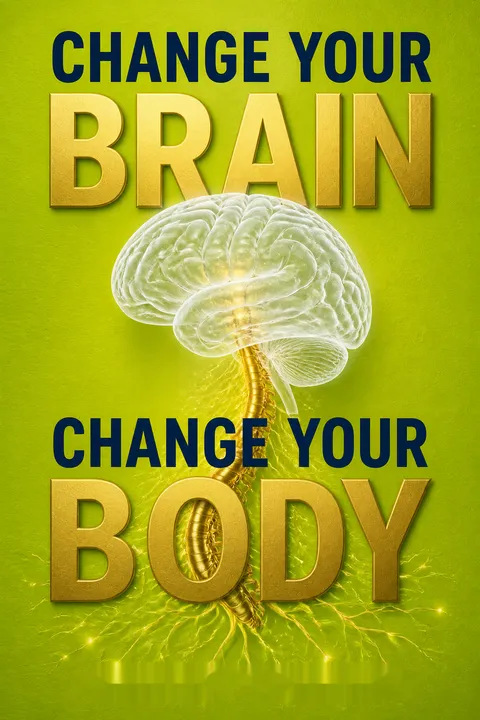


Key Takeaways
Treat brain health as the missing link between intentions and the body
Behavior has a biological context. Amen argues that brain function shapes choices about food, exercise, stress, sleep, and substance use, which in turn affect physical health and appearance. He uses SPECT, or single photon emission computed tomography, to measure patterns of blood flow and activity, rather than brain anatomy. His central point is that repeated failures to follow a health plan may have more than a willpower explanation.
Cases illustrate, not prove. One patient, Becca, had low activity in the prefrontal cortex, an area involved in planning and impulse control. Amen reports that treatment helped her stick to a health plan and lose eighty pounds over two years. Such clinical stories make the idea vivid, but a single case cannot show that the same cause or treatment applies to others.
The useful shift is from moral judgment to asking what makes a healthy action difficult. Behavioral medicine often treats choices as products of interacting biology, habits, resources, and surroundings, rather than isolated acts of will. That can reduce shame and guide more useful questions. The risk is replacing one oversimplification with another: a brain scan does not automatically explain a behavior, and poor health is not proof of brain dysfunction. The strongest use of this framework is as a prompt to investigate, not as a verdict about why someone struggles.
Build brain reserve before life's shocks spend it for you
Reserve supports resilience. Amen defines brain reserve as a cushion of healthy brain function that helps someone cope with stress, injury, and unexpected demands. In his account, habits that support the brain can build that cushion, while head injuries, substance misuse, poor sleep, and other harms can erode it.
Twins reveal different paths. Mary and Katie were identical twins, but their lives diverged. A scan showed damage in Katie's prefrontal and temporal regions. Her sister then recalled a childhood fall from a bunk bed that had knocked Katie unconscious. Amen suggests the injury may have contributed to Katie's greater difficulties. The story emphasizes prevention, including protecting the head and maintaining healthful routines, while remaining an individual case rather than proof that one injury explains a whole life.
Reserve is a memorable way to describe why the same stressor can affect people differently. It also resembles the broader idea of resilience: capacity is built through multiple supports, not one heroic trait. That framing encourages prevention and makes room for vulnerability without blame. Still, the metaphor can obscure social conditions. A person's ability to sleep, eat well, or avoid chronic stress is partly shaped by work, income, safety, and caregiving demands. Brain health is important, but reserve should not become another standard individuals are blamed for failing to accumulate.
Diagnose the pattern behind weight gain, not just the number on the scale
Weight has different drivers. Amen groups weight-management difficulties into six patterns: compulsive eating, impulsive eating, a mixture of both, emotional or seasonal overeating, anxiety-driven eating, and severe stress-linked weight loss. His point is that the same symptom can arise from different combinations of mood, attention, stress, habits, and medical factors.
Different cases, different needs. Rebecca was preoccupied with food and worried constantly; Rick struggled with impulsivity and attention; Jerry's eating and mood worsened after moving to a darker climate. Amen describes each as needing a different treatment approach. He also notes that people may fit more than one pattern. The categories can help organize questions for a clinician, but they are not a substitute for medical assessment or a validated diagnosis.
The model's strength is its refusal to treat body weight as a simple measure of discipline. It invites assessment of emotional eating, attention difficulties, sleep, environment, and physical health before prescribing a plan. That is compatible with a personalized approach to care. The limitation is that six brain-based types can sound more definitive than the evidence warrants. Eating behavior is also shaped by food access, stress, culture, medications, and learned routines. The categories work best as starting hypotheses that can be tested and revised, not labels that determine someone's treatment.
Strengthen the brain's brakes before bargaining with a craving
Craving competes with control. Amen describes the prefrontal cortex as a source of planning and impulse control, while the nucleus accumbens, within the basal ganglia, helps drive pleasure and motivation. Emotional memories can make a cue unusually compelling. He recalls seeing a caramel apple at a basketball game and feeling its pull, then taking a walk instead of buying one.
Make control easier to practice. The book recommends clear written goals, adequate sleep, regular meals that avoid sharp blood-sugar swings, exercise, and meditation. Its One-Page Miracle is a written outline of goals across health, relationships, work, and money, kept somewhere visible as a daily reminder. Amen also presents willpower as trainable through repeated practice. These strategies can support self-control, but persistent or severe cravings may need professional help.
The image of a brake competing with an accelerator captures a real feature of self-regulation: immediate rewards can crowd out distant goals, especially under fatigue or stress. Written intentions can help by turning vague wishes into cues for action. The practical implication is not to test willpower endlessly, but to reduce exposure to tempting situations and prepare alternatives. The book's emphasis on blood sugar and neurotransmitters is more certain than the evidence in every case allows. Cravings also reflect learning, availability, and emotion, not merely a chemical imbalance.
Choose food for steady energy, not just fewer calories
Food affects more than weight. Amen links nutrition to energy, attention, mood, and physical health. His practical emphasis is on nutrient-rich foods, fruits and vegetables, lean protein, complex carbohydrates, healthy fats, water, and fewer highly processed sweets. He urges readers to notice what they actually eat, since people may underestimate portions or overlook calories in drinks and restaurant meals.
Quality and quantity both count. The book describes a two-year study of 811 adults assigned to diets with different proportions of fat, protein, and carbohydrates. All four groups lost an average of nearly nine pounds, supporting the point that calorie reduction mattered across those diet patterns. Amen argues for nutritious calories rather than treating all calories as interchangeable. His nutrition advice is broad, but individual needs, medical conditions, and the quality of evidence behind particular supplements or food claims require care.
This section usefully joins two questions often separated in diet debates: how much someone eats and what those foods provide. Tracking can reveal unnoticed patterns, while a focus on nourishing meals avoids reducing health to arithmetic. The study described also cautions against assuming one fashionable macronutrient ratio is universally superior. Yet calorie needs and responses vary, and food logging can be unhelpful for people vulnerable to disordered eating. Nutrition guidance is most effective when it supports health and sustainable routines, rather than turning every meal into a test of virtue.
Move in ways that challenge both heart and coordination
Exercise trains the whole system. Amen presents physical activity as a way to improve blood flow, mood, sleep, and fitness, while supporting brain function. He highlights aerobic activity, resistance training, and coordinated movement. Aerobic exercise is linked in the book to brain-derived neurotrophic factor, a protein involved in the growth and maintenance of brain cells.
Add complexity to movement. Amen favors activities such as dancing, tennis, and table tennis because they combine physical effort with attention, timing, and planning. He recounts a Japanese study in which ten minutes of table tennis was followed by increased activity in the prefrontal cortex and cerebellum. The book also describes a fitness-focused school program in Naperville, Illinois, whose students performed strongly on international academic tests. These examples support movement as brain-friendly, though they do not prove exercise alone caused the academic results.
Exercise is unusually valuable because it can affect several outcomes at once: cardiovascular fitness, mood, sleep, and the ability to practice new skills. Coordination adds a cognitive challenge, making movement engaging rather than merely repetitive. The school example is suggestive, but academic performance depends on many factors besides physical education. The broader lesson is sound without requiring every activity to be a brain-enhancement technique: choose movement that is safe, enjoyable, and repeatable. A perfect workout that never happens is less useful than a modest routine that becomes part of ordinary life.
Protect sleep because tired brains crave more and choose worse
Sleep changes appetite and judgment. Amen recommends seven to eight hours for most adults and argues that sleep supports memory, attention, mood, skin renewal, and appetite regulation. He describes leptin as a signal of fullness and ghrelin as a signal of hunger, noting that sleep loss can shift both in an appetite-increasing direction.
A small study shows the pattern. In one experiment described in the book, participants who slept five and a half hours consumed an average of 221 more calories in high-carbohydrate snacks than when they slept eight and a half hours. Amen's practical advice includes keeping a regular sleep schedule, limiting late caffeine and alcohol, and turning off screens before bed. Persistent insomnia, loud snoring, or breathing interruptions merit medical evaluation, not just another bedtime tip.
Sleep makes self-control less mysterious: fatigue changes attention, mood, and appetite, so the person trying to make a better choice is not working under the same conditions as someone rested. This suggests that sleep belongs in weight and health plans, not at the bottom of the priority list. The snack study offers a plausible mechanism, but it is small and cannot establish a universal calorie effect. Sleep needs also differ. Persistent sleep problems may reflect apnea, pain, medications, or mental health conditions, which require more than general sleep hygiene.
Lower chronic stress before it reshapes appetite, mood, and health
Stress becomes costly when it persists. Amen explains that short-term stress can mobilize the body, while chronic stress keeps stress responses active. He links prolonged cortisol exposure to problems with memory, mood, appetite, and abdominal weight. Maria, a caregiver for her mother and a struggling child, had neglected her own health. With stress-management skills and renewed attention to her needs, she improved her health and lost abdominal weight.
Build recovery into daily life. The book suggests meditation or prayer, exercise, diaphragmatic breathing, sleep, laughter, gratitude, and learning to delegate. It also recommends therapy for chronic stress or past trauma. These tools can help people regulate stress, but they do not remove the circumstances causing it. Financial insecurity, caregiving, discrimination, and unsafe work can demand practical or collective solutions as well as individual coping skills.
The stress discussion recognizes that bodily health is affected by persistent demands, not only by isolated emergencies. Its most useful image is the caregiver who must preserve her own capacity to keep helping others. This connects personal recovery to sustainable caregiving and workplace design. Stress-management techniques can improve regulation, but they should not imply that a person can breathe away an unfair workload or unsafe environment. Good care asks both what helps the nervous system settle and what can change in the conditions producing the stress.
Treat negative thoughts as claims to test, not commands to obey
Thoughts can steer behavior. Amen calls recurring negative thoughts ANTs, short for automatic negative thoughts. He identifies patterns such as all-or-nothing judgments, fortune-telling, mind reading, and blaming. A thought like “one mistake ruins the diet” can turn a single lapse into giving up altogether.
Question the thought carefully. Amen adapts a method called the Work: write down a troubling thought, ask whether it is true and whether it can be known with certainty, notice its effects, imagine who one would be without it, and consider a balanced alternative. The aim is not forced optimism. Someone worried about memory, for instance, might acknowledge the fear and arrange a medical check rather than assume either disaster or perfect health. This approach can interrupt unhelpful thinking, but it cannot by itself solve external problems or replace treatment.
This is a practical form of metacognition: noticing a thought as a mental event rather than accepting it as a fact. That pause can make room for evidence and a more deliberate response. The distinction between accurate thinking and cheerleading is essential; an optimistic story that ignores real risk is not a useful correction. The technique also has limits. Some thoughts reflect genuine danger, grief, or discrimination, and the right response may be action or support rather than reframing. Thought tools work best alongside changes in behavior and circumstance.
Investigate hormones and illness when weight, energy, or memory changes
Symptoms can have medical causes. Amen discusses thyroid, adrenal, reproductive, and appetite-related hormones as influences on energy, mood, sleep, and weight. He describes his wife Tana, who developed irregular cycles, acne, high cholesterol, and signs of insulin resistance. A physician suspected polycystic ovarian syndrome, a condition associated with elevated testosterone; treatment improved her lab results, skin, and symptoms.
Look beyond a single explanation. The book urges readers with persistent changes in weight, energy, or mood to discuss a fuller assessment with a health-care professional. It also mentions conditions such as thyroid problems, diabetes, anemia, and medication effects. Hormones interact, but symptoms alone cannot identify which hormone is responsible. Testing and treatment need to be individualized. The book's supplement and hormone suggestions should not be treated as self-prescriptions, particularly because products can interact with medications or carry significant risks.
This is a strong argument for not treating unexplained symptoms as personal failure. A medical history, medication review, and appropriate testing can uncover problems that a diet plan cannot address. The PCOS example shows why appearances alone may mislead: Tana did not fit the stereotype, yet her symptoms warranted evaluation. At the same time, broad hormone testing and replacement are not automatically beneficial. Hormonal treatment requires a clear indication, attention to risks, and follow-up. The useful principle is investigate plausible causes with a clinician, not assume every change signals a hormonal imbalance.
Train memory with novelty, and treat cognitive problems early
Memory has different stages. Amen distinguishes working memory, which briefly holds information for immediate use; short-term memory, which can last from minutes to weeks; and long-term memory, which may last a lifetime. Attention and health affect whether information is recorded and retained. He recommends learning unfamiliar skills, taking new routes, and staying mentally and physically active.
Do not dismiss persistent changes. The book lists possible contributors to memory problems, including depression, stress, sleep apnea, diabetes, thyroid disease, vitamin B12 deficiency, medications, and substance use. John, a man with diabetes, repeatedly forgot his care instructions, with devastating consequences for his health. His case underscores the importance of support and assessment, not simply telling someone to try harder. New or worsening memory problems deserve medical evaluation because some causes may be treatable.
The distinction between attention, encoding, and long-term storage helps explain why “I forgot” can describe several different problems. It also supports useful strategies: reduce distraction, repeat important information, and use external reminders rather than relying on memory alone. Novel learning may keep people engaged, but it is not a proven guarantee against dementia. John's story also points to a practical ethical issue: when a person cannot reliably manage treatment, care systems and family supports matter. Early assessment can clarify both the cause and the help required.
Your habits travel through relationships, so model the health you want
Health is socially connected. Amen argues that mood, stress, and behavior affect partners, children, colleagues, and friends. He cites a study in which participants had a higher chance of becoming obese when a friend did, with the association stronger when they described the friendship as close. The book presents this as evidence that social networks influence health habits.
One person's change can matter. Amen describes how his father's argumentative behavior felt personal until a brain scan suggested a possible neurological contribution. Understanding the behavior helped Amen respond with less frustration. The lesson is not that one person controls everyone else's health. It is that supportive routines, respectful communication, and clear boundaries can influence a shared environment. The book also celebrates intimacy and connection, but sexual activity is not a universal health prescription and must be consensual and personally wanted.
Social influence makes health behavior less solitary: people share meals, schedules, stress, and norms, so a change in one person's routine can affect others. The same pattern can spread in either direction, which makes supportive companionship valuable. Still, associations between friends do not establish that friends caused one another's weight changes; people also form relationships with others who share existing habits. Understanding someone's behavior biologically may soften blame, but it does not erase its impact. Compassion and accountability can coexist, especially when a relationship needs boundaries.
Analysis
The book's most useful contribution is a change in the question. Instead of asking why a person lacks discipline, it asks what combination of brain function, mood, sleep, stress, medical conditions, and daily environment makes a healthy choice difficult. That shift is humane and practical. The stories of Becca, the twins, and Tana make abstract interactions concrete, while recurring advice on exercise, sleep, nutrition, and early assessment gives the reader a recognizable plan.
The book is also a product of its period and its author's clinical model. It treats SPECT patterns as a way to infer behavioral subtypes and guide treatment. Those interpretations should not be mistaken for established diagnostic tests: brain perfusion images are nonspecific, and an individual scan cannot by itself prove why a person overeats, feels anxious, or struggles with attention. The six weight patterns can be useful prompts for discussion, but they are not a universal classification system. Likewise, the book often presents supplements, hormone interventions, and nutrition claims with more confidence than the evidence justifies. Supplements can interact with medication, and hormone treatment requires careful clinical risk assessment.
Its strongest recommendations are also the least exotic: protect sleep, move regularly, eat a sustainable and nourishing diet, address persistent stress, seek evaluation for new symptoms, and treat mental health problems rather than moralizing them. Those principles do not require accepting every brain map or biochemical explanation. The reader should take the book as a call to investigate the whole person, not as permission to self-diagnose from a checklist or scan. Its lasting value lies in replacing shame with curiosity while keeping medical claims proportional to evidence.
Review Summary
Change Your Brain, Change Your Body receives mixed reviews. Readers appreciate the brain-body connection insights and motivational aspects but criticize repetitiveness and commercial elements. Some find the brain scan evidence compelling, while others question its validity. Positive reviews highlight the book's comprehensive approach to health and unique perspective on brain function. Negative reviews cite lack of scientific references and overemphasis on supplements. Overall, readers value the information on brain health but express skepticism about some claims and marketing tactics.
People Also Read







Glossary
Brain reserve
Cushion for copingAmen's term for the capacity of healthy brain function available to manage stress, injury, and unexpected demands. He argues that greater reserve supports resilience, while reduced reserve can increase vulnerability to difficulties. In the book, protective habits and damaging experiences are described as factors that may build or erode this capacity.
SPECT
Brain blood-flow imagingSingle photon emission computed tomography, an imaging method that estimates patterns of blood flow and activity in the brain. Amen uses SPECT scans to compare functional patterns with patient histories and to inform his treatment approach. The book distinguishes this from scans such as MRI, which primarily show brain anatomy.
Six Types of Weight-Management Issues
Six eating-pattern categoriesAmen's grouping of weight difficulties into compulsive overeating, impulsive overeating, a combination of impulsive and compulsive eating, emotional or seasonal overeating, anxious overeating, and stress-linked weight loss. The categories connect eating behavior to proposed patterns of mood, attention, anxiety, and stress. They are presented as a guide to individualized care, not a replacement for medical diagnosis.
One-Page Miracle
Written life-goal outlineA written exercise that sets out a person's goals across areas such as health, relationships, work, and finances. Amen recommends keeping the page visible and reviewing it regularly so that daily behavior can be compared with longer-term aims. The exercise is intended to support planning and follow-through.
ANTs
Automatic negative thoughtsAmen's acronym for recurring negative thoughts that can influence mood, decisions, and behavior. He groups them into patterns such as all-or-nothing thinking, fortune-telling, mind reading, and blaming. His approach asks readers to identify and examine these thoughts rather than treating them as unquestionable facts.
CRON
Fewer, more nutritious caloriesAn abbreviation for calorie restriction with optimal nutrition. In the book, it means reducing overall calorie intake while choosing foods that provide substantial nutritional value. The concept is meant to distinguish a nourishing, sustainable reduction in calories from crash dieting or severe restriction that may leave the body short of nutrients.
Long-term potentiation
Strengthened neural connectionsA process in which repeated activity strengthens communication between nerve cells. Amen uses the concept to explain how practicing a behavior can make the associated neural connections more efficient and the behavior easier to repeat. In the craving chapter, he applies this idea to practicing self-control.
Heart rate variability
Variation between heartbeatsThe variation in time between successive heartbeats. The book presents higher variability as generally associated with healthier regulation and lower variability as a possible sign of stress or illness. Amen discusses breathing, exercise, emotional regulation, and other practices as influences on this measure, while noting its connection to the brain and autonomic nervous system.
The Work
Questions for testing thoughtsA method described by Byron Katie and used by Amen to examine distressing thoughts. A person writes down a troubling belief, asks whether it is true and whether it can be known with certainty, considers its effects, and imagines life without it. The person then explores an alternative or reversed statement, seeking accuracy rather than forced positivity.
FAQ
What's Change Your Brain, Change Your Body about?
- Brain-Body Connection: The book emphasizes the link between brain health and physical well-being, suggesting that optimizing brain function is crucial for a healthy body.
- Practical Solutions: It offers actionable strategies to enhance brain function, which can lead to improved physical health, weight management, and vitality.
- Holistic Approach: Dr. Daniel G. Amen integrates neuroscience with lifestyle changes, including nutrition, exercise, and mental health practices, to help readers achieve their health goals.
Why should I read Change Your Brain, Change Your Body?
- Transformative Insights: The book provides insights into how brain health impacts physical health, making it a valuable resource for improving overall well-being.
- Personalized Strategies: It offers strategies tailored to individual brain types, allowing readers to customize their approach to health and fitness.
- Evidence-Based: Dr. Amen supports his claims with scientific research and case studies, ensuring the information is credible and actionable.
What are the key takeaways of Change Your Brain, Change Your Body?
- Brain Optimization is Key: Improving brain function is the first step to achieving a healthier body and lifestyle.
- Individualized Approach: The book highlights the importance of understanding your unique brain type and needs, as "one prescription does not work for everyone."
- Holistic Health Solutions: It offers a comprehensive approach that includes nutrition, exercise, sleep, and stress management as essential components of brain and body health.
What are the best quotes from Change Your Brain, Change Your Body and what do they mean?
- "Your brain is involved in everything you do." This quote underscores the brain's central role in decision-making, emotions, and physical health.
- "To change your body, you MUST first change your brain." It emphasizes that physical transformation begins with mental and emotional changes, advocating for a focus on brain health.
- "You can change your brain and body!" This serves as a motivational reminder that positive change is possible through understanding and optimizing brain function.
How does the brain influence weight management according to Change Your Brain, Change Your Body?
- Cravings and Impulsivity: Brain activity in areas like the prefrontal cortex affects impulse control and cravings, critical for weight management.
- Individual Brain Types: Dr. Amen categorizes overeaters based on brain function, suggesting tailored strategies for each type.
- Neurotransmitter Balance: The balance of neurotransmitters like serotonin and dopamine plays a significant role in appetite regulation and emotional eating.
What are some practical strategies for improving brain health mentioned in Change Your Brain, Change Your Body?
- Regular Exercise: Physical activity boosts blood flow to the brain, enhances cognitive function, and promotes new brain cell growth.
- Healthy Diet: A diet rich in antioxidants, omega-3 fatty acids, and low-glycemic foods supports brain health and function.
- Adequate Sleep: Prioritizing sleep is essential for brain rejuvenation and overall cognitive performance.
How can I use my brain to increase willpower and control cravings according to Change Your Brain, Change Your Body?
- Understanding Brain Circuits: The book discusses the prefrontal cortex's role in impulse control and how to strengthen it.
- Mindfulness and Meditation: Practicing mindfulness and meditation can enhance focus and reduce impulsive behaviors.
- Goal Setting: Creating clear, written goals can help direct attention and improve self-control.
What role does stress play in brain and body health according to Dr. Amen?
- Chronic Stress Effects: Chronic stress can increase cortisol levels, negatively impacting brain function and physical health.
- Stress Management Techniques: Techniques like meditation and relaxation exercises are recommended to improve overall health.
- Emotional Impact: Unresolved emotional issues can exacerbate stress, leading to further health complications.
How does Change Your Brain, Change Your Body suggest balancing hormones for better health?
- Hormonal Interplay: Hormones like estrogen, testosterone, and thyroid hormones significantly influence mood, energy, and health.
- Testing and Treatment: Regular hormone level testing and appropriate treatments, such as hormone replacement therapy, are recommended.
- Lifestyle Changes: A healthy lifestyle, including diet and exercise, helps maintain hormonal balance and improve health.
What are the focus and energy robbers mentioned in Change Your Brain, Change Your Body?
- Inherited Brain Disorders: Conditions like ADD and anxiety can impair focus and energy levels, often requiring specific interventions.
- Chronic Stress: Prolonged stress decreases brain function and energy, mitigated by stress management techniques.
- Poor Diet and Sleep: Inadequate nutrition and sleep contribute to low energy and poor focus, addressed by a brain-healthy diet and rest.
What are the focus and energy boosters recommended in Change Your Brain, Change Your Body?
- Regular Exercise: Physical activity boosts energy and focus by increasing blood flow and releasing endorphins.
- Healthy Diet: A balanced diet rich in omega-3s, fruits, and vegetables supports brain health and stable blood sugar levels.
- Meditation and Mindfulness: Daily meditation enhances focus and reduces stress, improving brain function and energy.
How does sleep affect brain and body health according to Change Your Brain, Change Your Body?
- Essential for Recovery: Sleep is crucial for brain repair and rejuvenation, with lack of sleep leading to cognitive decline.
- Impact on Weight: Insufficient sleep is linked to weight gain, disrupting appetite-regulating hormones.
- Cognitive Function: Poor sleep affects memory, attention, and decision-making, highlighting the need for adequate rest.
About the Author
Other books by Daniel G. Amen




Download PDF
Download EPUB
.epub digital book format is ideal for reading ebooks on phones, tablets, and e-readers.








