

Key Takeaways
Treat anxious thoughts and bodily alarms as different problems with different tools.
Two routes, one alarm. The book distinguishes cortex-based anxiety, which can begin with predictions, images, or interpretations, from amygdala-based anxiety, which can produce rapid bodily reactions to perceived danger. The amygdala also helps generate the physical response when anxiety begins in the cortex, so the routes often overlap. The opening scenario makes the distinction concrete: worrying about a stove starts with imagined danger, while braking suddenly for a car triggers an immediate protective reaction.
Match the response. Notice what comes first. Repetitive thoughts may call for changing attention or interpretation; a sudden rush of physical alarm may call for breathing, movement, or relaxation. This is a practical guide, not a diagnosis, and many people experience both patterns.
What's useful is the shift from asking, “Why am I anxious?” to asking what kind of process is active. That question can prevent a mismatch, such as debating a fear while the body is in emergency mode. The two-route model is a helpful map, not a complete account of brain function: anxiety involves interacting networks, and the boundary between thought and bodily reaction is porous. Its value lies less in locating a single brain part than in choosing a response that fits the moment.
Your amygdala learns danger by association, not by accepting a logical argument.
Emotion remembers differently. The amygdala can connect a neutral cue with a frightening experience and later react to the cue as though danger is present. The book calls such a cue a trigger. A Vietnam veteran named Don began having morning panic after his wife bought a soap with the same scent as soap he had encountered during wartime. The smell was harmless in his bathroom, but it had become linked to danger in his emotional memory.
Look for the cue. A trigger may be a sound, place, smell, bodily sensation, or situation, and its origin may be unclear. Finding the cue can explain a reaction, but knowing the history is not essential to changing it. The feeling signals a learned association, not conclusive evidence that the current situation is unsafe.
This account offers a compassionate alternative to self-blame: a baffling reaction can be understood as protective learning that has generalized beyond its original context. Associative memory is useful precisely because it does not wait for careful reasoning, but that speed can make old cues feel like present evidence. The distinction matters especially after trauma. A cue can carry a real history of danger even when the current setting is safer, so curiosity about context is more helpful than dismissing the reaction as irrational.
During panic, regulate the body before asking the mind to reason.
A panic attack is an alarm surge. The book describes panic as an intense activation of the body’s stress response, including a racing heart, rapid breathing, sweating, dizziness, or an urge to flee, fight, or freeze. These sensations can prompt frightening interpretations, such as believing a heart attack is underway, which can intensify distress. Because clear thinking may become difficult during a strong alarm response, a logical argument may not be the first useful tool.
Try a physical response. The authors recommend slow, comfortable breathing, releasing muscle tension, or walking and other movement. They also advise resisting an automatic escape when the setting is safe, because leaving can strengthen the association between that setting and danger. New, severe, or unusual symptoms warrant medical assessment rather than assuming they are panic.
The central practical insight is sequencing: physiological regulation can create enough room for reflection, while reasoning alone may arrive at the wrong moment. This resembles crisis skills used in many forms of emotion regulation, where lowering arousal precedes complex problem-solving. Still, a familiar panic pattern and a medical emergency cannot always be distinguished by sensation alone. The book’s reassuring frame is most useful alongside sensible caution: do not treat every chest symptom or episode of dizziness as anxiety without considering health and context.
Use supported exposure to give fear circuits new evidence about present safety.
New learning needs contact. Exposure means approaching a feared cue or situation without the expected harm occurring. The book describes building an exposure hierarchy, a sequence of manageable steps ranked from less to more anxiety-provoking. Someone afraid of crowded shops might first visit the parking lot, then enter briefly, and gradually work toward shopping and waiting in line. Repeated experiences can build a calmer response that competes with the old fear association.
Make the practice deliberate. Choose a target that limits an important goal, plan repeated attempts, and avoid relying indefinitely on escape or protective rituals. The authors recommend professional guidance, especially when anxiety is severe or linked to trauma or compulsions. Exposure belongs in situations that are objectively safe; it is not a reason to approach genuine hazards.
Exposure turns an abstract lesson into experience: the feared prediction can be tested against what actually happens. That is a powerful bridge between learning theory and everyday behavior. The book emphasizes remaining in a situation until anxiety drops, but reduced anxiety during one session is not the only sign of learning; a person may learn that fear is tolerable even if it remains present. Progress also depends on safety, consent, and appropriate pacing. A therapist can help distinguish a useful challenge from an overwhelming or unsafe one.
Rehearse relaxation while calm, so it is familiar when anxiety rises.
Practice the body’s counter-moves. Slow breathing and muscle relaxation can reduce physical tension and support the body’s settling processes. Progressive muscle relaxation is a named technique in which a person briefly tightens and then releases muscle groups, moving through the body. The authors suggest practicing regularly, rather than waiting until distress is intense. Diaphragmatic breathing, which allows the abdomen to expand as the lungs fill, is another option.
Fit the method to yourself. A short breathing practice may help one person and make another more aware of uncomfortable sensations. Imagery, movement, or muscle release may work better for someone else. The point is not to perform a perfect routine, but to learn one or more accessible ways to respond to tension before it accumulates.
Repeated practice makes relaxation a usable skill rather than a slogan offered during a crisis. It also shifts attention from trying to prove that nothing is wrong toward noticing what the body is doing now. This is a modest but important form of agency: breathing is partly automatic, yet it can also be deliberately adjusted. The method should remain flexible. For some people, monitoring breath intensifies alarm, so a body-based practice should be adapted, not forced, and professional support can help identify a better fit.
Replace worry loops with a concrete plan, then return attention to the present.
Interpretations shape the alarm. The cortex can turn an ambiguous event into a threat. A student sees a college envelope and assumes rejection before opening it; the eventual news is an acceptance and scholarship. Worry, catastrophizing, perfectionism, and repeated review of past events can keep distressing possibilities active, even when they do not solve the problem.
Separate planning from rehearsal. Identify the situation, the interpretation attached to it, and the resulting emotion. Then ask whether there is a practical action to take. If there is, make a plan and return to other tasks; if not, repeatedly imagining bad outcomes may only prolong distress. Alternative thoughts should be more balanced, not artificially cheerful. The goal is to consider evidence and options without turning uncertainty into a forecast of disaster.
The distinction between planning and worry is especially useful because both can feel like preparation. Planning ends in a decision or next step; worry often restarts the same mental loop without adding information. This resembles problem-solving approaches that distinguish actionable uncertainty from hypothetical threat. The model should not imply that every anxious interpretation is a distortion: some situations really do demand attention. The test is whether further thought changes what can be done, or simply rehearses the danger while leaving action unchanged.
Treat thoughts as mental events, not forecasts, verdicts, or commands.
A thought is not proof. Cognitive fusion is the tendency to treat a thought or feeling as if it were a fact. The book illustrates this with a mother who has frightening intrusive images about harming her baby and then fears that having those thoughts means she will act on them. The images distress her, but their presence alone does not establish intent or predict behavior.
Step back instead of wrestling. Cognitive defusion means noticing a thought as something the mind is producing, without automatically accepting or obeying it. Mindfulness develops this stance by observing sensations, impulses, and thoughts without judgment. When a worry keeps returning, the authors also recommend shifting attention toward another activity or replacing it with a more useful thought, rather than trying to erase it by force.
This approach makes room for an important distinction between mental content and personal intention. It can reduce the extra distress caused by treating every intrusive thought as morally revealing or predictive. The aim is not to argue that thoughts never matter, but to assess them without granting them automatic authority. For persistent obsessions or intrusive thoughts, simply reassuring oneself may not be sufficient; structured treatment can help people change their relationship to thoughts and compulsive responses without reinforcing the cycle.
Use regular movement and adequate sleep to make the alarm less reactive.
The body changes the brain’s conditions. The authors recommend regular aerobic activity such as walking, cycling, swimming, or dancing. They report that anxiety can decline after about twenty minutes of exercise, with relief lasting several hours for some people. Exercise can also expose people to sensations such as a faster heartbeat in a manageable setting, which may make those sensations less frightening.
Protect a full night’s sleep. The book reports a study in which participants kept awake for roughly thirty-five hours showed about 60 percent more amygdala response to negative images than participants who slept normally. It describes typical adult sleep needs as seven to nine hours and recommends consistent sleep and wake times, limiting stimulating light before bed, and avoiding late caffeine. These habits support, rather than replace, treatment.
This section resists the idea that anxiety is only a problem of thought. Physical activity, sleep, and emotional regulation are intertwined, so basic routines can change the conditions in which anxious reactions occur. Yet the figures describe specific studies, not guaranteed effects for every individual. Exercise capacity, disability, caregiving, shift work, and health conditions all affect what is practical. The strongest application is not to turn exercise or sleep into another perfectionistic demand, but to find sustainable adjustments that improve recovery and complement clinical care.
Choose fears to retrain by their cost, frequency, and interference with your goals.
Start where life is narrowed. The book rejects the idea that every fear must disappear. Instead, list situations that cause anxiety, how often they occur, how distressing they are, and which cues appear within them. A person anxious about work reviews, presentations, and arguments might notice a shared pattern: being watched or criticized. Tracking situations can reveal common triggers that are easy to miss when each event seems unique.
Let goals set the agenda. Prioritize fears that block something important, cause intense distress, or recur often. A public-speaking fear may deserve attention when it threatens a nursing student’s required coursework; a rarely encountered fear may not. Cognitive behavioral therapy, including exposure work, can provide structured support. Medication decisions should be discussed with qualified clinicians, and prescribed medication should not be changed without them.
A goal-based measure of progress is more humane than demanding that anxiety vanish. It asks whether a person can do more of what matters, even if discomfort remains. The worksheet approach also converts a vague emotional problem into observable patterns that can guide treatment. At the same time, what counts as an important goal belongs to the person experiencing anxiety, not an outside standard of productivity or sociability. Access to therapy and medical care varies, so practical self-observation can be useful without implying that anyone should manage severe symptoms alone.
Analysis
The book’s most enduring contribution is its insistence that anxiety requires more than one intervention. A person may be caught in a chain of imagined catastrophe, an automatic bodily alarm, or both. The distinction makes treatment feel less like a contest of willpower: reasoning, physiological regulation, and exposure address different parts of the cycle. Its examples make the model intuitive, especially the veteran whose soap scent evokes combat associations and the student who reads rejection into an unopened college letter.
The neuroscience is best treated as a practical map rather than a literal wiring diagram. Contemporary research describes anxiety through interacting systems, not two isolated channels, and the book’s contrasts between left and right hemispheres are more categorical than current accounts generally support. Likewise, the sympathetic and parasympathetic systems do not operate as a simple on-off switch. These simplifications help readers choose a starting strategy, but should not be mistaken for a complete explanation of an individual’s symptoms. Exposure is the clearest example of the book’s action-oriented model: fear changes through experience, not reassurance alone. Current learning theories also emphasize that new safety learning does not erase older fear memories. Fear can return in a different context, after stress, or after time away from the trigger. This does not make exposure futile. It explains why practice across situations, repetition, and professional support can matter, and why progress should include functioning and flexibility, not merely a lower fear rating during a session.
The overall message is neither that anxiety is imaginary nor that it is destiny. Anxiety reflects real brain and body processes, but learned responses and thought habits can shift. Because these strategies address mental health concerns, they are educational tools, not a substitute for assessment. Severe, persistent, trauma-related, or medically concerning symptoms deserve qualified care. The book is strongest when its promise of agency is paired with that realism: people can influence anxiety without being expected to control every reaction or cure themselves through effort alone.
Review Summary
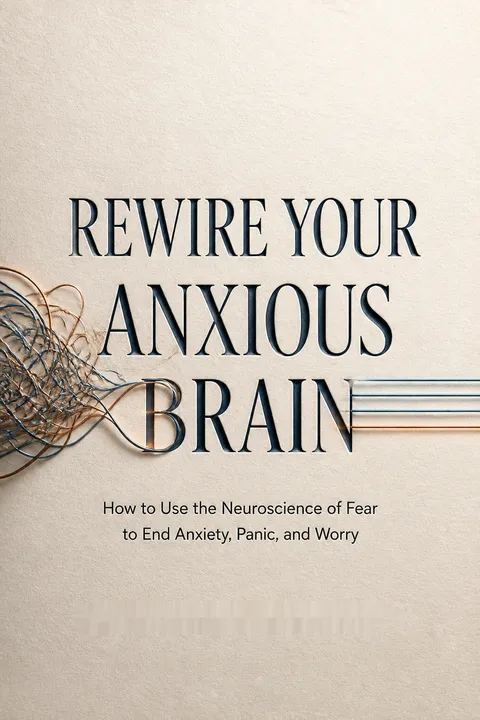
Rewire Your Anxious Brain receives mostly positive reviews for its clear explanation of anxiety's neurological basis and practical strategies to manage it. Readers appreciate the scientific approach and find the book helpful in understanding their anxiety. Many report improved coping skills after applying the techniques. Some criticize repetitiveness and simplistic advice, but overall, reviewers recommend it for those seeking to understand and manage anxiety. The book's focus on amygdala and cortex-based anxiety is highlighted as particularly insightful.
People Also Read






Glossary
Cortex pathway
Thought-led anxiety routeThe route in which sensory interpretations, memories, predictions, thoughts, or images contribute to anxiety by influencing the amygdala. Worrying about an uncertain event or interpreting an ordinary cue as threatening are examples. The book uses this term as a practical contrast with rapid amygdala-based responding, while recognizing that both processes can contribute to the same episode.
Amygdala pathway
Rapid alarm routeThe route through which sensory information can reach the amygdala quickly and activate a protective bodily response before conscious interpretation is complete. The book links this process with reactions such as sudden tension, a racing heart, or an urge to escape. It is a simplified model of fast threat processing, not a claim that anxiety involves only one brain structure.
Trigger
Learned anxiety cueA sensation, object, sound, smell, event, or situation that has acquired emotional significance and can bring on anxiety. A cue may become linked to a frightening experience even if it did not cause that experience. Triggers can also include internal sensations, such as dizziness or a pounding heart, and may affect someone without their knowing how the association formed.
Cognitive fusion
Treating thoughts as factsThe tendency to experience a thought or feeling as if it were an accurate description of reality, a prediction, or evidence of what someone will do. In anxiety, a person might mistake an imagined danger for proof that danger is imminent, or interpret an unwanted thought as proof of intent. The concept helps distinguish having a thought from believing or acting on it.
Cognitive defusion
Observing thoughts at a distanceA way of relating to thoughts as mental events rather than unquestionable truths. Instead of arguing with or obeying a distressing thought, a person notices that the thought is occurring and considers whether it deserves attention. The book presents mindfulness and deliberate observation as ways to practice this stance, reducing the extra anxiety created by treating every thought as evidence.
Exposure hierarchy
Ranked steps toward a fearA sequence of steps arranged from less to more anxiety-provoking for approaching a feared situation or cue. Each step breaks a larger challenge into practiceable components. For example, someone afraid of crowded shopping areas might progress from visiting the parking lot to entering a store and making a purchase. The hierarchy helps organize repeated exposure and track progress.
Progressive muscle relaxation
Tense and release musclesA relaxation technique that moves through groups of muscles, briefly tensing each group and then releasing it. The contrast helps a person notice and reduce tension. The book describes practicing with areas such as the hands, arms, legs, face, shoulders, and abdomen, while keeping breathing slow. People with injury or chronic pain may need a version that focuses on releasing muscles without first tensing them.
Interoceptive exposure
Practice with body sensationsA form of exposure that helps a person become more familiar with physical sensations associated with anxiety. The book gives examples such as vigorous activity, spinning, or breathing through a straw under appropriate guidance. The aim is to learn that sensations such as a faster heartbeat or light-headedness can be experienced without automatically treating them as proof of catastrophe. Clinical guidance may be important.
Worry circuit
Repeated anxious thought loopThe book’s label for a pattern in which anxious thoughts and emotional signals keep reinforcing one another, leaving a person preoccupied with possible problems that have not occurred. Rather than producing a useful plan, the loop repeatedly rehearses threats and maintains distress. The term describes a recurring pattern of activity, not a standalone diagnosis or a single brain pathway.
Neuroplasticity
The brain’s capacity to changeThe brain’s ability to alter connections and patterns of activity in response to experience, learning, thought, and behavior. The book uses neuroplasticity to explain why anxiety responses are not necessarily fixed: repeated practice, including exposure and new thinking habits, can support new patterns. Plasticity allows change, but it does not mean that every symptom can be quickly or completely changed by effort alone.
FAQ
What's "Rewire Your Anxious Brain" about?
- Focus on Anxiety: "Rewire Your Anxious Brain" by Catherine M. Pittman explores the neuroscience behind anxiety, fear, and panic, offering strategies to manage these emotions.
- Dual Pathways: The book explains how anxiety can originate from two different brain pathways: the amygdala and the cortex, each requiring different approaches for management.
- Practical Strategies: It provides practical techniques to rewire the brain's response to anxiety, emphasizing the importance of understanding and modifying brain circuitry.
- Scientific Foundation: The book is grounded in neuroscience research, making complex concepts accessible to help readers take control of their anxiety.
Why should I read "Rewire Your Anxious Brain"?
- Understanding Anxiety: It offers a deep understanding of the brain's role in anxiety, helping readers identify the root causes of their symptoms.
- Actionable Techniques: The book provides actionable strategies to manage anxiety, including relaxation techniques, exposure therapy, and cognitive restructuring.
- Empowerment: By understanding the science behind anxiety, readers can feel empowered to take control of their mental health.
- Expert Insights: Written by a clinical psychologist, the book combines professional expertise with practical advice, making it a valuable resource for anyone struggling with anxiety.
What are the key takeaways of "Rewire Your Anxious Brain"?
- Two Pathways: Anxiety can originate from the amygdala or the cortex, and each requires different management strategies.
- Neuroplasticity: The brain's ability to change and adapt (neuroplasticity) is crucial for overcoming anxiety.
- Exposure Therapy: Facing fears through exposure can help rewire the brain's response to anxiety triggers.
- Cognitive Techniques: Changing thought patterns can reduce anxiety by altering the brain's circuitry.
How does the amygdala contribute to anxiety according to the book?
- Emotional Memories: The amygdala forms emotional memories that can trigger anxiety responses when similar situations arise.
- Fight-or-Flight Response: It initiates the fight, flight, or freeze response, causing physiological changes like increased heart rate and muscle tension.
- Triggers: The amygdala responds to triggers based on past associations, even if they are not logically connected to current threats.
- Learning Through Experience: The amygdala learns from experience, meaning exposure to non-threatening situations can help reduce anxiety.
How does the cortex contribute to anxiety according to the book?
- Interpretations and Thoughts: The cortex can create anxiety through negative interpretations and thoughts about situations.
- Anticipation and Worry: It allows for anticipation of future events, which can lead to worry and anxiety if focused on negative outcomes.
- Cognitive Fusion: The cortex can cause anxiety by treating thoughts as reality, a process known as cognitive fusion.
- Changing Thoughts: By altering interpretations and thought patterns, the cortex's contribution to anxiety can be reduced.
What is exposure therapy and how is it used in the book?
- Facing Fears: Exposure therapy involves facing feared situations or objects to reduce anxiety responses over time.
- Gradual or Intense: It can be done gradually (systematic desensitization) or more intensely (flooding), depending on the individual's comfort level.
- Rewiring the Brain: By repeatedly exposing the amygdala to non-threatening experiences, new neural connections are formed, reducing anxiety.
- Practical Application: The book provides guidance on creating exposure hierarchies to systematically confront and overcome specific fears.
What role does neuroplasticity play in managing anxiety according to the book?
- Brain's Adaptability: Neuroplasticity refers to the brain's ability to change its structure and function in response to experiences.
- Rewiring Anxiety Responses: By engaging in new experiences and thought patterns, individuals can rewire their brain to respond differently to anxiety triggers.
- Long-Term Change: Consistent practice of new behaviors and thoughts can lead to lasting changes in the brain's circuitry, reducing anxiety.
- Empowerment: Understanding neuroplasticity empowers individuals to take active steps in managing their anxiety through targeted interventions.
What are some relaxation techniques mentioned in "Rewire Your Anxious Brain"?
- Breathing Exercises: Techniques like slow, deep breathing and diaphragmatic breathing help activate the parasympathetic nervous system to reduce anxiety.
- Progressive Muscle Relaxation: This involves tensing and then relaxing different muscle groups to alleviate tension and promote relaxation.
- Imagery and Visualization: Using positive imagery to mentally transport oneself to a calming place can help reduce stress and anxiety.
- Meditation and Mindfulness: Practices that focus on present-moment awareness can decrease amygdala activation and promote a sense of calm.
How does the book suggest using cognitive restructuring to manage anxiety?
- Identifying Thoughts: Recognize anxiety-igniting thoughts and understand how they contribute to anxiety.
- Challenging Beliefs: Use evidence to dispute irrational or exaggerated thoughts that lead to anxiety.
- Replacing Thoughts: Substitute anxiety-provoking thoughts with coping thoughts that promote calmness and resilience.
- Practice and Repetition: Consistently practicing cognitive restructuring can rewire the brain to adopt healthier thought patterns.
What are the best quotes from "Rewire Your Anxious Brain" and what do they mean?
- "Activate to generate": This phrase emphasizes the need to experience anxiety to create new neural connections and reduce fear responses.
- "Neurons that fire together wire together": It highlights the principle that repeated activation of neural pathways strengthens them, underscoring the importance of practice in rewiring the brain.
- "Courage is not the absence of fear; courage is acting despite fear": This quote encourages readers to face their fears through exposure, acknowledging that anxiety is a natural part of the process.
- "Focus on the positive": It reminds readers to direct their attention to positive experiences, which can help rewire the brain and reduce anxiety.
How does "Rewire Your Anxious Brain" address the role of exercise and sleep in managing anxiety?
- Exercise Benefits: Regular aerobic exercise can reduce anxiety by decreasing sympathetic nervous system activation and promoting endorphin release.
- Brain Chemistry: Exercise affects neurotransmitter levels in the brain, including serotonin and norepinephrine, which can calm the amygdala.
- Sleep Importance: Adequate sleep is crucial for reducing amygdala reactivity and maintaining overall mental health.
- Sleep Hygiene: The book provides tips for improving sleep quality, such as establishing a consistent sleep schedule and creating a conducive sleep environment.
What is the significance of mindfulness in "Rewire Your Anxious Brain"?
- Present-Moment Awareness: Mindfulness involves focusing on the present moment with acceptance and non-judgment, reducing anxiety by disengaging from distressing thoughts.
- Cortex Activation: Mindfulness practices activate parts of the cortex that help calm anxiety and promote emotional regulation.
- Acceptance Over Control: By accepting anxiety rather than trying to control it, mindfulness can reduce its power and influence over one's life.
- Practical Application: The book encourages incorporating mindfulness into daily routines to build resilience against anxiety.
About the Author
Other books by Catherine M. Pittman
Download PDF
Download EPUB
.epub digital book format is ideal for reading ebooks on phones, tablets, and e-readers.








