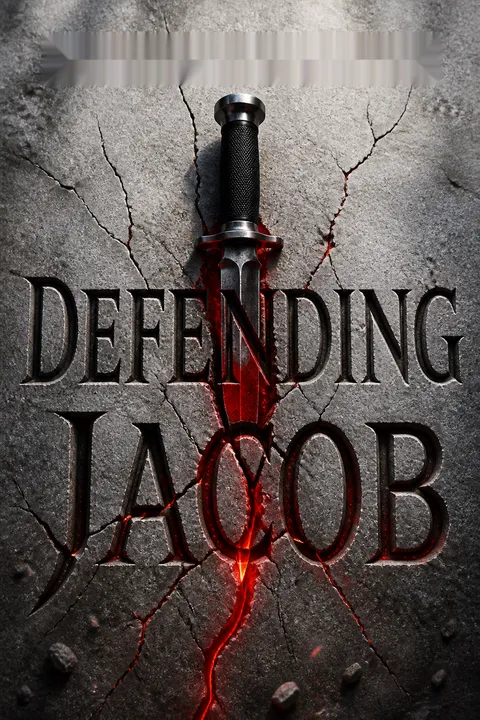


Plot Summary
The Case He Kept
Fourteen-year-old Ben Rifkin is found stabbed in Cold Spring Park, near the Newton school he shared with Jacob Barber. Andrew Barber, the county’s senior trial prosecutor and Jacob’s father, takes charge of the homicide almost immediately.
He knows his son barely knew Ben, so he dismisses the appearance of a conflict and treats the case as another demanding prosecution. A year later, unemployed and facing a grand jury, Andrew recounts how that decision unraveled his career and put his family under suspicion.
The evidence at the scene is sparse, but one bloodied fingerprint is preserved on Ben’s sweatshirt. Andrew does not yet know whose it is. He believes the law can uncover the truth, and that belief keeps him at the center of the investigation.
The opening binds public authority to private attachment before either has been tested. Andrew sees his professional role as a protection against bias, but his decision to keep the case quietly makes fatherhood part of the investigation. The grand jury frame introduces a second uncertainty: Andrew is not simply recounting events, he is selecting and interpreting them under pressure. His confidence in procedure is already shadowed by the possibility that a prosecutor’s judgment can be compromised without his recognizing it.
Newton Loses Its Shelter
At the Rifkins’ shiva, Newton’s school parents gather around Ben’s family, turning private mourning into a town-wide event. Andrew finds Ben’s father, Dan, alone and asking why anyone could kill a child, then requesting the certainty that an arrest might bring.
At home, Laurie Barber argues that McCormick School should stay closed until the killer is caught; Andrew insists that life must resume and promises the danger will soon pass. When the school reopens, police inspect students’ bags and use metal detectors.
Jacob says little, while Laurie watches him anxiously. Andrew intervenes when a police officer tries to confiscate a girl’s sweatshirt, then tells himself the security measures are mostly theater. His assurance steadies nobody for long.
The murder ruptures the town’s belief that careful parenting and an affluent suburb can keep childhood safe. Dan wants a culprit partly because uncertainty has become unbearable; Laurie wants physical safety before any return to routine. Andrew instead relies on the prosecutor’s familiar faith that danger can be contained by procedure. His school-side intervention shows that he can recognize needless displays of authority, yet he does not apply the same skepticism to his own promise that the killer will soon be found.
Patz Becomes the Answer
Five days into the investigation, Andrew finds no clear lead and grows impatient with the silence around Ben’s murder. State Police detective Paul Duffy brings him information about Leonard Patz, a large man living beside the park who has a record of sexual offenses involving boys.
Patz has recently faced another allegation, and he regularly walks in Cold Spring Park. Andrew treats those facts as motive and opportunity, although Duffy warns that no evidence connects Patz to the killing. Andrew orders Duffy to bring him in for questioning, despite the detective’s preference for quieter inquiries.
Meanwhile, District Attorney Lynn Canavan and Andrew’s former protégé, Neal Logiudice, challenge Andrew’s objectivity because Jacob attended Ben’s school. Andrew refuses to surrender the case, convinced he is following evidence rather than ambition.
Patz gives Andrew something the case has not offered: a coherent suspect-shaped story. That narrative is not yet proof, but it relieves the pressure of an unexplained child’s murder. Andrew’s impatience with Duffy’s caution exposes how easily professional experience can become confirmation bias. At the same time, Logiudice’s challenge is both ethically sound and politically charged. By refusing to step aside, Andrew turns a conflict-of-interest question into a test of his own integrity, making it harder for him to reassess either decision.
A Knife in Jacob’s Drawer
When investigators interview McCormick students, many deny even knowing Ben, despite evidence that he had friends. Sarah Groehl, the girl Andrew earlier helped at school, avoids giving him details but sends him toward a Facebook page where Jacob has argued with classmates.
One boy, Derek Yoo, has publicly accused Jacob of having a knife and killing Ben. Andrew searches Jacob’s room and finds a serrated folding knife hidden in a shirt. Jacob says he bought it because it looked interesting, not to threaten anyone.
Andrew believes him, but later throws the knife away rather than submitting it for testing. Laurie recognizes that disposing of it could look like protection of a suspect. Andrew insists it is only a way to keep a foolish purchase from being mistaken for a murder weapon.
The internet makes the children’s social world legible to adults, but not necessarily understandable. Andrew sees a record of cruelty and accusation where he had assumed his son’s life was mostly private and ordinary. His handling of the knife is more consequential than his stated belief in Jacob: he removes potentially useful evidence before anyone can evaluate it. The act is driven by protection, yet it creates the very appearance of concealment that a prosecutor would have treated as significant in someone else’s home.
The Fingerprint Names Jacob
After a community search for the missing murder weapon, police identify the fingerprint on Ben’s sweatshirt as Jacob’s. The print is clear and sits on a tag inside the bloodied garment, placing Jacob in contact with Ben after the attack began. Canavan removes Andrew from the case and tells him that Jacob will be arrested.
Andrew rushes home, searches his son’s room for anything else the police might seize, then waits outside as Duffy serves a warrant. Jacob is absent until officers find him hiding near his former elementary school. He tells them he found Ben already injured, tried to help, and fled in fear. At the station, he repeats that he wants his father. The family’s private nightmare becomes a first-degree murder prosecution.
The fingerprint does not settle what Jacob did, but it changes the scale of every earlier detail. Andrew’s professional habits now work against him: he understands exactly how evidence can be used, and he begins managing the investigation from inside the family. His search of Jacob’s room is both a father’s attempt to prevent harm and an act that resembles obstruction. The police statement offers an innocent explanation, but Jacob’s delay in reporting the body leaves the family with a fact that cannot be made harmless by love.
The Barber Bloodline
At Jacob’s arraignment, reporters call him a monster while Jonathan Klein, the family’s defense lawyer, insists on treating him as a frightened child. The judge sets modest bail, but the public humiliation follows the Barbers home in the form of murder graffiti.
Before court, Andrew tells Laurie the truth he has concealed for decades: his father, Billy Barber, is imprisoned for killing a girl, and earlier generations of the family were violent too. Andrew had told himself that erasing this history would give Jacob a clean start.
In the defense meeting, Jacob learns the secret from his parents and feels excluded from his own inheritance. Laurie raises the possibility of a genetic tendency to violence. Andrew rejects the idea, but the question has entered the family.
Andrew’s secrecy was intended as an act of protection, yet the timing makes it feel like a betrayal. He has treated knowledge as something he can contain and distribute according to need, just as he treats evidence in the case. Jacob’s reaction exposes the cost of that paternal control: a supposed blank slate can feel less like freedom than denial of identity. The family history does not prove anything about Jacob, but it makes biology and moral responsibility newly difficult for all three Barbers.
A Defense Turns Inward
As the trial approaches, defense psychiatrist Elizabeth Vogel questions the family about Jacob’s early behavior. Laurie recalls preschool injuries involving other children, his difficulty controlling himself, and years of petty theft.
Andrew dismisses these memories as ordinary childhood misbehavior, while Laurie wonders whether they missed signs that Jacob needed help. Their disagreements deepen an already damaged marriage. Vogel explains that the defense may need genetic evidence to argue that a predisposition affected Jacob’s impulse control, even though such evidence cannot establish guilt.
Andrew resists giving a DNA sample until Laurie reminds him that Jacob’s defense comes first. He visits his estranged father, Billy, in prison and obtains a swab. The examination offers no simple answer, but it forces the family to ask what can be inherited and what can be changed.
The psychiatrist’s questions turn family memory into contested evidence. Laurie reads old injuries as possible warning signs because the present gives them a terrible new meaning; Andrew resists because accepting her interpretation threatens both his image of Jacob and his own claim to have broken the family’s violent past. The genetic theory is strategically useful yet morally destabilizing. It can reduce blame by describing predisposition, but it can also make a child seem condemned before he acts.
Magrath Names Patz
Trying to build a defense the official investigation has abandoned, Andrew questions Sarah, who confirms that Ben had teased Jacob but refuses to become deeply involved. She directs him toward Derek, Jacob’s longtime friend.
Before reaching Derek, Andrew visits Matthew Magrath, the teenager whose earlier complaint brought Patz to police attention. Matthew admits that Patz paid him for sexual contact, then stopped when he became interested in another boy who walked through the park. Matthew says Patz had named Ben and carried a knife when approaching boys.
He also admits he invented the library incident to pressure Patz for money, making him an unreliable witness even as he tells Andrew the truth. Andrew leaves with a possible alternate killer, but no proof strong enough to persuade a jury.
Matthew’s account is morally compromised in exactly the way a courtroom finds difficult to absorb. He exploited Patz and lied to police, but those facts do not make his new information false. Andrew recognizes the evidentiary weakness while emotionally treating the account as certainty. The scene also reverses the usual roles: the former prosecutor must pursue a suspect without police resources, and he discovers that truth does not arrive in a form the legal system readily trusts.
Derek Opens the Wound
Andrew presses Derek at the Yoo home after Derek’s parents refuse to let him speak. Derek confirms that Ben repeatedly mocked Jacob, and that Jacob owned a knife and sometimes came to school with blood on his hand. He also describes Jacob reading graphic stories about torture, laughing at a disabled passerby, and once burying a dog he had found.
Derek admits he has never been sure what these moments mean, but they have made him uneasy about his friend. At home, Andrew searches Jacob’s iPod and finds a story closely resembling Ben’s murder among the boy’s saved writing. It may have been written by Jacob, but authorship is uncertain and its details were widely known. Andrew destroys the device rather than let investigators use it.
Derek’s account breaks through Andrew’s belief that loving a child means knowing him. None of the anecdotes proves murder, yet together they complicate the image of an entirely ordinary boy. Andrew responds by destroying the iPod, repeating his earlier decision with the knife: he protects Jacob from an interpretation before the evidence can be tested. His motive is understandable, but each intervention narrows the distance between a father defending his son and a man managing a case.
The Trial Begins
At trial, Logiudice presents Jacob as a bullied boy who planned a killing, then used his prosecutor father’s knowledge to hide it. He links the fingerprint, Jacob’s knife, Derek’s account, and the murder story found online.
Klein answers that Jacob found Ben after the attack and touched his sweatshirt while trying to help. Paula Giannetto, the jogger who discovered the body, confirms that she saw no one near Ben. A neighbor who glimpsed a boy in the park cannot identify Jacob with confidence, while dog-walker Sam Studnitzer recalls hearing Ben’s cry but seeing no attacker.
The prosecution’s account has emotional force, yet the witnesses do not directly place Jacob at the killing. The jurors hear the pain of the crime without a clear answer to why it happened.
The opening statements demonstrate how a trial converts incomplete facts into competing narratives. Logiudice gives the jury motive, preparation, and concealment, even though each depends on inference. Klein emphasizes the ordinary possibility that a frightened teenager touched a body and fled. The witnesses’ limitations matter, but so does the sound of Ben’s final distress, which gives the case an emotional center neither lawyer can control. The jury is asked to distinguish evidence from the story that makes it feel complete.
The Diagnosis Lands
After the first trial day, Vogel tells Andrew and Laurie that Jacob shows traits associated with narcissism and reactive attachment difficulties, including limited empathy and problems with impulse control.
She stresses that the observations do not establish that Jacob killed Ben, and that such traits can change, but her report also notes possible cruelty and emotional immaturity. Laurie is shaken because the assessment resembles concerns she has carried since Jacob was small. Andrew attacks the clinical language as an unjustified portrait of a monster.
Laurie accuses him of refusing to see what does not fit his hope. Their argument leaves the three-person defense divided: Klein must prepare for evidence of guilt, Laurie must face her doubts, and Andrew clings to the claim that Jacob is simply misunderstood.
Vogel’s assessment is not a verdict, but it strips away the family’s ability to treat the case as purely external. Her vocabulary turns remembered behavior into a pattern, while Andrew hears the danger of letting a pattern stand in for proof. Laurie is caught between maternal loyalty and an accumulating sense that her son may need help. The scene reveals that denial is not merely false belief; it can be an attachment strategy, preserving the family’s former self-image until reality makes that preservation impossible.
Evidence Without a Killer
State Police detective Paul Duffy testifies that the early investigation found no suspect and that Andrew’s focus on Patz had been reasonable. He also reveals that Canavan and Logiudice secretly pursued Jacob while Andrew still directed the case.
Criminalist Karen Rakowski explains that the blood pattern does not require the attacker to have been covered in blood, undercutting Klein’s argument that Jacob’s clean clothes prove innocence. She confirms the fingerprint was placed in wet blood during or soon after the attack, although she cannot say how it got there.
The murder weapon was never recovered; a knife found in a pond does not match the wounds. Klein exposes how little physical evidence links Jacob to the scene, but the central print remains difficult to explain.
The forensic testimony resists the simple logic both sides want. Absence of blood does not clear Jacob, and the fingerprint does not by itself prove that he stabbed Ben. Duffy’s account adds institutional complexity: the case against Jacob developed while Andrew was excluded from crucial decisions, but the same secrecy also makes Andrew’s earlier conflict harder to dismiss. Scientific expertise here does not deliver certainty. It defines the boundaries of what can responsibly be inferred, boundaries that the courtroom’s appetite for a culprit keeps pressing against.
The Best Friend Testifies
Derek tells the jury that Jacob had a knife, that Ben singled him out for repeated sexual taunts, and that Jacob had once described the murder story as his own writing. He recalls seeing a blood spot on Jacob’s hand on the morning Ben died. Derek also admits he did not report his suspicions immediately and deleted the email that carried the story, details Klein uses to question his reliability.
On cross-examination, Derek concedes he never saw Jacob threaten Ben or announce a plan to kill him. Still, the combination of the knife, the bullying, the blood, and the story shifts the courtroom’s mood. Andrew watches jurors stop taking notes and begins to imagine Jacob in prison. The defense’s earlier confidence is gone.
Derek’s testimony carries more force because it comes from intimacy rather than authority. He knows Jacob’s habits, but his friendship has not made his knowledge complete or consistent. His uncertainties weaken the prosecution’s precision, while his concrete memories make its theory emotionally persuasive. Andrew experiences the shift as a betrayal, though Derek is not inventing a case so much as admitting that affection could no longer silence his unease. The testimony marks the point at which doubt stops feeling like a legal tool and becomes a family wound.
A Confession Ends Trial
During the trial, a threatening note and a Lincoln Town Car appear near the Barber home. Andrew confronts the watcher with a baseball bat, but Duffy intervenes and identifies him as James O’Leary, a criminal fixer connected to Andrew’s imprisoned father.
Duffy also discovers that Logiudice once handled a serious case involving Patz and reduced the charge. The next morning, after Klein subpoenas Patz, police report that Patz has died by suicide and left a confession to Ben’s murder. Logiudice drops the case, and Jacob is freed before the jury delivers a verdict.
In the garage, Dan Rifkin approaches the family with a kitchen knife, but O’Leary disarms him. O’Leary says Andrew’s father sent him to protect them, leaving Andrew with relief and a troubling suspicion about how the confession came.
The confession resolves the legal crisis but refuses to provide clean moral closure. Patz’s death removes him from cross-examination, and the suddenness of the confession leaves its circumstances untested. O’Leary’s appearance suggests that Billy’s influence reaches beyond prison walls, yet Andrew has no proof of what that influence accomplished. The family is spared a verdict, not given a transparent account of the truth. Their rescue therefore carries a cost: Jacob is free, while the public can still wonder whether justice arrived or was arranged.
Jamaica’s Missing Hope
After Jacob’s release, the Barbers retreat from Newton and keep him out of school, relying on a home tutor while neighbors continue to treat him as suspect. Laurie slowly regains strength and proposes a family trip to a resort in Jamaica.
There Jacob befriends Hope Connors, a girl his age, and gives her Laurie’s maiden name so she will not find his case online. The family laughs and relaxes, briefly recovering an ordinary rhythm. Then Hope disappears.
On the evening she goes missing, Andrew notices reddish spots on Jacob’s swimsuit and tells him to rinse them in the sea, assuming they are food stains. Laurie wants to leave at once, but Andrew refuses, afraid departure will look like flight. Hope’s body is found weeks later, and the family returns to Boston under a new shadow.
The resort offers the Barbers a temporary identity untouched by court records, but Jacob’s borrowed surname shows that escape depends on concealment. Their happiness is genuine, not merely performative, which makes Hope’s disappearance more destabilizing. Andrew’s decision to stay protects Jacob from the appearance of guilt, yet it also reveals how thoroughly public judgment governs family choices. The red marks become significant only in retrospect, a reminder that ordinary details can acquire terrible meanings after uncertainty has already taken hold.
The Bridge at Ninety-Eight
Back in Massachusetts, Laurie grows quiet and distant; she never tells Andrew exactly what she suspects about Jacob and Hope. In April 2008, she drives Jacob to an interview at a private school while Andrew is away. Witnesses later report that her minivan accelerated toward a bridge abutment without braking.
Jacob dies in the crash, and Laurie survives. Andrew’s account to the grand jury reconstructs Jacob’s last moments as the consequence of a deliberate collision, while he refuses to say that Laurie murdered their son.
The grand jury is investigating her, and Logiudice presses Andrew to explain what happened to Jacob. Andrew’s testimony returns the story to its opening question: whether a father can recognize the truth about his child, and whether protecting a family can become another way of destroying it.
The ending gives Andrew the worst possible version of his earlier dilemma: he must decide what he knows about the people he loves when certainty is unavailable and the consequences are irreversible. Laurie’s silence after Jamaica and the witnesses’ account point toward deliberate action, but Andrew will not translate that implication into an accusation. His refusal may be loyalty, denial, or an attempt to preserve the only family bond left to him. The grand jury frame turns the reader into a listener to testimony, not a judge with full access to motive.
Analysis
Defending Jacob asks how people decide what they know when the evidence is incomplete and the cost of being wrong is intimate. Andrew’s career has trained him to distrust easy certainty, yet fatherhood gives him a motive to construct one: Jacob is innocent, Patz is guilty, and the law will eventually confirm it. His professional expertise does not cancel bias; it can make bias more articulate. He knows how to explain away evidence, how to frame an alternative story, and how to keep damaging information from view. Those skills protect Jacob in the short term while weakening the family’s ability to speak honestly to one another.
The book also refuses to make heredity a simple answer. Andrew’s violent ancestry shapes his fear, Laurie’s questions, and Jacob’s self-understanding, but it cannot establish what Jacob has done. Psychological diagnosis and genetic predisposition are similarly unstable: they may illuminate behavior, yet can become labels that substitute for proof. The law’s demand for a clean verdict meets the messier realities of temperament, memory, parenting, and social cruelty.
The children’s world is not incidental. School teasing, online accusation, and the competition for belonging provide the pressure that adults initially fail to see. Digital traces preserve words but not reliable context. Witnesses remember fragments, and families reinterpret old incidents through whatever catastrophe follows. Even Patz’s confession seems to resolve the murder only by raising new questions about who helped bring it about.
The final tragedy deepens rather than settles the central uncertainty. Andrew will not accuse Laurie, just as he could not fully imagine Jacob as dangerous. His loyalty is both an act of love and a limit on knowledge. The novel’s lasting challenge is not to choose cynicism over trust, but to recognize that love can distort perception while remaining indispensable to the people it binds.
Review Summary
Defending Jacob is a gripping legal thriller that captivated readers with its intense courtroom drama and exploration of family dynamics. Many praised the book's compelling plot twists, realistic characters, and thought-provoking themes about parental love and the nature of guilt. The ending was particularly impactful, leaving readers stunned and emotional. While some found certain plot points implausible, most agreed it was a page-turning read that raised intriguing questions about nature vs. nurture and the lengths parents will go to protect their children.
People Also Read










Characters
Andrew Barber
Father turned defendant's advocateAndrew is a veteran prosecutor and Jacob’s father, accustomed to controlling a case by separating evidence from emotion. He prides himself on discipline, skepticism, and knowing how criminal investigations work, yet his professional certainty cannot protect him from parental blind spots. He hides his own family history because he believes silence can spare his son its burden. When Jacob is accused, Andrew’s skill becomes both resource and danger: he can see how evidence may be misread, but he also learns to manage or remove evidence that threatens his child. His narration is intelligent and self-questioning, though his confidence often outruns what he can actually know.
Jacob Barber
Quiet boy under suspicionJacob is Andrew and Laurie’s fourteen-year-old son, a tall, private, bookish boy who prefers computers and solitary interests to sports or large social groups. At school he occupies an uncertain place among his peers, vulnerable to teasing and reluctant to explain himself to adults. His dry humor and guarded manner can look like composure, indifference, or defiance depending on who is watching. Jacob’s parents interpret his silences differently: Andrew sees a familiar adolescent reserve, while Laurie worries about what she may not understand. His case forces the adults around him to distinguish a difficult personality from proof of a crime.
Laurie Barber
Mother who keeps askingLaurie is Jacob’s mother and Andrew’s wife, a former teacher with a psychologist’s daughterly inheritance: she believes careful listening can reveal what fear conceals. She is warm, socially perceptive, and used to serving as the emotional center of her family and friends. Unlike Andrew, she is willing to revisit Jacob’s childhood and ask whether the family missed signs that he needed help. Her instinct to care can become painful self-scrutiny, especially when the legal crisis makes every parental choice seem consequential. She values connection but discovers that love does not guarantee access to another person’s inner life.
Neal Logiudice
Ambitious prosecutor and protégéNeal is Andrew’s former student and the prosecutor who takes over the Rifkin case. He is ambitious, methodical, and skilled at turning facts into a story jurors can remember. Andrew once saw him as an earnest outsider determined to earn his place; their professional relationship becomes strained as Neal seeks authority and Andrew refuses to yield it. Neal believes a prosecutor must press the strongest available case, but political ambition complicates how others read his choices. His courtroom confidence is real, yet he is also capable of forcing a theory beyond what the evidence can securely support.
Leonard Patz
Suspect near the parkPatz is a large, socially awkward man who lives near Cold Spring Park and has a record involving sexual offenses against boys. His routine walks in the park and his access to children make him a plausible early suspect, though the investigation initially lacks evidence tying him to Ben. Patz is guarded around police and relies on legal counsel when questioned. To Andrew, he becomes the alternative explanation that the official case stops pursuing. The difference between suspicion and proof, especially when a witness has credibility problems, defines how difficult it is to make Patz’s place in the case understood.
Paul Duffy
Detective and old friendDuffy is a State Police lieutenant who leads the homicide unit assigned to the district attorney’s office. He is a careful investigator and Andrew’s longtime friend, close enough to know the Barber family beyond the case file. His loyalty does not erase his duty, and the investigation forces him to testify against Jacob while remaining emotionally connected to Andrew. Duffy prefers patient inquiry to Andrew’s more forceful instincts. He is caught between institutional orders, personal trust, and the need to tell the truth in court, a conflict that leaves his friendship with Andrew altered even when neither man openly declares it.
Jonathan Klein
Jacob’s calm defense lawyerKlein is an experienced defense attorney whose quiet manner contrasts with Andrew’s combative instincts. He treats Jacob as a client with a right to make decisions, not merely as a child his parents must protect. Klein builds the defense around the prosecution’s burden of proof and warns that Jacob’s own account may not survive cross-examination. He resists Andrew’s desire to supply the jury with a complete alternate story, knowing that a weak countertheory could damage the defense. His patience and legal precision offer the family a steadier form of support than Andrew can provide.
Ben Rifkin
The murdered classmateBen is the fourteen-year-old whose killing transforms Newton and draws Jacob into the criminal investigation. His parents describe him as a good son, while classmates remember a popular boy who could tease and exclude others. Neither image wholly explains him. The distance between a grieving family’s memory and the more complicated social life of a middle school becomes part of the case, especially when students hesitate to talk about him honestly. Ben’s murder is not only a crime to solve; it is the loss around which every other character’s fears and judgments gather.
Sarah Groehl
Cautious student witnessSarah is a McCormick student who resists adult pressure and worries that anything she tells investigators will cease to be private. Andrew first meets her when he helps resolve a dispute with a school officer. She later nudges him toward the students’ online conversations and gives him a clearer picture of Jacob’s social position. Sarah is not a confident investigator or a central friend to either boy; her importance comes from noticing that adults do not understand what the students already know.
Derek Yoo
Jacob’s longtime friendDerek has known Jacob since kindergarten and shares years of ordinary childhood history with him. He is quiet, compliant, and uncomfortable when adults ask him to choose between friendship and disclosure. Derek understands the teasing Jacob endured, but he has also witnessed behavior that unsettled him. His testimony is colored by both affection and fear of being left alone with knowledge he cannot interpret. The case makes him confront the limits of loyalty: remaining a friend does not mean he can keep every troubling observation to himself.
Dr. Elizabeth Vogel
Defense psychiatristVogel is a psychiatrist and behavioral-genetics researcher hired to assess Jacob and prepare the defense for psychological evidence. She is direct, observant, and unwilling to provide reassurance simply because the family needs it. Her clinical role is not to decide whether Jacob committed murder, but to describe patterns and limits in what can be known. She challenges Andrew’s resistance and invites Laurie to speak candidly, while cautioning that diagnosis is not destiny. Her presence makes the family confront the difference between explaining behavior and excusing a crime.
William Billy Barber
Andrew’s imprisoned fatherBilly is Andrew’s estranged father, an imprisoned man whose violent past has shaped Andrew’s sense of family without being openly discussed. He is crude, self-dramatizing, and adept at turning vulnerability into a contest of control. Andrew has spent much of his adult life treating Billy as an absence, believing that refusal to engage can stop the past from passing forward. Their limited contact reveals a difficult mixture of resentment, curiosity, and biological connection. Billy is a reminder that ancestry can be emotionally powerful without serving as proof of a person’s character.
Matthew Magrath
Unreliable teenage witnessMatthew is a teenager from a financially strained family who becomes connected to Patz through paid sexual contact. He is streetwise, defensive, and willing to admit that he lied to police when it suited him. His account gives Andrew a possible lead about Ben, but Matthew’s history makes it difficult to use his information in court. He is neither an uncomplicated victim nor a dependable witness. His situation shows how vulnerability, need, and opportunism can coexist in a young person’s choices.
Dan Rifkin
Ben’s grieving fatherDan is Ben’s father, a controlled and rational-seeming man whose son’s murder leaves him searching for an explanation and a promise of closure. He turns to Andrew because the prosecutor represents the possibility that someone can restore order by identifying the killer. Grief gradually changes how Dan sees Andrew and the Barber family. His formal manner does not protect him from despair; it gives his pain a disciplined surface that can crack under the strain.
Joan Rifkin
Ben’s bereaved motherJoan is Ben’s mother and Dan’s wife. The murder places her inside a grief that strangers in town repeatedly make public, whether through sympathy, speculation, or attention to the case. She is a small, polished woman whose usual social poise cannot make the loss manageable. Her encounters with the Barber family show how differently two households experience the same accusation: one has lost a child, while the other fears losing one.
Lynn Canavan
District attorney and Andrew’s allyCanavan is the elected district attorney and Andrew’s longtime colleague. She is intelligent and politically alert, increasingly conscious that every office decision will be judged in public. Her friendship with Andrew is real but strained by the conflict his involvement creates. She must balance personal trust, institutional responsibility, and the need to present a credible case. Her caution may look cold to Andrew, though she sees the risks of allowing a prosecutor to investigate a crime touching his own family.
James O’Leary
A criminal fixerO’Leary, known as Father O’Leary, is an aging Boston criminal with a history of violence who now works as a fixer. He is practiced at intimidation and carries himself with the ease of someone accustomed to making other people’s problems disappear. His appearance around the Barbers suggests that old loyalties can reach into the present, though Andrew does not know precisely what has been arranged or why. O’Leary’s presence brings the family’s hidden history into the open without making its consequences fully knowable.
Hope Connors
Jacob’s vacation companionHope is a girl Jacob meets at the Jamaican resort where the Barbers try to recover from the trial. She is friendly, self-assured, and initially knows Jacob only by the name he gives her. Their tentative connection offers him a chance to be treated as an ordinary teenager rather than a notorious defendant. Her disappearance unsettles the fragile ease the family has found and casts a new uncertainty over their return to Massachusetts.
Toby Lanzman
Laurie’s steadfast friendToby is Laurie’s closest friend among the Newton parents, an energetic and dependable presence during the community’s early grief. She later helps Laurie rebuild strength through exercise and renewed friendship. Toby represents a social bond that can survive the town’s fear and suspicion.
David Yoo
Derek’s protective fatherDavid is Derek’s father and a longtime acquaintance of the Barbers. Once their families shared the ordinary routines of raising young children, but the murder case changes the terms of that relationship. He follows the prosecutor’s instruction and refuses Andrew access to Derek, prioritizing his son’s safety over old familiarity.
Plot Devices
Grand jury testimony
A delayed reckoningThe novel opens with Andrew testifying before a grand jury after the central events have already occurred. Neal Logiudice’s questions interrupt the chronology and make the reader reassess Andrew’s earlier choices: keeping the case, concealing Jacob’s knife, protecting his family, and withholding what he knows. The frame also creates suspense about the events that have not yet been explained, including why Andrew’s career ended and what the grand jury is investigating. By returning to the hearing at the close, the story turns a private family history into a public account under oath.
The bloodied fingerprint
Contact without explanationJacob’s print on a tag inside Ben’s bloodied sweatshirt is the prosecution’s most concrete link between the boys. It establishes that Jacob touched the garment while the blood was still wet, but it cannot show why or exactly when he touched it. Jacob says he found Ben and tried to help; the state treats the print as evidence of the attack. Because both explanations fit the physical fact, the fingerprint carries the case’s central tension between contact and culpability.
The digital trail
Private life becomes evidenceFacebook exchanges, email, a second account, and Jacob’s iPod turn adolescent social life into a lasting record. Online accusations reveal that students knew more about Jacob and Ben’s relationship than adults did. The story on the Cutting Room appears to describe the murder, but its authorship and source remain uncertain, while its details have circulated publicly. The devices expose both the investigative value and the interpretive danger of digital records: a post can be preserved with perfect clarity while its meaning remains disputed.
The Barber lineage
Inheritance versus choiceAndrew’s hidden family history of violence becomes the basis for arguments about genetic predisposition. Dr. Vogel considers whether behavioral genetics might help explain impulse control or mitigate a charge, while Andrew fears that the public will convert a complex scientific question into a claim that the Barbers are born violent. The idea affects how Jacob interprets himself and how his parents revisit his childhood. It does not prove guilt or innocence; its function is to make the family confront whether a past can shape a person without determining who that person becomes.
The missing knife
A choice that looks like concealmentJacob’s folding knife appears to support the prosecution’s theory, even though it is never proven to be the murder weapon. Andrew removes it from the home and disposes of it rather than submitting it for testing. Later, a different kitchen knife is found in the park, further complicating the evidence. The missing weapon becomes a measure of Andrew’s divided role: he is trained to preserve evidence as a prosecutor, but as a father he acts to shield Jacob from an inference he believes is false.
FAQ
Synopsis & Basic Details
What is Defending Jacob about?
- A Father's Moral Dilemma: The story centers on Andy Barber, a former prosecutor, whose life is upended when his son, Jacob, is accused of murdering a classmate. It explores the lengths a parent will go to protect their child, even when faced with mounting evidence.
- A Community Under Siege: The narrative also examines the impact of the murder on the seemingly idyllic town of Newton, Massachusetts, revealing the fear, suspicion, and judgment that surface within the community.
- A Legal and Psychological Thriller: The book blends elements of a legal thriller with a deep dive into the psychological complexities of the characters, particularly Andy, as he grapples with his own past and the possibility of his son's guilt.
Why should I read Defending Jacob?
- Moral Ambiguity: The novel challenges readers to question their own beliefs about justice, guilt, and innocence, presenting a morally ambiguous situation where the truth is elusive and the characters are deeply flawed.
- Psychological Depth: The story offers a compelling exploration of the human psyche, delving into the minds of the characters as they grapple with fear, doubt, and the weight of their pasts.
- Intricate Plot: The narrative is filled with twists and turns, keeping readers engaged and guessing until the very end, while also exploring the complexities of the legal system and the power of perception.
What is the background of Defending Jacob?
- Suburban Setting: The story is set in Newton, Massachusetts, a wealthy suburb known for its good schools and safe environment, which contrasts sharply with the violent crime that occurs. This setting highlights the fragility of suburban ideals and the illusion of safety.
- Legal System Focus: The novel is deeply rooted in the American legal system, exploring the intricacies of grand jury proceedings, trial strategies, and the challenges of proving guilt or innocence.
- Psychological Underpinnings: The narrative is informed by psychological concepts, such as the nature vs. nurture debate, the impact of trauma, and the complexities of human behavior, adding depth to the characters and their motivations.
What are the most memorable quotes in Defending Jacob?
- "They are bad guys because I am prosecuting them": This quote encapsulates the Prosecutor's Fallacy, highlighting the danger of confirmation bias and the potential for abuse of power within the legal system. It reveals Andy's awareness of the flaws in the system he once upheld.
- "You know, being confident isn't the same as being right. Think.": This quote, spoken by Laurie to Andy, underscores the theme of doubt and the importance of questioning one's own assumptions, even when faced with seemingly clear evidence. It also highlights the tension between Andy's confidence and Laurie's more cautious approach.
- "A jury verdict is just a guess—a well-intentioned guess, generally, but you simply cannot tell fact from fiction by taking a vote.": This quote reveals Andy's disillusionment with the court system, highlighting the limitations of the legal process and the inherent uncertainty of truth. It also underscores the theme of the power of the ritual and the religious symbolism of the court.
What writing style, narrative choices, and literary techniques does William Landay use?
- First-Person Perspective: The novel is narrated from Andy Barber's point of view, which allows readers to intimately experience his thoughts, emotions, and biases, creating a sense of immediacy and suspense. This perspective also limits the reader's access to the full truth, adding to the ambiguity of the story.
- Non-Linear Timeline: The narrative jumps between the present grand jury proceedings and past events, creating a sense of unease and foreshadowing, while also revealing the gradual unraveling of the Barber family.
- Foreshadowing and Red Herrings: Landay masterfully uses foreshadowing and red herrings to mislead the reader, creating a sense of suspense and uncertainty, while also highlighting the power of perception and the difficulty of discerning truth from fiction.
Hidden Details & Subtle Connections
What are some minor details that add significant meaning?
- The Five Fingers of Death Poster: The vintage movie poster in Jacob's room foreshadows the violence and martial arts-like precision of the murder, hinting at a darker side to Jacob's personality. It also symbolizes the influence of violent media on young minds.
- The Color Orange: The burnt-orange globes in the Rifkins' kitchen during the shiva create a warm, intimate atmosphere, which contrasts sharply with the cold reality of the murder. This detail highlights the artificiality of the community's attempt to find comfort in the face of tragedy.
- The Dog Owners in the Park: The fact that only dog owners continue to frequent Cold Spring Park after the murder highlights the community's fear and the way violence has disrupted their sense of safety. It also suggests a connection between the natural world and the primal nature of violence.
What are some subtle foreshadowing and callbacks?
- Dan Rifkin's Questions: Dan Rifkin's philosophical questions about the nature of evil and the capacity for violence foreshadow the moral dilemmas that Andy will face later in the story. His questions also highlight the limitations of the legal system in addressing the deeper questions of human nature.
- Laurie's Doubts: Laurie's repeated expressions of doubt about Jacob's safety and her unease with the school reopening foreshadow her eventual loss of faith in her son's innocence. Her concerns also highlight the emotional toll of the investigation on the family.
- The "Mindfuck" Concept: Jacob's use of the term "mindfuck" to describe being misled foreshadows the way Andy is manipulated by the evidence and his own biases, highlighting the theme of deception and the difficulty of discerning truth.
What are some unexpected character connections?
- Andy and Neal Logiudice: Despite being on opposite sides of the case, Andy and Neal share a history as colleagues and even friends, which adds a layer of complexity to their relationship. Their interactions reveal the personal and professional rivalries that exist within the legal system.
- Laurie and Toby Lanzman: Laurie and Toby's close friendship provides a sense of community and support for Laurie, but it also highlights the limitations of suburban friendships and the way they can be strained by tragedy.
- Andy and Paul Duffy: The close friendship between Andy and Paul Duffy, a state trooper, adds a layer of personal betrayal to the investigation, as Duffy is forced to investigate his friend's son. Their relationship highlights the conflict between personal loyalty and professional duty.
Who are the most significant supporting characters?
- Paul Duffy: As a state trooper and Andy's friend, Duffy represents the conflict between personal loyalty and professional duty. His presence highlights the complexities of the investigation and the way it strains relationships.
- Jonathan Klein: As the defense attorney, Klein provides a counterpoint to Andy's emotional turmoil, offering a more rational and strategic approach to the case. His presence highlights the importance of legal expertise and the challenges of navigating the court system.
- Lynn Canavan: As the district attorney, Canavan represents the political pressures and ethical dilemmas that exist within the legal system. Her decisions and actions highlight the complexities of power and the challenges of balancing justice with political ambition.
Psychological, Emotional, & Relational Analysis
What are some unspoken motivations of the characters?
- Andy's Need for Control: Andy's actions are driven by a deep-seated need for control, stemming from his own troubled past and his desire to protect his family. This need for control leads him to make questionable decisions and to ignore evidence that contradicts his beliefs.
- Laurie's Fear of the Unknown: Laurie's behavior is driven by a deep-seated fear of the unknown and a desire to protect her family from harm. This fear leads her to question Jacob's innocence and to make a tragic decision in the end.
- Jacob's Desire for Acceptance: Jacob's actions are driven by a desire for acceptance and a need to belong, which is why he is so affected by the bullying and why he seeks validation through his online presence. This desire for acceptance also makes him vulnerable to manipulation and misinterpretation.
What psychological complexities do the characters exhibit?
- Andy's Denial and Confirmation Bias: Andy's psychological complexity is evident in his denial of Jacob's guilt and his tendency to interpret evidence in a way that confirms his preconceived beliefs. This highlights the power of confirmation bias and the difficulty of remaining objective when faced with a personal crisis.
- Laurie's Internal Conflict: Laurie's psychological complexity is evident in her internal conflict between her love for her son and her growing doubts about his innocence. This conflict leads to a sense of despair and ultimately to a tragic decision.
- Jacob's Detachment and Narcissism: Jacob's psychological complexity is evident in his detachment from others and his narcissistic tendencies, which are revealed through his online behavior and his interactions with his parents. This highlights the challenges of understanding the inner lives of teenagers and the complexities of adolescent identity.
What are the major emotional turning points?
- The Discovery of the Knife: The discovery of the knife in Jacob's room marks a major emotional turning point for Andy, as it forces him to confront the possibility of his son's guilt. This moment also highlights the tension between Andy's love for his son and his professional duty.
- The Revelation of the Fingerprint: The revelation that Jacob's fingerprint was found on Ben Rifkin's sweatshirt marks a major emotional turning point for Andy and Laurie, as it seems to confirm their worst fears. This moment also highlights the power of physical evidence and the challenges of maintaining faith in the face of seemingly irrefutable proof.
- The Confession and Suicide: Patz's confession and suicide mark a major emotional turning point for the Barber family, as it exonerates Jacob but also raises questions about the true nature of justice and the lengths to which people will go to protect their own. This moment also highlights the limitations of the legal system and the enduring impact of violence.
How do relationship dynamics evolve?
- Andy and Laurie's Marriage: The relationship between Andy and Laurie evolves from a seemingly stable partnership to one marked by tension, doubt, and ultimately, tragedy. The investigation and trial expose the fault lines in their marriage, highlighting the challenges of maintaining intimacy and trust in the face of crisis.
- Andy and Jacob's Father-Son Bond: The relationship between Andy and Jacob evolves from a seemingly close bond to one marked by suspicion, distance, and ultimately, loss. The investigation and trial force Andy to confront his own limitations as a father and the challenges of protecting his son from harm.
- Jacob and Derek's Friendship: The friendship between Jacob and Derek evolves from a seemingly close bond to one marked by doubt, betrayal, and ultimately, loss. Derek's testimony highlights the complexities of adolescent friendships and the challenges of maintaining loyalty in the face of suspicion.
Interpretation & Debate
Which parts of the story remain ambiguous or open-ended?
- Jacob's True Nature: The novel leaves the reader questioning Jacob's true nature, never fully revealing whether he is innocent or guilty. This ambiguity highlights the difficulty of knowing another person's inner thoughts and motivations, even those closest to us.
- The Motive for the Murder: The novel never fully explains the motive for Ben Rifkin's murder, leaving the reader to speculate about the true reasons behind the crime. This ambiguity highlights the limitations of the legal system in addressing the deeper questions of human nature.
- The Meaning of the Ending: The novel's ending, with Laurie's tragic decision, is open to interpretation, leaving the reader to ponder the meaning of her actions and the ultimate consequences of doubt and suspicion. This ambiguity highlights the enduring impact of trauma and the challenges of finding closure in the face of tragedy.
What are some debatable, controversial scenes or moments in Defending Jacob?
- Andy's Decision to Hide the Knife: Andy's decision to hide the knife he finds in Jacob's room is a controversial moment, raising questions about his integrity and his willingness to protect his son at all costs. This moment also highlights the ethical dilemmas faced by parents when their children are accused of wrongdoing.
- Laurie's Doubts and Actions: Laurie's growing doubts about Jacob's innocence and her eventual decision to drive off the road with him are controversial moments, raising questions about the limits of parental love and the devastating consequences of doubt. These moments also highlight the emotional toll of the investigation on the family.
- The Portrayal of Leonard Patz: The portrayal of Leonard Patz as a pedophile and a potential murderer is a controversial aspect of the novel, raising questions about the way society views and treats individuals with a history of sexual offenses. This portrayal also highlights the dangers of prejudice and the challenges of remaining objective when faced with a morally repugnant character.
Defending Jacob Ending Explained: How It Ends & What It Means
- Laurie's Despair and Jacob's Death: The ending of "Defending Jacob" sees Laurie, overwhelmed by doubt and the weight of her family's situation, drive off the road with Jacob, resulting in his death and her own serious injuries. This act is a culmination of her internal struggle and her inability to reconcile her love for her son with the possibility of his guilt.
- The Ambiguity of Jacob's Guilt: The ending leaves the question of Jacob's guilt unanswered, as the reader is left to ponder whether he was truly innocent or if Laurie's actions were a desperate attempt to protect the world from a dangerous individual. This ambiguity highlights the novel's central theme of the elusiveness of truth and the limitations of human understanding.
- The Enduring Impact of Doubt: The ending underscores the devastating impact of doubt and suspicion on a family, as Laurie's actions are driven by her inability to reconcile her love for her son with the possibility of his guilt. This highlights the destructive power of doubt and the challenges of maintaining faith in the face of uncertainty.
Download PDF
Download EPUB
.epub digital book format is ideal for reading ebooks on phones, tablets, and e-readers.








