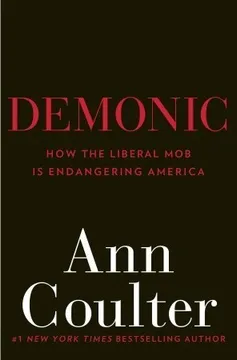


Key Takeaways
When politics becomes a mob, shared certainty can overpower individual judgment.
The book's premise. Coulter uses Gustave Le Bon's 1895 account of crowd psychology to argue that groups can act less thoughtfully than their members do alone. Under shared emotion, she says, people rely on simple images, idolize leaders, and cast opponents as enemies. Her sharpest claim is that liberal Democratic politics depends on mobilizing crowds in this way. The book applies this interpretation to protests, political messaging, and the media's treatment of public figures.
A diagnostic, not a verdict. The practical question is whether a movement permits dissent, checks claims, and accepts lawful limits. Coulter's label of liberalism as a mob is a partisan argument, not a neutral finding about every liberal or Democrat. Collective action can also organize legitimate reform, so the methods and evidence matter more than the label.
What's useful is the distinction between a crowd's size and the quality of its judgment. Social psychology recognizes that group settings can intensify emotion and conformity, but they can also help people coordinate, share information, and challenge power. The same march can be orderly or coercive, depending on its norms and leadership. The book's framework is strongest as a warning about unchecked certainty, not as a reliable test for sorting one political side from another. Applying it consistently means examining conduct across movements, including those a reader supports.
Use slogans as signals to investigate, not substitutes for evidence.
How a message spreads. Drawing on Le Bon, Coulter describes three ways a political claim can take hold: affirmation, or stating it confidently; repetition, or saying it again and again; and contagion, or its rapid spread through a group. She argues that slogans and vivid images are memorable precisely because they avoid the slower work of explaining a policy. As an example, she criticizes the image of a president inheriting a car in a ditch, saying it offers a simple culprit while obscuring a complicated financial crisis.
Test the compression. A slogan can make an idea easy to remember, but it also leaves out causes, tradeoffs, and evidence. Ask what facts would confirm or disprove the claim, and whether the same standard is applied to allies and opponents.
The point connects to a basic feature of human cognition: fluent, familiar statements can feel more credible simply because they are easy to process. Repetition can also help people coordinate around a real grievance, so brevity is not itself evidence of manipulation. The decisive question is whether a slogan opens a path to explanation or closes it. A useful habit is to translate the chant into a testable proposition, then look for evidence that could prove it wrong as well as right.
Don't confuse a leader's charisma with proof of competence.
The politics of adoration. Coulter argues that crowds turn favored politicians into symbolic saviors and opponents into embodiments of evil. She points to media coverage that presented Franklin Roosevelt, John Kennedy, Bill Clinton, and Barack Obama in unusually romantic or reverential terms. By contrast, she describes conservatives as more willing to criticize Ronald Reagan, even while admiring him. For her, this imbalance shows a difference between rational support and mob-like devotion.
Separate image from record. Emotional enthusiasm can make a campaign compelling, but affection is not evidence that a leader can deliver. The book's examples invite readers to compare the promises, governing choices, and outcomes rather than treating popularity as proof of either virtue or failure.
Political communication often relies on a candidate becoming a recognizable symbol, not just a bundle of policy positions. That can build trust and motivate participation, but it also makes scrutiny feel like betrayal. The book's contrast between left and right is too sweeping to establish a uniquely liberal habit: conservative movements can also form intense personal loyalties. The transferable lesson is symmetrical. A leader's appeal should increase curiosity about the record, not lower the evidentiary bar.
Study the French Revolution to see how virtue can justify terror.
From grievance to purge. Coulter presents the French Revolution as a warning about political movements that claim to act for the people while rejecting restraints. She recounts how rumors helped drive the 1789 storming of the Bastille, then describes attacks on the royal family, the execution of Louis XVI and Marie Antoinette, and the Reign of Terror. In that period, revolutionaries used accusations of disloyalty to justify executions, including the deaths of former allies.
A contrasting founding. The book sets this against the American Revolution, emphasizing advance planning, political argument, and the creation of a Constitution designed to limit power. Coulter's contrast is stark: one revolution culminates in terror, the other in a durable system of rules.
The comparison makes a vivid case that moral certainty becomes dangerous when it removes due process and treats disagreement as treason. Historical revolutions, however, do not reduce neatly to a single psychological cause. France's fiscal crisis, social inequalities, war, and institutional breakdown also shaped events, and the American Revolution had its own violence and exclusions. Those complications do not erase the warning. They make it more precise: examine how leaders handle opposition and constrain their own power, not merely the ideals they proclaim.
Protect due process when a crowd insists the verdict is obvious.
The case at the center. Coulter disputes the 2002 exoneration of five teenagers convicted in the 1989 Central Park jogger assault. The convictions were vacated after Matias Reyes confessed and DNA evidence linked him to the attack. Coulter argues that Reyes's claim to have acted alone did not disprove the teenagers' detailed confessions, which she says were supported by other testimony and evidence. She portrays the later reversal as a media-driven retrial that gave insufficient weight to the original proceedings.
Keep the safeguards. The case illustrates the book's broader defense of courtroom procedure against public judgment. Its own narrative is contested, and the seriousness of the original convictions makes careful review essential. Neither a confession nor a later exonerating claim should end inquiry without testing how it was obtained and corroborated.
The case is a useful test of whether due process is valued as a principle or only when it produces a preferred result. Confessions can contain reliable detail, but they can also be affected by pressure, especially when suspects are young. DNA evidence can identify a contributor without necessarily resolving who else participated. Those complications support neither reflexive dismissal nor reflexive belief. They call for independent review, transparent records, and consistent standards for evidence that incriminates and evidence that exonerates.
Judge political violence by documented acts, not partisan predictions.
Separate rhetoric from responsibility. Coulter challenges claims that right-wing language caused particular acts of violence. In discussing the 2011 shooting at a Gabrielle Giffords event, she argues that early media accusations against Sarah Palin and the Tea Party outran evidence about the gunman's politics or influences. She also revisits the Oklahoma City bombing, rejecting the immediate portrayal of Timothy McVeigh as a conventional conservative. Across these examples, she contrasts predictions of right-wing violence with attacks and intimidation she attributes to left-wing activists.
Count carefully. The book's central demand is that claims about political violence be supported by specific evidence rather than association or metaphor. Its own sweeping comparison of the two sides, however, also requires scrutiny: definitions, time periods, and selected cases can change the apparent pattern.
A causal claim about rhetoric needs more than a violent event and a politically charged phrase. It requires evidence that the perpetrator encountered the message, interpreted it as a call to act, and was influenced by it. Yet the opposite shortcut is equally weak: a lack of explicit instructions does not establish that political speech has no effects. The book is right to resist instant attribution, but its partisan counterclaim should meet the same standard. Reliable comparison needs transparent categories and representative data.
Notice when elite approval disguises conformity as courageous dissent.
The pull of status. Coulter argues that some people adopt fashionable political positions less from independent conviction than from a desire for approval among influential peers. She calls attention to celebrities praised for opposing conservative views, while those who defy progressive consensus, such as singer Justin Bieber when discussing abortion, face ridicule. She also recounts financial commentator Jim Cramer's public deference to Jon Stewart after Stewart criticized him, presenting the exchange as a ritual of submission to a cultural gatekeeper.
Ask who is applauding. The book's point is not that every celebrity or commentator is insincere. It is that praise and mockery can reward conformity while making it feel like moral courage. A position deserves examination on its arguments, not on how prestigious its audience appears.
Reputation is a real incentive, especially in fields where visibility, invitations, and professional networks matter. It can shape what people say without proving that their convictions are false. The distinction is between social pressure and argument: a popular view may be right, and an unpopular view may be wrong. Coulter's examples use ridicule to expose one status hierarchy, but satire can create its own in-group and out-group. A fair test asks what evidence would persuade the speaker to revise the claim.
Trace civil-rights claims through roll calls, not party folklore.
Follow the votes. Coulter challenges the familiar story that Republicans opposed civil rights while Democrats led the cause. She highlights congressional voting records on civil-rights legislation, noting that Republicans supported the 1964 act at higher rates than Democrats in both chambers. She also credits Eisenhower with enforcing school desegregation in Little Rock and Nixon with accelerating integration of Southern schools. Her argument is that later party narratives simplify a history in which political incentives and policy positions shifted.
Read the whole record. Voting data can expose convenient omissions, but one bill or era cannot explain an entire party's history. The book's evidence is best used to question inherited accounts and prompt closer checking, not to replace one sweeping partisan story with another.
Roll calls are valuable because they make political claims checkable against specific decisions. But the meaning of a vote depends on the bill's provisions, the available alternatives, and the coalitions behind it. Parties also changed over time, so a historical vote cannot stand in for every later position or voter. The strongest use of this material is forensic: establish what legislators did, then explain the context and consequences. That method is more durable than awarding either party permanent ownership of a moral cause.
Resist utopian fixes that concentrate power in the name of unity.
The danger of one answer. Coulter links the French Revolution's idea of a state expressing the people's unified will to later revolutionary projects that sought to remake society from above. She contrasts that vision with the American Constitution's division of authority and protection of individual rights. In modern politics, she uses the campaign for national health care as an example of a sweeping plan sold as a cure for problems she argues government mandates had helped create.
Judge the mechanism. The warning is to ask who gains power, how errors can be corrected, and whether people can refuse or revise a policy. Large public programs are not automatically totalitarian, but ambitious promises deserve scrutiny of their costs, safeguards, and results.
The distinction between designing a policy and controlling the people subject to it is crucial. Constitutional checks can slow abuses, while decentralized decisions can allow experimentation and correction. Central coordination can also address problems that local actors cannot solve alone. The relevant test is not whether a proposal is ambitious, but whether authority is accountable, evidence is open to challenge, and failure can be repaired. That standard preserves the book's caution about utopian certainty without treating every collective solution as tyranny.
Analysis
Demonic is a 2011 political polemic organized around a historical analogy. Coulter begins with Gustave Le Bon's theory of crowd behavior, then moves through the French Revolution, the American founding, campus protest, civil-rights politics, criminal cases, and contemporary media. Across these settings, she argues that collective passion can replace reason, that elites reward conformity, and that movements claiming to speak for the people may threaten individual rights. The narrative's force comes from returning to a single lens: compare what political actors say they defend with how they treat opponents, institutions, and evidence.
The adaptation's central challenge is that the book's thesis is also its partisan accusation. Coulter applies the label of mob behavior chiefly to liberal Democrats, while presenting conservative politics as more deliberative and law-abiding. That conclusion cannot be treated as an established finding simply because the book supplies vivid examples. Its method often relies on selected quotations, disputed historical interpretations, and comparisons that do not always use matching definitions. The argument against careless media attribution is strongest when it asks for specific evidence; it is weaker when the same standard is not visibly applied to its own claims. The most durable value lies in the questions the polemic raises. Do political groups tolerate dissent? Do they distinguish accusation from proof? Do they accept constraints when those constraints frustrate their goals? The French and American revolutions offer a memorable contrast between revolutionary certainty and constitutional restraint, though their histories are more complicated than a clean moral binary. Likewise, the Central Park case shows why due process must protect both public safety and the possibility of correcting error.
Read as a warning about group certainty, status incentives, and political mythmaking, the book remains provocative. Read as a neutral account of which modern party embodies those dangers, it requires substantial independent verification. Its most useful discipline is therefore symmetrical scrutiny: test the crowd's story, including the crowd one already belongs to.
Review Summary
Reviews of Demonic are sharply divided along political lines. Supporters praise Coulter's detailed research, sharp wit, and compelling comparison of the American and French Revolutions, arguing her facts are well-documented and her mob psychology analysis insightful. Critics, however, accuse her of gross generalizations, half-truths, manipulative rhetoric, and partisan bias, arguing she disguises propaganda as analysis. Many note her abrasive style alienates potential readers. The book's central thesis — that liberals embody mob mentality — is seen as either a bold, substantiated argument or an inflammatory, unsupported attack on Democrats.
People Also Read







Glossary
The Crowd: A Study of the Popular Mind
Le Bon's crowd psychology studyAn 1895 book by Gustave Le Bon that Coulter uses as her main framework for interpreting collective political behavior. Le Bon argues that crowds can become suggestible, emotionally contagious, and less responsive to careful reasoning than individuals acting alone. Coulter applies this model to political movements and media. It is the book's chosen interpretive lens, not a settled rule about every group.
general will
A unified public purposeA political idea associated in the book with Jean-Jacques Rousseau: legitimate government should express the common will of the people, rather than merely balance competing private interests. Coulter argues that treating one political program as the people's single true will can justify coercion against dissenters. The term's meaning has varied across political theory, so it should not be treated as identical to ordinary majority rule.
October Surprise
Alleged 1980 hostage dealThe name for an allegation that Ronald Reagan's campaign secretly arranged with Iranian representatives to delay the release of U.S. hostages until after the 1980 election, harming President Jimmy Carter's prospects. Coulter recounts the media attention and congressional investigations that followed, emphasizing their conclusion that credible evidence did not support the alleged agreement.
Show Trials
Media-led retrialsCoulter's term for public reconsiderations of criminal cases that she believes bypass normal courtroom safeguards and favor a predetermined conclusion. She applies it especially to the Central Park jogger case, arguing that media coverage and later legal review gave inadequate weight to the original trial evidence. The phrase expresses her criticism; it does not itself establish that a proceeding was unfair.
Strange New Respect
Praise for anti-partisan defectorsCoulter's label for approval she says liberals give conservative figures who criticize other conservatives, particularly when the criticism is not required by a specific policy disagreement. In her account, the praise rewards a break with one's own political group and demonstrates the influence of elite approval. It is a satirical description of perceived media and social incentives, not a formal political-science framework.
Download PDF
Download EPUB
.epub digital book format is ideal for reading ebooks on phones, tablets, and e-readers.








