

Plot Summary
The Slayer Becomes What He Hunted
In the wreckage of Chickoa's farm, the goddess Idun's final act has turned Magnar, a slayer sworn to destroy vampires, into one. The battle has also killed Miles and Warren, two of the Belvedere family, and left their survivors stunned among the burning ruins. Magnar's new strength is terrifying: when Fabian steps between him and Callie, Magnar breaks his bones with one blow.
Callie trusts the man she loves, but Magnar refuses the bottled blood offered to him, believing that feeding would make him a monster. He agrees to remain undead only because Callie asks him to live long enough to reach the holy mountain and break the curse. His brother Julius fears Magnar may instead ask him for death.
The transformation forces Magnar to confront the difference between moral identity and bodily appetite. He has spent his life defining himself through opposition to vampires, so the curse feels like an erasure of the person he believes himself to be. Callie's trust does not erase the danger; it gives him a reason to resist despair. The scene also makes the journey's urgency personal: the group is not pursuing prophecy from curiosity, but trying to keep Magnar alive without asking him to betray everything he has believed.
Miles and Warren's Absence
As the group prepares to leave the ruined farm, Montana tries to comfort Erik, her husband, but he withdraws into silence and asks to be left alone. Chickoa, whose home has burned, insists on joining the journey and pockets a photograph of her dead husband. Callie and Julius follow Magnar into the trees with bottled blood, though Magnar still refuses to drink.
The survivors load what supplies remain into an armored truck and set out for the holy mountain, carrying grief alongside their weapons. Erik drives past the place where Miles and Warren died without looking back. When the truck's charge finally runs out on a barren road, the group must abandon it and continue on foot, exposed to the landscape and whatever is hunting them.
Grief appears here not as a single shared feeling but as incompatible ways of staying functional. Montana reaches for connection, while Erik uses distance to keep his pain from spilling outward. Chickoa's photograph gives mourning a physical object to protect, a small act of continuity after her home and husband are gone. The failed truck turns emotional fracture into practical vulnerability: the group cannot pause long enough to reconcile, because survival keeps converting private loss into collective risk.
Magnar Loses the Fight
With the truck stranded, the group walks through ruined country while Magnar keeps away from Callie and Julius, trying to avoid their scent. Exhaustion and hunger gradually strip away his control.
When he sees Fabian carrying an exhausted Callie, jealousy and bloodlust combine; Magnar grabs her hard, then attacks Fabian, Erik, and Julius in succession. Callie unleashes her Dream Weaver power without intending to, knocking Magnar unconscious before his fangs reach Julius's throat. The others argue over whether to force blood into him while he sleeps.
Callie and Julius insist that feeding must remain Magnar's choice, so Erik carries his unconscious brother toward shelter. Their decision protects Magnar's dignity, but everyone now understands that his refusal is putting the whole group in danger.
The attack complicates the distinction between consent and compulsion. Magnar's refusal is an ethical choice, yet the curse progressively damages the capacities that make choice meaningful. Callie's power interrupts the violence without resolving its cause, buying time rather than control. Meanwhile, Magnar's possessiveness over Callie exposes how a protective instinct can become coercive when fear is allowed to speak for love. The group has to hold two truths together: Magnar is responsible for his actions, and the curse is altering the conditions under which he acts.
Blood Given, Not Taken
When Magnar wakes in a shelter, he remembers nearly attacking Julius and finds the thirst worse than before. Callie offers her wrist, but he cannot accept the idea of using her as food. Instead, she helps him understand that taking blood need not cancel his love or make him identical to the creatures he once hunted.
He eventually bites her during their intimacy, and the blood steadies him without venom or lasting injury. At the same shelter, Callie enters Valentina's dream and forces the vampire queen to reveal her position: Valentina is several days behind, but has a helicopter ready once her Familiars locate the group. The reprieve is real, but so is the threat of a rapid pursuit.
Callie's offer changes feeding from an act of predation into a negotiated intimacy, though the power imbalance remains real: Magnar is desperate, and she is the one choosing to risk her body. The distinction matters because the story refuses to make his hunger harmless; it asks whether care can create a form of consent under pressure. Callie's dream incursion performs a parallel act of access. She enters Valentina's private mind not to dominate for pleasure, but to obtain information that gives the group a chance to keep moving.
Memphis's Human Bait
While searching a bombed town for food, Montana and Erik discover that its emptied shops have been stripped by humans living beyond the vampires' former borders. A scream leads them into a square, where Memphis, a rebel vampire, holds a captive human girl and surrounds the pair with armed followers.
Memphis has taken Valentina's bounty and wants revenge on Erik for claiming authority over people who rejected his rule. Montana tries to bluff that an army is nearby, but hidden gunmen have already trapped them.
Her sword warns that reinforcements are closing in; then the group's allies strike from the ruins, scattering Memphis's fighters and freeing the girl. Before the survivors can regroup, Erik and Julius spot a much larger horde approaching and order everyone to flee.
The ambush exposes a political problem the protagonists cannot solve by defeating Valentina alone. Memphis's rebellion is fueled by resentment toward the Belvederes' rule, and his appeal to free human survivors shows how imperial order can look like another form of domination from outside its protected borders. The captive girl makes that conflict concrete: humans are still prey even when they live beyond the official system. The rescue wins a moment, not legitimacy, and the incoming horde turns unresolved politics into immediate pursuit.
Earth Opens Under Erik
Magnar meets the pursuing horde with the violence of his new vampire strength, hurling an abandoned truck into the attackers. As the others flee, Erik discovers that Idun's blood has given him power over earth and growing things. He raises a barrier that swallows much of Memphis's force, then uses roots and soil to trap Memphis and kill him.
The power drains Erik so severely that his thirst takes over; he attacks Julius before Montana and the others restrain him with bottled blood. Later, when sunlight breaks through the clouds, Erik remains unharmed, revealing another gift from Idun's blood. The survivors escape the town, but their emerging powers bring no easy safety. They also deepen the burden of the losses Erik has not yet faced.
Erik's power arrives as both rescue and liability. He can reshape a battlefield, but the effort leaves him vulnerable to the same thirst he is trying to manage in others. The suddenness of that exchange makes power less a solution than an intensified responsibility: saving the group creates a new danger inside it. His sunlight immunity also marks him as changed in a way that challenges the rules holding the group together. Yet the ability does not heal grief; his body can outlast the sun while his mind remains caught at the farm.
The Mall's Blood Price
At a ruined mall, the group finds food, clean clothes, and a limited cache of supplies, but the vampires' bottled blood is nearly gone. Montana and Callie resist becoming the group's regular food source until hunger overwhelms them.
Julius cuts his wrist for Montana, then later offers blood to the others; Callie loses control and feeds from him before Erik pulls her away. To keep the rest from attacking, Julius collects his blood in a bottle, and Callie eventually gives blood as well, setting limits on what she can safely provide.
Meanwhile, Erik admits to Montana that he blames himself for Miles and Warren's deaths because he had relaxed his vigilance. She helps him see that he cannot control every danger, and the two begin repairing the distance between them.
The mall brings the group's moral ideals into collision with bodily necessity. Julius's offer is generous, but Callie's involuntary feeding shows that generosity cannot guarantee control once the thirst has taken hold. The improvised bottle system creates boundaries where instinct threatens to erase them. Erik's conversation with Montana parallels this negotiation: he must relinquish the fantasy that vigilance can prevent every loss, while she must accept that supporting him cannot mean absorbing all his pain. Their intimacy improves when responsibility becomes shared rather than unilateral.
The Beach Between Wars
After days of cold travel and dwindling blood, the group reaches a beach and allows itself one night of rest. Montana and Callie share the sunlight and remember their parents, while the group swims, eats Magnar's improvised meal, and briefly experiences the world beyond the Realms. Fabian, long estranged from Chickoa, finally apologizes for turning her and for the harm he caused Callie and humanity.
Chickoa follows him into the trees to talk, leaving a chance for their old love to heal. Encouraged by Magnar, Julius stops denying his feelings for Clarice, and she accepts his offer to build a life together. The reprieve gives the travelers new bonds to protect, even as Helgafell and Valentina remain ahead.
The beach is not an escape from the plot so much as a measure of what the characters have been denied. Its open horizon contrasts with the fenced Realms, while ordinary pleasures make political liberation imaginable as lived experience rather than an abstract outcome. The relationships also move from grievance toward repair, but only after characters name the harm they caused. Fabian's apology cannot undo the past; Julius and Clarice's choice cannot guarantee safety. Their significance is that they begin choosing a future before the future is secure.
Familiars Tear the Trail
Near the mountain pass, Valentina's Familiars drive the group into the forest. Callie and Montana lose the others when they tumble down a steep slope; Montana breaks her back against a tree, and Callie's blood triggers her twin's hunger.
Callie offers her wrist, allowing Montana to feed and heal before a vampire-controlled bear attacks. The sisters kill it together, then encounter a pack of coyotes. Erik arrives with earth powers strong enough to open a chasm beneath the animals, but the effort leaves him drained and hungry.
When he lunges for Callie, Magnar restrains him; Callie then lets Erik feed briefly before Magnar pulls him away. The reunited group escapes the pass, shaken by how close hunger has brought them to harming one another.
The sisters' separation briefly turns their closeness into a survival mechanism with physical stakes. Callie's blood heals Montana, but the gift exposes the risk of being both kin and food to the same person. The attack by Familiars makes Valentina's pursuit feel ecological: she weaponizes animals and terrain rather than relying only on soldiers. Erik's intervention saves lives but repeats the pattern of power followed by depletion. The scene's emotional center is not victory over monsters, but the trust required to offer blood and still believe the other person will stop.
The Last Hungry Miles
Beyond the pass, the group crosses wetlands under punishing heat, carrying exhausted humans and conserving the last of its blood. When Fabian's thirst overwhelms him, he lunges for Callie and Magnar hurls him through the trees, nearly tearing his head from his body. The group waits until Fabian heals, then Callie gives him blood while Erik and Montana restrain him.
Magnar resents the danger to Callie, but begins to accept that the thirst, not simple cruelty, is driving the Belvederes' worst impulses. Along the march, Erik and Magnar speak of what comes after the curse and begin treating each other as kin rather than enemies. They reach the mountain's vicinity with their bodies and trust both strained.
Fabian's attack forces the group to stop pretending that hunger can be managed by moral resolve alone. Callie chooses to feed him, but the scene remains frightening because care requires her to enter danger repeatedly. Magnar's response reveals the cost of his protectiveness: he wants to shield Callie, yet cannot solve the thirst by controlling everyone around her. His growing kinship with Erik suggests that shared vulnerability can undo inherited hostility, though their new alliance is being tested under the most coercive conditions.
Helgafell Names Its Price
The group reaches Helgafell, the holy mountain named in the prophecy, and Callie and Montana feel its power draw them toward a cave that the others cannot enter. Inside, their family ring opens a golden door and leads them to a chamber filled with divine weapons and treasure. The god Andvari appears and explains that the ring is his property, not the debt required to break the curse.
His riddle points to death, and he demands both twins because their souls are bound together as sun and moon. He offers their friends an extra minute of immortality to fight the Biters after the curse breaks. Seeing Magnar, Erik, Julius, Clarice, Fabian, and Chickoa under attack through his mirror, the twins accept the price.
The revelation transforms the prophecy from a map to a contract. The ring has carried the twins toward the mountain, but its return does not settle the moral debt; Andvari defines payment in terms that turn their shared identity into a weapon against them. His offer of extra time is chilling because it converts the lovers' lives into a tactical advantage for survivors. The twins' choice is not simple martyrdom. They act under coercion, yet choose how to use the narrow agency left to them, prioritizing the people fighting outside.
Sun and Moon Fall
As the twins' souls are taken inside Helgafell, their friends fight Valentina's army outside. Magnar and Erik cut through the Biters while Erik uses Idun's earth power to resist Valentina's storms.
The curse then breaks: the vampires become human, losing their supernatural strength and hunger, while Valentina's followers become vulnerable. Magnar and Erik kill the remaining attackers and Magnar beheads Valentina. But victory arrives with the twins' bodies still lifeless in the mountain chamber.
The survivors discover that the curse has ended at the cost Andvari demanded, and the men who have just regained their humanity face a grief they cannot fight with weapons. Erik and Magnar refuse to leave Callie and Montana behind, even when the others know the twins are dead.
The curse breaks through sacrifice rather than triumph, so liberation and bereavement arrive in the same instant. Valentina's defeat matters politically, but it cannot compensate for the loss that made it possible. The transformation back to humanity is also a deliberate reversal of the story's opening: Magnar and Erik recover mortal bodies, yet those bodies are now inseparable from grief. Their victory is therefore ethically unsettled. The world is freed, but the people who secured that freedom are not automatically rewarded with life.
The Dead Refuse Their End
Erik and Magnar refuse to accept the twins' deaths. They take the divine weapons from the treasure chamber, leave Julius, Clarice, Fabian, and Chickoa behind, and break through the mountain into the afterlife. After meeting lost family and friends in Valhalla, they use Heimdall's horn to summon its warriors and cross an endless battlefield.
A wall declares that no mortal may pass, so the two men kill each other with divine weapons and awaken as souls beyond it. In Andvari's mirror chamber, they fight the god's many forms, enduring attacks that consume pieces of their memories. Erik and Magnar destroy the final mirror holding Andvari, killing him and releasing the souls he had devoured, including Callie and Montana.
Their pursuit is an act of love and a rejection of the gods' accounting system. Erik and Magnar do not treat the restored human life as a prize worth keeping without the women who gave it meaning. Their self-inflicted deaths make that refusal literal, while the weapons and summoned warriors turn grief into a dangerous form of collective resistance. Andvari's assault on memory sharpens the stakes: he threatens not only life but the inner evidence that a life was shared. Destroying him restores what his power tried to erase.
Odin Grants Another Life
After Andvari falls, the souls he had consumed escape, and Callie and Montana return in a joined, luminous form before separating into themselves again. The four lovers reunite in the afterlife, then ask Odin to restore their lives.
He accepts Andvari's death as payment and sends them back to the mountain chamber. The group returns to New York, where former vampires and humans begin rebuilding together. Erik and the Belvederes open the Realms, announce that the gates will stay open, provide food, and promise compensation for generations of blood taken.
Montana and Callie become ambassadors between the communities. The curse is over, but peace now requires the survivors to change the institutions that once confined people and made their suffering ordinary.
Odin's reprieve complicates the story's treatment of fate: divine power creates the conditions of suffering, but a bargain can also reopen a future. The twins' reunion does not erase their sacrifice; it makes survival feel contingent and hard-won. The return to New York shifts the narrative from supernatural victory to political responsibility. Opening the Realms and compensating families acknowledge that liberation cannot be reduced to ending a curse. The old system must be materially repaired, and the former rulers must listen to people whose lives their order restricted.
Vows Without Gods
After the survivors return to the Realms, the Belvederes begin building schools, hospitals, homes, and farms, while the twins help bridge the divide between humans and newly mortal vampires. Montana is pregnant when Callie and Magnar marry on a beach.
Julius conducts the slayer wedding, placing their hands over each other's beating hearts as they make vows without needing a goddess to bind them. Callie wears her mother's ring, restored to her family after the gods' bargain.
Their marriage completes a choice that has survived imposed bonds, transformation, and death: they claim one another because they want to, not because prophecy or divine power requires it. The world remains a work in progress, but they can finally begin a life they chose.
The wedding reverses the story's earlier use of supernatural bonds. Idun's marks and divine compulsion once shaped intimacy from outside; here, vows matter because the couple freely speaks and receives them. Julius's role connects the ceremony to Magnar's slayer heritage, while the mother's ring carries family memory without surrendering the couple's agency to a god. Montana's pregnancy places the marriage within a wider future, but the scene's central achievement is modest and profound: commitment is no longer a sentence imposed on them.
Epilogue
Four years later, the twins live near one another with their families. Their children imitate Magnar and Erik's sparring, while Clarice, Julius, Fabian, and Chickoa share in the life they helped rebuild. The former Realms are opening into free communities, and the old vampire empire is being remade through cooperation.
Montana and Callie walk together beside a stream that leads to the sea, grateful for the ordinary years they nearly lost. Their bond remains the story's constant: two sisters who survived separate loves, shared sacrifice, and death without losing one another.
The future coda measures victory in domestic details rather than another supernatural contest. Children play, families gather, and the twins can walk without walls enclosing their lives. These ordinary scenes answer the book's repeated question about what freedom is for: not simply survival, but the chance to inhabit time, raise families, and remember without being ruled by fear. The closing image of the sisters together preserves their shared identity without making them interchangeable. Their marriages and households differ, but their connection remains a chosen source of steadiness in a repaired world.
Analysis
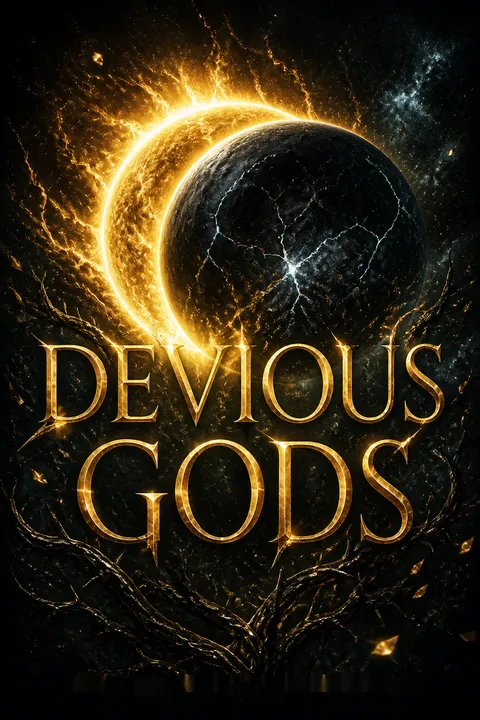
Devious Gods makes bodily transformation the most intimate form of political and moral pressure. Magnar's conversion is horrifying not merely because it changes his strength or hunger, but because it appears to invalidate the history through which he understands himself. The story's answer is neither that identity survives untouched nor that biology excuses behavior. Instead, characters establish identity through repeated choices: Magnar must confront possessiveness, Erik must loosen his grip on control, and the vampires must accept boundaries around the blood their bodies demand.
The twin bond gives this argument a counterpoint. Callie and Montana share a history and a destiny, but they are not interchangeable instruments of prophecy. Their closeness becomes practical when they save each other, and politically meaningful when they later help mediate between former rulers and the people those rulers confined. Their sacrifice is still coercive, however. Andvari's demand shows how easily a language of destiny can disguise exploitation, especially when the powerful define what counts as a debt.
The book also treats liberation as more than the defeat of a villain. Valentina's empire, the human Realms, and the vampires' hunger are linked systems in which survival has been organized through domination. Killing Valentina and breaking the curse remove immediate threats, but opening the Realms, rebuilding services, and compensating families are necessary acts of repair. The ending's domestic happiness is persuasive because it follows these public responsibilities rather than replacing them. Marriage, children, shared meals, and open gates make freedom visible in daily life. The story's deepest promise is not that love defeats every cost, but that a life shaped by coercion can still be reclaimed through consent, accountability, and the work of building something different.
Review Summary
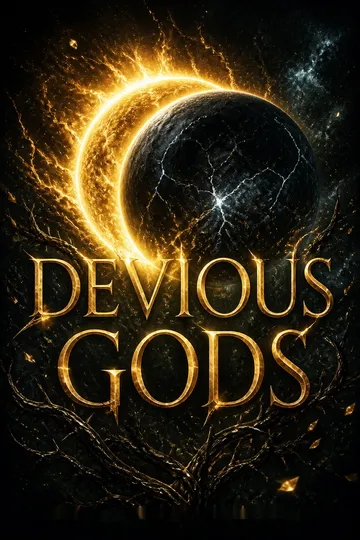
Devious Gods, the final book in the Age of Vampires series, receives mostly positive reviews. Readers praise the epic conclusion, character development, and satisfying ending. The book wraps up the twins' story with action, romance, and emotional moments. Some reviewers found the middle sections slow or repetitive. Overall, fans appreciate the authors' growth and creativity, comparing it favorably to their other works. The series is recommended for those who enjoy vampire fantasy with dystopian elements and multiple romantic storylines.
People Also Read




Characters
Callie
The dream-walking twinCallie is Montana's twin and a slayer whose Dream Weaver gift lets her enter other people's dreams. Quick-witted and stubborn, she has learned to distrust systems that claim authority over her body and choices. Her love for Magnar does not make her passive; she repeatedly argues for his right to decide how he faces his transformation, even when his refusal threatens the group. Callie's empathy extends beyond her family, but it is practical rather than sentimental: she uses her powers to gather information and offers help when someone is in danger. Her deepest motivation is to protect the people she loves without surrendering the independence she fought to claim.
Montana
The sunlit rebelMontana is Callie's twin and Erik's wife. Raised in a fenced human Realm, she begins with deep reasons to hate the vampires who ruled her people, yet she can revise her judgments when experience reveals the curse beneath their behavior. Her compassion is not the same as forgetting harm: she expects accountability and asks Erik to face his grief rather than hide behind control. Montana is attentive to other people's needs, sometimes to the point of feeling useless when she cannot fix what hurts them. Her growth lies in accepting both her strength and her limits. She wants a life in which love does not require captivity, and she works toward that future alongside Callie.
Magnar
The cursed warriorMagnar is a slayer of the Clan of War, Julius's brother, and Callie's beloved. His life has been organized around fighting vampires, making his own transformation an assault on his identity as well as his body. He values discipline, loyalty, and self-command, but the curse intensifies instincts he cannot simply will away. His protectiveness can become possessive, especially when Callie is threatened, and he must learn that love cannot mean controlling her choices. Beneath his severity, Magnar is a skilled cook, a devoted brother, and a man capable of revising old hatreds. He is driven by the wish to protect his family and keep the promises he makes.
Erik
The grieving rulerErik is Montana's husband and a Belvedere prince, accustomed to protecting his family and holding power together. The deaths of Miles and Warren expose how much of his identity depends on vigilance; he blames himself when danger gets past him and withdraws rather than letting others witness his grief. His relationship with Montana challenges that defense, because she offers companionship without pretending she can control loss. Erik also has to reckon with the human communities shaped by his family's rule. He is capable of tenderness and humor, but his instinct to manage danger can crowd out other people's agency. His struggle is to become responsible without believing he must control everything.
Julius
The loyal younger brotherJulius is Magnar's younger brother and a slayer whose loyalty remains strong even when the vampire curse places him in danger. He is blunt, irreverent, and willing to offer his own blood when the group has no safe alternative. His teasing often conceals how closely he watches the people around him. Julius and Clarice share an attraction neither wants to admit at first, partly because their inherited hostility makes affection feel like betrayal. He is also one of the people who understands that loving Magnar means respecting his choices, even when those choices frighten him.
Fabian
The remorseful emperorFabian is a Belvedere prince and one of the architects of the vampire empire. He once pursued Callie under a supernatural bond and is tied to the hardships imposed on the humans in the Realms. His confidence can harden into entitlement, but he is also capable of recognizing the damage caused by his decisions. His grief for Miles and Warren, his struggle with bloodlust, and his history with Chickoa reveal the vulnerability beneath his authority. Fabian wants to repair the empire and recover a love he once mishandled, though apologies cannot erase the consequences of his actions.
Clarice
The fierce Belvedere sisterClarice is Erik and Fabian's sister, a vampire who combines quick wit with fierce loyalty to her family. She grieves openly when others retreat into silence, and she often intervenes when fear or thirst threatens to split the group apart. Her attraction to Julius unsettles the old divisions between slayers and vampires, but she refuses to let that attraction make her less sharp or self-possessed. Clarice wants closeness without pretending that history has vanished. Her humor and directness help keep the group's emotional life visible, even when the journey leaves little room to mourn.
Chickoa
The steadfast survivorChickoa is an ancient vampire whose farm becomes a refuge before Idun's attack destroys it. She carries the memory of her husband and the hard-earned perspective of a long life, offering counsel without claiming that pain can be neatly solved. Chickoa understands the physical and emotional consequences of being turned against one's will, which makes her sympathetic to Magnar's resistance. Her history with Fabian is marked by love and injury, and she expects him to face what he did rather than hide behind charm or regret.
Valentina
The vampire queenValentina is a vampire ruler whose pursuit of power shapes the danger facing the group. She commands Familiars, uses surveillance to track her enemies, and recruits rebels with the promise of influence. Her rivalry with the Belvederes is political as well as personal: she wants control of the vampire world and treats people as resources to be acquired or removed. Valentina's confidence depends on her supernatural force and her ability to make others fear her. She is a calculating antagonist who turns the landscape, the animals, and the surviving human communities into pieces in her contest for rule.
Andvari
The ring's keeperAndvari is a god associated with the ring that guides the twins toward Helgafell. He speaks in riddles and frames supernatural power as a debt that must eventually be paid. His interest in ownership reaches beyond objects to the people whose lives become entangled with them. Andvari is patient, theatrical, and adept at presenting coercion as an inevitable rule of the world. The characters' struggle with him tests whether divine authority deserves obedience simply because it is powerful.
Odin
The king of godsOdin is the king of the gods and an imposing presence whose bargains shape the mortal world. He observes the consequences of the curse but is constrained by the politics of the gods and the obligations he claims to uphold. His words offer neither easy comfort nor simple moral clarity. Odin represents authority that can intervene, yet does not necessarily prevent suffering before it happens. The survivors must negotiate with him rather than assume that divine power will act out of kindness.
Idun
The dead goddess's curseIdun is a goddess whose actions and gifts shape the conflict even after her defeat. She is connected to the slayers' powers and has played a role in the supernatural order that binds vampires and humans. Her final choices leave the survivors facing new consequences, while the blood she leaves behind affects Erik and Magnar in unexpected ways.
Miles
Erik's lost brotherMiles is a Belvedere and one of Erik's closest family members. His marriage to Warren is a source of affection and stability within the family. His loss shapes Erik's grief and reminds the group that even the most powerful people cannot protect everyone they love.
Warren
Miles's beloved husbandWarren is Miles's husband and a member of the Belvedere family. His relationship with Miles represents a lasting tenderness within a world shaped by violence and hierarchy. His presence matters to the survivors not only as a loved one, but as part of the family life they are trying to preserve.
Memphis
The rebel vampire leaderMemphis leads a group of rebel vampires beyond the Belvederes' borders. He resents Erik's claim to rule and exploits Valentina's bounty to pursue revenge. His use of a captive human shows how opposition to imperial power does not necessarily make him an ally of the vulnerable.
Plot Devices
The prophecy
A map with a priceThe prophecy links the twins, the family ring, a debt, and a holy mountain, giving the group a destination and a sequence of clues. It promises that the earth will heal and the curse will end, but its language conceals the cost of that outcome. The prophecy therefore functions both as guidance and as pressure: each fulfilled image draws the characters closer to a choice they do not yet understand. Its final meaning is shaped by action, not by prediction alone, because the twins decide how to meet the cost once it becomes clear.
Andvaranaut
The ring that guidesThe ring is a treasured family heirloom carried by Callie and the key that helps reveal the route to Helgafell. Its power allows the twins to see the journey ahead and later opens the golden door within the mountain. The ring also conceals its own history: it belongs to Andvari and has passed through generations connected to the slayers. It joins family memory to divine ownership, turning an intimate object into both a compass and a contested debt.
The vampire thirst
Need that erodes choiceThe thirst is the physical mechanism of the vampire curse. It begins as an ache, then narrows attention, intensifies aggression, and can overwhelm a vampire's ability to recognize loved ones. Bottled blood offers a controlled alternative, but supplies run out during the journey, forcing the group to negotiate consent and survival. The thirst does not absolve characters of responsibility, yet it changes the conditions under which they make decisions. It drives Magnar's crisis, endangers the slayers, and repeatedly tests whether care can coexist with bodily danger.
Idun's blood
Power with a costIdun's divine blood gives Erik unusual command over the earth and growing things, as well as the ability to endure sunlight. The gifts help him protect the group, hold back Valentina's forces, and cross terrain that would otherwise stop them. Yet using the powers drains him and sharpens his hunger, making each act of rescue potentially dangerous. The device links divine intervention to physical consequence: power is not a clean advantage, but a force that changes the person wielding it and demands careful judgment.
The slayer weapons
Warnings and divine forceThe slayers' weapons do more than cut enemies. Blades such as Fury, Nightmare, Menace, and the others can sense Familiars and communicate warnings to their bearers, helping the group detect pursuit before it reaches them. The divine weapons in Andvari's chamber carry a larger scale of power and become essential in the struggle beyond mortal life. Together, the weapons externalize the characters' inherited skills while also giving them information and force that their bodies alone cannot provide.
Age of Vampires Series Series



About the Author
Other books by Caroline Peckham



Download PDF
Download EPUB
.epub digital book format is ideal for reading ebooks on phones, tablets, and e-readers.








