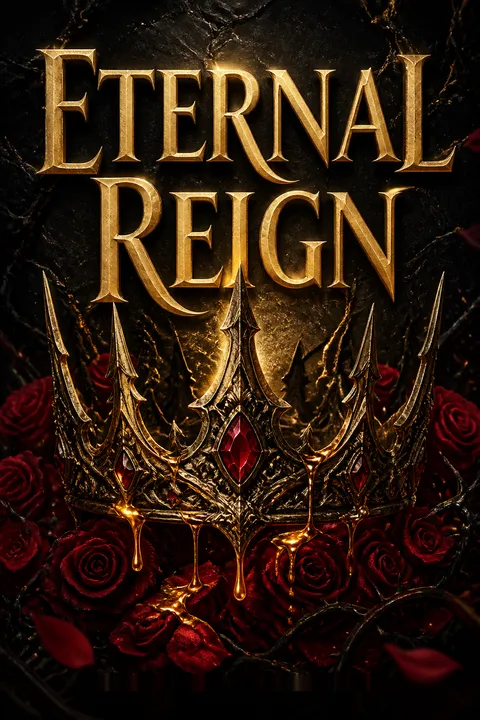


Plot Summary
Callie Follows Thomas
With winter worsening and her family’s rations shrinking, Callie follows Thomas through the ruins to discover how he slips beyond the electric fence. She crawls through a partly cleared drain and enters an abandoned apartment, where she takes thermal underwear, canned food, and an unfamiliar sweet she later learns is chocolate.
A warm coat stays behind because it would be too conspicuous to carry home. On her return, Thomas catches her and beats her, but Callie swings her loaded pack into his head. He survives, and she warns him to keep her secret. She reaches home just as the alarm bell summons the vampires who test young humans, carrying food that may save her family and a secret that could destroy it.
Callie’s first act of rebellion is practical rather than ideological: she crosses a forbidden boundary because hunger has made obedience untenable. The abandoned apartment sharpens the injustice by placing comfort within reach while the human settlement is deliberately deprived. Her refusal to take the coat also shows how surveillance has entered her thinking; even a useful object must be judged by whether it will expose her. The fight with Thomas makes the new freedom dangerous immediately. Callie gains supplies, but she has not escaped the system. She has only acquired a secret inside it.
The Bell Names Them
Montana, Callie’s twin, challenges a vampire at the ration counter when her family receives less food than before. The guard shocks her with a cattle prod, and she returns home bruised, ashamed that her anger may have cost them food. Their father tries to steady her, but the testing bell interrupts them.
General Wolfe arrives with guards, draws blood from both sisters, cuts locks of their hair, and takes their fingerprints. He says their results will come the next day, while their father privately admits that passing means they will be taken away. Callie reveals the provisions she stole and the drain Thomas uses. Rather than wait to be separated, the twins and their father agree to escape together the following morning.
Montana’s confrontation exposes the narrow space in which resistance is possible: speaking up risks bodily punishment, yet silence would make the family’s starvation feel consensual. Her shame after the shock is not weakness but the residue of a regime that makes victims blame themselves for its violence. Wolfe’s blood test transforms their private fear into an official threat, while the stolen food offers a counter-image of agency. The father’s decision matters because he does not treat escape as the daughters’ reckless fantasy. He joins their plan, making hope a family commitment rather than an individual impulse.
The Drain Becomes a Trap
The next morning, the three Fords leave separately so their escape will not attract notice. Montana reaches the tunnel first and finds her father waiting on the far side, but Lilien’s distress has delayed her. As they emerge, Wolfe and his vampires appear with Lilien, forcing the family to flee.
Their father turns back to distract the pursuers. Montana strikes a vampire with a rock, but the red-haired attacker overpowers and cuffs her; Wolfe knocks her unconscious while demanding Callie’s location.
Hidden nearby, Callie is held back by a stranger who promises he can help recover her family. She watches the vampires take Montana and their father, then follows the stranger rather than charging into a fight she cannot win. The family’s escape has become three separate fates.
The escape fails not through foolishness but through the regime’s capacity to punish an entire community for one person’s attempt at freedom. Lilien’s appearance forces Montana to choose between helping a neighbor and keeping the family’s timing; either choice carries moral cost. Their father’s return toward the vampires is an act of protection that makes escape inseparable from sacrifice. Callie’s forced stillness is equally consequential: she must accept help from a stranger while watching her family taken. The scene breaks the twins’ shared strategy into separate survival problems, setting their parallel journeys in motion.
Magnar Wakes Too Late
The stranger leads Callie away from the capture site and kills a pursuing vampire with two rune-marked swords. Callie has never seen a vampire die, so the body’s collapse into dust unsettles her as much as it amazes her. The warrior, Magnar, learns that the year is 2133 and realizes he slept far longer than intended.
He says he was meant to lead a crusade against the vampire royals, the Belvederes, after a hundred years of enchanted sleep. Instead, he has awakened to a world in which his people may be gone and the vampires rule. Callie chooses to trust him because he knows where the captured humans are taken. He identifies their destination as the blood bank, where her father may be held.
Magnar’s arrival reverses Callie’s understanding of power without making her suddenly safe. The first dead vampire proves that the rulers can be killed, but Magnar’s lost centuries reveal the cost of relying on a heroic past: his planned allies and world have vanished while he slept. Callie’s decision to follow him is not faith in a prophecy; it is a calculated choice between a dangerous stranger and certain helplessness. Their unequal knowledge runs both ways. Magnar understands the old war, while Callie understands the human society that war failed to protect.
Fury Finds Its Heir
Magnar gives Callie the rune-etched dagger Fury, and she instinctively knows its name and senses memories held in its blade. During their journey, he explains how vampires use animals as Familiars to spy on humans, then kills an owl that is secretly watching them. After Callie helps him fight a group of vampires, a red mark appears on her arm.
Magnar identifies it as a slayer’s mark and explains that her blood descends from the Clan of Dreams. She can inherit ancestral instincts and eventually develop gifts, but taking the slayer vow would bind her life to destroying vampires above other personal choices. Callie refuses to surrender her freedom again, though she keeps Fury and accepts that her blood may help her rescue her family.
The mark gives Callie power, but the book refuses to present power as uncomplicated liberation. The slayer vow resembles the vampire system in one crucial respect: both claim authority over a person’s future. Callie’s refusal is therefore not a rejection of courage; it is an insistence that survival should not require another institution to own her. Fury complicates that position because the blade carries ancestral experience she did not earn or choose. Her task becomes learning whether inherited strength can serve self-determination rather than replace it.
Montana Chosen by Erik
Montana is transported by plane with other young captives to the New Empire, where the vampire royals present them before a court. Countess Clarice and Counts Miles, Fabian, and Erik select humans for a four-day pairing ritual.
Montana refuses to perform for the royals, but Erik chooses her anyway, intrigued by her defiance. He tells her that the chosen women are expected to pair with a Count and eventually be turned into vampires, while refusal means the blood bank. Montana also learns that her father is there and Callie is still being hunted.
Erik blocks Wolfe from interrogating her and offers a bargain: if Montana helps him make Fabian want her, he will free her father and protect Callie if she is caught. Montana agrees because she has no safer leverage.
The court dresses coercion as choice. The four-day ritual gives captives a narrow interval to decide which powerful person will control their fate, while the blood bank stands behind every refusal. Montana’s public defiance cannot free her, but it changes how Erik sees her and gives him reason to recruit her. His bargain is morally compromised, yet it gives her a concrete objective when grief threatens to immobilize her. Her consent is strategic, not romantic: she accepts the mission because her family’s safety matters more than preserving her pride in a situation designed to deny both.
A Spy in Silk
Erik prepares Montana to attract Fabian’s interest, using a royal outing and a visit to Valentina, a vampire woman with an unsettling command of the weather, to coach her in courtship. He tells Montana to make Fabian desire her so she can learn what her politically ambitious brother plans.
Erik wants to weaken Fabian’s power over the Realms, but he withholds the larger reasons behind his struggle. Montana also discovers that the ritual is not merely a route to wealth: the selected humans are expected to marry into the royal family before being sired.
When she finds a message from Valentina urging Erik to discard her, she suspects she is disposable. Erik’s inconsistent kindness and control leave her unsure whether the bargain is protection or another trap.
Montana is asked to perform intimacy as intelligence work, a demand that makes her body both her own and a political instrument. The coaching scenes expose the gap between what the court calls romance and what the captives experience as surveillance and pressure. Erik’s opposition to Fabian offers a possible opening for reform, but he still controls the information and the terms. Valentina’s message deepens Montana’s distrust without resolving it. The central tension is not whether Montana can be charming; it is whether she can use a role imposed on her without letting that role define what she wants.
The Trap Closes on Callie
To draw the vampires away from their route, Magnar and Callie set a diversion and prepare an ambush. Magnar leaves Callie concealed in a pine while he tends the fire, but a rat Familiar spots her and alerts the hunters. An Elite vampire named Eve arrives with a force large enough to overwhelm Callie.
Fury helps her kill one attacker, but the others pin her down, recognize the slayer’s mark, and chain her for transport. Eve plans to report her success to Wolfe. Callie believes Magnar has abandoned her as the carriage carries her away. Yet the delay gives him time to locate the captors: he attacks the escort, kills the vampires, and reaches the cage before Eve can deliver Callie to Wolfe.
The trap fails because surveillance is embedded in the natural world, making concealment itself unreliable. Callie’s brief victory with Fury shows that her new inheritance is real, but it cannot compensate for numbers, experience, or captivity. Her fear that Magnar has left her repeats the novel’s recurring wound: the possibility that every bond will end in abandonment. His return does not erase that fear; it answers it through costly action. The rescue turns trust from an abstract promise into observable behavior, while leaving the larger objective, reaching the blood bank, unresolved.
Erik’s Perfect Realm
Erik takes Montana beyond the royal grounds to Realm A, expecting her to acknowledge that humans are treated well. She sees comfortable homes, food, schools, and children playing, then realizes that this carefully chosen settlement is nothing like her starving Realm G. Erik assumes her people share Realm A’s conditions and calls their dependence on vampire rule reasonable.
Montana cannot make him understand the deception and asks to return to the castle. His frustration confirms that the vampires themselves may be sheltered from the cruelty their system produces. Convinced Erik will discard her once he believes she is ungrateful, Montana decides to flee rather than wait for the ritual or trust his promise to save her family.
Realm A is not simply a contrast between poverty and comfort; it is evidence that the empire can manufacture its own innocence. The humane settlement functions as propaganda even when no explicit lie is spoken: its existence lets Erik treat Montana’s testimony as an exception rather than a structural fact. Her silence in the carriage marks a shift from arguing for recognition to acting without it. The scene also complicates power: Erik may possess authority, yet he lacks accurate knowledge of the people he governs. Montana’s escape follows from that epistemic failure, not merely from personal fear.
The Wall Gives Way
Montana breaks her shutters, slips the room key beneath the door, and escapes the castle while Valentina distracts a guard. She climbs a fallen tree to the outer wall, jumps onto a shelter below, and runs toward the woods with a small pack. Near the wall, she witnesses a hooded attacker kill a vampire guard, but cannot identify him.
Erik finds Montana before she gets far and carries her back across the wall. When she leads him to the scene, they discover the guard, Faulkner, suspended in a tree and killed by a hidden blade trap. Erik mourns the vampire he had sired and searches for the unknown assailant. Montana recognizes that someone else is moving against the royal court, though she has no idea who or why.
Montana’s escape is built from improvised tools and close observation, not sudden physical superiority. A heel becomes a lever; a brush becomes a key; the wall becomes a problem she can solve one handhold at a time. Her sighting of Faulkner’s killer interrupts the fantasy that leaving the palace will simply restore freedom. The violence also unsettles the moral categories she has relied on: even a vampire can be a friend to someone, and even a royal can grieve. Erik’s pursuit returns her to confinement, but it also brings the hidden danger into his immediate world.
A Bargain Becomes an Alliance
Back in the castle, Erik tends Montana’s injured knees and asks why she ran. She finally describes Realm G’s ration cuts, cold apartments, public beatings, disappearances, and the screams from the blood bank. Erik realizes that his view of human life was shaped by the prosperous Realm A, while Fabian oversees the harsher Realms.
He says he will act against Fabian and improve conditions if Montana helps expose his plans. Montana chooses to continue the mission because it may protect both her family and other humans. Erik’s concern does not erase his earlier coercion, but it changes their bargain. He kisses her, and Montana understands that her growing attraction to him may complicate every attempt to use him or escape his world.
The ending offers a fragile realignment, not a resolution. Montana’s testimony converts private suffering into political evidence, forcing Erik to confront the difference between his assumptions and the conditions his power sustains. His promise creates the possibility of reform, but the novel leaves accountability untested: he must still act, and Montana must still risk herself. Their kiss intensifies rather than settles the conflict, because desire now sits beside dependence, suspicion, and unequal power. Callie and Magnar remain on the road to the blood bank, so the family’s central danger persists as the story closes.
Analysis
Eternal Reign makes deprivation a political technology. The vampires do not merely take human blood; they control food, shelter, education, movement, and access to history, teaching the population to experience dependence as the natural order. Callie’s first act, crossing a fence for food, is therefore both an immediate survival tactic and a refusal of that imposed reality. Montana’s later encounter with Realm A complicates the rebellion: a comfortable settlement can function as evidence for the rulers’ self-image while concealing the harsher treatment imposed elsewhere.
The novel’s competing power systems are deliberately uncomfortable. Vampires claim authority through immortality and rank; slayers inherit weapons, memories, and obligations through blood and vows. Callie resists the slayer vow because liberation that requires surrendering her future would reproduce the structure she fled. Montana faces a parallel problem when Erik turns courtship into intelligence work. Both twins are offered forms of power that could help their families, but each offer arrives with a demand for control.
The romance between Montana and Erik grows within a profound imbalance. His moments of concern matter, but they do not cancel his role in a system that has harmed her or his initial use of her as a pawn. The strongest shift occurs when Montana’s account of Realm G corrects his assumptions and makes political responsibility personal. His response creates possibility, not proof of change. Meanwhile, Callie and Magnar’s journey connects private rescue to a historical war whose original participants have largely disappeared. Their partnership begins through necessity, then gains emotional weight as each recognizes the other’s losses.
The ending deliberately withholds the promised rescue of the family. Montana has gained an uneasy political ally, while Callie and Magnar remain committed to reaching the blood bank. The central question is no longer simply whether the twins can escape the vampires. It is whether they can build freedom without inheriting another system that demands obedience in exchange for protection.
Review Summary
Eternal Reign received mixed reviews, with ratings ranging from 1 to 5 stars. Many readers praised the world-building, character development, and slow-burn romance. The story follows twin sisters in a dystopian vampire-ruled world, offering dual perspectives and intriguing plot lines. Some found it captivating and addictive, while others criticized the writing style and pacing. Fans of the authors' previous works, like Zodiac Academy, generally enjoyed the book. Critics felt the story was poorly written or lacked depth. Overall, it's a divisive start to a series that has potential for growth.
People Also Read

Characters
Callie
The boundary-breaking twinCallie is Montana’s blonde, blue-eyed twin and the daughter who watches for patterns others miss. When her family begins to starve, she follows Thomas beyond the fence and risks punishment to bring back food. She is observant, resourceful, and quick to act, though her confidence can outrun her caution. Years of confinement have taught her to avoid attachment beyond her family, because loss feels like another weapon the vampires can use. Her first experiences beyond the Realm make the world larger and more frightening than the stories she grew up with. Callie is drawn to freedom, but she resists any version of it that requires someone else to dictate the shape of her life.
Montana
The defiant twinMontana is Callie’s dark-haired twin, a quick-tempered young woman whose anger is rooted in fierce loyalty to her family and neighbors. She challenges the vampire ration system even when she knows the punishment for speaking out, then struggles with guilt when her protest worsens the family’s hardship. Unlike Callie, she is more cautious about escape, but she will take extraordinary risks when the people she loves are threatened. Montana has been taught to think of herself as food, yet she refuses to let that label govern her behavior. Her directness can make her vulnerable to manipulation, but it also gives her a clear moral compass in a court built on euphemism and unequal power.
Magnar
The lost slayerMagnar is a powerful warrior from an ancient order devoted to fighting vampires. He awakens centuries later than intended, carrying the grief of a world and a people he can no longer recover. Discipline, duty, and a long memory shape his choices; he speaks and acts like someone trained to put a cause before private comfort. Yet his certainty is shadowed by loss, and Callie’s unfamiliar world forces him to learn rather than merely command. He is protective without being easy to approach, and his rune-marked weapons express a history older than the society around them. Magnar’s central tension is whether a life given entirely to war can still make room for a personal bond.
Erik Belvedere
The conflicted royalErik is one of the vampire royals governing the New Empire. He is sharp-tongued, controlling, and accustomed to obedience, yet he is not as emotionally vacant as he wants others to believe. Montana’s refusal to flatter him unsettles his assumptions about humans and draws his attention. He uses charm, intimidation, and political calculation interchangeably, making it difficult to know when his gestures are sincere. His rivalry with Fabian gives him a reason to recruit Montana, while his position grants him power over the very people she wants to protect. Erik is compelling because he can recognize that vampirism is a curse and still participate in a system that harms humans.
Their father
The family’s keeper of hopeCallie and Montana’s father is a widowed parent who keeps his daughters connected to a world beyond the Realm through stories of the past. He understands the danger of vampire rule but refuses to let fear become the family’s only inheritance. His practical care shows in saved food, old knowledge, and his readiness to join his daughters’ escape plan. The memories he shares give the twins a vocabulary for things they have never seen, while his own grief over their mother quietly shapes his protectiveness.
General Wolfe
The Elite enforcerWolfe is an Elite vampire general who arrives in Realm G to test young humans and enforce royal authority. He treats the Ford sisters as property and responds to questions with threats rather than explanation. His violence against their father and his pursuit of the fugitive family make him the immediate face of the regime’s brutality. Wolfe’s polished appearance sharpens the contrast between the court’s beauty and its methods.
Count Fabian
The political rivalFabian is one of the royal brothers and the administrator associated with the Realms. He is politically calculating, attentive to appearances, and more formidable than his formal manner suggests. Erik sees Fabian’s ambitions as a threat to the existing balance of power and wants Montana to draw information from him. Fabian’s role links the private ritual at court to the broader machinery governing human life.
Countess Clarice
The radiant royalClarice is the sole female member of the royal family and presents the pairing ritual as an opportunity for selected humans. Her warmth and enthusiasm make her less openly threatening than Wolfe or Fabian, but she still speaks from inside a system that removes human choice. She can recognize Montana’s distress and tries to guide Erik toward treating her with more care, though her idea of care remains shaped by royal privilege.
Count Miles
The charming royalMiles is a royal brother whose public manner is more inviting than Fabian’s or Erik’s. He selects a human during the court presentation and tries to frame the ritual in reassuring terms. His friendliness does not erase the coercive structure he represents, but it shows how the court can make domination sound like an offer.
Valentina
The weathered courtierValentina is a striking vampire woman with a close relationship to Erik and an unusual presence that seems to affect the weather around her. She coaches Montana in how to attract Fabian’s attention, while her private advice about Erik complicates Montana’s trust in him. Valentina is perceptive and forceful, but her motives are not immediately clear, making her both a possible guide and a source of uncertainty.
Thomas
The secret smugglerThomas is a human who secretly uses a damaged drain to cross the Realm’s boundary and bring back supplies. Callie studies his movements before following him, then has to fight him when he discovers her secret. His actions offer her a route beyond the fence, but his violence makes clear that shared oppression does not guarantee trust.
Lilien
The overburdened neighborLilien is a thin young mother and neighbor of the Ford family, responsible for three children while her husband is often absent. Her request that Montana watch the children collides with the escape plan and leaves Montana carrying guilt. Lilien’s household makes the Realm’s scarcity visible beyond the twins’ family.
Paige West
Montana’s fellow captivePaige is a young woman taken from another Realm and brought to the royal selection alongside Montana. She offers a small gesture of comfort during the flight and becomes a familiar face among the captives. Her concern for her family mirrors Montana’s, giving the group a moment of human connection inside a process designed to isolate them.
Frank
The captive who comfortsFrank is an older-looking human captive who travels beside Montana on the plane. He accepts the forced drink with weary pragmatism and offers her a brief, reassuring connection. His presence helps Montana understand that the royal selection draws captives from many different Realms.
Eve
The pursuing EliteEve is an Elite vampire who leads the force sent to capture Callie. She is confident in her rank and treats the journey across the western territories as an inconvenience. Her pursuit turns the vampire hunt into a direct physical threat to Callie and Magnar.
Felicia
The court’s presenterFelicia is a vampire attendant who organizes the captives’ grooming and presents them before the royals. She expects the humans to comply with courtly standards, revealing how the palace polishes its prisoners before displaying them. Her function is small but makes the ritual’s theatrical control concrete.
Plot Devices
The Realms
A hierarchy behind fencesThe Realms are enclosed human settlements governed by vampires after the Final War. Their conditions vary sharply: Realm G is cold, hungry, and punitive, while Realm A appears comfortable and orderly. This unevenness allows the ruling system to hide its brutality behind a carefully maintained example of humane treatment. The fences restrict movement, the ration system enforces dependence, and the blood bank threatens people who break the rules. For Callie and Montana, escape begins as a family survival plan, then becomes a struggle to understand how much of the empire’s cruelty is deliberate and how much is concealed even from its rulers.
The Royal Pairing Ritual
Coercion dressed as courtshipThe annual selection tests human blood and takes a small group of captives to the royal court. The selected humans are given four days to choose a royal partner, with the promise of eventual transformation into vampires; refusal means the blood bank. The court presents this as choice, privilege, and ceremony, while guards and threats make the coercion unmistakable. Erik uses the ritual as cover for his effort to recruit Montana as a spy against Fabian. The device brings political rivalry into intimate space, making the captives’ bodies instruments of both reproduction and court strategy.
Familiars
Animals become vampire surveillanceA Familiar is an animal whose soul is linked to a vampire, allowing the vampire to use it as a spy. Because birds, rats, and other creatures can move where humans cannot, they make the vampires’ knowledge of the Realms seem nearly omniscient. Callie and Magnar learn that the creatures are not ordinary wildlife when Magnar kills a spying owl. A rat Familiar later exposes Callie’s hiding place during their attempt to trap the hunters. This device makes nature both a refuge and a monitored space, undermining the assumption that distance from the settlement means safety.
Fury and the Slayers’ Marks
Inherited memory becomes a weaponFury is a rune-etched dagger that carries memories of its past wielders and responds strongly to Callie. After she kills a vampire, a red slayer’s mark appears on her arm, and Magnar explains that she descends from the Clan of Dreams. Her ancestry gives her access to inherited instincts and the possibility of further gifts, but fully embracing the role requires a vow that could limit her future choices. Fury therefore joins combat mechanics to the story’s argument about inheritance: the past can strengthen Callie, yet she must decide how much authority it gets over her life.
Rune Wards
Shelter with a will of its ownMagnar carves protective runes around temporary shelters to discourage hostile beings from approaching. The wards influence the mind as well as the landscape, creating an urge to remain inside the protected space. Callie notices the pressure and manages to resist it, an early sign that her perception differs from that of an ordinary human. The wards give the travelers a temporary refuge, but they cannot make the journey safe or prevent a determined Elite from hunting them. Their limited protection reinforces the story’s pattern: power can buy time, but it does not remove the need for choice and vigilance.
Age of Vampires Series Series

About the Author
Other books by Caroline Peckham



Download PDF
Download EPUB
.epub digital book format is ideal for reading ebooks on phones, tablets, and e-readers.








