

Plot Summary
Prologue
A prophecy promises that twins of sun and moon, a golden circle, an ancient debt, and a holy mountain will bring the vampire curse to an end. A thousand years ago, after a battlefield left Erik Larsen sickened by the deaths he had caused, he tried to kill himself.
The god Andvari stopped him and ordered him to lead his vampire family to a new land, where they would build an army by turning humans. Erik distrusted the god’s promises, but his siblings seized on the hope of power and safety. He agreed to leave with them, while privately swearing he would never have a child with a human.
Erik’s first defining choice is not cruelty but refusal: he sees the violence of vampirism as a curse, even when his family treats it as an opportunity. Andvari answers that moral resistance with a demand for expansion, making power look like the price of survival. The prophecy offers a possible future but gives no reliable instructions, so hope itself becomes a tool the gods can use. Erik’s private promise also establishes the story’s central tension: love and reproduction may be framed as destiny, yet the characters keep trying to distinguish their own wishes from divine coercion.
Two Brides Escape
As the wedding collapses in a storm, Montana leaves Erik Belvedere and Fabian’s city with the slayers who have come to rescue her twin, Callie. In a sewer beneath the streets, the sisters embrace after months apart, then discover matching silver marks on their palms. Montana’s cross draws her toward Erik; Callie’s mark pulls her toward Fabian, the vampire she has just married under pressure.
Callie also reveals that she has sworn a slayer’s vow under Magnar Elioson, the warrior leading the rescue. She is bound to obey him and to kill the Belvederes. Their reunion brings relief, but their bonds and conflicting loyalties make it clear that escape has not made either sister free.
The reunion restores the twins’ most dependable relationship, but the marks immediately turn intimacy into a contested territory. Each sister wants to choose family, yet divine bonds tug their bodies toward vampire enemies. Callie’s vow adds another authority to the conflict: Magnar can command her, while her feelings and fears remain her own. The escape therefore begins not with freedom secured, but with the sisters learning that survival can require concealment from one another. Montana hides her attachment to Erik, and Callie keeps the complexity of her feelings for Fabian buried beneath shared hatred.
A Command in the Rain
At the ruined hideout, Callie admits that her mark is pulling her toward Fabian, and Magnar’s anger sends him inside after ordering her not to follow. The command traps her on an exposed balcony through hours of cold rain. While she waits, Montana and the slayer Julius search an abandoned mall for dry clothes and supplies.
They encounter a starving, de-fanged vampire who begs for death; Julius kills him, explaining that banishment has left him without blood. When Montana returns, she realizes Callie cannot obey Magnar’s order and enter shelter, so she leads her inside herself. Magnar returns unaware of the danger he caused. Callie tells him his power frightens her, and he apologizes, but her trust has cracked.
Magnar’s mistake makes the vow’s coercion tangible. His intention is to withdraw and clear his head, but his authority turns that ordinary impulse into a life-threatening order. Callie’s shame at being unable to move compounds the physical cold, while Montana’s workaround shows that care can sometimes find a path around command. The starving vampire complicates the sisters’ moral categories: Julius sees a dangerous creature to destroy, while Montana registers a person reduced to desperation. Callie’s demand for space is not a rejection of Magnar so much as a first attempt to separate affection from obedience.
The Mirror's Red Future
While Julius and Montana shelter in the ruins, a presence steers her to an old mirror and replaces her reflection with a pale, crowned vampire. Andvari appears, pins Julius to a wall, and threatens his life until the goddess Idun intervenes.
Their confrontation exposes the gods’ rivalry: Idun created the slayers to oppose Andvari’s vampires, while Andvari has shaped a prophecy around a slayer who may become a monster. He suggests Montana’s transformation could break the curse.
Idun admits that she bound the twins to vampire brothers partly to obstruct Andvari and partly to manipulate their affections. The gods leave without explaining how to fulfill the prophecy. Montana and Julius agree to conceal the frightening possibility from the others.
The mirror turns a prophecy from distant verse into a threat to Montana’s identity. Her possible future is not simply death or danger, but a body and appetite she has spent her life fearing. Andvari’s revelation does not clarify the prophecy; it reveals that the gods are actively shaping the conditions they claim merely to foretell. Idun’s intervention protects Julius while confirming that even apparent rescue serves a private strategy. Montana and Julius keep the revelation secret because knowledge itself could become another instrument of control, especially if the slayers treat her as a necessary sacrifice.
Fabian's First Life
Callie’s Dream Walking carries her unexpectedly into Fabian’s private dream, where she first encounters a sexual fantasy and then forces the scene to reveal his former human life. He shows her the village he and his siblings destroyed after Andvari cursed them with an uncontrollable thirst for blood.
Callie sees his horror and guilt, and understands that he did not choose to become a vampire. But his vulnerability does not erase the centuries of human suffering under the Belvederes, or his part in forcing her into marriage.
When Fabian tries to claim their bond as proof they belong together, Callie rejects the idea and leaves him alone in the dream. The encounter softens her certainty that he is inhuman, without making him safe or absolving him.
The dream gives Callie access to evidence her political life has never allowed: the vampires were once human victims of a god’s violence. Yet the scene refuses the easy equation of suffering with innocence. Fabian’s original trauma helps explain his guilt, but it cannot undo the human system he later helped sustain or his attempt to possess Callie. Her Dream Walking gives her unusual power over his inner world, while her rejection establishes a crucial boundary: empathy can change how she judges him without obligating her to love him.
The River Splits Them
Julius leads the group toward an abandoned island refuge inside a giant statue, but a hidden Familiar marks their route and biters attack from the river. The small boat is overturned. Magnar rescues Montana, while Callie and Julius fight through the vampires separately. On shore, Valentina Torbrook reveals herself and uses her followers to seize Montana as bait for Magnar.
Montana strikes back with her slayer blade, and Magnar crashes through the pier to reach her. Valentina escapes after blasting him with lightning. Callie and Julius clear their own stretch of riverbank and reach the island by rooftops and water. The sisters reunite, shaken but alive, while Valentina’s desire to capture Magnar remains unexplained.
The ambush divides the twins at the exact moment their shared survival feels most secure. Each has to act without the other, and Montana’s rescue depends on Magnar while Callie’s escape depends on Julius. That split exposes how their new slayer family is already replacing the old two-person unit, though neither sister is ready to accept the change. Valentina’s attack also widens the conflict beyond the Belvederes and slayers: she has organized biters and commands storm power. Her focus on Magnar makes her more than a pursuer, but her motive remains an unanswered pressure on the group.
The King Renounces Wolfe
From the statue refuge, the group watches Erik and Fabian on a camera feed. Montana can no longer conceal that her feelings for Erik began before the mark appeared, and Callie struggles to accept that her twin could love a Belvedere. The broadcast then shows Erik publicly stripping Wolfe, the vampire who killed the sisters’ father, of his status and fangs before banishing him from the city.
Callie sees the punishment as inadequate, but Montana reads it as evidence that Erik is trying to change the laws he once upheld. Seeking more context, Callie enters Fabian’s dream again and learns that Erik once starved himself for two hundred years, hoping suffering could repay an ancient debt. Her certainty about the vampires begins to fracture.
The surveillance screen makes private feeling and public policy collide. Montana’s confession asks her sister to trust her perception, while Wolfe’s banishment offers visible but incomplete evidence of reform. Callie’s anger remains grounded in the father they lost; a punishment imposed by vampire law cannot equal the justice she wants. Fabian’s account of Erik’s self-starvation complicates the image of a prince who simply embraced power. The sisters are not debating whether past harms occurred. They are confronting whether remorse and change can matter when the injured still carry the consequences.
Gold Against the Gods
Callie discovers that her mother’s heirloom ring, a gold band with a green stone, briefly silences the pull of Fabian’s mark and Magnar’s commands. With that protection, she freely chooses Magnar, and the two finally act on their feelings. The ring also links the twins in a shared vision of a vast mountain called Mount Alma, giving the prophecy’s golden circle and holy mountain a possible meaning.
Montana calls Erik, who explains that he turned Magnar’s father while under Andvari’s influence, then admits he intended to save him but was wrong about the prophecy. Soon after, Erik offers a duel with Fabian against Magnar and Julius, wagering the twins’ futures. The slayers accept the challenge despite the sisters’ objections.
The ring matters because it changes the conditions of choice rather than supplying a simple escape. Callie can test whether her desire for Magnar persists when divine pressure loosens, and she chooses him. The shared vision gives the prophecy a location, but not a reliable interpretation; every clue still risks becoming an excuse for violence. Erik’s account of the transformed father reframes the ancient feud as a fatal misreading under divine influence, though it does not erase Magnar’s loss. The wager reveals how easily even protective men can treat the twins’ lives as pieces in a conflict they believe is theirs.
The Gods Stage the Duel
Montana and Callie try to stop the duel by offering to leave the island, but Callie’s vow physically prevents her from abandoning Magnar. The sisters argue that the prophecy may provide another path, yet Magnar and Julius remain fixed on vengeance. When Erik and Fabian arrive by speedboat, Idun and Andvari transform the meeting into a spectacle.
They dress the twins as royal prizes, separate them from their rescuers, and lock them inside a golden cage. The gods remove the slayers’ enchanted swords to make the fight bare-handed, then command the brothers to begin. Montana and Callie can only watch as Magnar faces Erik and Julius faces Fabian, their private loyalties trapped inside the gods’ public contest.
The cage literalizes the sisters’ political position: everyone claims to protect or love them, yet the men and gods still decide where they stand. Callie’s failed attempt to leave shows that a vow can make consent structurally impossible, even when the person bound by it understands the danger. Idun and Andvari’s theatrical intervention also reveals their shared method. They need not agree about the outcome if they can make mortals perform the conflict for them. The removal of the swords strips away the tools of each side’s identity and reduces a thousand-year history to bodies being used as weapons.
A Thousand Years of Vengeance
The brothers’ fight quickly becomes catastrophic. Erik hurls Magnar into the statue, while Fabian and Julius trade blows until the slayer knocks Fabian’s arm from its socket. Erik later drags Julius underwater and sees him close to drowning. Remembering Montana’s distress, he cuts Julius free and secretly brings him back to shore, choosing mercy over the clean victory Andvari wants.
Back on land, the battle continues. Fabian bites Magnar and leaves him gravely injured; Erik tries to stop his brother, but the struggle worsens. Magnar’s body falls still, and Callie believes he has died. His mark remains, however, giving her a reason to hope that he may yet recover.
Erik’s decision beneath the water is the first decisive break in the inherited logic of revenge. He has the advantage and could let Julius die, but Montana’s attachment makes the slayer’s life matter to him. The choice is not forgiveness, and it does not immediately end the battle; it is a small refusal to let the gods dictate what victory must cost. Magnar’s apparent death then tests the limits of that moral shift. Callie’s attention to the vow-mark turns a supernatural mechanism into evidence of hope, though it cannot yet tell her what to do.
Callie Kills Fabian
When Fabian enters the cage believing Magnar’s death has made Callie available to him, she pretends to yield. The taste of Magnar’s blood on Fabian’s mouth gives her enough fury to overcome the bond; she twists Fabian’s neck and tears off his head, then cannot bring herself to drive Fury into his heart. Magnar’s hand moves, confirming he is not dead.
At the same time, Callie tears her mother’s ring from the chain on Magnar’s neck and shields herself, Magnar, and Erik from the gods’ influence. Erik confirms Andvari had been controlling him. Magnar recognizes that their true enemies are the gods, and he and Erik stop fighting. Callie’s intervention ends the duel, but a cry from above draws her toward Montana.
Callie’s action is neither a clean rejection of Fabian nor surrender to him. She uses the bond’s false desire as cover, directs her own violence at the man who has treated her as a prize, and then stops short of destroying his heart. That hesitation preserves the emotional contradiction rather than pretending it has vanished. The ring expands her agency from personal resistance to collective protection, interrupting the gods’ control of both sides. The ceasefire between Magnar and Erik becomes possible only when the men recognize that their hatred has been cultivated and exploited, not simply inherited.
Montana Falls From the Crown
Andvari seizes Montana and carries her up the statue’s crown, demanding that she die as payment for an ancient debt. He lets her choose the leap rather than physically throw her, and she jumps, hoping to save Erik and end the curse. Callie finds her sister alive but gravely broken. With no human treatment possible, Erik offers the only chance to preserve her life: vampirism.
Callie agrees, and Erik feeds Montana his blood before biting her, beginning the transformation. He takes the unconscious Montana and Fabian away by boat, while Callie stays with Magnar and Julius. The twins are separated again, now on opposite sides of the vampire-slayers’ divide, with Montana’s new life and the prophecy still unresolved.
Montana’s leap is framed as a choice, but Andvari has engineered the danger and narrowed the available options. Her sacrifice therefore expresses love and agency inside coercive conditions, not freedom from them. Callie’s consent to the transformation repeats the book’s central ethical problem in a new form: saving someone may require choosing for them when they cannot speak. Erik’s action breaks his earlier promise never to turn Montana, but the alternative is losing her. The ending offers survival without resolution. The sisters remain emotionally bound, yet the bodily transformation that may fulfill the prophecy also makes their separation more dangerous.
Analysis
Wrathful Mortals builds its romantic conflict inside a war whose rules were written by gods, then asks whether affection can count as a free choice when supernatural bonds actively influence desire. Montana and Callie do not dismiss their feelings for Erik and Fabian, but neither do they treat those feelings as proof that the vampires’ political crimes are forgiven. Their differing responses keep love from becoming a moral shortcut. Montana insists that remorse and reform matter; Callie insists that the injured still have a right to demand justice.
The book’s strongest ethical contrast is between explanation and absolution. Erik’s account of being controlled when he transformed Magnar’s father makes the ancient feud less simple, and his rescue of Julius shows that he can act against the logic of vengeance. Yet those revelations do not erase the vampire empire’s treatment of humans. Likewise, Magnar’s devotion to Callie does not excuse the command that leaves her in the rain. The narrative repeatedly tests whether good intentions can repair harm when one person holds power over another.
The gods mirror the political systems they claim to oppose. Idun gives slayers strength but also binds their bodies and choices; Andvari condemns his vampires to a curse, then uses prophecy and violence to direct them. Their rivalry manufactures the very cycle of revenge they describe as inevitable. The golden ring matters because it interrupts that cycle at the level of perception and action. It allows the characters to see how much of their conflict has been externally steered, though it cannot instantly dissolve grief, history, or fear.
The ending refuses the comfort of a solved prophecy. Montana’s transformation may fulfill the warning that a warrior can become a monster, but the book does not yet reveal what that change means for her identity or the wider curse. Callie’s consent to save her sister is loving and desperate, not uncomplicated. The final separation leaves the twins alive but divided by the categories they have spent their lives fighting, making the next question not whether they love each other, but whether love can survive incompatible forms of life.
Review Summary
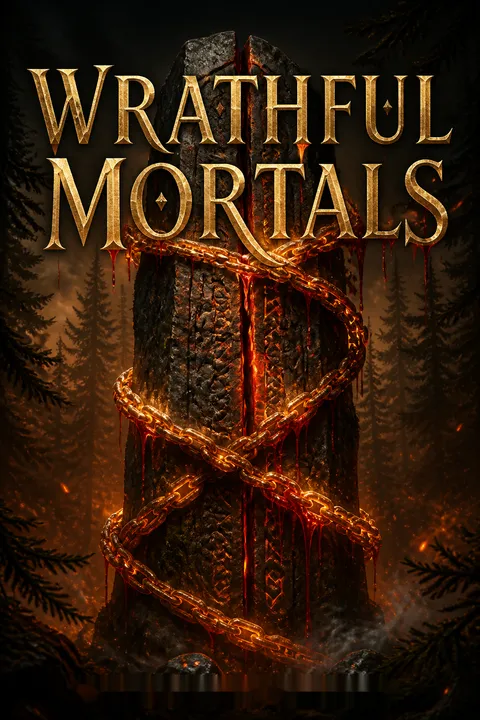
Wrathful Mortals receives high praise from readers, with an average rating of 4.24 out of 5. Fans love the complex relationships, especially between Montana and Erik, and the ongoing conflict between vampires and slayers. The book is praised for its fast-paced action, plot twists, and character development. Many readers find the series addictive and eagerly anticipate the next installment. Some criticize the length and pacing, but overall, readers are engrossed in the Age of Vampires world and its characters.
People Also Read
Characters
Montana Ford
The divided-hearted twinMontana is Callie’s twin sister, a human raised under vampire rule who becomes a slayer while being drawn toward Erik Belvedere. She is observant, stubborn, and slow to mistake power for goodness, but her experience with Erik forces her to distinguish personal affection from political absolution. Her central struggle is not simply choosing between a vampire and her family. She must decide whether her compassion is truly hers or a product of the mark binding them. Montana fears losing Callie more than she fears being judged, yet she also resists letting her sister define what she is allowed to feel. Her father’s stories and her mother’s heirloom connect her to a family history neither twin fully understands.
Callie Ford
The defiant dream walkerCallie is Montana’s twin, a fierce survivor whose loyalty to her sister has shaped nearly every choice she makes. She takes a slayer’s vow under Magnar and is bound by a divine mark to Fabian, creating a conflict between her declared enemy and the warrior she increasingly trusts. Callie is quick to anger, skeptical of authority, and unwilling to confuse vulnerability with innocence. Her emerging ability to enter dreams lets her see private histories, but it also exposes her to feelings she did not choose. She wants to protect humans from vampire rule while refusing to become a tool of either goddess or god. Her bond with Montana remains her deepest source of belonging.
Erik Belvedere
The remorseful vampire princeErik, born Erik Larsen, is one of the first vampires and a prince of the Belvedere family. He has spent centuries fighting the thirst and carrying guilt for the violence his kind has inflicted. His relationship with Montana challenges his belief that he can keep feeling separate from duty, while his history with Magnar makes tenderness politically dangerous. Erik is protective of his siblings and capable of loyalty, but he has also helped maintain an empire that treats humans as a resource. He wants the curse broken, yet his ideas about how to achieve that have repeatedly been shaped by Andvari’s riddles. His struggle is to take responsibility without pretending regret can erase harm.
Magnar Elioson
The vengeance-bound slayerMagnar is an ancient slayer, Julius’s brother, and Callie’s mentor under the vow. His father’s fate made vengeance against the Belvederes the organizing purpose of his long life. Magnar is formidable and disciplined, but his authority over Callie exposes the danger in confusing protection with control. His growing attachment to her asks him to confront the difference between keeping someone safe and deciding for them. He carries grief as a duty rather than a wound, which makes it difficult for him to imagine a future beyond revenge. His loyalty to the slayers is sincere, but the gods’ ability to use that loyalty turns his certainty into a vulnerability.
Fabian Belvedere
The possessive vampire brotherFabian is Erik’s brother and a vampire prince whose marriage to Callie is imposed under divine influence. He is passionate, impulsive, and accustomed to pursuing what he wants, but his dreams expose grief and guilt beneath his confidence. The memory of his human life and the massacre that followed his transformation complicate Callie’s view of him without making his possessiveness harmless. Fabian interprets their supernatural bond as proof of love, while Callie insists that desire cannot substitute for consent. His relationship with Erik is shaped by family loyalty and by their shared history of surviving the curse.
Julius Elioson
The irreverent slayer brotherJulius is Magnar’s brother and a skilled slayer who helps lead Callie and Montana through the ruined city. His humor and appetite for risk soften the severity of the brothers’ long war, though he remains fiercely hostile to vampires. He protects Montana and offers practical knowledge about the new world, including technology and the dangers of banishment. Julius’s loyalty to Magnar is deep enough to make him a willing partner in vengeance, but his choices also reveal a capacity to question what that vengeance demands.
Valentina Torbrook
The storm-wielding rebelValentina is Magnar’s ancient betrothed and a powerful vampire who commands storm magic. Her ambition and resentment make her a threat to both the Belvederes and the slayers. She leads biters and seeks to undermine the existing vampire order, but her methods endanger humans as readily as her enemies. Valentina is not driven by a simple wish to escape control; she wants authority and believes she has been denied a place she deserves.
Idun
The manipulative slayer goddessIdun is the goddess who empowers the slayers and opposes Andvari’s vampires. She presents herself as their protector, yet she uses vows, commands, and emotional bonds to steer their choices. Her interest in testing loyalty makes her relationships with her followers intimate and coercive at once. Idun’s interference repeatedly turns private affection into leverage in her wider conflict with Andvari.
Andvari
The vampire-making godAndvari created the vampire curse and continues to influence Erik and his family through riddles, visions, and direct control. He speaks as though mortals have freedom, yet repeatedly intervenes to make their choices serve his plans. His interest in debts and penance gives old injuries a supernatural frame, while his rivalry with Idun makes human and vampire lives into pieces in a divine contest.
Clarice Belvedere
The vampire family’s sisterClarice is Erik’s sister and one of the original vampires. She is socially perceptive and strongly invested in the safety and future of her family. Her role in the city gives her influence over the Belvederes’ household and their response to political threats. Like her brothers, she carries the history of the curse, though she is more willing than Erik to embrace the power it offers.
Miles Belvedere
The convivial vampire princeMiles is one of Erik’s vampire brothers, known for his ease with people and appetite for pleasure. Beneath that sociability lies the same dependence on family and fear of what the curse has made them. He helps establish the Belvederes’ history and their differing responses to Andvari’s command to build an empire.
Wolfe
The rogue vampire sirelingWolfe is a vampire once trusted by Erik, whose violence against the Ford family makes him a personal enemy to Montana and Callie. He believes vampires should be free to hunt humans and supports Valentina’s rebellion. His actions expose the gap between the Belvederes’ laws and the brutality those laws fail to prevent.
The twins’ father
The girls’ lost anchorMontana and Callie’s father gave them stories about the world beyond the Realms and taught them to imagine a life larger than captivity. His memory binds the twins, and the violence done to him shapes their understanding of vampires and justice. He remains present in their choices even when they disagree about what his loss should demand.
The twins’ mother
The keeper of the ringThe twins’ mother is remembered through family stories and the gold ring passed down through her line. Her heirloom becomes a link between the sisters’ personal history and the gods’ larger conflict. Her daughters’ memories of her offer a human source of continuity amid lives shaped by supernatural powers.
Elissa
The gifted slayer scoutElissa is a slayer from Magnar’s ancient clan, trained by him and gifted with power over water. Her growing skill and independence offer a glimpse of the community Magnar once led and the lives lost to the vampire war.
Aelfric
The horse-wise clan outsiderAelfric is a gifted horseman who joins Magnar’s people despite not being born a slayer. His loyalty and determination earn him a place among the clan, reflecting Magnar’s capacity to make family through choice as well as blood.
Plot Devices
The Prophecy
A riddle driving both sidesThe prophecy connects warrior and monster, enslaved souls, twins, a gold circle, an old debt, and a holy mountain. Its ambiguity drives both the Belvederes’ hope of ending their curse and the slayers’ search for a final victory. Characters attach different meanings to each image, and the gods exploit that uncertainty to steer them toward conflict. The twins identify Mount Alma through a vision, but they do not solve the prophecy before the novel ends.
The Mother's Ring
A shield against divine controlThe gold ring inherited through the twins’ maternal line can quiet the supernatural bonds and commands imposed on them. Once Callie wears it after taking her vow, it gives her a brief experience of uncoerced choice. It also produces a shared vision of Mount Alma and can hide those within its protection from the gods. Its power has limits, and using it openly risks drawing divine attention to the sisters.
Vows and Palm Marks
Desire made into obligationThe slayer’s vow gives Callie power and binds her to Magnar’s commands, while the marks on both twins pull them toward vampire princes. The marks are not merely symbols: they influence desire, constrain movement, and make the sisters’ loyalties physically difficult to separate from divine pressure. They explain why affection cannot be treated as uncomplicated proof of consent. Callie’s vow-mark also lets her recognize that Magnar may still be alive when she cannot see his body move.
Dream Walking
A passage into hidden historiesCallie can enter other people’s dreams and, as her skill develops, shape the dream environment. Her visits to Fabian expose his human past, guilt, and longing, while also showing how easily supernatural bonds can distort what she feels. Dream Walking gives her access to knowledge unavailable through ordinary conversation, but it is not a neutral tool: she can enter accidentally, and the emotional force of the dream can blur the boundary between revelation and manipulation.
Living Blades
Warnings and weapons for slayersThe slayers’ enchanted swords communicate through the mind, react to nearby threats, and can destroy vampires that ordinary weapons cannot reliably kill. Nightmare, Fury, Tempest, Venom, and Menace each guide or warn their wielder during the flight through the ruins and the battle at the statue. Their magic also gives the story a practical way to signal danger before an attack. Andvari’s removal of the blades before the duel leaves the fighters without their usual advantage.
Age of Vampires Series Series

About the Author
Other books by Caroline Peckham



Download PDF
Download EPUB
.epub digital book format is ideal for reading ebooks on phones, tablets, and e-readers.








