

Plot Summary
Prologue
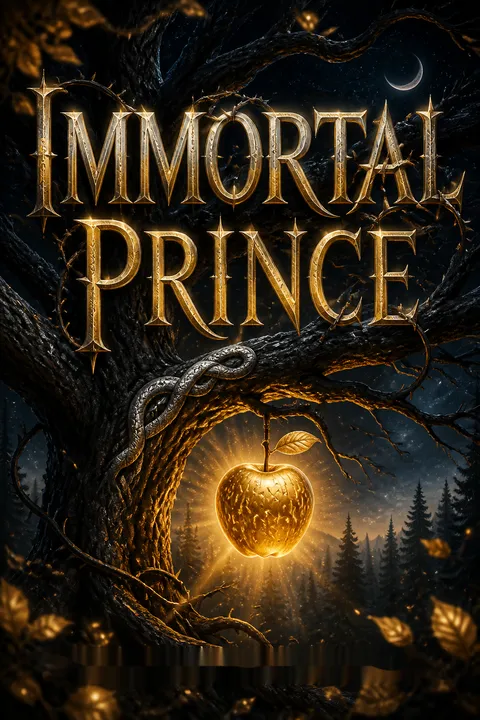
Thirteen centuries before the present, the god Andvari confronts Viking Erik Larsen and the other children of families who stole his gold. He forces them to eat enchanted apples: most die, while Erik, Fabian, Miles, and Clarice survive by becoming the first vampires, driven to slaughter their own village by bloodlust.
Andvari names their immortality a curse and offers a riddle as its only possible remedy. The goddess Idun cannot reverse the transformation, but warns that the prophecy holds the answer. Erik is left amid the bodies of his family, carrying both his guilt and the promise that his endless life might still have an exit.
The origin makes vampirism less a chosen evil than an inherited punishment imposed on children for their parents’ crime. Yet the curse does not erase responsibility: once their bloodlust takes hold, the survivors kill the people they love. Erik’s guilt begins at the point where compulsion and action become inseparable, a tension that will shape his later refusal to sire others and his willingness to wield power. Andvari’s riddle also turns suffering into an interpretive trap. The survivors are offered hope, but only in a form that forces them to keep living without knowing what would make them whole.
The Bedside Bargain
Montana wakes in Prince Erik’s castle with her wrists tied to the bed, a prisoner among the vampires who have ruled her human Realm. Erik has chosen her as his courtier in a public marriage ritual, while her twin sister Callie is missing and her father is held at a blood bank. He wants Montana to get close to his brother Fabian and report what she learns.
In return, he promises to protect her family and secure her father’s release. Montana accepts because she has little leverage and no safe alternative, but she intends to use Erik’s secret plan against him if he breaks his word. Their first alliance is already a contest over who controls the terms.
Montana’s bargain is made under coercion, so her apparent consent is tactical rather than free. She treats information as the only resource the vampires cannot simply take from her, turning the courtship ritual into an intelligence operation. Erik, meanwhile, mistakes his capacity to protect her for a right to direct her. Their early dynamic is not simply attraction opposed to distrust; it is a struggle over whether care can exist without control. Montana’s loyalty to Callie and her father gives her a stable moral center, but it also makes her vulnerable to anyone who can threaten them.
Fabian's Familiar Eyes
Erik prepares Montana to meet Fabian, the prince who oversees the human Realms, and she spends the day testing how much the charming vampire will reveal. Fabian describes human life before the Final War, then dismisses her complaints about starvation and blood donations as the cost of a world where not everyone can live like royalty.
In the grounds, he demonstrates that he can see and act through bonded animals, including his owl, Heimdall. Montana realizes the vampires’ familiars may have helped them monitor the Realms.
A report arrives that Chancellor Torin has been murdered. Erik later admits he ordered Torin’s death and suspects Fabian arranged the earlier killing of Erik’s loyal vampire Faulkner, exposing a royal feud beneath the polished courtship.
Fabian’s warmth is unsettling because it coexists with political indifference. He can offer Montana stories, food, and attention without acknowledging that his rule has made her people desperate. His familiar power literalizes the surveillance beneath royal charm: even a quiet walk in the woods may be watched. The murders show that the court is not a unified ruling family but a system held together by competing claims to power. Montana’s problem is therefore not only to judge which prince is kinder. She must decide whether any private kindness can matter when the person offering it benefits from the machinery that harms her.
Wolfe Tests the Blade
General Wolfe corners Montana and demands to know how her sister could have been present when vampires were killed outside the Realm. He produces a curved golden dagger and orders her to take it. The weapon warms in her hand and urges her to keep its reaction secret; when Montana lets it touch Wolfe’s wrist, it burns him.
He threatens to harm Callie if Montana tells Erik about the encounter, leaving her trapped between two dangerous men. Soon afterward, the blade’s presence sharpens Montana’s dreams and seems to connect her to Callie. She cannot yet explain the mark on her arm or the weapon’s voice, but she recognizes that someone is testing her for a reason.
The dagger changes the balance of power without making Montana safe. Its capacity to injure a vampire offers a material answer to the helplessness imposed by her captivity, but Wolfe’s threat prevents her from openly using that advantage. The blade also complicates her sense of agency: it gives direction, even as its insistent guidance risks replacing one form of control with another. Her choice to conceal what happened is not passivity. It is a judgment that protecting Callie matters more than securing immediate help from Erik, whose promises remain unproven.
Magnar Finds the Twins
Beyond the Realm, Callie travels with Magnar Elioson, a legendary slayer who has awakened after a thousand years sealed in a cave. He rescued her after vampires captured her during her attempt to reach her family, though he admits that her presence can also serve as bait for the vampires he wants to draw out.
Callie agrees to travel with him because he is her best chance of reaching the blood bank and finding Montana and their father. Magnar recovers her weapon, Fury, and teaches her to move quietly and fight. Callie resists his authority, but she begins to trust his skill. Their route south becomes a race between her family’s danger and Magnar’s war against the vampires.
Callie and Magnar begin as allies with mismatched priorities. Callie measures every choice by whether it brings her closer to her family; Magnar measures it by whether it advances a war he has pursued for centuries. His admission that she is useful as bait makes their arrangement ethically uncomfortable, but his rescue and training give her a practical path forward. Callie’s resistance to his commands protects her autonomy, while her willingness to learn shows that independence need not mean refusing help. The tension between those principles becomes central to their relationship.
A Thousand Years Hungry
In fragments of Erik’s long past, the first vampires learn from Andvari how to sire humans and animals. Fabian, Miles, and Clarice embrace the power and build networks of loyal followers; Erik refuses to make new vampires, believing that condemning others to his hunger would be another crime.
He struggles to feed without killing, but repeatedly loses control. After a slayer attack leaves him bloodied, he tells Fabian he intends to seal himself in a cave and starve until the curse is broken.
Fabian helps wall him inside and promises to return. The hunger drives Erik close to madness over the centuries, while visits from Andvari offer riddles rather than answers. His self-imposed imprisonment becomes the cost of refusing to pass on his curse.
Erik’s abstention is an attempt to preserve a moral distinction inside a life that repeatedly destroys it. He cannot undo the deaths caused by his hunger, but he can refuse to manufacture more vampires. The cave turns that refusal into an extreme experiment: he tries to make himself harmless by removing every opportunity to act. Yet starvation does not restore his humanity; it erodes his mind and leaves him dependent on the very god who cursed him. His history makes his later pursuit of power more than simple ambition. It is also a defense against the unbearable knowledge that restraint alone cannot repair the past.
Idun Binds Magnar
A separate glimpse into Magnar’s youth reveals a sixteen-year-old slayer already leading raids against the vampires’ human followers. After he rescues Astrid from a group preparing to sacrifice her, his father announces a political betrothal to Valentina, a woman Magnar does not love. Magnar asks Idun to free him from the match.
The goddess refuses, binding his future to a series of tests and promising that love may be possible only if he destroys the vampires and restores what they stole from her. Magnar accepts the challenge, then publicly pledges himself to Valentina while withholding the promise of his heart. His life becomes a collision between duty imposed by the gods and the love he hoped to choose for himself.
Magnar’s history mirrors Montana’s predicament: powerful authorities present personal sacrifice as necessary for a greater design. His father and Idun each narrow his choices, though in different registers, political duty and divine command. Magnar’s partial refusal, omitting his heart from the betrothal vow, is a small but meaningful act of self-possession. Yet the bargain with Idun does not free him; it converts his longing into a weapon aimed at a prescribed enemy. The parallel suggests that a destiny can offer purpose while still reproducing the coercion it claims to overcome.
Nightmare Chooses Montana
A vampire breaks into Montana’s room and tries to kill her with a small knife, claiming the royals will blame Montana for the attack. The golden dagger calls itself Nightmare and urges her to fight. Montana drives it into the attacker, who collapses into ash. Erik arrives to find her injured and the room wrecked.
Rather than reveal the weapon or the mark forming on her arm, Montana claims the vampire fell onto broken wood. Erik disposes of the remains and stays beside her, admitting that he has become attached to her and insisting he will protect her from Fabian. Montana distrusts the promise, but the attack proves she can strike back, and Nightmare becomes her secret defense.
Montana’s first killing changes her from a target who can only bargain into someone capable of altering the immediate outcome. The victory is real, but secrecy becomes part of its price: she cannot safely tell the prince who claims to protect her. Erik’s response matters because he conceals the death rather than exposing her, yet his language of possession continues to frame protection as ownership. Montana’s emerging power therefore does not resolve the central question of agency. It raises the stakes: she can resist the vampires, but must decide when revealing that resistance would endanger her family.
Horses Toward the Blood Bank
As Callie and Magnar move south, he teaches her to approach horses and travel without announcing herself to every predator in the forest. She resents his insults but improves, and the horses let them cover ground faster. When Callie asks why he saved her, Magnar admits that he first wanted her as bait, then says his instinct to protect her came before the plan.
Their anger breaks into a night of intimate surrender, though neither mistakes desire for a settled future. Near the blood bank, Callie uses a flashlight to lure out vampire familiars. Magnar kills the rabbit and rat; Callie approaches an owl herself and destroys it with Fury, proving she can contribute to the rescue rather than merely be used in it.
The relationship shifts when Magnar names the exploitative logic behind his rescue instead of disguising it as noble fate. Callie can resent his use of her and still recognize that he has repeatedly risked himself for her. Their intimacy does not erase the coming separation they expect, but it makes the cost of that separation newly legible. The familiar hunt then turns the emotional shift into practical collaboration. Callie’s successful strike is important because Magnar’s training does not simply make her more dependent on him; it gives her a way to act within a dangerous plan.
Miles Names the Price
Prince Miles takes Montana into the city with his bodyguard and lover, Warren, and their frank affection unsettles her assumptions about vampires. During a spa outing, Miles pushes her into a swimming pool despite her protests; Warren challenges his entitlement and helps Montana find her footing. In a sheltered pool cave, Warren notices the mark on her arm.
Miles identifies it as evidence of unusually strong slayer blood and fears the other royals may kill her if they learn the truth. He agrees to keep it secret only if Montana chooses him at the ceremony. His demand puts her between two promises: Miles’s silence and Erik’s help for her father. She accepts the condition temporarily, buying time without committing to either prince.
Miles’s genuine attachment to Warren unsettles Montana because it demonstrates that vampiric desire can include tenderness, not only appetite or domination. But Miles’s treatment of Montana in the pool exposes how easily affection coexists with entitlement. His bargain makes her body and identity political currency: the mark could make her valuable, but that value also makes her more vulnerable. Montana’s temporary agreement is a survival maneuver, not a choice of husband. The scene refuses an easy division between humane and monstrous characters, showing instead how power distorts even relationships that contain real care.
Blood Bank in Flames
Callie and Magnar enter the blood bank, where the vampires store harvested blood and keep unconscious humans in sealed medical units. Magnar smashes the blood racks, making concealment impossible. While he fights the responding vampires, Callie searches the control room and sees her father chained and being bitten by Wolfe on a surveillance screen.
She opens the units, but Wolfe reaches her first and tries to poison the humans through their feeding lines. Magnar breaks through the fight to help Callie escape. She finds her father still chained and gets him free, but Wolfe attacks again. Her father takes the blow meant for her, and Magnar wounds Wolfe before they flee. The blood bank burns behind them, but her father is gravely injured.
The blood bank makes the regime’s central euphemism impossible to maintain. Humans are not protected citizens but inventory, sedated, drained, and discarded when their bodies are judged less useful. Destroying the blood stores is both a tactical assault and an attack on the system’s claim to civilized order. Yet the rescue cannot reverse the damage already done. Callie frees her father from physical captivity while the venom in his wounds continues to constrain what freedom can mean. The sequence shifts victory from a clean escape to a fragile interval in which care, not combat, becomes the urgent task.
The Plaza Blast
At a royal party in the Plaza, Montana watches vampire elites celebrate while rebels outside demand the right to hunt humans. Erik tells her that the royal family’s control of blood supplies prevents a wider collapse into frenzy, though he admits their system still leaves humans abused.
Montana challenges him to take responsibility for the Realms rather than treating them as someone else’s problem. Later, Erik and Montana argue over her spying and their attraction, then return to the others.
As Erik escorts the intoxicated Brianna and Joshua toward a car, it explodes. He throws himself over Montana, shielding her from shrapnel. Brianna and Joshua die, and Montana is badly injured. Erik suspects Fabian arranged the attack but admits he has no proof.
The bombing punctures the court’s performance of safety and exposes how easily human bodies become collateral in vampire politics. Erik’s explanation of the blood system contains a partial truth: restraint may prevent mass slaughter, but it does not make captivity just. Montana’s challenge forces him to confront the gap between maintaining order and accepting responsibility for those order subordinates. His protection during the blast is consequential, yet it cannot settle whether his motives are love, possession, or both. The deaths of Brianna and Joshua also make the ritual’s supposed glamour harder to sustain for the surviving humans.
A Father's Last Dream
After the escape, Callie sits beside her unconscious father in an abandoned barn while Magnar searches for supplies. In a dream, she meets her father in an imagined version of the life their family never had. He tells her Montana is in New York and uses an old map to show that reaching her means crossing the country; a supply train may offer the fastest route.
He gives Callie her mother’s wedding ring, then fades as his injuries worsen. Callie’s father dies from the vampire venom, and Magnar helps her bury him beneath a cairn. Grief turns Callie toward revenge. When she demands the slayer vow, Magnar resists, but the ritual binds them as mentor and novice, and Callie’s power reaches across the distance to her twin.
The dream gives Callie both a practical direction and an emotional farewell. Its imagined family life does not soften the truth of her father’s death; it shows the future that captivity denied them. The wedding ring condenses inheritance into an object she can carry, a promise of connection rather than proof that the family can be restored. Callie’s vow is born from grief, so Magnar’s resistance recognizes that power gained in pain may become another form of captivity. Yet the ritual proceeds, binding them despite his hesitation. Her new strength opens a path toward Montana while making the cost of that path permanent.
The Children at Court
As the choosing ceremony approaches, Montana sees the vampires’ former human wives enter the ballroom with children who appear both living and undead. She realizes the court expects human brides to bear children for the royal family, a future no one explained to her. She refuses the idea and demands that Erik release Callie as well as her father.
Erik offers a different bargain: if Montana chooses him, he will marry her, keep her human, never require children, and protect her, though he does not promise Callie’s freedom. Before Montana can resolve the choice, Wolfe returns and exposes her slayer mark. Erik learns that Callie is her twin, while Wolfe confirms that Callie has a slayer’s weapon and that Magnar has returned.
The children transform the ceremony from a courtship spectacle into a reproductive program. Montana’s horror comes not simply from unwanted motherhood but from discovering that the entire ritual has concealed its real purpose. Erik’s revised offer removes some coercion, yet still asks her to exchange freedom for protection and marriage. His refusal to guarantee Callie’s release is the decisive limit of his promise. Wolfe’s revelation then changes the political meaning of the twins: they are not merely vulnerable humans but possible enemies of the vampire order, making the choice more dangerous just as Montana needs clarity.
The Choosing and the Vow
At the public ceremony, Paige chooses Miles and Hank joins Clarice’s harem, while Luke uses Clarice’s offer to return to Realm A. Montana, still unsure where her father and Callie are, chooses Erik, hoping his protection will keep her family safer than Fabian’s rule would.
At the same time, Callie’s slayer vow floods her with ancestral memories and opens a psychic channel to her twin. Through it, Montana sees Callie’s journey, Magnar, the burning blood bank, and the truth that their father has died.
Callie receives Montana’s memories of the royal children and understands the danger facing her. Montana collapses under the revelation as Erik catches her; Callie loses consciousness, but the twins know each other is alive and turn toward reunion.
The ceremony converts a private coercive bargain into a public, binding declaration. Montana chooses Erik, but the choice is constrained by incomplete information and the danger surrounding her family; it is a strategy for survival, not uncomplicated consent. Callie’s vow creates a counter-channel to the court’s spectacle, allowing the twins to exchange truths the vampires have kept apart. The link carries grief as well as knowledge, so connection does not rescue either sister from immediate pain. It does, however, restore a shared horizon: each now knows the other survives, and their separation becomes a problem they can act upon rather than an absence they can only fear.
Analysis
Immortal Prince places coercion inside nearly every relationship it depicts. The human marriage ritual calls itself a choice, but the courtiers enter it as captives, with family safety, food, and freedom used as bargaining chips. The book’s sharpest political insight is that an oppressive system can justify itself through a partial truth. Erik argues that rationing human blood prevents vampires from collapsing into uncontrolled predation. That may explain the system’s origin, but it does not absolve the rulers who keep people imprisoned and underfed. Montana refuses both the rebels’ appetite for unrestricted hunting and the royals’ claim that managed captivity is benevolence.
The twin plot gives this conflict its emotional scale. Montana and Callie pursue different immediate strategies, one negotiating inside the royal household, the other fighting across the wilderness, but neither mistakes survival for freedom. Their psychic connection makes intimacy a source of knowledge rather than merely comfort: each learns what the other cannot say or show directly. Their bond counters the vampires’ use of isolation, surveillance, and secrecy, although it also carries grief with brutal immediacy.
Erik and Magnar embody opposing responses to guilt. Erik has refused to spread his curse, then accepted political power as a way to manage the violence he believes he cannot undo. Magnar tries to redeem himself through a mission that has consumed centuries. Both men are tempted to treat duty as a substitute for chosen human connection. Their relationships with Montana and Callie challenge that substitution, but the book does not mistake desire for ethical transformation. Protection can still become possession, and a noble cause can still demand another person’s consent.
The prophecy binds the story’s personal and political questions together without resolving them. Its promise of restored life sits beside acts that cause new deaths, and its clues arrive through inherited objects, dreams, and vows. The ending offers the twins a route toward each other, not a cure or a victory. Hope survives as action: they know the other is alive, and they can keep choosing what to risk next.
Review Summary
Eternal Shade receives mostly positive reviews, with readers praising its engaging plot, character development, and romantic tension. Many find it an improvement over the first book, particularly enjoying the dual perspectives and backstories. The vampire-dystopian setting and slow-burn romances are highlighted as strengths. Some readers note pacing issues and a desire for more depth. Overall, the book is described as addictive and leaves readers eager for the next installment, with particular enthusiasm for the relationships between Montana/Erik and Callie/Magnar.
People Also Read
Characters
Montana Ford
The defiant human courtierMontana is Callie’s twin and the daughter who has learned to survive the vampires’ rule through watchfulness, stubbornness, and fierce loyalty to her family. She distrusts charm because she knows how easily comfort can disguise control. Her sharp humor lets her challenge powerful people without pretending she can overpower them, while her willingness to bargain shows a practical mind beneath the defiance. The court’s attention forces her to navigate beauty, desire, and political performance on terms she did not choose. Montana’s central drive is to keep her family safe without surrendering the right to judge what is done to her.
Callie Ford
The searching twinCallie is Montana’s twin, a restless and resourceful young woman whose strongest instinct is to move toward the people she loves, even when the odds are plainly against her. Years of deprivation have made her wary of dependence, but not incapable of learning from others. She meets danger with sarcasm, practical improvisation, and a readiness to fight when escape closes off. Callie is drawn to freedom as a lived condition, not an abstraction: she wants her family beyond the vampires’ reach. Her developing relationship with Magnar tests whether she can accept help without letting someone else define her purpose.
Erik Larsen
The restless vampire princeErik is an ancient vampire prince who masks boredom and guilt with provocation, political maneuvering, and a carefully maintained image of control. He has refused to create more vampires, but he has not withdrawn from the power structure that governs humans. His dealings with Montana reveal a man who can recognize injustice while still treating protection as something he has the right to administer. He is suspicious of his brother Fabian and accustomed to using people as pieces in a larger contest. Beneath that calculation, he is searching for a reason to feel engaged with a world that has changed around him.
Magnar Elioson
The awakened slayerMagnar is a formidable warrior from a distant age, committed to destroying the vampires and carrying the weight of a mission that began before he was sealed away. He is disciplined, physically fearless, and often abrasive, particularly when he believes someone’s survival depends on following his instruction. His confidence can become arrogance, but he is also capable of acknowledging painful truths about his motives. Callie challenges his belief that the mission must come before every human attachment. His central conflict is between the destiny imposed by divine powers and the personal bonds that make a life more than a campaign.
Fabian
The calculating royal brotherFabian is a royal vampire who governs the human Realms and presents himself as attentive, cultured, and politically capable. He enjoys beauty and displays confidence in his authority, but his charm never erases his belief that power belongs to those strong enough to take it. His animal familiars extend his influence into spaces where he is not physically present. Fabian sees the marriage ritual as a political instrument and distrusts his brother Erik’s independent approach to rule. His polished manner makes him difficult to read, especially because he can offer genuine attention while defending a system that keeps humans under his control.
Miles
The exuberant vampire princeMiles is a royal vampire whose sociability and humor make him more approachable than his brothers. He enjoys spectacle and can act impulsively, sometimes mistaking his own enthusiasm for another person’s consent. His close bond with Warren offers Montana a glimpse of genuine affection among vampires. Yet Miles is also politically shrewd and willing to make private bargains when he believes the stakes demand them. His openness can invite trust before a listener understands what he is withholding.
Clarice
The sharp-eyed princessClarice is the royal sister, a vampire with a confident presence and a strong sense of how her family’s choices affect the people around them. She can confront Erik when his treatment of Montana crosses a line, and she tries to preserve room for human courtiers to make decisions of their own. Her private relationships complicate the court’s formal arrangements. Clarice’s authority is real, but she does not always use it to challenge the larger system that gives her power.
General Wolfe
The royal enforcerWolfe is a senior vampire officer who serves the royal household with cold discipline and a taste for intimidation. He approaches Montana as a source of information and treats threats against her family as useful leverage. His polished appearance makes his cruelty more unnerving rather than less. Wolfe is attentive to signs of resistance and willing to act before the royals can intervene, making him dangerous even within a system he does not rule.
The twins' father
A human father and teacherMontana and Callie’s father has raised the twins under the vampires’ rule, teaching them the history of the lost human world and practical rules for surviving its predators. He is protective without mistaking caution for surrender. His stories give his daughters a vocabulary for imagining life beyond the Realm, while his fierce attachment to them shapes the risks they take. He carries the memory of his wife and keeps her wedding ring close.
Warren
Miles’s steady bodyguardWarren is Miles’s bodyguard and long-standing partner. He is measured where Miles is impulsive, and he is willing to challenge the prince when enthusiasm turns into disregard for another person’s boundaries. His relationship with Miles shows both affection and the daily work of keeping a powerful partner accountable. Warren’s restraint makes him an important counterweight to the court’s assumption that rank should settle every disagreement.
Valentina
The poised royal vampireValentina is a vampire within the royal circle whose composed manner and carefully managed presence conceal a complicated history. She understands the court’s rituals and their political consequences, and she watches the human courtiers with more concern than many of the other vampires. Her relationship with the royal family gives her access to its private conflicts, though it does not make her free of its obligations.
Andvari
The punishing godAndvari is the god whose stolen gold becomes the cause of Erik and his companions’ transformation. He treats punishment as an elaborate lesson, leaving the cursed survivors with a prophecy instead of a clear means of escape. His riddles give the immortals hope while keeping them dependent on interpretation. Andvari’s manner suggests that he views mortal suffering as both deserved repayment and entertainment.
Idun
The keeper of immortalityIdun is the goddess associated with immortality and the golden apples used in the original curse. She opposes Andvari’s misuse of her power but cannot simply undo what he has done. In Magnar’s history, she treats divine favor as something earned through tests and sacrifice. Her authority is immense, yet her bargain leaves mortals to bear the cost of a conflict among gods.
Paige
A fellow human courtierPaige is one of the young human women drawn into the royal marriage ritual. She is more willing than Montana to accept the comforts and possibilities of life at court, partly because the Realm has offered her so little. Her choices are shaped by both fear and the hope of improving life for her family. Paige gives Montana a close human companion whose compromises differ from her own.
Brianna
The hopeful courtierBrianna is a human courtier who begins with suspicion toward vampires but is drawn to the comfort and status offered at court. She believes that survival may require accepting a future she once feared. Her changing outlook pressures Montana to consider how deprivation can make an unjust bargain feel like the only available path.
Hank
Clarice’s human courtierHank is a human man among the royal courtiers, observant and more comfortable speaking plainly than performing courtly flattery. His closeness to Clarice places him within the same unequal ritual as the women, but he retains a clear sense of his own preferences. He offers Montana another human perspective on the choices available at court.
Luke
The courtier seeking homeLuke is a human courtier who values returning to his family and familiar community over joining a royal household. His presence makes clear that not every person drawn into the ceremony accepts its promise of status as a desirable future.
Nancy
The castle stylistNancy is a vampire servant assigned to prepare Montana for court. She is skilled at her work and more emotionally perceptive than Montana initially expects. Her gentle manner briefly unsettles Montana’s assumption that every vampire in the castle is indifferent to human feeling.
Plot Devices
Andvari's prophecy
A riddle across generationsThe prophecy promises a way to break the vampires’ curse but gives its clues in symbolic language. It connects Erik’s origin to the twins, slayer history, a circle of gold, an old debt, and a sacred mountain. Andvari repeats it over centuries without explaining its meaning, keeping Erik and the other survivors caught between hope and frustration. The prophecy also gives later events an uncanny sense of arrangement, especially when the twins’ connection and the golden wedding ring acquire new significance. The book ends without resolving its full meaning.
Slayer marks and blades
Human resistance made tangibleSlayer marks identify a bloodline with powers capable of harming vampires, while rune-etched blades can burn or kill creatures that ordinary weapons cannot. Nightmare and Fury seem to possess awareness, guiding Montana and Callie toward action and passing fragments of combat knowledge to their wielders. The weapons give the twins a means to resist the vampires, but their influence is not neutral: each blade urges violence and seems to have its own desires. Their magic links individual acts of defense to a much older conflict between vampires, slayers, and gods.
Animal familiars
Surveillance through bonded animalsVampires can bond with animals, see through their eyes, and direct them to observe or report. Fabian’s skill with familiars explains how royal power can extend beyond castle walls and why humans have difficulty moving unseen. Callie and Magnar learn to identify the creatures by their unnatural behavior and eyes, then lure them away from the blood bank before an attack. The device turns ordinary wildlife into uncertain territory: a rabbit, rat, or owl may be an innocent animal or an extension of a vampire’s attention.
The choosing ritual
Courtship as political machineryThe royal family selects human courtiers and stages a public ceremony in which each must choose a prince or princess. The ritual is presented as glamorous courtship, but it also manages vampire public opinion, consolidates alliances, and conceals expectations about marriage and children. The humans enter with unequal information and different degrees of choice. Montana’s attempts to use the ritual for her family’s protection expose its central contradiction: the ceremony calls itself a choice even while captivity and threats shape every available option.
The twin dream link
Distance breached by shared dreamsMontana and Callie begin sensing one another through vivid dreams before either understands why. Callie’s slayer gifts eventually strengthen the connection until the twins can share memories across the country. The link conveys more than location or danger: it carries emotional states and lets each sister witness what the other has endured. In the final sequence, it brings Callie news of their father and gives Montana proof that her twin is alive. The connection cannot reunite them physically, but it transforms their separation into a shared problem and a reason to keep moving.
Age of Vampires Series Series



About the Author
Other books by Caroline Peckham



Download PDF
Download EPUB
.epub digital book format is ideal for reading ebooks on phones, tablets, and e-readers.








