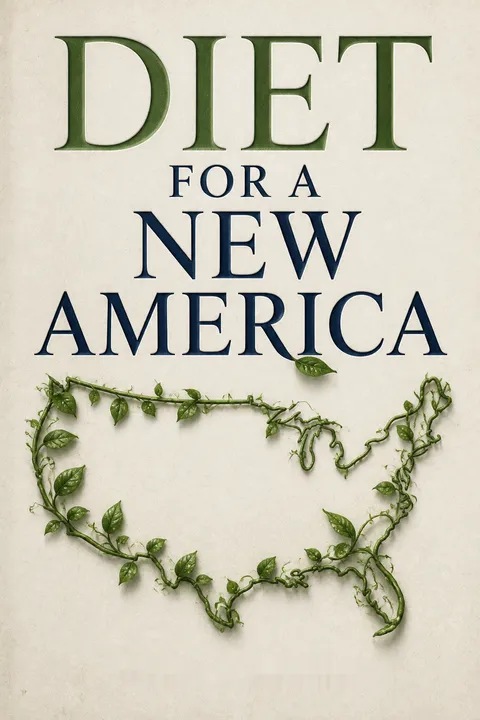


Key Takeaways
Treat every meal as a choice with consequences beyond your plate
A private choice, public effect. John Robbins opens with an unusual credential: he grew up expected to lead the Baskin-Robbins ice cream business, then declined it. He argues that eating connects personal health to animal welfare, hunger, environmental damage, and the kind of society people build. His central proposition is that a more plant-centered diet can serve several of these interests at once, rather than requiring a choice between personal well-being and care for the wider world.
A shared story. The book develops this claim through animal encounters, nutrition research, farming practices, and environmental costs. Its three strands are inseparable: what happens on farms shapes what reaches people’s plates, while demand for those products shapes how land and resources are used.
What's striking is the book's refusal to treat food as a purely private matter. It asks readers to notice the system behind an ordinary meal, much as systems thinking traces a product from its materials and labor to its waste. That frame is useful because it reveals consequences that the checkout price cannot show. The risk is that a compelling convergence of benefits can sound like proof that every benefit follows automatically from one dietary change. The book is strongest when it makes those links visible, and readers should still distinguish a moral argument from a measurable health or environmental claim.
Take animal minds seriously before treating them as ingredients
The case for attention. Robbins challenges the assumption that animals are unfeeling machines. He recounts Bobby, a terrier said to have stayed by his deceased caretaker’s grave for 14 years, and Pelorus Jack, a dolphin reported to have guided ships through dangerous waters. Such stories invite readers to reconsider what animals may feel, learn, and value. The chapter also discusses evidence that animals experience pain and form social bonds, and compares the effects of touch and maternal separation in human infants and other mammals.
Why the stories matter. The point is not that every anecdote proves a general rule about every species. Rather, Robbins uses them to unsettle the habit of dismissing animals’ inner lives before considering how they are treated for food.
The book uses narrative to widen the circle of moral attention. That is a real strength: an abstract claim about sentience can be easy to ignore, while an individual animal’s behavior makes the question concrete. The distinction between moral imagination and scientific evidence matters, however. A striking rescue story cannot establish how common such behavior is, and intelligence need not be the test for whether suffering counts. The more durable argument is simpler: uncertainty about another creature’s experience is a reason for care, not a license to assume that experience is absent.
Look past cheerful labels to the conditions behind industrial food
Efficiency has a cost. Robbins describes chicken sheds where birds are crowded in large flocks, deprived of ordinary movement, and sometimes debeaked to limit injuries caused by stress and confinement. He describes pigs in narrow stalls and calves raised in small crates. In these systems, practices such as mutilation or restricted movement are presented as ways to manage problems created by the production setup itself. The animal becomes a unit of output, while the package and advertisements suggest a pastoral life.
Language helps conceal. Robbins points to labels and industry materials that describe animals as products or portray them as contented. He also notes that farmers may have little power to change practices set by larger companies. The gap between a smiling carton and an animal’s actual conditions is central to his critique.
This is an account of incentives as much as individual cruelty. When a system rewards output and treats suffering as an external cost, harmful practices can become routine without every participant being personally malicious. That distinction helps readers ask better questions: who sets the standards, who bears the costs, and what information reaches buyers? The book’s descriptions are deliberately forceful, but labels such as natural or humane can cover a range of practices. The practical lesson is to seek verifiable production details rather than treating reassuring language as evidence.
Stop treating protein as a reason to center animal foods
Less protein anxiety. Robbins argues that most people can meet their protein needs without meat, eggs, or dairy. He presents a range of historical estimates for protein requirements and points out that many grains, beans, and vegetables contain protein. Frances Moore Lappé’s influential work on combining plant proteins helped challenge the idea that animal foods were indispensable. Lappé later revised her emphasis, saying that people eating a varied diet generally did not need to deliberately pair particular foods at every meal.
A useful qualification. The book also stresses that vegetarian diets can be poorly planned, just like any other diet. It specifically advises strict vegetarians to obtain vitamin B12. These arguments concern adequate, varied eating, not a guarantee that any menu labeled vegetarian is nutritionally complete.
The enduring insight is that a culturally repeated concern can outlast the evidence that first gave rise to it. The book traces the protein ideal to early growth studies in rats, then shows how industry messaging helped turn that finding into a broad dietary rule. Its own corrective is valuable: nutritional adequacy depends on the whole diet, not on whether a meal contains meat. The historical figures it reports should not be treated as individualized prescriptions. Protein needs, life stage, health, and food access differ, and a restrictive diet benefits from informed planning.
Build health around dietary patterns, not a single nutrient or cure
Patterns over slogans. The book challenges claims that meat is necessary for strength and that dairy is a simple answer to weak bones. It discusses studies of vegetarian athletes, wartime reductions in meat availability, and research linking diets high in saturated fat and cholesterol with cardiovascular disease. It also emphasizes fiber-rich plant foods and examines possible dietary relationships with cancer and other chronic illnesses. The broader argument is that eating patterns may influence health across several conditions, rather than acting through one magic ingredient.
Evidence is not uniform. Robbins sometimes presents associations as more conclusive than the evidence in the book can establish. The practical direction is to consider the overall pattern, while treating specific disease claims as questions for careful research and medical advice, not as a substitute for care.
The book’s strongest health reasoning is its focus on patterns and prevention rather than a single nutrient marketed as a cure. That perspective also guards against simplistic food morality: removing meat does not automatically create a nourishing diet. At the same time, studies comparing populations can be affected by differences beyond food, and correlations do not by themselves prove causation. Robbins’s rhetoric sometimes outruns those distinctions. Readers can preserve his useful question, what pattern supports health, without accepting every disease-specific claim as settled or changing treatment without a clinician.
Follow food's costs upstream, where land, water, and hunger meet
The conversion problem. Robbins argues that feeding crops to livestock before people eat them is an inefficient use of food and land. He cites an estimate that producing one pound of beef may require about 16 pounds of grain and soybeans. That conversion leaves less food available for direct human consumption and uses more acreage, water, and energy. The book links this pattern to hunger, explaining that scarcity is not only about how much food exists, but also who controls land and what crops are grown for.
Beyond the plate. Robbins connects livestock production to soil erosion, forest clearing, water use, and manure pollution. These estimates reflect the book’s sources and period, but the underlying question remains useful: what resources were spent to produce a serving, and who benefits from that use?
This chapter turns diet into a question of allocation. The relevant comparison is not simply whether a particular food is nutritious, but what else the land, crops, and water could have produced. That is a powerful economic lens because market prices often omit environmental damage and unequal access to food. The book is right to distinguish hunger from absolute scarcity, though agricultural output alone cannot solve hunger when distribution, poverty, and political power determine access. Its resource accounting is best read as a case for examining trade-offs, not as a complete explanation of food insecurity.
Question how industrial food moves persistent chemicals through the food chain
Concentration matters. Robbins explains how some persistent chemicals can accumulate in organisms and become more concentrated as predators eat contaminated prey. He argues that farm animals may also receive residues through feed, treatments, and crowded production systems, and that people can be exposed by eating animal products. The chapter draws on historical examples of contaminated feed and pesticides to show why the source and testing of food matter, not just its appearance.
Choose scrutiny, not panic. Robbins favors eating lower on the food chain and supports organic farming and integrated pest management, which uses methods such as crop rotation and beneficial insects to manage pests. His most alarming exposure claims are dated and should not be taken as current measurements. The sound takeaway is to demand reliable monitoring and transparent standards.
The chapter’s systems insight is that exposure can begin far upstream, in the feed or growing practices, and remain invisible to the person buying food. That makes monitoring and traceability essential public goods, not merely consumer preferences. The reasoning also needs a careful distinction between a chemical’s ability to cause harm and the actual risk at a particular exposure level. Without that distinction, alarming examples can produce fear without helping people judge comparative risk. The book’s support for prevention and transparent oversight is more useful than treating every contaminant claim as equally established.
Make climate action practical by changing what appears on your plate
A high-leverage choice. In the 25th anniversary epilogue, Robbins connects livestock production to climate change and cites a United Nations Food and Agriculture Organization estimate that livestock contributed 18 percent of greenhouse gas emissions, a larger share than transport in that report. He also cites a substantially higher estimate from a Worldwatch analysis, illustrating that accounting methods can produce different totals. His conclusion is that eating less meat, especially industrially produced meat, is a practical step that can complement changes in energy and agriculture.
Start where action is possible. The epilogue argues that a meatless day each week is more achievable for many people than expensive household upgrades. It presents dietary change not as a complete climate solution, but as an immediate lever available to individuals.
The practical force of this proposal lies in its low entry cost: it asks for a repeatable change in demand rather than a major purchase. The gap between the two emissions estimates Robbins cites is also instructive. Climate accounting depends on what is included, so a percentage should not be detached from its method or treated as a timeless constant. Yet uncertainty about the exact share does not erase the broader systems question. Readers can regard diet as one meaningful lever while resisting the idea that individual choices alone can replace policy and industrial change.
Pair personal food choices with pressure for transparent food systems
Visibility changes behavior. Robbins argues that food companies shape public understanding through advertising, school materials, and euphemisms that make production harder to see. He recounts how meat and dairy interests promoted their products as nutritional necessities, while presenting themselves as neutral educators. The 25th anniversary edition also describes efforts to restrict filming and protest at animal operations, which Robbins sees as a threat to public scrutiny.
Use more than the shopping cart. The publisher’s prologue reports that U.S. beef consumption fell 20 percent between 1987 and 1994, while noting that multiple causes contributed. Robbins’s argument is to combine individual choices with demands for accurate labeling, independent standards, and the right to investigate production. Change depends on both what people buy and what rules companies must follow.
The book usefully treats information as part of the food system. Consumers cannot make meaningful choices when production practices are hidden or terms lack consistent definitions. But consumer responsibility has limits: time, income, culture, and availability constrain what people can choose, while firms and governments shape the available options. The most persuasive interpretation is therefore not that every purchase is a referendum on personal virtue. It is that individual demand can support broader efforts for transparency, enforceable standards, and accountability.
Analysis
Diet for a New America is part memoir, investigative exposé, nutrition argument, and environmental appeal. Its structure moves from the moral status of animals, through industrial farming and dietary health, to the use of land, water, energy, and chemicals. Robbins’s decision to reject the family ice cream business gives the book a personal opening, but its deeper narrative is a change in perception: familiar food becomes evidence of a much larger system.
The book’s most durable contribution is this systems frame. It refuses to isolate health from animal treatment, or consumer choice from agricultural organization. The recurring contrast between a reassuring package and the production behind it makes the argument memorable. Its account of grain conversion, environmental costs, and industry-funded education also asks readers to examine incentives, not just individual intentions.
Its evidentiary style requires care. The text combines individual animal stories, population comparisons, laboratory studies, and strong claims about disease and chemical exposure. These forms of evidence do not carry equal weight. A story can awaken moral attention without proving how typical an event is; a correlation can identify a question without establishing cause. The forceful advocacy sometimes blurs these distinctions, and several statistics and claims belong to the historical setting in which the book was written. The 2012 epilogue extends the case to climate change, but its competing emissions estimates demonstrate how accounting choices shape conclusions.
A careful reader can retain the book’s central questions without treating every claim as final: What is the full cost of this food? What evidence supports the health claim? Are production conditions visible and accountable? Robbins’s most persuasive case is not that one dietary rule resolves every problem. It is that food choices are consequential, and that better information, thoughtful eating, and institutional accountability belong in the same conversation.
Review Summary
Diet for a New America receives mixed reviews, with many praising its life-changing impact on their dietary choices and environmental awareness. Readers appreciate the comprehensive information on animal welfare, health benefits of plant-based diets, and environmental impacts of food production. Some criticize the writing style, outdated information, and perceived bias. Many vegetarians and vegans credit the book for their lifestyle change, while others find it overly sentimental or preachy. Despite its flaws, many consider it a classic in environmental literature that continues to influence readers decades after its publication.
People Also Read


Glossary
Great American Food Machine
Industrial food systemRobbins’s term for the large commercial system that produces and markets food, especially animal products. It refers not only to farms and slaughterhouses, but also to the companies, advertising, educational materials, and political influence that shape production and public understanding. The phrase is critical and rhetorical, emphasizing how industrial priorities can override animal welfare, health, and ecological costs.
biochemical individuality
Individual nutritional variationThe idea that people differ in their digestive processes, nutrient needs, and responses to foods. Robbins uses it to argue against rigid dietary rules that assume everyone has identical requirements. It also qualifies his dietary recommendations: a pattern that suits many people may not suit every person, and nutritional adequacy depends on the individual as well as the foods selected.
protein complementarity
Combining plant protein sourcesThe practice of eating different plant foods whose amino acid profiles complement one another. Frances Moore Lappé popularized this approach as a way to make plant protein resemble the amino acid pattern then regarded as ideal. Robbins recounts that Lappé later judged deliberate combining unnecessary for most people eating a varied diet, correcting the impression that every meal requires precise pairing.
atherosclerosis
Arterial plaque buildupA process in which fatty and other deposits accumulate in artery walls, narrowing the channels through which blood flows. Robbins presents it as the underlying process that can lead to heart attacks when coronary arteries are blocked and to strokes when blood flow to the brain is interrupted. The book emphasizes diet as a preventive influence on this process.
integrated pest management
Combined, lower-chemical pest controlAn approach to controlling crop pests with a combination of methods, including crop rotation, pest-resistant plants, traps, beneficial insects, and careful use of chemicals when needed. Robbins contrasts it with reliance on routine pesticide use, which he argues can harm ecological balances and encourage resistant pests. The aim is to manage damage while reducing unnecessary chemical exposure.
FAQ
What's Diet for a New America about?
- Focus on Food Choices: The book examines how dietary choices impact health, the environment, and animal welfare, emphasizing the interconnectedness of these issues.
- Critique of Industrial Farming: John Robbins critiques factory farming, highlighting the inhumane conditions and environmental degradation it causes.
- Advocacy for Plant-Based Diets: Robbins advocates for a shift towards plant-based diets, arguing they are healthier and more sustainable.
Why should I read Diet for a New America?
- Awareness of Animal Suffering: The book provides detailed accounts of the conditions in which animals are raised and slaughtered, raising awareness about animal agriculture.
- Health Benefits: Robbins presents scientific evidence linking meat consumption to health issues, encouraging readers to consider plant-based diets for better health.
- Environmental Impact: The book discusses the environmental consequences of meat production, motivating readers to adopt sustainable eating habits.
What are the key takeaways of Diet for a New America?
- Interconnectedness of Life: Robbins emphasizes that food choices affect personal health, planetary health, and animal welfare, advocating for a holistic view of diet.
- Myths about Protein: The book debunks myths about the necessity of animal protein, showing that plant-based diets can provide adequate nutrition.
- Compassionate Eating: Robbins urges readers to consider the ethical implications of their food choices, promoting vegetarianism or veganism for a humane society.
What are the best quotes from Diet for a New America and what do they mean?
- “If you read only one book this year, let it be this one.”: Highlights the book's importance in changing perspectives on food and health.
- “What we do to the earth, we do to ourselves.”: Emphasizes the interconnectedness of human actions and environmental health.
- “I refuse to eat animals because I cannot nourish myself by the sufferings and by the death of other creatures.”: Reflects Robbins's ethical stance on vegetarianism.
How does Diet for a New America address the issue of protein in our diets?
- Protein Myths Debunked: Robbins challenges the belief that animal protein is essential, citing studies that show plant sources are sufficient.
- Healthier Alternatives: The book suggests plant-based protein sources like legumes and nuts, which provide all essential amino acids.
- Cultural Shift: Robbins advocates for a societal shift away from meat-centric diets, promoting improved health and ethical eating.
What are the main arguments against meat consumption in Diet for a New America?
- Health Risks: Robbins links meat consumption to health issues like heart disease and cancer, advocating for plant-based diets to reduce these risks.
- Environmental Degradation: The book discusses how meat production contributes to deforestation and pollution, calling for sustainable practices.
- Animal Cruelty: Robbins details the inhumane conditions in factory farms, arguing that meat consumption supports animal suffering.
How does Diet for a New America address health issues?
- Linking Diet to Disease: Robbins discusses how diets high in animal products are associated with health problems like heart disease and cancer.
- Nutritional Deficiencies: The book highlights deficiencies from meat-heavy diets, advocating for whole foods to ensure adequate nutrients.
- Preventative Health Measures: Robbins emphasizes dietary choices in preventing chronic diseases, promoting plant-based diets for better health.
What specific methods does Diet for a New America recommend for improving health?
- Adopting a Plant-Based Diet: Robbins recommends transitioning to a vegetarian or vegan diet, focusing on whole grains, fruits, and vegetables.
- Reducing Animal Product Consumption: The book suggests gradually reducing meat, dairy, and eggs to lower disease risk.
- Incorporating More Fiber: Robbins advises increasing fiber intake through plant foods for digestive health and overall well-being.
How does Diet for a New America discuss environmental issues?
- Impact of Animal Agriculture: Robbins details how animal farming contributes to deforestation and pollution, urging dietary changes for the planet.
- Sustainable Food Systems: The book advocates for organic farming and sustainable practices as alternatives to conventional methods.
- Personal Responsibility: Robbins encourages readers to consider the environmental impact of their food choices, promoting collective positive change.
What are the ethical implications discussed in Diet for a New America?
- Animal Welfare Concerns: Robbins highlights the cruelty in factory farming, calling for humane food sourcing.
- Moral Responsibility: The book encourages aligning dietary choices with values of compassion and sustainability.
- Interconnectedness of Life: Robbins emphasizes the ethical responsibility towards all living beings and ecosystems.
How does Diet for a New America relate diet to chronic diseases?
- Link to Heart Disease: Robbins presents evidence linking animal products to heart disease, advocating for dietary changes to prevent it.
- Cancer Correlation: The book discusses the association between meat consumption and cancer, promoting plant-based diets as preventive.
- Diabetes and Other Conditions: Robbins explains how diet impacts diabetes and obesity, emphasizing vegetarian diets for management and prevention.
What impact has Diet for a New America had since its publication?
- Cultural Change: The book has contributed to growing awareness of vegetarianism and veganism, influencing mainstream culture.
- Influence on Individuals: Many readers have changed their eating habits, reducing or eliminating meat after reading the book.
- Documentary Adaptation: The book inspired a documentary, spreading its message to a wider audience and reinforcing its ideas.
About the Author
Download PDF
Download EPUB
.epub digital book format is ideal for reading ebooks on phones, tablets, and e-readers.








