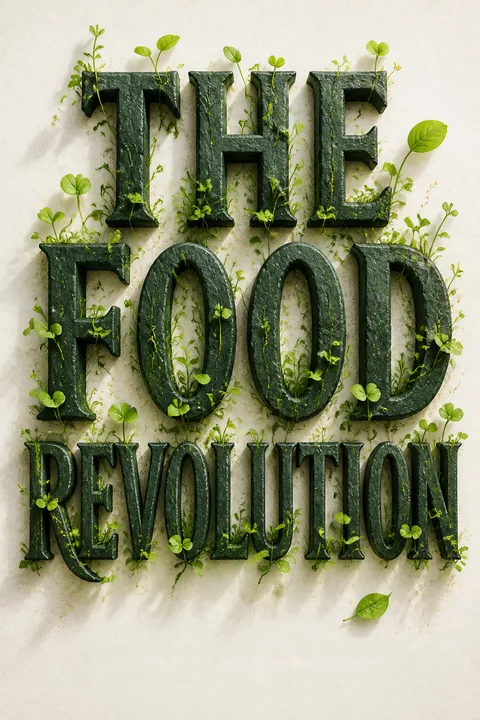


Key Takeaways
Link each meal to your health, the animals, and the planet
One choice, several consequences. John Robbins opens with a personal break from the family business that made him wealthy. His father founded Baskin-Robbins, but Robbins left the company, moved with his wife to a small island, and grew much of their own food. He came to see eating not as a private matter of taste alone, but as a choice connected to health, animal treatment, farming, and the environment.
The book's central claim is that diets with more whole plant foods and fewer animal products can benefit people and the living systems that support them. Robbins argues that everyday food purchases also express what kind of food system people support. The book is a call to align those choices with concern for health and other life.
What's distinctive is the book's systems view: a meal links a body to farms, markets, animals, and ecosystems. That framing helps explain why food policy cannot be reduced to individual nutrition advice. It also avoids the opposite mistake of treating consumers as powerless. Their choices matter, but choice is shaped by price, time, advertising, culture, and access to fresh food. A useful reading holds both truths at once: personal decisions have consequences, and fairer food systems require institutions to make healthful options practical, not merely virtuous.
Choose plant-rich meals to reduce risk, not to buy a cure
Prevention is the emphasis. Robbins connects diets rich in vegetables, fruits, beans, and whole grains with lower risks of heart disease and some cancers. He cites a 1997 international cancer-prevention report that reviewed more than 4,500 studies and estimated that 60 to 70 percent of cancers could be prevented through a combination of diet, physical activity, and not smoking. That figure describes a broad set of behaviors, not diet alone.
Heart disease offers a concrete example. The Ornish program combined a very low-fat, plant-based diet with exercise, stress management, group support, and smoking cessation. Robbins cites improvements in angina and arterial disease among participants, while acknowledging that a combined program makes it difficult to assign the benefit to diet alone. The practical message is risk reduction, not guaranteed immunity or a reason to replace medical care.
The strength of this argument is its focus on prevention and on patterns of eating rather than a single nutrient. It also points toward a central problem in clinical research: when a program changes diet, exercise, stress, and social support together, its success does not prove which ingredient did the work. That limitation does not make comprehensive care useless; it makes causal claims more careful. Plant-rich eating can be a meaningful health strategy, while individual risk, diagnosis, and treatment still call for qualified medical guidance.
Judge diets by evidence and durability, not dramatic short-term weight loss
A quick result can mislead. Robbins criticizes popular plans such as Atkins, The Zone, and the blood-type diet for relying on claims he says lacked adequate scientific support. He argues that many restrictive plans produce weight loss by cutting calories, even when their marketing credits special rules about carbohydrates, protein, or blood type. A lower number on the scale, by itself, does not establish that a diet is nutritionally sound or sustainable.
Look for the mechanism and the trade-offs. The book warns that severe restriction can omit fiber and other nutrients, and that a plan may be difficult to maintain. It also disputes the claim that people need to match foods to blood type, noting that the book found no credible published evidence for that theory. Robbins favors gradual changes built around minimally processed plant foods over dietary rules promising rapid transformation.
This is a useful test for any nutrition trend: separate the outcome from the story told to explain it. Weight can change because people eat fewer calories, regardless of whether a diet's signature theory is correct. Yet the book's own sweeping judgments about the long-term harms of particular diets should also be treated as claims from its period, not as timeless verdicts. Nutrition evidence develops, and outcomes vary. A sound evaluation asks about nutrient adequacy, adherence, health markers, and the quality of the evidence, not just testimonials or early weight loss.
Plan plant-based eating around whole foods and a reliable B12 source
A plant-based diet needs planning. Robbins describes a pattern centered on vegetables, fruits, legumes, and whole grains, with fewer refined foods, added sugars, and heavily processed products. He does not treat every meatless food as healthful: a diet built on sugary snacks or high-fat processed substitutes misses the point.
Cover specific nutrients. The book singles out vitamin B12 for vegans, recommending fortified foods or supplements because reliable sources are limited in plant foods. It also discusses omega-3 fats, identifying flaxseed and flaxseed oil, walnuts, hemp seeds, and leafy greens as plant sources. For pregnant or nursing people, it urges particular care with B12 and omega-3 intake. The practical lesson is not simply to remove animal foods, but to replace them with varied, nourishing foods and attend to nutrients that may require deliberate sourcing.
The strongest version of this advice combines a clear food pattern with nutritional realism. Removing one category of food does not automatically create a balanced diet, and supplementation can be a normal part of a well-planned eating pattern rather than evidence of failure. The book is especially useful when it names B12 instead of relying on vague reassurance. At the same time, nutrient needs can differ by age, health, pregnancy, and individual circumstances. General guidance is a starting point, not a substitute for tailored advice when needs are elevated.
Let animal suffering count as a real cost of cheap food
The farm is part of the meal. Robbins describes pigs confined in cramped buildings and chickens crowded into cages or sheds. He argues that these conditions prevent animals from moving and expressing ordinary behavior, while industry language can make intensive production sound benign. His ethical point is that an animal's treatment should count even when consumers never see the farm.
A pig farmer changed his own practice. Robbins recounts meeting an Iowa farmer who ran a large confinement operation. During a conversation, the farmer recalled being forced as a child to slaughter a beloved pet pig. After reading Robbins's earlier book, he sold the operation, moved to Missouri, and began growing vegetables organically. He kept a small number of pigs without killing them and invited schoolchildren to meet them. The story shows how new understanding can alter a livelihood, not just a shopping list.
The farmer's story makes ethical change more complex than a simple division between cruel producers and compassionate consumers. The farmer's options were shaped by economic pressure and an industry organized around scale. That perspective supports the book's appeal to compassion while directing attention toward incentives and market structures. The account is an individual example, not proof that every producer can make the same transition. Still, it shows why humane standards, buyer commitments, and viable alternatives for farmers matter alongside consumer decisions.
Prevent foodborne illness upstream, not only at the kitchen sink
Handling matters, but production matters too. Robbins describes foodborne pathogens such as E. coli, Salmonella, Campylobacter, and Listeria, and argues that industrial animal production can create conditions in which contamination spreads. He recounts outbreaks and recalls involving meat and poultry, and criticizes the idea that consumers alone should bear responsibility through careful cooking and kitchen hygiene.
The system shapes exposure. The book connects crowded animal facilities, slaughterhouse practices, and routine antibiotic use with risks to food safety and the effectiveness of medicines. It discusses HACCP, short for Hazard Analysis and Critical Control Points, a food-safety approach intended to identify hazards and control them at key stages of production. Robbins argues that inspection and enforcement matter, and that cleaner production is preferable to relying only on processing steps or irradiation after contamination has occurred.
The upstream framing is a powerful public-health principle: household precautions cannot compensate for every failure earlier in a supply chain. It also shifts attention from blaming individual cooks toward oversight, sanitation, and incentives for prevention. The book's descriptions of risk should be read as claims assembled in a particular period, not a current assessment of every food or producer. Its broader question remains valuable: are safety controls designed to prevent hazards, or mainly to manage them after they arise? That distinction applies far beyond food.
Price meat by its hidden demands on water, land, and climate
The shelf price leaves things out. Robbins argues that meat production uses substantial land, water, and energy, while generating pollution and greenhouse gases. He cites a California estimate of about 2,464 gallons of water per pound of beef and contrasts it with much lower estimates for plant foods. Such figures vary by place and method, but they illustrate the book's larger point: food has environmental costs that shoppers rarely see at checkout.
Land use adds another layer. The book links livestock production with pressure on forests, wildlife habitat, and biodiversity. It also cites the United Nations Food and Agriculture Organization's estimate that livestock accounted for 18 percent of human-caused greenhouse gas emissions in its 2006 report. Robbins's conclusion is that shifting toward plant foods can reduce several environmental pressures at once, though the precise impact depends on how food is produced.
This argument brings ecological economics to the dinner table: the market price of food rarely includes its full resource and pollution costs. The comparison is most useful as a direction of travel, not a universal conversion formula. Water use, emissions, and land impacts vary by production method, location, and which stages a calculation includes. That variation strengthens the case for transparent measurement rather than undermining it. A fair comparison should examine whole production systems, including crops grown for feed, and should avoid treating every plant food or animal product as environmentally identical.
Feed people crops directly before routing them through livestock
Conversion loses food value. Robbins argues that industrial livestock production uses grain and legumes that people could eat directly. He cites estimates that nearly 40 percent of the world's grain was fed to livestock, and says U.S. livestock consumed roughly twice as much grain as the country's human population. The precise shares depend on how feed crops and byproducts are counted, but the central concern is competition for land, water, and edible crops.
The consequences are unequal. Robbins describes countries redirecting farmland toward feed for meat consumed by wealthier populations, while poorer people face hunger or rising food prices. He distinguishes this from traditional systems where animals convert grass or other inedible vegetation into food. His criticism is aimed chiefly at grain-intensive production. The argument is that reducing demand for feed-intensive animal products could free resources for direct human food, though hunger also depends on poverty, access, and political power.
The food-conversion argument connects personal consumption to distributive justice. It asks who gains access to land and grain when production is organized around high-value animal foods. That is a stronger analysis than treating hunger as a simple shortage of calories: people can go hungry amid abundant production when income and ownership determine access. The distinction between grazing and feedlot systems is essential, since not all animal agriculture competes equally with human food. Dietary change can ease resource pressure, but it cannot substitute for addressing inequality, conflict, and food distribution.
Require transparency and independent testing before accepting engineered foods
The concern is governance as well as biology. Robbins describes early genetically engineered crops as concentrated mainly in varieties designed to tolerate herbicides or produce insecticidal traits. He recounts the FlavrSavr tomato, whose altered ripening characteristics did not translate into commercial success, and questions claims that biotechnology was already solving hunger. He also points to the use of golden rice in public relations, while noting that the crop still faced practical challenges before it could serve farmers.
Consumers need information. The book argues that without labeling, independent testing, and traceability, consumers cannot make informed choices and researchers may struggle to identify health effects. It warns that moving genes between species can produce effects that are difficult to predict. Its recommendation is precaution and public oversight, not blind confidence in corporate assurances.
The book's most durable contribution here is its focus on accountability: who tests a new technology, who discloses uncertainty, and who bears the cost if something goes wrong? Novel biological traits deserve careful evaluation, especially when they can spread beyond the original field. But the book's early warnings sometimes treat a diverse set of technologies as one uniform danger, and some predictions are more certain than the evidence presented warrants. A rigorous approach distinguishes products and uses, demands transparent evidence, and avoids both automatic rejection and automatic trust.
Change your habits without treating illness as proof of personal failure
Responsibility is not blame. Robbins argues that healthier choices can improve the odds of well-being, but cannot guarantee that anyone will avoid illness. He tells the story of his father, an ice-cream businessman who later changed his diet and reported better health. The anecdote supports the possibility of change, not a claim that food explains every disease.
Progress need not be all-or-nothing. The book repeatedly invites readers to make choices that fit their circumstances, rather than treating a label such as vegan or vegetarian as the goal. It also traces cultural shifts, including the decline in veal consumption after public attention focused on how calves were raised. Personal action can influence demand and public debate, but illness should never be treated as evidence of moral failure or a reason to deny care.
This distinction protects the health message from becoming punitive. Behavior can affect risk without giving people total control over disease, which is shaped by many factors beyond individual choice. Shame often narrows attention to personal fault; a more constructive response asks what support, information, and practical options could make change possible. The book's account of shifting public norms also suggests that individual action can gain force when people organize, communicate, and press institutions to respond. Personal responsibility is most useful when paired with compassion and collective responsibility.
Analysis
The Food Revolution is a health and environmental argument built as a sequence of linked stories, evidence, and appeals to conscience. Its organizing move is to reject the idea that food is merely a matter of personal preference: a meal is connected, in Robbins's account, to chronic disease, animal treatment, farming, climate, water, and hunger. His biography supplies the narrative engine. Walking away from the Baskin-Robbins fortune establishes that the argument is not an abstract dietary preference but a chosen reordering of values. The pig farmer story then gives the book a human-scale image of change under economic and emotional pressure.
The book's synthesis is its greatest strength. It makes visible how decisions in one sector can spill into others, and it gives readers concrete places to act, from meal choices to labeling, public policy, and food procurement. It also wisely separates responsibility from blame: better habits can reduce risks without guaranteeing health or explaining why someone becomes ill.
Its limitations follow from its urgency. Robbins writes as an advocate, often presenting correlations, estimates, and contested claims with the force of settled fact. The 2001 edition's scientific and regulatory details are historical, and some figures depend heavily on measurement choices. Its treatment of animal foods and genetic engineering can flatten meaningful differences among products and production systems. Readers should take the book's central questions seriously while checking specific medical claims against current evidence and professional advice.
The most productive reading, then, is neither conversion nor dismissal. It is a framework for asking what a food costs beyond its price, who benefits from the system producing it, and whether the evidence behind a confident claim is strong enough to justify the confidence. The book remains compelling when understood as a case for informed, compassionate choices and accountable institutions, rather than as a final scientific verdict on every diet or technology.
Review Summary
The Food Revolution receives overwhelmingly positive reviews, with readers praising its eye-opening content on diet, health, and environmental issues. Many describe it as life-changing, inspiring them to adopt plant-based diets. Reviewers appreciate Robbins' well-researched arguments, clear writing style, and compassionate approach. The book's coverage of factory farming, GMOs, and the meat and dairy industries' impact on health and the environment resonates strongly with readers. Some critics find it biased or alarmist, but most consider it an important, thought-provoking read that challenges conventional beliefs about food and nutrition.
People Also Read





Glossary
Ornish program
Lifestyle approach to heart diseaseA program developed by physician Dean Ornish to address coronary heart disease through several coordinated changes: a very low-fat, whole-foods vegetarian diet, regular moderate exercise, stress management, psychological support, and smoking cessation. Robbins cites studies of the program to argue that comprehensive lifestyle changes can improve heart-disease outcomes, while noting that combined interventions make it difficult to isolate the effect of diet alone.
China-Cornell-Oxford Project
Large diet and health studyA large collaborative study of diet and disease patterns in China, associated with Cornell University, Oxford University, and Chinese researchers. Robbins cites its findings as evidence linking greater consumption of animal-based foods with higher prevalence of chronic diseases. The project is used in the book to support a plant-centered dietary pattern, though population-level associations do not by themselves establish that a particular food caused an individual disease.
HACCP
Food hazard control systemHazard Analysis and Critical Control Points, a system for identifying food-safety hazards and monitoring steps in production where those hazards can be controlled. Robbins discusses its adoption in meat inspection and argues that its effectiveness depends on enforcement and credible oversight. In his account, industry self-monitoring and paperwork can weaken protection if inspections do not adequately examine actual conditions and products.
rBGH
Engineered cow growth hormoneRecombinant bovine growth hormone, a genetically engineered form of a hormone used to increase milk production in dairy cows. Robbins describes its use in U.S. dairies and raises concerns about animal health, milk composition, and consumer disclosure. The book also discusses disputes among regulators, researchers, and producers about safety and labeling, reflecting the controversy surrounding the hormone at the time of publication.
Bt crops
Crops producing insecticidal proteinsPlants genetically engineered with a gene from Bacillus thuringiensis, a soil bacterium whose proteins can kill certain insect pests. Robbins argues that continuous production of the insecticidal trait could encourage insect resistance and affect organisms beyond the target pests. He contrasts engineered plants with the more limited use of Bt preparations in some farming practices and raises questions about effects on ecosystems and food safety.
terminator technology
Sterility engineered into seedsA genetic engineering approach described in the book that makes seeds from a crop unable to produce viable offspring. The stated commercial purpose was to prevent seed saving, encouraging farmers to purchase new seed rather than replant harvested seed. Robbins argues that this could increase corporate control over seed supplies and create particular risks for farmers who rely on saved seed.
FAQ
What's The Food Revolution about?
- Diet and Health Focus: The Food Revolution by John Robbins explores the link between diet, personal health, and environmental sustainability, advocating for plant-based diets.
- Call to Action: It urges readers to reconsider their dietary habits, particularly the consumption of animal products, for better health and environmental outcomes.
- Research-Based Insights: Robbins supports his arguments with extensive research, making a compelling case for vegetarian or vegan lifestyles.
Why should I read The Food Revolution?
- Transformational Impact: Many readers find it life-changing, offering insights into how dietary choices can improve health and well-being.
- Environmental Awareness: The book highlights the environmental consequences of food choices, urging readers to consider their diets' impact on the planet.
- Empowerment Through Knowledge: Robbins provides knowledge about nutrition, food production, and ethical implications, encouraging informed decision-making.
What are the key takeaways of The Food Revolution?
- Health Benefits: A plant-based diet can prevent chronic diseases like heart disease, cancer, and diabetes.
- Environmental Responsibility: Reducing meat consumption can significantly lower one's carbon footprint.
- Ethical Eating: The book advocates for compassionate eating, highlighting animal suffering in factory farming.
What are the best quotes from The Food Revolution and what do they mean?
- Interconnected Health: "Your own body and the body politic affect each other—for better and for worse," emphasizes the link between personal and societal health.
- Awareness and Healing: "Awareness is the first step in healing," stresses the importance of informed food choices.
- Truth and Freedom: "The truth, as has been said countless times, will set you free," highlights the liberating power of knowledge about diet impacts.
What are the health risks associated with a meat-based diet according to The Food Revolution?
- Increased Disease Risk: High consumption of animal products is linked to heart disease, cancer, and diabetes.
- Nutritional Deficiencies: Meat-heavy diets can lack essential nutrients found in plant foods, like fiber and vitamins.
- Environmental and Ethical Concerns: Factory farming's ethical and environmental impacts make meat consumption a moral issue.
How does The Food Revolution address the environmental impact of food choices?
- Climate Change Contribution: Livestock production significantly contributes to greenhouse gas emissions.
- Resource Depletion: Animal agriculture depletes natural resources, including water and land, and contributes to deforestation.
- Sustainable Practices: Robbins advocates for sustainable agriculture and plant-based diets to restore ecological balance.
What dietary changes does The Food Revolution recommend?
- Adopt a Plant-Based Diet: Emphasizes fruits, vegetables, whole grains, and legumes while minimizing animal products.
- Focus on Whole Foods: Encourages choosing whole, minimally processed foods over refined options.
- Mindful Eating: Promotes eating with awareness and intention, considering health and environmental impacts.
How does The Food Revolution address common misconceptions about vegetarian diets?
- Protein and Nutrient Sufficiency: Dispels myths about protein deficiency, showing plant-based diets meet nutritional needs.
- Calcium and Bone Health: Challenges the belief that dairy is necessary for calcium, citing studies on bone health.
- Health Outcomes: Presents data showing vegetarians and vegans generally have better health outcomes.
What role does genetic engineering play in The Food Revolution?
- Concerns About GMOs: Discusses potential health risks and environmental impacts of GMOs, urging caution.
- Consumer Awareness: Emphasizes the importance of labeling and consumer choice regarding GMOs.
- Sustainable Alternatives: Encourages support for organic and sustainable farming practices over industrial agriculture.
How does The Food Revolution suggest individuals can make a difference?
- Vote with Your Fork: Make conscious food choices that support sustainable and ethical practices.
- Educate Others: Share knowledge about plant-based diets and meat consumption consequences.
- Engage in Activism: Promote healthier food systems and policies through local and global movements.
What is the HACCP system mentioned in The Food Revolution?
- Definition of HACCP: A system introduced by the USDA to improve food safety in meat and poultry production.
- Criticism of Effectiveness: Criticized for allowing the meat industry to self-regulate, leading to inadequate inspections.
- Public Health Risks: Despite HACCP, foodborne illnesses related to meat remain a significant issue.
How can I transition to a plant-based diet according to The Food Revolution?
- Start Gradually: Begin with small changes, like incorporating more plant-based foods into meals.
- Explore Alternatives: Try plant-based alternatives to meat and dairy, such as legumes and plant-based milk.
- Educate Yourself: Learn about nutrition and the benefits of a plant-based diet to support your transition.
About the Author
Download PDF
Download EPUB
.epub digital book format is ideal for reading ebooks on phones, tablets, and e-readers.








