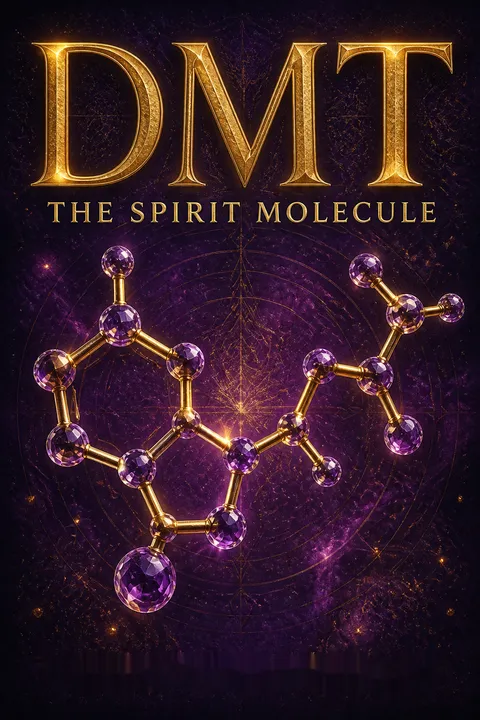


Key Takeaways
A convincing DMT world proves an experience, not another world.
A bold experiment. In 1990, psychiatrist Rick Strassman began the first new US human psychedelic research in more than twenty years. Over five years, he administered roughly 400 doses of DMT to 60 volunteers at the University of New Mexico. Given intravenously, DMT could take effect within seconds, overwhelm ordinary awareness, and wear off within about half an hour. Volunteers described dazzling visions, encounters with beings, bliss, panic, and experiences that felt more real than everyday life.
The unanswered question. Strassman called DMT the spirit molecule, but the book does not settle whether volunteers encountered independent worlds or drug-altered experiences generated by the brain. Its central tension is precisely that gap: the reports are compelling evidence about what people experienced, but not proof of what exists beyond experience.
What's striking is how clearly the book exposes a distinction often blurred in arguments about spirituality: an experience can be unquestionably real as an experience while its interpretation remains uncertain. That distinction protects both sides from easy dismissal. A person need not be called deluded for describing an encounter, and an investigator need not declare aliens or an afterlife established. The discipline is to preserve testimony without letting its emotional force do the work of evidence.
Interpret a psychedelic experience through the person, the room, and the drug.
Three interacting factors. Strassman uses set and setting to describe the person’s makeup and expectations, alongside the physical and social environment in which a drug is taken. Both interact with the drug itself. A volunteer’s history, mood, and beliefs mattered; so did the staff’s manner, the hospital room, and interruptions from alarms, jets, or workers entering unexpectedly.
Context changes meaning. The same drug could bring one volunteer insight and another terror. Even labels mattered: describing DMT as a psychosis-producing agent invites a different expectation than presenting it as a spiritual sacrament. Strassman argues that psychedelics intensify suggestibility, so the people, words, and surroundings are not incidental scenery. They help shape the experience and how it is understood.
This framework treats context as part of the cause, not just background noise. That is useful well beyond psychedelic research: expectations can change how people interpret ambiguous sensations, and social cues can either steady or amplify distress. Yet context does not mean that an experience is merely suggested or fabricated. A supportive room can influence what happens without determining every image or feeling. The practical lesson is to design environments with the same care given to the substance.
DMT occurs in the body; the pineal spirit theory remains untested.
A real molecule, an open question. DMT, short for N,N-dimethyltryptamine, is a psychedelic compound found in plants and animals. Strassman reviews reports of DMT in human blood, brain tissue, urine, and cerebrospinal fluid, as well as evidence that the brain transports it across the blood-brain barrier. Enzymes called monoamine oxidases break it down quickly, helping explain why injected DMT has such brief effects.
The pineal proposal. Strassman suspected that the pineal gland, best known for producing melatonin, might also make DMT during birth, dreams, meditation, psychosis, near-death, or death. The gland contains some relevant chemical precursors and enzymes, but no one had demonstrated DMT production there. His proposed link between pineal DMT and extraordinary states is a hypothesis, not a finding of the volunteer study.
The book is most persuasive when it keeps biological observation separate from biological interpretation. Finding a compound in the body, or showing that the brain transports it, establishes a reason to investigate. It does not reveal what the compound does at normal levels, where it is made, or whether it triggers a particular state. The gap matters because an elegant story about a gland and the soul can feel like an answer before the necessary measurements have been made.
Treat dose limits as an ethical boundary, not a test of courage.
A dose can overshoot. Early in the project, Strassman first tried intramuscular DMT, which acted too slowly to resemble smoked DMT. The team then tested intravenous doses. At 0.6 milligrams per kilogram, volunteers Nils and Philip endured overwhelming sessions marked by agitation or intense emotion, followed by sparse memories of what had happened. Both were experienced psychedelic users, but experience did not make the dose easy to manage.
The team stepped back. Strassman concluded that 0.6 was too much and set 0.4 milligrams per kilogram as the study’s highest planned dose. Around 0.2 was where reliably psychedelic effects began for most volunteers. The episode exposed a real tension: researchers needed strong effects to study, but volunteers’ willingness to continue could not replace the investigator’s responsibility to limit harm.
The episode makes dose-finding look less like a clean technical staircase and more like a moral judgment under uncertainty. Volunteers may want to prove their nerve, avoid disappointing a researcher, or keep up with peers. That makes consent necessary but not sufficient. The investigator must remain willing to stop even when a participant says yes. In this setting, caution is not a failure of scientific ambition; it is part of what makes the resulting knowledge defensible.
Four half-hour DMT doses stayed psychedelic, with no psychological tolerance.
A repeated-dose test. Tolerance means that a drug produces weaker effects after repeated use. To test whether DMT behaved this way, Strassman’s team gave volunteers four injections, each 30 minutes apart. The study included 13 volunteers, and the active sessions used a strong dose of 0.3 milligrams per kilogram.
The experience did not fade. Volunteers reported psychedelic effects as powerful on the fourth injection as on the first. The repeated sessions also gave some people more opportunity to describe and process what was happening than a single brief encounter allowed. But the result addresses one specific question, whether subjective effects diminished over these closely spaced doses. It does not establish that repeated exposure is safe, therapeutic, or useful outside the controlled study.
This finding matters because familiarity is often mistaken for protection. A person can repeat an intense experience without becoming less affected by it, and greater exposure can mean more opportunities for both insight and distress. The study also shows the value of asking narrow questions: a clear result about tolerance does not answer broader questions about benefit. Keeping those conclusions separate prevents one striking laboratory result from turning into an all-purpose claim.
Treat DMT entity encounters as data, not proof of aliens.
A recurring report. At least half the volunteers described contact with seemingly separate beings. Their forms ranged from clowns and insects to reptiles or unfamiliar figures. Some volunteers felt examined, touched, questioned, or shown information. The encounters could feel benevolent, frightening, or emotionally detached. Strassman was surprised by how often these accounts appeared, including among people unfamiliar with popular stories about DMT beings.
A difficult interpretation. At first, he considered hallucination, dreams, and psychological symbolism. Those explanations often failed to match how volunteers described their encounters, so he began listening as if the reported worlds might be real. That shift helped people speak openly, but the repeated accounts still cannot establish that the beings existed independently of the drug-altered mind.
Recurring details deserve attention, but recurrence has more than one possible explanation. Similar brains may produce similar experiences; shared human imagery may recur even without direct storytelling; and a genuinely external cause is another possibility the reports alone cannot resolve. The book’s most careful move is to let the experience remain open to inquiry rather than force it into either a supernatural or reductive account. Respectful listening and factual restraint can coexist.
DMT can resemble near-death and mystical states without explaining them.
A striking resemblance. Strassman compares DMT sessions with accounts of near-death and mystical experiences. Volunteers described leaving the body, entering tunnels, encountering helpers or light, losing ordinary time and space, and feeling certainty about consciousness beyond the body. Willow’s session included a journey through light and a strong sense of dying; other volunteers described a merging with an encompassing presence.
Similarity is not a mechanism. Strassman had hoped that such parallels might support a role for naturally produced DMT in spontaneous states. Yet only two volunteers’ sessions were dominated by death themes, and the study did not measure DMT during anyone’s actual near-death or mystical experience. The parallels make a research question plausible; they do not show that the pineal causes those states or prove what happens after death.
The comparison is valuable because it turns an unusual drug report into a testable line of inquiry about consciousness. But resemblance does not identify a shared cause: different processes can produce overlapping feelings, images, or shifts in selfhood. A rigorous next step would need measurements during spontaneous events, not just retrospective comparison. The distinction keeps the spiritual significance people attach to these experiences visible without treating that significance as laboratory confirmation.
A brief DMT peak can still trigger serious medical and psychological danger.
Short does not mean harmless. Strassman placed some adverse effects from 25 of the 60 volunteers’ sessions into his review category, although most problems were brief. Several people experienced terror or disturbing encounters. More concerning, Lucas’s blood pressure and pulse dropped to alarming levels, while Kevin’s systolic blood pressure rose to 208. These events required close observation and forced the team to reconsider who could safely continue.
Preparation has limits. The volunteers were screened, experienced with psychedelics, and supervised by medical staff. Even so, the hospital could not prevent every dangerous reaction, and its noise and clinical atmosphere sometimes made difficult sessions worse. The study’s short duration did not erase the risk. Strassman argues that a powerful experience can bring fear and physical danger, not only insight or bliss.
The safety lesson is stronger than a generic warning to be careful. Screening, monitoring, emergency planning, and a stable environment are separate layers, and none guarantees a benign outcome. The study also reveals a subtle hazard of interpretation: when a dramatic session is expected to be meaningful, physical warning signs can be overshadowed by its story. A responsible research design must let medical and psychological safety outweigh the appeal of collecting a complete set of data.
A peak experience is not treatment; lasting outcomes need follow-through.
Powerful moments, mixed results. Some volunteers said DMT reduced their fear of death, made them more open, or helped them face painful feelings. Cassandra connected long-standing abdominal tension with past trauma; Stan described a shift during four repeated sessions as he faced stress about divorce and his daughter. Others found that striking sessions faded or produced no clear change in daily life.
The study was not therapy. Its volunteers were generally healthy, and the researchers mostly observed rather than treating them. Only 11 people received formal long-term follow-up interviews. Strassman concluded that the drug was not therapeutic in itself: the person’s life and the setting for processing the experience mattered. Intense visions without a psychological, spiritual, or other supportive framework could remain just intense visions.
This is a useful distinction between an altered state and an altered life. A memorable experience may change how a person understands a problem without changing habits, relationships, or circumstances. At the same time, modest or hard-to-measure effects should not automatically be dismissed as worthless. The book’s limited follow-up makes strong conclusions difficult in either direction. Future work would need to measure both immediate experience and durable outcomes, while giving participants meaningful support to integrate what happened.
Measure inner experience carefully, but do not confuse scores with meaning.
A different rating scale. Earlier psychedelic questionnaires often treated drug effects as signs of psychosis or distress. Drawing on the Buddhist Abhidharma, a system for describing mental states, Strassman organized the Hallucinogen Rating Scale around aspects of experience such as feeling, perception, and habitual tendencies. The goal was to describe what volunteers reported rather than assume in advance that it was pathological.
Subjective data counted. The scale distinguished DMT doses more effectively than the study’s measured biological variables, including blood pressure and hormone levels. That made it a useful research tool, not a verdict about what a vision meant or whether an encounter was spiritual. Strassman’s Buddhist training also shaped how staff sat with volunteers: attentive, available, and careful not to impose an interpretation on someone in a vulnerable state.
The scale addresses an important problem in science: what gets measured reflects assumptions about what matters. A tool built only to detect pathology can overlook euphoria, awe, or changes in bodily awareness. Yet a more balanced questionnaire is still a map, not the territory. Numerical ratings can compare reports across conditions, but they cannot settle whether an experience is healing, spiritually valid, or externally caused. Good measurement makes interpretation better informed, not unnecessary.
A Schedule I label can block inquiry without settling the science.
Permission took persistence. Strassman submitted his research proposal in 1988 and spent nearly two years navigating university review, FDA approval, DEA permits, drug manufacturing requirements, and funding. A collaborator eventually synthesized DMT for about $300, but the study still required extensive testing and official clearance. After approval arrived in November 1990, the first volunteer session followed within days.
Research ended under pressure. The project stopped in 1995 amid a mix of safety concerns, institutional strain, personal circumstances, and conflict with Strassman’s Buddhist community. He proposed future work in a more supportive setting that combined medical capability with staff trained in psychological and spiritual care. The story argues for careful research, not blanket permission: scrutiny must protect participants without treating political stigma as a substitute for evidence.
The regulatory story is neither a simple case for deregulation nor a celebration of bureaucracy. Powerful drugs warrant oversight, but a legal category can make careful inquiry difficult without answering the scientific questions that prompted it. The practical challenge is to build governance that supports both accountability and learning: clear consent, independent safety review, privacy protections, and follow-up, alongside a realistic route for qualified researchers to obtain approval.
Analysis
This book is best read as two projects woven together: a clinical account of a rare human DMT study, and an attempt to interpret experiences that strained the investigator’s scientific and spiritual frameworks. Its narrative force comes from that strain. The reader moves from dose calibration and regulatory paperwork into encounters with beings, apparent death, and mystical unity, then back to the practical question of what those events changed in people’s lives.
The strongest evidence concerns the study itself: DMT’s rapid effects, participants’ reported experiences, physiological responses, the absence of diminishing subjective effects across closely spaced doses, and the difficulty of conducting research in a hospital. The further claims about pineal production, naturally occurring DMT surges, alien contact, dark matter, and life after death are proposals, not results of the experiments. The book sometimes places these claims near established biological facts, which can make speculation feel more settled than it is. A careful reading keeps the categories distinct.
The interviews and case histories have genuine value as qualitative evidence. They preserve details that rating scales cannot capture, including fear, uncertainty, and the way volunteers tried to make meaning from extraordinary states. But vivid testimony is not a controlled test of metaphysical explanations, and the small follow-up group cannot establish durable benefit. The study was designed to characterize pharmacology, not to provide psychotherapy or prove spiritual claims. The most durable contribution may therefore be methodological rather than metaphysical. DMT research cannot be reduced to a molecule acting on a passive subject: expectations, relationships, setting, medical safety, and aftercare shape both the experience and its consequences. Strassman’s willingness to report uncertainty and troubling outcomes makes the work more useful than a simple celebration of psychedelic insight. Its invitation is to investigate boldly, interpret modestly, and treat human experience as data without pretending that data already answers every question.
Review Summary
DMT: The Spirit Molecule explores Dr. Rick Strassman's groundbreaking research on DMT, a naturally occurring psychedelic compound. The book details the study's setup, participants' experiences, and potential implications for understanding consciousness and spirituality. While some readers found it fascinating and mind-expanding, others criticized its speculative nature and repetitiveness. Many appreciated the scientific approach to psychedelic research, but some felt it lacked concrete conclusions. Overall, the book challenges conventional views on consciousness and reality, sparking both praise and skepticism from readers.
People Also Read



Glossary
DMT
short-acting psychedelic compoundN,N-dimethyltryptamine is a tryptamine compound found in various plants and animals, and reported in human tissues. In Strassman’s study, it was administered intravenously to volunteers. Its effects began rapidly, peaked within minutes, and usually faded within roughly half an hour. The study documented its acute effects but did not establish its normal biological function.
Spirit molecule
Strassman’s name for DMTStrassman’s evocative label for DMT, reflecting his hypothesis that the compound may help mediate profound states involving spirituality, near-death, birth, or contact with other realms. The term is a proposed interpretation, not a demonstrated biological role. In the book, DMT’s striking subjective effects and reported presence in the body make it a candidate for investigation.
Set and setting
person and environmentSet refers to a person’s psychological and physical makeup, including history, expectations, mood, and body. Setting refers to the surroundings and social situation in which a drug is taken. Strassman argues that both interact with the drug to shape the experience and its interpretation. The concept is central to understanding why the same dose can affect people differently.
Psychedelic threshold
point of full psychedelic effectsStrassman’s term for the point at which DMT effects fully replace ordinary mental awareness. In his description, crossing this threshold involves separation of consciousness from the body, awe or wonder, and a strong certainty that the experience is real. The threshold varied by dose and person, and some volunteers experienced significant effects at relatively low doses.
Endogenous DMT
DMT made within the bodyDMT produced by an organism rather than taken from outside. The book reviews reports of DMT in human tissues and the biochemical pathways that can form it. Strassman proposed that the pineal gland might produce psychedelic amounts during particular states, but the study did not establish the gland as the source or show that endogenous DMT causes those states.
Hallucinogen Rating Scale
questionnaire for drug effectsA questionnaire Strassman developed to record subjective effects during psychedelic research. Its questions drew on the Buddhist Abhidharma’s description of mental functions and were organized into clinical groupings. In the DMT studies, its scores distinguished dose-related psychological effects more effectively than the measured biological variables. It describes reported experience; it does not establish what that experience means.
FAQ
What's DMT: The Spirit Molecule about?
- Exploration of DMT: The book investigates N,N-dimethyltryptamine (DMT), a potent psychedelic found in humans and plants, focusing on its effects on consciousness.
- Research Journey: Rick Strassman shares his pioneering research on DMT, marking the first U.S. psychedelic studies in over two decades.
- Spiritual Implications: It explores DMT's potential role in mystical experiences, near-death experiences, and consciousness.
Why should I read DMT: The Spirit Molecule?
- Unique Perspective: Strassman combines scientific research with personal anecdotes and philosophical insights, offering a comprehensive view of psychedelics.
- Cultural Relevance: As interest in psychedelics grows, the book provides valuable insights into their therapeutic and spiritual applications.
- Groundbreaking Research: It documents pioneering studies that could influence future research on consciousness and mental health.
What are the key takeaways of DMT: The Spirit Molecule?
- DMT's Ubiquity: DMT is present in humans and many plants, suggesting a fundamental role in consciousness.
- Psychedelic Experiences: DMT induces profound psychological experiences, including euphoria and altered perceptions.
- Potential for Healing: DMT may have therapeutic potential, particularly for psychological trauma and spiritual enhancement.
What are the best quotes from DMT: The Spirit Molecule and what do they mean?
- "We do not possess imagination enough to sense what we are missing.": Highlights the limitations of human perception and the vastness of psychedelic experiences.
- "DMT has no beneficial effects in and of itself; rather, the context in which people take it is at least as important.": Emphasizes the significance of setting and mindset in psychedelic experiences.
- "It is so important for us to understand consciousness.": Advocates for deeper exploration of consciousness through psychedelics.
What is DMT and how does it work?
- Chemical Structure: DMT is a tryptamine compound related to serotonin, known for its rapid and powerful psychedelic effects.
- Endogenous Presence: Naturally produced in the human body, particularly in the pineal gland, suggesting a role in altered states.
- Psychedelic Effects: Induces intense hallucinations and altered perceptions, peaking within minutes and offering profound insights.
How does Rick Strassman conduct his research in DMT: The Spirit Molecule?
- Volunteer Selection: Strassman selects experienced psychedelic users to ensure they can handle DMT's intense effects.
- Controlled Environment: Conducted in a clinical setting at the University of New Mexico, with close monitoring of volunteers.
- Data Collection: Detailed notes capture volunteers' experiences and physiological responses, reviewed later for deeper understanding.
What are the effects of DMT on the human body?
- Physiological Responses: DMT increases heart rate and blood pressure, with changes in body temperature.
- Psychedelic Experiences: Volunteers report intense hallucinations and profound emotional experiences.
- Short Duration: Effects last around 30 minutes, allowing for quick recovery and assessment.
What is the significance of the pineal gland in relation to DMT?
- Potential "Spirit Gland": Strassman suggests the pineal gland may produce DMT during significant life events, bridging physical and spiritual realms.
- Historical Context: The pineal gland has mystical associations, often linked to spiritual awakening.
- Biological Function: Produces melatonin, but may also synthesize DMT during altered states.
How does the setting influence DMT experiences?
- Importance of Environment: The context significantly affects the experience, with a supportive setting enhancing positive outcomes.
- Supportive Atmosphere: Volunteers are monitored in a safe environment, reducing anxiety and enhancing experiences.
- Expectations and Mindset: The volunteer's mental state shapes their experience, making preparation crucial.
What are the different types of experiences reported by DMT volunteers?
- Personal Experiences: Insights into personal lives and emotional healing are common.
- Invisible Realms: Encounters with otherworldly beings challenge perceptions of reality.
- Transpersonal Experiences: Profound spiritual insights often lead to feelings of unity with the universe.
How does DMT: The Spirit Molecule contribute to the understanding of consciousness?
- Exploration of Inner States: Provides a framework for understanding how psychedelics alter consciousness.
- Link to Spirituality: Suggests DMT facilitates access to spiritual realms, offering a biological basis for mystical states.
- Future Research Directions: Calls for further research into therapeutic and spiritual applications of psychedelics.
What are the potential therapeutic applications of DMT?
- Psychological Healing: DMT may treat PTSD and depression, facilitating healing and growth.
- End-of-Life Care: Could help terminally ill patients confront fears and find peace.
- Creativity and Problem Solving: May enhance creativity, suggesting therapeutic potential in unlocking new thinking.
Download PDF
Download EPUB
.epub digital book format is ideal for reading ebooks on phones, tablets, and e-readers.








