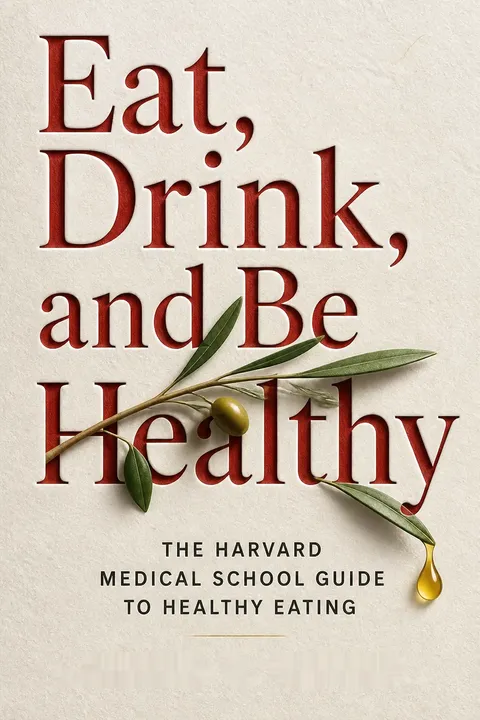


Key Takeaways
Build meals around plants, intact grains, unsaturated oils, and varied protein sources.
The central pattern. Willett's main argument is that food quality matters more than rigid rules about total fat, carbohydrates, or protein. The Harvard Healthy Eating Plate turns that idea into a meal: fill half the plate with vegetables and fruits, and divide the rest between whole grains and healthier protein sources such as beans, nuts, fish, or chicken. Use plant oils in moderation, and limit red and processed meat, refined grains, and sugary drinks.
A practical compass. This is not a demand to become vegetarian. A partial shift from meat-centered meals toward plant foods can improve the overall diet while leaving room for personal taste. The book's recipes make that principle concrete with meals built from vegetables, legumes, whole grains, and flavorful oils.
The framework succeeds because it organizes choices by their role in a meal, not by nutrient arithmetic. That makes it easier to use while shopping, cooking, or eating out. It also reflects a systems view: foods arrive in combinations, so a meal's pattern can matter more than one isolated ingredient. The plate is still a guide rather than a prescription. Appetite, culture, budget, and medical needs differ, and a visual template cannot settle every individual's nutritional requirements.
Treat food pyramids as policy choices, not neutral scientific verdicts.
Guidance has interests. Willett argues that the USDA's Food Guide Pyramid gave misleading emphasis to refined grains, treated fats as uniformly undesirable, and presented meat and dairy as default protein sources. The USDA's agricultural role, industry lobbying, and the political process can shape how scientific findings become public advice. In the 2015 guidelines, for example, the advisory committee's call to limit red meat did not appear in the final public recommendations.
Compare the models. The USDA's Healthy Eating Index measured how closely diets followed its recommendations. In studies described by Willett, that score predicted health less well than the Alternate Healthy Eating Index, built around distinctions such as whole versus refined grains and unsaturated versus saturated fats. Harvard's Plate and Pyramid were designed to make those distinctions visible.
What's useful here is the reminder that a public-health graphic is both a scientific summary and a political artifact. Simple guidance can improve reach, but simplicity also creates opportunities to blur meaningful differences between foods. The author's account makes a strong case for transparency about how recommendations are produced. Still, evidence of lobbying does not by itself establish that every contested recommendation is wrong. The sound response is to inspect the evidence and the decision process, rather than treating either government guidance or its critics as automatically authoritative.
Watch your weight trend and waist, not just a single BMI reading.
Trends reveal risk. Body mass index, or BMI, adjusts weight for height, but it cannot describe the whole health picture. Willett emphasizes weight gain over adulthood and fat around the abdomen as useful warning signs. In the Nurses' Health Study and Health Professionals Follow-Up Study, people who gained 8 to 35 pounds after age twenty were two to three times more likely to develop several conditions, including heart disease and type 2 diabetes, than those who gained little.
Act before extremes. The book recommends preventing further gain for people already above a healthy range and avoiding unnecessary gain for those below it. It also urges regular activity and attentive eating. Large restaurant portions, constant food availability, and sugary drinks can make excess intake routine, so relying on willpower alone is a poor plan.
The emphasis on trajectories is more informative than treating weight as a moral score or a one-time classification. A waist measurement or gradual upward trend can prompt useful changes before a diagnosis forces attention. At the same time, BMI and waist are screening measures, not complete portraits of health. Muscle, age, illness, and social conditions matter. The book's strongest practical contribution is to pair measurement with a non-punitive response: notice change, then examine habits and circumstances.
Trust a pattern of strong studies, not nutrition's latest headline.
Different questions need different studies. Randomized trials can test whether changing a diet causes an effect, but long trials are expensive and hard to control. Cohort studies follow people over time and can capture ordinary eating patterns, although they cannot eliminate every alternative explanation. Willett describes the Nurses' Health Study, launched in 1976, and related studies that repeatedly collected diet and health information from large groups.
Look for convergence. A single small study, a result in animals, or a change in a lab marker is weaker grounds for changing behavior than repeated findings in people, especially when different methods point in the same direction. The margarine story illustrates why: replacing butter seemed sensible based on fat content, but many margarines contained trans fats later linked to worse heart-health markers and outcomes.
This is a valuable lesson in scientific literacy: uncertainty is not proof that nutrition science knows nothing. It often means that researchers are testing different parts of a complicated question. The book's preference for converging evidence is especially appropriate when decades-long randomized trials are impractical or unethical. One caution is that large cohort studies can still inherit measurement error and bias. Readers should treat evidence as cumulative and revisable, not as a contest in which one study permanently settles a food's reputation.
Replace harmful fats with unsaturated fats, rather than with refined starch.
Fat is not one thing. Willett distinguishes industrial trans fats, saturated fats, and unsaturated fats. He urges avoiding partially hydrogenated oils, limiting saturated fat from sources such as red meat and full-fat dairy, and using unsaturated fats from foods such as olive oil, nuts, and fish. The key is substitution: replacing saturated fat with refined bread or sugar is not the same as replacing it with unsaturated fat.
Evidence beyond cholesterol. The book cites feeding studies, long-term cohorts, and trials of Mediterranean-style diets. In PREDIMED, participants assigned to a Mediterranean pattern supplemented with nuts or olive oil had about 30 percent fewer major cardiovascular events than those assigned to a low-fat comparison diet. This supports a pattern of food choices, not unlimited oil or a promise that one ingredient prevents disease.
The central insight is counterfactual: a food cannot be judged without asking what replaces it. That principle applies well beyond nutrition and prevents simplistic labels such as good fat or bad fat from doing all the thinking. Willett also correctly separates total fat from fat type. Yet trial results belong to whole dietary patterns, and the exact benefit of any single oil or nutrient is harder to isolate. The practical lesson is to improve the replacement, not merely remove a category.
Choose carbohydrates by processing and blood-sugar effect, not category names.
Structure changes digestion. The book challenges the old idea that all complex carbohydrates are beneficial and all simple sugars are harmful. The glycemic index estimates how quickly a carbohydrate food raises blood sugar compared with glucose. Glycemic load also accounts for the amount of carbohydrate in a serving. Highly processed grains and potatoes often raise blood sugar quickly, while beans, intact grains, and many fruits and vegetables tend to have gentler effects.
Keep the grain intact. Milling and refining remove or disrupt parts of the grain, including fiber and nutrients, and make starch easier to digest. In the cohorts Willett describes, people with the highest glycemic-index diets were about one-third more likely to develop type 2 diabetes than those with the lowest. The useful everyday rule is to favor intact or minimally processed grains and cut back on refined flour and sugary drinks.
The distinction between a food's label and its physical structure is a powerful way to understand why two foods in the same nutrient category can behave differently. Processing changes how quickly the body can access starch, while fiber and serving size also matter. The glycemic index is therefore a tool, not a menu-planning religion. Meals combine ingredients, and a single table value cannot capture every context. The book's simpler emphasis on less-refined foods keeps the science usable.
Pick protein for its whole package, not its grams alone.
Protein travels with company. Willett uses the idea of a protein package to describe the other nutrients that come with a protein source. A serving of salmon, lentils, or nuts brings a different mix of fats, fiber, salt, and other nutrients than a serving of beef or processed meat. The book recommends getting more protein from plants, fish, and poultry, and less from red and processed meat.
More is not automatically better. The cited adult protein allowance is about 0.8 grams per kilogram of body weight, and the author notes that deficiency is uncommon among healthy adults in the United States. Some high-protein diets can help with weight loss, but their health effects depend on what foods supply the protein. Replacing refined carbohydrates with beans or nuts is not equivalent to replacing them with bacon and cheese.
The package idea corrects a common blind spot in nutrient-centered eating. Protein is not delivered as a laboratory powder in ordinary meals; it comes embedded in foods with distinct consequences. The same logic also clarifies why substitution matters for plant-based diets. A meatless diet can still be built around sweets and refined starch, while a thoughtfully composed diet can include animal foods. The framework is persuasive, though the book notes that long-term evidence about ideal protein amounts is less developed than evidence about fat and carbohydrates.
Eat varied produce, while treating juice and potatoes as different foods.
Variety beats a magic food. The book recommends about five daily servings of vegetables and fruits, with variety across colors and plant types. Produce supplies fiber and many compounds that a supplement cannot reproduce as a complete package. The evidence is strongest for benefits such as lower cardiovascular risk and improved blood pressure. The DASH trial, for example, found that a diet rich in fruits and vegetables lowered blood pressure over eight weeks.
Not every plant serves the same role. Juice delivers sugar and calories more quickly than whole fruit, and the author counts it sparingly. Potatoes and corn are treated as starchy foods rather than substitutes for leafy or non-starchy vegetables. Willett also cautions against claiming that produce universally prevents cancer: a large cohort analysis he describes found no difference in overall cancer rates between people with very high and very low fruit and vegetable consumption.
The combination of enthusiasm and restraint makes this advice more credible than a blanket superfood claim. A varied diet is a sensible hedge against incomplete knowledge of plant compounds, while the distinction between whole fruit and juice reflects differences in eating speed, fiber, and concentration. The cancer discussion is particularly important: a food can support health without functioning as a universal shield against disease. Variety is a reliable organizing principle, but it should not obscure the value of affordability, access, and cultural food traditions.
Make water your default; sugary drinks add calories without much fullness.
Liquid calories are easy to miss. Water is the simplest routine drink, while coffee and tea are acceptable choices without heavy additions. Juice can contain the sugar of several pieces of fruit in one glass, and soda supplies calories with little nutritional value. The book cites a large analysis in which each daily serving of sugar-sweetened soda or juice was associated with a 13 percent higher risk of type 2 diabetes, beyond the effect attributed to weight gain.
Other drinks need context. Milk is optional for most adults, not a mandatory health food. Willett describes potential downsides of high dairy intake, including calories and saturated fat, while recognizing that preferences and needs differ. He also discusses possible heart benefits of moderate alcohol use alongside risks, including breast cancer and dependence. People who do not drink need not start for health reasons.
The useful distinction is between hydration and the cultural meaning assigned to beverages. A drink can quench thirst while also delivering calories, sugar, or alcohol, so the body does not experience all beverages as interchangeable. The advice is strongest for reducing sugary drinks, where there is little nutritional tradeoff. Alcohol is more complicated because risk varies with age, health, and personal history. Its possible cardiovascular benefit should not be turned into a general recommendation to begin drinking.
Treat calcium as one bone factor, not a reason to drink milk constantly.
Bone health is broader than calcium. The book questions the claim that several daily dairy servings reliably prevent fractures. A Women's Health Initiative trial involving more than 35,000 women found that calcium plus vitamin D slightly improved hip bone density but did not reduce hip fractures and was associated with more kidney stones. Willett stresses physical activity, vitamin D, vitamin K, and avoiding excessive preformed vitamin A as other considerations.
Supplements are not a substitute for food. The author recommends a standard multivitamin as insurance against gaps, especially for nutrients such as folate and vitamin B12, while emphasizing that pills do not supply the full range of food's components. His specific calcium and vitamin D targets reflect the edition's evidence and should not be treated as individualized medical instructions. Current needs depend on health, diet, medications, and clinician guidance.
This section usefully distinguishes a measurable intermediate outcome, bone density, from the outcome people actually care about, fractures. It also demonstrates why a nutrient's essential role does not prove that ever-higher intake is beneficial. The multivitamin argument is best understood as cautious coverage for possible shortfalls, not as a disease-prevention guarantee. Supplement recommendations can change as evidence and public-health guidance evolve, making individualized advice especially important for people with medical conditions or medication interactions.
Eat less beef to improve health and reduce food's environmental burden.
Food choices scale up. Willett links personal dietary patterns with farming's effects on climate, water, and ecosystems. In the book's account, U.S. feedlots use about 15 to 20 pounds of grain to produce a pound of beef. Beef represented about 4 percent of the retail food supply but 36 percent of diet-related greenhouse-gas emissions in the cited estimate. Replacing some red meat with beans, lentils, or other plant proteins can therefore serve both health and environmental aims.
The whole system matters. The author recommends eating less red meat and dairy, wasting less food, and favoring seasonal produce when practical. He cautions that local sourcing alone does not guarantee a smaller environmental footprint; the food itself and how it is produced matter too. Food production, transportation, processing, and waste all contribute to impact.
What's striking is that the health recommendation and the planetary argument converge around the same substitution: less beef, more plant protein. This makes individual choice legible without pretending that consumers control the entire food system. The chapter also avoids reducing sustainability to food miles, a useful correction to a popular shortcut. Still, environmental comparisons depend on production methods and measurement boundaries. Dietary change can contribute, but infrastructure, farming policy, and access determine how easy that change is to make.
Use the Mediterranean pattern as a flexible template, not a rigid menu.
A pattern can travel. Traditional Mediterranean eating, as described in the book, centers on vegetables, fruits, beans, whole grains, nuts, olive oil, and relatively modest amounts of meat and dairy. The Lyon Diet Heart Study found fewer repeat cardiovascular events among heart-attack survivors assigned to a Mediterranean-style diet than among those assigned to a low-fat diet. PREDIMED also found fewer cardiovascular events in groups assigned to Mediterranean diets supplemented with nuts or olive oil.
Adaptation makes it livable. Willett argues that the useful principles can be combined with foods from other cuisines, including Japanese and Latin American traditions. His practical advice includes cooking in batches, using leftovers, choosing satisfying portions, and enjoying food rather than relying on restrictive rules. A lasting pattern should fit taste, budget, health needs, and daily life.
The strongest feature of the Mediterranean model is its portability at the level of principles, not imitation. A person need not reproduce a particular region's menu to favor plants, whole grains, and unsaturated fats. That distinction reduces the risk of turning a living food culture into a branded diet. It also makes pleasure part of adherence rather than a reward for compliance. The model is not automatically affordable or accessible, however, so adaptation must account for local ingredients, time, and economic constraints.
Analysis
This book's most durable contribution is not a list of approved foods, but a way to reason about food. It asks readers to distinguish fat types, carbohydrate processing, and protein sources, then to ask what one food replaces. That final question is unusually important: many nutrition claims compare a food with an abstract alternative rather than with the actual meal it displaces. The book also makes a persuasive case that evidence accumulates through different methods. Randomized trials, long-term cohorts, and carefully measured biological responses each answer different questions, and nutrition cannot always be reduced to the trial design considered strongest in isolation.
Its argument about government dietary graphics adds an institutional dimension often missing from personal nutrition advice. A recommendation can be scientifically defensible in principle and still become distorted when translated for public use. Yet the book sometimes moves quickly from showing conflicts of interest to asserting their effects on specific guidance. Readers should preserve the distinction between a plausible institutional mechanism and proof that a particular policy was changed for a particular reason.
The text is also a 2017 edition, and some supplement, alcohol, dairy, and nutrient-dose recommendations are presented with more confidence than the evidence discussion elsewhere would warrant. Those details should be treated as historically situated advice, not universal clinical direction. The more stable framework is the emphasis on minimally processed foods, varied plants, whole grains, unsaturated fats, healthier protein sources, physical activity, and limiting sugary drinks. Its strongest practical lesson is methodological humility: keep the broad pattern, reassess the fine print, and consult current clinical guidance when personal health conditions or medications are involved.
Review Summary
Eat, Drink, and Be Healthy receives high praise for its science-based approach to nutrition. Readers appreciate the comprehensive, unbiased information on various food groups, vitamins, and dietary habits. The book's emphasis on moderation and sustainable eating habits resonates with many. Critics note some outdated information and repetitiveness. The recipes included are generally well-received. Many readers consider it an essential resource for understanding the relationship between diet and health, though some find the scientific language challenging.
People Also Read





Glossary
Harvard Healthy Eating Plate
Meal-building visual guideA visual meal guide developed by Harvard public-health researchers to show food quality and proportion. It recommends filling about half the plate with vegetables and fruits, and dividing the other half between whole grains and healthier protein sources. It also favors plant oils and water, and advises limiting sugary drinks and red or processed meat.
Healthy Eating Pyramid
Food-pattern hierarchyA pyramid created by Willett and colleagues to organize evidence-based eating advice. Its foundation is physical activity and weight control, followed by vegetables, fruits, whole grains, plant oils, and healthier protein sources. Foods such as refined grains, sugary drinks, and red meat appear as items to limit, contrasting with the USDA's earlier Food Guide Pyramid.
Alternate Healthy Eating Index
Diet-quality risk scoreA research score designed to evaluate dietary patterns using features Willett's group considered important for health, including vegetables, fruits, nuts, grain fiber, trans fat, types of dietary fat, and the balance of white and red meat. In the studies described in the book, it predicted chronic-disease risk better than the USDA's original Healthy Eating Index.
Glycemic index
Blood-sugar response measureA measure comparing how strongly a carbohydrate-containing food raises blood glucose with the response to a reference food, usually glucose. Foods with higher values tend to raise blood sugar more rapidly. The book uses the measure to distinguish among carbohydrates, while cautioning that processing, fiber, meal combinations, and serving size also affect the body's response.
Glycemic load
Serving-level glucose impactA measure that combines a food's glycemic index with the amount of carbohydrate in a serving. It estimates the blood-sugar impact of the portion actually eaten, rather than the food's carbohydrate quality alone. Willett presents it as a useful comparison tool, not a requirement to calculate every meal or snack.
Nurses' Health Study
Long-term women's health cohortA large U.S. cohort study begun in 1976 to investigate long-term health among female registered nurses. Participants periodically report diet, lifestyle, and medical information. The study later became an important source of evidence about relationships between eating patterns and chronic diseases, although, like other observational studies, it cannot by itself prove causation.
PREDIMED trial
Mediterranean-diet heart trialA Spanish randomized clinical trial described in the book that compared Mediterranean-style diets supplemented with extra-virgin olive oil or nuts against a low-fat comparison diet among people at elevated cardiovascular risk. The trial reported fewer major cardiovascular events in the Mediterranean-diet groups. It tested whole dietary patterns, not the isolated effect of olive oil or nuts.
defensive eating
Strategies against overeatingWillett's term for deliberate habits that help people avoid eating more than they intend in an environment filled with tempting, oversized, and readily available food. Examples include slowing down, choosing smaller restaurant portions, keeping snack foods out of the home, limiting liquid calories, and stopping before feeling stuffed.
protein package
Nutrients accompanying proteinWillett's term for the fats, fiber, sodium, and other nutrients delivered alongside protein in a food. The idea explains why protein sources are not nutritionally interchangeable: lentils, nuts, fish, processed meat, and beef each bring a different set of accompanying substances. The book therefore recommends choosing protein foods by their full composition, not protein grams alone.
FAQ
What's Eat, Drink, and Be Healthy about?
- Focus on Healthy Eating: The book provides a comprehensive guide to healthy eating, emphasizing the importance of informed dietary choices for improved health and longevity.
- Critique of Traditional Guidelines: Dr. Willett critiques outdated dietary guidelines, such as the USDA Food Pyramid, and proposes a more balanced approach prioritizing whole foods and healthy fats.
- Scientific Foundation: Grounded in research, particularly from the Nurses’ Health Study, the book offers evidence-based recommendations on the long-term effects of dietary patterns.
Why should I read Eat, Drink, and Be Healthy?
- Clear and Accessible Information: Dr. Willett simplifies complex nutritional science into practical advice, making it easy to understand and implement.
- Challenging Common Myths: The book debunks popular misconceptions about fats, carbohydrates, and proteins, encouraging readers to rethink dietary choices.
- Practical Tips and Recipes: It includes practical tips for shopping and meal planning, along with over seventy recipes that align with recommended dietary patterns.
What are the key takeaways of Eat, Drink, and Be Healthy?
- Emphasize Plant-Based Foods: A diet rich in fruits, vegetables, whole grains, and healthy fats is linked to lower risks of chronic diseases.
- Healthy Fats Matter: Incorporating healthy fats, such as those from olive oil and nuts, while reducing saturated and trans fats, can improve heart health.
- Mindful Eating Practices: Being mindful of eating habits, including portion sizes and food quality, can lead to better weight management and health outcomes.
What are the best quotes from Eat, Drink, and Be Healthy and what do they mean?
- “Eat food. Not too much. Mostly plants.” This quote emphasizes the importance of whole foods and moderation, focusing on plant-based foods as the foundation of a healthy diet.
- “You are what you drink.” It highlights the significance of beverage choices in overall health, suggesting that sugary drinks can contribute to weight gain and chronic diseases.
- “The ultimate winners are the readers of this book.” This reflects Dr. Willett's commitment to empowering readers with knowledge to make healthier dietary choices.
What is the Harvard Healthy Eating Plate?
- Visual Guide to Healthy Eating: It is a visual representation of Dr. Willett's dietary recommendations, emphasizing filling half your plate with fruits and vegetables.
- Focus on Whole Grains and Healthy Proteins: Encourages consumption of whole grains and healthy protein sources, such as fish, poultry, beans, and nuts.
- Avoid Sugary Drinks: Advises against sugary beverages, promoting water, coffee, or tea instead, aligning with the book's emphasis on reducing added sugars.
How does Eat, Drink, and Be Healthy address carbohydrates?
- Distinction Between Carbohydrates: Differentiates between refined carbohydrates, which spike blood sugar, and whole grains, which provide sustained energy and nutrients.
- Glycemic Index Importance: Discusses the glycemic index as a measure of how quickly carbohydrates affect blood sugar levels, recommending low-glycemic foods.
- Whole Grains for Health: Emphasizes the benefits of whole grains, linked to lower risks of diabetes and heart disease, encouraging their inclusion in diets.
What role does fat play in a healthy diet according to Eat, Drink, and Be Healthy?
- Good vs. Bad Fats: Categorizes fats into healthy unsaturated fats and harmful trans fats, encouraging consumption of unsaturated fats for better heart health.
- Importance of Omega-3 Fatty Acids: Highlights benefits of omega-3 fatty acids found in fish and certain plant sources, essential for brain health and reducing inflammation.
- Challenging the Low-Fat Myth: Critiques the belief that all fats are bad, promoting a balanced approach to fat consumption.
How does Eat, Drink, and Be Healthy suggest managing weight?
- Focus on Quality of Diet: Emphasizes that the quality of food is as important as quantity, with a diet rich in whole foods aiding weight management.
- Mindful Eating Practices: Encourages mindful eating, paying attention to hunger cues and portion sizes to prevent overeating.
- Regular Physical Activity: Stresses the importance of regular exercise for weight management and overall health.
What dietary patterns does Eat, Drink, and Be Healthy recommend?
- Mediterranean Diet Influence: Promotes a Mediterranean-style diet rich in plant-based foods, healthy fats, and lean proteins.
- Healthy Eating Pyramid: Introduces the Harvard Healthy Eating Pyramid as a visual guide for healthier food choices.
- Focus on Whole Foods: Emphasizes whole, minimally processed foods that are nutrient-dense to support long-term health.
How does Eat, Drink, and Be Healthy address the impact of beverages on health?
- Avoid Sugary Drinks: Advises against sugary beverages, which contribute to weight gain and chronic diseases, promoting water, coffee, and tea instead.
- Alcohol in Moderation: Discusses potential benefits and risks of alcohol, recommending moderation if consumed.
- Hydration and Health: Highlights the importance of staying hydrated with beverages that support overall health.
What does Eat, Drink, and Be Healthy say about the environmental impact of diet?
- Diet and Climate Change: Discusses how dietary choices, particularly red meat and dairy consumption, contribute to greenhouse gas emissions.
- Sustainable Eating Practices: Encourages adopting sustainable eating practices, such as eating less meat and choosing locally sourced foods.
- Healthier Planet, Healthier You: Posits that a plant-based diet benefits both individual health and the planet.
How does Eat, Drink, and Be Healthy suggest improving cooking habits?
- Cooking at Home: Encourages preparing meals at home to control ingredients and portion sizes, fostering healthier choices.
- Using Fresh Ingredients: Emphasizes using fresh, seasonal ingredients to enhance flavor and nutrition.
- Experimenting with Flavors: Suggests using herbs, spices, and healthy fats to boost flavor without unhealthy additives.
Download PDF
Download EPUB
.epub digital book format is ideal for reading ebooks on phones, tablets, and e-readers.








