

Key Takeaways
A supermarket full of choice can conceal a dangerously narrow food system
Variety can be an illusion. The book begins with Kavilca, an ancient wheat still grown in a few fields in eastern Turkey. Wheat seems abundant, but individual varieties can be close to extinction. The same pattern spans the diet: humans have eaten about 6,000 plant species, yet nine now supply most food calories, and rice, wheat, and maize provide half. Familiar brands and cuisines can make diets look varied even as the crops and animal breeds behind them become more alike.
Control is concentrated too. The book reports that four corporations control much of the world’s seed supply, while one banana variety, the cloned Cavendish, dominates global trade. The concern is not that every meal must be local or unusual. It is that apparent choice can rest on a small genetic and commercial base.
What's striking is the difference between variety on a menu and diversity in the system that produces it. A consumer may encounter cuisines from around the world while eating crops selected for the same storage, shipping, and processing requirements. This is a useful distinction for evaluating food claims: count not only dishes, but also the varieties, breeds, and suppliers beneath them. The argument should not imply that standardization is always harmful. It can make food cheaper and easier to distribute. The risk grows when efficiency depends on too few biological and commercial options.
Credit the Green Revolution's harvest, then confront its fragility
More grain came at a cost. After the Second World War, crop scientists developed high-yielding wheat and rice that helped avert famine. Norman Borlaug used dwarf wheat, including genes from Japan’s Norin 10, to make plants strong enough to benefit from heavy fertiliser use. Grain production tripled, and the approach contributed to feeding a rapidly growing population.
The package became the default. These crops generally depended on irrigation, synthetic fertiliser, pesticides, and uniform fields. That uniformity made harvesting and industrial processing more efficient, but it also reduced the range of traits in farmers’ fields. A fungus that attacks wheat, for example, can spread rapidly when many plants share similar vulnerabilities. The book’s case is not to erase the Green Revolution’s gains, but to question a system built around a temporary fix as though it were permanent.
A fair assessment has to hold two outcomes together: the Green Revolution increased food supply, and its input-intensive model created vulnerabilities and environmental costs. This is a classic policy problem in which success can harden into lock-in. Farmers, buyers, and research institutions adapt to the system that delivers reliably now, making alternatives harder to pursue. The practical question is not whether high-yield breeding should stop. It is whether breeding and farming can pursue output alongside resilience, soil health, and useful variation, rather than treating those goals as competing by definition.
Keep diverse crops growing, not merely frozen in seed vaults
A landrace is a living population. It is a locally adapted crop variety, shaped through generations of farmer selection and seed saving. Kavilca wheat, for example, evolved in the cold, wet conditions of the Anatolian plateau, where modern wheat varieties may struggle. Its mixed population contains plants with subtle differences in height, grain, and resilience.
Storage is insurance, not farming. The Svalbard Seed Vault holds samples of thousands of crops, including Kavilca, to preserve genetic options. The book also describes Vavilov’s seed collection and the scientists who protected it during the siege of Leningrad, even as they starved. Yet a stored seed cannot keep adapting in a field, sustain a miller’s skill, or feed a community. Conservation needs both secure collections and farmers who can plant, harvest, use, and pass on diverse crops.
The distinction between preserved material and a functioning agricultural practice matters well beyond food. A seed in cold storage is like an archived language: it preserves evidence and potential, but not the social relationships that keep it alive. Living fields allow selection under real conditions, while repositories protect against local loss and disaster. Neither can replace the other. The challenge is institutional as much as biological: farmers need access to seed, land, and buyers, or conservation becomes a collection project detached from the people who created the diversity.
Treat crop diversity as disease insurance, not agricultural nostalgia
Old traits can solve new problems. The book links uniform crops to shared vulnerability. Modern wheat is susceptible to Fusarium head blight, a fungal disease that can ruin harvests and contaminate grain. Older wheat varieties, including einkorn and emmer, show greater resistance. A Turkish wheat collected by botanist Jack Harlan helped breeders resist stripe rust after its seeds had been stored for years.
Wild relatives matter too. In India’s Garo Hills, wild citrus may hold genes that could help commercial citrus resist greening disease. In Oaxaca, a Mixe maize variety forms aerial roots that host microbes capable of helping the plant obtain nitrogen. These examples do not prove every traditional crop is superior. They show that rare varieties and wild relatives can preserve traits that modern breeding has overlooked or lost.
This is a strong case for maintaining genetic options before a crisis reveals their value. In evolutionary terms, variation is raw material for adaptation; in risk management, it prevents a single failure mode from becoming universal. But diversity is not a magic shield. A crop may carry a useful trait without yielding well, fitting machinery, or meeting current market demands. The opportunity lies in combining detailed knowledge of older varieties with contemporary breeding and agronomy. That approach treats heritage as a research resource, not as a demand to recreate the past.
When a food disappears, skills, autonomy, and identity disappear with it
Food loss follows power. Murnong, a nutritious root once widespread in southern Australia, declined after European livestock grazed and trampled its habitat. Aboriginal people were also violently displaced, taking with them the knowledge and practices that had helped sustain the plant, including careful burning that cleared competing growth. Efforts to grow murnong again now reconnect food with cultural knowledge.
Seeds can carry history. The Geechee red pea survived on Sapelo Island among descendants of enslaved Africans, who preserved its cultivation and the dishes made with it. Cornelia Walker Bailey helped revive the crop as the Geechee community faced displacement. On Okinawa, Kenichi Kariki is rebuilding a tiny supply of O-Higu soy, a local bean lost after occupation and imported soy displaced it. In each case, a food is also a record of a people’s relationship to land.
These stories sharpen the meaning of food sovereignty: the ability of communities to maintain control over what they grow, prepare, and pass on. Cultural continuity is not a decorative extra to nutrition; it can depend on access to land, seed, and livelihoods. At the same time, describing traditional foods as inherently healthier or more authentic can flatten diverse communities into symbols. The more useful lesson is that communities should have the resources and authority to choose which traditions to sustain, adapt, or leave behind.
Industrial scale turns biological sameness into shared risk
Efficiency can synchronize failure. Modern meat production relies on a narrow range of breeds. Many commercial chickens grow to slaughter weight in about 35 days, while a few breeding companies supply much of the world’s poultry genetics. When thousands of similar animals are kept close together, disease can move quickly through a flock. The book also describes African swine fever killing or prompting the destruction of 180 million pigs in China by 2020, followed by efforts to rebuild herds using imported Western genetics.
The same pattern reaches the sea. Farmed salmon are bred for rapid growth and kept in pens, where sea lice can multiply and escaped fish may interbreed with wild populations. These systems produce large quantities of food, but concentration can make ecological and biological failures harder to contain.
The key issue is correlated risk: a system becomes fragile when many producers depend on organisms with similar weaknesses. This resembles the danger of concentrated supply chains in other industries, where a single disruption can cascade across many businesses. Scale alone is not the culprit; large systems can invest in monitoring and biosecurity that small producers cannot afford. The deeper question is whether the system has enough biological and operational diversity to absorb shocks. More breeds and production methods can serve as redundancy, provided they are supported rather than merely catalogued.
Protect habitats and local livelihoods as one conservation project
People are part of the ecosystem. The Imraguen of Mauritania traditionally caught grey mullet and preserved its egg sacs as butarikh, a food and source of income. As subsidized foreign fleets increased pressure on West African waters, mullet stocks and local livelihoods weakened. Some Imraguen fishers shifted toward endangered sharks and rays, while women who processed the traditional catch lost work.
Protection can help stocks recover. The book describes Marine Protected Areas, or ocean zones where fishing is restricted or prohibited. In Cabo Pulmo, Mexico, a community-supported protected area helped fish biomass rise by nearly 500 percent within a decade. Yet less than 6 percent of the world’s oceans was protected at the time discussed, and some protected areas existed only on paper. Conservation works best when rules are enforced and local communities share in the benefits.
The Imraguen example shows why conservation and economic justice cannot be separated. Restricting local fishing while allowing powerful distant fleets to operate nearby undermines both legitimacy and ecological goals. Marine reserves can create spillover benefits as fish move into surrounding waters, but those gains are not automatic or evenly distributed. Governance determines who bears short-term costs and who receives the recovery dividend. The same principle applies on land: protecting biodiversity without protecting community access can turn conservation into another form of dispossession.
Make endangered foods viable through livelihoods, not nostalgia
A food needs a future market. Swabia’s Alb lentil disappeared from cultivation, but farmer Woldemar Mammel found its seeds misfiled in the Vavilov collection and began growing them again. More than a hundred local farmers eventually joined in, and demand exceeded supply. The crop returned because it could be grown, eaten, and sold, not simply because its history was admired.
Value can travel back to producers. In Venezuela, chef and activist Maria Fernanda Di Giacobbe trained thousands of women to turn rare criollo cacao into chocolate, helping farmers earn more from their crop. In Albania, a restaurant and food workshop helped create buyers for Mishavinë cheese. These efforts link conservation to income, skills, and local ownership. They are small compared with industrial supply chains, but they demonstrate practical routes from endangered ingredient to living tradition.
Markets can conserve what they reward, but they can also reshape a tradition to suit outsiders. The strongest examples here retain decision-making and added value close to growers and makers. That is a more durable model than treating rarity as a luxury branding opportunity alone. Still, niche demand cannot support every endangered food, and not every community wants to turn heritage into a business. Public procurement, cooperatives, and local institutions can help share the burden so preservation does not depend only on wealthy consumers or individual champions.
Redirect public money toward diverse farms and buyers who reward them
Incentives shape the menu. The book estimates that governments spend between $700 billion and $1 trillion annually on agricultural subsidies, often supporting large commodity crops and industrial production. Those policies influence what farmers plant and what food becomes cheap, available, and familiar. Individual shoppers make choices inside that system, not outside it.
Purchasing rules can change demand. The epilogue describes Brazil requiring at least 30 percent of school-meal food to come from local farms. In Copenhagen, apple suppliers were evaluated partly on how many varieties they could provide, encouraging a revival of local orchards. Gardeners and seed savers can also share open-pollinated seeds. The broader lesson is to combine personal action with public rules and institutional buying power, so diverse foods have dependable routes from field to table.
The book’s policy argument corrects a common blind spot in consumer ethics: people cannot choose foods that the market has made unavailable or unaffordable. Procurement rules can create reliable demand, while subsidies can either reinforce monocultures or help farmers transition toward more varied systems. Such reforms need safeguards for food affordability and farm income, since abrupt changes can shift costs onto those least able to absorb them. Diversity is therefore not only a matter of taste or technology. It is also a question of who pays, who benefits, and which choices public institutions make easy.
Analysis
The book’s most useful idea is that food diversity is not a decorative supplement to productivity. It is a form of option value. A seed, breed, fermentation practice, or local market may contain capabilities that are invisible until conditions change. The stories of resistant wheat, wild citrus, and Mixe maize make that value tangible, while the Hadza, Geechee, Imraguen, and Syrian examples show that biological resources are entangled with the people who maintain them.
The narrative also resists a simple celebration of the past. The Green Revolution delivered more grain and helped prevent famine; the problem is that a successful emergency model became a global default, with ecological costs and dependencies that are difficult to reverse. The best interpretation is not tradition against science, but a broader definition of innovation that includes farmer knowledge, living genetic diversity, and modern breeding. A seed vault is useful, but it cannot substitute for fields, skills, and livelihoods.
One tension deserves attention: diversity is not automatically resilience. A mixed system can still fail if its crops are poorly matched to local conditions, if farmers lack buyers, or if land and water are insecure. Nor can every rare food scale to feed large urban populations. The book is strongest when it presents endangered foods as sources of knowledge and as proof that alternatives can work, rather than as a ready-made menu for the planet.
Its conclusion is therefore institutional. Markets, subsidies, seed ownership, fishing rules, and public procurement determine which foods survive. Individual curiosity can help build demand, but it cannot by itself counterbalance policies and supply chains organized around a handful of commodities. The central challenge is to make diversity economically and politically viable without pretending that every community must preserve every tradition. The future food system is likely to need several modes of production, with enough biological and social variation to avoid making one failure everyone’s failure.
Review Summary
Eating to Extinction explores the world's rarest foods and their importance. Readers praise Saladino's passionate, informative writing and global perspective, though some find it repetitive. The book highlights the dangers of monocultures and loss of biodiversity in our food systems. It covers various food categories, from wild foods to sweets, and tells stories of people working to preserve endangered foods. While most reviewers found it eye-opening and thought-provoking, some criticized the lack of focus on sustainability and women's roles in food preservation.
People Also Read

Glossary
landrace
locally adapted crop populationA landrace is a local population of a crop shaped over time by farmer selection and adaptation to a particular environment. Its plants may differ from one another while sharing traits suited to local conditions. Farmers traditionally saved and replanted its seeds, allowing the population to continue adapting and maintaining useful genetic variation.
Green Revolution
high-yield crop transformationThe Green Revolution refers to the spread of high-yielding crop varieties, especially wheat and rice, combined with synthetic fertilisers, irrigation, pesticides, and new breeding methods. It greatly increased grain production and helped avert famine. The book also traces its costs, including dependence on intensive inputs and the replacement of many locally adapted varieties.
centres of origin
regions where crops first evolvedNikolai Vavilov used centres of origin to describe regions where cultivated crops originated and where related plants often display especially high diversity. Such places can contain valuable traits for breeding, including resistance to disease or tolerance of difficult conditions. Later researchers refined the idea into centres of diversity, while Vavilov’s maps remain influential.
Ark of Taste
catalogue of endangered foodsThe Ark of Taste is an international catalogue created by the Slow Food movement to identify foods at risk of disappearing. It includes crops, animal breeds, and traditional products associated with particular places and communities. The project treats food loss as more than the loss of an ingredient: it can also mean losing knowledge, skills, livelihoods, and local ecosystems.
milpa
intercropped maize farming systemA milpa is a traditional Meso-American farming system that grows maize alongside crops such as beans and squash. Maize provides a climbing structure for beans, squash leaves help cover the soil, and bean-associated microbes add nitrogen. The crops also complement one another as food. The system is an example of agricultural diversity functioning above and below ground.
nixtamalisation
alkaline treatment of maizeNixtamalisation is the process of soaking or cooking maize in an alkaline solution, commonly made with mineral lime. The treatment softens the grain and helps release nutrients that would otherwise remain difficult for the body to use. The resulting maize can be ground into masa for foods such as tortillas. The practice developed in Indigenous America.
qvevri
buried Georgian wine vesselA qvevri is a large, egg-shaped clay vessel traditionally buried in the ground and used to ferment and store Georgian wine. The earth helps maintain a stable temperature during fermentation and ageing. Some winemakers ferment white grapes with their skins and stems in the vessel, creating amber-coloured wines with a distinctive relationship to local grapes and yeasts.
Marine Protected Areas (MPAs)
protected ocean zonesMarine Protected Areas are defined areas of ocean where human activities, especially fishing, are limited or prohibited to protect marine life and habitats. The book describes evidence that protected areas can rebuild fish populations and allow eggs, larvae, and mature fish to spread into surrounding waters. Their effectiveness depends on enforcement and meaningful protection, not designation alone.
cold chain
unbroken refrigerated food transportThe cold chain is the continuous use of refrigeration to move perishable food from producer to consumer without interruption. Refrigerated ships, trucks, and storage extended the distance fruit could travel and the time it could be kept. This made year-round global trade possible, but it also favoured varieties able to withstand transport and storage, contributing to uniformity.
FAQ
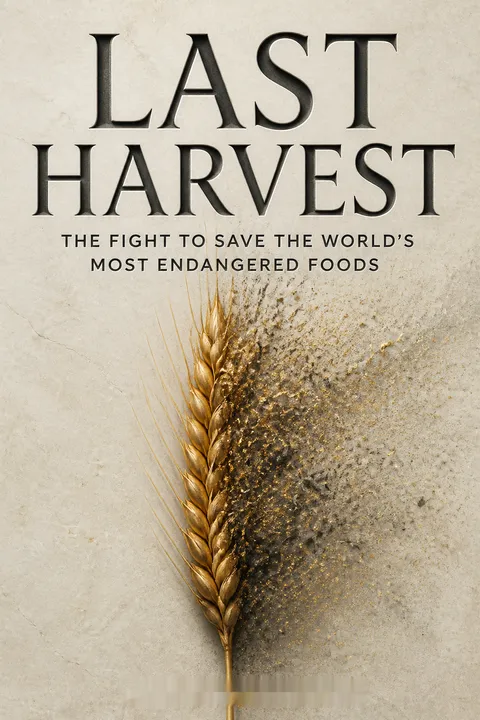
What's Last Harvest: The Fight to Save the World’s Most Endangered Foods about?
- Focus on endangered foods: The book delves into the decline of biodiversity in food systems, spotlighting endangered foods globally. It stresses the need to preserve these foods for cultural, nutritional, and ecological reasons.
- Connection to human history: Each food is linked to specific cultures and histories, showing how traditional practices have influenced diets. Dan Saladino uses these stories to highlight the interconnectedness of food, environment, and human survival.
- Call to action: Saladino urges readers to value food diversity and take steps to protect endangered foods, serving as both a warning and a guide for future food sustainability.
Why should I read Last Harvest?
- Awareness of food extinction: The book raises awareness about the alarming decline in food diversity, crucial for anyone interested in food security. It provides insights into how modern agricultural practices have led to this crisis.
- Cultural significance: Readers will appreciate the cultural heritage tied to various foods, understanding that losing these foods means losing part of our history. Saladino’s storytelling makes the subject engaging and relatable.
- Inspiration for action: The book encourages readers to support local farmers and traditional food systems, fostering a sense of responsibility towards food choices and empowering individuals to contribute to preserving food diversity.
What are the key takeaways of Last Harvest?
- Importance of biodiversity: Biodiversity in food is essential for resilience against diseases and climate change. Saladino argues that a diverse food system is crucial for our survival.
- Crisis of extinction: Many traditional foods are on the brink of extinction due to industrial agriculture and globalization. The author highlights specific examples to illustrate this point.
- Cultural and nutritional value: Traditional foods are integral to cultural identity and heritage. Preserving these foods is vital for maintaining cultural diversity.
What are the best quotes from Last Harvest and what do they mean?
- “Nature has introduced great variety into the landscape, but man has displayed a passion for simplifying it.” This quote highlights the tension between natural biodiversity and human tendencies towards uniformity in agriculture.
- “Tradition is not the worship of ashes, but the preservation of fire.” This emphasizes the importance of keeping culinary traditions alive, suggesting that preserving food diversity is about maintaining cultural vitality.
- “If we lose a traditional food, a variety of rice or a fruit, we store up problems for the future.” This underscores the long-term implications of losing food diversity, suggesting potential food insecurity and health issues.
How does Last Harvest address the impact of industrial agriculture?
- Critique of monocultures: Saladino critiques the reliance on monocultures in industrial agriculture, which leads to a loss of genetic diversity and makes crops more vulnerable to diseases and climate change.
- Historical context: The book provides a historical overview of agricultural practices, particularly after the Green Revolution, showing how the push for higher yields often came at the expense of biodiversity.
- Call for sustainable practices: Saladino advocates for sustainable agricultural practices that prioritize diversity and resilience, emphasizing the need for a food system that respects both nature and cultural heritage.
What role do indigenous communities play in preserving endangered foods in Last Harvest?
- Guardians of biodiversity: Indigenous communities are vital stewards of biodiversity, maintaining traditional farming practices that support food diversity. Their knowledge is essential for the survival of many endangered foods.
- Cultural connection: The book highlights the deep cultural connections these communities have with their food, fostering a sense of responsibility towards preserving their food heritage.
- Challenges faced: Saladino addresses the challenges indigenous communities face, including land loss and globalization pressures, underscoring the importance of supporting these communities in their preservation efforts.
What is the Ark of Taste mentioned in Last Harvest?
- Definition of Ark of Taste: A project by the Slow Food movement to catalog and promote endangered foods globally, aiming to raise awareness and encourage preservation.
- Global significance: The Ark contains over 5,300 foods from 130 countries, highlighting the rich diversity of global food heritage and serving as a resource for consumers and advocates of food diversity.
- Cultural preservation: It focuses on the foods and the stories and traditions associated with them, helping maintain cultural identities and practices at risk of being lost.
How does Last Harvest connect food and climate change?
- Impact of industrial agriculture: The book illustrates how industrial farming practices contribute to climate change through deforestation, greenhouse gas emissions, and loss of biodiversity.
- Need for resilience: Saladino argues that preserving diverse food species can help create more resilient food systems capable of adapting to climate challenges.
- Future food security: Addressing climate change requires reevaluating food systems and committing to biodiversity, as emphasized by the author.
What is the significance of the Svalbard Global Seed Vault in Last Harvest?
- Global backup for seeds: The Svalbard Global Seed Vault serves as a secure storage facility for seeds worldwide, safeguarding genetic diversity and acting as a backup for the world’s agricultural heritage.
- Preservation of landraces: The vault contains seeds of many landrace varieties, crucial for future breeding efforts and food security, essential for adapting to changing environmental conditions.
- Symbol of hope: Saladino presents the vault as a symbol of hope for the future of food diversity, representing a collective effort to protect the genetic resources that sustain humanity and the planet.
What specific endangered foods are discussed in Last Harvest?
- Kavilca wheat: An ancient emmer wheat from Turkey at risk of extinction due to modern agricultural practices, crucial for Turkey's agricultural heritage.
- Geechee Red Pea: Grown on Sapelo Island, Georgia, tied to the cultural identity of the Geechee people, reflecting broader issues of food sovereignty and cultural preservation.
- Olotón maize: A unique maize variety from Oaxaca, Mexico, noted for its unusual growth characteristics and potential benefits for sustainable agriculture, essential for maintaining the region's agricultural diversity.
How does Last Harvest suggest we can help save endangered foods?
- Support local farmers: Saladino encourages buying from local farmers who grow diverse crops, sustaining traditional agricultural practices and promoting food diversity.
- Engage in food activism: The book advocates for raising awareness about preserving endangered foods, participating in campaigns, supporting organizations like Slow Food, and educating others.
- Preserve traditional knowledge: Emphasizes documenting and sharing traditional food knowledge and practices to ensure future generations understand the value of food diversity and cultural significance.
How does Last Harvest address the issue of monoculture?
- Risks of monoculture: The book discusses how reliance on single crop varieties makes food systems vulnerable to diseases and pests, using examples like the Cavendish banana.
- Historical context: Saladino provides examples of monoculture leading to the extinction of diverse food varieties, such as the Gros Michel banana.
- Call for diversity: The author advocates for a return to diverse agricultural practices to ensure food security and ecological balance.
Download PDF
Download EPUB
.epub digital book format is ideal for reading ebooks on phones, tablets, and e-readers.








