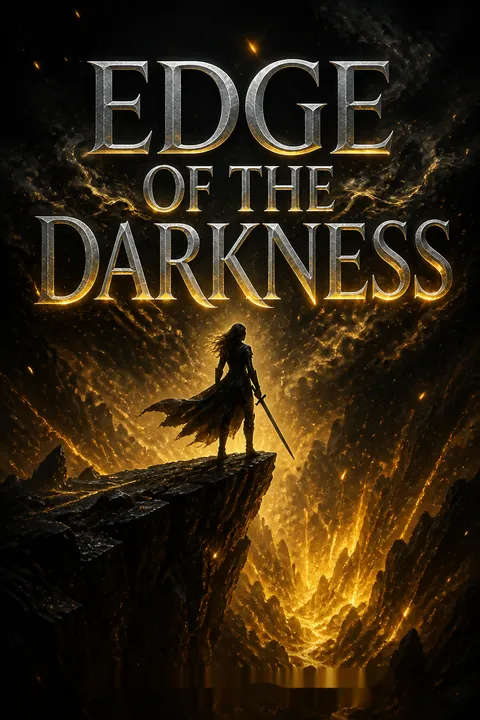


Plot Summary
The Pit in Bale's Dreams
After the battle in the minotaur’s cave, Bale, a veteran demon fighter, dreams nightly of a lightless pit and of Wrath, the horseman she stabbed. In those dreams, desire keeps undoing the resistance she depends on while the darkness draws nearer. Awake, she leads a small force through the winter Wilds, following an unexplained pull toward Wrath.
She hides the crucial reason from her companions: he is her Chosen, the fated partner whose death could kill her too. Bale still intends to destroy the horsemen, even if that means dying herself. The secret leaves her fighting on two fronts, pursuing Wrath as an enemy while fearing what the bond might demand of her.
Bale’s dream gives the novel a double pursuit: she is tracking Wrath across the Wilds while also being pulled toward him by a bond she interprets as a threat. Her silence is practical, since she fears the group might spare him to save her, but it also preserves her self-image as someone who can control every cost. The pit’s growing presence quietly undermines that certainty. Rather than making attraction a cure for hostility, the story makes it an additional danger, forcing Bale to distinguish what she wants from what her loyalties require.
A Trail Through Blood
The pursuit brings Bale’s party through mountain country where lower-level demons ambush them in a clearing. Bale kills one with her sword, while Corson, Wren, Hawk, Aisling, and the others fight through the attackers. Their victory costs human lives, and only about thirty members of the group remain.
The Wilds have become safer in places, but the steady losses have worn down even the veterans. Bale’s companions want rest; she is impatient to close the distance to Wrath, whose direction she senses without a trail. They settle for the night in a pine grove, carrying the dead with them in the only way they can: by burying them before moving on.
The ambush makes the war’s arithmetic visible. Each advance into the Wilds buys ground at the cost of people, and Bale’s habit of treating survival as the only available objective leaves little room to mourn. The burial is brief because the group has learned to perform grief inside the schedule of combat. That discipline keeps them moving, but it also narrows their imagined future: rest is a tactical pause, not yet a life they expect to reclaim.
The Nymphs' Neutral Ground
Bale’s party finds shelter in a former school now used by tree nymphs as a warm retreat beneath the protective calamut trees. The forest offers a rare rule: anyone who starts violence risks being killed by the trees, so enemies share the same uneasy refuge. Bale spots Calabar, a former ally who betrayed the palitons, but cannot reach him safely.
Then Wrath enters carrying Bale’s stolen sword. Death accompanies him, and the horseman deliberately approaches her table, turning the weapon into a reminder of their unfinished fight. Bale keeps her face composed while her body responds to him. Around them, the nymphs and demons continue their revels, making the room’s enforced peace feel more precarious than safety.
The calamut forest suspends ordinary power without resolving the conflict beneath it. Bale cannot punish Calabar, and Wrath cannot simply claim or attack her; both must inhabit a space governed by a force neither controls. That constraint exposes their mutual dependence on impulse and restraint. The nymphs’ pleasure-filled refuge also sharpens Bale’s isolation: she is surrounded by people free to seek comfort, yet cannot imagine touching anyone except the enemy who makes her life more dangerous.
The Forest Turns Savage
The truce collapses when nuckals, grotesque predators from Hell, force their way into the school and provoke the calamuts. The trees spear friend, enemy, and bystander alike, turning the refuge into a killing ground. Bale’s group cuts a hole through the wall to escape. Caim carries the gravely wounded Raphael out, while Corson and Wren stay behind to rescue two human Wilders, Dana and Darcy.
They reach them too late. Bale is injured and separated from the others; Wrath returns through the chaos, lifts her onto Zorn, and carries her beyond the trees to his hidden home in Eldorata. He chooses her safety over pursuing his own escape, though she has given him no reason to trust her in return.
The calamuts’ indiscriminate violence overturns the assumption that neutrality means protection. Their loyalty to the nymphs makes everyone else expendable, including the very people who sought shelter there. Wrath’s rescue complicates Bale’s enemy map through action rather than argument: he risks himself to save her, while she has not agreed to join him or abandon her friends. The deaths of Dana and Darcy also make the cost of the group’s rescue ethic concrete. Compassion matters here, but it cannot guarantee survival.
Fiora Behind the Gold
In Eldorata, Wrath treats Bale’s wounds and admits that his ability has been drawing him into her dreams. She demands to leave, but their argument breaks when she recognizes one of the gold figures lining his home: it is Fiora, her sister, missing for centuries. Before Bale can absorb the discovery, War returns and threatens her.
Wrath attacks his fellow horseman, stabbing him and refusing to let him touch Bale. Bale joins the fight with War’s weapon, and their struggle tears through the stone beneath them. Wrath finally removes War’s head, but Bale and Wrath fall through the broken floor into a lower level of Eldorata. Their escape from one enemy has dropped them into a place Bale fears even more.
Fiora’s statue transforms Eldorata from an eerie hideout into the physical form of Bale’s unresolved grief. Wrath’s response to War is equally revealing: he protects Bale before he has any assurance that she will choose him. Their fall joins intimacy and danger in a literal collapse of boundaries. Bale’s past has surfaced inside Wrath’s refuge, and the violence that once seemed to define him now shields her from another horseman. Neither revelation makes their opposing loyalties disappear.
Mytaz's Golden Kingdom
Bale explains that Mytaz once ruled this hidden region of Hell and could turn any demon he touched into gold. Centuries earlier, she and King Kobal fought him, but his apparent death was never confirmed. The figures in Eldorata are not carved statues; they are captured demons, and Bale fears they may remain conscious inside their golden shells.
She finds Fiora among them and recognizes the pose in which her sister was frozen. Wrath learns the truth and stays beside Bale as they explore the vast golden palace and its caves. They discover Mytaz has returned to the palace, leaving them trapped among his victims with no clear route out.
Mytaz’s power makes domination visible and permanent: each golden body preserves a person while erasing their ability to act. Bale’s fear that the victims might still be conscious turns the palace into a question about the difference between survival and life. Her account also reframes the old campaign against Mytaz as unfinished rather than safely past. Wrath, who once regarded the upper statues as curiosities, must now confront the suffering they embody and the possibility that his own survival could depend on understanding a world he never knew.
The Bond Refuses Obedience
Bale and Wrath argue over his revenge against Kobal and over whether their bond can survive their opposing sides. Wrath tries to take her, but she rejects him, unwilling to give herself to someone who might still kill her king. They keep their distance in the caves while waiting for Mytaz to leave the palace.
When Wrath’s desire overwhelms his control, Bale sees his distress and chooses to approach him, accepting the bond physically without yet resolving what it means for her loyalties. Their union begins just as Mytaz discovers them. Bale breaks away to fight, and Wrath reaches for his weapon, but Mytaz’s power turns the sword to gold before he can use it effectively.
Bale’s decision is neither surrender nor a clean reconciliation. She chooses closeness while keeping the political question open, refusing to let desire automatically dictate allegiance. Wrath’s restraint matters too: his earlier attempt to force the bond fails, and the eventual intimacy depends on Bale’s choice. The timing denies them a private resolution. Mytaz’s arrival makes the new connection immediately vulnerable to the same danger that threatens every other form of life in Eldorata.
The Golden Prison Breaks
Mytaz chases Bale and Wrath into the open, where Raphael, newly arrived with Caim, tries to stop him. Caim attacks first and is turned into gold. The group escapes to a place where Raphael can draw on life, then Raphael unleashes that power against Mytaz and destroys him. The gold covering Bale begins to recede before it can imprison her completely.
With Mytaz gone, the spell breaks across Eldorata: demons and hellhounds begin emerging from their shells, including Caim. Bale returns to the tunnel and waits beside Fiora until her sister’s face and hands are freed. Fiora wakes after centuries trapped and recognizes Bale, turning the victory into a reunion Bale had never dared expect.
The climax answers the darkness in Bale’s dreams by making it a place with a history, an antagonist, and captives who can be released. Raphael’s life-giving power counters Mytaz’s conversion of life into inert gold, but Bale’s own partial transformation keeps the victory frighteningly close. Fiora’s return makes liberation personal rather than abstract. The spell’s collapse also raises an ethical uncertainty: Bale and Wrath cannot know whether every captive is conscious, or whether freeing them will bring danger as well as hope.
Enemies Enter the Camp
Caim carries Bale and Fiora out of Eldorata, and Raphael brings Wrath after them. At the abandoned hotel, the surviving palitons greet Bale and are astonished to see Fiora alive. They also learn that Wrath is with her. Corson questions Bale privately about the bond, but promises not to kill Wrath unless Wrath forces him to act.
Fiora begins adjusting to Earth and explains how she survived her long captivity by retreating into periods of unconsciousness. She grows close to Caim, whose presence eases her nightmares. Their reunion gives Bale back part of her family, even as the group must decide whether the horseman can remain among them.
The hotel turns private choices into communal facts. Bale can no longer keep the bond secret, and Wrath must face people who remember him as an enemy rather than as the man who saved her. Corson’s promise is a hard-won form of trust, not blanket approval. Fiora’s recovery also links the two romances without making them equivalent: her bond with Caim offers comfort, while Bale and Wrath still carry the political threat of Kobal and the unresolved history of the horsemen.
Snowbound Before the War
Heavy snow traps the group at the hotel, giving Bale and Wrath a brief stretch of intimacy and patrols before the war resumes. Wrath proposes leaving with her to build a life elsewhere, but Bale refuses to abandon Kobal, Fiora, and the friends who became her family. He accepts her answer, though he still cannot promise that he has forgiven Kobal.
When the snow clears, the group plans to search for the freed hellhounds and any allies still in the Wilds. Raphael then spots Pride and Death advancing with an army of craetons. The respite ends. Wrath knows the horsemen will target him, but the army threatens everyone gathered at the hotel.
The snowbound pause tests whether love can become a private escape from collective obligation. Wrath offers precisely that, but Bale’s refusal is not indecision; her relationships and political commitments are part of who she is. His acceptance signals a change in what he can tolerate, though not yet a completed reconciliation with Kobal. The approaching army strips away the fantasy of a quiet choice. Their future must be negotiated inside a community and a war, not outside either one.
Horsemen Fall in the Snow
Pride and Death arrive with craetons and griffiths, monsters released from Eldorata. The battle overwhelms the small paliton force. Shax dies when Death drains the life from him, and Corson loses an arm while fighting beside Wren. Wrath kills Pride after Pride stabs him through the heart, but Death turns toward Bale and Corson.
Wrath attacks Death, holding him long enough for Raphael to take the horseman’s skull. Raphael destroys it with his life-giving power, ending Death; the surviving craetons flee. The victory costs Shax and leaves Wrath gravely injured. The horsemen are finally gone, but the group has paid for that freedom with friends and blood.
The battle resolves the external threat through the very relationships that have complicated the war: Wrath fights beside the palitons, and Raphael’s power finishes what ordinary combat cannot. Yet victory does not restore what it costs. Shax’s death and Corson’s injury prevent the battle from becoming a clean triumph, while Wrath’s willingness to protect Bale exposes the degree to which his former identity has changed. The remaining enemies flee, but the group’s grief makes clear that peace is not the same as repair.
A Week Between Heartbeats
The survivors carry Wrath into the hotel, where Bale stays beside him through a week of recovery. Raphael refuses to heal him, leaving Wrath’s body to mend on its own. Corson keeps watch while Bale grieves Shax and fears that Wrath may never wake. When Wrath finally opens his eyes, Bale rushes into his arms, then admits how frightened she was.
They make love as he recovers and, afterward, Wrath tells her he loves her. Bale returns the confession. His eyes briefly turn blue, recalling a happiness that existed before centuries of anger consumed him. Their bond no longer rests only on instinct or desire; each has chosen the other with full knowledge of the cost.
The recovery period slows the story enough for consequences to register in bodies and relationships. Bale’s vigil is an active choice: she stays even when no intervention can guarantee Wrath’s return. His confession answers the emotional uncertainty that physical union alone could not settle. The blue eyes make change legible without implying that Wrath’s anger has vanished. The scene’s intimacy is therefore not a magical cure, but evidence that a person shaped by violence can recover a capacity for happiness through sustained connection.
Home Without the Old War
Over the next six months, Bale and Wrath help clear the Wilds of the remaining craetons before returning to the wall. Kobal greets them without turning Wrath into a prisoner, and Wrath agrees not to attack him. He and Kobal acknowledge the old grievance while accepting a future in which seal creatures may live freely if they stop making war.
Raphael receives permission to return to Heaven when the Being returns, but Caim refuses to leave Fiora and his new family. The group celebrates its survivors and remembers those it lost. Bale and Wrath have not solved every difference between them, but they can now stand within the same community without hiding what they are to each other.
The resolution replaces punishment with conditional coexistence. Kobal does not erase Wrath’s history, and Wrath does not simply forget his imprisonment; instead, both accept a rule that distinguishes dangerous conduct from an identity deemed irredeemable. Caim’s choice mirrors that possibility on a smaller scale: he can honor his angelic past without returning to it. The ending values negotiated belonging over perfect agreement, suggesting that peace is built through limits, accountability, and relationships people freely choose.
Epilogue
Five years later, Wrath has made a home beside Bale at the wall and no longer lives by revenge alone. He has become an ally of Kobal and shares the work of keeping the surrounding lands peaceful. Bale is pregnant, and the pair are preparing for the family they will raise together.
Their life still includes journeys into Hell, where disorder remains, but those trips are chosen rather than imposed by war. Wrath watches friends, children, and loved ones gather around him and understands that he has built a life worth remembering.
The epilogue measures change through ordinary attachments rather than another battle. Wrath’s home, family, and chosen work stand against the enforced confinement that once defined his existence. He has not become harmless or forgotten Hell; he has found a way to use his strength without making destruction his only source of meaning. The family gathering also broadens the novel’s idea of survival. It is not merely staying alive after catastrophe, but creating a future in which children can inherit relationships and choices instead of an endless war.
Analysis
Edge of the Darkness asks whether a person shaped by violence can change without pretending the violence never happened. Bale and Wrath approach that question from opposite directions. Bale has spent centuries making duty the measure of her worth; she believes survival means keeping her private needs subordinate to the people who depend on her. Wrath has survived by refusing dependence altogether, treating other lives as sources of amusement or obstacles to revenge. Their bond intensifies these defenses rather than dissolving them. Bale must decide whether intimacy is compatible with loyalty, while Wrath must discover whether care can coexist with the anger that has defined his identity.
The novel’s images make these conflicts physical. Eldorata is a prison disguised as a palace, its beauty built from captured bodies. The golden figures preserve life only by removing motion and choice, a grotesque version of survival without agency. Bale’s recurring darkness becomes meaningful when it leads her to this place, but the revelation does not reduce her fear to a puzzle solved. She must still confront what Mytaz did to Fiora and decide whether the captives should be freed despite the uncertainty of their consciousness.
The book also questions the moral simplicity of sides. Kobal’s order protects many lives, yet Wrath’s resentment is rooted in a real history of confinement. The solution is not to declare that his grievances are false or that his past actions are harmless. Instead, the resolution distinguishes accountability from permanent imprisonment: beings may live freely if they stop making war. That compromise parallels the romance. Love does not erase the danger between Bale and Wrath; it gives them a reason to negotiate limits rather than retreat into old roles.
Finally, the story treats peace as an unfinished practice. The battle against the horsemen ends, but grief for Shax remains, and the Wilds still require care. The epilogue’s home and family matter because they are not rewards for becoming innocent. They are lives built by people who remember what destruction costs and choose, repeatedly, not to make it the only future available.
Review Summary
Edge of the Darkness received overwhelmingly positive reviews, with readers praising it as a satisfying conclusion to the Hell on Earth series. Fans enjoyed the enemies-to-lovers romance between Bale and Wrath, as well as the intense action and world-building. Many appreciated how the book tied up loose ends from both this series and the Road to Hell series. While some felt certain aspects were lacking or drawn out, the majority found it a thrilling and emotional finale, leaving them eager to revisit the series in the future.
People Also Read
Characters
Bale
The unyielding visionaryBale is a powerful demon fighter with fire resistance and sporadic visions. Raised by parents who fought Lucifer, she measures herself by loyalty, readiness, and the ability to keep moving after loss. Her discipline makes her a dependable leader, but it also encourages her to treat vulnerability as a weakness she can postpone. She protects her companions and her king with the same fierce resolve, even when the demands of those loyalties pull in different directions. Beneath her hard control is a capacity for tenderness she rarely permits herself to acknowledge. Her central tension is not simply between duty and desire, but between a life organized around surviving conflict and the possibility of choosing what comes after it.
Wrath
The imprisoned horsemanWrath is an ancient horseman whose power can inflame other people’s anger and drive them toward violence. Twelve thousand years behind a seal have left him fixated on revenge and deeply suspicious of any authority that claims to act for the common good. He has survived by treating other beings as diversions, enemies, or tools, and he is unused to trust, grief, or care. His attachment to his horse, Zorn, is the closest thing he has known to enduring friendship. Under his brutality lies a long-starved capacity for happiness, though he initially mistakes dependence for weakness and love for a loss of control.
Kobal
The varcolac kingKobal is the varcolac ruler whom the palitons follow, and Bale’s king, ally, and chosen family. His authority comes with an immense burden: he must keep order among demons, humans, and creatures whose histories are steeped in violence. He is pragmatic enough to make decisions that others resent, yet committed to preserving a world in which different beings can live without being hunted or sealed away. His relationship with River gives him a private source of loyalty beyond his office. Kobal’s governing challenge is to balance protection with the danger of repeating the very coercion he opposes.
River
The queen and peacemakerRiver is Kobal’s queen and the daughter of Lucifer, whose history makes her an unexpected bridge between opposing forces. She is warm with the people around her and attentive to the needs of her family, but she also carries the political weight of the choices that helped reshape the balance between Hell and Earth. Her care is practical rather than ornamental: she participates in the work of holding a fragile community together. River’s position shows how inherited identity need not dictate allegiance, though peace still depends on the difficult decisions she and Kobal make.
Corson
Bale's oldest allyCorson is an adhene demon, one of the rare survivors of his kind, and a longtime fighter beside Bale and Kobal. His humor often conceals a clear-eyed understanding of danger, while his loyalty is demonstrated through action rather than sentiment. He has learned to live with humans and to love Wren without abandoning his identity as a demon. Corson understands how powerful a Chosen bond can be, which helps him judge Bale without reducing her to her secret. His steady friendship provides her with a rare place where disagreement does not automatically threaten belonging.
Wren
The human-born warriorWren is a human Wilders fighter and Corson’s Chosen. She is practical, brave, and unwilling to treat human lives as expendable simply because demons consider them weaker. Her bond with Corson has required both of them to challenge inherited suspicion, and she meets that work with directness rather than idealism. Wren’s protective instincts extend to the Wilders who fight beside her, making every loss personal. She offers a counterweight to Bale’s tendency to press onward, reminding the group that courage can mean risking oneself to rescue someone who cannot keep up.
Caim
The defiant fallen angelCaim is a fallen angel with black wings, rainbow-colored eyes, and a talent for irritating even his allies. He was cast out after trying to stop a conflict among his angelic siblings, yet he chose to help Kobal and River rather than join Lucifer. Beneath his teasing manner is a deep hunger for connection and a willingness to accept the cost of his choices. He is loyal to his niece River and gradually builds bonds with the demons and humans around him. Caim’s struggle is to make a home from a life that has repeatedly placed him between worlds.
Raphael
The life-giving angelRaphael is a powerful golden angel whose gift can release life against demonic enemies. He is disciplined, morally serious, and often frustrated by the irreverence of the people he fights beside. His relationship with Caim is strained by their different choices and by the gulf between Heaven’s expectations and earthly experience. Raphael’s principles sometimes prevent him from giving the help others urgently want, but those limits are part of his understanding of responsibility. He is less comfortable than Caim among demons, yet his loyalty to his brother and allies repeatedly draws him into their dangerous world.
Fiora
Bale's tender sisterFiora is Bale’s younger sister, a visionary whose gifts appeared early and whose temperament differs sharply from Bale’s. She is gentler and more carefree, with less appetite for the battles that shaped their family. Bale has always felt responsible for protecting her, a role that deepens their closeness but can also make it difficult for Bale to accept Fiora’s independence. Fiora’s warmth draws people toward her, and her sensitivity gives her a keen awareness of suffering. She represents the life Bale might have wanted to protect from war, as well as the danger of defining someone only by the harm they have endured.
Death
The relentless horsemanDeath is one of the horsemen, a skeletal figure who can kill from a distance and carries his own head when necessary. He is methodical and confident in the reach of his power, regarding opponents as lives to be ended rather than people to be understood. His practical alliance with Wrath rests on shared history and necessity, not affection. Death’s composure makes him especially dangerous: he does not need rage to cause devastation, and he can wait for an opening rather than rush into a fight.
Pride
The contemptuous horsemanPride is one of the surviving horsemen, marked by arrogance and a belief in his own superiority. He regards the palitons as enemies and treats their vulnerability as an invitation to exploit them. His relationship with Wrath is shaped by long familiarity and mutual contempt, with no dependable affection beneath their alliance. Pride’s confidence can make him reckless, but his capacity for violence means that underestimating him remains dangerous.
War
The tormenting horsemanWar is a horseman whose influence can turn conflict into a compulsion and whose own delight in torture makes him feared even by his allies. He is manipulative, patient when it serves him, and eager to exploit any sign of weakness. His antagonism toward Wrath reflects the horsemen’s unstable bond: they remain together because shared power is useful, not because they trust one another. War embodies violence that has become entertainment, a quality that distinguishes him from fighters who believe they are protecting a cause.
Magnus
The illusion-making allyMagnus is a demon of illusions and a member of Kobal’s inner circle. He is clever, proud, and frequently at odds with Bale, whose bluntness meets his own flair for provocation. His relationship with Amalia reveals a more tender side, while his ability makes him invaluable when a small force must appear larger or confuse an enemy. Magnus’s confidence can read as vanity, but it also reflects a keen awareness of how perception shapes power. He is learning to make room for allies without surrendering his sharp, competitive nature.
Amalia
The jinni beside MagnusAmalia is a jinni, a member of a feared and mistrusted species, and Magnus’s Chosen. Her presence among Kobal’s allies challenges old assumptions about jinn as inherently treacherous. She is affectionate and steady, often softening Magnus’s combative manner without diminishing her own strength. Amalia’s ability to belong among demons who once distrusted her is part of a wider change in the group’s understanding of loyalty. She shows that trust is built through repeated choices, not guaranteed by species or reputation.
Shax
The earth-shaping demonShax is a demon who can manipulate the earth, a power that makes him an effective fighter and a valuable member of the palitons. He is steady under pressure and contributes without seeking the attention Magnus or Lix sometimes invite. His practical skill helps the group turn terrain into a weapon, while his loyalty keeps him close to the people who depend on him. Shax’s grounded manner makes him a stabilizing presence in a company where nearly everyone carries a more theatrical or volatile edge.
Lix
The last Wilds skelleinLix is a skeletal skellein and the last of his kind traveling with the palitons in the Wilds. He jokes, drinks, and dresses with a human style that makes him seem cheerfully absurd beside the violence around him. His humor is not proof that he takes danger lightly; it is a way to keep himself and others from being swallowed by the war’s grim routines. Lix’s attachment to his companions gives his eccentricity a deeper purpose: he insists on making room for pleasure even when the group is losing people.
Hawk
The human-born fighterHawk is a former human who fights alongside the palitons and is Aisling’s Chosen. His human past gives him an immediate stake in protecting mortals, whom some demons regard as collateral. He is a capable fighter, but his strongest instinct is often to shield others, especially Aisling. Hawk’s steadiness helps bridge the divide between human and demon allies, demonstrating that shared danger can create loyalty without erasing the differences between them.
Aisling
The fire-wielding allyAisling is a former human with demon abilities, including the power to wield fire, and Hawk’s Chosen. She is spirited and compassionate, with a willingness to act even when she knows the cost may be high. Her connection to human memories gives her a particular tenderness toward mortal companions, while her strength lets her fight beside demons on equal terms. Aisling’s past and present coexist without resolving neatly into one identity, making her a living example of how transformation can expand a person rather than replace them.
Zorn
Wrath's loyal horseZorn is Wrath’s powerful red horse, an extension of his abilities and a companion with a will of his own. He follows Wrath by choice, and their trust is one of the few enduring relationships in the horseman’s life before Bale. Zorn is fast, brave, and responsive to Wrath’s emotions, but he is not simply a mount or weapon. His loyalty offers a glimpse of the attachment Wrath can sustain, even before he understands that he is capable of loving another person.
Mytaz
The golden-touch demonMytaz is a powerful, enigmatic demon associated with Eldorata, a hidden golden realm. His touch can transform living demons into gold, and his immense palace is surrounded by the victims of that ability. Little is known about his origins, which makes him difficult to classify or predict. His power turns possession into spectacle: instead of merely killing an opponent, he can preserve them as an object. Mytaz’s threat lies not only in physical strength but in the way he denies others movement, choice, and even the certainty of death.
Calabar
The former paliton defectorCalabar is a demon who once fought with the palitons before defecting to Lucifer’s side. He carries knowledge of their strength and whereabouts, making his betrayal dangerous beyond the loss of his own loyalty. His brief appearance in the neutral refuge shows how old allegiances remain unsettled even when the forest prevents immediate retaliation.
Jolie
The Wilder who survivesJolie is a human Wilder and a close friend of Wren. She chooses to remain with the fighters despite the danger, reflecting the Wilders’ refusal to abandon their home. Her survival during the school attack helps preserve the human presence within the group.
Dana
A Wilder in the fightDana is one of Wren’s human Wilders, determined to fight for the land and people she calls home. Her decision to remain with the palitons puts her in the path of dangers no human should have to face.
Darcy
A Wilder in the fightDarcy is a human Wilder who stays with Wren’s fighters rather than retreating from the Wilds. Like the other mortal allies, Darcy brings a human stake to a war largely fought by immortal beings.
Plot Devices
The Chosen bond
A fate neither can ignoreThe Chosen bond links two beings as destined partners, intensifying desire and making the death of one potentially fatal to the other. For Bale and Wrath, the device creates a personal crisis inside a political war: she is loyal to Kobal, while Wrath wants revenge against him. Their attraction cannot settle the conflict by itself, and neither can simply step away without consequence. The bond therefore functions as pressure rather than a shortcut to romance, forcing both characters to decide what they will freely choose once instinct has made avoidance impossible.
Bale's visions
A warning shaped like darknessBale’s visionary ability usually arrives in fragments while she is awake, but her repeated dream of a bottomless pit grows more vivid as she follows Wrath. The darkness is a mystery she cannot interpret, and its recurring presence makes her fear that something is approaching. The dream eventually leads her toward the hidden world of Eldorata and the danger connected to Mytaz. It gives the narrative a question that is both supernatural and psychological: whether Bale is being warned about a place, a demon, or the fate that awaits her if she keeps descending.
Mytaz's golden touch
Life preserved as a prisonMytaz can turn a living demon into gold with a touch, leaving victims trapped in fixed poses throughout Eldorata. The transformation makes his power immediately legible while withholding its most disturbing question: whether those inside remain conscious. Bale discovers her sister among the figures, and the possibility of freeing them gives the confrontation stakes beyond survival. The golden bodies also connect the novel’s central image of the darkness to a real place and a history Bale thought finished. Mytaz’s magic is both weapon and architecture, turning an entire realm into a monument to control.
Wraith feeding
Power drawn from the deadWraiths are twisted human spirits that demons can consume for strength. The horsemen have survived on weak remnants while sealed away, but on Earth they can feed on healthier wraiths and gradually regain power. This mechanism gives the horsemen a concrete reason to hunt and explains why their threat rises as they adjust to their freedom. It also makes violence part of the world’s ecology: demons do not merely fight one another, they rely on the residue of human wrongdoing to sustain themselves. The system complicates moral judgments without making the characters’ choices inevitable.
The calamut sanctuary
Peace enforced by dangerous treesThe calamut forest shelters tree nymphs and prevents ordinary enemies from fighting there. Its enormous trees watch the people beneath them and attack when their sanctuary is threatened. The rule initially lets palitons and horsemen occupy the same building without open combat, creating a tense pause in the pursuit. When nuckals enter and violence spreads, the trees turn on everyone, including the innocent. The forest therefore complicates the familiar idea of neutral ground: its protection is conditional, impersonal, and powerful enough to make every visitor vulnerable to the same law.
The Road to Hell Series

About the Author
Other books by Brenda K. Davies
Download PDF
Download EPUB
.epub digital book format is ideal for reading ebooks on phones, tablets, and e-readers.








