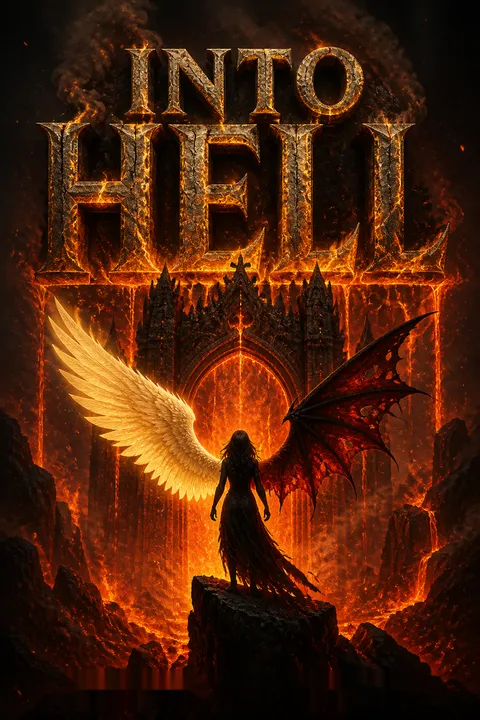


Plot Summary
The Asharún Crossing
Kobal is leading River and a small company through Hell to reach his hidden chambers and reunite with the fighters resisting Lucifer. River is already weakened by the heat, but insists they take the River Asharún, the quickest route, despite its thousands of trapped wraiths. When ferrymen bring their boats, lower demons attack from the water.
River is thrown into the current, where wraiths drain her strength and a demon drags her under. A tahanusi, one of Hell’s river creatures, carries her back to the surface. Kobal fights through the attackers and reaches her, badly wounded but alive. The ambush proves Lucifer can turn even a route Kobal thought safe into a trap aimed at River.
The crossing turns River’s compassion into a tactical vulnerability without making it a weakness. She accepts danger to spare the group time, but her body cannot simply overpower the dead that surround her. Kobal’s protectiveness is equally concrete: he must let River choose, then fight when that choice exposes her to harm. The tahanusi’s unexpected rescue complicates Hell’s moral geography. Its creatures are not all Lucifer’s weapons, and allegiance can matter more than appearance. The episode also makes the larger conflict intimate: every advance toward Lucifer is measured in what River and Kobal may lose.
The Oracle's Visitor
Away from the Asharún, Kobal diverts the company to the oracle, a lake of fire that can reveal parts of Earth. River hopes to see her younger brothers, but the flames instead show a devastated camp and the child Angela, a spirit only River can see. When Kobal recognizes Angela as a possible angelic guide, a raven emerges from the shadows and transforms into Caim, a fallen angel and Lucifer’s brother.
Caim explains that angels in Heaven are using Angela to reach River, then offers to help oppose Lucifer. He also warns that River cannot become immortal by turning into a demon without severing her bond to life. River accepts that truth as a fresh loss of hope, while Kobal remains wary of Caim.
The oracle turns looking into a form of exposure. River seeks reassurance about her brothers, but receives evidence that unseen powers are already arranging contact with her. Angela’s childlike form softens that intrusion, while Caim’s explanation makes clear that even gentleness may serve an agenda. His warning also sharpens River’s romantic stakes: the obvious route to sharing Kobal’s immortality would cost the very connection that defines her powers. The scene’s central tension is not simply trust versus suspicion. It is whether River can accept help without surrendering her judgment to beings who treat her as a means.
A Queen Among Demons
Kobal leads River through his long-abandoned chambers to the army of followers waiting in Hell. The demons kneel when they recognize him and accept River as their queen, though the scale of their allegiance frightens her.
Among the allies are Morax and Verin, Kobal’s trusted commanders, and Lopan, a lethal little demon who gives River a magically conjured golden rose. Kobal learns Lucifer is holding the throne room and keeping his strongest fighters close.
Rather than let the enemy remain behind its defenses, he proposes drawing Lucifer out with River as bait. River agrees to take a position above the battlefield, where she can attack without distracting Kobal’s soldiers. Their reunion gives the army a purpose, but makes the plan personally perilous.
The ceremony changes River’s status from protected outsider to participant in a political order. The demons’ submission is directed first at Kobal, yet their welcome makes River responsible for more than her own survival. Kobal’s plan recognizes her as powerful enough to lure Lucifer and dangerous enough to fight, while also exposing the limits of how much he can control her. Her agreement is not passive devotion: she accepts a role that lets her contribute without turning the troops into her bodyguards. The rose, a small gift amid a military gathering, gives the coming violence a human measure of tenderness.
The Throne Room Ambush
From a high tunnel above the throne room, River uses life energy drawn from the rock and Kobal to destroy two patrolling barta demons. Their deaths alert Lucifer’s forces. A battle erupts below, and Magnus hides a reserve of Kobal’s followers with an illusion so the enemy mistakes their retreat for a rout. Lucifer finally leaves the protected throne room to pursue them.
Kobal leaps from the cliff and catches him in midair, breaking one of his wings and dragging him toward the waiting hounds. River blasts a manticore from the sky and wounds Lucifer with a second burst of energy. The plan has worked, but fallen angels now know where River is, and the battle turns toward the narrow tunnel protecting her position.
The battle demonstrates that River’s power is not a single weapon with predictable limits. Her energy can pass through Lucifer and affect Kobal, linking the pair in a way neither fully understands. Magnus’s illusion makes strategic deception a necessary counterpart to brute force, while Kobal’s leap converts a carefully planned retreat into direct personal combat. The apparent success carries a cost: Lucifer’s attention moves toward River’s exposed position. This is a classic trap that works tactically and fails emotionally, because the person used as bait is also the person everyone most urgently wants to protect.
The Warning Comes True
When River sees a vision of the fallen angel Onoskelis decapitating Corson, she forces him to turn back instead of fleeing the battle. The warning helps the group prepare for a fight, but does not prevent the angels from breaking into their tunnel. Lucifer arrives badly burned from Kobal’s attack, and Onoskelis strikes River’s hand before he knocks her unconscious.
Corson tries to reach her, but Lucifer uses River as a shield and forces him back. Kobal is stabbed while fighting to hold Lucifer, then thrown from the cliff with the others. As Kobal climbs back toward the tunnel, a manticore paralyzes Corson with its stinger. Lucifer’s forces escape with River, leaving Kobal to gather survivors and hunt for her.
River’s premonition gives her information, not control. She can alter an immediate choice, but the vision does not grant the power to dictate what other people or the enemy will do. The distinction matters because her friends’ survival cannot be reduced to whether she foresaw danger correctly. Lucifer’s use of River as a shield also weaponizes attachment: Corson cannot attack without risking her, just as Kobal cannot pursue without exposing his forces. The capture marks a point of no return. The rescue mission is no longer a campaign objective; it is a confrontation with an enemy who understands exactly how to use love as leverage.
Blood on the Seal
Lucifer imprisons River among vast numbers of wraiths, whose cold cuts her off from the life energy she normally commands. He pins her hands to an ancient seal and tells her he intends to release what remains locked away. Caim objects, but Lucifer refuses to change course. River taunts him about his rejection by Heaven, hoping he will kill her rather than use her.
Instead, Lucifer explains that Kobal’s bond to her will keep the varcolac from attacking freely, making him a useful general. River’s blood, Lucifer’s force, and Kobal’s attempt to reach her converge on the seal. Its surface cracks, and River’s imprisoned power surges out of her. The burst destroys the seal and begins a chain reaction across Hell.
Lucifer’s strategy binds coercion to intimacy. He does not merely restrain River; he exploits Kobal’s devotion to constrain Kobal as well. The wraiths are a physical instrument of powerlessness, but also a distorted mirror of the life force River usually senses everywhere. Her attempt to provoke death shows the narrow agency available to a captive, while the seal’s cracking reveals that her body can become an instrument even when her will is denied. The catastrophe is not framed as a moral failure by River. Lucifer engineers the conditions, then benefits from the immense power he has forced into motion.
Hell Comes Apart
The broken seal releases the púca, shape-shifting predators, and the force of River’s power brings down the seals that follow. Caim protects her from Lucifer and carries her back to Kobal, who refuses to leave her behind despite his injuries. The creatures pour into the passages as demons and angels fight their way toward escape.
On the climb out, a manticore stings Morax, then eats him before Kobal can reach him. Verin loses her partner, but keeps moving with the survivors. At the throne room, Kobal opens a gateway toward Earth. He sends River, Corson, Hawk, and the others through first, choosing to remain behind while the collapsing chamber threatens to bury those still in Hell.
The collapse changes the story’s scale from a war over rule to a struggle over what can survive at all. River’s power releases captives, but the release also exposes innocent and hostile creatures alike to a world that cannot contain them. Morax’s death makes the cost immediate and irreversible, while Verin’s continued movement shows grief becoming action rather than disappearing. Kobal’s decision to remain behind echoes River’s willingness to sacrifice herself, but reverses their roles: he is now the one who insists she go first. The pair’s devotion repeatedly takes the form of separation for the other’s safety.
The Gateway's Price
As River’s group reaches the open gateway to Earth, she remembers Lucifer’s secret: the unnatural passage can be closed only with life’s blood and a sacrifice. Angela appears again, now visible to everyone, and silently guides River toward the opening. Knowing Kobal would stop her, River drives Caim’s sword into her own heart and spills her blood across the gateway.
The light follows her blood and seals the passage, stopping more creatures from escaping. Kobal reaches the gateway too late to prevent it and is driven back by the force closing it. River dies believing she has contained the invasion. Raphael, an archangel, leaves Heaven and uses his healing power to bring her back, knowing that the choice will prevent his return.
The gateway’s closure makes River’s agency costly in the most literal sense. She chooses the outcome, but only after Lucifer has disclosed the price and the angels have offered direction rather than protection from that price. Her death is neither a romantic proof of love nor a clean victory: it is a calculation made under catastrophic pressure, with no assurance that the mechanism will work. Raphael’s intervention adds a second sacrifice, shifting the ethical burden beyond River. The closing passage prevents further escape, but cannot reverse the creatures already loose or restore the world that existed before it opened.
An Angel Leaves Heaven
When Kobal escapes Hell through another gateway, he reaches River’s body just as Raphael restores her heartbeat. He nearly attacks the archangel before learning Raphael has surrendered his place in Heaven to heal her. The group learns the closed gateways have permanently altered the boundary between Earth and Hell: wraiths and demons can now remain on Earth, and the damage cannot simply be undone.
Raphael also believes River may eventually become immortal, though she has not yet reached that state. Kobal and River cling to the possibility of a shared future, while Caim chooses to remain with them rather than return to Lucifer. Their immediate task is to reach the wall, find River’s brothers, and face the world beyond the gateway.
Resurrection does not erase the sacrifice; it relocates it. River returns, but Raphael loses the home and status that defined his existence, while Kobal must live with the memory of having watched her die. The altered boundary makes their survival part of a new social reality rather than a restoration of the old one. Immortality appears as a possibility, not a guaranteed reward, which preserves uncertainty inside the lovers’ relief. Caim’s choice also gains weight here: allegiance is shown through the willingness to remain among people who distrust him, not through claims of innocence.
Allies at the Wall
On the road to the wall, River, Kobal, and their companions pass through a landscape increasingly shaped by escaped creatures. At Pearl’s, River invites the ghosts trapped in Purgatory to help light the wall in exchange for a chance to serve others. The ghosts argue, but Daisy considers the offer. At the wall, Colonel Mac reports attacks, casualties, and the collapse of contact with the human government.
Wren, a survivor who once fought Kobal’s group, arrives with armed companions and offers their skills and knowledge of the wilds. Kobal accepts them under strict conditions, then turns toward River’s home in search of her brothers. His new authority must now include humans and ghosts as well as demons, even as threats multiply.
The wall becomes an experiment in cooperation rather than a simple fortress. River’s offer to the ghosts treats even the socially despised dead as potential contributors, while Kobal’s terms for Wren’s group reflect the security concerns that such inclusion cannot dissolve. Their agreement is pragmatic, not sentimental: people with different histories choose to work together because the environment punishes isolation. The government’s silence makes this political shift urgent. Kobal and River are not merely claiming titles; they are inheriting the practical work of organizing food, defense, trust, and accountability in a world where old institutions have stopped answering.
The Town Without Birds
River reaches the Cape with Kobal’s company and finds both bridges collapsed and the familiar canal unnaturally quiet. The neighborhood where she grew up appears recently abandoned, but her friends’ homes contain no people.
At her mother’s house, River finds her alive, isolated, and mentally unraveling. Her mother admits that angelic voices once told her to keep River alive, later directing her to hand River over to soldiers. Raphael confirms that the angels had guided those choices after receiving a vision that River must survive.
He then reveals that River descends from Michael through Adam, in addition to being Lucifer’s daughter. Her mother’s bitterness cannot undo River’s compassion, but she reports that Lucifer took the townspeople and River’s brothers.
The homecoming replaces the anticipated comfort of reunion with silence, absence, and an explanation that deepens rather than resolves the family wound. River’s mother has harmed her, but the revelation that angelic intervention helped shape that relationship complicates blame without absolving the damage. River’s two inheritances are not just competing labels: they place her at the intersection of Heaven’s secrecy and Lucifer’s ambition. The absent birds and abandoned homes externalize the loss of ordinary life, while the mother’s fractured mind shows the human cost of treating people as instruments in a prophecy.
The Dead at Volunteer Field
Following the trail of Lucifer’s attack, the group finds the bodies of River’s neighbors, friends, and much of Hawk’s family scattered across the town’s familiar gathering place. Lucifer waits beyond the massacre on Kobal’s stolen throne, holding Bailey while Gage is restrained beside River’s smaller seat. As River struggles not to rush them, Lucifer deduces that she also carries Michael’s line.
He then tells the assembled demons that Kobal is not one of them in the ordinary sense, but a being fashioned by the same creator who made the angels. Kobal answers by claiming responsibility for Hell and promising a future of laws and shared survival rather than captivity. Lucifer makes clear that he intends to force a battle.
The battlefield is also a site of memory: the place where River once celebrated now holds the evidence of Lucifer’s attempt to make her grief useful to him. His revelation about Kobal is designed to divide the army by turning origin into a test of belonging. Kobal answers with conduct and responsibility, not denial. The difference between the two rulers is therefore political as well as personal: Lucifer treats other beings as possessions, while Kobal argues that power creates obligations. River’s restraint around her brothers becomes another form of resistance, because Lucifer is trying to make her act on his terms.
Lucifer's Last Battle
Lucifer sends demons and creatures against the defenders while trying to escape with Bailey. Kobal intercepts him in the air and burns through his body, but Lucifer’s force knocks Kobal down. River joins her life energy with Raphael’s power to hold a barrier behind their fighters, then combines light and fire in a blast that drops Lucifer from the sky.
Caim carries Bailey clear, while Verin rescues Gage from Onoskelis. Onoskelis cuts Verin’s throat, but a drakón consumes the angel before she can seize River. River’s blast leaves Lucifer badly damaged, not dead. Kobal reaches him on the ground and tears off his head. Without Lucifer, his followers scatter or fall, and the remaining fighters can recover both brothers.
The climax resolves the central struggle through complementary capacities rather than a single superior weapon. River’s power can weaken Lucifer, but Kobal must finish the fight at close range; Raphael’s strength protects the group, while Caim and Verin save the children. Victory remains costly. Verin dies in the act of saving Gage, and the drakón’s intervention shows that beings released from the seals have made choices of their own. Lucifer’s death ends his command, not the violence he set loose, so triumph arrives as a chance to rebuild rather than a return to safety.
Two Thrones, One World
After the battle, River reunites with Gage and Bailey, while the survivors bury the murdered townspeople and mourn Morax and Verin. Kobal moves River’s mother away from the family rather than leave her to die alone, though River keeps her distance.
At the wall, River and Kobal establish a shared rule for humans and demons, accepting Wren’s fighters and preparing the ghosts to contribute. They return to Hell’s throne room, where each takes a throne. Its ancient markings answer their combined powers, and demons, humans, and angels kneel to them.
River’s rule is not built on being Lucifer’s heir alone; she has chosen to use her authority to protect the people his schemes endangered. The immediate war ends, but escaped creatures still require pursuit.
The thrones convert a private bond into public authority. Their power responds to River and Kobal together, making shared rule more than a ceremonial pairing, while the kneeling humans and angels suggest a political order assembled from former enemies. The resolution does not excuse Kobal’s harshness or erase the dangers of concentrated power. Instead, River’s insistence on humane treatment and Kobal’s willingness to govern with her create a check on the logic of domination that defined Lucifer. Burial, grief, and practical administration keep the victory grounded in what remains unfinished.
Epilogue
One year later, Kobal has traveled through Hell and across Earth to establish new leaders and coordinate the hunt for Lucifer’s remaining followers. River and Kobal now rule from the wall, where humans, demons, ghosts, and a few escaped creatures have learned uneasy cooperation.
On her twenty-third birthday, River stops aging and becomes immortal. She is also carrying their child. When Kobal returns to the hall, he finds River reading to Bailey beside Gage, and the family gathers around the life they once feared they would never have.
The epilogue turns survival into duration. River’s immortality answers the fear that her mortal life would end before she could share Kobal’s future, but the answer comes only after she has nearly died and the world has been remade around her. Her pregnancy makes inheritance hopeful rather than merely dangerous: a child will carry power, yet will also be raised within a community capable of naming and guiding it. The closing image of siblings, partners, and allies in one hall counters the isolation of Hell’s chambers and River’s childhood home. The novel ends not with peace restored, but with a family and a political order choosing to build amid lasting danger.
Analysis
Into Hell makes political power inseparable from intimacy. Lucifer’s most effective weapon is not simply superior force; it is his understanding that River, Kobal, and their allies will accept danger for people they love. He turns River into bait, a captive, and a means of breaking seals, while the protagonists repeatedly struggle to preserve her ability to choose. Their devotion is therefore both sustaining and exploitable. The novel’s most important distinction is between protection and control: Kobal’s instinct is to keep River safe by deciding for her, whereas River’s choices force him to recognize that respect sometimes means accepting risk.
The book also revises its moral categories through concrete social consequences. Angels enforce laws while concealing the human costs of their interventions. Demons can be loyal, generous, and capable of building community. Humans are neither uniformly innocent nor powerless, and ghosts, creatures, and former enemies can contribute to survival. Lucifer’s history explains his grievance but does not excuse his response. The story separates the injustice of exclusion from the violence he chooses to commit in answer to it.
The falling seals turn this argument into a problem of governance. Collective imprisonment may prevent danger, but it also punishes whole populations for the acts of some. Kobal’s proposed order promises individual responsibility and cooperation, yet it still depends on his overwhelming force. The ending does not pretend that a new throne eliminates that tension. Instead, River’s presence and the participation of humans, demons, angels, and ghosts suggest that legitimacy must be continually built through shared work.
Finally, the gateway’s closure rejects restoration as a realistic goal. River stops further escape, but she cannot reverse the deaths, the released creatures, or the altered boundary between worlds. The novel locates hope in repair rather than rewind: burial, defense, negotiation, and the creation of a family capable of inheriting a changed world.
Review Summary
Into Hell concludes the Road to Hell series with mixed reviews. Many readers praise the intense action, character development, and satisfying conclusion to River and Kobal's story. They appreciate the world-building, plot twists, and emotional depth. However, some find the book repetitive, overly long, or disappointing compared to earlier installments. Critics note pacing issues and unnecessary information. Despite divided opinions, most agree the series offers a unique take on demons, angels, and apocalyptic themes, with strong character relationships and imaginative worldbuilding.
People Also Read

Characters
River Dawson
The life-wielding queenRiver is a determined young woman whose unusual ability to draw on life sits alongside a fierce attachment to her brothers and a deep affinity for water. She has spent much of her life protecting Gage and Bailey, often hiding her own needs to do it. Her relationship with Kobal gives her a bond of trust, but she refuses to let that bond turn her into someone who simply waits to be rescued. She can be impulsive when loved ones are threatened, yet she also learns to act under pressure and to make choices for a community larger than her family.
Kobal
Hell's rightful kingKobal is the varcolac, a powerful demon raised to fight for a throne Lucifer took from his kind. He is a formidable commander and protector, inclined to solve danger with force and to measure responsibility in lives saved. His bond with River has softened a solitude built across centuries, but it also exposes how deeply fear can govern his choices. Kobal wants to reclaim his kingdom and create a life with River on Earth. Learning to listen to her, rather than decide what risks she may take, is central to their partnership.
Lucifer
The fallen world-breakerLucifer is a fallen angel whose ambition has widened from escape and revenge into a threat to every realm. He is intelligent, theatrical, and skilled at identifying the private attachments that make people vulnerable. His resentment toward Heaven and the varcolac informs his desire to rule, but his methods reveal a deeper need to control the story others tell about him. Lucifer treats kinship as ownership and uses revelations as weapons. His beauty, history, and former status complicate simple ideas of good and evil without excusing the destruction he chooses.
Caim
The divided fallen angelCaim is Lucifer’s brother, a fallen angel able to take the form of a raven. He has shared the rebellion that brought the angels from Heaven, but he no longer accepts Lucifer’s plans to destroy the worlds. Caim is sharp-tongued and self-protective, with a capacity for loyalty that conflicts with his history. His refusal to pretend he is innocent makes him more credible than a simple convert, though River and Kobal have reason to question his motives. He is also a mediator by temperament, even when his own anger makes peace difficult.
Raphael
Heaven's healing warriorRaphael is an archangel whose healing ability and disciplined sense of duty make him a powerful presence among humans and demons. He speaks for Heaven’s laws, often with a certainty that frustrates those who have suffered under angelic decisions. His commitment to preserving life is real, but his emotional distance can make necessary sacrifices sound abstract. Raphael is not a simple opposite to Lucifer: both act from authority, but Raphael is willing to accept personal cost in service of others. His guarded relationship with Caim reflects the unresolved history of Heaven’s rebellion.
First Sergeant Sue Hawkson
The changed human fighterHawk is a former human soldier and one of River’s steadiest friends. After a near-fatal injury and a transformation involving canagh blood, he must adjust to demon needs and abilities he never chose. His dry humor keeps panic at bay, but his questions about feeding and identity reveal genuine unease. Hawk values loyalty and practical action, and he continues to fight beside River even as his body and place in the world change.
Corson
Kobal's loyal talonCorson is an adhene demon, a dangerous fighter and one of Kobal’s oldest advisers. His relaxed manner and teasing humor can conceal a ruthless instinct for action. He is fiercely loyal to Kobal and grows genuinely fond of River, treating her as a friend rather than only a queen. Corson has been shaped by his years on Earth, including new tastes and habits, but he remains quick to put himself between danger and the people he cares about. His willingness to question a plan does not weaken his commitment to the group.
Magnus
The master of illusionsMagnus is a demon of illusions whose wit is often as sharp as his magic. He prefers strategy and misdirection to direct combat, and his elaborate creations reflect a maker’s pride as well as a desire to control what others perceive. His arrogance can alienate the people he is trying to help, especially Bale, but he repeatedly risks himself to protect River and Kobal’s cause. Magnus understands that a false image can buy time, not replace reality, and this awareness gives his illusions an unusually practical purpose.
Bale
The unflinching commanderBale is one of Kobal’s senior fighters, a disciplined and formidable demon who meets danger directly. She trusts action more readily than persuasive explanations, which makes her wary of Magnus and cautious about Caim. Beneath that hard judgment is loyalty built through years of fighting alongside Kobal. Bale does not need to be liked to do her job, and she is often the person who translates a strategy into a blade at the right moment.
Morax
Kobal's steadfast commanderMorax is a powerful demon and one of Kobal’s longtime allies. His ability to communicate over distance makes him essential to coordinating the scattered resistance. He is intimidating in appearance, but with Verin he shows patience, affection, and a quieter ease. Morax values loyalty without mistaking it for obedience, and his deep knowledge of the forces in Hell helps Kobal make decisions with incomplete information.
Verin
The devoted demon warriorVerin is Morax’s Chosen and a striking, confident demon who is also a capable fighter. Her tenderness toward Morax sits comfortably beside her strength in battle; neither quality cancels the other. She moves through Kobal’s circle as both a trusted ally and someone whose private bond is visible to those around her. Verin’s loyalty is personal as well as political, and she takes responsibility for the people placed in her care.
Gage Dawson
River's resilient brotherGage is River’s younger brother, a watchful boy who tries to remain composed even when frightened. His bond with River is built on trust and the knowledge that she has long protected him and Bailey. He is old enough to notice danger and ask difficult questions, but still young enough to need adults who explain the world honestly. Gage’s steadiness helps anchor River’s sense of home.
Bailey Dawson
River's youngest brotherBailey is River’s small, affectionate brother, known for his teddy bear, wide curiosity, and dependence on the family members he trusts. He experiences the surrounding danger through a child’s limited understanding, which makes reassurance and physical closeness important to him. Bailey’s innocence is not a symbol detached from the plot: his safety directly shapes River’s choices and gives the adults a responsibility to protect children from conflicts they did not create.
River's mother
A damaged, fearful parentRiver’s mother is an unstable and often cruel woman whose resentment has shaped River’s childhood. She interprets River’s unusual nature through fear and accusation, and she has never offered the affection River wanted from her. Her hostility is not presented as harmless eccentricity; it leaves real emotional injuries. At the same time, her fear and isolation have roots in events she does not understand, making her a painful example of how powerful forces can distort an ordinary person’s life.
Angela
The childlike angel guideAngela appears to River as a young girl with a serious gaze and a habit of communicating through gestures rather than speech. She is a guide used by angels in Heaven to reach River when ordinary communication fails. Angela’s childlike appearance makes her seem vulnerable, but her presence carries the force of a message from beings who remain distant and powerful. River responds to her with sympathy, while Kobal suspects the guide’s purpose may not be benign.
Onoskelis
Lucifer's lethal angelOnoskelis is a fallen angel who serves Lucifer and combines formidable combat skill with a talent for manipulation. Her beauty and confidence can draw others toward her, but her allegiance is rooted in power rather than care. She treats River as both a relative and a target, using family language to unsettle rather than comfort. Onoskelis represents the danger of intimacy stripped of trust.
Lopan
The deadly little conjurerLopan is a leporcháin, a small demon whose colorful clothes and awkward human sayings disguise a lethal nature. His caultin is the source of his conjuring magic, and he treats it as both tool and safeguard. Lopan remains loyal to Kobal and offers River a rare gift, revealing a gentleness that contrasts with his teeth and fighting ability. His humor helps puncture the grimness without making him harmless.
Lix
The riddle-loving skelleinLix is one of the remaining skelleins, a skeletal demon with a taste for riddles, drink, and colorful clothes. He can be irreverent in the middle of danger, but his humor coexists with loyalty and a willingness to fight. Lix helps River feel that the creatures around her are more than their frightening appearances. His riddles also give the group a familiar ritual in a world where almost everything else has changed.
Shax
The Earthside commanderShax is a demon entrusted with defending the gateway and coordinating the people left on Earth while Kobal enters Hell. He values clear orders and practical readiness, but his time among humans has made him protective of their survival. Shax is a bridge between the demon fighters and the human encampments, often carrying news when the two groups are separated.
Wren
The hard-won human allyWren is a capable human survivor with a rifle, a sharp tongue, and a strong instinct for judging risk. She and her companions initially distrust the demons, but she is willing to reconsider when cooperation offers a better chance of survival. Wren demands fairness rather than asking to be treated as helpless, and she does not hide her suspicions or her courage. Her bluntness can unsettle people unused to being challenged.
Erin
The human riddle championErin is a human fighter whose quick mind makes her a favorite among the riddle-loving skelleins. She brings humor and composure to a strained camp, and she remains close to Vargas. Erin is neither dazzled by demons nor defined by fear of them; she evaluates what is happening and adapts. Her steadiness makes her a useful link between the human survivors and their supernatural allies.
Vargas
The steadfast human defenderVargas is a human survivor who fights alongside the demons and cares deeply for Erin. His faith remains part of how he understands catastrophe, even as the existence of Hell complicates his old assumptions. Vargas contributes courage and practical loyalty rather than supernatural power. He is one of the human faces of the community River hopes can endure.
Colonel MacIntyre
The human wall commanderMac is the human officer overseeing a section of the wall. He is disciplined, pragmatic, and accustomed to making decisions with limited supplies and incomplete information. His respect for Kobal’s fighters does not erase his responsibility to the humans under his command. Mac represents the possibility of human leadership continuing after formal government communication fails.
Michael
The law-bound archangelMichael is an archangel associated with Heaven’s laws and the decision to remove Lucifer and his followers from Heaven. He is not present in the main action, but his choices shape the history that Caim and Raphael argue over. Michael’s strict obedience suggests how duty can preserve order while also concealing the costs of decisions made in its name.
Lisa and Asante
River's childhood familyLisa and Asante are River’s close friends, and Lisa’s family gives River a refuge from the harshness of her own home. Their shared childhood memories establish the ordinary life River once had and the community she hopes to protect. They are among the people who help define home for her, not through grand gestures but through everyday kindness, food, conversation, and welcome.
Plot Devices
The seals of Hell
Prisons with consequencesAncient seals hold dangerous species and demons in separate prisons within Hell. Lucifer has already weakened them, and River’s powers become entangled with one when he pins her against it. Its rupture triggers the collapse of the remaining seals, releasing creatures that complicate every later battle. The seals are more than obstacles or a list of monsters: they embody the old order’s use of confinement, and their fall forces Kobal and River to imagine laws that punish individuals without imprisoning entire peoples. The final seal creatures continue to threaten Earth even after Lucifer is defeated.
The Asharún and oracle
A path through the unseenThe River Asharún is a current filled with wraiths, while the oracle is a lake of fire that reveals selected glimpses of Earth. The group’s passage through both locations exposes different limits on River’s abilities: wraiths weaken her, and the oracle shows what it chooses rather than what she requests. Angela appears through the oracle and gives the angels a way to guide River indirectly. These locations make Hell legible without making it safe. Each offers knowledge at a cost, and the most emotionally desired vision, a glimpse of River’s brothers, is not the one the oracle first provides.
River's life and fire
Power with two sourcesRiver can draw life energy from living things and matter, while also wielding fire inherited through her connection to Lucifer. The abilities grow stronger through contact with Kobal and can work in unexpected combination. Lucifer exploits the way wraiths block River’s access to life, then helps create conditions in which her accumulated power erupts through a seal. Later, River combines light and fire in the battle against him. Her abilities express her mixed ancestry, but their meaning depends on choice: power can be used to destroy, protect, or give others a chance to survive.
The gateway's blood toll
A life for a passageThe unnatural gateway between Earth and Hell cannot be closed by ordinary force. River learns that it requires life’s blood and a sacrifice, then acts on that knowledge when the passage threatens to remain open as the seals fall. Her blood carries the closing force across the gateway, making the decision physically irreversible. Raphael’s healing later restores her, but it does not undo the altered boundary between the realms or bring back those already killed. The gateway therefore structures the climax around an ethical question: what is one person willing to pay to stop a larger disaster, and who bears the cost of saving them afterward?
The Chosen bond and thrones
Love made political powerKobal and River’s Chosen bond deepens their strength and makes them emotionally legible to each other. Lucifer exploits that bond by using River to restrain Kobal, but the pair also draw on one another’s power in battle. The ancient thrones respond to both of them, binding their private relationship to the public task of ruling Hell and Earth. This device makes romance materially consequential without reducing either character to the other’s possession. Their bond can be used as leverage, yet it also enables a form of shared authority that differs from Lucifer’s rule by domination.
The Road to Hell Series

About the Author
Other books by Brenda K. Davies
Download PDF
Download EPUB
.epub digital book format is ideal for reading ebooks on phones, tablets, and e-readers.








