

Plot Summary
Prologue
In the woods, Olgon and his younger brother Eron draw a grieving woman into speaking about the life she wishes she had lived before Hell reached Earth. She longs for everyone to have the lives they wanted, including the people in the nearby camp.
Olgon turns her longing into the wish the brothers need, then leaves her unconscious. The scene reveals the jinn’s method: they make desire a doorway, and a generous wish can ensnare far more people than its speaker understands.
The opening makes cruelty look briefly like intimacy. Olgon listens, touches the woman’s hand, and lets her imagine a kinder world before converting that hope into an instrument of capture. The wish matters because it is not selfish: her concern for the camp gives the jinn a way to reach others. That irony establishes the book’s central danger, namely that longing can be exploited even when it begins in compassion. The brothers’ calm departure also contrasts with the misery they intend to create, presenting the jinn’s violence as deliberate rather than impulsive.
A Camp Without Breath
Magnus, a demon allied with King Kobal, returns from hunting with Corson, Caim, and the angel Raphael to find their camp silent. Humans and demons lie scattered where they fell, breathing slowly; one man is dead from a broken neck. Wren, Corson’s Chosen, is among them. Before the group can understand the attack, Caim spots a fleeing woman in the woods.
Magnus and the others chase and capture her. She identifies herself as Amalia, a jinni, but insists she did not cause the camp’s collapse. Corson demands that she wake Wren, while Magnus blocks him from killing Amalia. She explains that the victims’ minds have been taken into the Abyss, leaving their bodies alive but helpless.
The attack transforms a familiar refuge into a scene of helplessness, and the contrast matters: the victims are not visibly wounded, yet their inability to act makes them more vulnerable than ordinary captives. Magnus’s first defining choice is not to trust Amalia but to preserve her as a possible source of help. Corson’s grief threatens to turn protection into vengeance. Amalia’s insistence that she did not create the crisis begins the book’s conflict between inherited identity and individual responsibility, while the breathing bodies make rescue feel urgent rather than abstract.
The Jinni's Doorway
Amalia explains that a jinni can draw someone into the Abyss after the person makes a wish, but she cannot simply reverse the process. The victims must find a way out themselves. She offers to enter the unfamiliar plane and search for them; Magnus chooses to go with her, while Corson stays beside Wren and Raphael and Caim remain to guard the camp.
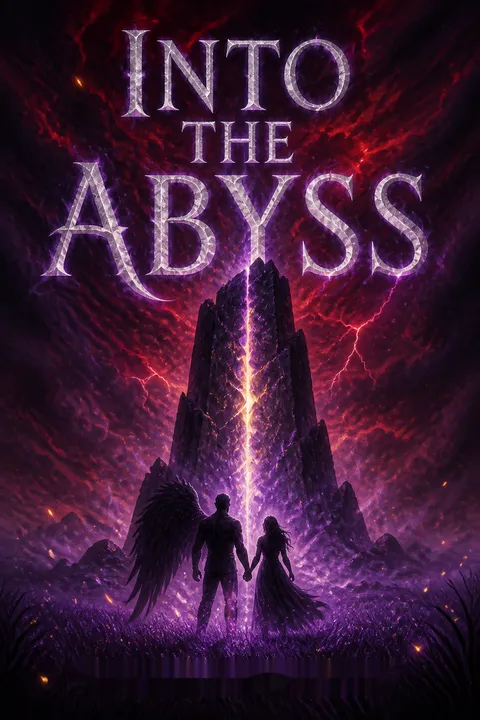
Amalia opens a gray doorway and takes Magnus’s hand. Beyond it, they find a field of purple grass beside still, reddish water, an unexpectedly gentle region that seems to mourn. Amalia has never crossed into the Abyss before. As they climb a hill, the landscape changes to a barren maze of paths, bones, and a towering black monolith.
The portal makes rescue a deliberate act of shared risk. Amalia does not possess a safe remedy, and Magnus cannot delegate danger to someone whose judgment he does not yet trust. His decision therefore marks a shift from suspicion to practical dependence, not sudden faith. The Abyss’s contrasting landscapes also resist a simple reading of the jinn’s realm as uniformly evil: beauty and devastation coexist, though neither character yet knows why. Amalia’s unfamiliarity keeps her from serving as an all-knowing guide, making the journey a genuine encounter with a world whose history has been hidden even from her.
Mara's Endless Wish
In the maze, Magnus and Amalia find Mara trapped in a repeated memory of her lover Ricky’s murder. The scene gives her the reunion she longs for, then brings back the demon that killed him. Magnus and Amalia try to pull her from the illusion, but Mara cannot accept that the past cannot be changed.
She eventually runs headfirst into the rocks and dies. Her life force flashes into the monolith, and Amalia feels the jinn feeding on it. She explains that she is an empath, a rare kind of jinni who experiences other people’s feelings as her own. The deaths and the Abyss’s cruelty press on her, but she refuses to abandon the victims.
Mara’s loop turns grief into a counterfeit form of agency. She can repeatedly approach the moment of loss, even imagine different outcomes, but the repetition prevents mourning from becoming memory. Magnus’s physical strength cannot reach her because the prison is structured around her own desire. Amalia’s empathy offers no easy solution either: she suffers alongside Mara without being able to remove the source of suffering. The scene establishes a distinction between compassion and control. Helping someone cannot mean rewriting reality for them, especially when the wish that promises repair is what keeps them trapped.
The Faulted Refuse
Erin, a human survivor, recognizes that her surroundings are wrong and escapes the Abyss, returning to the cave where Corson guards Wren. After Chet awakens and dies outside the cave, Magnus suspects the horseman Sloth helped the jinn put the camp to sleep. Amalia and Magnus seek help from Rislen, leader of the Faulted jinn, but she refuses to oppose her own kind.
She does reveal that the Abyss once belonged to the fae, whose empathic power used its monolith to share overwhelming emotions. The jinn twisted the place into a prison and fed victims’ life force into it. Amalia returns determined to help, while Rislen and the other Faulted remain neutral.
The refusal complicates the moral map without excusing passivity. Rislen’s group rejects the jinn’s cruelty, yet fear of betraying their kin keeps them from intervening. Their position echoes Amalia’s earlier conflict between her parents and her conscience, but Amalia now accepts that neutrality has consequences. The history of the Abyss also reframes its strange pockets of beauty: they are not decorative exceptions but remnants of a system built for emotional care. By connecting the land’s corruption to a specific misuse of power, the novel gives restoration a material target rather than leaving it as a vague hope.
Waterfall Interrupted
Back in the Abyss, Magnus and Amalia find a waterfall and shelter behind it. Their attraction nearly becomes physical, but Nalki, a jinni from Amalia’s family, attacks before they can leave. Magnus fights back, tears out Nalki’s heart, and is ready to kill him. Amalia stops him, insisting that a weakened enemy must not be murdered after the danger has passed.
Magnus spares Nalki despite his anger. As they continue, they find people caught in wish-made fantasies. Dana recognizes his imaginary family as a perfect substitute for the real family demons killed; Hawk sees that an endless sexual fantasy cannot give him the loving partnership he wants. Each breaks free by recognizing what the illusion cannot provide.
The interrupted intimacy sets desire beside ethical restraint without making either one trivial. Magnus’s violence is an intelligible response to an attack, but Amalia insists that self-defense does not automatically justify execution. Her appeal forces him to accept a boundary rooted in her values, even when he distrusts the person she protects. Dana and Hawk’s escapes echo that distinction: neither can be saved by receiving a more perfect illusion. Freedom begins when they identify the mismatch between a fantasy and the life they actually want. Recognition, not force, becomes the path out.
Amalia Claims Her Life
Magnus and Amalia continue finding captives who can recognize the false worlds around them, including Shax and Bale. When Bale mistakes Magnus for the cause of the prison and attacks him, Amalia intervenes despite her inexperience at fighting. Later, in a pool hidden in the Abyss, Amalia’s body completes its change into immortality.
She and Magnus become Chosen, marking one another and discovering a bond neither had planned. Their union releases powerful emotion into the land. The colorless stones around the pool regain their pinks, yellows, and blues, and nearby trees begin to revive. Magnus realizes that Amalia’s connection to the Abyss is changing it, though neither yet understands how far that change can reach.
Amalia’s adulthood arrives through both bodily change and chosen attachment, but the scene’s larger consequence is ecological. Intimacy does not merely secure a private couple; it supplies the damaged landscape with the feelings it was originally built to receive. The restoration begins locally, at a hidden pool, which makes renewal feel earned and fragile rather than miraculous by decree. Amalia’s fight with Bale also shows that her aversion to violence is not passivity. She can act when someone she loves is threatened, yet her agency remains guided by care rather than a hunger to dominate.
Absenthees Holds Them
Near the center of the Abyss, Magnus and Amalia discover that Absenthees displays the trapped victims’ wishes like scenes on a screen. The jinn watch their captives suffer and die, then absorb the life force that strikes the monolith. Three horsemen, Pride, Lust, and Sloth, are present with the jinn.
Magnus and Amalia try to climb toward nearby ruins, but the stairs crumble beneath them. The jinn seize Amalia, while Magnus is taken to the ruins and locked in a cell beside Wren, whose mind is still trapped in an imagined life. The horsemen use Wren and Amalia as leverage against the palitons, turning the rescue mission into a hostage crisis.
Absenthees makes spectatorship part of the violence. The jinn do not merely cause suffering; they gather around a display that converts other lives into entertainment and nourishment. The horsemen’s presence reveals that the attack is political as well as predatory, designed to weaken Kobal’s allies and gain leverage over Corson. The collapsed stairs remove the possibility of a clean escape and divide the pair physically. The scene also changes the meaning of the monolith: what appeared to be the Abyss’s power source is simultaneously a surveillance system, a theater, and a mechanism that rewards cruelty.
Pride Demands Surrender
Lust uses her power to immobilize Magnus and tries to assault him while Amalia is forced to watch. Amalia charges to stop her, but Lust’s horse kicks her across the rocks. Magnus breaks through the control when he sees Amalia hurt and attacks Lust; Sloth then knocks him unconscious. Pride demands that Amalia lead the horsemen to Corson and threatens both Chosen.
She refuses. To punish her, Pride beheads her mother, Vya, in front of her. Magnus wakes in the ruins beside Wren, while Amalia remains with the jinn and horsemen. The loss hardens her resolve, but it also leaves her grieving and unable to reach the person whose bond now ties their survival together.
Pride’s threat is designed to make coerced cooperation feel like the only form of care available. Amalia refuses because compliance would not guarantee safety; it would only make her an instrument of further harm. Vya’s murder exposes the cost of that refusal while also destroying any remaining illusion that family loyalty can soften Olgon or the horsemen. Magnus’s response to Amalia’s injury shows the Chosen bond as resistance, not simply romance: it helps him break Lust’s control. Yet separation gives their enemies a tactical advantage, converting emotional connection into a vulnerability they can exploit.
Cells Beneath the Ruins
Wren explains that she has been forced to watch a false version of her life replay, but her Chosen marks helped her recognize the deception. Magnus spots an ancient symbol above their cells and breaks it with his newly altered horns. The fae-built ruins collapse, yet Wren’s cell remains protected; Magnus bends its bars and frees her.
Amalia opens a portal to the cave and finds it empty, with Caim the only ally left behind. He agrees to return with her. Magnus escapes the wreckage and sees Amalia arrive in Caim’s arms, then launches into the battle below. The two rescues converge at Absenthees, where Amalia is no longer alone and Magnus is free to fight for her.
The escape depends on different kinds of recognition. Wren identifies the false life through the emotional dissonance of an imposed romance; Magnus reads the physical prison through its unfamiliar symbols. Neither method is sufficient alone, but together they expose the structure holding them. Caim’s decision to help Amalia matters for a different reason: trust is extended to someone whose history makes suspicion reasonable. The scene briefly makes isolation feel absolute when Amalia finds the cave empty, then counters it through action rather than reassurance. Rescue is assembled from imperfect allies who choose to act before certainty is possible.
The Fae Land Stirs
Caim carries Amalia back to the Abyss, where the jinn attack them near the monolith. Magnus reaches them and fights through the crowd, while Amalia presses her hand against Absenthees. The symbols glow beneath her palm, and cracks spread across the monolith’s black surface.
Rislen and the other Faulted arrive, drawn into taking a side by the violence and the land’s visible revival. Amalia tells them that neutrality will not protect the Abyss from those who would destroy it. They place their hands on the structure and join her. As Absenthees brightens, the horsemen’s influence weakens, and the jinn who still support them begin to retreat or falter.
The turning point moves Amalia from private source of renewal to public leader. Her power alone can awaken the monolith, but the restoration becomes politically consequential only when others choose to support it. Rislen’s arrival reverses the earlier refusal without erasing its cost; the Faulted act after witnessing that neutrality leaves the field to the aggressors. The light also disrupts the horsemen’s control, linking ecological repair to resistance. Amalia does not win by becoming a stronger version of the old rulers. She changes what the land responds to, then persuades others to protect that change.
The Horsemen Lose Ground
As Absenthees sheds its black shell, the jinni begin to scatter. Amalia’s father Eron turns on Olgon and kills him, then attacks Pride. Magnus kills Sloth by driving his horns through the horseman’s neck and using Sloth’s own mount to trample him. Pride kills Eron before escaping through a portal; Lust has already fled.
Absenthees releases a wave of light that throws everyone across the crater and restores color and life to the Abyss. Amalia survives the blast and finds Magnus alive, but her parents are both gone. The victory ends the horsemen’s immediate hold over the Abyss, while Pride’s escape leaves the wider war unresolved.
The defeat is deliberately incomplete. Sloth dies, Olgon’s vengeance ends with his own death, and the horsemen lose their control of Absenthees, but Pride escapes after killing Eron. The sequence resists a tidy moral ledger: the restored world does not undo the deaths that helped bring it back. Eron’s final turn against Olgon shows that even a character who has supported the wrong side can reject its consequences, though too late to save his family. Amalia’s survival alongside her grief makes victory a beginning rather than compensation for loss.
A Home Worth Defending
Amalia, Magnus, and the surviving jinn bury the dead beside the restored lake, keeping her parents’ graves apart from Olgon’s. The remaining jinn and the Faulted agree that the Abyss must never again be used to imprison or feed on others. At the calamut grove, the trees seize Sloth’s remains and destroy them, confirming that the land itself has become an ally.
Raphael leaves to inform Kobal of the attack and the survivors’ losses. Amalia opens a portal so the palitons can see what they are being asked to protect. Magnus stays beside her, and the pair end the crisis committed to each other and to guarding the world they have helped restore.
The ending turns restoration into a social obligation. Amalia’s achievement would remain vulnerable if the survivors treated the revived Abyss as a private refuge, so she requires them to see it and commit to its protection. The graves preserve grief within the transformed landscape rather than concealing the price of renewal. The calamuts’ destruction of Sloth’s remains extends that protection beyond the jinn and palitons, making the natural world an active participant in the new order. Magnus and Amalia’s bond closes the romantic arc, but their shared promise is larger: intimacy now means responsibility for a home beyond themselves.
Analysis
Into the Abyss ties its romance, political conflict, and fantasy ecology to one question: what should power do with another being’s vulnerability? The jinn convert wishes into access, the horsemen convert desire and fear into control, and Absenthees converts suffering into nourishment. These systems all depend on treating inner life as something available for use. Amalia’s empathy initially seems to make her less suited to survival, because she absorbs pain she cannot quickly repair. Yet that sensitivity is also the capacity the Abyss needs. Her response to suffering does not erase grief or reverse death; instead, it makes her refuse the idea that cruelty is inevitable simply because it has become customary.
Magnus’s development runs in parallel. He begins by treating trust as a tactical liability and violence as the most reliable answer to danger. Amalia does not make him harmless; she makes him accountable to someone whose values challenge his reflexes. Their Chosen bond strengthens him, but it also intensifies the cost of his choices. Love therefore functions less as a refuge from the plot than as a condition that makes every decision more consequential.
The book also resists easy moral sorting. Rislen’s neutrality has understandable roots in fear and kinship, but her refusal still leaves victims exposed. Eron’s loyalties are divided, while Caim’s playful manner conceals a more serious effort to help. The story’s resolution does not restore the dead or dissolve the war. It gives the survivors a changed landscape and asks them to protect it collectively. The Abyss becomes a practical image of repair: inherited structures can be corrupted, but they are not necessarily beyond renewal when those who benefit from them choose to change how they work.
Review Summary
Into the Abyss receives overwhelmingly positive reviews, with readers praising its engaging plot, character development, and steamy romance. Many appreciate the continuation of the Hell on Earth series and the exploration of new supernatural beings like the Jinn. Magnus and Amalia's relationship is well-received, with readers enjoying their chemistry and growth. The book is described as action-packed, magical, and hard to put down. Some readers note it's best to read the previous series for context, while a few find the pacing or character depth slightly lacking compared to earlier works.
People Also Read
Characters
Amalia
Empath seeking gentler groundA young jinni whose ability lets her feel the emotions of others, Amalia is curious about Earth and drawn to its living beauty. Her tenderness makes her uncomfortable with the cruelty accepted by much of her family, but it does not make her passive. She tries to help those in pain even when they mistrust her, and she is willing to oppose people she loves when their actions harm others. Her desire for peace is sincere, though the world repeatedly tests whether compassion can survive without becoming complicity.
Magnus
Illusionist with a bladeA demon close to King Kobal, Magnus is a practiced fighter who has spent centuries developing his ability to create illusions. His confidence often reads as arrogance, and his suspicion of the jinn initially makes him harsh toward Amalia. Loyalty to his friends, however, repeatedly outweighs self-preservation. He approaches problems through strategy and force, then has to reckon with the limits of both when facing the Abyss. His guardedness is not an absence of feeling; it is a defense against the vulnerability that attachment creates.
Corson
Chosen-bound war captainCorson is an adhene demon and one of Kobal’s trusted fighters. His humor and appetite for combat conceal how deeply he depends on Wren, his Chosen. When she is endangered, fear threatens to overwhelm his judgment. He is protective, loyal, and capable of recognizing when he has treated someone unfairly, though his first response to a perceived threat is often aggression. His bond with Wren gives his fierce devotion a personal center.
Wren
Human turned demonWren is a former human who has become a demon and serves as a leader among the Wilders. She is practical, resilient, and accustomed to making decisions under pressure. Her relationship with Corson offers her a kind of closeness she can trust, while her leadership requires her to care for people beyond herself. She has a sharp sense of what feels false, even when she cannot immediately explain why, and her stubbornness helps her endure situations designed to make her surrender.
Caim
Unruly fallen angelCaim is a fallen angel with black raven wings and a deliberately irreverent manner. He masks seriousness with jokes, mischief, and apparent distraction, making it difficult for others to know how much to trust him. His history includes fighting on both sides of a devastating conflict, and he carries the burden of choices made for survival. He is more perceptive than his antics suggest and shows a growing concern for lives beyond his own, even when his angelic allies remain wary.
Raphael
Detached golden angelRaphael is an angel whose gold-marked white wings and measured manner set him apart from the fallen. He often frames action in terms of fate and the limits of his role, which can make him seem cold to those facing immediate danger. Beneath that restraint, he is a capable guardian and a valuable ally. His tension with Caim reflects two incompatible ways of understanding duty: one governed by rules, the other by restless possibility.
Olgon
Jinni elder seeking revengeThe oldest surviving jinni and a leader among his people, Olgon has allowed the long history of imprisonment to harden into a demand for vengeance. He is controlled, persuasive, and accustomed to having others obey him. His family ties do not reliably temper his political choices, because he views loyalty to the jinn as more important than individual attachment. Olgon represents the danger of treating historical injury as permission to repeat it against new victims.
Eron
A father split by loyaltiesEron is Amalia’s father and Olgon’s younger brother. He loves his daughter and his Chosen, Vya, but remains bound to the jinn’s collective cause and initially follows Olgon’s leadership. His divided loyalties make him less predictable than a simple antagonist: affection remains present even when he fails to act on it. He embodies the strain of belonging to a family whose shared history has become an excuse for harmful choices.
Vya
Protective jinni motherVya is Amalia’s mother and Eron’s Chosen. She is gentler than Olgon and more openly troubled by the danger surrounding her daughter. Her maternal instinct urges her to protect Amalia, even when the jinn’s internal hierarchy discourages dissent. Vya’s affection is steady and direct, offering Amalia a model of love that is private, loyal, and not dependent on cruelty toward outsiders.
Rislen
Neutral leader of FaultedRislen leads the Faulted jinn, a small group marked by empathy for beings beyond their own kind. She is composed and protective, especially toward the younger Amalia, but her commitment to neutrality limits what she is willing to do. Rislen understands that the jinn have harmed others without endorsing those acts. Her caution reflects a real fear of internal fracture, though it also forces her to confront the cost of standing aside.
Nalki
Jinni caught between loyaltiesNalki is one of Amalia’s jinni relatives and initially follows the faction opposing Magnus. He is a capable fighter, but not entirely comfortable with every command issued by the jinn elders. His connection to Amalia complicates the hostility between the two sides. Nalki’s presence shows that family loyalty can persist even amid political conflict, while leaving open the question of whether affection is enough to change what someone is willing to support.
Pride
Horseman of ruthless vanityPride is one of the horsemen allied with the jinn, and he considers himself the most dangerous of them. He uses threats and calculated cruelty to make others feel that resistance is futile. His polished appearance conceals a sadistic appetite for control, while his arrogance makes him underestimate the loyalty and power of those he threatens. Pride’s self-regard is not merely vanity; it is the lens through which he interprets every other being as an object to command.
Lust
Horseman of sexual coercionLust is a horseman who weaponizes desire and uses her power to control others. She treats attraction as permission and regards people as instruments for her pleasure. Her confidence depends on the assumption that no one can resist her influence, leaving her vulnerable to anyone protected by a stronger bond. She also competes with Pride beneath the appearance of alliance, suggesting that the horsemen’s cooperation is tactical rather than rooted in genuine trust.
Sloth
Horseman of imposed torporSloth appears languid and indifferent, but his unhurried manner hides considerable power. He can induce a state of torpor that makes victims easier to manipulate, allowing him to support the jinn’s attack on the camp. He is less interested in leadership than in observing events from a position of safety. His passivity is a disguise for deliberate harm: he prefers to let others suffer while he watches.
Erin
Human survivor and riddle-solverErin is a clever human survivor who has endured years of conflict and knows how to question what seems familiar. She volunteered to serve at the wall while still young and later became a trusted member of Magnus’s group. Riddles appeal to her because they reward attention and reasoning, qualities she also uses to identify distortions in her surroundings. Erin’s independence is balanced by a strong attachment to family and friends.
Lix
Grieving skellein witLix is a skellein, a skeletal demon who enjoys drink, riddles, and playful banter. He distinguishes himself from other skelleins through his humor and personal accessories, though he can become severe when those around him dismiss a threat. His jokes are not evidence of shallow feeling; they are part of how he maintains companionship in a dangerous world. Loss leaves him quieter, but his attachment to puzzles and friends persists.
Hawk
Canagh longing for commitmentHawk is a former human transformed into a canagh demon, a kind of demon associated with sexual energy. He is sociable and confident, but his deepest wish is not endless pleasure. He wants a loving partner and a shared future, which makes him sharply aware when an experience reduces him to a stereotype. Hawk uses humor to handle awkwardness and remains open to people who approach him without assuming they already understand him.
Bale
Red-haired combat veteranBale is a fierce demon fighter with a difficult, combative relationship with Magnus. She is quick to assume the worst when disoriented and answers fear with direct violence. Beneath the hostility, she is a capable ally who has survived a long war and knows how to defend herself. Bale’s bluntness can create conflict, but it also makes her difficult to intimidate or easily recruit into someone else’s scheme.
Mara
A grieving human survivorMara is a human survivor grieving the loss of Ricky, the man she loved. Her longing for a life untouched by the demonic invasion makes her especially vulnerable to a wish that offers reunion and reversal. She is not defined by weakness; the trap exploits a grief that has no simple remedy and gives her a false way to revisit it.
Shax
A veteran demon friendShax is a long-standing associate of Magnus, shaped by centuries of fighting alongside him. He is a fast-healing demon and one of the few companions whose friendship predates Magnus’s withdrawal from the war. His steadiness gives Magnus a connection to an earlier life, while his presence in the camp underscores how much of the group is at risk.
Kobal
Varcolac king under siegeKobal is the varcolac king and the leader whose followers include Magnus and Corson. He represents the political order the jinn and horsemen seek to undermine, though he remains offstage for much of the story. His rule is defined by the struggle to preserve a fragile world after Hell’s forces reached Earth. His absence from the immediate crisis leaves his allies to decide what loyalty requires without waiting for his direction.
Plot Devices
The Abyss
Wish-made mental prisonThe Abyss is a separate plane entered through a jinni-made doorway. A wish can draw a victim’s awareness into it, where the jinn shape a private fantasy around the person’s deepest desire. The victim’s body remains elsewhere, vulnerable while the mind is trapped. Some captives escape when they recognize what feels false or accept a truth their fantasy cannot accommodate. The plane was once a refuge for the fae, but the jinn transformed it into a hunting ground and prison. Its remaining beautiful regions preserve traces of that former purpose.
The group wish
Desire becomes a snareJinn are drawn to intense desire and persuade people to make wishes that grant them access to the Abyss. A wish can reach beyond the person who makes it when its wording includes a group. In the camp attack, Sloth’s power helps render victims unconscious, making it easier for the jinn to influence many minds quickly. The device turns ordinary longing into a vulnerability and allows a sympathetic wish to become the opening move in a mass capture.
Absenthees
Abyssal heart and screenAbsenthees is the massive monolith at the center of the Abyss. Under the jinn’s control, it displays the victims’ experiences and channels the life force released when they die, nourishing the jinn and the corrupted landscape. Its symbols preserve traces of the fae who created the plane, and Amalia’s connection to that history lets her awaken it. When restored, Absenthees becomes a source of life rather than a receiver of death.
The Chosen bond
Love as mutual strengthA Chosen bond joins two demons in a relationship deeper than ordinary attraction. The pair mark one another, feel each other’s emotional states, and gain strength from their connection. Magnus’s bond with Amalia helps him resist Lust’s control and endure the fight around Absenthees. The bond also creates vulnerability, since danger to one threatens the other. In the story, its function is both intimate and tactical: love heightens risk while giving the characters a reason and capacity to resist.
Fae binding symbols
Ancient prison safeguardsThe fae left powerful symbols on parts of the ruins used as cells in the Abyss. Magnus recognizes the markings as more than decoration and discovers that one is tied to the structure’s stability. Breaking it lets him reach Wren, but also causes the surrounding ruins to collapse. The symbols establish that the fae possessed forms of power the other demons did not understand, and that their defense of the Abyss could be both protective and dangerous.
The Road to Hell Series


About the Author
Other books by Brenda K. Davies
Download PDF
Download EPUB
.epub digital book format is ideal for reading ebooks on phones, tablets, and e-readers.








