

Key Takeaways
Raise your voltage by clearing emotional resistance, not piling on wellness rules.
Think in terms of capacity. McKusick’s central idea is that health improves when the body has enough usable energy, and that suppressed emotions, exhausting habits, and unresolved stress drain that capacity. She calls this raising your voltage, using a battery as a practical metaphor: notice what depletes you, what restores you, and how much energy you have available. Her own path from bulimia, pain, and exhaustion toward greater vitality gives the idea its personal narrative.
Start with an inventory. Before adding another supplement or rigid health rule, ask what is consuming your energy and whether rest, emotional honesty, or a boundary might help. The battery image is a self-reflection tool, not a medical measurement. The book’s broader claim that low voltage explains chronic disease is not established clinical guidance.
What's useful here is the shift from treating wellness as an ever-growing checklist to asking what capacity a person has for recovery. Stress research and clinical practice both recognize that sleep, social strain, and emotional regulation influence health behaviors and resilience. The battery metaphor can make depletion easier to notice than abstract talk about self-care. Its limits matter: biological voltage is measurable in specific contexts, but a personal energy score cannot diagnose disease, and chronic illness is not reducible to emotional resistance. Used as a prompt for reflection, rather than a substitute for medical care, the framing remains practical.
Keep biofield maps useful without treating them as proven anatomy.
A method emerged from listening. McKusick describes beginning with tuning forks in her massage practice in 1996. As she moved them around clients, their tones seemed to change, and she interpreted those shifts as signals of tension or emotional disturbance. She developed Biofield Tuning, a practice that scans the space around the body with sound and aims to bring perceived patterns into greater harmony.
The map is a hypothesis. Her Biofield Anatomy Hypothesis proposes that a field surrounding and interpenetrating the body stores memories and emotional experience. She reports recurring patterns across thousands of sessions, but acknowledges that this map is based on her observations and is not objectively verified. She also cites research into biofield therapies, including reviews of clinical studies, as a developing area rather than proof of her specific model.
The account is strongest when treated as a practitioner’s model that generates questions, not as a settled map of hidden anatomy. In research, repeatable observations are a starting point; independent measurement, controls, and replication help distinguish signal from expectation, acoustics, and suggestion. That distinction need not dismiss clients’ reported relief. A ritual can influence attention, relaxation, and felt meaning even when its proposed mechanism remains unconfirmed. Readers can therefore appreciate the method’s role in the author’s story while keeping therapeutic claims proportionate to the evidence.
Let emotions move before they harden into recurring patterns.
Feel first, then respond. McKusick describes emotions as waves that rise, become noticeable, and subside. Her concern is less with having anger, grief, or fear than with condemning or suppressing those feelings. She argues that avoiding an emotion can keep a person caught in old reactions, while acknowledging it creates room to choose what to do next.
Use the energy deliberately. She calls channeling an intense feeling into constructive action “riding the dragon.” Anger might prompt a direct conversation or useful work; anxiety might lead to making a plan or moving the body. The aim is not to force constant positivity. It is to let the feeling register, find an appropriate outlet, and return to a steadier state she calls neutrality. For deep trauma, this process may require support, time, and professional care.
This is compatible with a useful distinction in emotion science: noticing a feeling is different from obeying it or suppressing it. Naming an emotion can make it more manageable, while deliberate action can turn arousal into problem-solving. The metaphor of a wave also counters the belief that distress must be permanent. Still, emotional expression is not automatically healing, and some people need containment before exploration, particularly after trauma. The practical principle is flexible: acknowledge the signal, assess what it calls for, and choose a safe response rather than treating every feeling as either an enemy or an instruction.
Return to your center before asking your mind to solve everything.
Reorient before reacting. In McKusick’s model, the central channel is an imagined midline running through the body, used as an anchor for attention. She suggests that stress pulls awareness into old memories, future worries, or habitual emotional reactions; deliberately returning to the body can create a pause before responding. The image is a way to practice presence, not a claim that a literal energy tube has been demonstrated.
Try simple resets. Breathe into the belly, exhale slowly, notice the feet on the ground, and listen to nearby sounds. Humming, singing, or playing music can also change attention and mood. These practices do not require tuning forks. McKusick recommends brief pauses during the day, especially when busyness or overthinking begins to dominate.
The strength of this advice is its low barrier to entry. A breath, a sensory cue, or a short pause can interrupt automatic responses and bring attention back to the current task. This resembles grounding practices used in mindfulness and some trauma-informed approaches, where orientation to the present helps people regain a sense of choice. The energetic explanation is optional; the behavior can be useful without it. A caution is that inward focus may intensify discomfort for some people, so orienting to external sights and sounds can be a gentler starting point.
Replace helpless stories with a small, testable next step.
Make the problem workable. McKusick links repeated self-descriptions, such as being powerless or incapable, with patterns that make new options harder to see. Her answer is not simply to repeat a positive slogan, but to name the problem and look for a response that can be acted on. She offers a five-part problem-solving sequence:
1. State the problem clearly.
2. Consider whether a solution is possible.
3. Identify why solving it matters.
4. Look for resources already available.
5. Put one resource to work, then reassess.
Test the story against action. If the problem feels too large, choose a first step rather than waiting for a dramatic transformation. Her point is that clearer attention and a sense of agency can reveal options that were obscured by rumination. A new perspective can help, but it cannot guarantee that every problem is within one person’s control.
This sequence turns a broad motivational claim into a usable procedure. It has affinities with problem-solving therapy, which breaks distressing situations into defined problems, possible responses, and manageable actions. The emphasis on available resources can also counter learned helplessness without pretending that structural barriers are imaginary. The important nuance is that beliefs do not always cause the conditions a person faces. Reframing can improve agency, but illness, poverty, discrimination, or unsafe relationships may require external help and collective change, not just a revised personal narrative.
Use body-map questions to spot where you feel stuck or overextended.
Treat the map as a reflection tool. McKusick assigns emotional themes to regions of the body and the surrounding field. In her model, the feet concern movement and direction, the knees concern freedom to change course, and the lower torso relates to survival, action, pleasure, and worth. The heart is associated with connection, the throat with expression, and the upper centers with perception and a sense of time or belonging.
Ask, do not diagnose. For example, she interprets fear near the right foot as hesitation about the unknown, and a sense of being trapped near the left foot as difficulty leaving a familiar but harmful situation. These are her recurring clinical observations, not validated anatomical rules. Used carefully, the map can prompt useful questions: Where am I overcommitted? What change am I avoiding? What support would make a next step possible?
A body map can make diffuse experience concrete: someone may notice tension, avoidance, or habitual overextension before they can explain it in words. This resembles expressive approaches that use bodily awareness to support reflection. Its value depends on holding interpretations lightly. If a practitioner treats a sensation as proof of a particular memory or family story, suggestion can shape what a client recalls. The safer use is collaborative and provisional: invite the person’s own meaning, consider ordinary physical causes, and avoid turning a symbolic association into a diagnosis.
Make pleasure sustainable by practicing moderation, not moralizing.
Separate enjoyment from compulsion. McKusick calls her approach “moderate hedonism ”: enjoying food and other pleasures without treating them as forbidden or using them automatically to soothe distress. Her own history includes bulimia and years of difficulty with sugar, so she presents balance as a gradual skill, not a shortcut. She describes temporarily avoiding certain foods when needed, then learning to notice hunger, satisfaction, and when enjoyment has turned into overconsumption.
Use curiosity instead of punishment. Before reaching for a comfort, ask whether it is pleasure or an attempt to avoid an uncomfortable feeling. Pay attention to how much feels good, without condemning yourself if you misjudge. This is not suitable for every pattern of addiction or health condition; some people need firm limits or clinical support rather than moderation.
The argument pushes back against the all-or-nothing cycle in which restriction fuels craving and a lapse becomes a reason for shame. Self-compassion and attention to cues can support sustainable behavior change. But moderation is not universally safe or realistic, especially when a substance or behavior reliably triggers loss of control. The book is most persuasive when it presents enjoyment as a legitimate part of health, while allowing that the path may differ by person. Pleasure need not be earned through perfect discipline, and discipline need not require self-punishment.
Protect your energy by telling the truth and receiving support.
Expression and boundaries belong together. McKusick sees the throat as a symbol of communication and the solar plexus as a center of agency. She argues that routinely saying yes while meaning no, hiding needs, or attacking oneself with an inner critic can deepen exhaustion and resentment. Her practical advice is to speak honestly with respect, follow through on commitments, and ask for help when a task is difficult to complete alone.
Notice the cost of overgiving. In her account, a person who constantly accommodates others may eventually withdraw or snap. A clear refusal can protect a relationship better than an insincere agreement. She also cautions against confusing power with domination: personal power means having enough capacity to act, contribute, and care for oneself. Her claims connecting communication patterns directly to thyroid disease are personal interpretations, not medical consensus.
This section joins two skills often treated separately: assertiveness and receptivity. Interpersonal research broadly supports the idea that clear requests and boundaries reduce avoidable conflict, while accepting assistance can strengthen cooperation rather than signal weakness. The author’s language about energetic fields is not required to make that case. The medical claim needs more caution: thyroid disorders have complex biological causes, and communication habits do not replace testing or treatment. The durable lesson is behavioral: advocate for needs, keep promises realistic, and let other people participate in meeting them.
Stay curious about electric life, but separate evidence from speculation.
Some electricity is established biology. Nerves, muscles, and heart rhythms involve electrical activity, and plasma, an ionized and electrically conductive state of matter, is well established in physics. McKusick uses these facts to build a larger picture in which bodies and the cosmos are connected through electromagnetic processes.
Other parts remain conjecture. She proposes that an “aether,” a universal medium that stores information, underlies the biofield and may explain distant healing and consciousness. This is a speculative framework, not a scientific consensus. She also presents electric-universe ideas as an alternative cosmology. The book’s own caveat is important: her biofield map and its mechanisms remain hypotheses. Readers can explore the worldview while distinguishing established bioelectricity from proposed explanations that require stronger evidence.
The book’s ambition to reconnect biology, sound, and cosmology gives it imaginative reach, but scientific credibility depends on keeping levels of evidence distinct. Plasma physics and bioelectric signaling are established fields; aether as a memory-bearing medium and remote biofield effects are not established explanations. A compelling analogy can generate research questions, yet it does not itself demonstrate a mechanism. This distinction preserves both curiosity and rigor: wonder can motivate investigation, while claims about diagnosis or healing should be judged by controlled, reproducible evidence.
Turn grief about the world into care that can actually act.
Hold pain and possibility together. McKusick describes a region near the left armpit as a “world pain zone,” where she believes people register distress about suffering and environmental damage. This is part of her subjective map, but the response she recommends is widely understandable: allow sadness, avoid getting trapped in helplessness, and choose a concrete contribution. If pollution weighs on someone, she suggests actions such as picking up litter near a river or supporting an organization.
Make feeling useful. Her broader message is not to replace grief with forced optimism. It is to recognize that painful events and reasons for gratitude can coexist. The reader can ask what small action is genuinely available, then take it without pretending that one person can solve a systemic crisis alone.
This is a productive response to a common trap in the face of large-scale suffering: emotional concern can become either numbness or endless consumption of alarming news. A specific, proportionate action restores some agency and connects concern to other people. The limitation is that individual action cannot substitute for institutional responsibility or policy change. The strongest version of the advice pairs personal contribution with collective effort, while allowing grief to remain real rather than making optimism a condition of participation.
Analysis
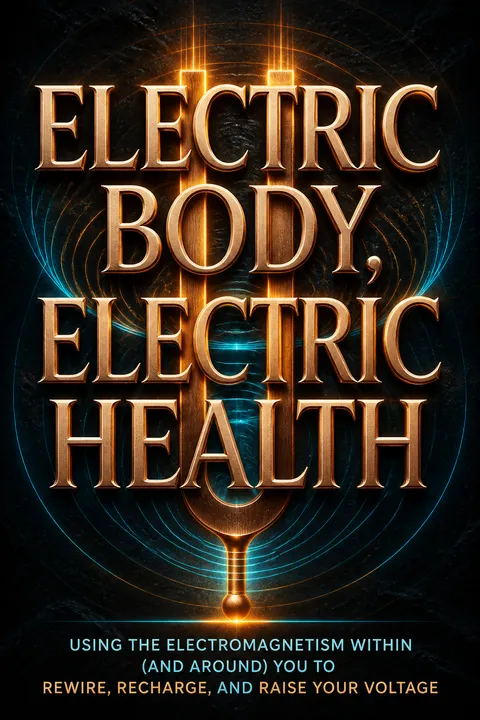
Electric Body, Electric Health is part memoir, part self-help guide, and part speculative theory of health. Its narrative begins with McKusick’s dissatisfaction with conventional self-improvement and her discovery of tuning forks, then widens into an account of the body as an electrical system and finally offers a map of emotional themes associated with different body regions. The connective thread is not electricity alone, but the proposition that suppressed feeling and habitual stories consume capacity that could support clearer action and greater vitality.
The book’s most transferable material is its practical attention to emotional avoidance, overwork, self-criticism, boundaries, pleasure, and present-moment awareness. Readers do not need to accept a biofield to try noticing what depletes them, allowing feelings without moral judgment, or breaking a problem into manageable steps. McKusick’s personal history gives these recommendations a lived context and helps explain why she distrusts wellness routines that ignore emotional life.
The central intellectual challenge is the book’s movement between established physiology and claims that are not comparably established. Bioelectric signaling and plasma are real scientific topics; the proposed memory-storing biofield, emotion-specific locations, aetheric communication, and disease explanations based on low voltage are hypotheses or interpretations. At points, metaphor carries the weight of mechanism. That leap can make the work vivid, but it can also encourage readers to treat an evocative map as medical fact.
A careful reading preserves the book’s strongest insight while limiting its weakest inference: emotional life matters to health and choice, but that does not mean emotions explain every illness or that mindset can replace medical treatment. The most useful stance is curious but discriminating. Treat the practices as prompts for self-observation, seek evidence before accepting physiological claims, and use qualified healthcare support when symptoms warrant it.
Review Summary
Electric Body, Electric Health receives high praise for its comprehensive exploration of bioelectricity and vibrational healing. Readers appreciate McKusick's clear writing style, bridging scientific and spiritual perspectives. Many find the book informative and practical, offering insights into chakras and energy centers. Some criticize the lack of detailed instructions for implementing techniques. Overall, reviewers value the book's unique approach to health and healing, though a few remain skeptical. The book is seen as thought-provoking and potentially life-changing for those interested in alternative healing methods.
People Also Read









Glossary
Biofield Tuning
Sound-based biofield practiceA method developed by Eileen Day McKusick that uses vibrating tuning forks around and sometimes on the body. Practitioners listen for changes in the tones and interpret them as signs of tension or disturbance, then use sound and attention in an effort to encourage greater harmony. Its proposed biofield mechanisms have not been established as medical fact.
Biofield Anatomy Hypothesis
Proposed map of emotional memoryMcKusick’s working model that a field surrounding and interpenetrating the body has an organized structure associated with memories, emotions, and life experiences. The model assigns recurring themes to different regions and proposes that sound can reveal or alter those patterns. The author identifies it as a hypothesis based on clinical observation, not objectively confirmed anatomy.
energenetics
Inherited emotional patterningMcKusick’s term for the idea that people inherit not only biological traits but also emotional and behavioral patterns associated with family history. In her biofield model, these inherited influences appear as recurring tonal patterns and may shape a person’s experience. The term describes her interpretation of intergenerational influence, not a recognized genetic mechanism.
purple-washing
Spiritualizing away discomfortMcKusick’s term for covering over painful emotions by presenting a situation in spiritual or overly positive language. Examples include skipping anger in favor of immediate forgiveness or dismissing disappointment with a claim that everything happens for a reason. The practice can prevent a person from recognizing what they feel and deciding how to respond.
riding the dragon
Channeling emotion into actionMcKusick’s phrase for acknowledging a strong emotion and directing its energy toward a constructive response rather than suppressing it or letting it control behavior. Anger might motivate a boundary or a practical change; anxiety might prompt planning or movement. The image emphasizes intentional action while leaving room for rest and emotional support.
moderate hedonism
Enjoyment without compulsionMcKusick’s approach to enjoying food and other pleasures without treating them as morally wrong or using them automatically to avoid uncomfortable feelings. It involves noticing desire, satisfaction, and personal limits, with gradual experimentation rather than rigid all-or-nothing rules. The author notes that moderation may not be appropriate for everyone, particularly where addictive patterns or health needs require different support.
central channel
Midline focus for groundingIn McKusick’s energy model, an imagined vertical axis through the center of the body that serves as a point of balance and connection. She recommends focusing attention there, alongside breathing and grounding, to return awareness to the present. It functions as a visualization and attentional practice rather than a medically established anatomical structure.
coherence
Patterns working in harmonyMcKusick uses coherence to describe a state in which the patterns of a person’s emotional and energetic system are more integrated and mutually aligned. She contrasts it with incoherence, which she associates with stress, unresolved emotion, and scattered attention. In the book, the term blends a sound-based analogy with a proposed biofield interpretation.
FAQ
What's Electric Body, Electric Health about?
- Exploration of Electromagnetism: The book explores the concept that humans are fundamentally electromagnetic beings, emphasizing the importance of understanding our electric health.
- Connection of Science and Spirituality: It bridges scientific principles with spiritual concepts, suggesting that both perspectives can coexist to enhance our understanding of health.
- Practical Applications: Eileen Day McKusick introduces Biofield Tuning, a method using sound therapy to address energetic blockages and improve well-being.
Why should I read Electric Body, Electric Health?
- Transformative Insights: Offers a new perspective on health, encouraging readers to view their bodies as electric systems that can be optimized for better health.
- Practical Techniques: Provides practical techniques for managing emotions and energy, leading to improvements in physical and mental health.
- Personal Journey: McKusick shares her journey from struggle to empowerment, inspiring readers to take charge of their own health.
What are the key takeaways of Electric Body, Electric Health?
- Understanding Your Biofield: Emphasizes the biofield as a map of your mind and a reflection of your emotional state.
- Electric Health Principles: Introduces the concept that maintaining high voltage in the body is crucial for health, as low voltage can lead to disease.
- Emotional Management: Highlights the importance of managing emotions, as they are electromagnetic waves impacting health and energy flow.
What is Biofield Tuning, as described in Electric Body, Electric Health?
- Sound Therapy Method: Biofield Tuning uses tuning forks to identify and correct energetic imbalances in the biofield.
- Noninvasive Approach: Focuses on using sound to release energetic blockages, promoting healing on physical, mental, and emotional levels.
- Personal Empowerment: Individuals can learn to use this technique on themselves, empowering them to take control of their health.
How does Eileen Day McKusick connect emotions to electric health in Electric Body, Electric Health?
- Emotions as Electromagnetic Waves: Emotions are electromagnetic waves that can either flow freely or become stuck, impacting overall health.
- Impact of Suppressed Emotions: Suppressed emotions create resistance in the biofield, leading to physical ailments and decreased vitality.
- Healing Through Expression: Advocates for healthy expression of emotions to maintain electric health and prevent disease.
What role does plasma play in the concepts presented in Electric Body, Electric Health?
- Fourth State of Matter: Plasma is described as the fourth state of matter, influencing our electric health.
- Connection to the Biofield: The human biofield is a form of bioplasma, interacting with the electromagnetic environment.
- Understanding Energy Flow: Recognizing plasma's role helps understand energy flow through the body and how to optimize it for better health.
What is the significance of the aether in Electric Body, Electric Health?
- Medium of Connection: Aether is presented as the medium connecting all things, facilitating energy and information flow.
- Historical Context: Discusses the historical dismissal of aether in science and its resurgence as a unifying concept.
- Implications for Health: Understanding aether allows appreciation of interconnectedness and the importance of maintaining a healthy biofield.
How can I raise my voltage, according to Electric Body, Electric Health?
- Focus on Electric Health: Raising voltage involves enhancing electric health through emotional management and self-awareness.
- Practical Techniques: Provides techniques like grounding, breathing exercises, and sound to increase energy flow and vitality.
- Awareness and Intention: Cultivating awareness of energy levels and setting intentions to maintain high voltage are key.
What are some practical exercises mentioned in Electric Body, Electric Health?
- Grounding Techniques: Suggests grounding exercises, like walking barefoot on natural surfaces, to connect with the earth's energy.
- Breathing Exercises: Recommends deep breathing techniques to release tension and promote energy flow.
- Using Tuning Forks: Encourages experimenting with tuning forks to identify and harmonize areas of dissonance in the biofield.
What are the different energy centers discussed in Electric Body, Electric Health?
- Chakra System: Outlines various energy centers (chakras) in the body, including root, sacral, solar plexus, heart, throat, third eye, and crown.
- Functions and Imbalances: Each center has specific functions and can experience imbalances affecting health.
- Healing Techniques: Provides techniques for working with each energy center to promote healing and restore balance.
What is the significance of the root chakra in electric health?
- Foundation of Energy: The root chakra is the first energy center, serving as the foundation for the overall energy system.
- Connection to Survival: Relates to basic survival needs and the ability to take constructive action.
- Imbalances and Solutions: Imbalances can lead to insecurity; grounding and deep breathing can help restore balance.
What are the best quotes from Electric Body, Electric Health and what do they mean?
- “You are the light you are seeking.”: Emphasizes that individuals possess the potential for healing and enlightenment within themselves.
- “Your energy field is a map of your mind.”: Highlights the connection between mental and emotional states and their reflection in the biofield.
- “Everything is energy, frequency, and vibration.”: Reinforces the idea that all aspects of life are interconnected through energy, leading to profound health changes.
About the Author
Other books by Eileen Day McKusick
Download PDF
Download EPUB
.epub digital book format is ideal for reading ebooks on phones, tablets, and e-readers.








