

Key Takeaways
Build emotional bonds by designing a creative culture, not just polished campaigns
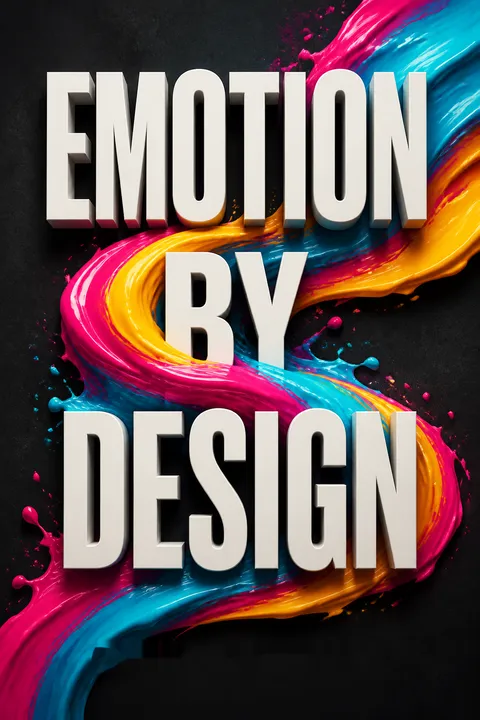
Emotion is the strategy. Greg Hoffman entered design school aiming for a prestigious art internship, not a career selling shoes. A summer at Nike changed his mind: he saw that a campaign could move people with the force of a sporting moment. He went on to spend twenty-seven years at Nike, learning to treat marketing as a deliberate craft of creating feeling, not simply displaying products. He calls this approach Emotion by Design: using stories, images, and experiences to help people feel connected to a brand and to their own aspirations.
The Colin Kaepernick work that framed Hoffman’s final Nike campaign brought the idea into focus. A portrait series tied Kaepernick’s personal values to sport, without reducing either to a sales message. Hoffman’s claim is that a small team can create such connections too. The decisive resource is the depth of the story, not the size of the budget.
The distinction between a campaign and a culture is important. A memorable advertisement may create attention, but a culture determines whether teams can keep producing work with insight, coherence, and conviction. That makes creative leadership less about approving clever outputs and more about shaping conditions: who gets heard, what risks are tolerated, and what the organization considers meaningful. Emotional design is powerful precisely because feeling can precede careful judgment, however. Brands earn trust when the emotion they evoke is supported by the product and the company’s conduct, rather than functioning as a polished substitute for them.
Put different lives in the room before asking a team to find insight
Difference creates perspective. Hoffman compares creative teamwork to Brazil’s Ginga style of football, a culturally rooted approach that prizes individual flair within a shared game. During a shoot in Brazil, fans surged onto the field to reach star player Ronaldo. Hoffman initially tried to hold them back, then followed Ronaldo’s lead and let them close in. The fans wanted connection, not chaos. That changed the shoot: instead of photographing only the players, Hoffman argued for including the supporters whose devotion gave the team its meaning.
At Nike, Hoffman urged leaders to welcome imaginative rule-breakers, make room for quieter colleagues, and recruit people with different backgrounds and skills. He cites a 2020 survey in which 88 percent of 3,883 marketing respondents identified as white. For him, representation is both an equity issue and a way to notice what a more homogeneous team may miss.
The Brazil story shows that insight can emerge when a team revises its assumptions in response to people, rather than treating its initial plan as a fixed brief. Difference helps only when it can affect decisions. A team may look diverse yet still reward the same speaking style, defer to seniority, or dismiss unfamiliar perspectives. The practical test is not who is present but whose interpretation changes the work. Making space for quieter contributors and giving varied perspectives genuine influence turns diversity from a staffing statistic into a creative method.
Schedule curiosity, because inspiration rarely arrives on a project deadline
Go looking for material. Hoffman treats curiosity as a practice that teams can strengthen, not a personality trait reserved for a lucky few. At an early Nike design retreat, colleagues listened to a serious Bigfoot enthusiast. The strange talk was memorable because it made the designers encounter a world outside their usual reference points. Other exercises pushed them to build a chair from cardboard, write a children’s book, or learn from Japanese sword makers, tea rituals, and garden design.
Hoffman also built routines for bringing discoveries back to work. He kept a visual archive of photographs and screenshots, assigned himself places to visit while traveling, and asked colleagues to share what they saw in “Outside In” sessions. Kobe Bryant embodied the habit: he sought out Hakeem Olajuwon to study footwork and introduced Nike colleagues to augmented reality because he was curious about it.
These practices make creativity less dependent on the romantic idea of sudden inspiration. A visual archive, a planned visit, or a shared travel report creates more chances for unexpected connections, while also giving a team material to work with. The caution is that collecting novelty can become a performance of curiosity: a packed trip or eccentric speaker does not automatically improve a product. The useful question is what a team notices, how it interprets that observation, and whether it can translate the learning into a better experience for the people it serves.
Use constraints to test bold ideas before bureaucracy sands them down
Limits can sharpen invention. For the 1994 World Cup, Nike had a $10,000 budget for soccer marketing across a major event. Hoffman and colleague Jason Cohn turned an old cargo van, nicknamed Stinky, into a mobile product showcase and drove it to meet fans directly. The small operation gave the brand human contact and feedback that a distant, expensive event installation might not have produced.
A different constraint tested the team’s appetite for risk. Nike’s five-minute animated film The Last Game began as a much longer script, too long for ordinary television advertising. Rather than abandoning the story, the team reworked it for digital release and built a real-time content operation around the World Cup. A two-hundred-person command center produced more than two hundred pieces in twenty-two languages. The campaign films earned over 400 million digital views.
Constraints are useful when they force a team to choose, prototype, and discover a new route. They are not inherently creative: chronic underfunding and impossible deadlines can also lower quality or exhaust people. The distinction is whether a limit focuses effort around a meaningful problem and whether leaders protect enough room to experiment. The Stinky van offered a low-cost way to learn in public; the large command center required substantial resources. Together, the examples show that resourcefulness and investment are not opposites. Good leadership knows when to improvise and when to build capacity.
Make every brand touchpoint tell the same human story in its own way
Identity exceeds the logo. Hoffman describes brand identity as a recognizable frame around a changing set of images, products, and experiences. Nike’s Jordan Wings poster did not show a spectacular play; its quiet portrait and poetic design suggested that athletic excellence could speak to something broader than basketball. The frame identified Nike while leaving the athlete and the image in the foreground.
The same principle shaped Nike’s Find Your Greatness campaign during the 2012 Olympics. Instead of centering only famous champions, it showed ordinary people moving in places named London around the world, including an overweight twelve-year-old runner. The campaign widened the meaning of athletic achievement without abandoning sport. Hoffman’s wider point is that a brand’s voice can change tone and medium while remaining recognizable. A retail space, a film, a product image, and a social post should each express the brand’s character in a form suited to that moment.
The frame metaphor captures a real design problem: consistency is not sameness. Repeating identical templates can make a brand recognizable but lifeless; changing everything can make it impossible to recognize. The strongest identity gives teams a small set of meaningful cues and enough freedom to interpret them. The Wings poster and Find Your Greatness campaign also show how a brand can invite people beyond its core fans. That invitation works best when it expands the audience’s role without pretending that everyone has the same access, resources, or experience.
Let customers make icons, then protect what they have made
Culture is co-created. Nike’s Air Force 1 was designed for basketball performance, but its life on city streets gave it a cultural meaning the company could not simply manufacture. Nike discontinued it in 1984, then brought it back after demand persisted. The shoe has appeared in roughly 1,700 versions and, according to Hoffman, never needed a television commercial. Its community helped make it an icon.
When Nike marked the shoe’s twenty-fifth anniversary, the team built an event around the product and its owners, not just celebrity appearances. A collection of 1,700 versions became the centerpiece. Nike later applied a similar idea to Air Max Day, held each March 26, the date of the Air Max 1’s release. Fans shared their collections, joined events, and sometimes voted on new designs. Nike supplied a platform; the community supplied much of the meaning.
This account distinguishes cultural relevance from a brand’s claim to cultural ownership. A company can create a useful product and invite participation, but it cannot decree that the public will find the product meaningful. That meaning grows through use, memory, adaptation, and exchange. The brand’s strongest move may be restraint: acknowledge the community’s role, provide ways to gather, and avoid turning every expression of enthusiasm into a sales funnel. There is still a tension, since a company benefits commercially from culture it does not control. Respectful participation requires more than celebratory language.
Sell the life a product enables, not the features it contains
Lead with the human benefit. Nike+ paired a shoe sensor with an iPod so runners could track distance and pace while listening to music. The important insight was not that the technology had impressive features. It was that many people found running lonely, boring, or hard to sustain. The product made progress visible and connected runners to others. In 2008, the Nike+ Human Race brought a million runners into a shared event, collectively covering 802,242 miles.
The same logic informed Nike’s partnership with Kevin Hart. Hart had started running himself and invited people in cities such as Boston to join him. Hundreds showed up for the first run. Nike used his humor and relatability to reach people who might ignore a professional athlete’s pitch. With the Apple Watch Nike+, a campaign dramatized the watch as a source of motivation, not a list of technical specifications. Hoffman’s framework for building a movement moves from finding early participants, to giving them shared action, to celebrating their participation.
A product becomes easier to understand when its story begins with a real friction in someone’s life. The runner does not need a lecture on sensors; the runner needs a reason to go out again. Community can strengthen that motivation by turning solitary effort into visible participation. But a compelling campaign should not be confused with proof that a product changes habits for everyone. Motivation varies, and access matters. The more responsibly a brand tells this story, the more clearly it distinguishes what its tool enables from what only the user, their circumstances, and sustained effort can achieve.
Make empathy tangible in the product, the place, and the platform
Turn listening into action. After four NBA players spoke publicly about racial injustice at the 2016 ESPYs, Hoffman’s team looked for ways to connect sport with the wider struggle for equality. Nike’s Equality campaign used athletes and the language of fair play to make that connection visible. Its work with Colin Kaepernick also centered the reason behind his protest, not merely his celebrity. The book traces the idea of sports as a platform for social issues back to campaigns such as Stand Up, Speak Up against racism in European football.
Empathy also shaped work beyond advertising. Nike involved local artists in designing a football center in Soweto, which served thousands of young players, and developed a lighter, more breathable performance hijab after listening to athletes who competed in traditional fabric. Hoffman closes with his own discovery of his birth family through genetic testing, and the realization that talent is shaped by inheritance as well as by the people who nurture it.
The examples make empathy concrete: it changes what gets built, whose expertise is respected, and who can participate. A campaign can widen public attention, while a facility or redesigned garment can address a practical barrier. These forms of action should be judged differently. A message may be memorable without changing conditions; a product may improve performance without resolving structural exclusion. Credibility comes from connecting communication to sustained decisions and from involving affected communities as collaborators, not just subjects. The final family story adds a personal dimension: creative ability is not only discovered, it is also supported.
Analysis
Emotion By Design is both a memoir of a designer’s professional formation and a practical argument about how organizations create meaningful brand work. Its structure moves from personal origin stories to team practices, brand identity, cultural participation, social impact, and finally the author’s account of discovering his birth family. That arc gives the business advice emotional stakes: creativity is not merely a corporate capability but a way people interpret their lives and connect with others.
The book’s strongest claim is that emotional connection depends on organizational conditions. Hoffman repeatedly shows that the work changes when leaders invite unfamiliar perspectives, give teams room to test ideas, and let disciplines collaborate before a campaign is already defined. His examples are unusually concrete, from an improvised fan-inclusive shoot in Brazil to a global content operation for The Last Game. The cases make creativity look less like isolated genius and more like a social process supported by trust, craft, and shared purpose.
A useful tension runs through the argument. Nike’s work can invite people into sport and address exclusion, but it also belongs to a corporation selling products. The book is most persuasive when it acknowledges that tension through choices with tangible consequences, such as building a community facility or designing gear for underserved athletes. Emotional storytelling alone cannot establish social benefit. The same campaign can be moving, commercially effective, and insufficient to alter the conditions it describes.
The book’s lessons therefore travel best when separated from the prestige of the Nike brand. Small teams can adopt its habits of curiosity, early visualization, cross-functional work, and genuine listening without imitating its scale or aesthetic. They should also ask who benefits, whose voice shaped the result, and what evidence would show that the promised connection is real. In that form, the book’s most durable contribution is not a formula for making consumers feel. It is a case for building organizations capable of noticing people, making with them, and accepting responsibility for what their stories imply.
Review Summary
Emotion By Design receives mixed reviews, with ratings ranging from 1 to 5 stars. Positive reviews praise the book's insights into Nike's marketing strategies and creative process, finding it inspirational for marketers and brand managers. Critics argue it lacks depth, feels self-indulgent, and offers limited practical advice. Some readers appreciate the behind-the-scenes look at Nike campaigns, while others find it too focused on the author's career. Overall, opinions vary on its value for different audiences, with some finding it enlightening and others disappointed.
People Also Read








Glossary
Emotion by Design
Deliberate emotional brand-buildingHoffman’s term for creating stories, images, and experiences deliberately designed to evoke feeling and connect a brand with people’s aspirations. It treats emotion as a result of choices in creative work, not as an accidental reaction. The approach depends on understanding an audience and building an organizational culture that can consistently produce meaningful work.
Vision Advantage
Seeing overlooked human insightsHoffman’s name for a marketer’s ability to notice truths or needs that competitors may overlook. He links this ability to empathy, which helps people understand perspectives beyond their own, and curiosity, which pushes them to seek new experiences. The advantage is not simply having a clever idea; it is seeing more of the human context around a product or story.
Creative Chemistry
Distinct talents working togetherHoffman’s description of a team dynamic in which individuals retain different styles, skills, and points of view while working toward a shared purpose. The idea is illustrated through Brazil’s expressive football culture and Nike’s collaborative teams. Rather than enforcing sameness, creative chemistry makes individual strengths combine into work no single contributor could produce alone.
Outside In
Sharing external discoveriesHoffman’s name for team sessions where employees report what they encountered beyond the organization, such as places visited, people met, or ideas encountered at an event. The practice transfers observations across a team and broadens its shared reference points. Its purpose is not to collect novelty for its own sake, but to make outside experiences available as potential creative material.
Recruit. Rally. Roar.
Three stages for movement-buildingA framework used in Nike’s FuelBand launch planning. First, recruit people who can demonstrate and share the behavior. Then rally participants around an action they can take together, such as sharing activity scores. Finally, create a celebratory moment that recognizes the community. The sequence moves a product from individual use toward shared participation.
Ginga
Brazilian expressive football styleA Brazilian approach to football that Hoffman describes as combining cultural influences, including martial arts and samba, with individual flair and improvisation. In his account, Ginga allows distinct players to express their styles while contributing to a team. He uses it as a model for creative collaboration, where difference can strengthen collective performance rather than obstruct it.
FAQ
What's Emotion By Design about?
- Creative Leadership Focus: The book explores creative leadership lessons from Greg Hoffman's career at Nike, focusing on the intersection of art, sport, and marketing.
- Emotion by Design Concept: Hoffman introduces "Emotion by Design," which is about creating emotional connections between brands and consumers through storytelling and experiences.
- Personal Journey: It chronicles Hoffman's journey from a design intern to Nike's Chief Marketing Officer, highlighting key projects and collaborations that shaped his philosophy.
Why should I read Emotion By Design?
- Inspiration for Leaders: The book offers insights for business leaders and marketers on fostering creativity and innovation within their teams.
- Real-World Examples: It includes examples from Nike's marketing campaigns, providing practical applications of the concepts discussed.
- Cultural Relevance: Readers will understand how sports and culture intertwine and how brands can leverage this connection to resonate with consumers.
What are the key takeaways of Emotion By Design?
- Empathy and Curiosity: The book emphasizes empathy and curiosity in understanding consumer needs and crafting compelling narratives.
- Team Collaboration: Creativity is a team sport, and diverse teams that embrace risk-taking and collaboration drive innovation.
- Brand Identity: A strong brand identity is crucial and can be communicated through visual language and storytelling.
What are the best quotes from Emotion By Design and what do they mean?
- “Emotion by Design—the ability to create stories, images, and experiences that make people feel that even their most audacious dreams are possible to achieve.” This highlights the power of emotional storytelling in branding.
- “There’s no greater danger than playing it safe.” This advocates for risk-taking in creativity, suggesting true innovation comes from stepping outside comfort zones.
- “You can’t learn if you don’t ask.” Attributed to Kobe Bryant, this emphasizes curiosity and the willingness to seek knowledge from others for growth and creativity.
What is the concept of "Emotion by Design" in Emotion By Design?
- Creating Emotional Bonds: "Emotion by Design" is about crafting narratives and experiences that resonate emotionally with consumers, fostering deeper connections.
- Universal Application: Hoffman argues this concept can be applied across various industries, not just marketing, making it relevant for all business leaders.
- Cultural Impact: The book illustrates how brands can leverage emotional storytelling to influence culture and inspire movements, as seen in Nike's campaigns.
How does Emotion By Design address creativity in teams?
- Team Sport Metaphor: Creativity is likened to a team sport, emphasizing collaboration and diverse perspectives for innovative outcomes.
- Encouraging Risk-Taking: A culture that encourages risk-taking and values contributions from all team members is advocated.
- Empathy in Collaboration: Empathy within teams is crucial to understanding different viewpoints and creating a supportive environment for creative expression.
How does Emotion By Design define the importance of brand identity?
- Visual Language: A strong brand identity is built through a consistent visual language reflecting the brand's values and purpose.
- Consumer Recognition: A well-defined brand identity helps consumers easily recognize and connect with the brand, fostering loyalty and trust.
- Long-Term Strategy: Investing in brand identity from the beginning lays the foundation for future growth and consumer relationships.
What insights does Emotion By Design provide on risk-taking in marketing?
- Cultural Emphasis: A culture of risk-taking is essential for innovation, encouraging teams to embrace bold ideas and learn from failures.
- Balancing Caution and Creativity: Brands should balance caution with creativity, not shying away from risks to engage consumers.
- Real-World Applications: Examples from Nike's marketing strategies show how calculated risks can lead to significant rewards and breakthroughs in brand engagement.
How does Emotion By Design illustrate the connection between sports and culture?
- Cultural Influence: Sports inspire and unite people, reflecting broader cultural movements and societal issues.
- Brand Responsibility: Brands, especially in sports, have a responsibility to engage with cultural conversations and use their platforms for positive change.
- Case Studies: Nike's campaigns featuring athletes like Colin Kaepernick demonstrate how sports can drive cultural narratives and influence public perception.
What role does storytelling play in Emotion By Design?
- Core of Branding: Storytelling is fundamental to branding, allowing companies to communicate their values and connect with consumers personally.
- Emotional Engagement: Effective storytelling evokes emotions, making the brand memorable and relatable to its audience.
- Real-World Examples: Successful Nike campaigns, such as the "Just Do It" slogan, utilized storytelling to engage consumers.
How does Emotion By Design explore the intersection of sports and social issues?
- Athlete Activism: Athletes use their platforms to address social injustices, exemplified by Colin Kaepernick's activism, highlighting sports' role in societal change.
- Cultural Relevance: Brands must engage with current social issues to remain relevant, aligning with causes that resonate with their audience.
- Empowerment Through Sport: Sports serve as a vehicle for empowerment and community building, with brands supporting these movements enhancing their impact and legacy.
What practical advice does Emotion By Design offer for business leaders?
- Foster Creativity: Leaders should create environments that nurture creativity, allowing team members to express ideas freely and take risks.
- Embrace Diversity: Diverse teams lead to richer insights and more innovative solutions.
- Connect Emotionally: Building emotional connections with consumers through storytelling and authentic brand experiences drives loyalty and engagement.
Download PDF
Download EPUB
.epub digital book format is ideal for reading ebooks on phones, tablets, and e-readers.








