

Key Takeaways
Treat technology as the product engine, not an overhead department
Technology shapes the business. Many companies treat technology as a cost center that takes orders from the rest of the business. Cagan argues that technology increasingly makes the product itself possible, whether the product is banking, insurance, transport, or entertainment. He contrasts outsourcing core engineering, as in his account of Boeing's 737 MAX decisions, with companies such as Tesla and Pixar, where technology is central to the customer experience and continued innovation.
Change the relationship. When engineers are organized mainly to serve internal stakeholders, they lose access to customer problems and are less able to apply their expertise to new solutions. Product engineering belongs close to the business's customers and product leadership, not treated as a detachable IT service.
The useful shift is from asking how much technology costs to asking what capabilities it makes possible. That question can change investment decisions, leadership structures, and who is invited into product choices. The argument is strongest for technology that directly shapes a company's offering. It is less useful as a blanket claim about every technology function: internal systems still need reliability, security, and operational discipline. The practical test is whether a technology group is merely maintaining infrastructure or helping the company create differentiated customer value.
Give teams customer problems, not feature lists, and measure outcomes
Output is not impact. A feature team is a group asked to implement a predetermined feature or project. An empowered product team is a cross-functional group given a customer or business problem, the context to understand it, and room to discover a solution. The team is accountable for results, not simply for shipping what someone requested.
Test the whole solution. Product discovery is the work of finding a solution that customers value, can use, that engineering can build, and that the business can support. Those risks are often called value, usability, feasibility, and viability. A proposed feature may be delivered on time and still fail if customers do not use it or the business cannot sustain it. The team needs to investigate those risks before committing to delivery.
This distinction makes accountability more credible: a team cannot fairly own a result if it has no influence over the solution. It also changes the quality of debate. Instead of bargaining over a backlog, people can examine evidence about whether a problem is real and whether an approach works. The model does depend on capable teams and clear constraints. Without those, handing over a problem can become abandonment disguised as autonomy. Empowerment requires both discretion and informed support.
Make developing people the manager's primary product
Coach, do not command. Cagan treats coaching as a core management responsibility: understand each person's strengths and gaps, give timely feedback, and help them improve without taking over their work. A practical tool is a skills assessment comparing the expectations of a role with the person's current ability. Managers can focus first on the three most important gaps, then review progress regularly.
Make the conversation routine. The weekly one-on-one is meant to support the employee's growth, not become a task-status meeting. During onboarding, a new product manager may need especially frequent coaching while learning the product, customers, data, industry, and business. Annual performance reviews should not introduce surprises; feedback should already have been shared in ongoing conversations.
Treating a team as something a manager develops is more than a humane management style. It is a way to build the organization's future capacity instead of relying on a few high performers to compensate for weak systems. Regular feedback also lowers the stakes of correction because a problem can be addressed while it is still small. There is a necessary boundary: coaching is not a promise that every person will thrive in every role. Managers owe people support and clarity, not indefinite avoidance of difficult decisions.
Focus a few teams on insights that can move business metrics
Choose what matters. Product strategy is the approach for making a product vision real while meeting the business's needs. Cagan describes it as a progression: focus on a few important problems, find insights that could change their outcomes, turn those insights into team work, and actively manage progress. A long list of priorities is not focus. He argues that organizations pursuing 20 or 30 supposedly critical efforts spread attention too thinly to make a meaningful difference.
Follow evidence. In the book's jobs-marketplace case, data showed that employers had better outcomes when a posting attracted 8 to 25 qualified applications. Teams worked on improving the match between postings and applicants. Employer posting success rose from 37% to 41% in a quarter, and later approached 45%; annual employer churn fell from 6% to 5.1%.
The case illustrates how an insight can redirect effort from activity to a mechanism that matters. The team did not simply add more features for employers; it examined what conditions were associated with successful hiring. That is a more disciplined basis for strategy, though correlation alone cannot establish why a metric changes. The book's emphasis on both customer research and quantitative evidence is important here: numbers reveal patterns, while conversations help explain them. Focus is not just choosing less work. It is choosing work for a reason.
Use a shared vision and deliberate team boundaries to create autonomy
Give teams a destination. A product vision describes a customer-improving future, usually several years away. It acts as a shared direction for teams that own different parts of a larger product. Principles clarify how to make difficult trade-offs along the way. The vision should inspire and orient people, not prescribe a list of features.
Shape ownership intentionally. Team topology means how product teams divide responsibility, including what each team owns and how it depends on others. Cagan recommends balancing ownership, autonomy, and alignment. For example, platform teams can provide shared services, while experience teams focus on end-to-end customer needs. Too many dependencies constrain teams; too broad a scope can overload them. Leaders should design boundaries with product and engineering together, then revisit them when strategy, architecture, or customer needs change.
A shared destination makes local decision-making more coherent: teams can choose different methods while still pulling toward a common purpose. Team boundaries then determine whether that freedom is real or nominal. This resembles a general principle of organizational design: interfaces between groups can either enable independent work or force constant negotiation. A vision is not automatically useful, however. If leaders cannot explain how it connects to current choices, it becomes ceremony. Its value lies in helping people make trade-offs without requiring every decision to travel upward.
Make OKRs a leadership practice, not quarterly paperwork
Define problems and evidence. Objectives and Key Results, or OKRs, are a way to express a problem a team should solve and the outcomes that indicate progress. The objective is not a feature request; key results should measure business or customer impact rather than completed tasks. Leaders choose which problems matter and which teams should address them, while the team proposes meaningful measures and targets through discussion.
Separate aspiration from promise. A high-integrity commitment is a specific deliverable and date that a team has investigated enough to believe it can meet. Such commitments are useful for major deadlines or dependencies, but should remain exceptional. The book argues that OKRs fail when companies impose them on feature teams, add individual and manager objectives, or leave teams alone without active leadership and support.
The distinction between an aspiration and a promise prevents two common failures: treating every ambitious goal as a contractual deadline, and treating genuine deadlines as casual forecasts. It also clarifies what leadership contributes. Leaders are not supposed to dictate every solution, but they must set priorities, resolve cross-team conflicts, and help teams respond to obstacles. A measurement system cannot manufacture trust or strategic judgment. OKRs are useful only when they encode a real operating relationship, rather than adding another layer of reporting.
Recruit competent, decent people, then coach them into exceptional teams
Hire for capability and character. Cagan warns against treating an elite resume, domain expertise, or vague cultural fit as a substitute for the skills required by the role and the ability to work well with others. A highly skilled but destructive person can damage a team's trust and collaboration. Different backgrounds and ways of thinking can also widen the range of solutions a team sees.
Make staffing a manager's job. Strong managers recruit continuously, curate the interview team, check references, and personally onboard new hires. Onboarding should include meaningful exposure to customers, the product, and the business, not just company procedures. Hiring for potential can work, but only when a manager is prepared to coach that person closely toward competence.
This approach treats hiring as the design of a team, not the acquisition of isolated talent. It also challenges the tendency to hire people who feel familiar, which can quietly narrow both perspective and problem-solving options. The standard of character should be applied carefully: disagreement or an unfamiliar communication style is not evidence of toxicity. Clear behavioral expectations, structured interviews, and multiple viewpoints help separate harmful conduct from mere difference. Coaching then turns hiring into a continuing investment rather than a one-time bet.
Treat discovery as shared problem-solving, with ethics included in the brief
Work across disciplines. Product managers, designers, and engineers should investigate problems together rather than passing requirements and designs from one function to the next. A prototype can give the team something concrete to test and debate. Collaboration does not require consensus or compromise; it means using each person's expertise to find a solution that works for customers and the business. Stakeholders contribute essential context about areas such as sales, legal constraints, and finance.
Ask whether to build. The book adds ethical risk to the usual questions of customer value, usability, technical feasibility, and business viability. Teams should consider effects on customers, other affected groups, and society, and raise concerns thoughtfully. A product can be useful and commercially viable while still causing harm that the team should not ignore.
The strongest feature of this model is that it makes disagreement productive: expertise is distributed, so the best answer may not come from the most senior person or the person with the product title. Including ethical risk also makes responsibility harder to outsource to a separate review process. Still, a checklist cannot settle every moral conflict. Teams need clear principles and routes for escalation, especially when commercial pressure rewards a harmful choice. Ethical inquiry is most effective when it changes design decisions, not merely when it is documented.
Empower engineers to shape solutions, not merely implement decisions
Use engineering judgment early. Engineers work directly with the technologies that may unlock new solutions, so their contribution should begin during discovery, not at sprint planning. The tech lead is a senior engineer who partners with product and design to evaluate what is technically possible and what is worth building. Empowerment means giving engineers the problem and strategic context, then inviting them to help determine the solution, not merely choosing how to code it.
A team can pivot without losing its purpose. At the Guardian, a five-person product team faced an iPad deadline and discovered that adapting its existing news app was not feasible at the desired quality. It quickly explored a different idea centered on photojournalism, prototyped it, and delivered an experience Apple showcased at launch. The example shows how discovery can turn a constraint into a new product direction.
This is the book's sharpest corrective to organizations that treat engineering as a downstream service. Technical insight can change not only implementation but also which product is possible. The Guardian story gives that claim a human scale: a small team used a tight deadline as a reason to rethink the offering, not simply to rush a weaker version into release. Engineer empowerment still needs balance. Customer understanding, design expertise, and business constraints remain essential partners, not obstacles to technical creativity.
Analysis
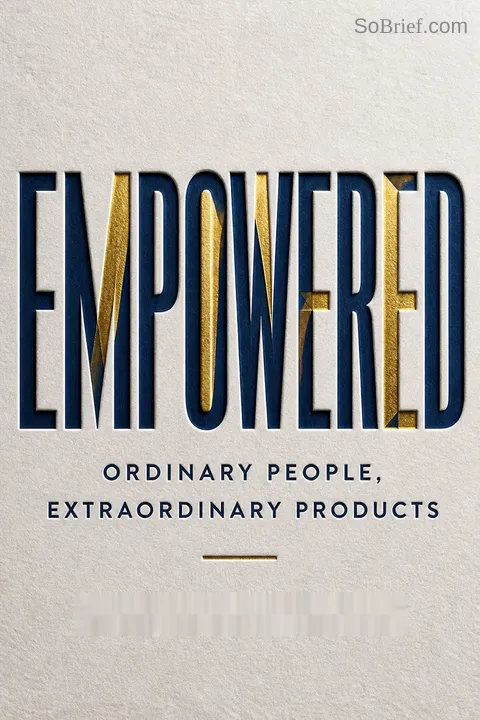
EMPOWERED argues that a company cannot reliably innovate by asking technology teams to execute decisions made elsewhere. Its alternative is organizational, not merely procedural: leaders set direction, managers develop people, and cross-functional teams receive problems to solve with enough context to make informed choices. The central promise is that capable, ordinary people can produce extraordinary work when they have ownership, skill, and trust. The book's strongest contribution is connecting practices often discussed separately. Coaching is tied to staffing; vision informs architecture and team boundaries; strategy determines which problems receive scarce attention; objectives connect direction to accountable action. This integrated view explains why adopting Agile rituals or OKR templates alone often changes paperwork but not behavior. The marketplace case makes the argument tangible: teams acting on a specific insight improved measures tied to employer and seeker success.
The framework also makes clear that empowerment is not abdication. Leaders select problems, set boundaries, support dependencies, and intervene when teams need help. That distinction matters because autonomy without competence or access to decision-makers can become a polite name for neglect. Likewise, accountability is fair only when teams can influence the solutions and understand how results are measured.
The model has demanding prerequisites. It relies on managers with enough craft knowledge to coach, teams with time for discovery, and executives willing to share authority. Organizations with rigid reporting lines, weak customer access, or incentives centered on short-term delivery may struggle to reproduce the examples without changing those conditions. There is also a risk that outcome metrics become another form of pressure if leaders ignore market uncertainty or treat exploratory failures as personal failures.
The most useful reading is therefore not as a universal organizational template, but as a set of linked design questions: Who understands the customer? Who chooses the problem? Who can shape the solution? Who helps people improve? And who owns the consequences? When those answers reinforce one another, technology teams can become a source of innovation rather than a queue for requests.
Review Summary
EMPOWERED receives mostly positive reviews, with readers praising its insights on product leadership and empowered teams. Many find it valuable for understanding successful tech companies' practices. Critics note repetition from Cagan's previous book and lack of depth in some areas. The book is highly recommended for product managers, designers, and engineers, particularly those in leadership roles. Some readers found it too basic or lengthy, while others appreciated its practical advice and case studies. Overall, it's considered essential reading for product leaders in technology companies.
People Also Read








Glossary
Empowered product team
Problem-solving cross-functional teamA cross-functional team, typically including product management, product design, and engineering, given a customer or business problem rather than a prescribed feature list. The team has the strategic context and decision-making room to discover a solution, then is held accountable for results. Empowerment depends on capable people, clear direction, and active leadership support.
Feature team
Team assigned predetermined featuresA cross-functional group assigned features or projects selected by stakeholders or leaders. Its main responsibility is to design and deliver the requested output, rather than investigate which solution will solve a customer problem. It may resemble an empowered product team in its roles, but it has little meaningful authority over what gets built and is not accountable for customer or business outcomes.
Product discovery
Finding a solution worth buildingThe work of investigating a problem and testing possible solutions before committing to full delivery. Teams examine whether customers will value a solution, whether users can use it, whether engineering can build it, and whether the business can support it. Prototypes, customer research, and data can help teams reduce uncertainty and learn quickly.
Product strategy
Plan for realizing product visionThe approach for making a product vision real while meeting the needs of the business. In this book, strategy requires leaders to focus on a small number of important problems, find insights that can influence them, turn those insights into team objectives, and actively manage progress. A roadmap of features is not, by itself, a product strategy.
Team topology
How product teams divide ownershipThe arrangement of product teams, including each team's scope, responsibilities, skills, and dependencies. The purpose is to divide work in a way that supports meaningful ownership and team autonomy while remaining aligned with customers, business needs, product vision, and technology architecture. Leaders should design the topology intentionally and adjust it when circumstances change.
Objectives and Key Results (OKRs)
Problems paired with outcome measuresA goal-setting method in which an objective describes a customer or business problem to address, and key results indicate whether progress is being made. In the book's empowered-team model, leaders assign important problems and teams help determine the outcome measures and targets. Key results should reflect results, not merely completed features, meetings, or other activity.
High-integrity commitment
Investigated promise with a dateA specific deliverable and deadline that a product team agrees to meet after doing enough discovery to assess the solution's value, usability, feasibility, and business viability. It is reserved for important external or internal commitments, tracked separately from aspirational objectives, and requires the team to raise concerns early if delivery becomes uncertain.
Keep-the-lights-on work
Essential work maintaining operationsThe ongoing work required to keep a product and business functioning. It can include fixing critical bugs, addressing performance or compliance problems, supporting customers, and helping dependent teams. It is distinct from a team's most important strategic objectives, but leaders must monitor it because a rising burden can prevent teams from making progress on those objectives.
FAQ
What's Empowered: Ordinary People, Extraordinary Products about?
- Focus on Product Teams: The book emphasizes the importance of empowered product teams in tech companies, highlighting their role in innovation and creating products that customers love.
- Role of Leadership: It discusses the critical role of strong product leadership in fostering an environment where teams can thrive and be accountable for their results.
- Empowerment and Autonomy: It advocates for a shift from traditional feature teams to empowered product teams that have ownership over the problems they solve.
Why should I read Empowered: Ordinary People, Extraordinary Products?
- Transformative Insights: The book offers practical advice and frameworks for building empowered product teams, leading to significant improvements in innovation and product success.
- Real-World Examples: It includes lessons learned from top tech companies, providing readers with relatable case studies and actionable strategies.
- Leadership Guidance: It provides guidance for product leaders on creating an environment that fosters empowerment and collaboration among teams.
What are the key takeaways of Empowered: Ordinary People, Extraordinary Products?
- Empowerment is Essential: Empowered product teams are crucial for innovation; they should be given problems to solve rather than just features to build.
- Strong Leadership Matters: Effective product leaders inspire and coach their teams, ensuring they have the strategic context needed to make informed decisions.
- Customer-Centric Approach: The book emphasizes the importance of understanding customer needs and integrating that understanding into product development.
What are the best quotes from Empowered: Ordinary People, Extraordinary Products and what do they mean?
- "Leadership is about recognizing that there's a greatness in everyone.": This quote underscores the role of leaders in creating an environment where team members can realize their potential.
- "If you think that by moving to Agile you've already done some form of digital transformation, I am sorry to tell you, but you haven't even gotten started.": This highlights that adopting Agile practices alone is insufficient for true transformation; a deeper cultural shift is necessary.
- "We need teams of missionaries, not teams of mercenaries.": This emphasizes the need for passionate, committed teams motivated by a shared vision rather than just completing tasks.
How does Empowered: Ordinary People, Extraordinary Products define strong product leadership?
- Inspiration and Execution: Strong product leadership involves inspiring teams while also ensuring effective execution of product strategies.
- Coaching Focus: Leaders are responsible for coaching their teams, helping them develop the necessary skills and knowledge to succeed.
- Strategic Context: Effective leaders provide their teams with the strategic context needed to make informed decisions and feel a sense of ownership over their work.
What is the role of technology in empowered product teams as discussed in Empowered: Ordinary People, Extraordinary Products?
- Core Business Enabler: The book argues that technology should be viewed as a core business enabler rather than a cost center, fundamentally changing how teams operate.
- Integration with Product Teams: Technology teams should work closely with product teams to ensure that the solutions developed are aligned with customer needs and business goals.
- Empowerment through Knowledge: Empowered teams leverage technology to solve customer problems creatively, requiring a deep understanding of both the technology and the market.
What is the significance of the coaching mindset in Empowered: Ordinary People, Extraordinary Products?
- Developing People: The coaching mindset emphasizes that developing team members is the primary responsibility of leaders, which leads to better outcomes for the organization.
- Building Trust: A strong coaching relationship fosters trust, allowing team members to feel safe in taking risks and sharing ideas.
- Continuous Improvement: The book advocates for ongoing coaching and feedback, which helps individuals and teams continuously improve their performance.
How does Empowered: Ordinary People, Extraordinary Products address the issue of stakeholder collaboration?
- Partnership Approach: The book emphasizes that product managers should view stakeholders as partners rather than clients, working collaboratively to find solutions that benefit both customers and the business.
- Understanding Constraints: Effective collaboration involves understanding the constraints and concerns of stakeholders, which helps in making informed decisions.
- Building Trust: Establishing a constructive relationship with stakeholders is crucial for gaining their support and ensuring successful product outcomes.
What is the importance of customer-centricity in Empowered: Ordinary People, Extraordinary Products?
- Understanding Customer Needs: The book stresses that product teams must prioritize understanding their customers to create products that truly meet their needs.
- Empathy in Product Development: Developing empathy for customers leads to better product decisions and innovations that resonate with users.
- Long-Term Success: A customer-centric approach is essential for long-term business success, as it fosters loyalty and satisfaction among users.
How does Empowered: Ordinary People, Extraordinary Products suggest handling performance reviews?
- Ongoing Feedback: The book argues that performance reviews should not be the primary feedback mechanism; instead, regular one-on-one meetings should be used for continuous feedback.
- No Surprises: Managers should ensure that there are no surprises during performance reviews, as ongoing discussions should have already addressed any issues.
- Focus on Development: The emphasis should be on developing team members rather than merely evaluating their past performance, fostering a culture of growth and improvement.
What are OKRs and how are they used in Empowered: Ordinary People, Extraordinary Products?
- Objectives and Key Results: OKRs are a framework for setting and communicating goals within an organization. They consist of specific objectives that teams aim to achieve and measurable key results that indicate progress.
- Empowerment Technique: Cagan argues that OKRs empower teams by allowing them to define their own key results based on the objectives set by leadership. This fosters a sense of ownership and accountability.
- Regular Check-Ins: The book emphasizes the importance of regular check-ins to track progress on OKRs. This ongoing management helps teams stay focused and adapt to any challenges that arise.
What challenges do organizations face when transitioning to empowered teams according to Empowered: Ordinary People, Extraordinary Products?
- Cultural Resistance: Organizations often face resistance to change from employees accustomed to traditional feature teams. Overcoming this resistance requires strong leadership and clear communication about the benefits of empowerment.
- Skill Gaps: There may be skill gaps in the existing workforce that need to be addressed to support empowered teams. Investing in training and development is crucial for building capable product teams.
- Alignment Issues: Ensuring alignment between product teams and other business units can be challenging. Effective collaboration and communication strategies are necessary to bridge these gaps.
About the Author
Other books by Marty Cagan

Download PDF
Download EPUB
.epub digital book format is ideal for reading ebooks on phones, tablets, and e-readers.








