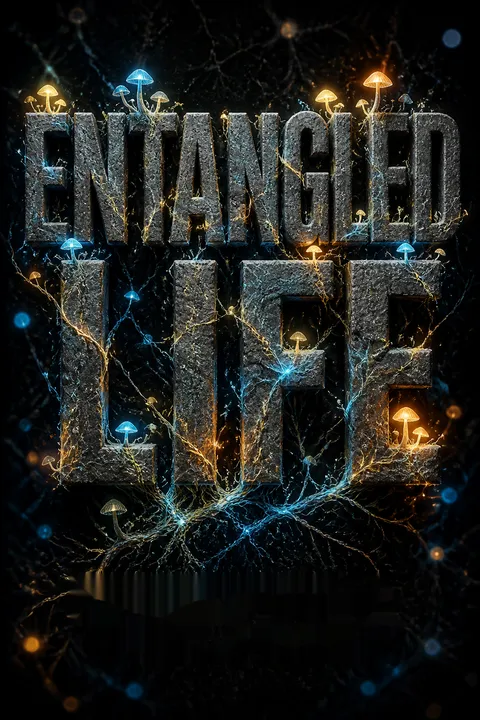


Key Takeaways
Look beneath the mushroom: fungi are networks sustaining life on land.
The visible part is small. A mushroom is a spore-producing structure, not the whole fungus. Most of the organism is mycelium, a branching mesh of fine threads called hyphae. In the book’s opening, the author follows a tree root through Panamanian soil to find fungal threads woven around it. The hidden partnership helps the tree gather nutrients, and similar relationships support most plants on land.
A vast, unseen kingdom. Fungi also break down wood, make soil, produce medicines, and disperse spores. Scientists estimate that 2.2 to 3.8 million fungal species exist, while only about six percent have been described. Truffles reveal one striking strategy: their strong scent recruits animals to eat them and carry spores elsewhere.
What's striking is how much ecological work happens beyond ordinary perception. The same problem appears in public health and infrastructure: people notice a bridge or a hospital, but not the networks that keep either functioning. Fungi make that hidden layer biological and alive. Still, calling them foundational should not imply that every ecosystem depends on identical fungal arrangements. The broad lesson is stronger than any single statistic: visible organisms are often only the most legible participants in a much larger system.
Treat fungal networks as problem-solvers without assuming they think like us.
Growth can solve problems. A fungal network does not need a brain to adapt its shape. In experiments by ecologist Lynne Boddy, mycelium spreads outward from a block of wood. When it finds a second food source, it withdraws some exploratory threads and strengthens the route to the new food. The whole network changes, although only one part encountered the resource.
Flexible, not human. Fungi can navigate tiny mazes, respond to light, moisture, chemicals, and touch, and coordinate growth across a sprawling body. Researchers have also detected electrical impulses in fungal tissue, but have not established how those impulses control behavior. These findings invite broader definitions of problem-solving, while leaving open whether terms such as intelligence or memory describe fungal experience or simply our interpretation of its behavior.
The useful shift is from asking whether fungi possess human-like intelligence to asking what problems their bodies can solve. That functional approach also helps engineers study distributed computing, where many simple units produce useful patterns without a central controller. Yet a successful route through a maze does not prove conscious deliberation. Treating behavior as meaningful while resisting premature claims about inner experience keeps scientific curiosity from turning into either dismissal or fantasy.
Define living individuals by relationships, not skin or species labels.
Lichens unsettle boundaries. What looks like one lichen is a partnership between a fungus and a photosynthetic alga or bacterium. A 2016 discovery found that some lichens also contain a yeast partner, and further research revealed additional participants. Lichens can survive on bare rock, help break it down, and contribute to the formation of soil.
Complex life is composite. The book connects lichens to endosymbiosis, the process by which one organism comes to live inside another and becomes part of a new biological arrangement. Mitochondria in our cells descend from bacteria that entered ancient cells; plant chloroplasts have a similar origin. The term holobiont describes an organism together with its associated microbial partners. These partnerships can cooperate, compete, or cause harm, so a shared body is not necessarily a harmonious one.
This perspective usefully unsettles the idea that an organism is a sealed, self-sufficient unit. In medicine, the microbiome already makes that question practical: microbes affect digestion, immunity, and development, while the host shapes the microbial community in return. The concept of a holobiont can clarify those relationships, but it should not erase distinctions among partners. A body can be interdependent without becoming a single unified agent, and the boundaries that matter may differ depending on whether the question concerns health, evolution, or ecology.
Remember that plants colonized land with fungal partners before roots.
Fungi helped plants arrive. Early land plants lacked roots and struggled to obtain water and minerals from bare ground. The evidence reviewed in the book suggests that partnerships with fungi helped algae make the transition onto land roughly 500 million years ago. More than 90 percent of plant species now form mycorrhizal relationships, in which fungi supply minerals and water while plants provide sugars and other carbon-rich compounds.
A planetary partnership. Fungal threads reach through soil far beyond the range of fine roots, and can help plants cope with drought and other stresses. By making phosphorus available, fungi may also have supported rapid plant growth during the Devonian period. Climate models suggest that the efficiency of these exchanges could have influenced the decline of atmospheric carbon dioxide, although other geological factors also shaped ancient climate.
The evolutionary significance lies not just in a useful exchange, but in a new capability assembled across species. Invention often works this way: one participant supplies a function another lacks, and the combined system expands what both can do. This is a powerful corrective to stories of evolution told only as competition among isolated organisms. It also demands care with causation. A model can show that fungal partnerships could affect climate, but it cannot by itself establish exactly how much they did in the ancient world.
Read forest networks as negotiations, not a benevolent tree internet.
Connections are real, effects vary. A common mycorrhizal network forms when fungi connect the roots of multiple plants. Researchers have traced carbon moving between trees through these fungal links. One forest study reported 280 kilograms of carbon transferred per hectare, while other experiments found little or no transfer. Results depend on the plants, fungi, and conditions involved.
Fungi are participants. Resources can move from abundance to scarcity, but the fungus is not passive plumbing. It can alter its network and regulate transport. Some studies suggest that plants and fungi reward partners that provide more resources. Other findings show shared networks can favor large plants, intensify competition, or carry toxic chemicals. The popular image of forests as cooperative communities may be suggestive, but it does not describe every network or settle whose interests are served.
The most productive way to use the forest-network image is as a prompt for investigation, not as a moral fable. Network science shows how hubs can spread resources and information efficiently, while also making a system vulnerable when key connections fail. Those possibilities are relevant to forests, but metaphor does not establish mechanism. Researchers still need to identify what travels through a network, which organisms control the movement, and whether observed effects matter at the scale of an entire forest.
Recognize behavioral control without mistaking it for human-style intention.
A parasite can redirect its host. The fungus Ophiocordyceps infects carpenter ants, causing them to leave their nests, climb vegetation, and clamp onto a leaf in a position suited to fungal growth and spore release. In one study, 98 percent of infected ants bit a major leaf vein. The fungus can occupy a large share of an ant’s body, yet researchers found it conspicuously absent from the brain. Chemical control is a leading explanation, not a fully solved mechanism.
A useful evolutionary lens. The extended phenotype describes an organism’s inherited effects beyond its body. An ant’s altered behavior can serve the fungus’s reproduction, making that behavior part of the fungus’s evolutionary reach. The idea explains how one organism can shape another’s actions without proving that the fungus plans or consciously commands them.
This case exposes a limit in everyday ideas of agency: behavior can be organized around one organism’s reproductive success while being carried out by another organism’s body. Similar questions arise in behavioral ecology whenever parasites, hormones, or microbes alter host behavior. The extended phenotype is a helpful way to track evolutionary consequences, but it should not collapse host and parasite into one organism. The ant remains a living system with its own history, even as the fungus redirects some of its behavior.
Treat psychedelic effects as evidence of influence, not proof mushrooms speak.
Fungal chemistry can alter experience. Psilocybin is converted in the body into psilocin, which acts on serotonin receptors in the brain. In two clinical studies involving patients with cancer-related distress, psilocybin given with psychotherapy was followed by substantial symptom reductions for many participants; around 80 percent showed improvement that persisted for at least six months. These results are promising, not a guarantee of benefit for every patient.
Influence is not intention. Brain scans link stronger reports of self-loss with reduced activity in the default mode network, a set of brain regions associated with self-reflection and mental organization. The book also considers the speculative idea that mushrooms manipulate human minds for their own benefit. Unlike zombie fungi that depend on insect hosts, psilocybin-producing species existed long before humans, and their evolutionary purpose remains uncertain.
The therapeutic findings make subjective experience a serious part of treatment rather than an incidental side effect. This resembles psychotherapy more than a simple model in which a drug switches off a symptom: context, interpretation, and emotional experience may all contribute. At the same time, vivid experiences do not verify the beliefs formed during them. Distinguishing the reality of a person’s experience from claims about its ultimate cause allows research to respect patients without treating spiritual or evolutionary speculation as established fact.
Use fungal technologies experimentally, while respecting ecological fit.
Fungal appetites can be put to work. Mycoremediation uses fungi to break down or contain pollutants. Mycofiltration passes contaminated water through mycelium, which can trap heavy metals and help remove toxins. In one experiment, oyster mushroom fungi reduced the mass of discarded diapers by about 85 percent after the plastic covering was removed.
Materials can grow, too. Mycofabrication uses mycelium to make packaging, insulation, and leather-like materials, often from agricultural waste. The approach turns a waste stream into a potential product, but success in a laboratory does not guarantee success in a polluted field or factory. Fungi need suitable conditions, and introducing a strain can disrupt local communities. The book also describes research in which fungal extracts reduced viruses in honeybees, while stressing that long-term effects on colonies remain uncertain.
These applications are strongest when treated as ecological engineering, not magic cleanup. A fungus can metabolize a pollutant under specific conditions, but field performance depends on temperature, oxygen, competing organisms, and what happens to the by-products. That is familiar from any technology moved from a controlled pilot into a complex environment. The promising principle is to design with biological processes and local materials. The necessary discipline is to measure outcomes, monitor unintended effects, and avoid selling experimental success as a universal fix.
Follow yeast from fermentation into the making of human culture.
Yeast changes what food becomes. In the absence of oxygen, yeast converts sugar into alcohol and releases carbon dioxide. That chemistry makes wine and beer, and helps bread rise. The book considers the possibility that early agriculture grew partly around the needs of brewing and baking: settled people could reliably provide yeast with grain, fruit, and other sugars. The exact history remains debated, but fermentation has clearly shaped food, ritual, work, and trade.
Stories steer practice. The author ferments apples from a tree associated with Isaac Newton and turns them into cider, following a story whose historical details are uncertain but whose cultural effects are visible in the tree’s preservation. The episode captures the book’s broader method: stories influence how people treat living things, while organisms and their metabolisms help remake those stories.
Fermentation makes co-production tangible: humans supply conditions and raw materials, while yeast performs a transformation people cannot accomplish alone. The same perspective can sharpen accounts of culture by asking which nonhuman processes make a social practice possible. But calling yeast humanity’s domesticator is a lively interpretation, not a literal account of intent. Its value is to reverse the usual human-centered story and expose how technology, food, and culture often emerge from partnerships rather than from human control alone.
Analysis
Entangled Life is less a catalogue of remarkable fungi than a sustained challenge to the boundaries used to organize biology. Its narrative repeatedly changes scale: from a hypha navigating a microscopic maze, to a tree exchanging nutrients, to plants reshaping the atmosphere, to a molecule altering a human mind. The movement matters because fungal life is hard to observe directly. The author therefore makes readers alternate between laboratory evidence, field encounters, and imaginative models of what an organism might be doing.
That approach is also the book’s central epistemic tension. Metaphors such as networks, markets, brains, and communication make unfamiliar behavior legible, but they can smuggle human assumptions into the explanation. The strongest sections keep the metaphor provisional. Electrical signals in fungi do not establish a fungal brain; transfer through a forest network does not establish altruistic tree care; psychedelic experience does not establish that mushrooms communicate through human consciousness. Wonder is most persuasive when paired with those limits.
The book’s account of individuality is similarly productive when treated as a question rather than a slogan. Lichens, mycorrhizal partnerships, and microbial communities show that biological boundaries are permeable and historically contingent. Yet interdependence does not mean that every partner shares interests or forms a unified self. A parasite, a host, and a mutualist can occupy the same intimate system while benefiting differently. That distinction matters for ecology, medicine, and environmental policy, where interventions must identify which relationships they strengthen and which they disrupt.
The practical promise of fungi follows from this relational view. Fungi can transform waste, make useful materials, and support crops, but their abilities depend on particular partners and environments. There is no universal fungal fix. The book’s most durable lesson is methodological: study organisms as active participants in entangled systems, use metaphors to open questions rather than close them, and keep evidence, possibility, and speculation distinct.
Review Summary
Entangled Life receives high praise for its fascinating exploration of fungi. Readers appreciate Sheldrake's engaging writing style, enthusiasm, and ability to make complex concepts accessible. The book offers insights into fungi's role in ecosystems, their intelligence, and potential applications. Many reviewers express awe at the unexpected aspects of fungal biology and behavior. Some critics find the philosophical musings excessive, but most agree the book is enlightening and thought-provoking. Overall, it's considered a captivating read that changes perspectives on the natural world.
People Also Read


Glossary
Mycelium
Fungal network of threadsThe branching body formed by fungal hyphae, the fine tubular structures through which many fungi grow, absorb nutrients, and explore their surroundings. Mycelium is not simply a fixed object: it can branch, fuse, transport materials, and withdraw or reinforce connections as conditions change. Mushrooms are reproductive structures produced by some mycelial networks.
Mycorrhiza
Fungus-root partnershipA close association between a fungus and a plant root. The fungus extends the plant’s access to water and soil nutrients, while the plant supplies carbon-rich compounds made through photosynthesis. Mycorrhizal relationships are widespread among plants, but their costs and benefits vary with the partners and their environment.
Common mycorrhizal network
Fungal links between plantsA mycorrhizal fungal network that connects the roots of more than one plant. Materials such as carbon, nutrients, and signaling compounds can move through these connections in some circumstances. The extent and ecological importance of such movement vary, and the network is an active fungus, not merely a passive conduit between plants.
Wood Wide Web
Shared fungal forest connectionsA popular name for fungal networks that link plant roots in forests. The phrase draws attention to possible transfers of resources and information between plants through fungal connections. It is an evocative shorthand, not evidence that forests operate like the internet or that linked trees always cooperate.
Holobiont
Host and microbial partnersAn assemblage of a host organism and the other organisms living with it, considered together as a biological unit for some purposes. The term highlights how microbes can contribute to an organism’s development, metabolism, or survival. It does not imply that all partners have identical interests or that the assemblage is a single unified individual.
Mycoheterotrophy
Plant nutrition obtained from fungiA way of life in which a plant obtains carbon and other nutrients through fungi rather than relying entirely on its own photosynthesis. Some mycoheterotrophic plants, such as ghost pipes, no longer photosynthesize and receive resources from fungi that are themselves connected to photosynthetic plants.
Extended phenotype
Inherited effects beyond the bodyA concept describing how an organism’s inherited traits can produce effects outside its physical body. A beaver’s dam is a familiar example. In the book, an infected ant’s fungus-induced behavior is considered an effect of the fungus because it can help the fungus reproduce. The concept requires that the trait be inherited, vary, and affect reproductive success.
Mycoremediation
Fungal pollution cleanupThe use of fungi to help break down pollutants or remove contaminants from an environment. Fungal enzymes can act on substances including some pesticides, petroleum compounds, and industrial chemicals. Results depend on the fungal strain and local conditions, so success in a laboratory does not ensure effective cleanup in a complex field site.
Mycofiltration
Filtering through fungal myceliumA method that uses mats or networks of mycelium to filter contaminated water or runoff. The fungal material can physically trap particles and may help remove or break down some contaminants, including certain toxins and disease-causing organisms. Its performance depends on the contaminant, the fungal species, and the conditions of use.
Mycofabrication
Growing materials from fungiThe production of useful materials by growing mycelium through a substrate, often agricultural waste, and shaping it into forms such as packaging, insulation, or leather-like sheets. The resulting material can be dried or otherwise processed. The approach offers alternatives to some conventional materials, though its environmental value depends on production and disposal conditions.
Radical Mycology
Grassroots fungal practiceA movement focused on making knowledge of fungi accessible and using fungal cultivation and applications to address social, ecological, and technological problems. It includes amateur practitioners, workshops, community projects, and experimentation outside conventional research institutions. The movement emphasizes local knowledge and practical skill while recognizing that much fungal biology remains poorly understood.
Anastomosis
Fusion between fungal threadsThe joining of fungal hyphae with one another. Hyphae branch to extend a fungal network and can fuse to form connections that allow it to become more integrated. Fusion can occur within a network or between compatible fungal networks, making mycelium a connected and potentially changing body.
Lichening rod effect
Lichens unsettle familiar categoriesA phrase used by lichen curator Trevor Goward for the way lichens provoke new ways of thinking about life. Because lichens combine multiple organisms, survive extreme conditions, and blur the line between individual and community, they challenge familiar ideas about identity, symbiosis, and what counts as an organism.
FAQ
What's Entangled Life about?
- Exploration of Fungi's Role: Entangled Life by Merlin Sheldrake explores the hidden and intricate world of fungi, emphasizing their crucial role in ecosystems and their influence on life on Earth.
- Interconnectedness of Life: The book illustrates the complex relationships between fungi, plants, and animals, challenging traditional views of individuality and highlighting life's web of interactions.
- Scientific and Personal Journey: Sheldrake combines scientific research with personal experiences, making the narrative both informative and engaging, inviting readers to rethink their understanding of life.
Why should I read Entangled Life?
- Unique Perspective on Nature: The book offers a fresh perspective on the natural world, focusing on the often-overlooked role of fungi in ecosystems.
- Relevance to Current Issues: Understanding fungi's roles can provide insights into ecological health and sustainability, relevant in the context of environmental challenges like climate change.
- Mind-Expanding Ideas: Sheldrake encourages readers to rethink assumptions about life and individuality, promoting a holistic view of ecosystems and inspiring appreciation for interconnectedness.
What are the key takeaways of Entangled Life?
- Fungi as Ecosystem Engineers: Fungi play a vital role in nutrient cycling and soil health, acting as "ecosystem engineers" that shape their environments.
- Interdependence of Life Forms: The book emphasizes that no organism exists in isolation; life is a tapestry of relationships, challenging the notion of individualism in biology.
- Potential for Radical Change: Understanding fungi can lead to innovative solutions for environmental issues, offering promising avenues for ecological restoration.
What are the best quotes from Entangled Life and what do they mean?
- “Fungi are everywhere but they are easy to miss.”: Highlights the omnipresence of fungi, often unnoticed despite their critical roles, reminding us to pay attention to nature's hidden aspects.
- “Without this fungal web my tree would not exist.”: Emphasizes fungi's essential role in supporting plant life, illustrating the interconnectedness theme.
- “We are all lichens.”: Explores symbiosis and the blending of identities among organisms, suggesting humans are composite beings shaped by relationships.
How do fungi influence ecosystems according to Entangled Life?
- Nutrient Cycling: Fungi decompose organic matter, returning nutrients to the soil, crucial for maintaining soil fertility and supporting plant growth.
- Mycorrhizal Networks: Fungi form associations with plant roots, facilitating nutrient exchange and communication, enhancing plant resilience and ecosystem stability.
- Impact on Biodiversity: Fungi influence plant diversity by determining which species thrive, shaping community dynamics and ecosystem health.
What is the "Wood Wide Web" mentioned in Entangled Life?
- Definition of the Concept: The "Wood Wide Web" refers to interconnected mycorrhizal networks formed by fungi that link trees and plants, facilitating communication and nutrient exchange.
- Functionality: Through these networks, plants share resources and send distress signals, enhancing survival and forest health.
- Ecological Implications: Challenges traditional views of competition among plants, suggesting cooperation plays a significant role in forest ecosystems.
What is mycoremediation as discussed in Entangled Life?
- Definition of Mycoremediation: Mycoremediation uses fungi to degrade or remove environmental pollutants from soil and water, leveraging fungi's natural decomposition abilities.
- Fungi's Decomposition Abilities: Fungi can degrade a wide range of pollutants, including pesticides and plastics, enhancing decomposition through mycelial networks.
- Challenges in Implementation: Practical application faces challenges like ensuring the right conditions for fungal growth, with success depending on specific fungal strains and adaptability.
How do fungi communicate with plants and each other?
- Chemical Signaling: Fungi and plants exchange chemical signals for nutrient transfer and environmental alerts, essential for maintaining health.
- Electrical Impulses: Some fungi conduct electrical signals through mycelial networks, coordinating responses to stimuli like nutrients or threats.
- Shared Networks: Fungi connect multiple plants, enabling communal responses to challenges, fostering resilience within plant communities.
What is mycorrhizal fungi and why are they important?
- Definition: Mycorrhizal fungi form symbiotic relationships with plant roots, enhancing nutrient uptake while receiving carbohydrates, crucial for plant health.
- Nutrient Acquisition: Help plants access essential nutrients like phosphorus and nitrogen, vital for survival in nutrient-poor soils.
- Ecosystem Stability: Contribute to soil structure and health, promoting water retention and reducing erosion, enhancing ecosystem resilience.
How do fungi contribute to human health and medicine?
- Medicinal Properties: Fungi have been used in traditional medicine and modern research confirms their potential in treating ailments, with compounds like penicillin revolutionizing medicine.
- Psychoactive Effects: Certain fungi, like psilocybin mushrooms, show promise in treating mental health conditions, inducing profound psychological experiences.
- Nutritional Benefits: Fungi provide essential nutrients, vitamins, and antioxidants, contributing to overall well-being when incorporated into diets.
How does Entangled Life address the relationship between fungi and humans?
- Cultural Significance: Explores fungi's historical and cultural significance, from traditional medicine to culinary practices, shaping human culture.
- Psychoactive Properties: Discusses psychoactive fungi in spiritual and therapeutic contexts, highlighting their potential to alter consciousness and promote healing.
- Environmental Stewardship: Advocates for a respectful and sustainable relationship with fungi, recognizing their ecological importance and calling for a shift in interaction with nature.
How does Entangled Life redefine our understanding of ecosystems?
- Interconnectedness of Life: Emphasizes the interconnectedness of organisms through fungal networks, encouraging a holistic view of ecosystems.
- Role of Fungi: Portrays fungi as essential players in nutrient cycling and plant health, challenging the view of them as mere decomposers.
- Implications for Conservation: Understanding fungi's role can inform conservation efforts, leading to effective strategies for preserving biodiversity and ecosystem health.
Download PDF
Download EPUB
.epub digital book format is ideal for reading ebooks on phones, tablets, and e-readers.








