

Key Takeaways
Treat the nurse's unease as evidence worth investigating
Notice the mismatch. Charge nurse Kellie Travers trusts Amy, an experienced nurse who suspects a patient with severe abdominal pain has an aortic dissection, a dangerous tear in the body's largest artery. A doctor initially orders routine tests, but Travers pushes for a scan. It reveals the dissection, and the patient goes to emergency surgery. Amy's concern helps save his life.
Nurses may spend far more time observing patients than doctors do. In another account, nurse Andrea Perry recognizes that a young overdose patient needs a central line, despite a doctor's dismissal. She presses the issue until he performs the procedure. In both cases, advocacy begins with treating a worrying observation as a reason to look again.
What's striking is how clinical insight often appears first as a discrepancy: the patient looks worse than the initial explanation predicts. In decision science, this resembles a useful alarm signal, not a final diagnosis. The next step is verification, through a scan, reassessment, or consultation. That distinction matters because intuition can detect danger, but it can also mislead. Teams work best when concern can be voiced without turning every disagreement into a contest of rank.
When treatment cannot promise recovery, make presence part of care
Stay with the person. ICU nurse Katie Quick breaks routine to bring a dying man's golden retriever to his bedside. In another case, she invites a dying patient's wife to help wash him, then makes room for the couple to nap together. The patient dies that night, but his wife has time for closeness and a final shared rest.
During COVID, visitors are barred from hospitals, leaving some patients to face death among masked strangers. Nurses describe holding hands, arranging video calls, or calling relatives after a death. These acts do not reverse illness. They make frightening, isolating moments less lonely, and help families remain part of a patient's experience even when they cannot be physically present.
This is care as relationship, not decoration added after medicine is complete. Palliative care makes a similar distinction: when cure is unavailable, comfort, communication, and a patient's priorities remain treatable concerns. The nurses' choices also show why policies need room for humane judgment. Rules can protect patients and staff, yet a blanket ban on meaningful contact may compound distress. Discretion is strongest when it is paired with clear safety standards and attention to what the patient wants.
Reassess the patient, not just the diagnosis you started with
Keep updating the picture. New nurse Megan Ottenbacher assumes a patient with bowel pain is receiving all the relief available. A more experienced nurse asks when she last assessed the patient. This time, there are no bowel sounds, a change that suggests an obstruction and calls for a new response. The initial assessment was not enough; the patient's condition had changed.
Other stories show how emergencies can hide behind ordinary complaints. A man who says his back hurts looks gray and sweaty, prompting nurse Jody Smitherman to check his heart. The monitor reveals a major heart attack. In the ER, symptoms and first impressions are starting points, not guarantees. Repeated observation can expose a serious problem before it becomes unmistakable.
Reassessment is a practical defense against anchoring, the tendency to stick with an early explanation even when new evidence appears. It also reflects how emergency care operates under uncertainty: information arrives in fragments, and the working picture must change with it. Rechecking is not merely caution; it is a clinical intervention. Still, more monitoring is not automatically better. Useful reassessment focuses on changes that could alter treatment, rather than generating noise that distracts an already busy team.
Learn emergency work through coached practice, not bravado
Build skill with support. Clayton Roelle, a nursing student on an externship, has never performed chest compressions on a real patient when a code begins. His preceptor directs him to the bedside, helps him find his role, and checks in afterward. The patient regains a pulse. A week later, Roelle visits and sees him awake, making the abstract lesson of resuscitation feel real.
Another new nurse, Shannen Kane, is guided through her first cardiac arrest by an experienced colleague who explains how to use the defibrillator. She later learns the patient survived and visits him in the ICU. These stories show that emergency confidence is built through supervised action, clear roles, and debriefing, not by pretending fear or inexperience has disappeared.
The scenes resemble deliberate practice: a learner takes on a real task with guidance, receives feedback, and gradually assumes more responsibility. High-stakes teams also rely on role clarity, because confusion wastes attention at exactly the wrong moment. The value is not that every novice receives a dramatic success story. Many patients' outcomes remain unknown, and some die. Good mentorship prepares clinicians to act competently without turning survival into the sole measure of their performance.
Let emotional armor protect the shift, not define recovery
Function now, process afterward. ER nurse Mike Hastings calls his rapid switch from witnessing one patient's death to caring for the next a "bipolar approach." He describes an attentional shift, not a psychiatric diagnosis. Other nurses describe placing painful events in mental boxes or focusing tightly on the next task. Such compartmentalization can help a clinician keep working amid nonstop emergencies.
But the accounts also show its cost. Nurses cry after shifts, speak with colleagues or counselors, exercise, pray, or lean on family. John Antonelli warns new nurses that burying grief can damage both a career and a life. The collection treats emotional strain as part of the job, not proof of weakness, and shows that coping often requires both temporary focus and a place to unpack what happened.
The distinction between suppression and regulation is central here. A clinician may need to set emotion aside during a resuscitation, but sustained avoidance can leave distress unaddressed. Peer support is especially valuable because colleagues understand the details without requiring a translation of the work. Humor can also release tension, though it may sound cruel to people outside the team. No single coping routine fits everyone, and institutional access to counseling matters more than exhortations to be tougher.
Do everything possible without pretending outcomes are yours to command
Separate effort from control. EMS nurse John Antonelli remembers a severely injured toddler he thought could not survive. The child recovered and returned home. Years later, Antonelli works on a seven-year-old after a fall; the team resuscitates him for fifty-four minutes, but he dies. The contrast teaches him that skilled care matters, while survival is not something clinicians can guarantee.
That uncertainty shapes how nurses offer hope. Andrew Festa tells COVID patients that each case differs, even after many similar patients have died. His words do not promise a happy ending; they preserve uncertainty without stripping patients of hope. The stories resist both fatalism and the fantasy that perfect effort always produces a cure. The duty is to act well, communicate honestly, and stay present.
This is a demanding form of professional humility. In outcome-based cultures, success can be mistaken for competence and death for failure, even when the team's actions are sound. Separating process from outcome supports better judgment and can reduce corrosive guilt. Yet uncertainty does not excuse vague communication. Patients and families deserve candid explanations of what is known, what remains uncertain, and what choices are available. Hope is most trustworthy when it does not masquerade as prediction.
Give care according to need, not likability, status, or blame
Care is not a verdict. After a drunk driver causes a fatal crash, nurse Karen Bender feels anger but still protects his rights in the trauma room. She asks police to leave until they have legal authority to collect his blood. Her role is to provide care and follow procedure, not to decide who deserves medical treatment.
Flight nurse Cyd Stephens faces a different test when she treats an injured teenager at a compound displaying racist symbols. She proceeds despite the danger and despite the residents' hostility. Later, she also treats a white supremacist with a gunshot wound. These stories define impartial care as a professional obligation: a patient's conduct or beliefs do not erase the duty to treat an emergency.
Clinical impartiality is not moral approval. It is a safeguard against allowing disgust, prejudice, or social status to determine who receives care. The distinction protects patients and clinicians alike, especially when police, family members, or bystanders exert pressure. It also has limits: impartial treatment does not mean ignoring threats to staff or abandoning accountability outside the clinical role. The strongest version of the principle combines equal care with safety, lawful process, and clear professional boundaries.
Resilience cannot compensate for unsafe staffing, inadequate gear, or absent support
Look beyond individual grit. During New York's first COVID surge, nurse Angela Parawan reuses respiratory protection for weeks, works punishing hours, and watches young patients die. Other nurses describe insufficient protective equipment, isolation rules, and overwhelming caseloads. They keep caring for patients, but endurance does not make those conditions safe.
Tom O'Hara volunteers for a COVID ICU in Chicago and sees repeated deaths. After returning home, he asks for time to recover, but his employer presses him to resume work. He develops severe trauma symptoms and seeks therapy. Across the stories, coworkers, families, and counselors help people endure; so do rest and boundaries. But those supports cannot replace adequate equipment, staffing, and institutional care for workers.
The book's most important correction to heroic storytelling is that courage cannot substitute for infrastructure. Safety depends on equipment, staffing, training, and time to recover, not only individual character. Occupational health frameworks treat psychological injury as a workplace risk, which places responsibility on employers as well as workers. Peer support helps, but it should not become a low-cost replacement for professional care or safer conditions. Admiration for nurses is meaningful only when paired with practical protection.
Treat financial desperation as part of the medical emergency
Health problems have material causes. An ICU nurse describes a farmer whose hand becomes trapped in machinery. Fearing the medical costs and the loss of his farm, he tries to cut off the injured part himself rather than call an ambulance. The injury is only one crisis; the threat of debt shapes his decisions before he reaches the hospital.
Nurse Jody A. Jamieson-Liana meets Sandy, a single mother who delays care because her insurance is limited. A scan reveals a large brain mass requiring urgent surgery. Jamieson-Liana works with her manager to organize fundraising support. Nurses in the collection sometimes bridge gaps through personal advocacy, but these cases show that access, insurance, and family resources can directly shape whether a person seeks care and what happens next.
These stories make social determinants of health visible at the bedside. A patient's choice may look irrational when stripped of the financial constraints that produced it. Nurses can connect people to help, but relying on individual generosity makes access uneven and burdens clinicians with problems no bedside intervention can solve. The broader lesson is to ask what pressures shape a patient's decision, then connect care to social and financial support where possible. Treatment is not truly accessible if its cost makes people avoid it.
Analysis
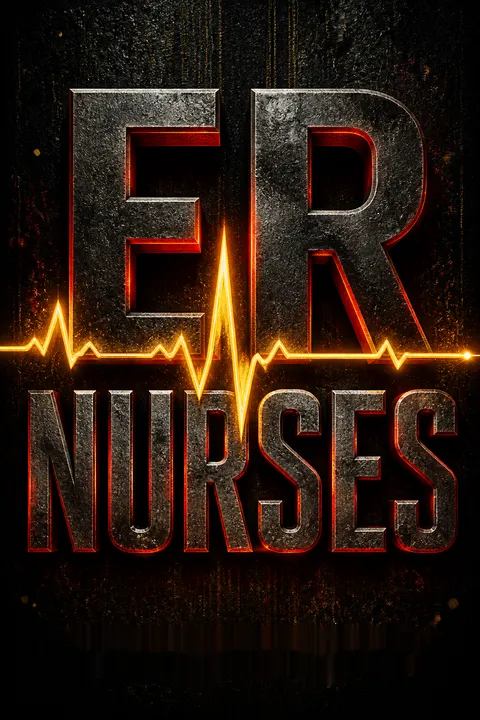
ER Nurses is a story-driven collection, not a medical manual or a single argument supported by systematic data. Its structure is cumulative: dozens of nurses describe the moment a patient, family, or colleague made the work newly visible. Across very different settings, from a rural ambulance to a pandemic ICU and a military field hospital, the same role emerges. Nurses watch closely, detect change, coordinate action, protect patients, and translate frightening events for families.
The central tension is between clinical detachment and human connection. The nurses need enough distance to move from a child's death to the next patient's request, yet the acts that define their work are intensely personal: holding a hand, finding a family member, or making space for a spouse at the bedside. The book does not resolve this tension with a tidy formula. It shows different coping styles, from prayer and humor to exercise, counseling, and compartmentalization. Their variety suggests that emotional survival is individual, while the need for support is shared.
The anthology's greatest strength is its attention to invisible labor. Readers see how a nurse's concern can prompt a scan, how an advocate can challenge a physician, and how a patient may leave before a nurse learns whether treatment worked. The recurring uncertainty gives the stories moral force: effort matters even when the outcome cannot be controlled.
The format also has limits. Vivid anecdotes make emergency care memorable, but they cannot establish how common any particular experience is or represent every nurse, patient, or hospital. Some dramatic decisions succeed; others do not, and hindsight can make sound judgment appear obvious. The stories are best read as testimony about work, not as a guide to clinical procedure. Their strongest practical message is broader: competent emergency care requires both technical attention and humane regard, while the systems employing nurses must provide the conditions that let both survive.
Review Summary
ER Nurses receives mostly positive reviews, with readers praising its compelling stories and insights into nursing. Many appreciate the honesty and emotional range of the nurses' experiences. Some criticize the book for including non-ER stories and perpetuating the "hero" narrative. Nurses find it relatable, while non-medical readers gain new appreciation for the profession. Common themes include the challenges, rewards, and emotional toll of nursing. The audiobook narration receives mixed reactions, particularly regarding accents.
People Also Read
Glossary
bipolar approach
rapid focus switchingMike Hastings uses this phrase for the rapid mental shift an ER nurse makes between one patient's crisis and another patient's immediate needs. For example, a nurse may witness a death, then turn attention to a different patient who needs care. It describes a work strategy in this account, not a psychiatric diagnosis or a formal clinical framework.
ROSC
circulation restored after arrestROSC means return of spontaneous circulation. It describes the restoration of a patient's heartbeat and blood flow after cardiac arrest and resuscitation. Nurses and doctors monitor for ROSC during or after CPR, but its return does not by itself establish that the patient has recovered fully or will survive.
code
resuscitation emergencyIn the hospital stories, a code is an emergency response to a patient whose heart or breathing has stopped, or is in immediate danger of stopping. It brings clinicians together to perform actions such as CPR, manage the airway, give medications, and use a defibrillator when appropriate. The precise response depends on the patient's condition and care orders.
FAQ
What's "ER Nurses: True Stories from the Frontline" about?
- Collection of Stories: The book is a collection of real-life stories from ER nurses, showcasing their experiences on the frontline of healthcare.
- Diverse Perspectives: It includes narratives from various nurses, each with unique backgrounds and experiences, highlighting the diversity in the nursing profession.
- Emotional and Intense: The stories are often emotional and intense, providing a raw look at the challenges and triumphs faced by ER nurses.
- Insight into Healthcare: It offers readers an inside look at the healthcare system, particularly the emergency room, through the eyes of those who work there.
Why should I read "ER Nurses: True Stories from the Frontline"?
- Real-Life Insights: The book provides authentic insights into the lives of ER nurses, making it a compelling read for those interested in healthcare.
- Emotional Connection: Readers can connect emotionally with the stories, gaining a deeper understanding of the human side of nursing.
- Educational Value: It serves as an educational resource for those considering a career in nursing or healthcare.
- Inspiration and Empathy: The stories inspire empathy and appreciation for the dedication and resilience of nurses.
What are the key takeaways of "ER Nurses: True Stories from the Frontline"?
- Resilience and Dedication: The book highlights the resilience and dedication required to be an ER nurse, showcasing their commitment to patient care.
- Emotional Challenges: It emphasizes the emotional challenges nurses face, including dealing with trauma, loss, and the pressure of life-and-death situations.
- Teamwork and Support: The importance of teamwork and support among healthcare professionals is a recurring theme throughout the stories.
- Impact of COVID-19: The book also touches on the impact of the COVID-19 pandemic on healthcare workers, illustrating the increased challenges they faced.
What are the best quotes from "ER Nurses: True Stories from the Frontline" and what do they mean?
- "You can do this." This quote reflects the encouragement and support nurses often give each other, emphasizing resilience and perseverance.
- "I’m a nurse. I can handle anything." It highlights the confidence and strength nurses develop through their experiences.
- "We’re doing the best we can." This quote underscores the dedication and effort nurses put into their work, even in the most challenging circumstances.
- "It’s supposed to be hard. Remember, nothing that’s worthwhile in life comes easy." This reflects the understanding that the nursing profession is demanding but rewarding.
How does "ER Nurses: True Stories from the Frontline" portray the impact of COVID-19 on nurses?
- Increased Workload: The book describes how the pandemic led to an overwhelming increase in patient numbers and workload for nurses.
- Emotional Toll: It highlights the emotional toll of dealing with a high number of critically ill patients and the fear of contracting the virus.
- Resource Scarcity: Nurses faced challenges due to the scarcity of personal protective equipment and other essential resources.
- Resilience and Adaptation: Despite the challenges, the stories illustrate the resilience and adaptability of nurses during the pandemic.
What unique challenges do ER nurses face according to "ER Nurses: True Stories from the Frontline"?
- High-Stress Environment: ER nurses work in a high-stress environment where quick decision-making is crucial.
- Emotional Strain: They often deal with traumatic situations and must manage their emotional responses while providing care.
- Physical Demands: The job is physically demanding, requiring long hours on their feet and the ability to handle physically challenging tasks.
- Unpredictability: The unpredictability of the ER means nurses must be prepared for any situation at any time.
How does "ER Nurses: True Stories from the Frontline" highlight the importance of teamwork in healthcare?
- Collaborative Efforts: The book emphasizes that successful patient outcomes often result from collaborative efforts among healthcare professionals.
- Support System: Nurses rely on each other for support, especially during high-pressure situations, creating a strong sense of camaraderie.
- Interdisciplinary Coordination: Effective communication and coordination with doctors, technicians, and other staff are crucial for efficient ER operations.
- Shared Experiences: The shared experiences and challenges faced by ER staff foster a unique bond and mutual understanding.
What role does empathy play in "ER Nurses: True Stories from the Frontline"?
- Patient Care: Empathy is central to patient care, allowing nurses to connect with patients and provide compassionate support.
- Emotional Support: Nurses often provide emotional support to patients and their families, helping them cope with difficult situations.
- Understanding and Patience: Empathy helps nurses understand patient needs and respond with patience and kindness.
- Building Trust: By showing empathy, nurses build trust with patients, which is essential for effective care and treatment.
How does "ER Nurses: True Stories from the Frontline" address the theme of resilience?
- Overcoming Challenges: The stories highlight how nurses overcome various challenges, from emotional stress to physical exhaustion.
- Adaptability: Resilience is shown through the nurses' ability to adapt to rapidly changing situations and environments.
- Personal Growth: Many stories illustrate personal growth and strength gained through overcoming adversity in the ER.
- Inspiration: The resilience of nurses serves as an inspiration to readers, demonstrating the power of perseverance and dedication.
What insights does "ER Nurses: True Stories from the Frontline" provide about the healthcare system?
- Systemic Challenges: The book sheds light on systemic challenges within the healthcare system, such as resource limitations and bureaucratic hurdles.
- Patient Care Dynamics: It explores the dynamics of patient care, including the complexities of managing diverse patient needs.
- Healthcare Inequities: Some stories touch on healthcare inequities and the impact of socioeconomic factors on patient outcomes.
- Role of Nurses: The book emphasizes the critical role nurses play in the healthcare system, often serving as the backbone of patient care.
How does "ER Nurses: True Stories from the Frontline" depict the emotional impact of nursing?
- Emotional Rollercoaster: The book portrays nursing as an emotional rollercoaster, with highs of saving lives and lows of witnessing loss.
- Coping Mechanisms: It discusses various coping mechanisms nurses use to manage stress and emotional strain, such as humor and peer support.
- Personal Sacrifices: The stories reveal the personal sacrifices nurses make, including time away from family and the emotional burden of their work.
- Emotional Resilience: Despite the emotional challenges, the book highlights the resilience and strength nurses develop over time.
What lessons can aspiring nurses learn from "ER Nurses: True Stories from the Frontline"?
- Realistic Expectations: Aspiring nurses can gain realistic expectations about the demands and rewards of the profession.
- Importance of Empathy: The book underscores the importance of empathy and compassion in patient care.
- Value of Teamwork: It highlights the value of teamwork and collaboration in achieving successful patient outcomes.
- Resilience and Adaptability: Aspiring nurses can learn about the resilience and adaptability required to thrive in the ER environment.
About the Author
Other books by James Patterson










Download PDF
Download EPUB
.epub digital book format is ideal for reading ebooks on phones, tablets, and e-readers.








