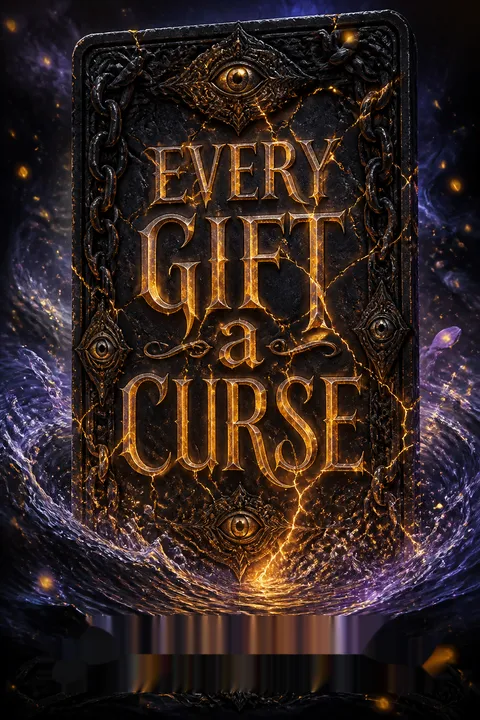


Plot Summary
Thirty-Six Days of Waiting
Thirty-six days after the fire that killed Heather Banbury and Sister Assumpta, Maeve Chambers meets her friends at Nuala’s house to ask whether the Housekeeper will avenge their deaths. The spirit has appeared before when people summoned her for revenge, but this time no one knows who might call her, or whom she might take.
The Children of Brigid, led locally by Dorey, still want control of the magical Well beneath St Bernadette’s school. Aaron, a former Children recruiter and fellow sensitive, has disappeared. Fiona’s magpie, Paolo, reports new missing-person posters in the countryside. The group realizes that three young people have vanished in a month, even as Maeve waits for the Housekeeper and worries that Aaron has abandoned them.
The opening makes uncertainty itself the immediate danger. Maeve and her friends are still counting the cost of the fire, but they cannot agree on who bears responsibility or what supernatural justice might demand. Their talk of cosmic fairness is not abstract: two women are dead, the school is ruined, and a new pattern of disappearances is taking shape. Maeve’s concern for Aaron also exposes a private fear that mirrors the group’s public one: betrayal and abandonment can look alike when nobody has the facts. The novel begins with people trying to turn grief into a usable explanation.
A Note Meant to Split Them
Maeve and Roe hear movement inside the fire-damaged school and find Aaron sleeping rough in a classroom, with a camera and a forged postcard addressed as if Maeve had summoned him.
Roe suspects a trap, and a scuffle on the scaffolding turns dangerous when their gifts combine: Roe’s influence over built things joins Aaron’s ability to find weakness, shaking the school until both boys briefly go blind. Maeve stops the fight before the structure collapses.
Aaron admits he vanished because he feared the Housekeeper would kill someone close to him, and because Dorey could use his visa to threaten him. He has returned with information about a Children-run refuge called the Lodge, where runaway teenagers are drawn into increasingly severe spiritual discipline.
The forged invitation turns a reunion into an engineered test of trust. Maeve wants Aaron back, but his secrecy and Roe’s justified hostility make cooperation costly before they even understand the trap. Their blindness gives the conflict a physical consequence: magical powers are not merely personal talents, since fear and anger can make them combine destructively. Aaron’s return also complicates a simple redemption story. He has left the Children, yet his own account of what they did carries the imprint of his former role in recruiting vulnerable teenagers. The group needs his knowledge while remaining right to question him.
The Camera Remembers
Aaron explains that a runaway named Connor sold him the camera and described the Lodge: residents surrender their phones, receive Polaroids, and are gradually trained to distrust their own memories. Roe discovers that the camera’s flash retains an impression even without film.
When Aaron, Roe, and Maeve combine their gifts, the blank flash yields fragments of a faux Gothic hotel, solar panels, overgrown land, and a wire fence. Lily draws the image on a bedsheet while Nuala identifies the building as an unfinished hotel abandoned after the financial crash.
Meanwhile, Maeve notices that Lorna McKeon has stopped attending online school. The Lodge now has a possible location and a possible resident, although neither clue yet proves what has happened to Lorna.
The camera is an apt countermeasure to the Lodge’s assault on memory: a machine preserves what its human witness can no longer reliably recall. The group makes that preservation communal, with each gift contributing a different kind of attention. Lily’s drawing, Nuala’s local knowledge, and Roe and Aaron’s perceptions turn incomplete impressions into a map. This collaborative method contrasts with the Children’s practice of isolating recruits and making them doubt their own accounts. Lorna’s absence extends the danger beyond the sensational cases the group already knows. Maeve begins to understand that ordinary systems, including remote schooling, can make a vulnerable person disappear quietly.
The Party Turns White
A local newspaper profiles Maeve, Fiona, and Lily as the Witches of St Bernadette’s, giving the Children an easy way to discredit them. Lily cuts and dyes her hair, begins tattooing friends, and kisses Mark at Holly McShane’s party.
Fiona is approached about a television role, while Roe’s band earns a promising review and Roe embraces they and them pronouns. Maeve learns that Lorna had been dating an older member of the Chastity Brothers, a Children-linked group.
Later, after Mark kisses Becky, Maeve lashes out at Becky and Holly, exposing private cruelties she has sensed. When Maeve strikes Holly, Holly’s eyes turn white. Fiona and Lily leave furious with Maeve, who returns alone to the ruined school and hears a woman crying behind a door.
The party gathers the characters’ ordinary coming-of-age choices beside the supernatural plot, then shows how badly Maeve handles their overlap. Lily claims new forms of self-expression, Fiona faces an unexpected career possibility, and Roe’s public recognition supports a more honest account of gender. Maeve, meanwhile, uses her telepathy as a weapon when she feels protective and excluded. Her ability to expose secrets does not make her morally perceptive; it can turn insight into cruelty. Holly’s temporary blindness suggests Maeve’s anger has acquired a power beyond mind-reading, while her friends’ anger makes clear that concern for Lily cannot excuse violating her agency.
A Door Behind the Cry
At St Bernadette’s, Maeve and Aaron open the door to a corridor that resembles an old version of the school, complete with portraits and a painting of the Housekeeper. A second doorway leads into the Lodge, where they find empty rooms, unlocked doors, and recruits living in bare, unsettled quarters.
A thin girl, whom they pretend to be inspecting, admits she has been punished for calling her sister. She is hungry and has been made to monitor other residents through confession games called weather reports.
When Maeve asks about Lorna, the girl’s thoughts falter and she insists Lorna has left, though Lorna has not returned home. The pair flee before staff arrive, carrying evidence of coercive control but no reliable account of where Lorna went.
The Lodge’s most frightening feature is not a locked door but the manufacture of consent. Its residents have been taught to describe deprivation as discipline and surveillance as communal care. The girl’s confusion when Maeve names Lorna makes the damage visible as a disruption in thought, not simply a rule imposed from outside. Aaron’s instinctive return to the language of his former authority helps them pass inspection, but it also exposes how readily he can reproduce the institution’s methods. Their escape gives them a glimpse of the system without yet giving them a clean rescue plan.
Dorey’s Strings Tighten
On a second passage through the corridor, Maeve and Aaron confront Dorey in her office at the Lodge. Dorey can force Aaron’s arm to move because her emotional and magical hold on him has not fully loosened, and she uses his old religious shame to unsettle both visitors.
Maeve breaks the spell by challenging Dorey’s authority and pointing out that the Housekeeper has not appeared. Dorey denies starving the recruits, describes their fasting as voluntary, and hints that she is studying Maeve’s recent changes.
Aaron notices distinctive hawthorn trees outside the office. With Paolo’s aerial observations and Nuala’s maps, the group locates the Lodge near a coastal fairy fort. Roe’s touring prospects and Fiona’s possible acting work make the friends’ growing separation harder to ignore.
Dorey’s power works through attachment as much as direct control. Aaron’s body obeys her because his old need for approval remains a point of leverage, which makes psychological recovery more than a matter of changing beliefs. Maeve’s resistance depends on refusing the frame Dorey offers, rather than matching her force. At the same time, the group’s map-making shows how knowledge can be reclaimed from manipulation: a tree, a bird’s memory, and local geography become checks against Dorey’s secrecy. The friends’ artistic opportunities sharpen the emotional stakes, because the Children can divide them without openly attacking them.
Maeve Meets the Housekeeper
After Maeve’s anger overwhelms her at Nuala’s chicken coop, she loses nearly two hours and finds several chickens staring with white eyes. Aaron tells her that she is becoming the Housekeeper, the revenge spirit the group has been waiting for. In the corridor, Maeve sees the spirit’s portrait as her own face.
Later, she dreams herself into an earlier Kilbeg, where a young mother asks for protection for her daughter Una, who is leaving for Canada. Maeve accepts the woman’s heirloom brooch and promises to keep Una safe; Tutu appears as the Housekeeper’s enormous hound and takes the offered hares. Maeve wakes hungry but invigorated, having felt the Housekeeper’s power as purposeful protection rather than senseless violence.
The revelation does not simply give Maeve a new identity; it reframes the source of her frightening behavior. The Housekeeper’s force emerges when someone vulnerable is threatened, but Maeve’s own anger and choices remain part of the event. Her encounter with Una gives the inheritance a human history, grounding the myth in a woman’s practical fear for her daughter’s safety. The brooch and hares establish a language of reciprocal offering that will matter later. Maeve is exhilarated by a sense of purpose, yet that pleasure is perilous: she has discovered that the curse can feel like the first vocation that fits her.
The Silver Coin
Maeve hides the Housekeeper revelation from Roe, who has begun preparing for months of touring with the band. When Roe sees Maeve return from the school with Aaron, Maeve offers only a partial explanation and refuses to wear one of the silver coins that can suppress magical gifts. Roe hears her refusal as proof that she is hiding an affair, and their argument ends their relationship.
Maeve spends Christmas grieving, then goes out with her siblings and runs into Michelle, an old school friend who apologizes for their past cruelty. The fragile kindness gives Maeve a reason to stay out, but she remains unsettled by the widening distance between the future Roe wants and the burden she is concealing.
The breakup grows from more than jealousy. Roe’s request for the coin repeats the Children’s method of suppressing gifts, while Maeve’s refusal is both a defense of her autonomy and a way to keep Roe from learning the truth. Each has a legitimate fear, but neither can interpret the other generously once trust has thinned. Maeve’s grief also reveals how much of her imagined future had been organized around Roe’s. Michelle’s apology offers a small alternative: relationships can be repaired when someone names the harm, though this does not undo Maeve’s deeper isolation.
Fur in the Club
At Scarlet nightclub, Maeve meets Chantelle, a dazed girl who has been drugged by an older man posing as a familiar customer from her bakery. Maeve recognizes his intent through Chantelle’s muddled thoughts, pulls her away, and alerts the bouncers, but the staff prioritize clearing the club over confronting the assailant. The man tries to escape.
Maeve’s anger calls up the Housekeeper, and grey fur pushes through the skin of the men in the club before vanishing in the rain outside. Maeve leaves with a cut above her eyebrow and no clear explanation for what she has done. After she withdraws for several days, Aaron insists she tell the group, warning that her power is becoming too dangerous to manage alone.
The episode binds the Housekeeper’s old purpose to a present danger: a young woman is being targeted while the people responsible for her safety misread her as an inconvenience. Maeve’s intervention matters, but the supernatural punishment expands beyond the attacker to other men in the club. Protection and indiscriminate retaliation are therefore already entangled. The fading fur leaves no settled public account, only a shared memory that Kilbeg is strange. Maeve’s retreat afterward is not just shame; it is recognition that righteous intent does not guarantee control over consequences.
Saints Around the Bonfire
At Nuala’s, Maeve finally explains the Housekeeper, and Manon connects the Lodge’s fasting and self-punishment to stories of young Catholic saints whose suffering produced miracles. She theorizes that Dorey is forcing recruits into extreme sacrifice to draw power naturally from the Kilbeg Well. The group votes to investigate, and Maeve and Aaron reach the Lodge while their friends approach by road.
They find Dorey addressing barefoot, half-dressed recruits around a bonfire and blaming Sophia, a dead resident, for her own physical collapse. Dorey recasts suffering as a path to spiritual power, then recognizes Maeve as the Housekeeper. Her followers attack Aaron, and Maeve drives them back with poisonous smoke before escaping with him.
Manon’s theory explains how Dorey can exploit the Well without repeating the failed attempt to drain it directly. The recruits’ chosen suffering is being converted into a supply of power, though the choices are shaped by isolation, hunger, and Dorey’s authority. Her spiritual language makes bodily harm sound voluntary and ennobling. Maeve’s smoke pushes back against the gathering, but it also confirms that the Housekeeper’s methods are becoming available to her. The confrontation establishes Dorey’s central danger: she can sincerely believe in social order while treating individual lives as expendable material.
The Past’s Blindfold
After the Lodge confrontation, Roe’s car is wrecked in a roadside collision, but Roe survives by using their gift with machinery; Fiona heals Aaron’s damaged ankle. Nuala’s estranged former partner, René, arrives to help reverse Maeve’s transformation. During a river ritual, Maeve travels into the Housekeeper’s past and sees how the original witch was trapped, blinded, and reduced to a weapon controlled by others.
René’s plan requires Maeve to kill the Housekeeper, but she cannot stab the woman who was once a protector. Maeve wakes with the coins meant to close the spirit’s eyes still in her hand. Nuala later explains that her own failed transformation separated her from Manon for years, making the ritual’s risk painfully personal.
The past changes the moral meaning of Maeve’s choice. The Housekeeper’s violence did not begin as an innate appetite for revenge; it grew from the loss of judgment and autonomy. Killing her would end the threat by repeating the coercion that created it. Maeve’s hesitation is not a simple failure of nerve, although it leaves her without the clean cure her friends expected. Nuala’s account of her separation from Manon adds a personal counterpoint to René’s confident ritual theory. A rite may have structure, but the people inside it still carry histories that can interrupt the path.
A Gift Instead of a Request
Maeve proposes giving the Housekeeper something instead of asking for another favor, and she decides the offering should be St Bernadette’s itself. Before she can complete the gift, a newspaper reports that Lorna and Sophia’s remains have been found in a grain silo. Maeve understands that the Children’s spiritual discipline has ended in real deaths, and that Lorna’s disappearance was not a voluntary departure.
She argues with her parents, who want to keep her home, then visits the school, where police detain her after Dorey manipulates them into holding her overnight. Roe, Lily, and Manon break her out. At a late-night petrol station, Maeve and Aaron combine their gifts and see Dorey preparing a mass sacrifice at the Lodge.
The bodies in the silo collapse the comforting distinction between a dangerous institution and a merely misguided one. Maeve’s regret over failing to find Lorna is sharpened by the earlier clues she could not convert into certainty. Her parents’ fear is genuine, but confinement would protect Maeve by leaving other girls exposed, a trade she refuses. The police detention shows how Dorey’s influence reaches beyond the Lodge into civic institutions. Finally, Aaron’s past-sight and Maeve’s present-sight turn connection into foresight. Their shared ability offers knowledge at the moment when delay has become intolerable.
The Lodge’s Last Fire
The group reaches the Lodge as Dorey gathers her recruits for a final act of sacrifice. Manon disguises herself as Dorey and leads residents away, while Maeve, Aaron, and Fiona enter the basement. Dorey attacks them with tarot cards and fills the unfinished spa with smoke from burning hemlock and juniper.
Fiona uses her healing gift to keep lungs working, while Maeve and Aaron turn the pain Dorey has inflicted back along her magical ties. Lily and Roe breach the building to open an escape route, and Nuala and René pull recruits out from above. Maeve then uses Dorey’s own belief in safety and justice to bind her power into a new tarot card, leaving the survivors free of her control.
The climax resolves the book’s central contest over how power is organized. Dorey treats people as a collective resource, while the friends’ combined abilities work only through mutual support and attention to individual needs. Fiona’s protection, Lily and Roe’s breach, and Nuala and René’s rescue each counter a different part of the trap. Maeve’s decisive move is not to overpower Dorey with a larger force but to attach Dorey’s professed ideals to an obligation she cannot evade. The new card transforms coercive belief into containment, though it cannot undo the lives already lost.
A House Shared
Back at St Bernadette’s, Maeve gives the Housekeeper the school and offers her own life in exchange for a chance to protect people. The Housekeeper accepts, and Maeve is flooded by the pain of strangers across Kilbeg until Lily helps her share it. Using paint scraped from the Housekeeper’s portrait, turpentine, and her tattoo tools, Lily makes marks that let the others take part of the burden: Fiona receives a magpie, Roe a hare, and Maeve a hound, while Lily claims her own share.
The friends choose to divide the work rather than leave Maeve alone with it. Their new arrangement does not promise an easy life or an escape from Kilbeg; it gives their gifts a shared purpose and makes the Housekeeper’s power a collective responsibility.
The ending refuses both the clean victory of destroying the curse and the romantic fantasy that Maeve can carry it alone. Her offer is still costly: she accepts a life organized around protecting Kilbeg, and the new flood of suffering reveals how little a single body can contain. Lily’s tattooing transforms a private craft into a mechanism of shared responsibility, while the different animal marks connect each friend to the Housekeeper’s older system of offerings and familiars. Their choice is not proof that shared burden removes pain. It is a refusal to let power isolate its bearer.
Analysis
Every Gift a Curse asks what happens when protection becomes a role imposed on someone rather than a choice made in freedom. Maeve inherits a magical responsibility before she understands it, while the Housekeeper’s past shows how a protector can be stripped of judgment and converted into an instrument. Dorey offers a parallel distortion. She identifies genuine failures of community and care, then uses them to justify surveillance, deprivation, and sacrifice. The novel therefore resists the comforting division between benevolent institutions and monstrous individuals: coercion often speaks in the language of safety, belonging, and purpose.
The book’s treatment of power is also relational. Individual gifts seem narrow until characters trust one another enough to combine them. Maeve’s telepathy can violate privacy, but joined with Fiona’s healing and Aaron’s memory, it helps expose hidden harm. The conclusion extends this principle beyond teamwork as a tactic. Maeve refuses both solitary heroism and the simple destruction of the Housekeeper, then accepts a shared burden that her friends choose to take with her. Their marks do not promise that suffering can be eliminated; they make responsibility less isolating.
Coming of age here means learning that inner thoughts, public identity, and chosen action are not the same thing. Maeve’s cruelties are real even when they arise from fear, just as Roe’s ambition and Fiona’s career do not make them disloyal. The story allows its teenagers to be generous, vain, jealous, frightened, and brave in the same breath. Its final ethical claim is modest but demanding: people cannot be made safe by pretending danger is gone, and no one should be forced to carry the work of care alone.
Review Summary
Every Gift a Curse received overwhelmingly positive reviews, with readers praising the satisfying conclusion to the trilogy. Many appreciated the character development, magic system, and Irish setting. Themes of friendship, identity, and overcoming challenges resonated strongly. Some found the pacing slow or repetitive, but most were captivated by the story and its diverse representation. Readers expressed emotional connections to the characters and sadness at the series' end. The book's exploration of tarot, witchcraft, and coming-of-age experiences was particularly well-received.
People Also Read


Characters
Maeve Chambers
Reluctant Well guardianMaeve is a sharp-tongued seventeen-year-old witch whose sensitivity lets her read other people’s thoughts and emotional colors. She is loyal, curious, and often more impulsive than she believes herself to be. Her instinct to protect friends can become possessiveness, especially when she feels excluded or afraid of being left behind. Magic gives her responsibility before she has the maturity or confidence to want it, and she sometimes uses humor to disguise how frightened she is. Maeve’s central struggle is not simply whether she is good, but whether she can take responsibility for what she does without pretending her worst impulses are someone else’s.
Roe O’Callaghan
Machine-talking musicianRoe is Maeve’s longtime friend and romantic partner, a gifted musician whose connection to machinery lets them sense and influence constructed things. They are funny, affectionate, ambitious, and increasingly willing to define their gender on their own terms. Music offers Roe a future beyond Kilbeg, but success also raises questions about loyalty, distance, and whose needs deserve attention. Roe can be tender and perceptive, yet insecurity makes them suspicious when Maeve shares an intimacy they cannot understand. Their bond with Maeve is shaped by genuine love and by the difficulty of growing toward different lives.
Lily O’Callaghan
Artist remaking herselfLily is Maeve’s oldest friend, an artist and cellist whose return from a supernatural disappearance has left her with an unusual relationship to embodiment and ordinary life. She is often direct, dryly funny, and hard to impress, but her apparent calm can conceal deep emotional history. Drawing and tattooing give her ways to make change tangible, both on paper and on skin. Lily dislikes being treated as fragile or as a mystery to solve. Her loyalty is practical rather than sentimental: she acts when someone she loves needs help, while insisting that her own life belongs to her.
Fiona Buttersfield
Healer with a familiarFiona is Maeve’s best friend, an aspiring actor whose warmth and social fluency once helped her move comfortably through school. Her healing gift and bond with Paolo reveal a more powerful, sensitive side beneath that ease. Fiona cares deeply about being liked, but she is not merely accommodating: she can confront Maeve when protection becomes cruelty and can act decisively under pressure. Her growing attraction to Manon unsettles her familiar sense of herself, while a sudden acting opportunity tests her wish to pursue a life beyond Kilbeg. Fiona’s strength is partly her ability to care without losing sight of practical consequences.
Aaron Branum
Former cult recruiterAaron is an American sensitive who once recruited teenagers for the Children of Brigid. Years of religious control have left him wrestling with shame, compulsive thoughts, and a fear that his convictions may not be his own. His gift, which he initially understands as finding weakness, is bound up with memory and the painful details people try to bury. Aaron is intelligent and capable of reading a room, qualities that once made him useful to the Children and now make his motives difficult for others to trust. He seeks atonement through action, but cannot erase the harm he helped cause.
Nuala
Practical witch and mentorNuala is a witch, farmer, and steady adult presence for Maeve’s group. She knows Kilbeg’s local history and magical geography, and her practical knowledge often keeps the teenagers’ theories tethered to the real world. Her dry humor and hospitality make her a refuge, though she is guarded about the losses that shaped her. Nuala’s relationship with her daughter Manon carries unresolved pain, and her history with René complicates her usual composure. She values caution because she has learned that rituals can cost more than their participants expect.
Manon
Analytical trickster heirManon is Nuala’s daughter, raised partly in France and connected to a family of trickster beings who unsettle people convinced of their own power. Precise, skeptical, and often formal, she uses research to test magical claims rather than accept them on atmosphere alone. Her intelligence can sound dismissive, but it also helps the group identify patterns others miss. Manon is learning how to understand her family history and her complicated relationship with Nuala. Her growing closeness to Fiona brings tenderness into a character who is most comfortable showing care through analysis and action.
Isadora Dorey Manford
Children’s persuasive leaderDorey leads the Children of Brigid with polished warmth and a talent for making control sound like care. Her sensitivity lets her influence people she has drawn into her orbit, often by finding the beliefs and vulnerabilities they already carry. She presents herself as a practical answer to disorder, using religious language and communal routines to recruit young people who feel isolated or unhappy. Dorey is more dangerous than a simple zealot because she can identify real social failures and offer persuasive, authoritarian remedies. She values structure and power, and expects others to mistake her confidence for moral certainty.
René
Manon’s trickster fatherRené is Manon’s wealthy father and a trickster whose presence makes rules and expectations feel less solid. Charming, playful, and assured, he approaches difficult magical work as if it can be made manageable through the right ritual. That confidence is useful, but it can overlook the emotional cost carried by the people he hopes to help. His long history with Nuala remains tender and unfinished, and his return forces their daughter to confront the family choices that separated them.
Sister Assumpta
Late guardian of the WellSister Assumpta was the elderly guardian of Kilbeg’s Well and the head of St Bernadette’s. Though others underestimated her, she understood the school’s magical importance and entrusted Maeve with its future. Her death leaves the younger witches without their most experienced protector, but her care for the school continues to shape their choices.
Heaven
Nuala’s lost sisterHeaven was Nuala’s sister and an earlier sensitive connected to the Housekeeper. Her life and choices remain a source of grief and unanswered questions for Nuala. The possibility of what Heaven might have become as a guardian weighs on Maeve, who fears she is unprepared for the same responsibility.
Heather Banbury
Teacher serving the ChildrenHeather was a teacher at St Bernadette’s who presented herself as a sympathetic adult while secretly serving the Children’s effort to control the Well. She exploited students’ trust and used her position to gain access to their vulnerabilities. Her actions left Maeve and her friends uncertain about where care ends and manipulation begins.
Tutu
Maeve’s loyal dogTutu is Maeve’s aging family dog and a source of uncomplicated comfort in a household full of fear. His presence connects Maeve to her ordinary life even as he becomes entangled in the Housekeeper’s older world. Maeve trusts him with feelings she cannot yet share with her friends.
Paolo
Fiona’s scouting magpiePaolo is Fiona’s familiar, a magpie who scouts from the air and shares impressions with her. He cannot interpret the world as a person would, so his clues arrive as shapes, fragments, and remembered places. Fiona’s attachment to him is affectionate and deeply reciprocal, making him more than a convenient source of information.
Lorna McKeon
Missing classmateLorna is a quiet, academically capable classmate whom Maeve barely knows at first. Her absence from online lessons gradually draws attention to how easily a teenager can disappear without triggering the alarm raised by a more public case. Lorna’s connection to a member of the Chastity Brothers gives the group a lead into the Children’s recruitment network.
Sophia Mulready
Lodge recruitSophia is a young woman whose name and identity reach Maeve through the Lodge’s damaged community and later through a borrowed driving licence. She is among the recruits Dorey describes as seeking spiritual transcendence. The gap between Dorey’s account and the evidence around Sophia makes her an emblem of how institutions can recast harm as personal failure.
Connor
Runaway Lodge witnessConnor is a former Lodge resident who escaped and met Aaron while both were moving through temporary shelters. His account of the Lodge, and the camera he sells Aaron, gives the group its first practical lead into the refuge.
Michelle Breen
Maeve’s former school friendMichelle once belonged to Maeve’s school social circle. After changing schools, she reaches out with an apology and offers Maeve a brief chance to belong somewhere outside the occult crisis.
Jo Chambers
Maeve’s older sisterJo is Maeve’s older sister, affectionate and practical, who tries to include Maeve in family life. She helps Maeve enter the adult world cautiously, even when she cannot grasp the magical danger Maeve faces.
Plot Devices
The Kilbeg Well
Source of local magicThe Well is a deep reservoir of magic beneath Kilbeg, with St Bernadette’s school built over its most important point. Its power responds to the people and practices around it, but cannot simply be seized without consequences. The Children’s earlier attempt to drain it directly fails, so Dorey searches for a way to draw power through recruits’ own acts of sacrifice. Maeve’s role as a sensitive connects her to the Well and makes her responsible for protecting it. The Well also anchors the story’s conflict in a particular town: the magic is not an abstract resource, but part of Kilbeg’s history and community.
The Housekeeper
Vengeance seeking protectorThe Housekeeper is a supernatural figure summoned to answer a grievance, but her revenge has historically operated without human judgment. Her appearances in local history are linked to both protection and death, leaving the group unsure whether she is a force of justice or a danger to everyone nearby. The ruined school’s corridor and the Housekeeper’s tarot image connect Maeve to an older history beneath the present conflict. Her identity, the origin of her power, and the way Maeve chooses to relate to her are central revelations, so this device carries major spoilers.
The Lodge’s Discipline
Sacrifice harvests magicThe Lodge recruits isolated teenagers, separates them from ordinary supports, and replaces their phones with cameras. Confession games, restricted communication, shifting rooms, fasting, and self-punishment make recruits dependent on Dorey’s approval. Manon recognizes that the Children may be turning these practices into a way of drawing power from the Well through extreme acts of bodily sacrifice. This mechanism makes the refuge both a social-control system and a magical engine. Its final purpose and the danger to the residents are major plot revelations.
Gifts and Shared Sight
Powers combine through trustEach young witch has a distinct gift, including Maeve’s telepathy, Roe’s connection to machines, Fiona’s healing, Lily’s electricity, and Aaron’s sensitivity to memory. These abilities can reinforce or damage one another depending on the relationship between their users. The camera investigation, the final assault, and Aaron and Maeve’s visions all depend on gifts being combined rather than used alone. Their powers are not fixed tools with perfectly clear limits; practice, emotional state, and mutual trust change what the group can do.
Tarot and Tattoos
Images carry magical bargainsTarot cards give characters a shared language for interpreting uncertainty, while Dorey uses them to summon, threaten, and control. The cards also connect to the Housekeeper’s history as a power held in an image. Lily’s tattoo work introduces a more personal way of making images permanent. Near the end, paint from the Housekeeper’s portrait becomes tattoo ink, allowing the friends to share the magical burden through marks on their skin. This last use reveals the new form of the Housekeeper’s power and is a spoiler.
About the Author
Other books by Caroline O'Donoghue

Download PDF
Download EPUB
.epub digital book format is ideal for reading ebooks on phones, tablets, and e-readers.








