

Key Takeaways
Treat mating conflict as evidence of competing goals, not failed love.
Conflict belongs in the picture. David Buss opens with a tension: people seek romance and lasting love, yet relationships also contain jealousy, competition, betrayal, and breakups. His argument is that these are not simply glitches in an otherwise peaceful system. They can arise when one partner's strategy obstructs the other's, such as when one wants quick sex and the other wants commitment first.
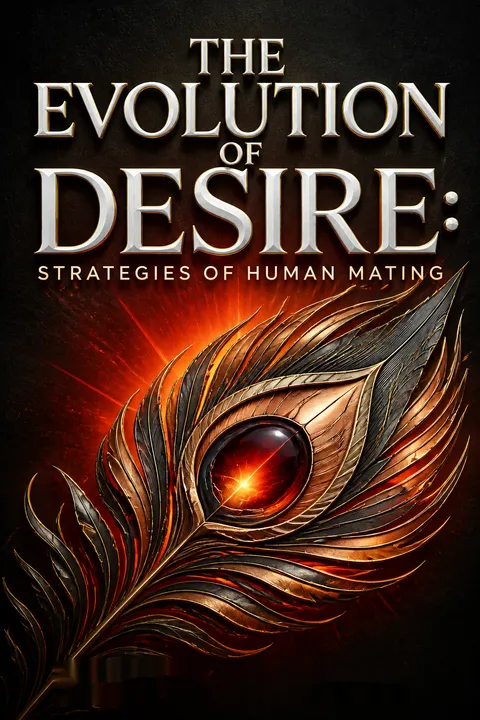
Desire has an evolutionary history. Darwin's theory of sexual selection explains how traits can spread because they help an animal attract or compete for mates, even when they bring survival costs. The peacock's elaborate tail is the classic illustration. Buss applies the same logic to human preferences, courtship, and conflict, while stressing that love and competition can coexist.
What's useful is the refusal to treat relationship friction as proof that affection was false. In social science, a conflict of incentives can explain behavior without reducing people to villains: partners may value different outcomes, face different risks, or interpret the same act differently. That lens can replace blame with clearer questions about expectations and consent. The caution is that an evolutionary explanation is not automatically the best explanation for a particular couple. Personal history, institutions, and deliberate choices also shape intimate life.
Read evolved mating strategies as flexible tendencies, never commands.
Strategies are problem-solving mechanisms. Buss uses the term sexual strategies for evolved psychological tendencies that help solve recurring mating problems, including choosing, attracting, retaining, or leaving a partner. The word does not mean people consciously calculate reproductive outcomes. A feeling such as jealousy may motivate action without the person understanding its possible evolutionary function.
Context changes what gets activated. The same person may seek casual sex at one stage and commitment at another. Culture, available partners, personal circumstances, and sex ratios can all influence which strategy is useful or feasible. Buss compares modern preferences for abundant, concentrated food with mating desires playing out on dating apps: old psychological tendencies operate in conditions their ancestors did not encounter.
The distinction between an evolved tendency and a fixed instinct is central, and it aligns with interactionist thinking: behavior emerges from dispositions meeting a particular environment. It also guards against the claim that biology makes conduct inevitable. A useful test is to ask what conditions intensify or dampen a response, rather than assuming every person expresses it in the same way. Still, flexibility needs to be demonstrated, not merely asserted. A theory becomes stronger when it specifies which contexts should change behavior and what evidence would count against that prediction.
For long-term partners, evaluate resource potential and reliability together.
Resources mean more than money. Buss argues that women have often benefited from choosing partners able and willing to contribute resources to a family. In a survey of 10,047 people across 37 cultures, women rated a mate's financial prospects about twice as important as men did. The book also describes preferences for ambition, social standing, intelligence, dependability, and emotional stability, qualities that may signal future provision or a steadier partnership.
Potential must become dependable action. A high-status man who does not share time, care, or resources may be a poor partner. In the author's studies of newlyweds, emotional instability was associated with costs such as possessiveness, selfishness, and infidelity. The practical question is not only what someone has, but whether their behavior suggests they will contribute consistently.
The shift from a snapshot of wealth to the reliability of contribution is a valuable one. In economics, a resource has little practical value if it cannot be accessed when needed; in relationships, predictability can matter as much as abundance. The cross-cultural survey gives the argument breadth, but stated preferences are not identical to actual choices, and a 37-culture sample cannot represent every society or historical period. Nor should these average differences become a rule for judging individual women or men.
Interpret attraction to youth and beauty without confusing description with approval.
Appearance can carry information. Buss argues that men's average preference for youth and physical attractiveness partly reflects cues historically associated with health and reproductive potential. In the 37-culture survey, men in every sampled society preferred wives younger than themselves, by about two and a half years on average. The book also discusses visible qualities such as clear skin, symmetry, and body shape as possible cues people use in judging attractiveness.
A pattern is not a moral law. Preferences vary among individuals and respond to culture and circumstance. The author notes that the importance placed on good looks increased across generations, even as a gender gap persisted. His account describes a possible evolutionary origin; it does not show that beauty standards are harmless, fair, or beyond social influence.
Separating explanation from endorsement is ethically essential. A descriptive account of attraction cannot justify discrimination, age-based judgment, or pressure to alter one's body. The proposed link between appearance and fertility is also more complicated than a simple cue-reading story: cultural ideals, media exposure, status, and individual experience can shape what looks attractive. Evolutionary accounts are most useful here as hypotheses about recurring pressures, not as proof that any contemporary beauty norm is natural, universal, or inevitable.
Casual sex can serve women's strategies too, not only men's.
Short-term mating can have different benefits. Buss argues that casual sex may offer men sexual variety, but that women may also pursue it for immediate resources, information about a possible partner, protection, or a route out of an unsatisfactory relationship. In some societies described in the book, men brought food or gifts to mistresses, and women could refuse sex if the gifts stopped.
Some proposed benefits remain uncertain. An affair might help a woman assess sexual compatibility or keep a potential replacement partner nearby. Buss also discusses the possibility of genetic benefits from a short-term partner, but presents this as a hypothesis, not a settled fact. The broader point is that people of either sex can use more than one mating strategy, depending on circumstances.
This is a corrective to accounts that cast women as passive participants in casual sex. It makes room for agency, bargaining, and diverse motives without assuming every encounter has the same meaning. At the same time, a strategic interpretation can overread behavior: people may seek pleasure, intimacy, novelty, or connection without consciously pursuing the reproductive benefits proposed by the theory. Economic inequality and coercion also shape who has genuine choice, so apparent strategy should not be mistaken for equal power.
Match your courtship signals to the relationship you actually want.
Signals work in context. Buss describes mate attraction as a competition to show qualities a potential partner values. In his research, displays of resources and ambition tended to help men seeking commitment, while conspicuous gifts and immediate spending could appeal in casual contexts. Kindness, fidelity, and sustained attention could signal long-term interest. Women's appearance-focused tactics could attract attention, though attention did not guarantee commitment.
Signals can also mislead. Some people exaggerate status, conceal existing relationships, or imitate commitment to gain sex. A long courtship can give partners time to check claims and assess compatibility, though it cannot remove all uncertainty. Buss calls the interference between one person's mating strategy and another's strategic interference, such as when a false promise of commitment serves one person's goal while undermining the other's.
Courtship is a signaling problem: people infer hidden intentions from visible actions, and signals are more credible when they are costly to fake or consistent over time. That insight is useful well beyond dating, since trust depends on repeated behavior rather than polished self-description. Yet no single signal is conclusive. Gifts can express care or create pressure, and persistence can feel romantic to one person and invasive to another. Clear communication and freely given consent remain better guides than decoding gestures as if they were proof.
Jealousy tracks different threats, but its evolutionary origin excuses nothing.
Jealousy can respond to different risks. Buss argues that men may be especially alert to sexual infidelity, which could cast doubt on paternity, while women may be especially alert to emotional attachment that could redirect a partner's time and resources. In one study of 511 students, 60 percent of men found sexual infidelity more upsetting, while 83 percent of women found emotional infidelity more upsetting. The book reports similar patterns across several cultures and research methods.
The same emotion can lead to very different acts. Jealousy may prompt a difficult conversation, surveillance, threats, or violence. Buss presents it as a psychological response shaped by recurring relationship threats, not as an uncontrollable command. Explaining a possible origin neither excuses abuse nor makes coercive monitoring a healthy way to protect a bond.
The distinction between understanding a motive and approving an act should remain explicit, especially here. Naming jealousy as a threat response can help people recognize when fear is driving control, and research on emotion regulation supports treating feelings as information rather than orders. But the reported gender pattern does not describe every person, and forced-choice scenarios may exaggerate differences compared with real relationships. The book's framing is strongest when it informs prevention and self-awareness, not when it is used to naturalize surveillance or violence.
Let life stage and local sex ratios reshape your mating strategy.
The mating market changes around people. Buss argues that age, resources, and the relative number of available men and women can alter who has options and which strategies are viable. A surplus of women may make commitment harder to secure if many men can pursue casual relationships; a surplus of men may increase competition for partners. The book illustrates this with the Ache of Paraguay, where communal food sharing reduced women's dependence on a husband's hunting success.
Personal value also changes. A chimpanzee named Yeroen loses dominance to a younger rival, then regains some access to females through an alliance. The story shows status shifting with time and coalitions. Human lives differ enormously, but the same broad lesson applies: a strategy that works in one stage or setting may fail in another.
This ecological view usefully connects intimate decisions to demographics and institutions rather than treating preference as a private, context-free fact. It also suggests why dating experiences differ across cities, generations, and social networks. However, sex-ratio explanations can become too tidy: people do not pair off in a single uniform market, and education, class, sexuality, and local norms divide populations into overlapping pools. The 2016 examples in the book should be read as illustrations from their period, not as current demographic measurements.
Treat breakups as responses to changing costs, not mysterious failures.
Relationships are reassessed over time. Buss draws on a comparison of divorce causes in 160 societies, where infidelity and infertility were among the most widely reported reasons for marital dissolution. Cruelty and failure to provide support also appeared as significant causes. These problems can undermine trust, cooperation, and the practical benefits a couple expected from staying together.
Leaving solves one problem and creates another. A breakup may protect someone from abuse or a persistently damaging partnership, but it can also mean losing resources, shared networks, or daily support. People may end a relationship directly, withdraw affection or sex, or allow conflict to make separation more likely. Buss's central point is that relationships change as partners, circumstances, and alternatives change, not that every departure follows a hidden calculation.
Thinking in terms of changing costs and benefits can help explain why a relationship once valued becomes untenable, while reducing the shame often attached to separation. It also makes room for safety: leaving abuse is not a failure to honor commitment. The cross-cultural list is informative but not a universal ranking of modern divorce causes, and its historical evidence cannot capture every couple's motives. Decisions about staying or leaving also involve law, finances, children, and social support, not only evolved preferences.
Build harmony by meeting needs while refusing to naturalize harm.
Cooperation is part of the same story. Long-term partners can share resources, coordinate care, support each other's goals, and create a stable environment for children. Buss argues that many people value kindness, dependability, and commitment, and that showing these qualities can strengthen a bond. Love is not erased by competition; it is one of the powerful ways people build and maintain cooperation.
Understanding creates room to choose. Evolved tendencies are not destiny. Buss's practical implication is to recognize what may trigger conflict, then shape relationships and circumstances to reduce it. In everyday terms, that means making expectations explicit, respecting boundaries, and addressing threats without coercion. An evolutionary account may explain why a tendency exists, but people and societies can still decide whether to encourage, constrain, or reject its expression.
The strongest contribution is a model of agency that avoids both extremes: humans are neither blank slates nor biological puppets. This is compatible with contemporary approaches that treat behavior as plastic but constrained by development, incentives, and institutions. The account is less persuasive when it suggests that present gender hierarchies follow straightforwardly from evolved mate preferences; structural power, law, and history have independent force. Its practical value lies in using explanation to widen choices and reduce harm, not to preserve inherited arrangements.
Analysis
The book's central achievement is to make mating a connected system rather than a collection of isolated topics. Mate choice shapes competition; competition shapes courtship; commitment creates incentives for retention; retention generates jealousy; and changed circumstances make separation possible. This sequence helps explain why affection and conflict can coexist without treating either as an aberration. The framework is especially effective when it asks what information a preference might track and what problem an emotion might help solve.
Its evidential strength is uneven. The large cross-cultural survey provides an unusually broad comparison of stated mate preferences, and the animal examples make sexual selection legible. But breadth is not the same as causal proof. A preference observed across societies may reflect evolved predispositions, convergent institutions, common constraints, or interactions among them. Self-reported ideals also do not reliably predict actual partner choice. The book sometimes moves from a plausible adaptive story to an asserted explanation faster than the evidence warrants, particularly for complex traits such as beauty standards, jealousy, or violence.
The most responsible reading treats evolutionary accounts as testable hypotheses, not universal keys. A claim gains force when it predicts specific patterns across contexts, distinguishes competing explanations, and survives evidence from behavior rather than questionnaires alone. The book's own emphasis on context supports this discipline, though the tendency to organize evidence by binary sex categories can obscure individual variation, gender diversity, and within-group differences.
The framework is most useful ethically when explanation is separated from justification. A tendency can have an evolutionary history and still be harmful, modifiable, or socially unacceptable. Conversely, acknowledging evolved motives need not erase culture or agency. The lasting value of the book is not a rulebook for men and women. It is a set of questions for examining how desire, power, risk, and commitment interact, and for distinguishing what people may be inclined to do from what they ought to permit in relationships.
Review Summary
The Evolution of Desire receives mixed reviews. Many praise its comprehensive analysis of human mating strategies from an evolutionary perspective, finding it insightful and well-researched. Critics argue it's too reductive, potentially sexist, and overly reliant on limited studies. Some readers appreciate the book's challenging ideas, while others find it dry or offensive. Despite controversy, most agree it offers a thought-provoking examination of human sexuality, even if they disagree with some conclusions.
People Also Read





Glossary
sexual selection
Evolution through mating successEvolutionary change driven by differences in success at obtaining mates. It occurs through competition among members of the same sex, through preferences that shape which mates are chosen, or through both processes. In the book, it explains how traits and preferences can spread because they improve mating success, even when they carry costs for survival.
sexual strategies
Responses to mating problemsEvolved psychological tendencies that help people address recurring mating challenges, such as selecting, attracting, retaining, or leaving a partner. The term is a metaphor for functional patterns, not a claim that people consciously plan to reproduce. Which tendencies are expressed can depend on personal circumstances, culture, and the immediate social environment.
strategic interference
One strategy obstructs anotherA conflict that occurs when one person's mating strategy makes it harder for another person to achieve a mating goal. For example, seeking sex quickly can conflict with a partner's preference for a longer period of courtship. The term describes competing incentives, not necessarily conscious manipulation or deliberate hostility.
mate value
Perceived desirability as a partnerA person's perceived desirability in a particular mating context. It can reflect qualities such as health, appearance, resources, status, kindness, or commitment, but its importance depends on the person doing the choosing and their circumstances. Mate value is not a fixed score or an objective measure of human worth.
sociosexual orientation
Openness to casual sexAn individual's relatively stable inclination toward short-term sexual relationships or sex within committed relationships. The book uses the term to describe variation among people, while emphasizing that individuals can also change strategies across life stages and situations. It is a tendency, not a complete description of someone's desires or behavior.
mate poaching
Pursuing an attached partnerAttempting to attract someone who is already in a romantic or sexual relationship. The effort can aim at a brief encounter or a committed partnership. Buss describes tactics such as increasing contact when the partner is absent and encouraging dissatisfaction in the existing relationship. The strategy can offer access to a partner, but also risks conflict and reputational costs.
error management theory
Bias shaped by error costsA theory proposing that when two kinds of judgment error have different costs, natural selection can favor a bias toward the less costly mistake. In the mating context discussed here, men may be biased toward interpreting ambiguous friendliness as sexual interest because missing a genuine opportunity may have carried greater costs than a false positive.
Coolidge effect
Renewed response to noveltyThe tendency, observed in many male mammals, for sexual responsiveness to revive when a novel partner appears, while responsiveness to a familiar partner may decline. The book uses animal studies and evidence about habituation to erotic images to discuss whether a comparable response to sexual novelty occurs in humans.
bodyguard hypothesis
A mate may deter assaultThe hypothesis that pairing with a male partner can reduce a woman's risk of sexual aggression from other men because the partner may deter or defend against potential attackers. The book discusses lower reported victimization among married women as suggestive evidence, while noting that lifestyle differences and other explanations could also account for the pattern.
FAQ
What's The Evolution of Desire about?
- Human Mating Focus: The Evolution of Desire by David M. Buss explores the evolutionary psychology behind human mating strategies, examining how our ancestral past shapes modern sexual behavior.
- Gender Differences: It delves into the distinct mating preferences of men and women, highlighting how evolutionary pressures have led to different strategies for attracting and retaining partners.
- Casual vs. Committed Sex: The book discusses the dynamics of casual sex and long-term relationships, providing insights into the motivations and behaviors that drive individuals in both contexts.
Why should I read The Evolution of Desire?
- Scientific Insights: The book is grounded in extensive research and empirical studies, offering readers a scientific perspective on human mating that challenges common misconceptions.
- Understanding Relationships: It provides valuable insights into the complexities of romantic relationships, helping readers understand their own behaviors and those of their partners.
- Cultural Relevance: Buss's exploration of mating strategies is relevant in today's context, especially with the rise of online dating and changing social norms around relationships.
What are the key takeaways of The Evolution of Desire?
- Evolutionary Basis of Mating: Human mating strategies are deeply rooted in evolutionary history, influencing preferences for traits like youth, health, and resources.
- Sexual Strategies: Men and women employ different strategies for short-term and long-term mating, with men often seeking casual encounters and women prioritizing commitment.
- Impact of Context: The effectiveness of attraction tactics varies based on context, such as whether individuals are seeking casual sex or a committed relationship.
What is sexual strategies theory as defined in The Evolution of Desire?
- Definition: Sexual strategies theory posits that men and women have evolved different mating strategies based on their reproductive challenges.
- Adaptive Significance: These strategies are adaptive responses to maximize reproductive success, with men benefiting from multiple partners and women from securing a reliable mate.
- Cultural and Individual Variability: While rooted in evolution, these strategies can vary significantly across cultures and individuals, reflecting the interplay between biological imperatives and social contexts.
What are the differences in what women and men want in a mate according to The Evolution of Desire?
- Women Seek Resources: Women prioritize traits such as financial stability, social status, and emotional stability in a long-term partner.
- Men Prefer Youth and Beauty: Men value physical attractiveness and youth, as these traits are associated with fertility and reproductive potential.
- Context Matters: Preferences can shift based on context, such as whether individuals are seeking a casual encounter or a committed relationship.
How does The Evolution of Desire explain casual sex?
- Evolutionary Perspective: Casual sex can be seen as an adaptive strategy for men, allowing them to increase their reproductive success by mating with multiple partners.
- Women’s Benefits: For women, casual sex can provide immediate access to resources and serve as a way to evaluate potential long-term partners without the commitment.
- Psychological Mechanisms: Both men and women have evolved psychological mechanisms that influence their willingness to engage in casual sex, shaped by their respective reproductive strategies.
How does The Evolution of Desire explain jealousy?
- Adaptive Emotion: Jealousy is described as an evolved response that serves to protect one’s reproductive interests.
- Gender Differences: Men often feel more threatened by sexual infidelity, while women are more concerned about emotional infidelity.
- Consequences: Jealousy can lead to mate guarding and aggression, motivating protective behaviors but also potentially causing harm to relationships.
What role does jealousy play in relationships according to The Evolution of Desire?
- Adaptive Function: Jealousy helps individuals protect their relationships from potential threats, such as infidelity or mate poaching.
- Gender Differences: Men experience jealousy more intensely in response to sexual infidelity, while women are more concerned about emotional infidelity.
- Impact on Behavior: Jealousy can lead to behaviors aimed at retaining a partner, including vigilance and derogation of rivals.
How does The Evolution of Desire address the concept of mate poaching?
- Prevalence: Mate poaching is a common strategy where individuals attempt to attract someone who is already in a relationship.
- Tactics Used: Tactics include enhancing one's own attractiveness and undermining the rival’s desirability.
- Consequences: While mate poaching can be successful, it often comes with risks, including social stigma and potential violence from jealous partners.
What are the mate retention tactics discussed in The Evolution of Desire?
- Public Displays of Possession: Tactics such as introducing a partner as a spouse or holding hands in public signal commitment and deter rivals.
- Emotional Manipulation: Strategies like provoking jealousy or submitting to a partner aim to reinforce the bond and prevent a partner from straying.
- Cost-Inflicting Measures: Some individuals may resort to derogation of competitors or threats to maintain their relationship.
What role does culture play in human mating according to The Evolution of Desire?
- Cultural Variation: Cultural contexts significantly influence mating behaviors and preferences, with unique norms and values shaping relationships.
- Impact of Social Structures: Economic conditions, gender roles, and social hierarchies affect mating dynamics.
- Adaptation to Cultural Changes: Humans are capable of adapting their mating strategies to fit changing cultural landscapes, reflecting the complexity of human relationships.
How does The Evolution of Desire explain the importance of physical appearance in attraction?
- Cues to Reproductive Value: Physical appearance serves as a key indicator of a partner's health and youth, critical factors in reproductive success.
- Universal Preferences: Men across cultures consistently prioritize physical attractiveness in potential mates, reflecting an evolved preference for traits that signal fertility.
- Impact of Media: Modern media can distort perceptions of beauty and attractiveness, leading to unrealistic standards that can affect self-esteem and relationship satisfaction.
About the Author


Download PDF
Download EPUB
.epub digital book format is ideal for reading ebooks on phones, tablets, and e-readers.








