

Key Takeaways
Treat sexual conflict as clashing individual strategies, not a war between sexes
Conflict has a mechanism. Buss uses sexual conflict for situations where one person’s preferred outcome interferes with another’s. The disagreement might concern when to have sex, whether to remain faithful, or whether a relationship should end. Sexual conflict coevolution describes how one person’s tactics can prompt countertactics in another, much like prey develop defenses against predators. A male spider may disguise a worthless nuptial gift; females respond by developing ways to detect the trick. Human versions include courtship deception and resistance to unwanted advances.
Individuals still differ. The book’s focus is on average sex differences, not claims that every man or woman behaves alike. Most men do not harass or assault women, and people of both sexes vary widely in their desires and conduct.
The framework is strongest when used to ask what each person wants, what obstructs that aim, and who bears the cost. It can make otherwise disconnected behaviors easier to compare without treating every conflict as evidence of a single social cause. Its central caution is equally important: an explanation of how a behavior might arise is not an excuse for it. Claims about evolved motives are also harder to establish than claims about observable behavior, so the proposed mechanism should be tested rather than assumed.
Recognize how unequal reproductive costs shape choice without defining individuals
Investment is asymmetric. Human reproduction involves internal pregnancy and typically extended breastfeeding, costs borne by women in ways men do not bear. Buss argues that these biological differences helped shape average differences in sexual psychology, including women’s selectivity and men’s greater interest in sexual variety. Selection, in this account, is not a moral judgment. It describes pressures that may influence behavior.
The Tiwi example is stark. In the northern Australian society Buss describes, custom required every woman to be married, including infants. Men arranged marriages and some accumulated many wives, while other men had none. The system made women central to male status and alliances, but it also sharply constrained women’s choices. The example shows how mating competition can become embedded in social rules, not just individual attraction.
The distinction between reproductive biology and social rules matters: costly pregnancy helps explain why choice may be consequential, but it does not dictate a particular marriage system or justify controlling women. The Tiwi case illustrates how institutions can magnify unequal bargaining power. It also warns against treating one society as a template for humanity. An evolutionary account is most useful here when it identifies pressures while leaving room for culture, individual variation, and political change.
Read dating-market statistics as averages, not instructions about any person
Desires differ on average. In a survey of 16,288 people across 52 nations, men reported wanting an average of 1.87 sex partners over the next month, compared with 0.78 for women. The book presents this as a large, culturally widespread difference, while stressing that individual preferences overlap. Many men prefer monogamy, and some women want casual sex.
Markets magnify mismatch. Buss describes women as more selective on average and men as more likely to pursue many potential partners. A dating-app study of fourteen fake profiles received thousands more likes for its female profiles than its male profiles, although the site’s user imbalance also mattered. When people want different kinds of relationships, or rate their own desirability differently, the result can be frustration, rejection, or pressure rather than mutual agreement.
Population averages can illuminate why recurring misunderstandings arise, but they cannot tell a person what a particular date wants. That distinction is crucial in a culture where statistics are easily turned into scripts about what men or women supposedly must do. The useful application is not to presume intent from sex, but to make intentions explicit and assess the other person’s actual choices. Dating platforms also change who is visible and how people behave, so their patterns should not be mistaken for timeless laws.
Check ambiguous signals against consent, not wishful mind-reading
Interest is easy to misread. The sexual over-perception bias is a tendency, found especially in some men, to interpret ambiguous behavior such as a smile or incidental touch as sexual interest. In speed-dating research described by Buss, men overestimated women’s interest, particularly when the men were narcissistic or preferred short-term mating. Women in the same work tended to underestimate men’s interest.
Deception compounds error. Online profiles often exaggerate appearance, height, income, or relationship intentions. Buss reports that one study found at least one verifiable lie in 81 percent of profiles. The Dark Triad, a cluster of narcissism, Machiavellianism, and psychopathy, is associated in the book’s research with manipulative and exploitative behavior. Women can also deceive or poach partners, though the tactics may differ.
This section’s practical lesson is epistemic humility: attraction is not consent, politeness is not a promise, and a profile is not verification. The bias framework can help explain why some people persist after receiving unclear feedback, but it should never shift responsibility onto the person being misread. Clear communication reduces ambiguity; it does not guarantee good faith. Attention to repeated conduct and accountability is more reliable than trying to diagnose someone’s personality from a few early signals.
Treat commitment as ongoing negotiation, not proof that interests align
Couples keep different interests. Buss argues that infidelity, children from earlier relationships, breakup possibilities, and changing desirability can all pull partners’ priorities apart. People may also cultivate backup mates, potential alternatives who offer emotional support, sexual opportunity, or a fallback if the current relationship ends. The book’s research reports that even people who describe their relationships as happy may have such backups.
Affairs can serve different purposes. Buss contrasts men’s affairs, often associated with desire for sexual variety, with women’s affairs, which he argues may often help them move from an unsatisfying relationship to a more desirable partner. In one cited study, 79 percent of women who had affairs reported emotional involvement, compared with 30 percent of men. Secretly diverting shared money or resources to another partner is called resource infidelity.
The chapter usefully replaces the fantasy that commitment automatically erases competing interests with a more realistic picture of relationships as changing systems. But a proposed evolutionary function is not a complete account of why any specific person cheats; motives can include loneliness, anger, opportunity, or unmet needs. The concept of backup partners also raises a practical distinction: private contingency planning is not the same as honest intimacy. Couples benefit from discussing expectations about money, exclusivity, and emotional boundaries rather than assuming both partners define them identically.
Watch for coercive control where jealousy meets dependence and isolation
Jealousy can become control. Buss describes jealousy as a response to perceived threats to a valued relationship. It may prompt vigilance, questioning, or attempts to keep rivals away. But when jealousy is used to monitor, intimidate, or restrict a partner, it can become part of intimate partner violence, which includes physical, sexual, emotional, economic, and psychological abuse.
Control narrows escape. Abusers may undermine self-esteem, isolate a partner from friends and relatives, restrict access to money, distort the victim’s sense of reality, or threaten harm. Dependence can make leaving harder. The book identifies risk contexts including suspected infidelity, a partner trying to leave, and the presence of stepchildren. It also reports that Dark Triad traits, especially psychopathy, are associated with higher use of abusive tactics. These explanations do not excuse abuse.
The emphasis on dependence and isolation adds something important to the familiar image of violence as a single physical episode. Control can operate through money, threats, and the gradual loss of outside support, which means that a person’s apparent decision to stay may not reflect free choice. The evolutionary account can help identify situations in which risk rises, but it must not turn risk factors into a prediction about every couple. Prevention and response should focus on behavior, safety, and access to support, not on presumed motives.
Take post-breakup pursuit seriously when threats turn rejection into danger
Persistence can become stalking. Stalking is repeated unwanted conduct that causes fear or substantial distress. It may include persistent messages, surveillance, unwanted gifts, following, or showing up at someone’s home or workplace. Buss describes rejected partners who seek reconciliation, try to frighten away new romantic interests, or turn to revenge. The behavior can consume victims’ time, disrupt work and relationships, and leave them feeling trapped.
Threats are warning signs. In one study cited in the book, 76 percent of women killed by former partners had been stalked by the ex during the preceding year. The chapter recommends building social support, saving messages and other evidence, limiting contact where safe, and notifying police or seeking protective orders. These are options for increasing support and documentation, not guarantees of safety.
The chapter makes a crucial distinction between conduct that feels romantic to its pursuer and conduct experienced as frightening by its target. Repetition, unwanted contact, and the context of a breakup matter more than a stalker’s stated intention. The reported homicide statistic is a warning about risk, not evidence that stalking usually ends in murder. Because no single precaution works in every case, responses should be guided by the victim’s circumstances and coordinated with qualified local support.
Target coercive behavior, not a myth that all men are rapists
Coercion has many forms. Buss uses sexual coercion to cover unwanted sexual attention, harassment, and rape involving pressure, incapacitation, threats, or force. He argues that available evidence does not establish a specialized evolved male adaptation for rape. Instead, he points to broader mating motives and traits that can contribute to coercion, including short-term mating orientation, entitlement, low empathy, and Dark Triad traits.
Risk is concentrated. The book describes studies in which a minority of men admitted to forcing sex, often more than once. In one survey of 1,882 American men, 6.4 percent reported behavior meeting the study’s definition of rape. The figures depend on definitions and self-report. Buss also cautions against reducing rape to male deprivation: some perpetrators are popular or high-status men who use entitlement or power.
Rejecting a claim that all men are potential rapists does not soften the seriousness of rape. It can improve prevention by directing attention toward conduct, accountability, and the subset of people most prone to coercion, while preserving the fact that anyone can perpetrate or experience abuse. The evidence here varies in quality, from self-reported attitudes to reported crimes, and underreporting complicates every estimate. The strongest conclusion is therefore conditional: risk factors help guide inquiry, but no checklist can substitute for consent and enforceable boundaries.
Strengthen support and consent systems, never turn defenses into blame
Defenses are varied. The book describes women using allies, avoiding dangerous situations, escaping, calling for help, or physically resisting. It also discusses tonic immobility, an involuntary paralysis that some people experience under extreme fear and entrapment. One study cited by Buss found it in 37 percent of rape victims. A body’s automatic response does not indicate consent, enjoyment, or failure to resist properly.
Trauma can persist. Rape may bring injury, pregnancy risk, stigma, isolation, depression, or post-traumatic stress symptoms. Some victims conceal what happened because disclosure can invite blame or disbelief. The book argues that social support can matter both for immediate protection and for recovery. It also warns that safety strategies impose costs: women may have to limit movement and social life because others violate their boundaries.
This account is valuable because it treats fear and trauma as meaningful responses rather than signs of weakness, while recognizing that involuntary bodily reactions are often misunderstood. The emphasis on defenses must be handled carefully: describing what may help in a dangerous situation is not assigning victims responsibility for preventing assault. That responsibility belongs to perpetrators and to institutions that fail to protect people. The broader lesson is to make support accessible without demanding that survivors prove they reacted in a particular way.
Change incentives and institutions as well as individual conduct
Context changes behavior. Buss argues that social norms, laws, enforcement, income inequality, access to resources, and sex ratios can alter the likelihood and consequences of sexual conflict. When women have independent resources and allies, they have more ability to leave harmful relationships. Clear rules and consequences can also make harassment and assault costlier for perpetrators. The book points to declining reported rates of partner violence and rape in the United States as signs of possible progress, while emphasizing that the goal remains preventing these harms.
Autonomy is central. The proposed response includes educating people about differences in sexual perceptions, enforcing laws against harassment and assault, reducing barriers to reporting, and ensuring that women control their own bodies. An evolutionary account, Buss argues, is useful only if it helps identify conditions that reduce harm.
The shift from individual morality to institutional design is a strong closing move: behavior responds to incentives, enforcement, and available alternatives, not only to personal attitudes. Material independence can make consent more meaningful when a person can leave without losing shelter or basic security. Yet cultural comparisons and changing rates do not prove which policy caused improvement. Sound policy needs ongoing evaluation, survivor input, and attention to harms across genders and communities. The standard should remain straightforward: no explanation of desire overrides another person’s right to choose.
Analysis
The book’s central move is to treat sexual misconduct as a set of conflicts with identifiable incentives, rather than as inexplicable cruelty or a simple contest between two uniform groups. That reframing is productive: it directs attention to differences in desired outcomes, the tactics used to obtain them, the people who bear the costs, and the social conditions that alter risk. It also helps connect dating deception, partner control, stalking, harassment, and assault without pretending they are interchangeable.
The evolutionary perspective is most persuasive when it generates testable, conditional predictions. For example, it can ask whether control becomes more likely when a partner is economically dependent, or whether certain personality traits correlate with repeated coercion. It is less secure when a present-day behavior is given a plausible ancestral purpose without direct evidence that selection produced that function. Those claims should be separated from well-supported descriptions of current behavior. A possible function is not a proven origin, and neither establishes that a behavior is inevitable.
The distinction between average group patterns and individual prediction is essential. A difference in average desire cannot identify what a particular person wants, and describing a risk factor does not explain or excuse an offender’s choice. This is especially important where discussion of victim defenses could slide into advice that places responsibility on people targeted for harm.
The book’s most useful practical implication is that prevention needs several levels at once: individual boundaries, social allies, economic options, enforceable rules, and institutions that take complaints seriously. Its explanations are not a substitute for legal or moral judgment. Their value lies in helping identify where behavior can be interrupted, which people may require scrutiny, and which environmental changes make coercion harder to carry out and easier to report.
Review Summary
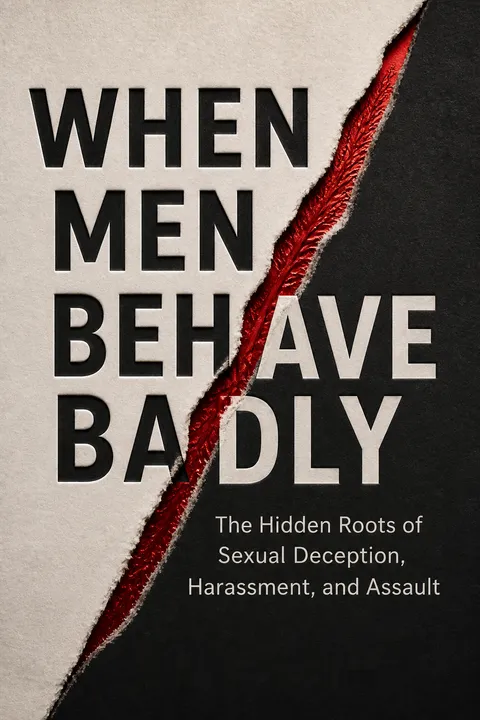
When Men Behave Badly explores sexual conflict between men and women from an evolutionary perspective, examining topics like harassment, violence, and deception. Buss presents empirical evidence for gender differences in mating strategies and explains how these can lead to conflict. Some readers found the book insightful and important, while others criticized it for potentially excusing bad behavior or lacking compassion. Many praised Buss's scientific approach but noted the book's content can be disturbing. Overall, reviewers saw it as a significant contribution to understanding human sexual behavior, despite its controversial nature.
People Also Read









Glossary
sexual conflict coevolution
reciprocal mating tacticsA process in which a tactic that advances one person’s mating interests can impose costs on another, prompting countertactics in response. Buss uses the idea to connect sexual offenses and defenses, such as deception and detection or unwanted advances and resistance. The concept describes reciprocal pressures, not a moral justification for harmful behavior.
strategic interference
one strategy blocks anotherA conflict that occurs when one person’s mating strategy obstructs another person’s strategy. For example, someone seeking a brief sexual encounter may meet a partner seeking commitment. Because both aims cannot be satisfied in the same way at the same time, one person may be disappointed or pressured.
Dark Triad
three exploitative traitsA cluster of narcissism, Machiavellianism, and psychopathy. In Buss’s account, narcissism involves entitlement, Machiavellianism involves manipulation, and psychopathy involves low empathy and indifference to others’ suffering. Research discussed in the book links higher scores to greater likelihood of some exploitative relationship behaviors, though a trait score does not establish that an individual will offend.
sexual over-perception bias
overreading sexual interestA tendency to infer sexual interest from ambiguous cues that may instead be friendliness or ordinary social behavior. Buss reports that men, on average, are more prone to this error than women, especially in some short-term-oriented or narcissistic men. The bias can help explain mistaken advances, but it never makes the recipient responsible for another person’s conduct.
mate-switching hypothesis
leaving for a better mateBuss’s proposal that some people, particularly women in the account presented, have affairs partly to exit an unsatisfactory relationship and transition to a more desirable partner. It contrasts with explanations that treat women’s affairs mainly as a way to obtain genetic benefits. The hypothesis is an explanatory model, not a claim that every affair has the same motive.
backup mates
potential replacement partnersPeople who may provide emotional support, sexual opportunity, or a possible new relationship if a current partnership ends. Buss argues that people in committed relationships sometimes cultivate these alternatives, even when they are not openly planning a breakup. Their existence can provide security to one partner and create conflict if discovered or if the backup becomes unavailable.
resource infidelity
diverting shared resourcesThe covert diversion of money or other pooled resources away from a primary partner or household, often toward an outside romantic or sexual partner. Buss describes it as a financial counterpart to sexual infidelity. Secret bank accounts, concealed spending, and redirected household funds can threaten trust and create conflicts over who controls shared resources.
welfare trade-off ratio
relative value placed on welfareA measure of how much one person values another person’s welfare compared with their own when making choices that affect both. A higher ratio means the other person’s interests receive more weight; a lower ratio reflects a more self-focused balance. Buss uses the concept to discuss investment, conflict, and attempts to change how partners treat each other.
tonic immobility
involuntary fear paralysisAn involuntary state of bodily paralysis that can occur under extreme fear when escape seems impossible. Buss describes it as a response reported by a substantial minority of rape victims. It is not consent, enjoyment, or a deliberate decision not to resist. Understanding it can help counter mistaken assumptions about how a victim should behave during an assault.
FAQ
1. What’s When Men Behave Badly by David M. Buss about?
- Explores sexual conflict roots: The book investigates the evolutionary origins of sexual deception, harassment, assault, and related behaviors, focusing on how sex differences in psychology create predictable conflicts between men and women.
- Evolutionary psychology lens: Buss uses evolutionary theory to explain why men and women have different mating strategies and how these differences lead to ongoing coevolutionary “arms races” of offense and defense.
- Focus on heterosexual dynamics: While primarily examining heterosexual relationships, the book acknowledges research gaps regarding LGBTQ+ populations and calls for further study.
- Aims for understanding and solutions: The book seeks to deepen empathy for victims, clarify the causes of sexual conflict, and suggest ways to reduce harm.
2. Why should I read When Men Behave Badly by David M. Buss?
- Scientific explanation of sexual conflict: The book moves beyond cultural or ideological explanations, offering a rigorous, evidence-based account of why sexual conflict and violence occur.
- Practical insights for modern life: It reveals how ancient sexual psychology misfires in contemporary contexts like online dating, pornography, and gender-integrated workplaces, helping readers navigate these challenges.
- Empathy and prevention focus: Understanding the evolutionary roots of sexual conflict can foster compassion for victims and inform strategies to prevent harm.
- Balanced and humane approach: Buss distinguishes between explaining and excusing behavior, emphasizing accountability and the need for better policies.
3. What are the key takeaways from When Men Behave Badly by David M. Buss?
- Sexual conflict is coevolutionary: Men’s and women’s reproductive interests often clash, leading to ongoing cycles of offense and defense in mating strategies.
- Dark Triad traits matter: Individuals high in narcissism, Machiavellianism, and psychopathy are disproportionately responsible for sexual exploitation and violence.
- Sex differences drive misunderstandings: Men’s tendency to over-perceive sexual interest and women’s tendency to under-perceive it fuel miscommunication and harassment.
- Solutions require understanding psychology: Effective prevention and policy must account for evolved sex differences and the psychological mechanisms underlying sexual conflict.
4. What are the main evolutionary concepts in When Men Behave Badly by David M. Buss?
- Sexual over-perception bias: Men often misinterpret women’s friendliness as sexual interest, especially those pursuing short-term mating strategies.
- Sex differences in reproductive biology: Men’s low-cost sperm and women’s high-cost eggs, pregnancy, and child-rearing create asymmetrical mating strategies and conflicts.
- Female evolved defenses: Women have developed multiple strategies—such as seeking allies, vigilance, and tonic immobility—to protect against sexual coercion.
- Coevolutionary arms race: Male offenses and female defenses have evolved in tandem, shaping the dynamics of sexual conflict.
5. How does When Men Behave Badly by David M. Buss explain the “battle of the sexes” and mating market conflicts?
- Mating strategy differences: Men generally desire more sexual variety, while women are more selective, leading to conflicting goals and strategic interference.
- Female choosiness and mate value: Women often prefer men in the top 20% of mate value, leaving many men feeling rejected or “friend-zoned.”
- Sexual deception and misperception: Men’s over-perception of interest and women’s under-perception complicate communication and increase conflict.
- Arms race dynamics: These differences create ongoing cycles of offense (e.g., deception) and defense (e.g., choosiness).
6. What role do Dark Triad traits play in sexual conflict according to When Men Behave Badly by David M. Buss?
- Traits linked to exploitation: Men high in narcissism, Machiavellianism, and psychopathy are more likely to harass, assault, or exploit women sexually.
- Women’s Dark Triad behaviors: Women with these traits may engage in mate poaching or use sex instrumentally for resources or status.
- Explains within-sex variation: The Dark Triad accounts for why some individuals are much more prone to harmful sexual behaviors than others, beyond average sex differences.
- Targeting high-risk individuals: Recognizing these traits can help in prevention and risk reduction strategies.
7. How does When Men Behave Badly by David M. Buss address sexual coercion and rape?
- No evolved rape adaptation: Buss finds no evidence for specialized psychological mechanisms for rape; sexual coercion is seen as a byproduct of other mating strategies and traits.
- Profile of perpetrators: Rapists tend to have high Dark Triad traits, hostility toward women, impulsivity, and a preference for short-term mating.
- Evolutionary mismatch in fear: Women’s fear of stranger rape is evolutionarily ancient but often mismatched to modern realities, as most rapes are by acquaintances.
- Impact on victims: Sexual coercion causes severe psychological trauma, including PTSD, and motivates evolved defenses.
8. What does When Men Behave Badly by David M. Buss say about stalking and revenge porn?
- Stalking as mate retention: Stalking is often a desperate attempt by rejected men to regain access to former partners, sometimes escalating to violence.
- Revenge porn’s impact: Posting explicit images without consent devastates victims’ reputations, triggers further harassment, and causes anxiety and depression.
- Legal and social responses: Laws against revenge porn and stalking exist but are often insufficient; victims are advised to seek social support and legal remedies.
- Psychological toll: Victims of stalking and revenge porn experience fear, isolation, and long-term psychological harm.
9. How does When Men Behave Badly by David M. Buss explain intimate partner violence (IPV)?
- Functional logic of IPV: IPV is often a last-resort mate-retention tactic, especially by men facing resource or mate-value discrepancies.
- Dark Triad and personality disorders: Men high in Dark Triad traits or borderline personality disorder are more likely to perpetrate IPV due to fear of abandonment and poor impulse control.
- Victim psychology hijacked: IPV lowers women’s self-esteem, induces shame, and traps them in abusive relationships by shifting their welfare priorities.
- Cultural and social factors: While patriarchy and social learning play roles, evolutionary roots explain why IPV occurs even in egalitarian societies.
10. What defenses and coping strategies against sexual coercion and stalking does When Men Behave Badly by David M. Buss recommend?
- Social support and vigilance: Victims should enlist friends and family as allies, document incidents, and minimize contact with perpetrators.
- Physical and technological security: Securing homes, using alarms and cameras, and carrying self-defense tools can help deter attackers.
- Legal action: Reporting to police, obtaining restraining orders, and, in extreme cases, changing identity or location may be necessary.
- Empowerment through knowledge: Understanding risks and evolved psychology enables more effective personal and collective defenses.
11. How does When Men Behave Badly by David M. Buss address cultural and social aspects of patriarchy and sexual violence?
- Institutionalized patriarchy: Historical laws and norms granted men control over women’s bodies, though these are eroding in many societies.
- Changing social norms: Movements like #MeToo and stricter workplace policies are reducing tolerance for harassment and abuse.
- Psychological foundations: Men’s evolved motivations for status and control, and women’s mate preferences for resource-holding men, have shaped patriarchal institutions.
- Potential for change: As women gain resources and legal protections, mate preferences and social structures can shift toward greater equality.
12. What are the best quotes from When Men Behave Badly by David M. Buss and what do they mean?
- “Sexual conflict is mostly about individual men and individual women interfering with each other…” Highlights the complexity of sexual conflict as individual, not just group, dynamics.
- “Men are one long breeding experiment run by women.” Emphasizes the evolutionary arms race where men evolve traits to attract women, and women evolve counter-strategies.
- “There is no adaptive value of sexual conflict per se.” Sexual conflict is costly for both sexes but persists due to conflicting reproductive interests.
- “Jealousy is the most dangerous emotion.” Underlines jealousy’s role in mate retention and its link to violence.
- “Violence against women is never acceptable, never excusable, never tolerable.” Reinforces the book’s moral stance that understanding causes does not justify abuse.
About the Author


Download PDF
Download EPUB
.epub digital book format is ideal for reading ebooks on phones, tablets, and e-readers.








