

Key Takeaways
Judge origin stories by what they predict, not how satisfying they sound.
Good explanations earn trust. Physics explains observations by combining an initial state with laws that describe how it changes. A story that can be fitted to any result, such as Earth being created recently with an ancient-looking fossil record, cannot be ruled out, but it predicts nothing. Hossenfelder calls claims of this kind ascientific: not disproven, but beyond what observations can establish. By contrast, the standard cosmological model links independent evidence, including the distribution of galaxies and tiny temperature variations in the cosmic microwave background, the afterglow of the early universe.
The origin remains open. The well-tested model describes the universe back to a hot, dense phase, but the Big Bang itself and proposed predecessors such as inflation lack decisive evidence. Reaching the earliest conditions requires extrapolating physics far beyond tested energies. Scientific restraint sometimes means saying that a story is possible, not that it is known.
What's valuable here is the separation of emotional satisfaction from explanatory performance. A claim that accommodates every possible observation may feel complete, yet it offers no way to learn whether it is right. This is a useful standard well beyond cosmology, from medical claims to political narratives. The caution also has a limit: not every meaningful question is experimentally answerable, and untestable does not mean foolish. The distinction is between evidence-based knowledge and other forms of belief, not between worthy and worthless questions.
Relativity preserves the past in spacetime, not a usable afterlife.
There is no universal now. Special relativity shows that observers moving differently can disagree about whether distant events happened simultaneously. If two events cannot affect each other, different observers can place them in different temporal orders. The block universe is the resulting picture: past, present, and future are all parts of spacetime, though each observer experiences only one moment at a time. GPS systems account for relativistic clock differences, confirming that this is physical, not just philosophical.
Existence is not experience. The laws of physics appear to preserve information about earlier states, in principle, although quantum measurement and black hole evaporation complicate the picture. This does not mean a dead person remains conscious, or that their life story can be recovered. The grandmother in the opening question may be part of spacetime, but physics does not offer a personal afterlife.
The distinction between persistence and access matters in many fields. A digital record can survive while its original context, meaning, or user disappears; likewise, physical information is not the same as a continuing point of view. Relativity challenges the intuition that only the present exists, but it does not settle what existence means in every philosophical sense. The block universe is a coherent reading of relativity, not a direct measurement of a cosmic archive containing accessible versions of everyone.
Entropy makes aging likely, while the universe's low-entropy past stays unexplained.
The laws do not pick a direction. Many fundamental equations work forward or backward in time. Yet eggs mix, windows shatter, and bodies age because these changes lead toward states with many more possible microscopic arrangements. Entropy measures how many such arrangements fit a broad observable state. The past-hypothesis is the assumption that the universe began in an unusually low-entropy condition, allowing entropy to rise and giving time its familiar direction. Why the universe began that way remains unanswered.
The cosmic story has caveats. Rare fluctuations could, in some models, produce a brief self-aware brain from a high-entropy universe. These Boltzmann brains expose a problem: if such fluctuations dominate, our orderly memories and observations become surprisingly unlikely. Whether the relevant laws allow all possible fluctuations is unsettled. Hossenfelder also questions whether current entropy concepts are sufficient to predict the universe's ultimate fate.
The central insight is statistical, not mechanical: a broken cup does not violate reversible equations, it follows an overwhelmingly more probable route. This same reasoning underlies why records point toward the past, from geological traces to memories. But entropy depends on how a system is described, and gravity makes the universe harder to treat like a bowl of mixed ingredients. The book is strongest when it distinguishes a powerful explanation of everyday irreversibility from a complete theory of cosmic history.
Your identity depends more on organized relations than on particular atoms.
Matter keeps being exchanged. The body constantly takes in and releases atoms; one study cited in the book estimates that the average human cell is about seven years old. The ship of Theseus poses the same puzzle: if a vessel's parts are gradually replaced, is it still the same ship? Hossenfelder's answer emphasizes the arrangement and interactions among parts, rather than the original materials.
Layers explain different things. Coarse-graining means averaging over microscopic details to build a useful description at a larger scale. A fluid's temperature, for example, describes many molecules without tracking each one. Such higher-level properties are emergent. Weak emergence means they arise from underlying parts and interactions, even when calculating them is difficult. A silicon replacement for a neuron might preserve a brain function if it preserved the relevant interactions, but this is a thought experiment, not proof that uploading a person is possible.
This account connects physics to functionalist theories of mind, which identify a mental process by what it does rather than by the material carrying it. It also clarifies why reduction does not make higher-level explanations useless: chemistry is not replaced by particle physics when explaining a drug's effects. The harder question is whether preserving function preserves subjective experience and personal identity. Embodied cognition, in which thought depends partly on bodily processes, cautions against treating the brain as a self-contained file that can simply be transferred.
Quantum randomness cannot give you control over the choices it changes.
Chance is not agency. The known laws largely determine what follows from earlier states, while quantum mechanics introduces random measurement outcomes. Randomness does not create an independent chooser: a person cannot command a quantum event to produce a preferred decision. Hossenfelder therefore sees ordinary decision-making as physical processes evaluating information, not as an exception to nature. Compatibilists use a different definition, treating actions as free when they arise from a person's own reasoning rather than external coercion.
Responsibility can be practical. The book recounts the case of Lisa Marie Montgomery, who committed a grave crime after years of abuse and serious psychological trauma. Her history complicates simple judgments of blame, but society still has to decide how best to protect people and prevent future harm. That decision can focus on treatment, deterrence, or confinement without requiring a metaphysical power to have chosen otherwise.
This framing shifts the debate from whether people deserve suffering in some ultimate sense to which responses reduce harm. That is a productive connection to public health and behavioral science, where prevention often matters more than assigning fault. It does not make accountability irrelevant: consequences can shape future behavior and express social norms. Nor does physics alone determine which goals justice should serve. The empirical picture constrains the debate, but values still guide the choice of punishment, rehabilitation, and protection.
Treat unobservable multiverses and fine-tuning as beliefs, not settled science.
One universe gives one sample. The laws of nature contain measured constants, such as the strengths of forces and particle masses. Some arguments say these values are extraordinarily unlikely because different values might prevent life. But we have observed only one set of constants, so there is no measured probability distribution showing how likely another set would be. A Bayesian argument can express a person's prior expectations, but that is not the same as an objective frequency in nature.
Possibility is not evidence. Many-worlds, cosmic multiverses, and the simulation hypothesis add realities that are not needed to reproduce current observations. The simulation idea also assumes that some hidden computation could reproduce the detailed laws and symmetries physicists observe, without explaining how. Hossenfelder does not claim these ideas are false. She argues that their truth remains a matter of belief unless they yield distinctive, testable predictions.
This is a useful check on a common rhetorical move: calling something an explanation because it makes a surprising fact seem inevitable. A multiverse may eventually gain scientific standing if it produces successful predictions that competing accounts cannot. Until then, the burden is to show how the proposal changes what researchers can calculate or observe. There is a genuine challenge, though: physics routinely infers unobserved entities from their measurable effects. The decisive issue is not direct visibility, but whether the inference has empirical consequences.
Study consciousness as a physical process, without pretending its mystery is solved.
No extra substance is established. Consciousness is observed in physical organisms, and research can measure brain activity associated with awareness or induce experiences by stimulating the brain. Hossenfelder sees no evidence that thoughts require a nonphysical ingredient. One proposed model, Integrated information theory, assigns a system a value based on how much its information processing is integrated. The calculation is so demanding that studies often use simplified versions, and those measures do not consistently track consciousness.
Quantum proposals remain speculative. Roger Penrose and Stuart Hameroff's Orch OR theory proposes that quantum events in neuronal microtubules contribute to awareness. The book notes that ordinary quantum effects are difficult to sustain in the brain, and the proposal lacks confirming evidence. A modest, physics-compatible panpsychism might treat consciousness as gradual across complex information-processing systems, but the claim that elementary particles themselves have experiences is not supported by particle physics.
The section models an important discipline: recognizing that consciousness is scientifically tractable does not mean that a settled definition or complete explanation already exists. Competing theories need operational tests that distinguish conscious experience from mere information processing. Integrated information offers a measurable target, but a single score risks mistaking structural complexity for subjective awareness. The broader lesson applies to other difficult sciences: measurement makes progress possible, while proxy measures must not be confused with the phenomenon they are intended to represent.
A brainlike cosmic web cannot think unless its parts can communicate.
Resemblance is not function. The cosmic web of galaxies and the brain's network of neurons share some structural patterns. A study discussed in the book found similarities between brain samples smaller than a millimeter and cosmic structures spanning hundreds of millions of light-years. But brains send signals quickly across short distances; the universe is so vast that even light takes millions of years to cross between nearby galaxy clusters. Cosmic expansion further stretches large-scale distances.
Entanglement is no shortcut for messages. Entangled particles have correlations that become apparent when measured, but the random measurement result cannot carry a controllable signal faster than light. Hossenfelder considers hypothetical nonlocal connections that might link distant regions, but they lack empirical support. Without such connections, the universe's visual resemblance to a brain does not establish that it thinks.
The comparison usefully separates network shape from network capability. In neuroscience, connectivity matters because signals can be transmitted and integrated on timescales relevant to thought. A map of roads may resemble a neural network, but that resemblance says little about what information moves or what the system can do. The speculative loophole is worth keeping in view: physical theories can change. Still, a proposed connection becomes an explanation only when its mechanisms and observable consequences are specified.
Human behavior may be deterministic yet remain hard to predict or govern.
Predictability needs more than laws. A system can follow fixed rules and still resist forecasting if its initial state is hard to measure or its behavior is computationally demanding. A study of mobile-phone users cited in the book found that their movement patterns were 93 percent predictable, but that does not mean every personal choice can be forecast. Quantum uncertainty, limits on copying a complete quantum state, and the difficulty of simulating a brain all obstruct prediction in practice.
AI raises immediate questions of power. Hossenfelder expects advanced AI systems to be fragile, expensive, and difficult to reproduce, rather than instantly becoming immortal machines. If access is limited, questions of ownership, auditing, and who gets to ask the systems for advice become urgent. The book also points to practical uses of prediction, such as detecting unstable fusion plasma before it disrupts an experiment.
Prediction is not a single capability. A model may forecast population-level patterns while failing on an individual's next action, and a forecast can change the behavior it predicts. That feedback is familiar in economics and policy, where people adapt to rules and incentives. The book's emphasis on AI access is especially useful because governance problems can arrive before machine autonomy does. A further concern is that predictive accuracy alone does not guarantee fair decisions, particularly when affected people cannot inspect or challenge a system's reasoning.
Make shared understanding a purpose without demanding a cosmic purpose.
Physics gives constraints, not a life plan. The laws of nature can challenge comforting stories, but they do not prescribe what an individual should value. Hossenfelder's mother, a teacher, once described life's meaning as passing knowledge to the next generation. The author eventually arrives at a similar view: people support basic research not only for practical inventions, but because understanding the universe matters to them.
Wonder needs communication. Science can reveal a reality richer than unaided intuition, while religion and other traditions often provide forms of community and shared practice that science does not. Hossenfelder argues that scientists should communicate plainly, acknowledge the limits of their evidence, and make room for people to discuss how scientific ideas affect their lives. Knowledge-sharing becomes a human purpose without requiring the universe itself to have designed one.
This ending treats meaning as something people make through practices and relationships, not something guaranteed by cosmology. That stance is compatible with existentialist thought, where freedom and responsibility arise in a world without an assigned script, although Hossenfelder's account places special weight on learning and transmission. Science communication also has a civic dimension: trust depends not only on accurate facts, but on honest boundaries and listening. The aspiration is compelling, provided that shared understanding includes disagreement about values, not just the spread of scientific conclusions.
Analysis
The book's central achievement is not a new theory of the universe, but a sorting method for claims about it. It repeatedly asks whether an idea fits established evidence, adds predictive power, or simply fills a gap with an appealing story. That standard makes the tour unusually useful across topics as different as time, consciousness, and cosmic origins. The through-line is epistemic humility: physics has real authority where observations constrain it, and no automatic authority where they do not.
The method is most persuasive when it distinguishes measurable consequences from unsupported additions. It is less secure when interpretations of established mathematics are presented as though they were themselves settled physical facts. The block universe, for example, is a strong reading of relativity, but the move from observer-dependent simultaneity to the claim that every time exists in the same sense is philosophical as well as physical. Similarly, the preservation of information does not establish the persistence of persons. These are not reasons to reject the arguments, but reasons to keep the levels of certainty visible.
A second productive tension concerns reductionism. The book insists that higher-level behavior depends on physical constituents, yet it also shows why descriptions at higher levels are indispensable. This is a stronger position than the claim that everything is merely particles: an explanation of a brain in particle terms may be possible in principle and useless in practice. The challenge is to avoid treating computational difficulty as proof of fundamental independence, while also avoiding the reverse mistake of assuming that microscopic description exhausts every meaningful question.
The result is a book that gives science neither a monopoly on meaning nor permission to ignore evidence. Its most durable lesson is methodological: separate what has been observed, what follows from a model, and what remains an interpretation. That separation can make reality less comforting, but it also makes wonder more honest.
Review Summary
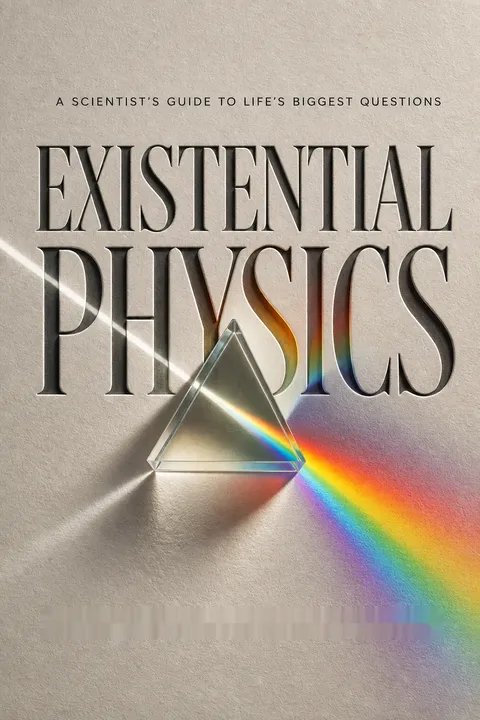
Existential Physics by Sabine Hossenfelder explores fundamental questions about the universe through a physicist's lens. Readers appreciate Hossenfelder's no-nonsense approach, clear explanations, and skepticism towards unproven theories. She distinguishes between scientific, unscientific, and ascientific concepts, challenging popular speculations. The book covers topics like free will, consciousness, and the nature of time. While some find her style refreshing and informative, others feel her arguments are overly dismissive or difficult to follow. Overall, the book stimulates thought and debate about the intersection of physics and philosophy.
People Also Read






Glossary
ascientific
Outside science's reachA claim is ascientific when it neither contradicts established evidence nor makes testable predictions that could support or reject it. The term distinguishes such claims from pseudoscientific ones, which present themselves as scientific while disregarding evidence. An ascientific belief may be meaningful or appealing, but its truth is not something current science can establish.
block universe
All times in spacetimeThe block universe is a view of spacetime in which past, present, and future events are parts of a four-dimensional structure rather than successive stages with one objectively privileged present. It follows from interpreting relativity's lack of universal simultaneity this way. The view does not imply that people experience all times or that the past is practically accessible.
past-hypothesis
A low-entropy beginningThe past-hypothesis is the assumption that the universe began in a state of unusually low entropy. This special starting condition allows entropy to increase toward more probable states, accounting for the familiar direction of time in processes such as mixing, aging, and memory formation. Current theories use the assumption but do not explain why the initial state was so ordered.
Boltzmann brains
Brains from rare fluctuationsBoltzmann brains are hypothetical, short-lived conscious brains that arise from rare entropy-lowering fluctuations in a universe otherwise near equilibrium. They matter as a test of cosmological models: if such observers vastly outnumber ordinary observers, our ordered memories and detailed observations become statistically puzzling. Whether fundamental physical theories permit the required fluctuations is unresolved.
coarse-graining
Averaging away fine detailCoarse-graining is a method of moving from a detailed description of many constituents to a simpler account that preserves only information relevant at a chosen scale. Describing a gas by pressure and temperature, rather than tracking every molecule, is a familiar example. The resulting effective model is useful within its limits, but it discards details and is not a complete microscopic account.
weak emergence
Higher-level behavior from partsWeak emergence describes properties that appear at a larger scale and can, in principle, be derived from the behavior and interactions of the system's smaller constituents. Temperature, color, and biological function are examples of higher-level properties that depend on underlying physical arrangements. The derivation may be too difficult to perform in practice, but the property is not independent of its physical basis.
strong emergence
Behavior not reducible to partsStrong emergence is the proposed existence of higher-level properties that cannot be derived from the properties and interactions of a system's underlying constituents. It would mean more than practical difficulty in calculation: the higher-level behavior would be independent of the lower-level account in a fundamental way. Hossenfelder notes that no convincing example of strong emergence is established in nature.
Integrated information theory
A proposed consciousness measureIntegrated information theory, or IIT, is a mathematical approach that associates consciousness with how much a system integrates information across its interacting parts. It assigns a quantity often written as phi, with greater integration taken to indicate greater consciousness. The theory is debated: exact calculation is extremely demanding, simplified measures have limitations, and a high value does not by itself establish conscious experience.
FAQ
What's Existential Physics about?
- Exploration of Big Questions: Existential Physics by Sabine Hossenfelder examines fundamental questions about existence, time, and the universe, blending insights from physics with philosophical inquiries.
- Physics and Philosophy Connection: The book argues that physics can provide insights into philosophical questions about reality and our place in the universe, emphasizing the importance of scientific principles in addressing existential queries.
- Accessible to Non-Experts: Hossenfelder aims to make complex scientific concepts approachable for readers without a physics background, bridging the gap between science and public understanding.
Why should I read Existential Physics?
- Engaging and Thought-Provoking: The book challenges readers to think critically about their beliefs and the nature of reality, with Hossenfelder's engaging writing style making complex topics accessible.
- Combines Science and Philosophy: It offers a unique perspective by merging scientific knowledge with philosophical questions, encouraging reflection on existence and the universe.
- Addresses Pseudoscience: Hossenfelder clarifies misconceptions about physics and counters pseudoscientific claims, providing a solid foundation for understanding the scientific method.
What are the key takeaways of Existential Physics?
- Nature of Time: The book discusses how time is perceived differently in physics, challenging the conventional understanding of time as linear.
- Determinism vs. Free Will: Hossenfelder explores the implications of quantum mechanics on free will, suggesting that the future is largely fixed, with randomness introduced by quantum events.
- Existence of Consciousness: The author argues that consciousness arises from particle interactions, challenging dualistic views of the mind and body.
What are the best quotes from Existential Physics and what do they mean?
- "Grasp the Universe as it is": This quote by Carl Sagan emphasizes understanding reality through scientific inquiry rather than comforting delusions.
- "The past, present, and future exist": This statement challenges our intuitive understanding of time, suggesting all moments are equally real.
- "The future is fixed": This highlights the deterministic nature of the universe, acknowledging the role of randomness from quantum mechanics.
How does Existential Physics address the concept of time?
- Time as a Dimension: Hossenfelder explains that time is treated as a dimension in physics, part of the four-dimensional space-time continuum.
- Relativity of Simultaneity: The book discusses Einstein's theory of relativity, illustrating how time is relative to the observer's frame of reference.
- Block Universe Theory: Hossenfelder introduces the idea that all moments in time exist simultaneously, challenging the notion of a singular "now."
What does Existential Physics say about free will?
- Determinism and Quantum Mechanics: The book argues that nature's laws are deterministic, with quantum mechanics introducing uncontrollable randomness, suggesting free will may be an illusion.
- Philosophical Perspectives: Hossenfelder critiques compatibilism, which posits that free will can coexist with determinism, emphasizing its misalignment with scientific causality.
- Implications for Human Behavior: The author suggests decisions result from complex computations based on input and experiences, rather than free will.
How does Existential Physics relate to consciousness?
- Consciousness as Emergent: Hossenfelder posits that consciousness arises from particle interactions in the brain, challenging the need for non-physical processes.
- Material Basis of Thought: The book argues against dualism, asserting that mental processes can be explained through physical interactions.
- Complexity of Conscious Systems: While consciousness is complex, it is fundamentally rooted in physical laws, inviting readers to consider a purely physical understanding of the mind.
What are the implications of the block universe theory presented in Existential Physics?
- All Moments Are Real: The theory suggests past, present, and future exist simultaneously, challenging the traditional view of time as linear.
- Reevaluation of Existence: It prompts a reevaluation of existence, implying every moment in time is equally valid and real.
- Philosophical and Scientific Intersection: The theory bridges philosophical inquiries about existence with scientific understanding, illustrating how physics informs profound questions about life.
How does Existential Physics address the concept of knowledge?
- Knowledge and Predictability: Hossenfelder discusses the limits of predictability in science, highlighting the dynamic nature of knowledge and its growth over time.
- Role of Scientific Theories: The book argues that scientific theories evolve with new discoveries, encouraging readers to embrace uncertainty in scientific inquiry.
- Interconnectedness of Knowledge: Hossenfelder illustrates how advancements in one field can lead to breakthroughs in another, fostering a holistic view of knowledge.
What does Existential Physics say about the nature of reality?
- Reality as Mathematical: Hossenfelder explores the idea that reality may be fundamentally mathematical, inviting readers to consider the implications of a mathematical foundation for existence.
- Subjectivity of Experience: The book emphasizes that our understanding of reality is shaped by perceptions and experiences, which can differ from objective truths.
- Scientific Inquiry as a Pathway: Hossenfelder advocates for scientific inquiry as a means to uncover reality, grounding beliefs in scientific understanding rather than speculation.
How does Existential Physics challenge traditional scientific narratives?
- Critique of Fine-Tuning Arguments: Hossenfelder critiques the fine-tuning argument for a creator, emphasizing that nature's constants do not require explanations beyond current understanding.
- Questioning Multiverse Theories: The book challenges the multiverse hypothesis, suggesting it does not provide meaningful explanations for nature's constants.
- Emphasis on Limits: Hossenfelder highlights the limits of scientific inquiry, encouraging readers to embrace uncertainty and recognize the boundaries of scientific understanding.
What role do interviews play in Existential Physics?
- Diverse Perspectives: Interviews with physicists and philosophers provide insights into complex topics like consciousness and the universe, enriching the narrative.
- Real-World Applications: Expert opinions connect theoretical concepts to real-world implications, helping readers understand how scientific advancements influence existence and morality.
- Engaging Format: The conversational format makes the content relatable, showcasing the human side of science and the thoughts of those grappling with profound questions.
Download PDF
Download EPUB
.epub digital book format is ideal for reading ebooks on phones, tablets, and e-readers.








