

Key Takeaways
Treat the impossibly cheap dresser as a warning about who sets the price.
A price with a story. In 2002, furniture maker John Bassett traveled to Dalian, China, to find the factory behind a bedroom set selling for far less than Vaughan-Bassett could spend on its materials. His workers dismantled the set and found a production method unlike theirs. The Chinese factory owner described selling at a loss as an investment in capturing the American market, and planned a huge expansion. Bassett suspected government support was helping make those prices possible.
What counts as dumping. In trade law, dumping means selling exports below a legally calculated fair value. It is not automatically illegal: U.S. authorities also have to find that domestic producers were harmed. The dresser turned an abstract trade dispute into a direct threat to a factory, its workers, and the town around it.
What's striking is how one cheap product makes a sprawling supply chain visible. The sticker price appears to be a simple consumer benefit, but it can conceal who finances production, who absorbs losses, and who bears the cost when local capacity disappears. That does not make every low-priced import unfair. Lower costs can reflect scale, better logistics, or different labor markets. Bassett's case is specifically about whether hidden subsidies and below-value pricing tilted competition, a distinction that matters more than treating foreign goods as a single category.
Remember, the South's furniture boom began with the same cheap-labor logic.
A southern manufacturing formula. In 1902, John Bassett's grandfather, J.D., built a furniture factory beside the Smith River, close to hardwood, a new railway, and people seeking paid work. He raised $27,500, hired fifty workers, and paid five cents an hour. Furniture production had already moved from New England to Michigan, and now shifted south for the same basic reasons: accessible materials and lower labor costs.
Opportunity and exploitation. Bassett hired Black workers when many nearby manufacturers would not, offering industrial employment beyond sharecropping. But Black workers earned far less than white workers, were confined to the dirtiest departments, and had little chance of promotion. The company created jobs and wealth, while extracting labor unequally. A century later, the same cost-seeking logic would help move production to Asia.
The history complicates any neat story in which American factories represent an innocent past later disrupted by globalization. Bassett itself grew by exploiting cheap labor and by undercutting northern competitors. Yet the workers' circumstances mattered: factory wages could offer more stability and choice than agricultural labor, even under racist pay and segregation. This is a useful distinction between a system's benefits and its justice. Economic opportunity can be real without making the conditions fair, and the people who profit most are rarely the people with the least power.
A company town can provide security while concentrating power in one family.
One company, many roles. Bassett Furniture did more than employ the town. The family owned homes, a bank, utilities, and major civic institutions. Workers could find housing and steady jobs, while the company sometimes helped with loans, schooling, or personal emergencies. During the Depression, J.D. reduced hours and wages rather than dismissing the entire workforce.
Paternalism has a price. Bassett was unincorporated, so residents had little independent civic authority. Family influence reached into local government, hiring, and daily life. Black employees experienced segregation and lower wages, and workers had few protections against management's decisions. This tightly managed arrangement could feel protective when business was strong, but a factory closure could strip away income, identity, and the town's economic foundation at once.
The company town resembles a private welfare state: one employer supplies services that might otherwise come from public institutions, and gains unusual authority in return. Such arrangements can coordinate investment and support workers, but they also create a dangerous concentration of risk. If the employer changes direction, residents cannot easily replace the whole ecosystem. The model also makes generosity difficult to separate from control. A benefit given at an owner's discretion is not the same as a right secured by law or a community decision.
A family succession fight made John Bassett build a proving ground elsewhere.
An heir without the throne. John Bassett III grew up expected to lead the family company. After his father died, however, the board elevated his cousin Ed and brother-in-law Bob Spilman. Spilman controlled decisions and sidelined John, who remained in the company without the authority he expected. In 1982, John left Bassett Furniture for Vaughan-Bassett in Galax, a much smaller company connected to his wife's family.
Results earned the hard way. Vaughan-Bassett was losing money, behind on bills, and struggling with poor quality. John invested his own money, upgraded equipment, and recruited capable operators, including manufacturing expert Duke Taylor and engineer Linda McMillian. He learned to make a failing factory profitable without the authority or scale he had once assumed would be his birthright.
The family feud is more than colorful corporate drama. It explains why John built a separate source of power and why his later defense of domestic manufacturing became personal. Exclusion can sharpen a person's independence, but it can also turn business decisions into contests over identity and recognition. His drive helped the smaller company survive; the same force could make him abrasive and controlling. The case illustrates how resilience often grows from constraint, while reminding readers that determination is not automatically the same as good judgment.
Outsourcing transfers manufacturing know-how along with production.
The lessons traveled too. Taiwanese entrepreneur Larry Moh showed that Asian factories could make American-style furniture, not only wicker and rattan. His team found a way to use discarded rubberwood, organized production around efficiency, and built an international network of factories and assembly operations. The furniture could look familiar while costing substantially less.
American firms helped train competitors. U.S. manufacturers and suppliers visited Asian plants, shared designs and production methods, and sometimes allowed their own factory lines to be filmed. The advice that began as a way to secure cheaper products helped build overseas manufacturing expertise and supply chains. Meanwhile, container shipping became cheaper, making bulky furniture easier to move across oceans. The threat was not simply low wages. It was a growing system that joined materials, machinery, skills, logistics, and access to retailers.
This is a case of capability migration: production knowledge is partly embodied in workers, but also in supplier relationships, process design, machinery, and quality standards. Moving an order abroad can therefore transfer more than a task. It can help create a rival industrial ecosystem. That does not mean firms should never outsource, or that knowledge can be permanently contained. It does mean the immediate savings should be weighed against the long-term value of domestic expertise and supplier networks, costs that rarely appear on a purchase order.
When imports erase your cost advantage, redesign the factory and the offer.
Change the work, not just the slogan. John recruited experienced managers and engineers, upgraded equipment, reorganized production, and introduced cheaper furniture lines for customers who could not afford higher-priced solid wood. In Sumter, he helped revive a shuttered factory by making low-cost furniture from medium-density fiberboard. The product was widely mocked, but it sold quickly and returned the plant to profitability.
Keep production economically viable. Vaughan-Bassett also reverse-engineered its drawer parts, reduced material waste, and introduced limited-time low-price promotions called Barnburners. The company sometimes accepted little profit on those items because running the factory and retaining market access could be better than operating at reduced hours. Its strategy was not to preserve every old product. It was to keep adapting what it made, how it made it, and who could buy it.
The strongest version of Bassett's argument is that manufacturing is not a museum piece. A domestic plant must compete through process innovation, product choices, and cost discipline, not nostalgia. The story's less comfortable implication is that survival may still depend on intensifying work or shifting toward cheaper products. That can preserve employment without guaranteeing good wages or lasting security. Adaptation is essential, but it does not settle who should bear the risks of reinvention or what public support should require in return.
Turn distance into a service advantage customers can feel.
Make speed the product. Chinese goods could be cheaper, but a container took weeks to cross the Pacific. Vaughan-Bassett responded with Vaughan Bassett Express, or VBX, a system promising delivery to stores in about a week. The company increased inventory, changed credit processing, and persuaded independent trucking firms to prioritize its orders.
Coordinate the whole chain. The system required office workers, warehouses, sales staff, and drivers to operate differently. New-store credit that once took days had to be processed in minutes. Retailers could keep fewer pieces in stock and order what they needed quickly, reducing the risk of holding unsold inventory. VBX was not merely faster shipping. It was a redesign of inventory, finance, and delivery around smaller retailers that could not order containers at a time.
The strategic insight is that a business can compete on a different dimension from the one where it is losing. Instead of matching the lowest factory price, Vaughan-Bassett sold responsiveness and lower inventory risk. This resembles a broader operations principle: the customer experiences the whole system, not the factory's unit cost alone. The approach is demanding, however. Speed requires inventory and coordination, which tie up capital and can fail if forecasts are wrong. Service differentiation works only when the promised reliability is real.
Trade remedies can preserve factories, but their side effects need scrutiny.
A legal route to challenge prices. John assembled a coalition of furniture makers and workers to petition under the Tariff Act of 1930. The companies argued that Chinese bedroom furniture was being dumped and that domestic producers were being harmed. The coalition eventually represented 57 percent of the relevant industry. The U.S. International Trade Commission agreed that imports had injured domestic producers, and duties were imposed.
A contested result. The duties helped Vaughan-Bassett continue operating and fund equipment, but they did not restore the industry as a whole. Some imports shifted to Vietnam, Malaysia, and Indonesia. Critics argued that consumers paid more, retailers faced disruption, and legal settlements created an opaque system. The Byrd Amendment directed some collected duties to affected domestic firms, but Congress repealed it. The case shows both the potential and the limits of trade enforcement.
The petition exposes a genuine policy conflict: prices benefit many consumers, while job losses and community decline are concentrated among particular workers and places. The law offered a remedy for alleged unfair competition, but its design could not guarantee that duties would create durable employment or that payments would reach workers. The book's account is strongest when it distinguishes a legal finding of injury from proof that protection is an optimal economic policy. A remedy can be lawful and still produce uneven, costly, or unintended consequences.
Count globalization's gains and losses where they actually land.
Savings are broad, losses local. Economists argued that imported furniture lowered prices and increased consumer choice. Research cited in the book estimated modest per-person savings from Chinese imports, while job losses clustered in manufacturing towns. Between 1990 and 2010, Martinsville and Henry County lost nearly half their jobs. By the book's reporting period, unemployment was often between 15 and 20 percent, and many families relied on food assistance.
A lost job changes more than income. Former workers described delayed medical care, unstable part-time work, and difficulty retraining for jobs that were not available nearby. Some who found new work earned much less. Local suppliers and shops also lost customers when factories closed. The gains from cheaper goods appeared at checkout, while the costs accumulated in particular households, public services, and communities.
This is a distributional problem, not a simple arithmetic dispute about whether total consumer savings exceed total wage losses. A small discount spread across millions of shoppers can coexist with severe, persistent harm to a narrow group. Aggregate statistics can obscure that asymmetry, while personal testimony can reveal it but cannot by itself establish the best policy. The useful question is therefore not only whether trade raises overall purchasing power, but whether institutions help displaced people share in the gains and regain stable work.
Saving one factory cannot reverse a region's industrial collapse.
One holdout, many closures. Vaughan-Bassett remained the largest American maker of wooden bedroom furniture and kept roughly 700 workers employed. It invested in machinery, contributed to employee profit sharing, and opened a free clinic. In 2012, it also announced plans to reopen a nearby plant and hire 115 workers. These choices supported Galax, but surrounding towns continued to lose factories and jobs.
The production map keeps moving. Stanley Furniture shifted much adult furniture production to Indonesia and Vietnam, where workers leaving farming found indoor factory jobs and new income. They, too, worried that rising wages would push production elsewhere. The same global cost search that moved furniture from the American South to Asia could continue within Asia. There is no single, permanent location secured by a low wage.
The book refuses a tidy victory lap. Bassett's factory demonstrates that local production can survive through investment, operational change, and legal action, but one company's success cannot restore the supplier network or civic life lost across a region. Nor does preserving American jobs erase the working conditions and insecurity facing workers abroad. The more durable lesson is that economies need institutions capable of absorbing repeated transitions. A successful factory is valuable, but a community should not have to depend on one unusually determined owner to remain viable.
Analysis
Factory Man works because it turns a debate over trade policy into a story with a vivid object at its center: a dresser whose price appears to defy the cost of making it. That object leads backward to the founding of Bassett, where cheap labor and local timber built an industrial empire, then forward through family succession, Asian manufacturing, corporate retrenchment, and a legal campaign against alleged dumping. The repeated historical echo is important. The South once displaced northern producers through lower costs; Asian manufacturers later used a similar advantage against southern factories. The book therefore complicates any claim that manufacturing has a natural home or that one generation's competitive success is permanent.
John Bassett is an effective protagonist precisely because he is not an uncomplicated hero. His intensity, practical intelligence, and commitment to workers help keep Vaughan-Bassett alive. His family wealth, paternal management style, and tolerance for hardball tactics complicate that achievement. The company's earlier history includes racial wage inequality and concentrated family power. The narrative also gives competing parties room to explain why imports appealed to retailers and consumers, and why public companies chose to close plants rather than continue investing in them.
The central policy tension is between diffuse benefits and concentrated costs. Lower prices can help households broadly, while factory closures can devastate workers, suppliers, and towns with few alternative employers. Neither the consumer-price argument nor the community-loss argument resolves the tradeoff alone. The antidumping campaign had measurable effects, including reduced Chinese bedroom-furniture imports and continued production at Vaughan-Bassett, but it also generated high legal costs, contested settlements, and shifts in sourcing to other countries. The case is best read not as proof that protectionism works universally, but as evidence that trade rules, corporate choices, and local resilience are intertwined.
Its deepest challenge is institutional: a region should not need an exceptional heir, a multimillion-dollar legal campaign, and a shrinking circle of surviving factories to keep people employed. Market efficiency can be real while its social costs remain unpaid. The book asks readers to measure success not only by cheaper goods or surviving firms, but by who has bargaining power, who can adapt, and who is left to absorb the transition.
Review Summary
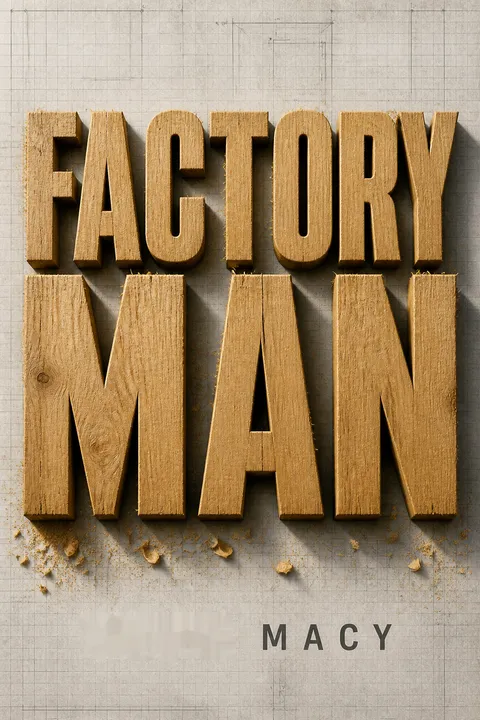
Factory Man by Beth Macy is a compelling account of John Bassett III's fight to save American furniture manufacturing jobs from Chinese competition. Readers praise Macy's thorough research, engaging writing style, and ability to humanize complex economic issues. The book offers insights into globalization's impact on small-town America and the furniture industry's history. While some found the family history sections lengthy, most appreciated the balanced portrayal of characters and the exploration of trade policies. Many readers were moved by the stories of workers affected by factory closures and admired Bassett's determination to keep manufacturing local.
People Also Read










Glossary
Dumping
Exports priced unfairly lowIn the book's trade-law context, dumping means exporting goods at prices below a legally calculated fair value, or below the price charged in the producer's home market. Low prices alone do not establish illegal dumping. Authorities must also determine that the imports caused harm to domestic producers. In the furniture case, the calculation involved comparing Chinese prices and costs with values from a surrogate market economy.
Vaughan Bassett Express (VBX)
Fast furniture delivery systemVBX was Vaughan-Bassett's delivery program, designed to get furniture from factory to retailer in about a week. The company increased inventory, accelerated credit approval, reorganized warehouse and shipping processes, and negotiated priority with trucking firms. The program aimed to compete with imported furniture by offering speed and reliability, while allowing smaller retailers to carry less inventory.
Barnburners
Low-price promotional furnitureBarnburners were Vaughan-Bassett furniture promotions priced so aggressively that the company sometimes made little or no profit on an item. John Bassett used them to attract orders, maintain market share, and keep factory production running. The approach treated continuous factory operation and customer access as strategically valuable, even when an individual discounted sale offered little margin.
Blended strategy
Domestic production plus importsA blended strategy combines a company's own domestic manufacturing with furniture sourced from overseas. American furniture makers adopted it to lower costs and compete with imports, sometimes buying components or finished products from Asian factories for sale under their own brands. The strategy could preserve a brand or retail business while reducing domestic production, which made its effects on local jobs contested.
Byrd Amendment
Duties paid to affected firmsThe Byrd Amendment, formally the Continued Dumping and Subsidy Offset Act of 2000, directed certain U.S. antidumping and countervailing duties to domestic companies judged to have been harmed by unfairly traded imports. Furniture coalition members received payments that helped fund operations and equipment. The amendment was repealed after international opposition; subsequent collected duties went to the U.S. Treasury rather than petitioner companies.
Trade Adjustment Assistance (TAA)
Support for displaced workersTrade Adjustment Assistance is a federal program that provides training and other resources to workers who lose jobs because of foreign competition. In the towns described in the book, some workers used TAA funding for community-college courses or vocational training. Participation was limited, in part because the program's full-time study requirements could be difficult for people with bills, family duties, and limited local job prospects.
Sunshine pump
Praise masking extra demandsJohn Bassett used this phrase for a management tactic he associated with Bob Spilman. A manager received encouraging language that made an assignment sound like a promotion or special opportunity, but the practical result was often greater responsibility without a corresponding raise or change in status. The term captures how praise can be used to motivate employees while concealing an unequal bargain.
glit
Printed particleboard furnitureGlit was furniture-industry slang for low-cost pieces made by gluing printed paper designs onto particleboard or medium-density fiberboard. The material could imitate wood or marble at a much lower price than solid wood or veneer. Vaughan-Bassett used it in its Sumter operation to serve budget-conscious buyers. Critics mocked its appearance and durability, but the product found a market and initially generated profits.
FAQ
What's Factory Man about?
- Focus on John Bassett III: The book tells the story of John D. Bassett III, a furniture maker from Virginia who fought against offshoring to save his family business and community.
- Impact of Globalization: It explores how globalization affected American manufacturing, particularly in the furniture industry, and the challenges local businesses faced against cheaper imports.
- Personal and Community Struggles: The narrative includes personal and familial conflicts within the Bassett family and the broader community's struggles with job losses and economic decline.
Why should I read Factory Man by Beth Macy?
- Insightful Historical Context: The book provides a detailed look at the American furniture industry and the socio-economic changes that have shaped it, relevant for those interested in business history.
- Inspiring Story of Resilience: John Bassett's determination to keep his family business afloat serves as an inspiring tale of resilience and innovation in the face of adversity.
- Relevance to Current Issues: With ongoing discussions about offshoring and the future of American manufacturing, the book is timely and relevant, providing context for understanding trade policies.
What are the key takeaways of Factory Man?
- Importance of Local Manufacturing: The book emphasizes the value of local manufacturing and the need to support American jobs against globalization.
- Resilience and Innovation: John Bassett III’s story showcases the importance of resilience and innovation in business practices to survive in a competitive market.
- Human Cost of Globalization: It highlights the struggles of workers who lose their jobs to cheaper labor markets, calling attention to the need for policies that protect domestic industries.
What are the best quotes from Factory Man and what do they mean?
- "If the price is right, you will do anything.": Reflects the perception of American business leaders as overly focused on profit, often at the expense of ethics.
- "The rules of war had changed—drastically.": Signifies the shift in the business landscape due to globalization, where traditional competition methods were ineffective.
- "You get what you inspect, not what you expect.": Highlights John Bassett’s management philosophy, stressing the importance of oversight and accountability in business operations.
Who is John D. Bassett III in Factory Man?
- Third-Generation Furniture Maker: He is a descendant of a prominent furniture-making family in Virginia, known for their significant contributions to the industry.
- Fighter Against Offshoring: Recognized for his efforts to combat the offshoring of furniture manufacturing to China, advocating for American jobs and fair trade practices.
- Community Advocate: His efforts extend beyond his business; he becomes an advocate for the local community, striving to protect jobs and support workers affected by economic changes.
How did John Bassett III fight against offshoring in Factory Man?
- Antidumping Petition: Led a coalition to file an antidumping petition against Chinese imports, arguing they were sold at unfairly low prices to protect American jobs.
- Innovative Business Strategies: Implemented strategies like lean manufacturing and a focus on quality to compete against cheaper imports while maintaining American-made products.
- Community Engagement: Actively engaged with local retailers and the community to promote the value of American-made furniture, fostering solidarity among those affected by job losses.
What challenges did the American furniture industry face according to Factory Man?
- Rising Imports: The influx of cheap furniture imports from China severely impacted American manufacturers, forcing many to close or reduce their workforce.
- Economic Shifts: Changes in consumer preferences and the rise of global supply chains created a challenging environment for American furniture makers.
- Corporate Decisions: Decisions driven by short-term profits led to offshoring and the erosion of local economies, emphasizing the need for sustainable business approaches.
How did globalization affect the furniture industry in Factory Man?
- Shift to Cheap Labor: Globalization led to manufacturing moving to countries with lower labor costs, undermining American furniture makers.
- Market Saturation: Cheaper imported furniture saturated the market, making it difficult for local manufacturers to compete on price without sacrificing quality.
- Loss of Jobs: Many American workers lost their jobs as factories closed or relocated overseas, leading to economic decline in manufacturing-reliant communities.
How did Vaughan-Bassett adapt to survive in the changing market?
- Lean Manufacturing Techniques: Adopted lean manufacturing to improve efficiency and reduce costs, allowing competitiveness against cheaper imports.
- Product Innovation: Focused on creating new lines that appealed to changing consumer tastes, helping capture market share and maintain relevance.
- Community and Employee Engagement: Emphasized strong company culture and local initiatives, building loyalty among workforce and customers.
What role did family dynamics play in Factory Man?
- Power Struggles: The book illustrates power struggles within the Bassett family, influencing business decisions and leadership roles.
- Legacy and Identity: John’s desire to establish his own identity apart from his family legacy is a central theme, highlighting familial expectations in business.
- Support and Conflict: Family relationships provided both support and conflict, shaping John’s journey and decisions in the face of adversity.
How did the community respond to the factory closures in Factory Man?
- Support for Local Businesses: The community rallied around local businesses, emphasizing the importance of supporting American-made products to preserve jobs.
- Advocacy for Policy Change: Residents and workers advocated for policy changes to protect domestic industries, highlighting the desire to fight globalization.
- Emotional Toll: The emotional impact of closures was profound, with families facing financial hardship and uncertainty, illustrating the human cost of economic decline.
What role did trade policies play in the story of Factory Man?
- Impact of NAFTA and WTO: Trade agreements facilitated offshoring, often prioritizing corporate interests over domestic workers and industries.
- Antidumping Laws: John Bassett III’s use of antidumping laws shows how small manufacturers can leverage trade policies to protect their interests.
- Need for Reform: The book calls for trade policy reform to better support domestic industries, advocating for a balanced approach considering worker welfare.
Download PDF
Download EPUB
.epub digital book format is ideal for reading ebooks on phones, tablets, and e-readers.








