

Key Takeaways
Train to meet failure without turning pain into a verdict on yourself
The result is not your identity. Chödrön defines failure in ordinary terms: events did not go as hoped. The deeper danger comes when that disappointment hardens into a judgment that something is fundamentally wrong with you. Her central proposal is to learn how to encounter that rawness without fleeing into blame, self-attack, or numbness. This is the practical meaning she draws from the Beckett line behind the book’s title: setbacks recur, but our way of meeting them can change.
Life offers no script. In her graduation address, she compares stepping out of school to entering a vast unknown. Prepare, know what matters, and act, but accept that no plan can tell you exactly what comes next. Her own painful second divorce took years to become a turning point rather than a sentence on her future.
The useful shift is from outcome-based identity to a process-based question: what can be learned or done now? That resembles approaches in sport and education that treat mistakes as feedback rather than proof of fixed ability. Yet the distinction matters: a setback is not automatically instructive, and some failures reflect unfair systems, inadequate resources, or another person’s misconduct. The book’s strongest claim is not that every loss is secretly good. It is that a person can resist letting a painful result define the whole self, while still examining what the event demands.
Treat a setback as unfinished information, not a final verdict
Outcomes change meaning. Chödrön tells a Tibetan story about an older couple whose valuable horse runs away. Their neighbors call it a disaster. The horse returns with another horse, and the same neighbors call it a blessing. When the couple’s son breaks his leg while trying to tame the newcomer, the verdict flips again. Then soldiers arrive and take the able-bodied men to war, while the injured son is spared. The story stops there, but its point is that people rarely know what one event will lead to.
Keep judgment provisional. The old farmer does not claim every event is good. He refuses to pretend he can see the whole chain of consequences. That stance makes room for grief and practical response without declaring, in the first painful moment, that life is ruined.
This is a compact lesson in hindsight bias: once outcomes are known, people tend to mistake the ending for something that was obvious from the start. The farmer’s restraint protects against that distortion. It can also prevent premature despair when circumstances shift. Still, uncertainty should not become passivity. A broken leg needs care, and an injustice may require intervention. The story is best used as a check on overconfident interpretation, not as a reason to call harm a blessing or to avoid decisions that can be made with the information available.
Notice the sensation before believing the story about it
Separate hurt from self-judgment. Chödrön describes failure as a bodily experience as well as a thought: dread, heat, tightness, or the exposed feeling of having got something wrong. The mind quickly adds a story, such as “I am a failure” or “this is all someone else’s fault.” She recommends noticing both the sensation and the words appearing in the mind, then returning attention to the immediate experience. A gentler description might be: this hurts, but pain alone does not prove that I am bad.
Practice in small intervals. In the interview, she suggests staying with an uncomfortable feeling for a few seconds at first. Meditation offers a model: notice when attention has wandered into harsh self-talk, and bring it back to what is happening now. Curiosity interrupts automatic blame without requiring the feeling to disappear.
The move from “I am ruined” to “I notice dread and self-criticism” creates distance between an experience and an identity. In psychology, this resembles affect labeling and metacognitive awareness: naming an emotion can make it easier to observe rather than obey. Chödrön’s emphasis is especially useful because it does not demand instant positive thinking. A necessary qualification is that staying present is not always the only response. Persistent distress, danger, or trauma may call for outside help; attention to feelings can support action, but should not replace it.
Expect the waves, and practice getting back on your feet
Resilience is repeated recovery. Chödrön recounts advice from her teacher, Chögyam Trungpa Rinpoche. He compared painful periods to walking into the sea: a wave knocks a person down, and the choice is to remain there or stand and continue. Another wave may arrive, so the practice is to keep rising, with courage and humor. The waves do not have to stop for life to become more workable. As a person learns to meet them, the same upheaval may no longer feel as overwhelming.
Train before the crisis. Chödrön credits meditation with helping her become curious instead of simply shutting down when she felt she had failed. This is not a promise of invulnerability. It is practice in returning to the present, again and again, so that distress is something to experience rather than a command to give up or lash out.
The wave image treats resilience as a skill of recovery, not a permanent state of calm. That is a more humane standard than expecting adversity to stop affecting someone. It also fits the logic of repeated practice: small acts of returning attention can build familiarity with distress before a larger crisis arrives. The metaphor has limits, however. Some waves represent conditions that must be changed, not merely endured. The image works best when standing up means both tolerating what cannot be controlled and seeking help or changing course where action is possible.
Name the harm without turning shame into your identity
Accountability needs honesty. Chödrön distinguishes an unwanted outcome from a deliberate wrong. When someone has acted unethically or hurt another person, she recommends a fearless inventory, similar to the fourth step of Alcoholics Anonymous. The aim is neither to excuse the behavior nor to declare the whole person irredeemable. She describes basic goodness as an underlying human wholeness that can be obscured by temporary patterns such as greed, fear, or aggression.
Regret must be acknowledged. Chödrön says she has practiced confession twice a month for more than thirty-five years. In her account, naming a harmful act and allowing remorse are necessary to set it down. The process is not self-punishment: a person recognizes the harm, notices the impulses that led there, and uses that understanding to make a different choice when those impulses return.
This distinction resembles the difference between guilt about an action and shame about the entire self. The first can focus attention on repair; the second can trap someone in self-condemnation. Chödrön’s account is strongest when basic goodness supports responsibility rather than softening it. Naming a harmful act should include listening to those affected and making amends where possible, not simply feeling remorse privately. Nor does inner transformation erase consequences. A humane view of the person and a clear view of the damage belong together.
Let regret widen empathy and guide repair
Do not erase the past. Chödrön speaks of regret about choices that hurt her children and parents. Those events cannot be undone, but she tries to build a more attentive relationship with her children now and to dedicate kind actions to the memory of her parents. She also recalls the Dalai Lama describing a decision he regretted, one he believed contributed to an old man’s death. He did not claim to have made the regret vanish.
Turn remorse outward. Chödrön takes from this story two possibilities: regret can help someone feel kinship with others who have caused harm, and it can motivate a life more oriented toward helping than hurting. The alternative, in her view, is to let regret become a fixed identity and a cycle of self-pity that serves neither the person harmed nor the person who feels remorse.
Regret can be morally informative because it keeps attention on consequences that a self-protective story might minimize. Chödrön’s emphasis on compassion gives that attention somewhere to go: toward changed conduct and greater care for others. This connects remorse with restorative ideas of accountability, where repair matters more than declaring oneself good or bad. But dedication and compassionate intention cannot substitute for restitution, changed safeguards, or accepting consequences. When repair is impossible, the work may be to remember honestly and let the memory shape future behavior without pretending that this cancels the loss.
Trace repeated relationship pain back to its first attraction
Study the whole cycle. For people who keep reaching painful endings in relationships, Chödrön suggests examining not only the final hurt but also the beginning. What feeling, quality, or familiar dynamic draws them toward the same kind of person? What happens emotionally when the relationship starts, and what happens when it ends? She argues that becoming conscious of both points can reveal a repeating pattern that was previously operating unnoticed.
Awareness creates options. A person might decide not to enter a familiar dynamic, choose someone different, or change their own part in the relationship. Chödrön does not promise that every attempt will succeed. Sometimes a changed response leads to a different relationship; sometimes it shows that the old dynamic depends on both people continuing their familiar roles.
Tracking both attraction and ending is a practical form of pattern analysis. People often scrutinize the breakup while overlooking the early cues that made a relationship feel compelling. Noticing those cues can create a pause between familiar chemistry and automatic commitment. The approach should not turn every painful relationship into a personal failure or imply that someone causes another person’s abuse. Context, power, and safety matter. Pattern awareness is most useful when it increases choice and protection, not when it becomes a new reason to blame oneself.
Move toward fear in small steps when a calling matters
Fear can mark open ground. Chödrön describes transitions as frightening because old certainties have fallen away. Drawing on Trungpa, she presents fear as a fluid state that can be explored rather than instantly treated as proof that retreat is necessary. Courage, in this account, means being willing to feel fear while remaining open to what is not yet known. Following a calling does not guarantee praise or success, but staying still solely to avoid criticism can mean giving up a meaningful direction.
Make the approach gradual. For someone overwhelmed by a major choice, Chödrön recommends patience and small steps. A person who wants to write could begin by keeping a journal or blog; someone considering a career change can start moving in that direction while allowing time for fear to ease. Slow movement still counts as movement.
This advice bridges acceptance with behavioral exposure: approaching a feared task in manageable increments can make action more possible than waiting for fear to disappear. It also challenges the assumption that confidence must precede commitment. Yet fear is not always merely an obstacle to growth; it can signal genuine danger, exploitation, or an unwise risk. A useful application asks what the fear is responding to, then distinguishes protective information from the discomfort of uncertainty. Small steps should increase informed agency, not force someone into a decision they do not want.
Separate changing capacity from the worth of a whole person
A body can change without erasing you. Chödrön discusses aging, back pain, and living with chronic fatigue for more than twenty years. Physical limits altered what she could do, including how long she could sit in meditation. She urges readers not to treat illness or aging as evidence that a person has become less whole. The body’s decline may be painful and frightening, but it does not settle the question of a person’s worth.
Keep the story flexible. Chödrön warns against adding a second injury through a fixed narrative about what illness means or how others must see you. Her phrase “spirit is everything” refers to an attitude that stays open to life, not to feeling cheerful or denying suffering. Acceptance can make room for grief while loosening the grip of self-condemnation.
This perspective separates human dignity from productivity, an important corrective in cultures that measure people by output and independence. It can help someone adapt without treating disability as a personal defeat. The essential nuance is that attitude does not cure illness, eliminate pain, or provide access to care. A whole person may still need medication, accommodations, assistance, and advocacy. The most generous reading of Chödrön’s point is not that spirit should overcome bodily limits, but that bodily limits do not exhaust who someone is.
Analysis
This short book joins a commencement address to a long interview, and its two-part form matters. The speech gives the memorable images: a farmer who refuses to label events too quickly, and a person repeatedly knocked down by waves. The interview makes the philosophy more operational by exploring self-talk, remorse, relationship patterns, fear, and illness. Together they redefine failure less as an outcome than as a relationship to an outcome. The central practice is to feel what has happened without immediately converting it into a verdict about the self or another person.
The book is not simply an argument for positive thinking. It asks readers to remain with painful feelings, but it also asks for honest acknowledgment when they have caused harm. That distinction gives the teaching ethical weight. Basic human worth is not a license to evade responsibility; remorse should inform future choices. Likewise, the farmer’s uncertain judgment is not a claim that every event is beneficial. It is a warning against confusing an early interpretation with the whole story.
The strongest practical sequence is: notice the immediate feeling, recognize the story attached to it, and choose a response that does not merely repeat an old defense. That sequence can support emotional regulation, but it cannot solve every problem internally. Some pain points to unsafe conditions, structural barriers, illness, or harms requiring restitution and outside intervention. The book is most persuasive when inner openness and concrete action are treated as partners.
Its promise is modest but consequential. Losses may continue, bodies may change, and courageous choices may fail by conventional measures. Yet a person can become less governed by blame, shame, and avoidance. “Forward” therefore does not mean guaranteed improvement. It means staying responsive to reality, including its unfixable parts, while retaining the capacity to learn, repair, and care.
Review Summary
Fail, Fail Again, Fail Better receives mostly positive reviews, with readers appreciating Pema Chödrön's insights on embracing failure as a learning opportunity. Many find her writing style clear, concise, and hopeful. The book, which contains a commencement speech and an interview, is praised for its encouragement to move forward despite setbacks. Some criticize the book's brevity and layout, feeling it could have been more concise. Overall, readers find the message inspiring and applicable to various life situations.
People Also Read








Glossary
Fail better
Learn through repeated setbacksChödrön’s interpretation of the Beckett phrase treats failure as an unavoidable part of living, not a single disqualifying event. To fail better is to meet disappointment with more awareness and less blame or avoidance, allowing vulnerability to deepen learning, connection, and more careful choices.
basic goodness
Inherent human wholenessA Buddhist idea Chödrön uses to describe a fundamental human wholeness that is not erased by painful feelings or harmful actions. It does not excuse unethical behavior. Rather, it allows a person to acknowledge and change destructive tendencies without treating those tendencies as the person’s permanent identity.
shamatha-vipassana
Sitting meditation practiceA form of sitting meditation that Chödrön names among the practices she received from her teacher. In this book, she associates it with breath meditation and with learning to notice when attention wanders into thought, then return to present experience. The text does not give a step-by-step meditation manual.
lungta
Uplifted life energyA Tibetan term Chödrön uses for an uplifted quality connected with the energy of life. She links it to an attitude that stays open to what is unfolding rather than insisting that experience must be labeled entirely good or bad. It does not mean feeling happy at all times.
confession practice
Acknowledge and release regretA contemplative practice Chödrön says she has undertaken twice monthly for more than thirty-five years. It involves honestly bringing forward actions one regrets, allowing the remorse to be felt, and then laying it aside rather than carrying it as a permanent identity. The process calls for acknowledgment, not denial or self-punishment.
FAQ
What's "Fail, Fail Again, Fail Better" about?
- Commencement Speech: The book is based on Pema Chödrön's 2014 commencement address at Naropa University, focusing on embracing failure as a path to growth.
- Themes of Failure: It explores the concept of failure, how to handle it, and how it can lead to personal development and creativity.
- Inclusion of Interview: The book includes a conversation with Tami Simon, discussing failure, regret, and the mystery of life.
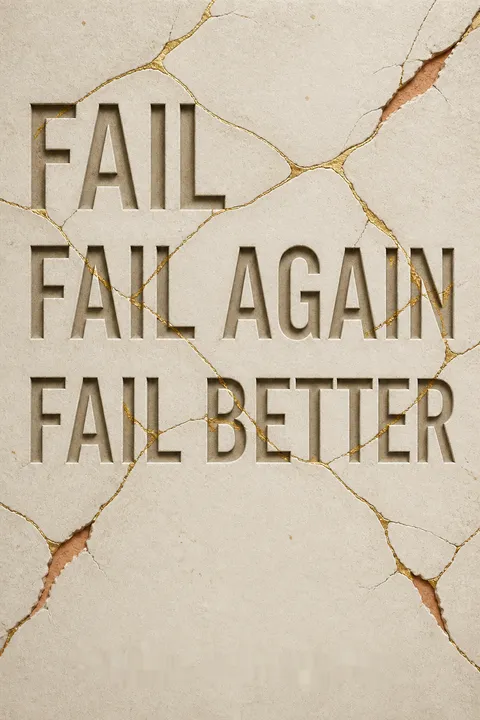
- Inspirational Quote: The title is inspired by Samuel Beckett's quote, "Fail. Fail again. Fail better," emphasizing resilience and learning from setbacks.
Why should I read "Fail, Fail Again, Fail Better"?
- Practical Wisdom: The book offers practical advice on dealing with failure and uncertainty, which is applicable to various life situations.
- Encouragement to Embrace Vulnerability: It encourages readers to embrace vulnerability and see failure as an opportunity for growth.
- Insightful Conversations: The included interview provides deeper insights into handling life's challenges and the importance of self-compassion.
- Inspirational and Relatable: Pema Chödrön's personal anecdotes and teachings make the book both inspirational and relatable.
What are the key takeaways of "Fail, Fail Again, Fail Better"?
- Failure as a Teacher: Failure is not the end but a teacher that can lead to new discoveries and personal growth.
- Embrace Uncertainty: Life's uncertainties are opportunities for potential and should be embraced rather than feared.
- Self-Compassion: It's crucial to be kind to oneself during failures, avoiding self-blame and harsh judgments.
- Continuous Learning: The process of failing better involves learning from each experience and using it to move forward.
What are the best quotes from "Fail, Fail Again, Fail Better" and what do they mean?
- "Fail. Fail again. Fail better." - This quote by Samuel Beckett, used by Chödrön, emphasizes resilience and the iterative process of learning from failure.
- "Welcoming the unwelcome." - This phrase suggests embracing challenges and discomfort as opportunities for growth.
- "Spirit is everything." - Reflects the importance of maintaining a positive attitude and spirit, especially in the face of adversity.
- "Maybe yes, maybe no." - A reminder to remain open-minded about outcomes, as what seems negative may lead to positive developments.
How does Pema Chödrön define failure in "Fail, Fail Again, Fail Better"?
- Unexpected Outcomes: Failure is defined as situations not turning out as expected or desired.
- Opportunity for Growth: It is seen as an opportunity to learn and grow, rather than a definitive end.
- Emotional Rawness: Failure often brings feelings of vulnerability and rawness, which can be transformative if embraced.
- Part of Success: Chödrön emphasizes that failure is an integral part of the journey to success.
What advice does Pema Chödrön give for dealing with failure?
- Stay Present: Encourage staying present with the feelings of failure rather than escaping them.
- Curiosity Over Judgment: Approach failure with curiosity instead of self-judgment or blame.
- Learn from Mistakes: View mistakes as portals to discovery and creativity.
- Embrace Vulnerability: Accept vulnerability as a natural and valuable part of the human experience.
What is the significance of the Samuel Beckett quote in "Fail, Fail Again, Fail Better"?
- Iterative Learning: The quote highlights the importance of learning from each failure and improving with each attempt.
- Resilience: It underscores the resilience needed to keep trying despite setbacks.
- Growth Mindset: Encourages adopting a growth mindset, where failure is seen as a step towards success.
- Universal Experience: Reflects the universal nature of failure and the potential for personal development it holds.
How does Pema Chödrön suggest we change our perspective on failure?
- Reframe Failure: View failure as a natural part of life and a stepping stone to success.
- Focus on Process: Emphasize the process of learning and growing rather than the outcome.
- Embrace Uncertainty: Accept that life is uncertain and that this uncertainty is full of potential.
- Cultivate Compassion: Develop self-compassion and understanding towards oneself during failures.
What role does vulnerability play in "Fail, Fail Again, Fail Better"?
- Essential for Growth: Vulnerability is seen as essential for personal growth and genuine communication.
- Connection with Others: It allows for deeper connections with others by sharing authentic experiences.
- Courageous Acceptance: Embracing vulnerability requires courage and leads to a more fulfilling life.
- Transformative Power: Vulnerability can transform failure into a source of strength and creativity.
How does Pema Chödrön address the fear of failure in "Fail, Fail Again, Fail Better"?
- Fear as Opportunity: Fear is presented as an opportunity to explore and understand oneself better.
- Stay with Discomfort: Encourages staying with the discomfort of fear rather than avoiding it.
- Positive Attitude: Maintaining a positive attitude towards fear can lead to personal growth.
- Fear as Fluid: Fear is described as a fluid state that can lead to openness and new possibilities.
What methods does Pema Chödrön recommend for handling failure?
- Mindfulness Practices: Use mindfulness and meditation to stay present with feelings of failure.
- Self-Reflection: Engage in self-reflection to understand the root causes and lessons from failure.
- Gentle Self-Talk: Practice gentle and positive self-talk to counteract negative self-judgments.
- Continuous Practice: Regularly practice these methods to build resilience and improve over time.
How can "Fail, Fail Again, Fail Better" help someone facing a major life transition?
- Guidance on Uncertainty: Provides guidance on navigating the uncertainty and potential of life transitions.
- Encouragement to Embrace Change: Encourages embracing change as a natural and beneficial part of life.
- Tools for Resilience: Offers tools and perspectives to build resilience and adapt to new circumstances.
- Inspiration for Growth: Inspires readers to see transitions as opportunities for personal growth and discovery.
About the Author
Other books by Pema Chödrön





Download PDF
Download EPUB
.epub digital book format is ideal for reading ebooks on phones, tablets, and e-readers.








