

Key Takeaways
Read a binge as a signal of deprivation, not proof of weak character.
A coping act, not a verdict. Roth describes compulsive eating as a frantic retreat into food, where chewing and swallowing briefly shut out distress. After her first love died, she binged for months, using food to muffle grief she did not know how to manage. The relief was real, but temporary: the loss remained after the eating stopped.
Look for what hurts. Roth argues that a binge can signal unmet physical or emotional needs, rather than a lack of willpower. That framing does not make bingeing harmless. It makes the behavior worth investigating: What was happening before it began? What did the food briefly help the person avoid or feel?
The useful shift is from moral judgment to functional analysis. In psychology, a behavior can persist because it brings short-term relief even when it creates longer-term harm. Seeing the relief helps explain why simply condemning the behavior rarely changes it. Still, not every binge has a single emotional cause, and eating disorders can involve biological, psychological, and social factors at once. Compassion is a starting point for inquiry, not a diagnosis or a reason to ignore medical risk.
Loosen rigid food bans when restriction keeps triggering the binge cycle.
Restriction creates pressure. Roth recounts trying roughly forty-five diets and losing more than five hundred pounds in total over seventeen years, only to regain weight. Her experience illustrates the cycle she challenges: a strict plan labels foods forbidden, hunger and preoccupation intensify, and a binge becomes a release from deprivation. Shame then prompts another attempt at control.
Practice permission, not punishment. Roth suggests gradually allowing foods that have been treated as forbidden, and eating them when hungry rather than saving them for a desperate episode. The aim is to learn what eating feels like without a ban hanging over it. This is not an argument that every eating plan is harmful; it is a challenge to rigid restriction when it repeatedly fuels distress and bingeing.
The book makes a memorable case against treating food rules as a test of virtue. Contemporary research also recognizes that restraint can increase food preoccupation for some people, especially when rules are rigid and emotionally charged. But structure is not automatically deprivation: medical needs, food access, and treatment plans can all make consistent eating important. The practical question is whether a rule supports nourishment and stability, or intensifies fear, secrecy, and rebound eating.
Ask what your weight may be protecting before demanding it disappear.
A body can carry a message. Roth invites readers to consider whether weight has helped them cope with situations they could not face directly. In one workshop, Anna said her husband became jealous and threatening when she was thin. She feared losing him, so weight gain offered a way to avoid attention and the conflict that followed. Her struggle was not simply a matter of failing to diet; it was entangled with the relationship she was trying to preserve.
Explore, do not assume. Roth treats fat as a possible form of protection, rebellion, or communication. She recommends looking back at periods of weight change and asking what else was happening. That inquiry can reveal needs for safety, distance, or choice, without assuming that every person's weight has the same meaning.
This lens takes seriously the possibility that a symptom can serve a protective function. Trauma-informed care often asks what a coping strategy has helped someone survive before trying to remove it. The caution is equally important: weight is not a deliberate message in every case, and it is shaped by many influences beyond personal history. The idea is most useful as an open question, never as a verdict about why a particular body looks the way it does.
Separate the body you have from the insults you learned to see.
The mirror has a history. At six, Roth's friend called her fat. She later traced years of self-consciousness to that remark, along with criticism from family, doctors, and classmates. Even when she became extremely thin, she continued to see a fat body in the mirror. In Roth's workshops, participants often described themselves harshly while other women saw features they liked or found appealing.
Notice whose voice is speaking. Roth argues that body image is shaped by memory and cultural expectations, not just by present-day appearance. She encourages looking at the body without insult, noticing specific features, and distinguishing personal observation from inherited judgment. Acceptance here means ending the punishment, not pretending that every feeling about one's body vanishes.
The gap between perception and appearance is familiar in cognitive science: attention and expectation influence what people notice, while repeated criticism can become an internal standard. Roth also connects that standard to a culture that evaluates women heavily by looks. The insight is powerful, but outside feedback is not an infallible correction, and mirror exercises may distress some readers. A safer aim is less self-attack and more curiosity, with professional support when body-image distress is severe.
Translate cravings into questions about the hunger beneath them.
Some hunger is not for food. Roth uses the term nonphysical hunger for an unmet need that may appear as restlessness, emptiness, or a craving to eat. It might point toward intimacy, meaningful work, self-expression, a boundary, or simply comfort. The need is personal: one person's hunger for quiet may be another's hunger for company.
Follow the moment backward. Roth describes sitting with dried pears after a painful uncertainty in a relationship. She noticed that eating could distract her from grief, but could not resolve it. She suggests asking what was happening just before the urge began and what the person wants beyond the food. The question is not meant to disqualify appetite; it helps distinguish physical hunger from other needs that food cannot fully meet.
Naming an emotion or need can create space between an impulse and an automatic response. That connects Roth's approach to emotion-regulation practices that encourage people to identify what they are experiencing before acting. But cravings are not always disguised psychological messages. Appetite can be influenced by hunger, sleep, stress, medication, and habit. The strongest use of this idea is additive: check the body's need for food, and also ask whether another need deserves attention.
Match nourishment to the need, not merely to the discomfort.
Food has a specific job. Roth defines nourishment broadly as comfort, support, and what enables growth. Food nourishes physical hunger, but she argues that it cannot reliably replace emotional connection, rest, or purpose. A person may feel full and still feel emotionally underfed when food is being asked to solve a different problem.
Thelma finds the missing conversation. After her husband danced closely with another woman, Thelma felt lonely and hurt, then binged on dough in the kitchen. Her husband found her, and they began talking about how little they shared and how neglected each felt. Their conversation did not make food irrelevant forever, but it showed that her distress involved more than appetite. Roth urges readers to ask what kind of care would actually fit the need.
The distinction between comfort and nourishment matters: a coping behavior may soothe without resolving the condition that calls for care. Thelma's story also shows that needs can be relational. It is tempting, though, to make conversation sound like a cure for bingeing. Relationships may be unsafe, unresponsive, or part of the problem. Nourishment can mean support from a trusted person, a boundary, professional help, or physical food, depending on what is actually missing.
Bring secret eating into a trustworthy conversation before shame deepens it.
Secrecy feeds isolation. Roth's stories are full of hidden food, empty packages replaced before anyone notices, and people eating alone behind closed doors. She presents that secrecy not as evidence of bad character, but as part of the suffering. In one workshop, Florinda joined after stopping alcohol use and spoke openly about her drinking and eating struggles. Hearing others share similarly private experiences helped her feel less alone.
Let support widen the choices. The workshop was not a substitute for medical care, but it gave Florinda a place to speak, write, and examine what she needed. Over time, she described finding nourishment in journaling and other parts of her life, not only in food or alcohol. Roth's broader point is that compulsions thrive in isolation, while honest attention and supportive company can make other responses possible.
Shame often narrows a person's world: concealment reduces the chance of being judged, but also blocks practical help and connection. Group support can counter that isolation by making private experiences speakable. The key word is trustworthy. Disclosure to a dismissive or unsafe person can increase harm, and peer support is not equivalent to treatment for a serious eating disorder or substance-use problem. The book's collective voice is most persuasive as an invitation to find competent, compassionate support.
Watch what eating changes before deciding whether it truly helps.
Awareness replaces self-attack. Roth asks readers to observe what happens before, during, and after eating without immediately labeling themselves weak or disgusting. Does the food relieve the pain? For how long? Does it create new discomfort? This kind of attention is different from counting calories or monitoring the body for failure. It treats the experience as information.
Notice the whole episode. Roth describes a woman who began eating doughnuts after a loved one left and her mother entered the hospital. By the fourth doughnut, she recognized her fear and sadness, left food unfinished, and went home to cry and sleep. The point is not that everyone can stop eating on cue. It is that awareness can reveal what food is doing, and whether another response might serve better.
This approach resembles mindful observation: attention to sensations and context can interrupt an automatic loop without demanding instant control. Its strength is that it treats change as learning rather than punishment. Its limit is that internal cues may be difficult to access, particularly after prolonged restriction, trauma, or a medical condition. If observation becomes another way to scrutinize or shame the body, support from an eating-disorder-informed clinician may be more useful than going it alone.
Build self-trust through care and expression, not another test of willpower.
Freedom is bigger than weight. Roth calls the process of moving out of compulsive patterns Breaking Free. It means understanding what the behavior has been doing, meeting needs with greater care, and making choices without treating oneself as fundamentally untrustworthy. She does not define success only as never bingeing or reaching a prescribed size.
Recovery opens ordinary life. Florinda's account ends not with a perfect body, but with writing, flowers at home, brighter clothes, and time spent outside with her children. She had stopped drinking and gradually found other sources of nourishment. Roth also describes progress as uneven: awareness and self-kindness matter even when old urges return. The practical measure is whether life becomes less organized around food, secrecy, and self-punishment.
Roth's recovery model relocates success from appearance to agency, which can free readers from making thinness the price of a worthwhile life. It also connects self-trust to action: expressing needs and choosing forms of care can matter beyond eating. The caution is that intuitive eating is not a universal stand-alone treatment. Some people need structured nutrition, medical monitoring, or specialized therapy. Self-trust should include the ability to seek expert care, not become a reason to refuse it.
Analysis
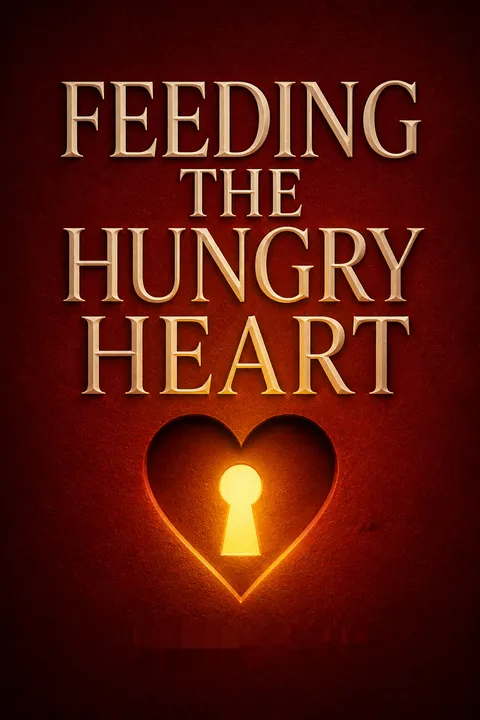
Feeding the Hungry Heart is part memoir, part group portrait, and part argument against treating compulsive eating as a simple failure of discipline. Its many first-person accounts give the subject a human scale: hidden food, childhood criticism, grief, troubled relationships, and the exhausting swing between restriction and bingeing. The stories function as more than illustrations. They challenge the reader to see behavior in context, where eating can offer temporary relief, protection, or a way to express needs that feel impossible to voice.
The book's sharpest contribution is its reversal of the moral story. Rather than asking why someone lacks control, Roth asks what the person is trying to manage, and what kind of care might fit the need. That shift can reduce shame enough for honest observation and support to become possible. Her attention to gender is also significant: she shows how women's bodies become public evidence used to judge their worth, while men's appearance is treated differently.
The framework has limits. The book sometimes treats weight as if it carries a decipherable personal message, and it places considerable faith in learning to follow bodily signals. Neither account fits every person. Weight is influenced by many factors, and hunger or fullness cues can be disrupted by illness, medication, prolonged restriction, or eating disorders. The text is also rooted in its period, including clinical language and claims that should not be mistaken for current medical guidance.
Its lasting value is therefore not a universal treatment protocol or a promise that self-acceptance will produce weight loss. It is a method of attention: notice the role food is playing, question the rules and judgments surrounding the body, and seek forms of nourishment that address the actual need. Read as an invitation to compassionate inquiry, rather than a substitute for care, the book remains unusually humane.
Review Summary
Feeding the Hungry Heart by Geneen Roth receives mixed reviews, with an average rating of 3.95/5. Many readers find the book helpful for addressing compulsive eating and body image issues. They appreciate Roth's compassionate approach and insights on emotional hunger. Some readers felt the book was life-changing, while others found it outdated or difficult to relate to. The audiobook format received both praise and criticism. Overall, readers value the book's emphasis on self-love, mindfulness, and breaking free from dieting cycles.
People Also Read







Glossary
compulsive eating
Eating beyond physical hungerRoth uses this term for repeated, difficult-to-stop eating that can serve purposes beyond satisfying physical hunger. She frames it as a possible response to deprivation, distress, or unmet needs, rather than proof of weak character. The term describes a pattern in the book, not a diagnosis, and it should not replace assessment by a qualified health professional.
nonphysical hunger
An unmet needRoth's term for a longing that may feel like restlessness, emptiness, or a craving to eat, but is not primarily a need for food. It can point toward emotional connection, meaningful work, self-expression, rest, or other forms of fulfillment. The concept encourages readers to investigate what they need while still recognizing that physical hunger is real.
essential wrongness
A belief of being fundamentally badRoth's phrase for the deep belief that one's basic self, wants, or feelings are unacceptable. In her account, this belief encourages self-distrust and deprivation: a person may feel unable to give themselves what they want because they expect their desires to be dangerous or shameful. She presents acceptance, forgiveness, and self-trust as ways to challenge that belief.
Breaking Free
A compassionate recovery processRoth's name for moving away from compulsive eating by understanding its function rather than attacking the behavior. The process emphasizes awareness, self-acceptance, nourishment, and support. Progress is not defined solely by a particular body size or the total absence of bingeing; it involves developing more ways to respond to needs and less dependence on food for relief.
About the Author
Other books by Geneen Roth
Download PDF
Download EPUB
.epub digital book format is ideal for reading ebooks on phones, tablets, and e-readers.








