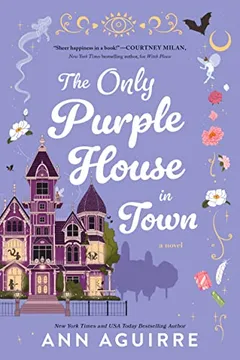


Plot Summary
The Purple House Inheritance
Iris Collins has no steady income, mounting debts, and no supernatural gift to match her sisters’ powers. When her great-aunt Gertrude leaves her a Victorian house in St. Claire, Iris drives there rather than face another week of unpaid rent. The inheritance offers shelter, though the house needs work and its contents are a lifetime of unfamiliar decisions.
At the same time, Eli Reese arrives in town to help his grandmother prepare her home for sale. A successful app developer and hawk shifter, Eli carries an old debt to Iris: years earlier, she stood up for him when other children bullied him. He has never found the courage to thank her, and neither knows their paths are about to cross again.
The inheritance does more than solve Iris’s immediate housing crisis. It gives her a place where she can make decisions without her family’s constant comparisons, but the house also makes her responsible for the practical labor she has long avoided. Eli’s parallel arrival establishes a different kind of burden: he has financial freedom, yet feels unnecessary and socially adrift. The two protagonists begin with opposite resources and a shared deficit of belonging, setting up a romance in which practical help and emotional recognition will matter more than status.
Two Strangers Share a Secret
After settling the estate, Iris sells Gertrude’s old car to pay her former roommates and moves into the house. She sorts her great-aunt’s belongings, cleans the rooms, and abandons her expensive bed-and-breakfast plan when renovation quotes prove impossible. Instead, she advertises bedrooms for rent.
At a café, Eli sees her and intends to introduce himself, but Iris assumes he has come to apply. He lets the mistake stand, accepts a room, and pays more than the bargain rent she asks. Henry Dale Macabee, a solitary older man with little money, takes another room and offers repairs in exchange for a rent discount. Iris has tenants, income, and the first fragile beginnings of a household.
Iris’s room-rental plan is a modest act of agency, but it also recreates the insecurity she knows from being dependent on other people’s goodwill. She chooses tenants who seem to need the rooms, mistaking shared vulnerability for a guarantee of safety. Eli’s silence is more consequential: he believes he is repaying Iris, yet his decision to conceal their childhood connection makes the relationship start on unequal knowledge. The house therefore becomes both refuge and test. Its residents must learn whether generosity can coexist with honesty and boundaries.
Renovations Reveal Their Natures
Henry Dale starts restoring the kitchen, and Eli joins him, sanding cabinets and improving the worn floor. Their work gives Iris a livable home without the costly overhaul she feared. As the three begin sharing meals, Eli tells Iris that he can turn into a red-tailed hawk.
Instead of recoiling, she treats the ability as wondrous and admits that her family consists of psychic vampires who feed on human emotions. Her sisters have distinct gifts, but Iris believes she has none. Their disclosures deepen an easy friendship.
They buy paint together, agree to improve the bedrooms, and sign up for ballroom lessons after Iris spots a community-center flyer. For Eli, the shared projects become a reason to remain close to the woman he once admired from afar.
The house repairs function as a practical language for intimacy. Eli and Henry Dale make visible improvements, while Iris offers trust and a willingness to see difference without turning it into spectacle. The supernatural disclosures are reciprocal, but not symmetrical: Eli knows what he is, while Iris interprets herself through her family’s belief that she lacks a gift. Her acceptance of Eli gives him an experience of safety he rarely expects from others. Meanwhile, the shared work lets attraction grow through competence and cooperation rather than grand declarations.
Sally Brings the House Together
Sally Carruthers, a cheerful grandmother newly separated from her husband, moves into the house and quickly fills it with knitting, visits, and conversation. Through her son Bruce, Iris meets Mira Yoon, a tech witch whose sublet has fallen through.
Mira demonstrates her magic by restoring a crack in Iris’s phone, then repairs Henry Dale’s broken Walkman, a keepsake from his late friend. Iris offers Mira reduced rent in exchange for one household restoration spell each month. Henry Dale, initially skeptical of witches, apologizes after seeing the magic work.
Meanwhile, Iris’s online jewelry shop begins attracting visitors with Eli’s design advice. The house is becoming more welcoming, and each resident contributes a different skill rather than relying on Iris to fix everything alone.
Mira’s magic unsettles the household because it can accomplish in minutes what would otherwise require money, labor, and time. Henry Dale’s response reveals that his skepticism is not simply hostility; he fears that his practical knowledge will become obsolete. The Walkman repair matters because Mira restores not just a device but an accessible connection to memory. Sally’s sociability and Iris’s barter arrangement turn the house into a place where contribution has many forms. The emerging community is not based on equal means, but on reciprocal recognition.
Blood Records Break the Family
Iris’s mother, Delphine, arrives with sisters Lily and Rose to explain a discovery in Iris’s medical records. Iris’s blood type cannot come from Delphine and her father, and testing confirms that she is not biologically related to any of them.
Lily responds with relief rather than compassion, while Delphine leaves Iris to decide whether she still considers herself family. Sally sends the three women away and stays with Iris as the shock settles. Iris weeps alone, then receives messages from Olive, the one sister who insists that their bond remains real.
In the days that follow, Hazel, an old friend of Gertrude’s, shares stories about the house and its former owner. Iris begins to build belonging from chosen relationships rather than inherited claims.
The revelation does not create Iris’s alienation so much as give it a devastating explanation. She has spent years interpreting family conflict as proof that she is unusually difficult; now biology seems to confirm that she never belonged. The deeper wound is not the absence of shared genes but Delphine’s refusal to reassure her that parenthood is more than genetics. Sally and Olive counter that rejection through concrete care. Hazel’s memories also give Iris a connection to Gertrude that is chosen, not merely bestowed by a will.
Lessons Leave the Door Open
Iris and Eli begin ballroom lessons, where their awkward first steps give way to an easy physical rhythm. Hazel, who knew Gertrude for decades, tells Iris that her great-aunt chose independence and traveled after caring for her father.
The stories make Iris feel less like an accidental heir and more like someone continuing a life Gertrude valued. Eli shares his own history in pieces: his parents died when he was young, and his grandmother raised him. Their closeness deepens through cooking, painting, and evenings at home.
When Iris worries that Eli might leave after his grandmother’s house sells, she admits she has romantic feelings for him. He returns them, and they kiss, beginning a relationship without resolving the secrets Eli still keeps.
The ballroom lessons give the romance a bodily dimension: Iris and Eli learn to coordinate without either needing to dominate. Hazel’s account of Gertrude also reshapes the inheritance from a burden into a relationship across generations. Yet the section’s happiness contains an asymmetry. Iris believes she is beginning a relationship with a fellow tenant, while Eli knows he chose the room partly to stay near her and has not disclosed his successful business life or their childhood history. Affection is genuine, but its foundation is already compromised by omissions.
Violet Gables Takes In Rowan
Mira worries when Rowan, the nineteen-year-old she once mentored, stops answering messages after being outed to their religious family. Iris, Mira, and Sally drive to Rowan’s isolated farmhouse and find them outside, upset but physically safe.
Sally retrieves Rowan’s confiscated phone from a locked cabinet, and the group brings them and their few belongings to Violet Gables. Iris offers the small attic room without demanding rent or a contract.
Rowan later insists on contributing, so Iris hires them to pack jewelry orders while Rowan pursues digital art. Henry Dale builds a foldaway desk and chair for their cramped room. As the household makes room for Rowan, Iris’s business grows and Eli recognizes that the home has become a family by choice.
The rescue turns the household’s kindness outward. Iris does not simply sympathize with Rowan’s predicament; she offers space, safety, and control over whether to stay. Rowan’s insistence on earning their place shows how difficult it can be to accept care after being treated as a problem. Henry Dale’s custom desk answers that need with practical respect rather than pity. The household’s support also mirrors Iris’s own gradual recovery: each person receives help without being reduced to helplessness, and each finds a way to contribute.
One Complaint Changes Everything
Susan Calhoun, the neighbor who has repeatedly criticized the house and its repairs, reports that too many unrelated people are living under one roof. Iris learns that the city limits a single-family home to four unrelated residents, leaving her five-person household exposed to inspection and possible penalties.
A rooming-house license might solve the problem, but the Victorian may need safety upgrades and rewiring. Iris asks Ethel, the witch dating Sally, whether her coven can help Mira perform a large-scale spell.
At the same time, Eli contacts his lawyer and begins arranging a way to fund the work without Iris’s knowledge. The complaint forces the household to confront its precarious legal status, while Eli’s instinct to solve the crisis for Iris threatens the trust they have built.
Susan’s complaint converts a private sanctuary into a regulated space, exposing how easily ordinary rules can destabilize an improvised family. Iris responds by seeking a legitimate license rather than hiding residents, an important departure from her old habit of avoiding hard problems. Eli’s secret intervention grows from care, but it repeats a familiar power imbalance: he decides what Iris needs without asking her. The coming conflict is therefore not simply about money. It is about whether help can remain loving when it denies the recipient authorship over her own life.
Help Becomes a Betrayal
While arranging to pay the witches for a major spell, Eli offers to cover the full cost. Iris overhears him discussing tens of thousands of dollars and searches his name, discovering that he is a wealthy app entrepreneur with multiple properties, not a struggling handyman who needs a room. He has also moved in because he recognized her from childhood and wanted to thank her for defending him, though he concealed both facts.
Iris cancels the coven’s help, telling them Eli had no authority to act for her. When he admits the truth, she returns the bracelet he kept from their childhood and says his emotional support mattered, but his lies broke her trust. Eli leaves the house, and Iris is left to face the licensing problem without him.
Iris’s anger is rooted in more than the discovery of money. Eli has used a false premise to enter her home and then tried to use his resources to control a crisis she wanted to manage herself. His childhood gratitude is sincere, but sincerity does not erase the effect of concealment. The bracelet makes their history tangible, yet it cannot repair the present breach. For Eli, leaving is an attempt to respect Iris’s decision, but it also repeats his pattern of retreating when intimacy becomes frightening.
Violets Cover the House
After Eli leaves, Iris carries fire alarms and extinguishers through the house and tries to imagine how she can complete the license application. Outside, facing the weathered Victorian, she focuses on its identity as Violet Gables.
A surge of unfamiliar power answers her, and violets bloom across the woodwork and walls without soil. Iris realizes she is not an ordinary human or an unawakened psychic vampire. Her fae nature has surfaced, and the house responds to her will.
Mira arrives and recognizes the scale of the change, while Rowan sees the impossible floral growth for themself. Iris’s new ability offers hope that she can protect the place, but the voice she senses in the magic suggests that her discovery has reached someone far beyond St. Claire.
The flowering house is both an external transformation and a change in Iris’s self-understanding. Until now, she has measured herself against her sisters’ abilities and concluded that she is deficient. Her power emerges not through a formal lesson but through attachment to a place she has chosen and cared for. That distinction matters: Iris’s magic answers belonging rather than status. The violets also turn a neglected property into a visible claim, inviting the wider supernatural world to notice her even as she is only beginning to understand herself.
The Inspector Meets the Fae
A glowing doorway appears in the basement, and two fae visitors step through, identifying Iris as their missing child. They explain that she was exchanged with a human baby and magically bound to a human form; then one of them removes the binding.
Iris learns that her biological parents come from rival fae houses and that they created her through magic. When city inspector Melvin Terry arrives to investigate Susan’s complaint, the visitors declare Violet Gables an anchor point and sovereign territory.
Faced with their power, Melvin agrees to refer the matter upward rather than enforce the housing rules. Iris has found the truth of her origin and a way to keep her household together, though she still must decide how to live between two worlds.
The family revelation resolves Iris’s lifelong suspicion that she was misplaced, but it does not erase the human life she has built. Her fae parents offer origin and power; Violet Gables represents the relationships she chose. Their intervention also exposes the unequal treatment of supernatural communities: local authorities can threaten vulnerable residents, then retreat when confronted by a more powerful group. The scene’s emotional center is Iris’s insistence that the house is already her home. Discovery does not require her to surrender the life that made belonging possible.
Two Hawks Find Their Way
Iris’s fae parents visit for a week, then leave the portal open so she can meet them without abandoning St. Claire. Before they go, they explain that transformation requires Iris to believe her body is not fixed. She acts on that lesson after learning where Eli is staying. In his rented apartment, she shifts into a hawk and flies to him.
She apologizes for ending the relationship in anger, while making clear that honesty must replace his secrecy. Eli promises not to hide important truths again and explains that the home at Violet Gables mattered more to him than his wealth or business offers. Iris tells him her fae power lets her share the sky with him. They reconcile, confess their love, and choose to face future problems as partners.
Iris’s first deliberate transformation is an act of connection, not escape. She does not become a hawk to flee human vulnerability; she uses the form to reach Eli on terms that preserve her own agency. Their reconciliation depends on naming the actual injury and changing the conditions of trust, not on grand gestures or financial rescue. Eli’s decision to stay in St. Claire and Iris’s choice to share flight bring their contrasting needs together: he can keep solitude as a pleasure without using it as a refuge from attachment.
A Table Full of Kin
At Thanksgiving, the housemates and their friends gather around a crowded table. Iris’s jewelry business now has enough orders to employ Rowan, Henry Dale has begun selling custom furniture for small spaces, and Eli announces an app designed to help people find relatives or build community in a new place.
Sally names the household her found family, while Iris and Eli share their plans openly. The group’s shared prosperity is modest but real, built from craft, labor, and collaboration rather than one person rescuing the rest.
Iris still keeps distance from most of the Collins family, though she remains connected to Olive and her father. The holiday makes Violet Gables feel less like a refuge from rejection and more like a home with room for everyone’s next beginning.
The Thanksgiving gathering makes the novel’s idea of success concrete. Iris is no longer measuring her worth by comparison with her sisters, and the household’s income comes from several people’s distinct abilities rather than a single benefactor. Eli’s app turns his personal difficulty finding connection into a tool others might use. The community is not frictionless: its residents still need boundaries, work, and negotiation. What distinguishes it is that support does not require sameness or dependence. Each person can belong without surrendering an independent identity.
Epilogue
At Christmas, Iris hosts a full house: the residents of Violet Gables, Ethel’s coven, Hazel, Bruce and his family, Eli’s grandmother, and Iris’s sister Olive. Iris’s father arrives too, unsure of his welcome, and finds her surrounded by people who make her visibly happy.
During the gift exchange, the household presents Iris with a hand-painted wooden sign bearing the name Violet Gables, made by Rowan and Henry Dale. Iris bonds it to the house with her magic. The group returns to the party, where the crowded rooms and shared laughter complete the home she began rebuilding with an inheritance and a handful of uncertain plans.
The sign gives physical form to a name that has gathered meaning through use. Violet Gables is no longer merely Gertrude’s eccentric house or Iris’s inheritance; it is a shared creation, marked by the talents of the people who live there. The Christmas gathering also allows Iris to welcome parts of her former life without making reconciliation a condition of happiness. Her father and Olive can enter, while the Collins family’s absence remains a boundary she controls. The ending measures security not by a perfect family or a finished renovation, but by the freedom to choose who belongs.
Analysis
The novel treats belonging as a practice rather than a bloodline, a status, or a supernatural category. Iris begins with a family that measures her against her sisters and a self-image built from repeated failure. Her inheritance gives her a place, but the home becomes meaningful only when she lets other people help shape it. The residents do not form a family because they are alike. They are a retired contractor, a witch, an artist, a newly independent grandmother, a hawk shifter, and a woman who believes herself powerless. Their shared routines make room for difference without requiring anyone to perform gratitude or normality.
The story is equally attentive to the dangers hidden inside kindness. Eli’s generosity is sincere, yet his concealment denies Iris the chance to choose what kind of relationship she wants. His money cannot repair that breach because the injury is not scarcity; it is loss of agency. Iris’s anger therefore marks growth. She can value Eli and still refuse his unilateral solution. Their reconciliation becomes credible only when he accepts that his intentions do not cancel the consequences of his choices.
The house’s physical restoration parallels this emotional work. Cabinets are renewed rather than discarded, the Walkman is repaired, and an obsolete home gains new uses without erasing its history. Iris’s fae awakening extends that logic: she is not defective because she failed to match the Collins family’s gifts. Her power emerges through attachment to a place she has chosen. In the end, success is neither wealth nor exceptional power. It is the ability to build a life in which care is mutual, boundaries are respected, and no one has to earn the right to belong.
Review Summary
Reviews for The Only Purple House in Town are mixed, averaging 3.43/5. Positive readers praise its cozy found-family atmosphere, diverse LGBTQ+ representation, and heartwarming romance. The audiobook narrator, Carly Robins, receives consistent acclaim. Critics, however, take issue with the male lead Eli's stalker-like behavior toward Iris, describing it as romanticized and troubling. Additional complaints include an overcrowded plot, underdeveloped romance, unrealistic financial elements, heavy-handed messaging, and rushed fantasy elements. Many note the book works as a standalone despite being fourth in the Fix-It Witches series.
People Also Read


Characters
Iris Collins
The reluctant homeownerIris is imaginative, warm, and chronically unsure that she can finish what she starts. She has spent years being compared with her accomplished sisters, so financial setbacks and failed plans quickly become evidence, in her mind, that she is a disappointment. Her instinct is to avoid conflict and then blame herself for the consequences. Yet she notices who is overlooked, welcomes people who need a place to land, and treats old belongings as carriers of memory rather than clutter. Her growth comes through taking responsibility without pretending she must do everything alone. She learns to accept support while retaining the right to decide what help she wants.
Eli Reese
The solitary hawk shifterEli is a gifted app developer who finds human interaction harder to navigate than code. Childhood bullying and the early deaths of his parents taught him to expect loss, while flying offers a clean, solitary escape from the risk of needing anyone. He is attentive and generous, often seeing practical needs before others do, but he can confuse care with taking control. Iris’s directness draws him toward connection, while the household gives him a sense of usefulness that wealth and private homes never provided. His central struggle is learning that intimacy requires truthful disclosure, not merely good intentions.
Henry Dale Macabee
The guarded repairmanHenry Dale is a retired contractor with a sharp tongue, a practical mind, and little patience for being treated as fragile. He has spent years caring for others, and his guarded manner protects him from the vulnerability of needing a place himself. Repair work gives him structure and a visible way to contribute, while his reluctance to discuss his losses keeps people at a distance. He respects fairness more than politeness and takes names and pronouns seriously as a matter of basic manners. Beneath his curmudgeonly habits is a capacity for deep loyalty, especially toward people who need room to become themselves.
Sally Carruthers
The irrepressible connectorSally is a sociable grandmother who has spent much of her life caring for other people and is now determined to make choices for herself. She brings food, conversation, crafts, and an instinct for when someone needs comfort, but her cheerfulness is not ignorance of pain. She knows what it costs to leave an established life and refuses to shame others for doing the same. Sally’s humor helps the housemates approach difficult subjects without denying their seriousness. Her ability to make introductions and sustain friendships turns an inherited house into a community rather than a collection of tenants.
Mira Yoon
The practical tech witchMira is a tech witch with a nonprofit-management degree and a careful, professional approach to both magic and shared living. After a breakup leaves her housing plans in disarray, she seeks a room where she can contribute rather than rely solely on sympathy. Her spells can restore nonliving things, but larger workings require substantial energy or help from others. Mira is thoughtful about consent and practical limits, making her an effective collaborator for Iris. As a mentor to Rowan, she also understands that safety and autonomy must coexist, especially when someone is leaving a hostile home.
Rowan
The emerging artistRowan is a nonbinary young artist whose family’s religious expectations make home unsafe after they are outed. They are wary of accepting care without earning it, but their creativity and persistence quickly become central to the household. Rowan creates digital art, develops a web comic, and asks for meaningful work rather than being treated as a charity case. Their talent for observing the group helps them understand the dynamics others overlook. Rowan’s development is a move from isolation toward self-determination: they build skills, income, and a chosen community without pretending the hurt of their past has vanished.
Olive Collins
Iris’s steadfast sisterOlive is Iris’s more compassionate older sister, a doctor working abroad who uses her supernatural ability to ease patients’ pain and support healing. She avoids the family’s competition for status and keeps a gentler relationship with Iris despite long distances and unreliable communication. Olive’s messages after the family revelation make clear that she values their bond independently of biology or family politics. She offers help without demanding that Iris reconcile with anyone else.
Delphine Collins
The demanding family matriarchDelphine is a psychic vampire whose ability feeds on positive emotions, but her influence at home is defined more by judgment and control than by her supernatural nature. She expects her daughters to follow conventional markers of success and treats Iris’s uncertainty as a problem to correct. Delphine can be forceful in family conflicts yet emotionally distant when Iris most needs reassurance. Her marriage to an absent-minded scholar leaves her accustomed to directing the household herself.
Rose Collins-Connery
The status-conscious sisterRose is Iris’s accomplished older sister, a lawyer whose ability feeds on anger and whose professional confidence reinforces her family’s high expectations. She values achievement and family presentation, and she often intervenes in disputes as though she can resolve them by deciding who is being unreasonable. Her marriage to Greg Connery places her within a polished political and legal world that Iris distrusts. Rose’s relationship with Iris is shaped by competing ideas of what counts as loyalty.
Lily Collins
The grief counselor sisterLily is a psychic vampire who feeds on grief and has built a career helping people work through emotional pain. Her public role as a counselor contrasts with her willingness to dismiss Iris’s hurt in private. Lily prizes her own judgment and expects the family to move past conflict on her timetable. Her romantic choices deepen an existing pattern in which Iris is asked to absorb the cost of keeping the family calm.
Gamma
Eli’s adventurous grandmotherGamma raised Eli after his parents died and gave him steady affection without making gratitude a debt he had to repay. Expressive, stylish, and eager for new experiences, she is preparing to move to New Mexico and build a social life of her own. Her support helps Eli understand that love can mean encouraging someone to leave, rather than asking them to stay out of obligation.
Susan Calhoun
The meddling neighborSusan is a controlling neighbor who measures good conduct by tidiness, conventionality, and the effect a property has on the block. She repeatedly criticizes Iris’s house and choices, presenting her interference as concern for manners and safety. Her hostility becomes a practical threat when she turns to the city over the number of residents. Susan’s need to regulate what she cannot control makes her a local antagonist to the household’s improvised way of living.
Hazel
Gertrude’s old friendHazel is a talkative older woman who remembers Gertrude from decades of friendship and shared gardening. She enjoys stories, food, and company, and she is unembarrassed by her own tendency to speak at length. Her memories help Iris understand the woman who left her the house, while her willingness to befriend Iris creates a bridge between the past and the new household.
Ethel
The welcoming coven witchEthel is an experienced witch, a friend and romantic partner to Sally, and a generous host to people seeking community. She understands that magical work depends on group consent and shared effort, so she does not promise the coven’s help before consulting its members. Her curiosity about Iris’s heritage allows her to recognize that Iris’s problems may have a larger explanation.
Liz Fielding
Eli’s candid lawyerLiz is Eli’s attorney and longtime professional confidante. Direct, perceptive, and more emotionally invested in him than he initially realizes, she pushes him to take opportunities seriously and notices when his withdrawal becomes alarming. She is willing to travel to check on him, and her humor makes her a counterweight to his tendency toward solitude.
Rain and Fen
Visitors from another worldRain and Fen are poised, uncanny visitors whose arrival brings old histories and unfamiliar customs into Iris’s home. Their communication and sense of time differ sharply from those of the mortal residents, and they move between striking forms with ease. They are devoted to Iris, but their confidence in their own power can make their protection feel overwhelming to the people around her.
Gertrude Van Doren
The absent great-auntGertrude is Iris’s great-aunt, an unmarried woman remembered as eccentric by some neighbors and cherished by a small circle of friends. She left behind a Victorian house, ceramic angels, letters, photographs, and stories that reveal a life fuller than local gossip suggested. Her choice of heir gives Iris shelter, while the house preserves traces of Gertrude’s independence and attachments.
Plot Devices
Violet Gables
A home built by choosingGertrude’s Victorian house begins as Iris’s unexpected inheritance and a place to live without rent. Its five bedrooms let Iris take in people who need affordable shelter, while repairs and shared meals transform it into a functioning household. Each resident contributes in a different way, from carpentry to witchcraft to business help. The house becomes the material center of the story’s chosen-family plot, and its changing condition tracks Iris’s growing confidence and belonging.
Hawk shifting
Escape becomes shared flightEli’s ability to become a red-tailed hawk gives him freedom from human scrutiny and a private way to manage isolation. Flying initially lets him observe without participating. As his bonds deepen, however, the sky becomes a place he can share rather than a refuge he must enter alone. The ability also establishes that supernatural identities can coexist with ordinary routines and intimate relationships.
The rooming-house complaint
A rule threatens the householdSusan’s complaint about too many unrelated residents forces Iris to investigate housing limits and seek a rooming-house license. The application exposes the house’s unsafe wiring and needed safety equipment, creating pressure on a household with limited cash. The regulatory obstacle links the domestic plot to the wider conflict over how supernatural and unconventional communities are treated. Its resolution ultimately tests whether the residents can protect their home without surrendering Iris’s control.
The childhood bracelet
A keepsake carries a debtEli keeps the bracelet Iris dropped after defending him from a bully. It preserves his memory of her kindness and explains why he approaches her with such longstanding gratitude. When he finally returns it, the object confirms their shared past but also exposes how much he concealed. Its meaning changes from private talisman to evidence that affection, even sincere affection, cannot substitute for informed trust.
The fae binding
A hidden origin becomes powerA magical binding conceals Iris’s nature and confines her to a human form, leaving her convinced that she has no special ability. The discovery of her fae heritage reframes her sense of being out of place and gives the neglected house a supernatural connection to her identity. Once the binding is removed, Iris can access powers that respond to her chosen home. This device connects the family mystery, the house’s transformation, and the resolution of the city’s complaint.
Download PDF
Download EPUB
.epub digital book format is ideal for reading ebooks on phones, tablets, and e-readers.








