


Plot Summary
The Exile Is Summoned
Rebekah Wilde has spent ten years in Sedona, keeping away from witchcraft after St. Cyprian’s ruling coven exiled her. Now a harsh magical summons drags her back to Missouri, where her sister Emerson and their friends have just helped stop a supernatural flood. Instead of thanking the group, Joywood leader Carol Simon accuses Rebekah and Emerson of violating the terms of their failed coming-of-age tests.
Their friends face lesser charges for helping. Rebekah proposes that Emerson be allowed to retake the test, but Carol turns the suggestion against both sisters: they must take a difficult adult test at the summer solstice, or face exile again. Rebekah has returned to a town that still treats survival as an offense.
The summons makes homecoming an involuntary confrontation, not a sentimental return. Rebekah has built her identity around surviving without magic, but the Joywood immediately recast her survival as evidence of disobedience. Their legal language converts a recent act of collective rescue into a personal offense, revealing how institutions can claim moral authority while refusing to acknowledge the good their subjects do. Rebekah’s proposal is practical, but it also exposes her old reflex: she would rather enter a rigged contest than let the powerful define her sister’s worth.
A Future Shattered
As the Joywood depart, Rebekah notices the engagement ring Emerson briefly wears, then hides. Rebekah’s Diviner sight, usually crowded with possible futures, gives her only broken, unreadable images.
Her old friend Georgie explains that the adult test has not been given for generations, so the group will need help preparing. Nicholas Frost, an immortal witch with a history of helping and betraying Rebekah, refuses to tutor them, then vanishes in theatrical smoke.
The group flies back to Wilde House, where the town and its hidden three-river confluence stir memories Rebekah has worked to bury. She cannot yet face the absence of her dead grandmother, so she retreats to her childhood room, where home feels less like shelter than the source of an old wound.
The broken vision establishes that Rebekah’s defining ability is no longer a reliable instrument. It also makes uncertainty concrete: she cannot read even her sister’s future, the relationship she most wants to protect. The return flight restores a bodily pleasure she had trained herself to forget, complicating the belief that exile made her whole. Wilde House then gives that contradiction an address. Rebekah misses the place and resents what it holds, especially the grief she has managed by refusing to look directly at it.
High School, Again
The next morning, Rebekah opens a concealed compartment beneath her bedroom floor and finds the keepsakes she hid before leaving, along with a small spell that still answers her. Joywood Diviner Felicia Ipswitch arrives with binders assigning Rebekah, Emerson, and their friends months of classes, exercises, and social punishments.
The most insulting requirement is attendance at the Beltane prom. Emerson sees a chance to follow every instruction and expose the coven’s unfairness; Jacob North, her Healer fiancé, warns that the curriculum is designed to distract and shame them.
Rebekah recognizes the strategy beneath the schoolwork: the Joywood want the group to feel powerless and childish again. She begins to suspect that the sisters did not truly fail their first tests. The authorities needed everyone to believe they had.
The hidden compartment offers a counter-record to the Joywood’s official judgment. Rebekah’s childhood objects and surviving spellwork testify that her identity did not disappear when the coven declared her powerless. The binders make institutional punishment look almost ordinary, which is precisely what gives it force: humiliation is administered through routine, schedules, and public expectations rather than spectacle alone. Emerson and Rebekah respond differently, one by mastering the assigned rules and the other by reading their political purpose. Their difference becomes an asset when they stop treating it as a defect.
The River Bites Back
Emerson persuades Nicholas to help them prepare, and he summons water from the confluence for Rebekah to use in a basic Diviner exercise. Rebekah takes up his opal-tipped wand and asks the water for insight. Instead of a clear vision, she feels searing pain and sees only blurred fragments.
She tries again, pushing past Nicholas’s warning, until the table and ritual tools vanish in a flash and she collapses. Emerson carries her to Jacob’s farmhouse, where Jacob heals the damage but cannot explain its cause.
He says Rebekah’s magic reacted with something unfamiliar inside her. He also confirms that Emerson’s recovered power is unusually strong. Rebekah leaves with a working hand, but the failure deepens the mystery: the problem is not simply her training or her reluctance to use magic.
The failed exercise complicates Rebekah’s belief that magic is a dangerous habit she can manage through discipline. Her power is not absent or weak; it is reacting to an unknown force. Nicholas’s test becomes a conflict between self-protection and the desire to prove herself, while Jacob’s careful diagnosis refuses a convenient explanation. The result is both bodily and relational. Rebekah is hurt, Emerson worries, and the group must accept that their familiar categories of witchcraft no longer explain what is happening.
An Immortal’s Warning
At Nix, the riverside bar, Rebekah joins her friends to celebrate Emerson and Jacob’s engagement. Nicholas arrives and pulls her outside, where he says the painful scrying was not normal and that the flood was only one part of a wider imbalance. He insists Rebekah has a power she must learn to use, but she resists his authority and resents his cryptic advice.
Their magical clash exposes an attraction neither can comfortably admit. Nicholas tells her to meet him at Frost House on Beltane, when he may be able to help. Rebekah returns to the bar and drinks with her friends, refusing to explain the encounter. The celebration resumes, but his warning changes the stakes: the group’s fight may extend beyond the river and the upcoming test.
The bar scene places Rebekah’s private desire beside the public danger she would rather avoid. Nicholas speaks in riddles, but his warning is specific enough to unsettle her confidence that the flood was a finished crisis. Their conflict is not a simple contest between mentor and student: Rebekah challenges the authority that once shaped her choices, while still wanting his attention. Her return to the party is an act of control, but withholding the encounter from her friends also repeats the secrecy that has damaged her before.
The Parents Return
As Beltane approaches, Rebekah and Emerson learn that their prom dresses require parental approval. Their estranged parents, Elspeth and Desmond Wilde, suddenly return from Europe, summoned by the Joywood rather than by concern for their daughters.
Desmond criticizes the trouble they have caused, while Elspeth focuses on dresses and appearances. She is startled when Emerson alters the gowns with magic, but she signs off on their choices. Rebekah challenges the assumption that the sisters really failed their first tests, forcing their mother to entertain, however cautiously, the possibility that the Joywood may be wrong.
Later, Emerson admits she still wants their parents’ approval. Rebekah helps her evade the household curfew so she can visit Jacob, and the sisters find a more honest tenderness beneath their familiar teasing.
The parents’ return gives the sisters’ institutional conflict an intimate counterpart. Elspeth and Desmond embody the family’s investment in status, while their absence has left the daughters to manage the emotional consequences alone. Elspeth’s reaction to Emerson’s magic is a small but meaningful crack in certainty, not a sudden conversion. Rebekah’s practical help with Emerson’s escape likewise marks a shift: she can tease her sister without dismissing her needs. Their closeness becomes less competitive when they recognize that both have wanted the same scarce thing, parental recognition.
Beltane’s Hidden Clues
At the mandated Beltane prom, Georgie notices that Carol’s opening spell differs from the version recorded in Nicholas’s old book. Rebekah confronts Carol and asks about her son Skip, whom the group has nearly forgotten since Emerson’s magic transformed him into a weasel after his attack.
Carol’s hostile magic burns Rebekah’s hand, but the small orange crystal Nicholas gave her eases the pain. Meanwhile, Ellowyn becomes dangerously ill. Zander and Jacob help her leave while Rebekah, Emerson, and Georgie create magical doubles to keep the Joywood from noticing.
Nicholas appears at the dance, gives Rebekah the crystal, and tells her to meet him later. The evening reveals that the coven’s rituals have been altered without record, and that its magical attacks may reach beyond the Wilde sisters.
The prom turns the Joywood’s juvenile punishment into a site where evidence leaks through the performance. Georgie’s attention to the altered ceremony and Rebekah’s question about Skip expose gaps the ruling coven would prefer to keep invisible. Ellowyn’s sudden illness makes the threat personal and immediate, but the friends respond through coordinated deception rather than individual heroics. Nicholas’s crystal is both a practical aid and a sign that his involvement has become more deliberate. The scene gathers clues without resolving them, showing how control depends on making suspicious events look like isolated accidents.
Fire Names Her Power
At Frost House, Nicholas leads Rebekah through a Beltane fire ritual meant to clear her fractured visions. She removes the piercings and tattoos she has used to dampen overwhelming magic, but refuses to take off her grandmother’s narcissus ring.
The orange crystal settles into the ring’s center, and the static in Rebekah’s sight disappears. She then walks through the ritual fire unharmed and discovers that she is a rare Chaos Diviner, whose power can either destroy or heal. Rebekah and Nicholas kiss and sleep together.
In the clearer visions that follow, she sees parts of his past and learns that a prophecy links her to his death. Nicholas warns her that the prophecy is literal, while Rebekah refuses to treat it as a command to surrender her choices.
The ritual joins agency to vulnerability. Rebekah chooses to remove the protections that helped her survive, but keeps the ring that connects her to her grandmother. The crystal does not simply grant power; it restores access to a self she had restrained for understandable reasons. Naming her as a Chaos Diviner gives her capacity moral weight rather than making it a triumph without cost. The intimacy with Nicholas intensifies the same question: whether a prophecy determines the future or merely makes each choice more consequential.
The Past on Display
Over the following weeks, Rebekah studies with Nicholas, attends classes, and tries to keep her restored visions under control. At a school assembly, Felicia presents a film of Rebekah’s final night in St. Cyprian ten years earlier.
It shows Rebekah using dark magic against Felicia after Emerson’s mind was wiped, confirming the act Rebekah has hidden from everyone. Her friends had believed she was only a victim of exile. They leave the assembly shocked, and Emerson asks for time to think.
Rebekah cannot bear their changed faces and flies away from town. Above the river, she lets herself fall, convinced that her past makes her unworthy of the people who love her. Nicholas catches her before she hits the ground, but she still tries to leave for Sedona.
The public film weaponizes truth by stripping away context, but Rebekah’s pain comes from the truth she withheld as much as from the Joywood’s distortion. Her friends’ shock is not proof that they no longer love her; in the moment, however, it activates the shame that has shaped her exile. The fall gives that shame physical form. Rebekah’s impulse is not merely to escape the town, but to accept punishment as the only honest response to what she did. Nicholas’s rescue interrupts the action, not yet the belief beneath it.
Grandmother’s Absolution
Nicholas takes Rebekah to the cemetery, where her grandmother appears in a form Rebekah can touch. Her grandmother helps her understand that she ran from the possibility of forgiveness because she believed she did not deserve it. Rebekah admits she is ready to stay and ask for help.
At dawn, she visits Emerson and apologizes for hiding the truth about the dark magic and her history with Nicholas. She tells Emerson and their friends the full story, including what she did and why she concealed it.
Emerson does not erase the hurt, but reminds Rebekah that the Joywood want to divide them. Rebekah’s friends agree to work together again. With Georgie, she begins investigating an old protective spell that might save Nicholas from the sacrifice Rebekah believes he is planning.
The cemetery scene reframes forgiveness as a practice rather than a verdict. Rebekah’s grandmother does not deny the harm Rebekah caused; she refuses to let that harm define the whole person. This distinction lets Rebekah return to her friends without demanding that they absolve her first. Her confession restores their ability to make informed choices together. The protective spell extends that repair outward: Rebekah is no longer trying to carry danger alone, even when her motive is to prevent Nicholas from making a sacrifice he has not explained.
Zelda’s Last Day
On the day of Litha, Rebekah’s aunt Zelda dies after a mysterious illness that the Healers could not stop. Seven other St. Cyprian witches have died from the same unexplained condition. The loss threatens to overwhelm the group just before the Joywood’s test, but they continue toward the ceremony.
Before Rebekah and Emerson leave, Elspeth gives them new amulets marked with the designations she believes they deserve: Diviner and Warrior. Desmond dismisses the test as futile, while Elspeth offers quiet support.
Rebekah and Emerson arrive at the confluence with their friends, grieving Zelda and uncertain where Nicholas is. Carol announces that the sisters will be judged not just on magical ability but on whether their power serves witchkind, preparing the crowd to accept whatever verdict the Joywood deliver.
Zelda’s death converts the background mystery of illness into an immediate cost, while the approaching test leaves little room to mourn. The new amulets matter because Elspeth assigns the identities the Joywood once denied, even though she cannot yet openly break from them. Her gesture is modest and incomplete, which makes it more credible than a sudden transformation. Carol’s public framing raises the stakes from competence to moral legitimacy. The sisters are not merely being assessed; their opponents are defining the terms by which the crowd will interpret what it sees.
Nicholas Breaks His Oath
At the confluence, Rebekah and Emerson balance light and darkness together, but Carol declares them failures. Elspeth and several townspeople challenge the verdict. As the usual student tests continue, eight young witches suddenly writhe in pain, and Rebekah is magically immobilized while the Joywood prepare to blame her.
Nicholas appears and tells the crowd that the Joywood seek immortality, following a series of steps that would leave other witches enslaved. Breaking a blood oath, he reveals what he knows and is struck down by its force.
Rebekah summons her ancestors, escapes the spell, and reaches Nicholas with the four-element talisman her friends prepared. Their magic helps him survive, but his immortality is gone. The immediate danger to the students ends, and the crowd has witnessed both the Joywood’s attack and Nicholas’s sacrifice.
The climax exposes the difference between power used to protect a hierarchy and power used at personal cost. The Joywood’s apparent care for the students masks a deliberate attack and an attempt to frame Rebekah. Nicholas’s revelation is costly because the oath does not merely silence him; breaking it nearly kills him. Rebekah’s ancestors and friends make her rescue possible, turning her restored power into a collective act rather than a solitary display. The talisman succeeds not by preserving Nicholas unchanged, but by helping him survive the loss of the immortality he chose to surrender.
Riverwood Takes Its Stand
With Nicholas alive but mortal, Rebekah challenges the crowd to judge whether she and Emerson deserve to remain witches. Carol accepts an anonymous vote by adult witches, hoping to contain the protest, but the sisters’ supporters prevail by three votes.
The ruling coven cannot execute them or deny their power without public opposition. Emerson announces that a rival coven will contest the Joywood at the autumn Ascension. The group names itself Riverwood, honoring the confluence where their magic first joined.
Rebekah’s parents stand among those who supported them, while spirits of their ancestors and the newly dead Zelda share in the celebration. Rebekah and Nicholas choose to face what comes next together. The ruling coven remains in power for now, but the sisters have turned private survival into an organized challenge.
The vote is a limited victory, which keeps the ending from confusing public recognition with structural change. Three votes save the sisters, but the Joywood still govern and the promised Ascension remains ahead. The new coven transforms a circle of friends into a political alternative, grounding its legitimacy in shared work rather than inherited office. Rebekah’s relationship with Nicholas also changes terms: he is no longer immortal and untouchable, and their future must be lived within ordinary limits. The ending offers belonging not as a return to the old order, but as a choice to build something new.
Analysis
Big Little Spells treats magical power as a political question: who gets to name it, regulate it, and decide whether its use serves the community. The Joywood’s authority relies not only on force but on classification. By calling Rebekah and Emerson powerless, then later dangerous, the coven controls the story others tell about their abilities. Its school binders, ritual tests, and public demonstrations make domination seem procedural and reasonable. Rebekah’s return exposes that such systems are sustained partly by the people they isolate from one another.
The sisters’ contrasting temperaments sharpen the book’s account of resistance. Emerson trusts preparation, public service, and organized action. Rebekah trusts her own judgment, often to the point of hiding crucial truths. Neither approach is sufficient alone. Their magic becomes most effective when they combine light and darkness without allowing the ruling coven to dictate what balance must look like. The story therefore makes solidarity a practical power, not just an emotional comfort: it lets the friends detect deception, protect one another, and challenge the Joywood in public.
Rebekah’s inner conflict is not resolved by discovering that she was always powerful. It changes when she accepts responsibility for the harm she caused without treating that harm as proof she is irredeemable. Her grandmother’s counsel separates accountability from self-erasure, allowing Rebekah to confess, seek help, and remain in relationship. That movement mirrors the book’s treatment of prophecy. The future may be constrained by history, ritual, and other people’s choices, but it is not identical to fate. Rebekah’s decisions matter precisely because outcomes are uncertain.
The romance with Nicholas tests the same distinction. His immortality has insulated him from ordinary consequences, while Rebekah’s attraction does not erase the damage of his past choices. His loss of immortality makes their relationship more equal in time and vulnerability. The conclusion is hopeful without pretending the political struggle is over: the Riverwood wins the right to continue, not the final victory. The book’s deepest promise is that people can build a more just community by combining power with honesty, shared responsibility, and the willingness to change.
Review Summary
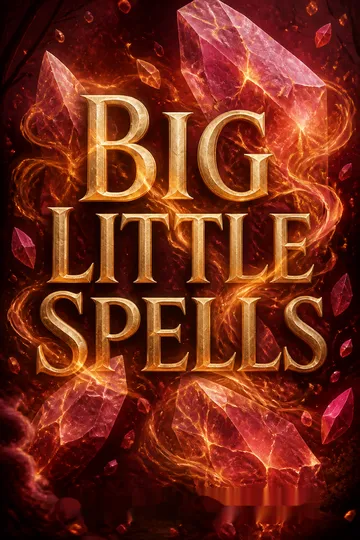
Big Little Spells, the second book in Hazel Beck's Witchlore series, receives mixed reviews averaging 3.79/5 stars. Readers appreciate the focus on Rebekah Wilde's redemption arc, sisterhood themes, and the witchy small-town atmosphere. Many praise the romance with immortal Nicholas Frost, though some find their relationship uncomfortable. Positive reviews highlight character development, emotional depth, and the cozy fantasy elements. Critics cite slow pacing, weak plot execution, surface-level character exploration, and frustration with the protagonist. Most agree it's best read after the first book, with readers divided on whether it surpasses or falls short of its predecessor.
People Also Read




Characters
Rebekah Wilde
Exiled witch and artistRebekah is the younger Wilde sister, a witch who has spent a decade living outside St. Cyprian after a painful conflict with its ruling coven. Resourceful and fiercely self-reliant, she has built a life through creative work and human recovery practices, while trying to keep her magic at a safe distance. Her wit often shields a more vulnerable fear of being rejected once people see the whole of her. Rebekah resists being managed, especially by Emerson, but her independence can become secrecy and self-punishment. She is perceptive about manipulation and less practiced at asking others to help her carry what she sees.
Emerson Wilde
Relentless Warrior sisterEmerson is Rebekah’s older sister, a capable community leader whose optimism can look like effortless certainty. She organizes, plans, and keeps pushing when other people have given up, partly because she believes problems can be solved if everyone works together. Her impulse to care for others sometimes makes her controlling, and her bond with Rebekah carries the ordinary friction of sisters alongside deep loyalty. Emerson is engaged to Jacob North and is rebuilding a magical identity after years without access to her memories of witchcraft. She values fairness, but she must learn that perseverance alone cannot make an unjust system fair.
Nicholas Frost
Immortal, guarded mentorNicholas is an ancient witch, renowned for his power and his role as the first Praeceptor. He lives apart from St. Cyprian behind elaborate glamour, presenting himself as disdainful of nearly everyone. His knowledge makes him a valuable teacher, but his cryptic habits and history of withholding information make trust difficult. He is drawn into the Wilde sisters’ struggle despite insisting that he has no interest in helping. Nicholas is accustomed to control, distance, and the long view of history; his attention to Rebekah unsettles both of them. Beneath his formidable reputation lies a person shaped by choices whose consequences have lasted far longer than he expected.
Ellowyn Good
Truth-bound best friendEllowyn is Rebekah’s oldest friend and a Summoner whose truth-bound nature makes even casual conversation unusually exact. She is sharp, funny, and protective, with a strong sense of when a joke can puncture someone else’s authority. Her friendship with Rebekah has survived distance because the two continued to stay in touch through ordinary human means. Ellowyn’s part-human heritage makes others underestimate her magic, a judgment she sometimes fears may be true. Her history with Zander remains complicated, and her fierce loyalty to the group coexists with a private uncertainty about her own abilities.
Georgie Pendell
Coven’s searching HistorianGeorgie is Emerson’s longtime friend, Rebekah’s old schoolmate, and a member of a family devoted to recording St. Cyprian’s history. Thoughtful and bookish, she approaches danger by searching records for the detail others have overlooked. Her quiet manner can be mistaken for passivity, but Georgie is willing to challenge authority when evidence demands it. She helps the group interpret old rituals and spells, while her curiosity gives her a route into mysteries that seem beyond the reach of ordinary study. Georgie’s romantic interest in Sage Osburn reflects her preference for kindness and steadiness over spectacle.
Jacob North
Steady Healer and fiancéJacob is a Healer, farmer, and Emerson’s fiancé. He has a calm, observant manner that makes him a stabilizing presence when the others are overwhelmed. His care is practical rather than showy: he treats Rebekah after her magical collapse, helps protect the group, and supports Emerson without trying to take over her decisions. Jacob’s commitment to healing gives him a clear sense of responsibility, though he understands that not every wound can be repaired by skill alone. His relationship with Emerson is built on enduring affection and a respect for her drive, even when he must remind her that determination is not a substitute for listening.
Zander Rivers
Wry Guardian cousinZander is Rebekah’s cousin and a Guardian connected to the rivers, ferry, and local bar his family helps run. He masks serious feelings with sarcasm and an easygoing manner, but his loyalty to the group is durable. His past relationship with Ellowyn still complicates their exchanges, even when they are working toward the same goal. Zander is also carrying family responsibilities that he rarely discusses openly. He dislikes being pulled into other people’s plans and resists authority when it feels imposed, yet he repeatedly shows up when the people he loves need him.
Carol Simon
Ruling coven’s WarriorCarol leads the Joywood, the coven that governs St. Cyprian and witch society. She is polished, persuasive, and skilled at making coercion sound like concern for the public good. Carol rarely needs open force when she can use procedure, embarrassment, or a carefully managed public story instead. Her authority depends on others believing that her decisions are necessary and benevolent. She treats dissent as a danger to be contained, and her apparent warmth can make her manipulation harder to challenge. As a political antagonist, Carol is most effective when she makes cruelty look like common sense.
Felicia Ipswitch
Punitive school DivinerFelicia is the Joywood’s Diviner and the former high school principal who disciplined Rebekah and Ellowyn. She favors humiliation and rigid rules, and she treats youthful dissent as evidence of bad character. Felicia understands how to provoke people into confirming the labels placed on them. Her rivalry with Rebekah is personal, but it also reflects the coven’s broader resistance to anyone who might challenge its authority.
Zelda Rivers
Rebekah’s beloved auntZelda is Rebekah’s aunt and Zander’s mother, a Guardian who has offered Rebekah warmth and understanding when other adults could not. She has kept in contact with Rebekah throughout exile, often by text, and shares the family’s practical, earthy relationship with magic. Zelda’s illness limits her presence, but her affection remains a steady thread in Rebekah’s life. She is associated with gardens, river country, and a generous belief that people can learn from their mistakes.
Elspeth Wilde
Formal, exacting motherElspeth is Rebekah and Emerson’s mother, a polished witch who cares deeply about tradition, reputation, and proper conduct. She has spent years away from her daughters and tends to express concern through instructions and efforts to manage outcomes. Her expectations have contributed to both sisters’ hunger for approval, though they respond to that pressure differently. Elspeth is capable of composure under strain, and her beliefs are less settled than her controlled manner suggests.
Desmond Wilde
Status-minded fatherDesmond is the sisters’ father, a Praeceptor from a prominent witch family. He is attentive to social standing and often treats family troubles as matters of reputation. His formal manner and emotional distance have helped shape Rebekah’s defiance and Emerson’s desire to excel. Desmond prefers the company of influential people and expects his daughters to respect established hierarchies, leaving little room for their own accounts of what happened.
Skip Simon
Carol’s hostile sonSkip is Carol Simon’s son and a longtime antagonist to Emerson. He embodies the privilege of someone protected by the ruling coven, using that position to intimidate others. His conflict with Emerson reaches back to their youth and complicates the group’s memories of the Beltane prom.
Sage Osburn
Bookish schoolteacherSage teaches at St. Cyprian High and takes a quiet interest in Georgie. He is earnest, academic, and more comfortable with books than with the social theatre around him. His access to school materials becomes useful to Georgie’s research, and his willingness to help suggests that not everyone inside the town’s institutions supports the Joywood.
Smudge
Opinionated familiar catSmudge is Rebekah’s black cat familiar, who chose to accompany her into exile and remained with her in Sedona. She communicates telepathically and has a dry, bossy temperament, often puncturing Rebekah’s self-deceptions. Smudge’s loyalty is expressed less through softness than through her stubborn decision to stay.
Coronis
Nicholas’s watchful ravenCoronis is Nicholas Frost’s raven familiar, an ancient and observant creature who appears around Frost House and the town. His presence can signal Nicholas’s attention without revealing what the immortal intends. Coronis is not a pet in the ordinary sense and seems to choose when to acknowledge other people.
Festus Proctor
Joywood GuardianFestus is a Guardian in the Joywood and a distant relation of Zander’s family. He is connected to the coven’s enforcement of its decisions and has social ties to Desmond Wilde. His position places him among the adults whose loyalties shape how St. Cyprian responds to conflict.
Felix Sewell
Joywood HealerFelix is a Healer serving the Joywood. He is among the officials responsible for responding when young witches become ill during the Litha ceremony. His role places him at the intersection of the coven’s public duty and its internal power structure.
Gil Redd
Joywood PraeceptorGil is a Praeceptor who teaches the adult candidates at St. Cyprian High. His lessons focus on the official history and rules of witch society. He represents the authority of the curriculum, even when the students suspect that their education has been shaped to limit rather than empower them.
Plot Devices
The Pubertatum
A test of magical belongingThe pubertatum is the witch coming-of-age test that asks young witches to demonstrate their power and receive a designation such as Warrior, Healer, or Diviner. Rebekah and Emerson are judged to have failed it ten years before the story begins, with consequences that shape their lives in opposite but related ways. Their required adult retest gives the Joywood a public mechanism to discipline them again. The test also makes the book’s central dispute concrete: whether a ruling authority has the right to define another person’s abilities and social place.
The Three-River Confluence
The coven’s source of powerSt. Cyprian is built around a hidden meeting point of three rivers, a source of magical power concealed from ordinary human maps. The town’s witches draw on this place for major rituals, including the effort to stop the flood and the Litha ceremony. The confluence makes local geography part of the conflict: control over the town is also control over a powerful source that can be used collectively or monopolized. Its changing balance signals that the danger around St. Cyprian is larger than a dispute between two sisters and their leaders.
Narcissus Ring and Crystal
A link between memory and powerRebekah’s grandmother gives her a gold ring containing a narcissus flower, which she hides before exile. Nicholas later gives her a small orange crystal. When the crystal settles into the ring during the Beltane ritual, the fractured static in Rebekah’s visions clears and she can understand the nature of her unusual power. The objects connect Rebekah’s inherited family magic with Nicholas’s intervention, while the ring’s place in the process remains tied to Rebekah’s own choice. It is not simply a tool that works without her participation.
The Four-Element Talisman
Collective protection for NicholasBefore Litha, Rebekah and her friends make a talisman from a stone taken from the confluence. Each person contributes a different element: earth, air, water, or fire. Georgie guides the old protection rite, and Ellowyn calls on spirits to witness it. Rebekah intends the charm to protect Nicholas if he makes the sacrifice she fears is coming. At the climax, she presses it against his heart while the group adds its magic. The talisman does not preserve his old state; it helps him survive a transformation that leaves him mortal.

Download PDF
Download EPUB
.epub digital book format is ideal for reading ebooks on phones, tablets, and e-readers.








