

Key Takeaways
They planned to lose, then inherited a presidency they had not prepared to run.
Defeat was the plan. Michael Wolff depicts a campaign built around the benefits of almost winning: Donald Trump could become more famous, his family could strengthen its brand, and advisers could secure media careers. Many insiders expected Hillary Clinton to win. They had not built a governing team, carefully checked their own vulnerabilities, or seriously prepared a transition. Even Trump told his wife there was little chance he would become president. On election night, the surprise was so profound that his son reportedly saw him looking stunned, while Melania was in tears.
Victory changed the story. In the book’s account, Trump soon recast the unexpected result as proof that he belonged in the presidency. But a campaign designed to avoid the costs of winning had left the incoming administration with those costs anyway, and little preparation to meet them.
The opening reversal is more than a political twist. It shows how expectations shape preparation: a team that treats an outcome as impossible has little incentive to build the capacity it will need if the outcome arrives. This resembles organizational preparedness, where planning for low-probability, high-impact events can matter precisely because they are easy to dismiss. The story also complicates the familiar idea that confidence and ambition naturally lead to readiness. Yet Wolff’s portrayal is assembled from interviews, many anonymous, and should be read as a reported interpretation of private motives, not a complete record of every participant’s thinking.
A White House without a chain of command turns every decision into a loyalty contest.
Proximity beat position. Wolff describes a West Wing where the chief of staff, Reince Priebus, shared influence with Steve Bannon and presidential son-in-law Jared Kushner. Ivanka Trump also exercised independent access. Their agendas differed: Bannon pushed nationalist confrontation, Priebus leaned on Republican leaders in Congress, and Kushner favored moderation and business connections. Staff could receive a decision from one adviser, prepare to carry it out, and then be countermanded by another.
The structure rewarded rivalry. Trump wanted broad access to himself and resisted a firm hierarchy. Even the Oval Office became a crowded arena where aides watched one another’s influence. The result was not simply disagreement over policy. Without agreed authority, every decision could become a contest over whose advice, and whose relationship with the president, would prevail.
Organizational design determines which conflicts get settled and which are continually reopened. In a clear hierarchy, disagreement can be vigorous while responsibility remains legible. In the White House Wolff describes, access functioned as an informal currency, so staff had incentives to bypass procedure and cultivate the president directly. That pattern resembles a principal-agent problem: the leader delegates work but leaves agents uncertain about authority and objectives. Still, competing advisers are not inherently dysfunctional. Their opposing views can check tunnel vision, but only when a decision process identifies who decides, who implements, and when debate ends.
When the president will not process briefs, access becomes policy.
Information came in fragments. Wolff portrays Trump as avoiding written briefings, losing interest in lengthy explanations, and preferring to speak rather than listen. Staff therefore tried to infer his priorities from improvised remarks, calls, and tweets. Bannon kept a record of campaign promises, while aides such as Hope Hicks filtered news for the president, often emphasizing what might reassure him. Advisers believed that the last person to speak with Trump could carry unusual influence, even though he might not carefully absorb that person’s argument.
Presence replaced procedure. Kushner’s rationale for a formal White House role was access to the president. The closer an adviser stood to Trump, the greater the chance of shaping his attention in the moment. Yet the book’s portrayal suggests that influence was temporary: a new caller, grievance, or television segment could redirect it.
This is a striking example of how a leader’s information habits become an institution’s operating conditions. When written analysis is ignored, organizations shift toward oral briefings, trusted intermediaries, and vivid stories. Those channels can be fast and human, but they also make information harder to audit and easier to distort. Cognitive science distinguishes between the volume of information available and the attention a decision-maker can actually allocate; more data does not guarantee more understanding. The account also invites caution: access can shape what a leader hears, but it does not prove that any aide can reliably control what the leader concludes.
Bannon made confrontation a governing tactic, not just a campaign style.
Conflict was the message. Bannon’s version of Trumpism, a populist nationalist politics framed against globalism and Washington institutions, treated visible conflict as a way to energize supporters and expose liberal hypocrisy. He pushed an aggressive immigration order early in the administration, despite agency confusion and protests. He also described dismantling the administrative state, meaning a drive to weaken the regulatory and bureaucratic structures he viewed as vehicles for progressive policy.
Disruption had a cost. Bannon saw executive orders and rapid action as ways around slow institutions. But the immigration order was assembled without adequate coordination, and its immediate rollout generated legal challenges and confusion. On health care, Bannon and Republican leaders differed sharply over repeal, while Trump himself showed little interest in the policy details. The White House could create dramatic conflict more easily than it could convert that conflict into durable legislation.
Bannon’s approach treats attention as a political resource: provocation clarifies sides, motivates committed supporters, and forces opponents to respond on his chosen terrain. That logic has affinities with movement politics, where emotional identification can matter more than detailed policy agreement. But governing has implementation costs that campaigning can defer. An order that signals resolve still depends on legal authority, agency capacity, and public legitimacy. Conflict can expose real trade-offs, but it can also become a substitute for resolving them. The useful distinction is between disruption that opens a path to change and disruption that mainly demonstrates hostility.
Campaign shortcuts become governing liabilities when victory makes them visible.
The campaign skipped scrutiny. Wolff argues that Trump’s team behaved as if it would not win, so it paid little attention to transition planning, conflicts of interest, or vetting. The book describes aides with controversial financial ties, a candidate who did not release tax returns, and relatives whose businesses remained entangled with their new public roles. It also recounts Michael Flynn’s paid speech in Russia and Paul Manafort’s prior work for foreign political figures as examples of risks the campaign had not adequately confronted.
The Russia cloud grew. The text presents many claims and competing explanations about Trump associates’ Russian contacts, while noting that the book’s White House sources often dismissed the allegations as politically motivated. Its central point is not that every suspicion was proven, but that a hastily assembled team with unresolved business and personal entanglements gave investigators and critics abundant material to examine.
The campaign-to-government transition is a sharp case of path dependence: decisions made under one set of assumptions continue to shape the next environment, even after the incentives change. A campaign may tolerate informality and private interests; public office brings legal, ethical, and national security obligations that make the same informality costly. The book is strongest in showing how exposure compounds when preparation is weak. Its claims also require source discipline. Wolff acknowledges conflicting accounts and reliance on anonymous sources, so reported allegations should not be mistaken for judicial findings or independently established facts.
Personalize institutional conflict, and a personnel fight can become a constitutional crisis.
The investigation became personal. Trump aides used the phrase deep state for the intelligence and career-government networks they suspected of resisting the new administration. Wolff presents this as their political interpretation, not proof of a coordinated conspiracy. As the FBI investigated possible links between Trump associates and Russian efforts to influence the election, Trump focused on individual figures, especially FBI director James Comey. He repeatedly treated the investigation as an unfair attack and pressed advisers to consider firing Comey.
The firing changed the stakes. Trump dismissed Comey in May 2017, despite warnings from Bannon and Priebus that doing so could intensify the controversy. The administration’s explanations shifted, and Deputy Attorney General Rod Rosenstein appointed Robert Mueller as special counsel. Wolff shows how a decision framed by Trump as a matter of loyalty and personal threat triggered a broader institutional response.
Institutions often outlast the individuals who lead them, which is why attacking a person does not necessarily eliminate the process or organization behind that person. The episode illustrates a failure to distinguish between a leadership dispute and the legitimacy of an institution’s work. In constitutional systems, procedures can be cumbersome by design: they limit unilateral power and preserve continuity. That does not make every investigation unbiased or every official beyond criticism. It does mean that a credible challenge needs evidence and process, rather than the assumption that institutional opposition is itself proof of conspiracy.
Permanent outrage captures attention, then erases the difference between major and minor events.
Every day became a new crisis. Trump’s tweets, public clashes with journalists, and repeated grievances generated a steady stream of coverage. The book portrays a feedback loop: Trump wanted favorable attention, but his attacks drew more negative attention, which then fueled further attacks. His media relationship with Joe Scarborough and Mika Brzezinski, once cordial, became a public dispute when he insulted them online. Soon another controversy displaced it.
The churn had political effects. Wolff argues that the constant cycle made it difficult to sustain a governing agenda, while also allowing one damaging episode to be overshadowed by the next. The White House complained that journalists treated every development as historic. Yet Trump’s own conduct repeatedly created the events and expanded their reach. The media conflict was both a source of political energy and a drain on attention.
This pattern resembles an attention economy in which novelty and emotional intensity compete more effectively than incremental policy. Repetition can mobilize a loyal audience, but constant escalation makes it harder to rank evidence and consequence. The news cycle also rewards conflict on both sides, giving politicians and media organizations incentives to keep the confrontation alive. Still, the account’s critique of disproportionate coverage should not flatten the distinction between spectacle and public accountability. A president’s words can be newsworthy precisely because the office magnifies their consequences, even when a particular outburst produces no immediate policy change.
Translate expertise into a form the decision-maker can actually absorb.
The Syria crisis tested the White House. After Syrian government forces used chemical weapons in Khan Sheikhoun, advisers disagreed over whether the United States should respond militarily. Bannon argued against deeper involvement; national security officials favored a limited strike. The president resisted lengthy briefings and detailed presentations, leaving aides uncertain whether he understood the options or wanted to act.
Images moved him. Ivanka Trump and Dina Powell presented photographs of children harmed in the attack. Wolff reports that Trump studied the images repeatedly and shifted toward a military response. The United States later launched missiles at the airfield associated with the attack. The episode suggests that presentation mattered: the same crisis that had seemed abstract in technical briefings became emotionally immediate through pictures. It also exposed the tension between moral urgency, strategic restraint, and a president’s preference for vivid information.
The scene captures an important communication principle: information has to be cognitively accessible before it can influence judgment. Images compress complexity into an emotionally legible signal, while technical briefings ask audiences to hold many details in mind. But vividness is not the same as completeness. Images can clarify human consequences while obscuring uncertainty, alternatives, and likely downstream effects. Good decision support combines concrete evidence with structured options and explicit trade-offs. The account also shows why communication is part of governing, not mere packaging: the format can shape which aspects of a crisis become salient.
Bannon shaped Trump’s movement, but could never control its champion.
The strategist needed the star. Bannon helped give the campaign a coherent appeal to disaffected voters and later pushed an explicitly nationalist agenda. Yet Trump remained the indispensable figure and did not reliably follow Bannon’s direction. The book tracks their uneasy alliance through Bannon’s internal exile, return to influence, and eventual departure from the White House in August 2017.
The split continued outside. After leaving, Bannon presented himself as the leader of the national-populist movement. In an Alabama Senate primary, he backed Roy Moore while Trump supported the Republican establishment’s Luther Strange, describing Strange as a friend. For Bannon, the contest tested whether the movement belonged to Trump or could operate independently. The episode condensed the book’s central contradiction: political operatives could build a powerful vehicle around Trump, but they could not reliably steer him.
Movements often depend on a charismatic figure whose appeal exceeds the organization built around that figure. That creates a principal-agent reversal: strategists may believe they are directing the leader, while the leader’s personal incentives and instincts remain decisive. Bannon could supply language, tactics, and an audience, but not durable control. The same dynamic appears in other personality-centered political organizations, where loyalty is valuable but authority remains contingent. Wolff’s narrative makes Bannon’s confidence part of the drama, yet his own self-presentation as architect should be treated as a participant’s claim, not a neutral measure of his influence.
Analysis
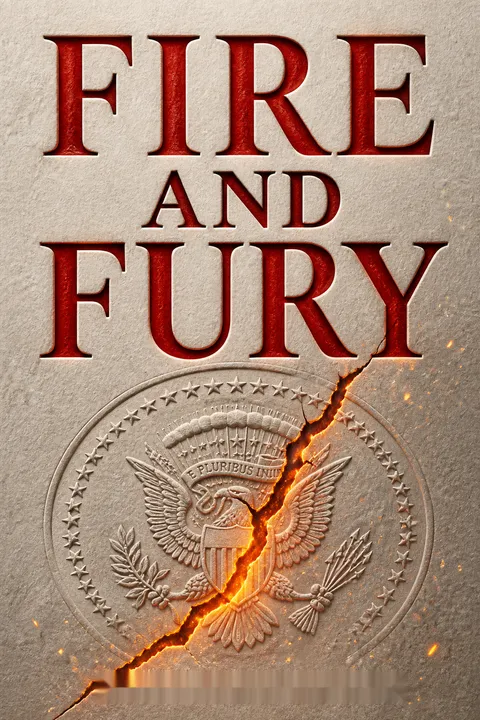
Fire and Fury is a reported political narrative about a presidency in which the leader’s personal habits become governing conditions. Its central paradox is that Trump’s improvisation and celebrity helped him win, while the same traits made it difficult to build a stable administration. The book follows that paradox through a sequence of collisions: an unprepared campaign unexpectedly wins, competing advisers try to define the presidency, investigations become personal battles, and the strategist who helped shape the movement eventually loses his place beside its central figure.
The most illuminating thread is organizational rather than psychological. Trump’s resistance to briefs, procedures, and a clear chain of command did not simply make him unconventional. It changed incentives across the White House. Staff pursued access, managed impressions, leaked to advance factions, and tried to translate impulses into policy. That is a recognizable problem in organizational theory: when goals and authority are ambiguous, informal power expands, and coordination becomes fragile. The book’s strongest scenes show the practical consequences, from the hurried immigration order to the disputed firing of Comey.
The narrative also has limits that matter. Wolff describes his extensive interviews and acknowledges that accounts conflict, including stories from people with competing interests. His vivid scenes and sharp character judgments make the political machinery memorable, but they can make contested testimony feel more settled than it is. The book is best read as an interpretation of the administration’s early months, not as a neutral transcript or a legal record. Its enduring value lies in showing how personality, organizational design, media incentives, and institutional safeguards interact, and how quickly those interactions can become a crisis.
Review Summary
Fire and Fury received mixed reviews, with many readers finding it gossipy and lacking in new information. Critics praised its insider perspective but noted sloppy writing and lack of sourcing. The book was seen as confirming existing perceptions of chaos in the Trump White House rather than revealing shocking new details. Some found it an entertaining but flawed account, while others felt it was overhyped. Overall, readers were divided on its credibility and literary merit, though many agreed it offered an intriguing glimpse into the administration's inner workings.
People Also Read

Glossary
Trumpism
Trump-centered populist politicsIn Wolff’s account, Trumpism is the political current organized around Trump’s appeal to voters alienated from political and cultural elites. Bannon gives it a more defined nationalist and anti-globalist program, including restrictive immigration and economic protectionism. The book also emphasizes that Trump’s own positions can be inconsistent, so the term describes a coalition and style as much as a settled doctrine.
Jarvanka
Jared and Ivanka togetherA portmanteau used in the book for Jared Kushner and Ivanka Trump as a joint power center in the White House. They were family members with direct access to the president, yet also held official roles and pursued overlapping political aims. The term captures how their influence blurred the boundaries between family authority, staff responsibility, and government procedure.
deep state
Alleged entrenched government resistanceIn the book, Trump allies use deep state to describe what they suspect is organized resistance to the administration within intelligence agencies, career government, or other institutions. Wolff recounts this as a political interpretation and a recurring White House concern. The term itself does not establish that a coordinated conspiracy existed.
deconstruction of the administrative state
Reducing agency power and rulesBannon’s phrase for weakening the federal agencies, regulations, and bureaucratic structures he associated with progressive government. In the book, the strategy includes using executive orders to reverse policies and reduce regulatory influence. It expresses a political aim, rather than a detailed administrative plan, and Wolff highlights the gap between the ambition to disrupt government and the ability to implement policy.
firewall
Separate legal defense operationBannon’s proposed separation of the president’s legal and communications response from the regular White House staff. The aim was to keep the administration focused on governing while a separate team handled investigations and public defense. The plan depended on disciplined coordination and limiting the president’s involvement, conditions the book depicts as difficult to maintain.
alternative facts
Competing claims about realityA phrase associated in the book with Kellyanne Conway’s defense of the administration’s account of a disputed public event. It became shorthand for claims that differed from widely available evidence, rather than for additional or differently interpreted information. Wolff uses the episode to illustrate the conflict between the administration and news organizations over factual authority.
FAQ
What's Fire and Fury: Inside the Trump White House about?
- Explores Trump's presidency: The book provides a detailed account of the early days of Donald Trump's presidency, focusing on the chaos and conflicts within the White House.
- Interviews and insights: Michael Wolff conducted over two hundred interviews with key figures in the Trump administration, offering a unique perspective on their experiences and viewpoints.
- Political storm: It captures the extraordinary political environment following Trump's inauguration, likening it to the most significant political upheaval since Watergate.
Why should I read Fire and Fury by Michael Wolff?
- Behind-the-scenes access: The book offers readers a rare glimpse into the inner workings of the Trump administration, revealing the dynamics between Trump and his advisors.
- Controversial insights: Wolff's portrayal of Trump and his team is both candid and provocative, making it a compelling read for those interested in contemporary politics.
- Cultural significance: Understanding the events and personalities in this book is crucial for grasping the current political landscape in the United States.
What are the key takeaways of Fire and Fury by Michael Wolff?
- Chaos in the White House: The book illustrates the disorganization and infighting among Trump's staff, highlighting how this affected decision-making and governance.
- Trump's leadership style: Wolff emphasizes Trump's impulsive nature and lack of traditional political experience, which contributed to a unique and often tumultuous administration.
- Media relations: The book discusses the Trump administration's contentious relationship with the media, portraying it as both adversarial and symbiotic.
How does Michael Wolff gather information for Fire and Fury?
- Extensive interviews: Wolff conducted over two hundred interviews with Trump, his senior staff, and other close associates to gather firsthand accounts of events.
- Deep background conversations: Many sources spoke on deep background, allowing Wolff to present their insights without direct attribution, adding layers of complexity to the narrative.
- Observational access: Wolff spent significant time in the West Wing, allowing him to witness interactions and dynamics that shaped the administration's early days.
What are the best quotes from Fire and Fury and what do they mean?
- “The reason to write this book could not be more obvious.” This quote underscores Wolff's motivation to document the unprecedented nature of Trump's presidency.
- “I became more a constant interloper than an invited guest.” This reflects Wolff's unique position in the White House, emphasizing the chaotic and open nature of the Trump administration.
- “He just keeps going.” This quote about Trump illustrates his resilience and relentless pursuit of public attention, a key theme throughout the book.
How does Fire and Fury portray Donald Trump?
- Impulsive and unpredictable: Wolff depicts Trump as a leader who often acts on instinct rather than careful consideration, leading to erratic decision-making.
- Self-centered: The book emphasizes Trump's need for validation and attention, portraying him as someone who craves approval from both the public and his inner circle.
- Charismatic yet flawed: While acknowledging Trump's appeal to his base, Wolff also highlights his shortcomings and the challenges they pose to effective governance.
What role does Steve Bannon play in Fire and Fury?
- Chief strategist: Bannon is portrayed as a key figure in shaping Trump's agenda, advocating for a populist and nationalist approach to governance.
- Conflict with others: His rivalry with Priebus and Kushner is a central theme, illustrating the power struggles within the administration and the differing visions for its direction.
- Ideological influence: Bannon's alt-right beliefs and strategies are depicted as driving forces behind many of the administration's controversial policies and actions.
What insights does Fire and Fury provide about Jared Kushner?
- Kushner’s Role: The book portrays Kushner as a key advisor to Trump, often acting as a bridge between the president and more traditional Republican figures.
- Perception of Naivety: Wolff suggests that Kushner’s lack of political experience led to a certain naivety in handling complex issues, particularly regarding Russia.
- Family Dynamics: The book explores how Kushner’s relationship with Ivanka Trump and their familial ties to the president influenced decision-making in the White House.
How does Fire and Fury address the media's role in the Trump presidency?
- Adversarial relationship: The book highlights the Trump administration's contentious interactions with the media, portraying it as a constant source of conflict and tension.
- Media manipulation: Wolff discusses how Trump and his team use media coverage to their advantage, often engaging in a symbiotic relationship that fuels both sides.
- Impact on public perception: The portrayal of the media as an enemy contributes to the narrative of Trump's presidency, shaping how the public views both the administration and the press.
How does Fire and Fury depict the Trump family?
- Family Influence: The book highlights the significant influence of Trump’s family, particularly Ivanka and Jared, on his decision-making.
- Ivanka’s Role: Ivanka is portrayed as a key advisor, but her lack of political experience is noted as a potential liability.
- Don Jr. and Eric: The book presents Trump’s sons as loyal but somewhat overshadowed by their sister and brother-in-law.
What conflicts are highlighted in Fire and Fury by Michael Wolff?
- Bannon vs. Priebus: The book details the rivalry between Steve Bannon and Reince Priebus, showcasing their differing visions for the administration and their struggle for influence.
- Kushner's role: Jared Kushner's attempts to moderate Trump's more extreme impulses are contrasted with Bannon's aggressive agenda, creating tension within the White House.
- Media battles: The ongoing conflict between the Trump administration and the media is portrayed as a central theme, with both sides engaging in a war of narratives.
What are the implications of Fire and Fury for understanding Trump’s presidency?
- Insight into Governance: The book provides a unique perspective on the challenges of governing in the Trump era, highlighting the chaos and dysfunction that characterized the administration.
- Cultural and Political Shifts: Wolff’s narrative suggests that Trump’s presidency represents a significant cultural and political shift in the U.S.
- Legacy of the Trump Administration: The book prompts readers to consider the long-term effects of Trump’s presidency on American politics and society.
Download PDF
Download EPUB
.epub digital book format is ideal for reading ebooks on phones, tablets, and e-readers.








