

Key Takeaways
Make plants the meal, not the garnish, and choose them mostly whole.
The pattern matters. The book defines a whole-foods, plant-based diet as one built around vegetables, fruits, legumes, and whole grains, while excluding meat, fish, dairy, and eggs. It also advises limiting refined flour, sugar, extracted oils, and additives. The point is not simply to eat vegan: potato chips and dairy-free pastries may contain no animal products, but they are not the nourishing pattern the book recommends.
Choose foods close to their source. The book argues that a varied plant diet supplies protein, fiber, vitamins, and minerals, while singling out vitamin B12 as an exception that requires special attention. Its practical rule is to focus on an overall pattern rather than chasing individual nutrients or counting calories. Meals can start with beans, grains, vegetables, and fruit, then use herbs, spices, and sauces for flavor.
The distinction between a dietary identity and a dietary pattern is essential. A vegan label says what is absent, not whether a meal is rich in fiber or minimally processed. That makes the book's emphasis on intact foods more useful than a simple list of forbidden ingredients. It also helps explain why a plate of beans, greens, and grains is not nutritionally interchangeable with refined snack foods. The practical challenge is variety: a narrow plant diet can still be inadequate, so the book's whole-food principle works best when it means diverse foods, not merely foods from plants.
For heart disease, pair a plant-based diet with medical supervision.
A different treatment lens. The book describes coronary artery disease as plaque narrowing or damaging blood vessels, rather than as an unavoidable event of aging. It argues that a low-fat, whole-foods, plant-based diet can reduce the inputs that contribute to plaque and may help the body recover. Its central examples are Anthony Yen, who had five bypasses and continuing chest pain, and Evelyn Oswick, who had two serious cardiac events.
Cases are not guarantees. Both adopted Dr. Caldwell Esselstyn's dietary program and, according to the book, went on to live active lives well beyond earlier predictions. The book also reports a small program involving 24 patients with advanced heart disease, with no further cardiac incidents among those who followed the diet. These stories illustrate possibility, not a promise that diet alone will reverse disease for everyone.
The book's strongest clinical contribution is to widen the treatment conversation beyond procedures and prescriptions. Its patient stories make that possibility vivid, particularly for people who have been told that little can be done beyond managing symptoms. Still, anecdotes and a small, selected group cannot establish the outcome for every patient. Heart disease varies, and dietary changes should complement, not interrupt, medical care. The most persuasive version of the book's claim is not that food replaces cardiology, but that food deserves a serious place in it.
Treat type 2 diabetes as a condition whose course may respond to food.
The proposed mechanism. The book explains type 2 diabetes mainly through insulin resistance: the body makes insulin, but cells respond poorly, leaving excess glucose in the bloodstream. It argues that excess fat inside cells can interfere with insulin's action, and that a low-fat, plant-based diet may help reduce that interference. This account is presented as a reason to address diet, not only blood sugar numbers.
A personal example. San'Dera Prude had high blood pressure and diabetes, received little practical dietary guidance, and continued eating familiar meat-heavy meals. After changing to a whole-food, plant-based diet with Dr. Esselstyn's support, the book reports that her blood sugar returned to normal and her symptoms disappeared. Joey Aucoin's blood sugar had reached 480; after changing his diet, he lost 28 pounds over 22 weeks and needed far less medication. Individual results vary, and medication changes require clinical oversight.
These stories show why a diagnosis needs an explanation patients can act on. A prescription may address a measurable symptom while leaving daily habits untouched, whereas a supported dietary change gives the patient a role in treatment. The book's account of insulin resistance is useful as a model, but real diabetes is not reducible to one mechanism or one menu. The sound takeaway is that food can be a meaningful treatment lever, not that every patient can stop medication. Monitoring matters because glucose levels and medication needs can change as eating patterns change.
Separate suggestive cancer mechanisms from proof of human prevention.
What the book presents. A central example is T. Colin Campbell's rat experiment on casein, the main protein in dairy. The book reports that rats given a diet with 20 percent casein showed more early tumor growth than rats given 5 percent, and that tumor growth changed when researchers switched the animals between diets. It uses this experiment to argue that diet can influence cancer development.
Keep the inference bounded. The book also proposes pathways involving dairy, insulin-like growth factor, and sex hormones, and contrasts these with protective compounds found in plant foods. These are reasons to investigate diet and cancer, but a result in rats does not establish that dairy causes cancer in people or that a plant-based diet prevents it. Human cancer risk has many influences, and the evidence described here is not a substitute for established screening or treatment.
This section is most useful when it distinguishes biological plausibility from demonstrated clinical effect. Animal experiments can isolate a mechanism and generate a testable question, but human diets, exposures, and cancers are more complex than a controlled rat feeding study. The book's broader invitation to examine dietary patterns remains valuable, especially because nutrition is modifiable. Its most sweeping language about particular foods and cancer deserves more restraint than its practical advice to eat varied whole plant foods. Readers can take the question seriously without treating a proposed mechanism as settled proof.
Plan B12 deliberately; whole plants do not provide a dependable source.
One explicit exception. The book says that a well-structured plant-based diet can meet ordinary needs for calories, protein, vitamins, and minerals, but identifies vitamin B12 as the important exception. B12 supports normal brain and nervous-system function. The book explains that animals obtain B12 through bacteria and that modern food sanitation removes much of the soil that once supplied it to people eating plants.
Make adequacy practical. The book recommends a B12 supplement as insurance and advises consulting a qualified health professional about dosage. It also counters the common fear that plant-based eaters cannot get enough protein, noting that legumes, grains, and other plant foods contain protein and that a varied diet can provide sufficient amounts. The useful lesson is not to rely on guesswork: build meals from a range of plant foods and address B12 on purpose.
The B12 guidance strengthens the book because it replaces dietary optimism with a concrete safeguard. A diet can be ethically or environmentally motivated and still need nutritional planning; a reliable B12 source is a clear example. The same principle applies more broadly: adequacy depends on what is actually eaten, not on the label attached to a diet. Readers should be especially careful when changing diets during illness or other periods of increased nutritional need. The book's basic message is strongest when paired with individual assessment, rather than a claim that one template fits everyone.
Make familiar meals plant-centered instead of relying on willpower alone.
Change the default meal. The book argues that transition is easier when familiar dishes are adapted instead of abandoned. Its suggestions include removing butter from breakfast, using fruit for sweetness, adding vegetables and beans to meals, and using broth or water to cook vegetables without oil. Blended vegetables can make soups creamy, while fruit can thicken dressings. The recipe collection applies these ideas to everyday food, from oatmeal and bean salads to lentil soups, vegetable lasagna, and fruit-based desserts.
Notice the pull of processed food. Psychologist Doug Lisle calls the mismatch between ancient instincts and modern food abundance the pleasure trap. In his account, highly processed foods can strongly stimulate pleasure and encourage repeated eating. The book's response is practical: keep satisfying whole foods available, prepare simple meals, and give taste preferences time to adjust rather than treating every craving as a failure.
The behavior-change insight is that eating is shaped by convenience, habit, and reward, not just information. Familiar recipes reduce the psychological cost of changing, while prepared beans, cut vegetables, and simple soups make the new choice easier to repeat. This is consistent with a broader principle of behavioral design: reliable routines often outperform dramatic resolutions. The book's claim that cravings settle quickly may not describe every person, however. Social setting, culture, income, and food access all influence what feels sustainable, so flexibility is part of a durable transition.
Choose plant staples to reduce animal suffering and resource demand.
The costs extend beyond health. The book contrasts idyllic images of family farms with industrial systems that confine animals in crowded spaces, restrict movement, and subject them to painful procedures. It reports that 8.56 billion land animals were killed to supply American diets in 2008, and estimates a much larger total when fish are included. Its ethical argument is that food choices can either support or reduce demand for these systems.
Land and water matter too. Citing estimates available at the time, the book says producing a pound of processed beef takes about 2,500 gallons of water, compared with 250 for soy and 25 for wheat. It also connects livestock production to greenhouse gases, deforestation, waste, and pressure on fisheries. Its proposed response is to eat more foods directly from plants, which require fewer resources than raising animals on feed crops.
The book makes a useful connection between personal meals and systems of production. Animal welfare and environmental impact are not separate topics when the same demand drives confinement, feed production, and resource use. The estimates it cites are broad comparisons, not universal measurements: production methods and food sources vary, and plant agriculture also has environmental costs. That nuance does not erase the central point that shifting the balance toward plant staples can reduce demand for animal production. The ethical case is also distinct from the medical case, giving readers more than one reason to reconsider a meal.
Demand nutrition guidance that explains choices, not just diagnoses.
Information changes the choice. The book argues that patients are often told their cholesterol or blood sugar is high without receiving a clear account of how food might affect it. Pam Popper describes clients who were offered medication but not a meaningful comparison with dietary change. The book also points to limited nutrition education in medical training and to commercial interests that promote particular foods or products.
Make prevention discussable. Its proposed remedy is nutritional literacy: patients and clinicians should be able to discuss food as part of prevention and treatment, with the likely benefits and limits made clear. This is not a claim that clinicians, hospitals, or medicines are useless. It is a call to make dietary counseling an ordinary part of care, rather than an obscure alternative that patients must discover on their own.
The strongest version of this argument is about informed choice, not a blanket indictment of medicine. People cannot weigh options they have never been offered, and food advice becomes more credible when clinicians explain the reasoning, evidence, and tradeoffs. At the same time, institutional incentives are complicated, and broad claims about industry influence should not substitute for evaluating specific recommendations. A constructive standard is straightforward: patients deserve practical nutrition guidance alongside appropriate medication and procedures, with neither portrayed as automatically sufficient.
Read ingredients and serving sizes; plant-based labels can mislead.
Packaging is not a health guarantee. The book advises reading the ingredient list, which presents ingredients in descending order by weight. It warns that manufacturers can split sugar across several names, making it appear lower on the list, and that dairy ingredients may appear in foods that do not seem dairy-based. Serving sizes can also make products look lower in calories or fat than the amount people actually use.
One vivid example. The book points out that cooking spray can be labeled fat-free because a tiny listed serving contains less than half a gram of fat, even though the spray itself is overwhelmingly oil. Its simplest shopping advice is to rely more often on whole foods that do not need ingredient lists, such as oats, lentils, fruit, and vegetables. When buying packaged food, inspect both the ingredients and the serving size.
This is a small but powerful lesson in measurement: a nutrition claim can be technically accurate for a stated serving and still mislead about ordinary use. Ingredient literacy gives consumers a way to look past front-of-package language and ask what the product contains. The book's examples also show why minimally processed foods simplify decisions. Yet labels are only one tool. Price, availability, cooking time, and household preferences determine what people can buy and prepare, so useful nutrition advice must address the food environment as well as individual vigilance.
Analysis
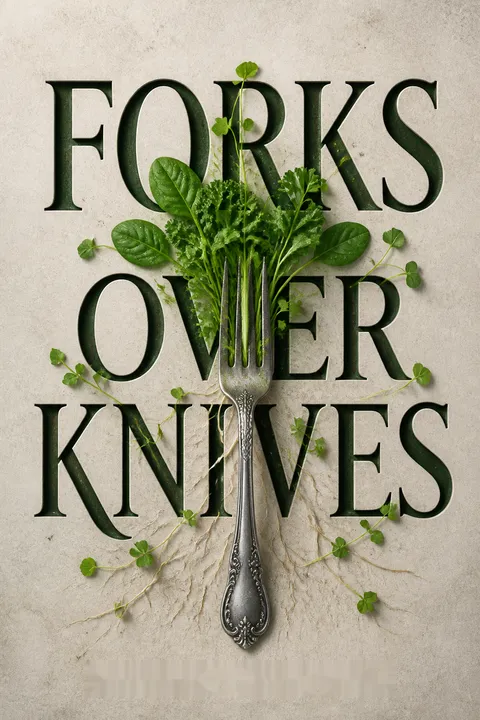
Forks Over Knives is both an argument for a particular dietary pattern and a practical guide to adopting it. Its structure moves from claims about chronic disease, through patient and researcher stories, into ethical and environmental consequences, then finishes with shopping guidance and recipes. That arrangement gives the book emotional momentum: the plate is framed not as a matter of taste alone, but as a decision with consequences for health, animals, and resources.
Its most persuasive idea is the pattern-level one. Instead of treating nutrition as a hunt for isolated nutrients, the book asks readers to build meals around whole grains, legumes, vegetables, and fruit, while reducing animal foods and highly refined products. The recipes make this more actionable than a purely scientific argument would be. They show how a change in principle can become soup, breakfast, a packed lunch, or a familiar comfort meal.
The evidence requires more careful sorting than the book's assertive rhetoric sometimes provides. Rat experiments, population comparisons, small clinical programs, and personal stories answer different questions. A mechanistic result can suggest a pathway, and an observational association can identify a pattern, but neither alone proves that a food causes or prevents a disease in every person. The book's accounts of dramatic improvement are compelling illustrations, not universal forecasts. A careful reader can value the clinical and behavioral questions raised without treating every conclusion as settled.
The health argument is also strongest when it does not make medicine the enemy. Diet can matter profoundly, but chronic disease treatment may include medication, procedures, and individualized monitoring. The ethical and environmental arguments stand on their own and broaden the book's relevance beyond personal health. Overall, this is best read as a persuasive public-health case and a cookbook for changing defaults, not as a complete or neutral review of nutrition science. Its enduring practical contribution is a clear direction: make minimally processed plant foods the center of meals, and make the transition concrete enough to sustain.
Review Summary
Forks Over Knives received mixed reviews, with an average rating of 4.08 out of 5. Many readers found the book informative and life-changing, praising its plant-based diet approach for improving health and reducing disease risks. Some appreciated the recipes and personal stories included. However, critics felt the book lacked scientific depth compared to the documentary, relied too heavily on anecdotes, and presented an extreme view of veganism. Several reviewers recommended watching the documentary instead of or in addition to reading the book.
People Also Read


Glossary
whole-foods, plant-based diet
Minimally processed plant eatingThe dietary pattern advocated in the book. It centers on whole or minimally refined vegetables, fruits, legumes, and grains, and excludes meat, fish, dairy, and eggs. It also recommends limiting refined flour, sugar, extracted oils, and additives. The book distinguishes this pattern from merely avoiding animal products, since highly processed vegan foods do not necessarily fit its definition.
The China Study
Diet and health investigationThe name used for a large collaborative investigation of diet, lifestyle, and disease across rural Chinese communities, conducted with researchers from Cornell, Oxford, and Chinese institutions. The book describes data from thousands of adults across many counties and emphasizes associations between plant-centered diets and lower rates of some chronic diseases. The investigation was observational, so associations do not by themselves prove causation.
the pleasure trap
Instincts exploited by excessPsychologist Doug Lisle's term for the conflict between human motivational instincts and a modern environment rich in highly stimulating foods. He describes three basic drives: seek pleasure, avoid pain, and conserve energy. Processed foods can intensify pleasure and encourage repeated eating, even when that behavior conflicts with health. The book presents the idea as a way to understand cravings and design more supportive eating routines.
Cardiovascular Health Study
Long-term cardiovascular studyA study cited by the book in its discussion of heart disease among older adults. The book uses its ten-year findings to argue that cardiovascular disease is common among people raised on a traditional Western diet. The study's name refers to a research project, not to a dietary program, and the book's interpretation should be distinguished from what any single study can establish about diet and individual risk.
Framingham Heart Study
Long-running heart health studyA long-term study of cardiovascular health cited in the book's discussion of stroke risk. The book reports an association between eating additional daily servings of fruits and vegetables and lower stroke risk. It uses the finding to support a plant-rich eating pattern. As with other population studies, the reported association does not establish that fruit and vegetable intake alone caused the difference in risk.
FAQ
What's "Forks Over Knives: The Plant-Based Way to Health" about?
- Documentary Influence: The book is based on the feature documentary "Forks Over Knives," which explores the idea that many degenerative diseases can be controlled or even reversed by rejecting animal-based and processed foods.
- Health Focus: It emphasizes the health benefits of a whole-foods, plant-based diet, showcasing personal stories and scientific research supporting this lifestyle.
- Expert Contributions: The book includes insights from experts like Dr. T. Colin Campbell and Dr. Caldwell B. Esselstyn, who have conducted extensive research on the relationship between diet and health.
- Practical Guidance: It provides practical advice on transitioning to a plant-based diet, including recipes and tips for reading nutrition labels.
Why should I read "Forks Over Knives: The Plant-Based Way to Health"?
- Health Benefits: The book offers compelling evidence that a plant-based diet can prevent and reverse chronic diseases such as heart disease, diabetes, and cancer.
- Scientific Backing: It is grounded in scientific research and includes contributions from leading experts in nutrition and health.
- Practical Advice: Readers receive actionable steps to transition to a healthier diet, including recipes and meal planning tips.
- Inspiring Stories: The book shares transformative personal stories of individuals who have improved their health through dietary changes.
What are the key takeaways of "Forks Over Knives: The Plant-Based Way to Health"?
- Plant-Based Diet Benefits: A whole-foods, plant-based diet can significantly improve health and prevent chronic diseases.
- Scientific Support: The book is backed by research from experts like Dr. Campbell and Dr. Esselstyn, who have demonstrated the health benefits of plant-based nutrition.
- Practical Implementation: It provides guidance on how to adopt a plant-based diet, including tips for reading labels and transitioning gradually.
- Environmental and Ethical Considerations: The book also discusses the environmental and ethical benefits of reducing animal product consumption.
What are the best quotes from "Forks Over Knives: The Plant-Based Way to Health" and what do they mean?
- "Leave your drugs in the chemist’s pot if you can cure the patient with food." - This quote by Hippocrates emphasizes the power of diet in healing and maintaining health.
- "Forks Over Knives is literally a lifesaver." - This reflects the transformative impact the plant-based diet has had on individuals' health and well-being.
- "Our bodies were created to run perfectly on plants." - This underscores the book's central message that a plant-based diet aligns with our natural physiology.
- "Eating a vegan diet will save our lives." - This highlights the potential of plant-based eating to prevent and reverse life-threatening diseases.
How does "Forks Over Knives: The Plant-Based Way to Health" suggest transitioning to a plant-based diet?
- Gradual Changes: The book suggests making gradual changes by replacing animal products with plant-based alternatives in familiar meals.
- Focus on Whole Foods: Emphasizes the importance of consuming whole, minimally processed foods like fruits, vegetables, grains, and legumes.
- Reading Labels: Provides tips on reading nutrition labels to avoid hidden animal products and unhealthy additives.
- Practical Recipes: Offers a variety of recipes to help readers incorporate plant-based meals into their daily routine.
What scientific evidence does "Forks Over Knives: The Plant-Based Way to Health" present?
- The China Study: Dr. T. Colin Campbell's research, known as The China Study, is highlighted, showing a correlation between plant-based diets and lower rates of chronic diseases.
- Dr. Esselstyn's Research: Dr. Caldwell Esselstyn's studies demonstrate the reversal of heart disease through a plant-based diet.
- Nutritional Studies: The book references various studies that support the health benefits of plant-based nutrition, including reduced risk of cancer and diabetes.
- Expert Contributions: Includes insights from multiple experts who have conducted research on diet and health.
What are some practical tips from "Forks Over Knives: The Plant-Based Way to Health" for adopting a plant-based diet?
- Start with Breakfast: Begin by incorporating plant-based options like oatmeal or smoothies into your breakfast routine.
- Experiment with Recipes: Try new recipes from the book to discover plant-based meals you enjoy.
- Stock Your Kitchen: Keep your kitchen stocked with whole grains, legumes, fruits, and vegetables to make meal preparation easier.
- Plan Meals: Plan your meals ahead of time to ensure you have plant-based options available.
How does "Forks Over Knives: The Plant-Based Way to Health" address common concerns about a plant-based diet?
- Protein Intake: The book explains that plant foods provide sufficient protein and that a varied diet ensures all essential amino acids are consumed.
- Nutrient Deficiencies: It discusses how to obtain necessary nutrients like vitamin B12 and omega-3 fatty acids through fortified foods or supplements.
- Taste and Satisfaction: Offers recipes and tips to create flavorful and satisfying meals without animal products.
- Social and Cultural Challenges: Provides strategies for navigating social situations and cultural traditions while maintaining a plant-based diet.
What role do personal stories play in "Forks Over Knives: The Plant-Based Way to Health"?
- Inspiration: Personal stories serve as powerful testimonials to the transformative effects of a plant-based diet on health and well-being.
- Real-Life Examples: They provide real-life examples of individuals who have successfully adopted a plant-based lifestyle and experienced significant health improvements.
- Motivation: These stories motivate readers by showing that positive change is possible and achievable.
- Connection: They help readers connect with the material on a personal level, making the information more relatable and impactful.
How does "Forks Over Knives: The Plant-Based Way to Health" address environmental and ethical issues?
- Environmental Impact: The book discusses the environmental benefits of reducing animal product consumption, such as decreased greenhouse gas emissions and deforestation.
- Animal Welfare: It highlights the ethical considerations of factory farming and the treatment of animals raised for food.
- Sustainability: Emphasizes the sustainability of plant-based diets in feeding the growing global population.
- Global Perspective: Provides a broader perspective on how dietary choices affect the planet and future generations.
What are some of the challenges mentioned in "Forks Over Knives: The Plant-Based Way to Health" regarding the adoption of a plant-based diet?
- Cultural Norms: The book acknowledges the challenge of changing long-standing dietary habits and cultural norms centered around animal products.
- Social Situations: It addresses the difficulty of maintaining a plant-based diet in social settings where animal products are prevalent.
- Misinformation: Discusses the challenge of overcoming misinformation and marketing from the food and pharmaceutical industries.
- Personal Preferences: Recognizes that individual taste preferences can make the transition challenging but offers solutions to adapt favorite dishes.
What resources does "Forks Over Knives: The Plant-Based Way to Health" provide for further learning and support?
- Recipes: The book includes a variety of plant-based recipes to help readers get started with meal planning.
- Online Resources: It suggests websites and online communities for additional support and information on plant-based living.
- Books and Studies: Recommends further reading, including books and studies by experts featured in the book.
- Community Support: Encourages joining plant-based groups or forums for shared experiences and advice.
Download PDF
Download EPUB
.epub digital book format is ideal for reading ebooks on phones, tablets, and e-readers.








