

Key Takeaways
Treat every city as a living system, not a monument built to last
Cities end in different ways. Çatalhöyük emptied gradually as people dispersed; Pompeii was buried by Vesuvius; Angkor dwindled amid climate extremes and political strain; Cahokia fragmented as residents reshaped public life. These were not four versions of one sudden collapse. Their residents made different choices under different pressures.
Follow people, not ruins. The book grew from Newitz’s experience of loss, including her father’s suicide. Archaeology helped shift her question from why someone died to how he had lived. She applies that change in focus to cities: to understand abandonment, first examine the daily labor, relationships, and decisions that made a place worth living in. Cities are not permanent objects. They are changing communities supported by work, infrastructure, and shared purpose.
The shift from ruins to lived experience is also a shift from event-based history to systems thinking. A city’s fate emerges from interactions among water, food, labor, governance, and belonging, not from one dramatic date. This resembles resilience research, which studies how systems absorb shocks and reorganize rather than simply survive or fail. The comparison is useful, but it should not flatten distinct histories: an eruption, a slow migration, and a political reorganization are not interchangeable forms of decline. The book’s strongest premise is that the human consequences of urban change become visible only when those differences remain in view.
Settled life remade human bodies, identities, and the meaning of home
A new kind of life. Çatalhöyük, founded about 9,000 years ago, held perhaps 5,000 to 20,000 people. Its houses crowded together like cells, with rooftop paths and ladders leading down into rooms. Residents farmed, kept animals, and developed cooking tools that made household work more efficient. Across generations, settled diets and close contact with domesticated plants and animals changed human bodies, while dairy consumption favored adult lactose tolerance in some populations.
Home became history. People buried the dead beneath sleeping platforms, rebuilt houses on the same footprints, and used objects and house features to connect present residents with earlier ones. A city also made privacy and public life newly imaginable: a doorway separated household from rooftop community. The term material entanglement describes how people’s identities become bound to physical surroundings, from a home to the land it occupies.
Çatalhöyük complicates the familiar story that agriculture simply delivered progress. Permanent settlement offered specialization, dependable stores, and a wider circle of social ties, but it also bound people to vulnerable crops, crowded housing, and neighbors they could not easily leave. The account anticipates a modern insight from environmental history: human bodies and landscapes change together. Yet the biological examples should not be mistaken for a single, universal pathway. Diet, genetics, and settlement developed differently across regions. The durable lesson is less that cities domesticated humanity than that daily environments gradually reshape what people can do and who they understand themselves to be.
Interpret ancient objects in context before turning them into familiar myths
Artifacts need neighbors. Archaeologist Ian Hodder’s contextual archaeology treats an object as evidence of relationships and practices, not as an isolated treasure. That approach matters at Çatalhöyük, where a famous female figurine was once presented as proof of a goddess-worshipping matriarchy. The claim rested on a small number of finds and assumptions about what powerful women must have represented.
The wider record complicates it. In one house, archaeologists counted 141 figurines: 54 showed animals, only five showed complete human figures, and others depicted body parts. Many were worn from handling or discarded, rather than carefully displayed. They might have served practical, spiritual, or commemorative purposes, but the evidence does not settle the question. Likewise, skeleton Dido’s damaged bones and soot-darkened chest help reconstruct a life of labor, while leaving much about her family and beliefs uncertain.
This is a useful corrective to the urge to make fragmentary evidence tell a satisfying story. In archaeology, an artifact’s meaning depends on where it appears, what surrounds it, and which comparisons researchers choose. The same principle applies to contemporary data: a striking example can become misleading when stripped from its base rate or social context. There is also an important limit. Context does not eliminate interpretation, especially when people left no writing. The best account therefore distinguishes what the evidence supports from what remains a plausible hypothesis, rather than replacing one confident myth with another.
A city thrives when ordinary workers can shape its public life
Pompeii belonged to the street. Its public world included bars, shops, bathhouses, theaters, temples, and even communal toilets. The city had more than 160 tabernas, or food and drink businesses, serving residents who lived and worked among them. Many shops were run by liberti, people freed from slavery who often remained connected to former owners while building businesses of their own. Women also managed property and public institutions, as Julia Felix’s rental advertisement and Eumachia’s civic building show.
Small traces reveal large groups. Researchers applied data archaeology, combining patterns from everyday evidence rather than relying only on elite texts. Cart ruts and damaged curbs helped reconstruct traffic; uneven street paving exposed unequal access to infrastructure. Graffiti and shop remains reveal a diverse population whose public culture was more complex than the stories written by aristocrats.
Pompeii makes public space tangible as both an economic network and a social arena. Its shops did not merely sell meals; they created repeated encounters among people with different origins, status, and prospects. Urban sociology often treats such everyday contact as a source of information, opportunity, and social mixing, although contact alone does not dissolve inequality. Pompeii’s paved and unpaved streets make that qualification visible: shared space existed alongside deliberate privilege. The account also shows why histories built only from elite writing are incomplete. Material patterns can recover ordinary activity, but they cannot automatically reveal how every participant understood it.
After disaster, save the people even when the place cannot be saved
Pompeii could not be rebuilt. Vesuvius buried the city beneath roughly six meters of ash. Superheated flows and toxic material made excavation dangerous, while ash damaged water supplies and farmland. Archaeologists have found about 1,150 bodies, likely a fraction of the dead. Many residents escaped before the eruption’s worst phase, carrying whatever they could.
The city’s people found new homes. Emperor Titus appointed officials to oversee recovery and used public funds, along with the property of victims without heirs, to support affected communities. New neighborhoods and civic buildings were developed in nearby places such as Cumae. Families and former neighbors resettled together, preserving business and social connections. Pompeii vanished as a place to live, but its people and Roman urban culture continued elsewhere.
The response shifts the measure of recovery from restoring buildings to restoring people’s capacity to live. Disaster policy today often faces the same choice: rebuild in place, relocate, or support a community across several destinations. Each option distributes costs and benefits differently, and the Pompeian example does not prove that Roman aid reached everyone equally. The surviving records disproportionately illuminate people with property and family ties. Still, the case makes a compelling principle concrete: when land is toxic or infrastructure irretrievable, assistance that preserves social networks and livelihoods may matter more than a symbolic reconstruction.
Infrastructure fails when rulers prize spectacle over maintenance and consent
Angkor ran on water and labor. At its height, the Khmer capital may have held 800,000 to 900,000 people. Its reservoirs and canals captured monsoon water, supported rice farming, and displayed royal power. The West Baray, an enormous reservoir, was oriented east to west to fit cosmological beliefs, even though the land’s slope left parts of it dry. The book presents it as a warning about political priorities overriding engineering.
Climate exposed the weakness. In the 14th and 15th centuries, prolonged drought gave way to heavy rains and floods. Sediment clogged channels, infrastructure failed in connected cascades, and repairs became harder as the labor force and royal authority weakened. Angkor’s system depended on khñum, a broad category including enslaved, indentured, and other workers. When the monarchy could no longer mobilize them, the waterworks could not be maintained.
Angkor illustrates a classic infrastructure trap: systems built to manage one pattern of risk can amplify another. Canals that draw water toward a city may become liabilities when rainfall swings sharply, while a labor-intensive network can become brittle if its workforce has little power or incentive to sustain it. Contemporary engineering increasingly uses adaptive planning, designing for uncertain conditions rather than one expected climate. But engineering alone cannot repair an unjust political contract. The evidence does not make the reservoir’s ceremonial purpose certain, and the city’s decline had several causes. Its clearest warning is that technical capacity and political legitimacy must endure together.
When central power excludes residents, neighborhood life can become the alternative
Cahokia made public life monumental. Around 1050, the Mississippi River city may have reached 30,000 residents. Its Grand Plaza, huge earthen mounds, and neighborhood gathering places drew immigrants from across the region. Residents built Monks Mound by carrying baskets of earth, while festivals, games, and ceremonies made the plaza a center of shared identity.
That center lost its claim. During Cahokia’s later years, leaders enclosed the downtown plaza with a wooden palisade. The public space became more exclusive, and residents increasingly held rituals in neighborhood settings. The city’s building patterns shifted back toward courtyards. People also ritually closed houses by removing posts, filling holes with colored clay, and sometimes burning offerings. These practices suggest that a building’s end could be intentional and meaningful, not merely a sign of disorder.
Cahokia makes the design of public space a political question. A plaza can gather a population into a shared public, but walls can turn that same space into a badge of exclusion. The movement toward neighborhood gatherings resembles decentralized governance, where decisions and rituals are distributed rather than concentrated in one center. Such arrangements can broaden participation, though they may also make coordination across a large region more difficult. The archaeological record cannot establish a single popular uprising or prove that every neighborhood was democratic. It does show that residents altered the city’s social geography, and that this transformation deserves attention alongside the famous monuments.
Abandonment changes a society; it does not erase its people or culture
The lost-city story is often false. Angkor was never simply forgotten: monks, pilgrims, and local communities continued to use its temples after the royal court moved. European accounts later cast the site as a discovery, obscuring Khmer knowledge and ongoing care. Cahokia’s population dispersed, but Mississippian traditions persisted among Indigenous communities, including Siouan peoples. Pompeii’s refugees carried social ties and identities to nearby cities.
Change is not extinction. Archaeologists increasingly question “collapse” as a label for societies whose urban centers shrink or change form. Survivance, a term coined by Gerald Vizenor, describes Indigenous presence and cultural continuity as active and ongoing, rather than as mere survival after loss. The people of a city may leave its center, reorganize into villages, or build elsewhere while carrying knowledge, practices, and memory with them.
Rejecting the equation of urban decline with cultural death is not just a matter of terminology. It changes whose experiences count as history, especially when colonial accounts describe places as empty to justify outside control. The idea of survivance also resists a museum-like view of Indigenous cultures as remnants of the past. At the same time, continuity should not be used to soften real losses: displacement, violence, and damaged infrastructure can profoundly alter communities. A precise account holds both truths together. People adapt and carry traditions forward, but adaptation is not the same as having suffered no harm.
Build cities around resilient systems and dignified labor, not royal glory
The past is a design record. Across these cases, cities relied on food systems, water, roads, shared spaces, and the people who maintained them. The book’s practical priorities follow from those histories: infrastructure that can handle environmental change, accessible public places, adequate domestic space, social mobility, and leaders who respect workers. Angkor shows how climate shocks can overwhelm rigid water systems; Pompeii shows that public support can help people rebuild elsewhere; Cahokia shows the cost when shared space becomes exclusionary.
No city is permanent. Newitz’s San Francisco experienced both an economic exodus and a later surge in growth, a reminder that recent fortunes do not guarantee future stability. Climate disruption, poverty, and political conflict can compound, while public investment and collective action can change outcomes. The goal is not to make a city immortal, but to make it safer, fairer, and more adaptable.
The book’s policy lesson is strongest when treated as a question of urban governance rather than a checklist of engineering fixes. Resilience depends on who gets protected, who pays for repairs, and whose labor keeps services running. Research on climate adaptation likewise emphasizes that a seawall or drainage upgrade can reduce physical risk while intensifying displacement if residents lack a voice. The comparison across four ancient cities cannot specify one blueprint for every modern metropolis. It does offer a durable test for decisions: does a project strengthen the everyday systems that residents rely on, or mainly advertise the power of its sponsors?
Analysis
The book’s comparative method changes the meaning of a “lost city.” Instead of treating urban disappearance as a single event, it follows the practical systems and social relationships that make settlement possible. Çatalhöyük reveals how domestic routines can generate urban identities. Pompeii shows public life as an engine of cultural exchange and mobility. Angkor exposes the dependence of monumental waterworks on both sound design and coerced labor. Cahokia demonstrates that people can redirect a city’s public life, then leave its central form behind. Together, the cases make a strong argument against environmental determinism: drought or eruption matters, but the consequences depend on political arrangements, available alternatives, and who bears the costs.
The strongest analytical contribution is the insistence that ordinary people are not background scenery. Laborers, shopkeepers, household members, migrants, and refugees sustain urban systems and make choices within them. This view also challenges the colonial habit of calling a place “lost” when local communities still know and use it. The account’s storytelling makes that correction memorable, though it can create a tension between vivid reconstruction and evidentiary uncertainty. Archaeologists often cannot know exactly what a ritual meant or why a household moved. The book generally presents competing interpretations, but any narrative of deep history risks making conjecture feel more settled than it is.
A useful extension is to think of cities as sociotechnical systems: infrastructure, institutions, labor, and shared meanings are interdependent. A canal is not merely a channel, and a plaza is not merely open ground. Each embodies decisions about whose needs matter and who has authority. This framework clarifies why resilience cannot mean only that buildings withstand floods. A resilient city must also preserve people’s ability to maintain livelihoods, influence decisions, and relocate without losing all community ties. The book’s final wager is therefore neither that cities are doomed nor that better planning guarantees permanence. It is that urban futures remain political choices, made through ordinary work as much as grand design.
Review Summary
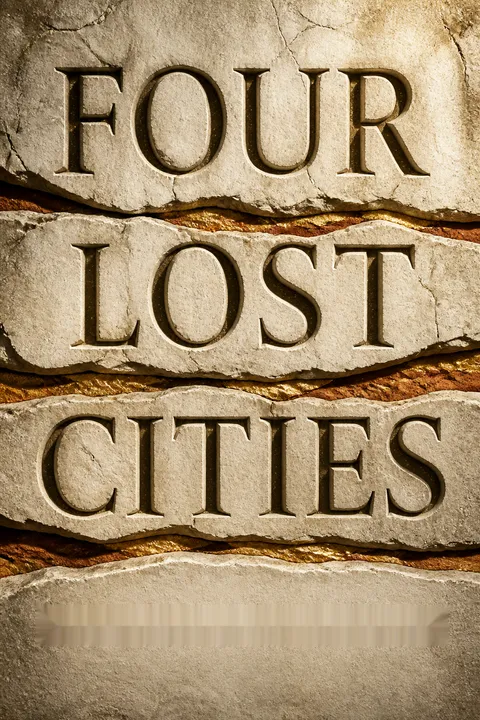
Four Lost Cities examines the rise and fall of four ancient urban centers: Çatalhöyük, Pompeii, Angkor, and Cahokia. Newitz explores archaeological findings and theories about daily life, societal structures, and reasons for abandonment. Reviewers appreciate the focus on ordinary citizens and the debunking of "lost city" myths. Many found the writing engaging and informative, particularly enjoying the Pompeii section. Some criticize the book's uneven quality and speculative conclusions. Overall, readers value the insights into ancient urban life and the book's relevance to modern city challenges.
People Also Read



Glossary
contextual archaeology
Artifacts within cultural contextAn archaeological approach associated in the book with Ian Hodder. It interprets artifacts through their relationships to buildings, practices, and other objects, rather than treating them as isolated treasures. A figurine, for example, means something different depending on whether it was displayed, handled, buried, or discarded.
material entanglement
Identity bound to surroundingsThe process by which people’s identities become connected to physical things and places. At Çatalhöyük, houses held food stores, ancestors, ritual objects, and repeated family histories. The built environment therefore did more than shelter residents: it helped shape how they understood community, memory, and their place in the world.
Neolithic Revolution
Transition to farming and settlementA term coined by archaeologist V. Gordon Childe for the cluster of changes associated with agriculture, symbolic communication, trade, and dense settlement. The book explains that the process was neither a sudden universal break nor a single Middle Eastern development. It unfolded gradually, with different forms emerging independently in multiple regions.
anthropogenic geomorphology
Human shaping of landscapesThe study of landforms created or substantially altered by people. In tropical settings such as Angkor, human-made features may include drained fields, raised house foundations, reservoirs, and canals, rather than large stone buildings. Recognizing these changes helps archaeologists identify settlements whose architecture has returned to the forest.
lidar
Laser-based terrain mappingLight detection and ranging, a mapping method that measures how laser pulses bounce back from the ground. When used from aircraft, lidar can reveal subtle changes in elevation beneath forest cover. Surveys around Angkor exposed buried roads, reservoirs, house foundations, and neighborhoods that earlier observers had not recognized.
data archaeology
Patterns in everyday remainsAn approach that combines evidence from many ordinary objects or structures to infer common practices. At Pompeii, researchers used patterns in street wear, shops, drainage, and other remains to reconstruct traffic and commercial life. It helps address the historical silence left by people who rarely appear in elite written records.
khñum
Angkorian laboring dependentsAn Old Khmer term used for a range of people who worked for temples and elites, including enslaved people, indentured workers, servants, and commoners. Its meaning varies by context, so it does not describe one uniform legal status. The book uses it broadly when discussing the labor that built and maintained Angkor.
heterarchy
Distributed forms of authorityA form of social organization in which power is shared among multiple groups or levels rather than concentrated in one ruler. Archaeologist Sarah Baires uses the term as a possibility for Cahokia, where neighborhoods or other communities may have had their own leaders and practices alongside the authority associated with Monks Mound.
sandcastle depreciation
Repeated disasters erode prosperityA term used by researcher Solomon Hsiang for the economic damage that accumulates when disasters repeatedly strike a region. Repairing infrastructure consumes resources, and successive shocks can leave a society less able to return to its previous level of prosperity. The concept helps explain how repeated floods and droughts could compound Angkor’s difficulties.
survivance
Active cultural continuityA term coined by Indigenous scholar Gerald Vizenor to describe Indigenous presence as active, continuing, and self-defining. It rejects accounts that frame Native cultures only through tragedy, victimhood, or survival after colonial violence. In the book, it connects Cahokia’s legacy to living communities, stories, art, and political action.
FAQ
1. What is Four Lost Cities: A Secret History of the Urban Age by Annalee Newitz about?
- Exploration of ancient urbanism: The book investigates the rise, life, and decline of four ancient cities—Çatalhöyük, Pompeii, Angkor, and Cahokia—revealing how these urban centers shaped human history and culture.
- Interdisciplinary approach: Annalee Newitz combines archaeology, anthropology, history, and environmental science, using modern technologies like lidar mapping and data archaeology to uncover hidden aspects of these cities.
- Themes of resilience and transformation: The narrative highlights how cities undergo cycles of growth, decline, and renewal, challenging the notion of sudden “collapse” and instead presenting urban abandonment as a gradual process of cultural transformation.
- Lessons for today: By examining why these cities were abandoned, the book draws parallels to modern urban challenges, offering insights into the vulnerabilities and resilience of contemporary cities.
2. Why should I read Four Lost Cities by Annalee Newitz?
- Reveals hidden histories: The book uncovers the lives of commoners, laborers, and women in ancient cities, providing a more inclusive and nuanced understanding of urban life.
- Connects past and present: Newitz draws direct connections between ancient urban challenges—like infrastructure management and social hierarchy—and those facing modern cities, making the book highly relevant.
- Engaging and accessible: Through vivid storytelling and personal experiences, the author makes complex archaeological and historical topics compelling for a broad audience.
- Challenges myths and assumptions: The book debunks popular misconceptions about ancient cities, such as the idea of sudden collapse or matriarchal goddess worship at Çatalhöyük.
3. What are the key takeaways from Four Lost Cities by Annalee Newitz?
- Cities as social experiments: Urban centers are ongoing experiments in organizing human life, balancing cooperation and conflict, and creating shared identities through public spaces and rituals.
- Abandonment is gradual and complex: Urban decline is rarely sudden; it is shaped by environmental changes, political shifts, and social transformations, making the idea of “collapse” an oversimplification.
- Resilience and survivance: Even after physical abandonment, cultures and traditions persist and adapt, emphasizing continuity and renewal beyond city walls.
- Infrastructure and labor matter: The management of water, food, and labor is crucial for urban sustainability, and failures in these areas often contribute to decline.
4. How does Annalee Newitz in Four Lost Cities challenge the traditional idea of “collapse” in ancient civilizations?
- Rejects sudden collapse narrative: Newitz and many archaeologists argue that urban decline is usually a gradual process involving complex social, political, and environmental factors.
- Focus on transformation: Cities often transform or decentralize rather than simply disappear, with people adapting to new forms of social organization.
- Political and social agency: Abandonment is framed as a political process involving shifts in power and social fragmentation, not just environmental catastrophe.
- Continuity of culture: The concept of “survivance” highlights how traditions and identities persist even after cities are deserted.
5. What are the main cities explored in Four Lost Cities by Annalee Newitz, and why were they chosen?
- Çatalhöyük: An early urban settlement in Anatolia, notable for its dense, interconnected housing and complex spiritual life, representing the dawn of urbanism.
- Pompeii: A Roman city famous for its sudden destruction by Mount Vesuvius, offering a snapshot of vibrant urban life and social diversity.
- Angkor: The sprawling capital of the Khmer Empire, known for its sophisticated water management and eventual abandonment due to environmental and political challenges.
- Cahokia: The largest pre-Columbian city in North America, characterized by monumental mounds and a unique urban and spiritual organization.
- Chosen for diversity: These cities represent different eras, geographies, and urban forms, allowing Newitz to explore universal patterns and unique variations in urban rise and decline.
6. How does Four Lost Cities by Annalee Newitz use modern technology like lidar to study ancient cities, especially Angkor?
- Lidar mapping breakthroughs: Lidar technology allowed archaeologists to see beneath dense jungle canopy, revealing the full extent of Angkor’s urban sprawl, including commoners’ neighborhoods and agricultural fields.
- Distinguishing features: The precision of lidar helped differentiate natural landforms from human-made structures like reservoirs, canals, and temple foundations.
- Challenging old assumptions: Lidar data confirmed the vast size and complexity of Angkor, supporting historical inscriptions and challenging Western skepticism about its population and infrastructure.
- Revealing urban planning: The technology uncovered both organic and grid-like patterns in Angkor’s layout, highlighting the city’s unique approach to urban design.
7. What was daily life like in Çatalhöyük according to Four Lost Cities by Annalee Newitz?
- Dense, interconnected living: Çatalhöyük featured houses accessed via rooftops and ladders, marking a shift from nomadic to settled life and introducing new concepts of privacy and public space.
- Domestic and symbolic complexity: Residents engaged in intensive domestic labor, maintained clean homes, and embedded wild animal imagery and human skulls in their walls, reflecting a rich spiritual and social life.
- Egalitarian yet evolving: While the city appeared egalitarian, evidence suggests growing social stratification and cultural shifts over time.
- Gradual decline: Social tensions and climate events, such as the 8.2k event, contributed to the city’s slow abandonment.
8. How does Four Lost Cities by Annalee Newitz challenge the myth of goddess worship and matriarchy at Çatalhöyük?
- Origins of the myth: Early excavations led to the belief that Çatalhöyük was a matriarchal society worshipping a fertility goddess, based on the discovery of female figurines.
- Modern reinterpretation: Recent research shows these figurines were a small fraction of artifacts, often worn and discarded, suggesting they were not central to religious worship.
- Complex social roles: The book argues that projecting modern gender concepts onto ancient societies is misleading; Çatalhöyük likely had no clear gender hierarchy.
- Alternative social divisions: Social stratification may have been based on factors like age or occupation rather than gender.
9. What does Four Lost Cities by Annalee Newitz reveal about Pompeii’s urban life, economy, and social structure?
- Vibrant public culture: Pompeii’s streets were lively centers of commerce, entertainment, and social interaction, with numerous shops, bars, bathhouses, and brothels.
- Diverse population: The city included elites, freed slaves (liberti), immigrants, and slaves, with women participating in business and property ownership.
- Social mobility: Freed slaves could rise socially, and the city was undergoing a social revolution with increased rights for women and freedmen.
- Embedded commerce: Economic transactions were woven into social relationships, with no centralized marketplace but a thriving network of small vendors and artisans.
10. How did the residents of Pompeii respond to the eruption of Mount Vesuvius, according to Four Lost Cities by Annalee Newitz?
- Warning signs and evacuation: Earthquakes and smoke preceded the eruption, prompting many residents to flee, though thousands remained, including slaves under orders.
- Destruction and preservation: Superheated gas and ash flows killed many instantly and buried the city under meters of ash, preserving it for posterity.
- Relief and resettlement: Emperor Titus provided relief funds and relocated survivors to nearby cities, where new neighborhoods and facilities were established.
- Cultural trauma: The disaster was so traumatic that Roman society largely avoided discussing it, resulting in a “generation of silence.”
11. What role did labor and debt slavery play in the Khmer Empire’s Angkor, as described in Four Lost Cities by Annalee Newitz?
- Khñum labor force: The term khñum included a range of workers from lifetime slaves to indentured debt slaves, essential for maintaining Angkor’s vast infrastructure.
- Debt as social glue: Debt slavery was normalized and permeated all levels of society, binding commoners, elites, and kings in a fragile system of mutual obligations.
- Modern parallels: Newitz draws comparisons between ancient debt slavery and contemporary economic systems, highlighting the complexities of labor coercion and compliance.
- Spectacle and loyalty: The system relied more on loyalty and public spectacle than outright coercion, reflecting the nuanced nature of labor relations in Angkor.
12. What insights does Four Lost Cities by Annalee Newitz offer about Cahokia’s urban and spiritual life?
- Monumental mound-building: Cahokia was the largest pre-Columbian city in North America, with massive earthen mounds serving as political and spiritual centers.
- Social and religious unity: The city was founded and sustained by social and religious movements that united diverse immigrant populations through rituals, festivals, and games.
- Urban transformation: Cahokia experienced phases of centralization and decentralization, with late revitalization reflecting democratization and diverse leadership.
- Enduring legacy: Cahokia’s cultural influence persists among Siouan tribes and indigenous artists, challenging Eurocentric narratives and affirming indigenous urban traditions.
About the Author



Download PDF
Download EPUB
.epub digital book format is ideal for reading ebooks on phones, tablets, and e-readers.








