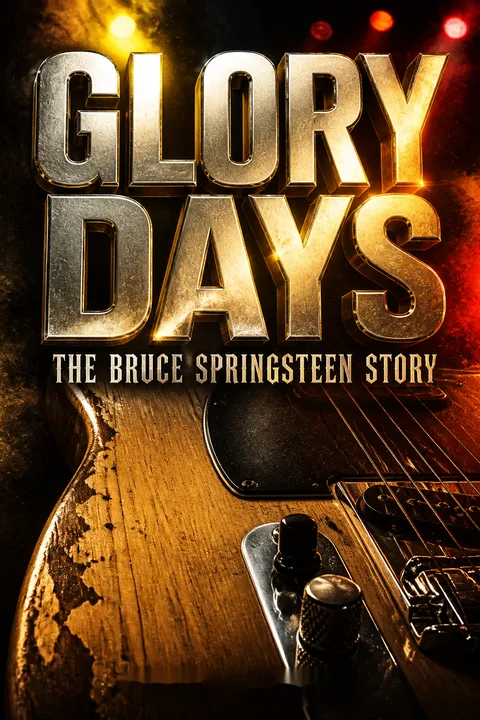


Key Takeaways
Use music to turn exclusion into a language others can share
A guitar made room. Bruce Springsteen grew up in working-class Freehold, New Jersey, feeling out of place at school and at home. At thirteen, he bought an $18 guitar from a pawnshop and found a way to express feelings he could not otherwise voice. In his first band, the Castiles, music offered both purpose and a group to belong to. His parents’ lives also left a lasting mark: his father’s unstable work and his mother’s determination to keep the family steady became part of his songwriting’s emotional ground.
Escape became connection. Springsteen first treated rock as a route out of a narrow life, but his later work returned to the towns, jobs, and families he had tried to leave. The music that helped him feel less alone became a way to speak to people living similar pressures.
The story presents art as more than self-expression: it becomes a social bridge between people who might otherwise remain invisible to one another. That is a powerful model for creative work rooted in lived experience. Its limit is equally important: one person’s escape through music cannot stand in for better schools, secure work, or support at home. The book’s strongest insight is that private relief can become shared language, not that art alone repairs the conditions that made relief necessary.
Build a sound from forgotten records, not current industry labels
Local listening became a style. At Asbury Park’s Upstage, young musicians could play late into the night and learn from one another. Springsteen absorbed rock, soul, rhythm and blues, and half-forgotten radio hits, then recombined them rather than copying a single model. The E Street Band grew from this scene, with players whose differences helped create its sound.
The industry misheard him. When Columbia signed Springsteen in 1972, executives marketed him as a singer-songwriter and a new Dylan. His first album’s arrangements muted the force of the band he wanted to record with. The second album showed greater confidence, but poor promotion and radio’s narrow preferences kept it from a broad audience. Springsteen’s breakthrough came not from fitting a category, but from making his own musical history audible.
Springsteen’s originality comes less from inventing new ingredients than from recombining material that the industry had stopped valuing. That distinction matters: innovation can be an act of attention, recovering neglected sounds and giving them a new purpose. The approach also exposes how labels shape opportunity. Yet nostalgia alone would not have produced this music. The old records became useful because Springsteen’s own concerns, from class to escape, changed what listeners could hear in them.
Claim control of your songs before business partners define your career
A handshake was not protection. Springsteen signed management and recording agreements with Mike Appel when he was young and inexperienced. The contracts gave Appel’s company rights to his recordings and publishing while Springsteen received a low royalty and limited control. An audit later found poor accounting and substantial expenses charged to Springsteen. When Appel blocked Springsteen from recording with Jon Landau, the dispute became a fight over creative control as well as money.
The settlement changed the work. Springsteen sued in 1976, and the case was settled in 1977. He regained control of his publishing and the ability to record with Landau. The conflict delayed his next album, but it also made clear that artistic independence depends on practical knowledge of contracts, money, and rights.
The episode resembles a classic principal-agent problem: a representative may control the information and agreements that shape an artist’s career, while the artist bears the consequences. Creative freedom is therefore partly legal and administrative, not merely a matter of vision. Springsteen’s case also shows the cost of learning late. Recovering control required years of conflict, and the story should not be romanticized as proof that talent can always defeat unequal bargaining power.
Make the concert a changing conversation, not a fixed product
The show kept moving. In his early years, Springsteen’s concerts could last several hours. He changed arrangements, added new songs, told stories, and brought old recordings into the set without treating them as museum pieces. The audience was not simply there to hear an album reproduced. Bruce treated the performance as a two-way exchange, sometimes stepping into the crowd or inviting a fan onstage.
Scale tested the bond. He resisted arenas after a disastrous opening slot with Chicago, where poor sound and a short set made his show seem ordinary. Later, he learned that large halls could work if he controlled the sound and gave the music room. Stadiums posed a new challenge: distance and crowd size threatened intimacy, so he relied on recognizable songs, direct address, and the band’s physical energy to keep the exchange alive.
A live performance is not just a delivery system for finished work. The crowd changes what the performer can do, and the performer can change what the crowd believes it is there to experience. Springsteen’s long, variable shows made that relationship visible. But scale has costs: stadiums can turn participation into spectacle, and the most devoted fans may mistake access for ownership. The challenge is to preserve responsiveness without promising that every listener will receive a private encounter.
Write about the cost of escape as carefully as the dream
The dream met the paycheck. Born to Run made escape feel possible through cars, lovers, and a shared night on the road. Darkness on the Edge of Town turned toward factory work, shrinking prospects, and people who had little control over their lives. The River widened the picture, setting youthful excitement beside marriage, joblessness, and mortality. Its characters learned that wanting a different life did not guarantee one.
Work entered the romance. Springsteen drew on the lives around him, including friends whose futures resembled his parents’ working-class struggles. In songs such as Racing in the Street and The River, the car is not merely a symbol of freedom. It is also a way to escape briefly from work, obligation, and a future that seems to be closing in.
The progression from escape to constraint avoids a familiar cultural trap: treating individual determination as a complete answer to structural problems. Springsteen’s characters can hope and act, yet jobs, class, and economic decline still shape their choices. That tension makes the songs more useful than simple anthems of resilience. The counterpoint is that bleak portraits can make limited options seem inevitable. The book’s most humane moments resist that conclusion by showing connection and effort persisting even without an easy victory.
When old answers fail, strip the sound and face the silence
A cassette changed the direction. In early 1982, Springsteen recorded a set of songs alone at home on a small cassette machine. When the band tried to recreate them in the studio, the arrangements weakened their intimacy and force. The rough recordings became Nebraska, a stark album about isolation, violence, and people whose lives have lost their usual supports. Songs such as Nebraska, Used Cars, and Reason to Believe offered no easy redemption.
Solitude was both tool and danger. Springsteen had sought privacy to hear his material clearly, but the album’s emotional world also reflected his own growing isolation. Its stripped-down sound removed the usual protection of the E Street Band. Nebraska became a way to examine what happens when work, family, and community no longer seem to hold people together.
Reduction can function as a diagnostic: when the arrangement falls away, the listener hears what the song cannot hide. Nebraska’s roughness was not simply an aesthetic choice; it exposed the emotional condition of its characters. Still, solitude is not automatically insight, and the album’s bleakness should not be mistaken for a complete map of life. Its value lies in making isolation audible, while leaving open the harder question of how people rebuild connection.
Let distant audiences refresh the work before home fans define it
Europe offered a new mirror. Springsteen’s 1981 tour began in Germany, where audiences initially stayed seated and listened rather than responding like American crowds. During Hungry Heart, many sang along in imperfect English and German. Their response helped the band understand that the songs could cross cultural boundaries without being explained in detail. In Europe, Springsteen also felt freer to reshape familiar concert material.
Familiarity can become a cage. At home, some fans treated Springsteen as a fixed identity and called changes in his band, sound, or personal life betrayals. His later European audiences were often more willing to hear new versions of old songs and to meet unfamiliar material on its own terms. That freedom did not mean every listener understood the songs alike. It did give the artist more room to change.
The tour illustrates how meaning depends on context. An unfamiliar audience may hear a work without the expectations accumulated by a long-time fan base, allowing new possibilities to emerge. At the same time, foreign audiences can project their own ideas onto an American performer just as domestic audiences do. The useful lesson is not that distance guarantees openness, but that artists need settings where their work can be encountered without a rigid demand that it remain unchanged.
Turn fame into practical solidarity, then amplify those already organizing
Support became specific. Springsteen’s 1981 benefit for Vietnam Veterans of America helped the organization raise more than $1.5 million and gain national attention. During the Born in the U.S.A. tour, he met local food banks and community groups, then donated to their work and urged audiences to contribute. In Freehold, he backed workers at a 3M plant facing closure, connecting the shutdown to the same working-class losses his songs described.
The organizations led. Springsteen did not present himself as the expert on hunger or unemployment. He met people doing the work and used his audience to make their efforts more visible. The money mattered, but so did the attention, volunteers, and public discussion that followed.
Celebrity can magnify organizations that already understand a problem, but it cannot substitute for durable policy or local expertise. Springsteen’s most effective role here is not savior but amplifier: he directs attention and resources toward groups with ongoing work. That arrangement also places limits on celebrity power. A concert donation may help a food bank today, yet it cannot undo the economic decisions that create hunger and joblessness in the first place.
Defend dissent without letting politicians borrow your songs
A hit can be misread. Ronald Reagan’s campaign invoked Born in the U.S.A. as patriotic support, though the song tells of a Vietnam veteran whose country has failed him. Springsteen rejected the implied endorsement and spoke about unemployment, poverty, and the responsibilities citizens share. In 2000, he performed 41 Shots, inspired by the police killing of Amadou Diallo, despite attacks from police unions and New York’s mayor.
Silence has consequences too. In 2003 Springsteen supported the Dixie Chicks after radio stations and political figures attacked them for criticizing the president. He defended their right to speak without claiming that their views were his own. His position was careful but not empty: people should be free to challenge power, and a song should not be treated as a politician’s property.
Popular songs are unusually vulnerable to appropriation because listeners can detach a chorus from its story and use it as a badge. Springsteen’s response shows both the value and the limits of authorial intent: he can reject a false endorsement, but he cannot dictate every interpretation. His support for dissent is strongest when it protects the audience’s freedom to think, rather than demanding that listeners adopt his own position.
Turn private grief into practical care without pretending art repairs loss
The story changed shape. After Tunnel of Love, Springsteen recorded two albums with new musicians, toured without the E Street Band, and later reunited with them. In 1992, his friend’s daughter Kristen Carr worked on his European tour. She died of cancer in 1993. Bruce and Patti Scialfa sang at her funeral, and he later performed a benefit that raised more than $1.5 million for a fund in her name.
Loss entered the work. Springsteen wrote Streets of Philadelphia for a film about AIDS and, after September 11, released The Rising, an album that returned to questions of grief, community, and survival. The music did not undo anyone’s loss. It gave private sorrow a public form and helped direct practical support toward people facing illness.
Public art can give grief a shared language, while practical institutions can address needs that songs cannot. The Carr benefit makes that distinction unusually clear: music gathered resources, but research and support services did the continuing work. The book also shows why personal loss should not be packaged as a neat redemption story. Grief can deepen an artist’s attention without yielding a cure, a moral lesson, or a clean ending.
Analysis
Marsh’s biography is not only a portrait of Bruce Springsteen. It is also an argument about what popular art can do when an artist refuses to separate craft from audience, or success from social responsibility. Its deepest tension is between control and contact. Springsteen needs solitude to write, insists on control over his recordings, and resists the machinery that turns musicians into products. Yet his defining ambition is to reach people, not retreat from them. The concerts become the place where those impulses meet: carefully made performances that invite a crowd to act like a community.
Marsh writes as a critic, friend, and witness. That proximity gives the narrative unusual access to recording decisions, legal conflict, backstage rituals, and the emotional cost of fame. It also creates a real risk of hagiography. The book sometimes treats Springsteen’s intentions as evidence of his integrity, and it gives less space to ordinary listeners who may hear his songs differently. Still, it does not erase every complication: the Appel lawsuit, the Lynn Goldsmith incident, the uncertainty around fame, and the limits of celebrity activism remain visible.
The book’s most useful distinction is between a symbol and a person. Reagan’s campaign could turn Born in the U.S.A. into a patriotic emblem; devoted fans could turn Springsteen into a fixed promise of authenticity. Both forms of admiration simplify the work. The songs are more difficult: they keep hope and defeat in the same frame, and they refuse to make personal effort a substitute for economic or political change.
That complexity explains why the biography’s arc is not a simple rise to stardom. It moves from escape, to doubt, to public responsibility, and finally to a more adult form of connection. Springsteen’s achievement is not that he remains unchanged. It is that he changes without abandoning the people and places that made his art possible.
Review Summary
Glory Days receives mixed reviews, with ratings ranging from 1 to 5 stars. Some readers praise the book for its insider information and detailed account of Springsteen's career in the 1980s, particularly the recording of "Nebraska" and his rise to superstardom. Others criticize it for being overly positive, long-winded, and lacking critical perspective. Fans appreciate the insights into Springsteen's music and community work, while critics find the writing style challenging and the content dated. Overall, the book seems best suited for dedicated Springsteen enthusiasts rather than casual readers.
People Also Read








Glossary
hype
Promotion mistaken for proofIn Marsh’s account, hype begins as promotional exaggeration or manufactured attention. The Springsteen phenomenon complicated the term: enthusiastic coverage could be dismissed as hype even when it accurately described the music and live performances. The label then became a way to discredit praise without engaging with the work itself.
Rock Establishment
Rock’s business power structureThe Rock Establishment refers to the interlocking record companies, booking agencies, radio programmers, promoters, and media institutions that shaped popular music careers. Marsh uses the term for a system that could amplify artists but also favored predictable formats, marketable images, and commercial conventions that Springsteen resisted.
M.U.S.E.
Musicians United for Safe EnergyM.U.S.E., or Musicians United for Safe Energy, was a group of musicians and activists formed after the Three Mile Island nuclear accident. It organized benefit concerts in New York in 1979 to raise money and public awareness about nuclear power. Springsteen’s participation marked a significant step toward public engagement on political issues.
American dream
A promise of dignity and opportunityIn this biography, the American dream is not simply wealth or upward mobility. It is the promise that people can live with dignity, have meaningful opportunities, and participate in a society that treats them fairly. Springsteen’s songs repeatedly test that promise against poverty, class barriers, war, unemployment, and exclusion.
Download PDF
Download EPUB
.epub digital book format is ideal for reading ebooks on phones, tablets, and e-readers.








