

Plot Summary
The Leg in the Box
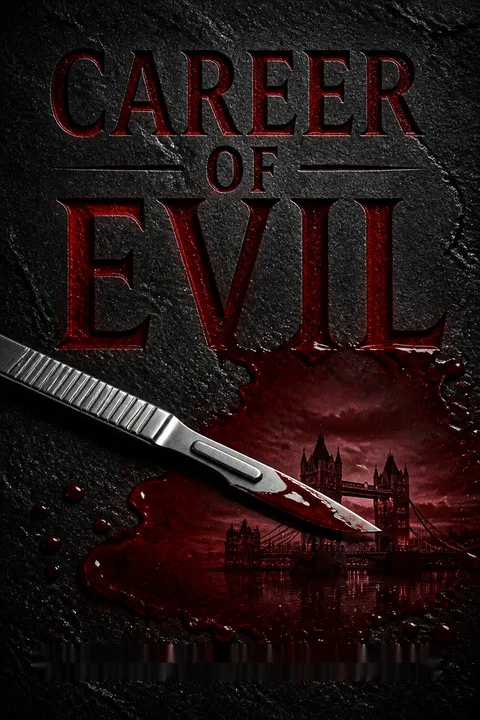
A courier hands Robin Ellacott, assistant to private detective Cormoran Strike, a heavy parcel at their London office. Inside is a woman’s severed right leg. The sender first addressed it to Strike, then changed the label to Robin, making the threat personal and showing that the killer knows where she works.
A note built from Blue Öyster Cult lyrics unsettles Strike: he recognizes the words and notices old scarring on the leg. Robin is shaken, but refuses to leave the job. The police take the limb, while Strike asks his acquaintance Eric Wardle to handle the case. The package has done more than frighten them. It has reached into Strike’s past and put his closest colleague directly in danger.
The parcel is both evidence and a deliberate violation of professional boundaries. Its label shifts the threat from Strike’s public identity to Robin’s vulnerable position beside him, while the old scar and song reference make the violence feel authored for a specific audience. Robin’s insistence on continuing is not simple bravado: her work is a hard-won claim to competence, and surrendering it would let the sender dictate the shape of her life. Strike, by contrast, immediately reads the threat through responsibility. His protective instincts are useful, but they also begin to blur the distinction between keeping Robin safe and deciding for her.
Three Enemies, One Song
Strike identifies three men with reasons to hate him: Donald Laing, a former soldier he helped convict for torturing his wife; Noel Brockbank, an ex-army officer whose suspected abuse of his stepdaughter ended in disaster for Strike; and Jeff Whittaker, the man acquitted of murdering Strike’s mother, Leda. He briefly mentions a gangster, Terence Malley, but doubts the polished lyric clue fits him.
The Blue Öyster Cult reference cuts closer: Leda adored the band and wore the song title as a tattoo. Strike remembers her chaotic home, Whittaker’s fascination with death, and his own decision to testify against him. News coverage of the leg drives away clients, while Strike shelters from reporters and searches for the three men.
The suspect list is also a map of Strike’s unresolved history. Each man represents a different failure of justice: Laing was caught, Brockbank escaped trial, and Whittaker walked free after the death of Strike’s mother. The song connects the present threat to Leda without proving who sent it, encouraging Strike to treat memory as a lead while warning him that memory can distort. His decision to investigate all three is methodical on the surface, yet the stakes are intimate enough to compromise his usual discipline. Meanwhile, the press makes the attack materially consequential by stripping the agency of work and privacy.
The Ring Comes Off
Robin’s engagement to Matthew Cunliffe is already strained by his jealousy of Strike and his old university friend Sarah Shadlock. After another argument, Matthew admits that he and Sarah had an affair while Robin was recovering at home after being raped at university.
The betrayal changes the meaning of years of apparent support: Matthew had been unfaithful during the period when Robin was isolated and unable to resume her studies. Robin takes off her engagement ring and leaves their home.
At the Tottenham pub, exhausted and drinking on an empty stomach, she tells Strike about the rape, including how she survived by pretending to be dead and later identified her attacker. Strike listens without treating her as diminished, then finds her a secure place to sleep.
Robin’s disclosure links two forms of vulnerability without equating them. The rape disrupted her education and bodily trust; Matthew’s concealed affair compromised the story she had built around their shared recovery. Her decision to confide in Strike is partly practical, but it also marks a shift in emotional reliance: he is the person she trusts to hear what her family and fiancé have struggled to understand. The ring’s removal is not yet a settled ending. It creates room for Robin to examine whether loyalty has become habit, and whether the safe life Matthew represents is still the life she wants.
Kelsey’s Hidden Room
Police discover the rest of the body in a freezer at a Shepherd’s Bush flat and identify the victim as Kelsey Platt, sixteen, who had written to Strike seeking help to remove her own leg. Forged letters found in her flat make it appear that Strike encouraged her and arranged to meet her, but he and Robin confirm they never answered her letter.
The correspondence suggests the killer knew about Kelsey’s unusual wish and intended to draw suspicion onto Strike. Kelsey had been staying with her half-sister Hazel Furley, who thought she was away on a college placement. Forensics confirm that the severed limb came from a recently dead woman, not hospital waste, and the case becomes a murder investigation.
Kelsey’s story complicates the apparent meaning of the leg. Her wish to lose a healthy limb is neither a joke nor evidence that she consented to what happened; it is a private distress that the killer has learned to exploit. The forged letters turn Strike’s silence into apparent complicity, demonstrating how easily an isolated person’s words can be manufactured into a story that serves someone else. Hazel’s ignorance is not simple malice, but her inability to hear Kelsey’s need has left the girl searching elsewhere for recognition. The murder investigation now has to distinguish genuine vulnerability from the false narrative built around it.
Melrose and Barrow
Strike travels to Edinburgh Castle, where his former colleague Graham Hardacre helps him consult restricted service records. He learns more about Laing’s criminal history and Brockbank’s discharge after a severe brain injury.
In Melrose, Laing’s mother refuses to help, but Rhona’s mother, Margaret Bunyan, describes Laing’s abuse of her daughter, his threats, and his later return to the area. Strike then drives to Barrow-in-Furness to find Brockbank’s twin sister, Holly.
Pretending to be a compensation lawyer, Robin draws out Holly’s resentment and learns that Brockbank’s behavior drove her from the family home, that he later left for Market Harborough, and that he still blames Strike for his injuries. The journeys sharpen the suspects but produce no direct proof.
These visits turn old case files into living consequences. Rhona’s mother remembers the cost of Laing’s violence in bodily and familial terms; Holly describes the long pressure of living with Brockbank after Strike’s intervention failed to secure a trial. Strike’s military past gave him procedure and authority, but both cases expose their limits: one man was imprisoned and later released, while another escaped conviction through a medical complication. Robin’s impersonation of a lawyer shows her developing skill as an investigator, but also the moral ambiguity of using a grieving or resentful person’s hopes to obtain information.
A Forum of Missing Limbs
Robin searches online communities for people who share Kelsey’s desire for amputation and finds a forum where Kelsey asked about Strike. She contacts Jason, a young man who wants to become an amputee, and Tempest, an activist who presents herself as disabled. Jason admits he met Kelsey in person, though he initially lied to police, and says Kelsey believed Strike had amputated his own leg.
Tempest recalls a boyfriend collecting Kelsey by motorbike after they met. At Kelsey’s home, Strike learns from Hazel that Kelsey had a supposed boyfriend called Niall and had previously injured her leg with wire. He also finds acne medication and a numbered ticket in her room, details whose significance remains uncertain.
The online community offers Kelsey a language her household could not provide, but it cannot reliably distinguish care from projection or manipulation. Robin approaches its members with curiosity rather than contempt, recognizing that unusual desire does not automatically imply violence. Tempest’s performative certainty and Jason’s fear show different ways people manage stigma: one takes control of the story, the other hides from consequences. The motorbike and invented boyfriend introduce a person who can move between Kelsey’s private world and the city without appearing in the family’s account of her life. The physical objects Strike finds are not answers yet, but they resist being dismissed as meaningless.
The Toe Arrives
A card addressed to Robin arrives with a rotting toe taped inside. Its image and wording again draw on Blue Öyster Cult, confirming that the sender is continuing to communicate with both detectives. Strike has the toe tested and learns that it came from Kelsey’s other foot. Meanwhile, a young prostitute, Lila Monkton, survives a knife attack in Shacklewell, though the assailant cuts off two of her fingers.
Strike and Robin recognize that the killer’s violence extends beyond the first murder. Police focus on Malley and on online amputee fetishists, while Strike keeps pursuing Laing, Brockbank, and Whittaker. The killer’s messages are no longer an isolated threat to the agency; they are part of a pattern of attacks and stolen body parts.
The toe collapses the comforting possibility that the first package was merely an attempt to frighten Strike. It establishes repetition, private trophies, and a direct interest in Robin. At the same time, Lila’s survival offers a crucial counterpoint to the killer’s fantasy of total control: a victim lives, remembers enough to contribute, and forces the police to widen their inquiry. The investigators’ competing theories reveal a familiar institutional temptation to prefer a suspect who fits a known pattern. Strike’s persistence with his personal suspects may be insight, grievance, or both, and the novel keeps that uncertainty active.
Whittaker in Catford
Strike locates Whittaker in Catford, living near Stephanie, a severely undernourished young woman who appears dependent on him. When Strike confronts them, Whittaker grabs Stephanie by the throat and lifts her from the ground. Strike punches him and tries to pull her away, but Stephanie returns to Whittaker, demonstrating how fear and dependence can bind someone to an abuser.
The encounter confirms that Whittaker remains violent, yet it gives Strike no proof that he sent the leg or killed Kelsey. Robin later approaches Stephanie carefully and learns that Whittaker’s relationship with her is abusive, but she also hears that he travelled with the band Death Cult around the night another woman was attacked.
The confrontation gives Strike a direct view of Whittaker’s coercive power, but not the evidence he needs. Stephanie’s return to him frustrates Strike because he mistakes physical rescue for a complete exit from abuse; Robin understands more clearly that dependency is not freely chosen in any ordinary sense. Their different reactions expose a tension in the partnership: Strike acts quickly against visible danger, while Robin tries to understand the conditions that make escape difficult. The band’s movements also complicate suspicion. Whittaker may be capable of violence, but an alibi can matter as much as a repellent character.
The Ripper Takes Shape
After Heather Smart, a young visitor to London, is found murdered and mutilated, police connect her death to Lila’s attack and Kelsey’s killing. They also identify two older victims, Martina Rossi and Sadie Roach, establishing a series in which the killer takes body parts or personal trophies. The press names him the Shacklewell Ripper and descends on Strike’s office, worsening the agency’s collapse.
Wardle’s brother dies in a traffic accident, and Detective Inspector Roy Carver takes temporary charge of the inquiry. Carver, hostile to Strike after an earlier professional humiliation, orders him away from the case. Strike’s leads on his three old enemies receive less attention just as the murders demand a broader investigation.
The serial pattern changes the scale of the story: the threat is no longer a private feud but a public danger built from repeated predation on women made vulnerable by circumstance. Media attention both exposes the crimes and turns victims into competing narratives, with some receiving more sympathy than others. Wardle’s family loss has institutional consequences, placing the inquiry under Carver, whose personal resentment narrows the channels through which Strike can contribute. The detective’s exclusion is not merely an affront to his pride. It creates a practical risk that useful knowledge will be ignored because of who delivers it.
Robin Fights Back
After Robin questions Stephanie, a large man in a balaclava ambushes her near Catford Bridge station and cuts her arm with a machete. Robin uses the self-defense techniques she learned after her earlier rape: she strikes at his groin, activates her alarm, and sprays red dye into his face before landing a blow to his neck.
The attacker flees when bystanders respond. Strike hears the struggle over the phone and races to the hospital, where surgeons repair tendon damage and treat her other injuries. Robin insists she can return to work, but the assault brings back the bodily fear she had fought to outgrow. Strike blames himself for allowing her to remain exposed to the killer.
Robin’s survival is active rather than miraculous. Her training, attention, and willingness to make noise interrupt the attacker’s control, while the red dye turns his own concealment into a potential identifying mark. Yet competence does not erase trauma; her earlier assault resurfaces, making recovery more complicated than physical repair. Strike’s guilt is understandable, but his impulse to decide what Robin can endure risks replacing the killer’s control with protective paternalism. The episode tests both characters at once: Robin must preserve her claim to agency without pretending she is unharmed, and Strike must separate care from command.
Flowers and False Alibis
While Robin recuperates, Strike reexamines Kelsey’s case and the supposed alibis surrounding the suspects. A thought about flowers at the hospital leads him to reconsider a photograph of Laing and his associate Ritchie on a beach.
Sea holly appears in the picture, although it would not be flowering during the April weekend they claim to have spent there. The image may therefore document a different date, undermining the account that placed Laing away when Kelsey was killed.
Robin, working separately from home, calls nurseries while pretending to be Brockbank’s partner and obtains the address of the household where he lives with Alyssa and her daughters. Both investigators now have leads that threaten the suspects’ carefully maintained cover stories.
The sea holly clue illustrates how investigation depends on ordinary knowledge as much as forensic spectacle. A plant’s season can puncture a rehearsed alibi more effectively than a dramatic confession, because it exposes the mismatch between a claimed memory and the material world. Robin’s nursery calls likewise transform routine information into access, though her impersonation carries ethical and personal risk. Their separate discoveries show that the partnership still operates even while Strike tries to protect Robin by keeping her away. The evidence begins to converge, but it also raises the question of whether either investigator can act safely within the police process.
Angel Names Her Abuser
Strike tells Robin not to approach Brockbank or his household, fearing she will compromise the police case. Robin learns that Brockbank is living with Alyssa and her daughters, including toddler Zahara, and decides the children cannot wait for the authorities. With Shanker nearby, she visits Alyssa and tries to warn her that Brockbank has abused children before.
Alyssa attacks Robin, believing she is connected to Brittany, but Robin fights back and insists that Alyssa ask her daughters what happened. Angel, the older girl, finally identifies Brockbank as her abuser. He arrives, recognizes Robin, and escapes when Shanker breaks through the door. Robin stays to comfort the family and arrange a repair, but the suspect has been tipped off.
Robin’s choice is a morally costly act of intervention. She accepts that the evidence may be incomplete, but she judges the immediate danger to a child more urgent than procedural neatness. Alyssa’s initial violence shows how an abuser can preemptively discredit anyone who threatens his control; Angel’s disclosure becomes possible only after an adult names the danger plainly. Robin helps create that opening, yet Brockbank’s escape is a real consequence, not an incidental flaw in her plan. The scene refuses an easy division between heroic action and professional failure: Robin protects a child and also complicates an investigation.
Strike’s Last Gamble
Strike learns that Robin went to Brockbank’s home and, furious that she ignored his warning and helped the suspect flee, fires her. Yet the case has also given him a decisive realization: Laing may be hiding in plain sight behind the identity of Ray Williams, a respected retired firefighter.
Clues include the borrowed identity, the false camping photographs, the arthritis medication hidden in Kelsey’s room, and Laing’s picture beside the Strata building. Strike recruits Alyssa to pose as a temporary office worker and appear at a club, hoping to draw the killer out. He then enters Laing’s empty flat disguised as a gas worker, carrying a propane canister to create a reason for the neighbors to stay away.
Strike’s decision to fire Robin is both a response to genuine danger and an expression of accumulated fear and pride. He cannot separate her disobedience from the risk to his agency, especially after Carver has warned him away. At the same time, his own plan involves deception, trespass, and a carefully managed danger, exposing the asymmetry in his standards for himself and Robin. The Ray Williams identity matters because it reveals how credibility can be stolen: Laing borrows the social trust attached to a firefighter and uses it as camouflage. Strike’s trap places him inside that camouflage, where insight alone will not protect him.
Laing’s Freezer
Inside the flat, Strike finds newspaper reports of the murders, stolen jewelry, and trophies from the victims, including Martina’s charm and body parts from Kelsey, Lila, and Heather. Laing returns and attacks him with a machete and carving knife.
Strike fights back until Shanker arrives and helps restrain him. The evidence reveals that Laing has posed as Ray Williams, using the real firefighter’s story and identity to gain Hazel’s trust and access to Kelsey.
He manipulated Kelsey’s belief that Strike had chosen his amputation, then forged letters to implicate the detective and sent body parts to destroy his reputation. Police charge Laing with multiple murders, Lila’s attempted murder, and the assault on Robin. Ritchie confirms that the camping alibi was fabricated.
The revelation makes the crime’s design legible: Laing did not merely imitate Strike’s history, he converted the detective’s disability and public reputation into instruments of humiliation. His stolen identity similarly weaponizes trust, allowing a violent man to inhabit the moral prestige of a rescuer. The trophies expose his private theology of possession, in which the victim’s body becomes proof of his power. Strike’s capture of Laing is a professional victory, but it comes through an illegal and physically dangerous gamble, with Shanker’s intervention essential. The case’s solution therefore resists a clean fantasy of solitary detective genius.
The Wedding Door Opens
Laing’s arrest comes just before Robin’s wedding to Matthew. Strike, badly injured and desperate not to miss the ceremony, persuades Shanker to drive him from London to Masham. He reaches the church after the service has begun, his face bruised and his clothes stained.
As Robin and Matthew exchange their vows, Strike knocks over a flower stand near the back of the church. The crash turns the congregation toward him, but Robin sees the battered detective and smiles while continuing the ceremony.
She marries Matthew, even as her expression gives Strike a private acknowledgment that the bond between them has survived his anger and her dismissal. The ending offers no neat romantic resolution: Robin’s marriage proceeds, and the partners’ future remains open.
The final image holds two incompatible forms of loyalty in the same room. Robin makes a public commitment to Matthew, while her smile to Strike registers the private significance of a relationship that neither the firing nor the wedding can simply erase. Strike arrives not as a triumphant rescuer but as a visibly damaged man who has spent the night choosing the case and then the wedding over his own comfort. The fallen flowers puncture the ceremony’s polished choreography without stopping it. The book closes on recognition rather than resolution: Robin’s agency includes the choice she makes at the altar, and Strike must accept that affection does not grant him a claim on her future.
Analysis
Career of Evil treats investigation as a struggle over who gets to define another person. The killer turns bodies into trophies, but he also tries to turn Strike’s amputation into a false story about shame and choice. His forged letters exploit Kelsey’s desire to be understood, while the deliveries transform Robin from colleague into target and Strike from decorated veteran into a figure linked to mutilation. Violence therefore operates not only on flesh but on reputation, memory, and the possibility of being believed.
The novel’s strongest counterforce is not a single institution. The police have expertise and resources, yet personal rivalry can close their ears; family members may care deeply and still dismiss what they cannot understand; online communities offer recognition while opening new routes to exploitation. Robin’s work repeatedly depends on listening across those failures. Her approach to Kelsey’s unusual desire, Stephanie’s dependence, and Angel’s fear is attentive without assuming that every vulnerable person can be rescued on command. Her intervention at Brockbank’s home is ethically urgent, but it also creates consequences the investigation cannot ignore.
Strike’s arc tests the difference between protecting someone and respecting her agency. His fear for Robin is grounded in real danger, but it becomes controlling when he treats her as a liability rather than a partner. Robin’s persistence, in turn, is not proof that trauma has disappeared. She fights because her chosen work matters to her, even as the attack reopens old wounds. The ending refuses to convert that conflict into a simple romantic reward: Robin marries Matthew, while her look toward Strike acknowledges a bond that remains unresolved.
The title’s idea of a career in evil belongs to the killer’s repeated practice, but also to the way cruelty can be made systematic through lies, social blind spots, and failed accountability. The novel’s most useful lesson is not that intuition always wins. It is that good judgment must combine evidence with attention to the people whom institutions and families have trained themselves not to hear.
Review Summary
Career of Evil receives mostly positive reviews, praised for its complex characters, thrilling plot, and dark themes. Readers enjoy the development of Strike and Robin's relationship. Some criticize the graphic violence and pacing issues. The mystery keeps readers guessing until the end, though a few find the resolution unsatisfying. Many appreciate Rowling's skillful writing and character development. Overall, fans of the series find it a compelling addition, while others struggle with its darker tone and violent content.
People Also Read





Characters
Cormoran Strike
War-scarred private detectiveA former military policeman and now a private detective, Strike is physically imposing, observant, stubborn, and more emotionally guarded than his blunt manner suggests. Losing part of his right leg in Afghanistan shaped his life without making him define himself by the injury. He values evidence and procedure, yet personal history can pull him toward suspects he hates or feels responsible for. His bond with Robin is built through work, trust, and shared danger, though he sometimes mistakes protection for authority. He uses humor to blunt horror, especially when confronting death, but the case forces him to face how much old guilt and present affection influence his judgment.
Robin Ellacott
Resourceful investigative partnerRobin is a perceptive, kind, and determined investigator whose gentle manner often gains access that Strike’s size and bluntness cannot. Her fascination with psychology and her strong memory make her especially alert to discrepancies in people’s stories. She has survived a violent assault in the past and works hard not to let that experience define her ambitions. Her engagement to Matthew offers familiarity and social stability, while her partnership with Strike gives her demanding work that feels closer to the life she once imagined. Robin’s central struggle is not whether she is brave, but whether others will let her decide what risks and responsibilities she can bear.
Matthew Cunliffe
Robin’s long-term fiancéMatthew is Robin’s handsome, polished partner from their Yorkshire youth. He values security, professional status, and a life that appears settled, and he is uncomfortable with the danger and irregularity of Robin’s detective work. His jealousy of Strike often surfaces as criticism of the agency and Robin’s low salary. Matthew is not simply an antagonist: he has been a source of comfort during Robin’s recovery, which helps explain the difficulty of disentangling shared history from present trust. His desire for a conventional future clashes with Robin’s growing need to be treated as an equal adult.
Donald Laing
Former soldier under suspicionLaing is a former army boxer whose years of violence, charm, and calculated self-presentation have made him difficult to read. Strike remembers him as a dangerous man whose self-control could collapse into brutality, yet Laing has also shown an ability to win sympathy from people who do not know his history. He has a fraught connection to several people in Strike’s past and remains a deeply personal suspect. His physical condition and shifting circumstances make him hard to locate, while his capacity to exploit others’ assumptions complicates every attempt to judge him from appearances.
Noel Brockbank
Disgraced army officerBrockbank is a former military officer whose case left Strike with one of the deepest regrets of his service career. He was accused of abusing his stepdaughter Brittany, but a serious brain injury and the dispute over its cause prevented the case from reaching trial. Strike remembers Brockbank as physically powerful, volatile, and adept at using confusion to his advantage. Years later, his history and continued proximity to vulnerable people make him a disturbing suspect. The unresolved question of what happened to Brittany remains central to Strike’s guilt and to the investigation.
Jeff Whittaker
Strike’s troubling former stepfatherWhittaker married Strike’s mother, Leda, and became a menacing presence in Strike’s adolescence. A musician drawn to notoriety and transgression, he cultivated an image that others could mistake for theatrical rebellion, while his behavior made Strike distrust him intensely. Whittaker was accused of killing Leda and acquitted, leaving the family with a history that the courts did not resolve. His connection to Blue Öyster Cult and to Strike’s childhood gives the present case a particularly intimate resonance. He remains a suspect because both his past and his current associations invite scrutiny.
Eric Wardle
Strike’s police contactWardle is a Metropolitan Police detective who has developed a workable, if sometimes competitive, relationship with Strike. He shares information when he can and tries to balance the private detective’s useful instincts against official investigative priorities. Wardle is personable and capable, but his casework is affected by pressure from colleagues, the press, and personal circumstances. His role gives Strike a limited channel into the police investigation, while also reminding both men that cooperation depends on trust and timing.
Shanker
Loyal criminal informantShanker is a scarred, streetwise friend from Strike’s adolescence, connected to him through Strike’s mother, Leda. He operates in criminal circles and expects payment for useful information, but his loyalty to Strike is genuine in its own unconventional way. Quick to spot danger and comfortable with disorder, Shanker can be both an asset and a liability. His history with Leda gives him a personal link to Strike’s past, while his presence often supplies practical help that formal institutions cannot.
Kelsey Platt
Isolated young studentKelsey is a sixteen-year-old studying childcare who has been living with her much older half-sister, Hazel. She struggles to be understood at home and carries a private wish concerning her own body that she finds easier to discuss online than with family. Her interest in Strike grows from what she believes about his amputation, and her letters become a key thread in the investigation. Kelsey is not defined only by her unusual fixation: she is also a grieving teenager, a devoted fan, and a young person trying to build an identity with limited support.
Hazel Furley
Kelsey’s older half-sisterHazel took Kelsey into her home after their mother’s death, but their large age difference left her feeling more like a reluctant guardian than a sister. She values order and practical responsibility, and she struggles to understand Kelsey’s lies, moods, and distress. Her grief is tangled with guilt over what she failed to notice and the ways she dismissed what Kelsey tried to tell her. Hazel’s account gives Strike access to the household’s history, while her own limits show how care can coexist with emotional misunderstanding.
Ray Williams
Retired firefighter and partnerRay is a retired firefighter who lives with Hazel and has a serious injury from a rescue operation. He is patient with Kelsey and more willing than Hazel to let her speak about difficult subjects, though he does not fully understand her needs. His injuries, work history, and place in Hazel’s household become important to the investigation. Ray represents the kind of ordinary trust that can make a home feel safe, and the danger of treating a person’s good reputation as proof that every detail about them is known.
Alyssa Vincent
Mother guarding her homeAlyssa is a striking, fiercely defensive mother who works in the sex industry and is raising two daughters. She has learned to meet strangers with suspicion, a habit shaped by a life in which trust can carry serious costs. Her relationship with Noel Brockbank initially appears to offer companionship and help, but Robin’s warning forces her to confront the possibility that the man she welcomed into her home poses a danger to her children. Alyssa’s anger and protectiveness are inseparable, and her response to Robin reflects both fear and the need to defend her family.
Angel
Alyssa’s older daughterAngel is Alyssa’s older daughter, a quiet child who has learned to keep a frightening secret. Her fear makes disclosure difficult, especially when the adults around her are already in conflict. Robin’s insistence that Alyssa listen gives Angel a chance to name what has happened to her. Angel’s experience reveals how an abuser can use threats against a younger sibling to control an older child, and how a child’s silence should not be mistaken for consent or safety.
Stephanie
Whittaker’s vulnerable girlfriendStephanie is a very young, physically fragile woman caught in a dependent relationship with Whittaker. She appears isolated and has few resources beyond the people around him. Robin approaches her without demanding immediate escape, while Strike’s earlier attempt to pull her away fails. Stephanie’s attachment illustrates how abuse can coexist with longing, fear, and economic dependence. She also possesses information about Whittaker’s movements, though her circumstances make it difficult to know when or whether she can speak freely.
Brittany Brockbank
Brockbank’s former stepdaughterBrittany is the eldest daughter in Noel Brockbank’s former family. As a child, she tried to disclose abuse while also worrying about what would happen to her mother and younger sister if the family broke apart. Her account became entangled with Brockbank’s brain injury and the investigation Strike conducted, leaving Strike with persistent doubts about whether he could have done more. Brittany’s silence and uncertain whereabouts form part of the emotional burden behind his pursuit of Brockbank.
Leda Strike
Strike’s magnetic motherLeda was a former rock-scene figure whose affection and spontaneity coexisted with instability, drug use, and a succession of difficult relationships. Strike remembers her laughter and warmth, but also the chaotic homes in which he and his sister grew up. Her taste for Blue Öyster Cult and her marriage to Jeff Whittaker connect family history to the present case. Leda’s life resists simple judgment: she could be generous to outsiders while failing to provide her children with consistent safety, leaving Strike both protective of her memory and angry about what she exposed them to.
Linda Ellacott
Robin’s protective motherLinda is Robin’s practical, perceptive mother, closely attuned to her daughter’s moods and the tensions in her engagement. She supports Robin’s ambition even when the danger of detective work frightens her, and she tries to offer advice without taking away her daughter’s choices. Her concern can become pressure, especially when she wants Robin to return home or settle the wedding questions. Beneath the family’s ordinary planning lies Linda’s effort to keep Robin safe while recognizing that protection cannot mean deciding her life for her.
Elin Toft
Strike’s elegant girlfriendElin is a Radio Three presenter navigating a divorce and the care of her young daughter. She is attractive, composed, and accustomed to a more affluent world than Strike’s, and their relationship offers him companionship without demanding that he become deeply involved in family life. Their differences in conversation and priorities reveal how easily Strike can mistake convenience for intimacy.
Tempest
Online community advocateTempest runs an online community for people who identify with the desire to become disabled. Confident and talkative, she presents herself as a guide for others and speaks openly about the stigma her community faces. Her self-assurance can crowd out quieter people, especially Jason, and her own needs complicate her claims to speak for everyone. Tempest’s presence helps Strike and Robin understand the social world Kelsey entered, while forcing them to distinguish empathy for marginalized people from uncritical agreement with every belief.
Jason
Kelsey’s online contactJason is a young man who shares Kelsey’s interest in amputation and fears being exposed to his family and friends. His initial denial of meeting Kelsey comes from panic rather than a wish to protect a killer. He is shy in person and looks to Tempest for reassurance, but Robin’s patience helps him provide information about Kelsey’s meeting with a motorcyclist. Jason illustrates how shame can make witnesses unreliable without making them malicious.
Roy Carver
Hostile lead detectiveCarver is a Metropolitan Police inspector who takes charge of the inquiry after Wardle’s leave. He resents Strike for having outperformed him in an earlier investigation and treats the private detective’s theories with deep suspicion. Carver’s position gives him authority over the official case, but his hostility risks turning professional caution into personal exclusion. He is not simply an obstacle: he must answer to a force under intense public pressure while managing a complex investigation and the competing claims of a celebrated outsider.
Lucy Strike
Strike’s younger sisterLucy grew up with Strike in the unsettled orbit of their mother’s life and later built the stable family life she once longed for. She worries that her brother’s solitary habits and dangerous work prevent him from settling down. Their relationship is affectionate but limited by shared memories that neither finds easy to discuss.
Plot Devices
Blue Öyster Cult references
Past turned into signatureThe killer uses lyrics and song titles from Blue Öyster Cult to make the body-part deliveries feel personally addressed to Strike. The references connect the threat to Leda, whose devotion to the band shaped Strike’s childhood and whose tattoo bears one of its song titles. At first the music seems to point toward Whittaker, the man who shared Leda’s home and knew her tastes. It ultimately serves a broader purpose: it helps the killer exploit Strike’s memories and directs suspicion toward a man with an obvious connection to the songs. The clues are genuine, but their meaning is deliberately misleading.
Body-part messages
Threat made physicalThe severed leg and later toe turn the killer’s communications into evidence that cannot be dismissed as anonymous harassment. They threaten Robin, damage Strike’s business, attract the press, and tie his public identity as an amputee to the murder of a young woman. The changed address on the first parcel shows that Robin is not merely collateral in the killer’s mind. Each delivery also draws attention away from the victims’ full lives and toward the spectacle of mutilation, which is precisely how the killer wants the public to see Strike and the case.
BIID online community
A private need exploitedKelsey’s online searches connect her to others who identify with the desire to lose a limb, including Jason and Tempest. The community provides language and contact unavailable to her at home, but it also creates a route for an outside manipulator to learn about her fixation and her interest in Strike. Robin’s respectful research distinguishes the desire for amputation from a desire to harm others, while the investigation shows how a vulnerable person’s search for understanding can be turned into a trap. The forums produce witnesses and leads, but never a simple explanation of Kelsey’s inner life.
Borrowed identity
Respectability as camouflageA suspect’s ability to borrow another person’s identity allows him to cross into a household under the appearance of safety and good character. The false biography draws on the real man’s respected work as a firefighter and his visible injuries, giving people a reason to trust a story that would otherwise invite questions. The device also conceals movement and supplies apparent alibis. It is effective because the people around the impostor see the role they expect to see, while the investigation is distracted by more obvious suspects and the detective’s personal history.
The sea holly photograph
Season exposes the lieA photograph offered as support for a suspect’s whereabouts contains sea holly, a plant that would not be in bloom during the date claimed. Strike’s familiarity with coastal plants makes the seasonal mismatch visible, turning an apparently ordinary holiday image into evidence that the alibi was staged or dated differently. The clue is modest by design: it does not identify the killer by itself, but it weakens a carefully arranged story and directs attention back to the people who supplied it. The case ultimately depends on such small material facts surviving a larger web of deception.
FAQ
Synopsis & Basic Details
What is Career of Evil about?
- Gruesome package sparks investigation: The story begins with a severed leg being sent to Robin Ellacott, setting off a dangerous investigation into a killer with a personal vendetta against Cormoran Strike.
- Past traumas resurface: Strike's past comes back to haunt him as he identifies three men who might be responsible, each with a history of violence and a motive for revenge.
- Robin's personal life unravels: Robin's engagement is in turmoil, and she struggles with her past trauma while trying to prove her worth in the investigation.
Why should I read Career of Evil?
- Intricate plot and suspense: The novel offers a complex and suspenseful plot, keeping readers guessing as Strike and Robin navigate a web of deception and danger.
- Deep character development: The characters are richly developed, with complex motivations and emotional struggles that add depth to the story.
- Exploration of dark themes: The book delves into dark themes of violence, revenge, and the psychological impact of trauma, making it a compelling and thought-provoking read.
What is the background of Career of Evil?
- Military and criminal underworld: The story draws on Strike's background in the Special Investigation Branch of the Royal Military Police and his past encounters with dangerous criminals.
- London setting: The novel is set in London, with detailed descriptions of the city's diverse neighborhoods and hidden corners, adding to the atmosphere of the story.
- Cultural references: The book incorporates references to music, particularly Blue Öyster Cult, which adds a layer of symbolism and foreshadowing to the narrative.
What are the most memorable quotes in Career of Evil?
- "They belonged to you once you had killed them: it was a possession way beyond sex.": This quote reveals the killer's twisted psychology and his desire for control over his victims.
- "A rock through a window never comes with a kiss.": This quote, from a Blue Öyster Cult song, highlights the violent and unforgiving nature of the killer's actions.
- "She wanted to die. She was the quicklime girl.": This quote, spoken by Jeff Whittaker, reveals a disturbing connection to the lyrics of a Blue Öyster Cult song and hints at his possible involvement in his wife's death.
What writing style, narrative choices, and literary techniques does Robert Galbraith use?
- Third-person limited perspective: The narrative primarily follows Strike and Robin's perspectives, allowing readers to experience the story through their eyes and understand their thoughts and feelings.
- Foreshadowing and symbolism: Galbraith uses subtle foreshadowing and recurring symbols, such as the Blue Öyster Cult lyrics, to create a sense of unease and hint at future events.
- Detailed descriptions and realistic dialogue: The author's writing style is characterized by detailed descriptions of the settings and characters, as well as realistic dialogue that brings the story to life.
Hidden Details & Subtle Connections
What are some minor details that add significant meaning?
- The color peach: The killer's description of the blood-soaked peach-colored bath towels foreshadows the violence and brutality that will follow, and the color itself is a stark contrast to the violence.
- The winged Honda logo: Robin's recognition of the winged Honda logo on the courier's motorbike is a subtle detail that highlights her keen observation skills and her knowledge of vehicles.
- The child's drawing: The child's drawing of a soldier tacked up in Strike's flat reveals a softer side to his character and hints at his past military experiences.
What are some subtle foreshadowing and callbacks?
- The "Mistress of the Salmon Salt" tattoo: Leda Strike's tattoo foreshadows the killer's connection to Blue Öyster Cult and his twisted understanding of the song's lyrics.
- The mention of a penis sent through the mail: This detail foreshadows the killer's gruesome methods and his willingness to send body parts as a form of intimidation.
- The description of the sea: Strike's memories of the sea in Cornwall foreshadow his later encounter with the killer, who is also associated with water and drowning.
What are some unexpected character connections?
- Shanker and Leda Strike: The connection between Shanker and Leda, Strike's mother, reveals a hidden aspect of Strike's past and highlights the complex relationships that have shaped his life.
- Wardle and April: The revelation that Wardle's wife is a burlesque dancer adds an unexpected layer to his character and challenges the reader's initial assumptions about him.
- Holly and Noel Brockbank: The fact that Holly and Noel are twins adds a layer of complexity to their relationship and highlights the twisted family dynamics that have shaped their lives.
Who are the most significant supporting characters?
- Shanker: Shanker's knowledge of the criminal underworld and his loyalty to Strike make him a valuable ally in the investigation.
- Detective Inspector Eric Wardle: Wardle's presence provides a counterpoint to Strike's methods and highlights the challenges of working within the confines of the law.
- Linda Ellacott: Robin's mother provides a source of emotional support and a reminder of the importance of family, even as Robin's personal life is in turmoil.
Psychological, Emotional, & Relational Analysis
What are some unspoken motivations of the characters?
- Strike's guilt: Strike's guilt over his past actions and his inability to protect his mother drives his determination to catch the killer, even at great personal risk.
- Robin's need for validation: Robin's need to prove her worth as an investigator stems from her past trauma and her desire to overcome the limitations imposed on her by others.
- The killer's desire for recognition: The killer's actions are driven by a need for recognition and a desire to be seen as powerful and important, even if it means committing horrific acts.
What psychological complexities do the characters exhibit?
- Strike's internal conflict: Strike struggles with his past, his physical limitations, and his desire to protect Robin, creating a complex and conflicted character.
- Robin's resilience and vulnerability: Robin's ability to overcome her past trauma while still being vulnerable to emotional manipulation highlights her psychological complexity.
- The killer's psychopathy: The killer's lack of empathy, his meticulous planning, and his enjoyment of violence reveal a deeply disturbed and psychopathic mind.
What are the major emotional turning points?
- Robin's discovery of the severed leg: This event triggers a series of emotional responses in Robin, from shock and fear to anger and determination.
- Strike's realization about Brittany Brockbank: The possibility that the severed leg might belong to Brittany Brockbank triggers a deep-seated fear and guilt in Strike.
- Robin's break-up with Matthew: This event marks a significant emotional turning point for Robin, forcing her to confront her own desires and priorities.
How do relationship dynamics evolve?
- Strike and Robin's partnership: Their relationship evolves from a professional partnership to a deep friendship, marked by mutual respect and a shared commitment to justice.
- Robin and Matthew's relationship: The relationship between Robin and Matthew deteriorates as they struggle with infidelity, jealousy, and a lack of understanding.
- Strike and Elin's relationship: Strike's relationship with Elin is characterized by a lack of emotional intimacy and a sense of obligation, highlighting his difficulty in forming close personal connections.
Interpretation & Debate
Which parts of the story remain ambiguous or open-ended?
- The killer's true identity: While Donald Laing is arrested, the novel leaves open the possibility that other individuals may have been involved in the crimes, or that Laing may not be the only killer.
- The nature of evil: The novel raises questions about the nature of evil and whether it is something that is inherent in certain individuals or a product of their environment and experiences.
- The future of Strike and Robin's relationship: The ending leaves the future of Strike and Robin's relationship uncertain, with the possibility of a romantic connection still lingering.
What are some debatable, controversial scenes or moments in Career of Evil?
- Strike's treatment of Robin: Some readers may find Strike's attempts to control Robin's actions and his dismissive attitude towards her emotional needs to be problematic.
- The graphic violence: The novel's graphic descriptions of violence and mutilation may be disturbing to some readers, raising questions about the author's use of such imagery.
- The portrayal of mental illness: The novel's portrayal of mental illness, particularly in the case of the BIID sufferers, may be seen as insensitive or stigmatizing by some readers.
Career of Evil Ending Explained: How It Ends & What It Means
- Laing's capture: The novel ends with the capture of Donald Laing, but the circumstances surrounding his arrest are chaotic and violent, leaving the reader with a sense of unease.
- Robin's decision: Robin's decision to return to Matthew, despite his infidelity, suggests that she is still grappling with her own desires and priorities.
- Strike's isolation: Strike's decision to end his relationship with Elin and his continued isolation highlight his inability to form lasting personal connections.
Cormoran Strike Series



About the Author
Other books by Robert Galbraith
Download PDF
Download EPUB
.epub digital book format is ideal for reading ebooks on phones, tablets, and e-readers.








