

Plot Summary
Prologue
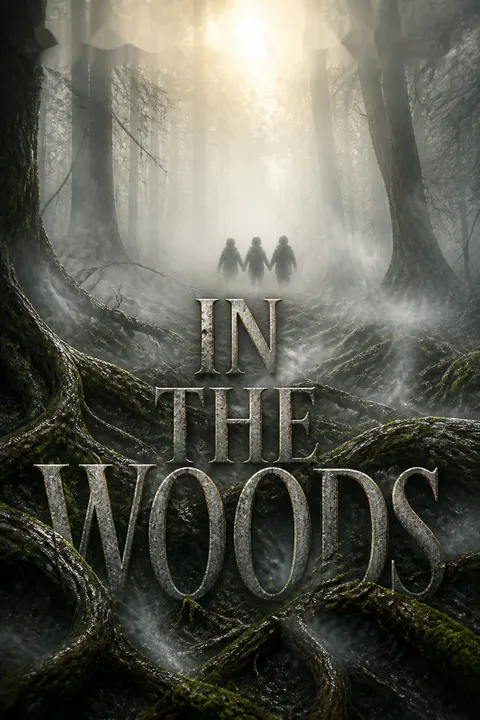
In the summer of 1984, twelve-year-old Adam Ryan, Peter Savage, and Jamie Rowan spend their days roaming the Knocknaree wood. One evening Peter and Jamie vanish. Searchers find Adam standing against an oak, his shoes soaked with blood, his shirt torn, and his memory gone.
The blood cannot be identified as his or Jamie’s, and Peter’s watch turns up more than a year later. Neither missing child is ever found. Adam’s parents move away, and the boy grows up under another name, carrying an absence he has learned not to discuss.
The prologue makes the wood both a childhood refuge and a crime scene, placing innocence and danger in the same landscape before the adult investigation begins. Adam’s unexplained survival is not presented as a solved mystery but as a wound with evidence attached: blood, torn fabric, a watch, and a blank space in memory. By giving the reader a case-file outline inside an intensely remembered summer, the book establishes its central tension between what can be recorded and what can be recalled. Adam’s disappearance from his own past becomes a structural mystery as important as the missing children.
Partners in the Squad
Now a Murder detective, Rob Ryan keeps his childhood identity buried beneath a polished accent and a new name. He describes his work as a pursuit of truth carried out through calculated deception. When a storm disables Cassie Maddox’s Vespa, he offers her a lift, and their teasing quickly becomes an unusually close friendship.
Her undercover work and his own case stories give them a shared appetite for the difficult, morally untidy parts of policing. They become partners, build a strong record, and learn to read each other in interviews. Rob does not tell the squad that he is Adam Ryan, the boy found in Knocknaree, a choice that will soon entangle his private history with their next case.
Rob’s professional identity rests on a paradox he understands intellectually but does not fully confront: he claims to serve truth while using concealment as an everyday instrument. His friendship with Cassie offers a rare relationship in which he feels recognized without having to explain himself. That ease also makes his silence more consequential. He treats his past as private property, not as information that might alter the ethics of an investigation. The partnership’s fluency is both a strength and a vulnerability: because they trust one another’s instincts, they can work seamlessly, but Rob’s unshared history prevents Cassie from judging the risks he is taking.
The Altar at Knocknaree
Archaeologists uncover a murdered girl on a Bronze Age stone at Knocknaree, and Superintendent O’Kelly assigns the case to Rob and Cassie. The surviving strip of wood borders the site where Rob’s friends disappeared. He recognizes the old tire swing’s frayed rope and feels his supposedly distant childhood press back into the present.
The girl is not Jamie, but her body lies near blood on the stone and a child’s hair clip resembling one Jamie wore. Rob tells Cassie the clue may connect to an old case without explaining why he recognizes it. The scene forces him to choose between protecting his carefully constructed identity and following evidence that might reopen the loss he has spent twenty years avoiding.
The crime scene collapses the separation Rob has maintained between detective and survivor. The altar, the wood, and the old hair clip are not merely clues; they are objects that make his private history legible to the investigation. His refusal to explain his connection is a form of control, but it also reproduces the investigative secrecy he claims to distrust. The body’s placement encourages a ritual interpretation, while the absence of clear evidence resists it. This scene introduces a recurring problem: the human urge to turn uncertainty into a story can misdirect the search as easily as it can guide it.
The Devlin Twins
Missing Persons identifies the victim as twelve-year-old Katharine Devlin, called Katy, who disappeared from home the morning before her body was found. Rob and Cassie tell her parents, Jonathan and Margaret, and meet her twin Jessica and older sister Rosalind. Jessica’s resemblance to Katy briefly makes Rob think he is seeing the dead girl alive.
The family’s reactions are unsettled: Jonathan is furious and demanding, Margaret seems to retreat into grief, Jessica is dazed, and Rosalind manages the room with an adult composure that draws Rob toward her. The detectives learn that Katy had left home dressed, carrying her key, and apparently expecting to return. That detail shifts the case from abduction toward a meeting she chose to attend.
The Devlin home is introduced as a family in which grief does not produce a single shared response. Each person appears to occupy a separate emotional role, while Rosalind’s competence draws attention precisely because it seems unusually polished. Rob’s mistaken vision of Katy in Jessica reveals how quickly his past is shaping his perception of present evidence. The key in Katy’s pocket complicates the conventional stranger-abduction theory: she may have trusted whoever summoned her. The scene also establishes how bereavement can make investigators both more perceptive and more vulnerable, since every gesture is scrutinized for meaning while the family is least able to control how it appears.
A Body Kept Hidden
The post-mortem shows that Katy was struck twice with a rough object, suffocated with plastic after she was unconscious, and assaulted after death with a wooden implement. Her body had been kept in an enclosed place before being moved, and her injuries suggest she fought hard. A biscuit and an earlier meal help place her death during the night.
The altar was a dumping site, not where she was killed. The medical findings make a spontaneous attack less likely: someone had access to Katy, held her somewhere, and moved her carefully. At the same time, the staged sexual assault threatens to pull the investigation toward a familiar sex-crime profile that may not fit the evidence.
The autopsy separates the murder into actions with different psychological meanings. The blows, suffocation, post-mortem assault, concealment, and careful placement do not form one simple impulse. Cassie reads the hesitation in the violence as evidence that the killer may not be a habitual sadist, while Rob resists turning that interpretation into certainty. The forensic distinction between the primary scene and the altar also punctures the media’s sacrificial narrative. Yet the post-mortem assault remains a deliberate distortion, designed to make the crime look like something it may not be. The body provides facts, but those facts do not automatically reveal motive.
Mark’s Fire in the Wood
The archaeological team offers few useful leads until Sophie Miller finds a small campsite in the wood, with a fire, wine, cigarette ends, and a long fair hair. Rob recognizes the roll-up tobacco as Mark Hanly’s, and Mark’s hair matches the clue. At headquarters, Cassie uses the cigarette butt to make Mark admit that he slept in the wood on Monday night.
Mark says he was keeping vigil for the threatened archaeological site and saw a small torch crossing the excavation from the estate toward the road. His account places someone moving through the area during the likely window, but Mark has an alibi for the following night and no apparent reason to kill Katy. He becomes a witness, not a solution.
Mark embodies a belief system that the detectives initially mistake for eccentricity. His vigil is not a convenient criminal disguise but a response to the destruction of a place he regards as sacred through history and labor. That conviction makes him suspicious, yet it also gives him a coherent reason to be in the wood. The torch sighting narrows the geography of the crime without identifying its owner. The scene shows how investigative attention can overvalue visible oddness: Mark’s unusual commitments attract scrutiny, while a more ordinary-seeming person may be harder to imagine as dangerous.
A Family Out of Balance
Katy’s ballet teacher, Simone Cameron, explains that Katy had won a place at the Royal Ballet School and had once suffered unexplained bouts of severe stomach illness. The illnesses stopped when Katy insisted she would no longer get sick.
Simone says Jonathan supported the ballet ambition, while Margaret seemed detached. Jessica is underweight and withdrawn; Rosalind is striking, protective, and difficult to read. Jessica later describes a bald, heavy man in a dark tracksuit who praised Katy’s dancing and tried to lure her away with a story about an injured daughter.
Jonathan also reports threatening calls linked to his campaign against the motorway. Each clue opens a possible motive, but none yet explains why Katy left home expecting to return.
The family investigation creates competing explanations from details that cannot yet be securely connected. Katy’s illness may be a medical mystery, a bid for attention, or a sign of someone’s control; Jessica’s withdrawal may reflect disability, grief, or something occurring at home. Rosalind’s protectiveness can read as care or concealment. The tracksuit account seems concrete because it comes from Jessica, but her fragmented recall makes it difficult to date or verify. Meanwhile, Jonathan’s campaign supplies an external threat that could explain the phone calls without explaining the murder. The investigators are not short of stories. They are short of reliable ways to distinguish them.
Millions Beneath the Motorway
Sam O’Neill maps the land around the planned motorway and finds that three development firms acquired nearby property before the route was announced, then won industrial and residential rezoning. Their concealed owners stand to lose millions if the road is moved, giving Jonathan’s campaign a dangerous political dimension.
Sam traces threatening calls to pay phones on developer Terence Andrews’s route home, and Jonathan identifies Andrews’s voice in a lineup. A wiretap later catches Andrews arguing with a hidden associate about money, police attention, and the stalled project.
Sam recognizes the associate’s voice as his uncle, politician Redmond O’Neill. When Sam reports it, Superintendent O’Kelly orders him to suppress the recording. The political trail points upward, but does not explain Katy’s killing.
The motorway plot turns development into a system of concealed relationships: land changes hands through holding companies, public decisions enrich private owners, and threats travel through pay phones. Sam’s careful map makes an opaque process visible, but evidence of corruption is not evidence of murder. His discovery that Redmond is implicated converts a professional inquiry into a crisis of familial loyalty. O’Kelly’s order exposes how institutions manage scandal as well as crime. The case therefore asks whether truth is still a public good when disclosure may destroy a career, a family bond, and the political structures that investigators themselves depend on.
The Past Breaks Surface
As the new case stalls, Rob revisits the 1984 file and learns that police once considered a local group of young men, including Jonathan Devlin, Cathal Mills, and Shane Waters. Memories return in fragments. Rob recalls that he, Peter, and Jamie secretly watched the older boys assaulting a young woman in the wood; one attacker struck her when she tried to scream.
The children fled after being seen. Rob tells Cassie the memory, though he cannot explain how it came back or whether the same men later harmed his friends. The recovered scene gives the old disappearance a possible motive and sends the detectives searching for the woman, while Rob’s private trauma becomes an active part of the case.
Memory arrives here as evidence without the protections of procedure. Rob does not recover a complete chronology or an objective record; he retrieves a scene saturated with fear and shame, then must ask whether it is accurate enough to pursue. The remembered assault also alters the moral geometry of the past: Jonathan’s respectable adult life is now connected to an act of violence Rob witnessed as a child. Yet a motive is not proof that the three boys were killed to silence witnesses. The novel refuses to let recovered memory function as a magic key. It opens a door, but the room beyond remains dark.
Sandra Names the Men
Rob’s childhood acquaintance leads the detectives to Sandra Scully, who confirms that Cathal, Jonathan, and Shane assaulted her in the wood in 1984. Sandra does not want to pursue charges, but her account supports Rob’s memory.
Jonathan, questioned privately, admits that he helped hold Sandra while Shane raped her, describing the act as the product of a closed, reckless friendship with Cathal. He says he later heard a strange voice laughing in the trees and knew children had witnessed the attack.
Cathal denies responsibility while revealing his contempt for Jonathan’s courage; Shane refuses to cooperate from prison. The old case now has a plausible motive for the children’s disappearance, but no evidence showing what happened to Peter and Jamie.
The confession exposes how male loyalty can turn into a private moral jurisdiction, where a group treats another person’s body as proof of its own solidarity. Jonathan’s account explains the social logic he used to excuse himself, but it does not absolve him. Sandra’s refusal to prosecute also shows the limits of retrospective justice: confirmation of harm does not guarantee a legal remedy. The strange laughter in the wood links the assault to Rob’s fragmented past without resolving the disappearances. The detectives gain a credible reason to suspect the old friends, yet the central question remains unanswered because motive and memory cannot substitute for missing bodies or physical proof.
Cassie’s Old Wound
As Rob’s fixation on Jonathan grows, Cassie reveals why she left university before joining the police. A charming classmate once cultivated her trust, then falsely accused her of threatening him with a rape allegation when she rejected him. Their classmates believed him, and he privately threatened that nobody would believe her if he attacked her.
Cassie learned how easily charm and victimhood can be used as weapons. She recognizes similar manipulative patterns in the Devlin household but cannot prove what they mean. Her disclosure deepens Rob’s understanding of her, yet he does not grasp that her story is also a warning about his own susceptibility to people who make vulnerability feel like intimacy.
Cassie’s history is not simply a backstory explaining professional intuition. It is a demonstration of how social belief can be captured by the person who performs injury most convincingly. Her former classmate weaponized the language of sexual violence to discredit the person he had harmed, leaving Cassie with a costly sensitivity to manipulation. The revelation should make Rob more attentive to her judgment, but his own need to be trusted will soon distort what he hears. The section places credibility at the center of both personal and investigative life: being truthful does not guarantee being believed, and being believed does not guarantee truth.
Rob Turns on Jonathan
Rob and Cassie bring Jonathan into an interview room covered with photographs from Katy’s murder and the old disappearance. They press him on the assault, his connection to Peter and Jamie, and Katy’s earlier illnesses. Jonathan refuses to confess, though his reactions convince Rob that he is hiding something. Rob lunges at him in rage, and Cassie restrains Rob before he can strike.
Jonathan leaves without charge. Cassie tells Rob he cannot keep working in this state, but he responds by withdrawing from her rather than accepting help. The failure costs them trust and leaves Rob ashamed of his loss of control, while the physical evidence still points toward a local person with access to Katy.
The interview turns the detectives’ practiced use of threat into a rupture between performance and reality. Rob has often relied on simulated aggression to make suspects imagine consequences; this time, grief and personal history overwhelm the technique. Cassie’s intervention protects Jonathan and Rob, but it also marks a limit in their shared choreography. Rob responds to care as if it were accusation, a defensive habit shaped by his need to remain self-contained. The scene demonstrates that professional skill cannot guarantee emotional distance. When the investigator is also a witness and survivor, procedure may become an instrument for acting out what it was supposed to contain.
The Wood Refuses Answers
Rob returns alone to the wood at night, hoping the place will restore his missing memories. He recalls the afternoon Peter and Jamie planned to run away rather than let Jamie leave for boarding school. The children raced into the trees, but the memory stops before explaining why Rob was found alone. Fear overwhelms him, and he flees to his car.
Cassie collects him and stays with him; their comfort crosses into a kiss and sex. By morning Rob panics about what their intimacy will mean and insists it was a mistake. He then avoids Cassie, turning a moment of mutual trust into another source of distance while the childhood mystery remains unresolved.
The wood gives Rob a true memory but not a usable answer. He learns what the children intended to do, not what interrupted their plan or separated him from them. The incomplete recall frustrates his desire to convert trauma into a coherent case. His intimacy with Cassie follows the same pattern: when closeness becomes real, he recasts it as a mistake and retreats behind certainty. The two unresolved mysteries mirror one another. Rob wants an explanation that will let him regain control, but both memory and affection demand that he tolerate ambiguity, dependence, and the possibility that no final account will repair what was lost.
The Trowel Under Tarps
When Rob returns to retrieve his sleeping bag, he notices an archaeologist angrily policing the team’s use of trowels. He asks Sean Callaghan about a tool that vanished before Katy’s body was found. Sean recalls leaving his initialed trowel in the locked finds shed on Monday, the night Katy died. Rob calls Cassie, Sam, and the forensic team back to the site.
They search the sheds and find the trowel hidden beneath tarps in the tools shed, along with blood revealed by luminol on the finds-shed floor. The tool matches the pathologist’s description of the implement used after Katy’s death. Only three people had keys to the relevant sheds, sharply narrowing the suspect list.
The decisive clue comes not from Rob’s recovered past but from patient attention to an ordinary workplace grievance. Sean’s complaint about a missing tool seems petty until Rob connects its disappearance to access, timing, and the autopsy. The archaeological setting becomes a system of routines, keys, shelves, and work habits that can preserve evidence as surely as it preserves ancient objects. Luminol makes the cleaned room visible again, turning an attempted erasure into a map of violence. This is the novel’s most procedural breakthrough: the past does not yield to a dramatic revelation but to a small fact noticed because someone bothered to ask again.
Damien Finally Confesses
The three keyholders are questioned, and Damien Donnelly emerges as the strongest suspect: he is left-handed, unlike Mark, and has no independent alibi for the night. Rob and Cassie use photographs and Damien’s fear of living with the crime to break through his denials.
Damien admits he lured Katy to the finds shed with the promise of a lucky charm, struck her with a rock, and suffocated her when she fought back. He hid her beneath tarps after seeing Mark’s fire in the wood, then moved her to the altar the next night so animals would not reach her. He also admits inventing the tracksuit man. His confession identifies the killer but not the reason he chose Katy.
Damien’s confession is emotionally credible because it is full of panic, practical mistakes, and shame rather than a polished criminal narrative. His attempt to protect the body from animals coexists with his choice to kill it, exposing the unstable moral categories through which he understands himself. He distinguishes care from cruelty after the fact, as if a considerate disposal could soften the original act. The false tracksuit clue also reveals how evidence can be manufactured by the very person investigators are trying to understand. His admission closes the question of who killed Katy while sharpening the question that matters next: whose idea was the murder?
Sam’s Uncle on Tape
A wiretap on Terence Andrews captures him arguing with a hidden associate about the money he paid to secure political influence and the police attention surrounding Katy’s death. Sam recognizes the associate as Redmond O’Neill, his uncle, whom he had insisted was honest. He takes the recording to O’Kelly, who orders him to erase it and stop investigating Andrews.
Sam struggles with whether to expose his uncle or protect the family that shaped his life. He eventually lets the political lead fall away. The recording strengthens the evidence of corruption and intimidation, but it never ties Andrews or Redmond to Katy’s murder. The case’s political subplot remains compromised rather than solved.
Sam’s discovery makes the abstract land map intimate. The voice behind the corrupt deal belongs not to a distant villain but to the uncle who represents Sam’s childhood sense of safety and public service. His hesitation is therefore not simple cowardice; he is being asked to surrender a family story along with a career. O’Kelly’s order confirms that institutions can contain evidence without disproving it. The subplot deliberately refuses the satisfactions of exposure: the motorway interests remain powerful, the route remains in place, and the truth is not enough to force accountability. Sam’s ethical crisis becomes another measure of what the investigation cannot repair.
A Lover’s Manufactured Cause
In a second interview, Damien admits that he and Rosalind had been secretly seeing each other since meeting through the motorway campaign. He says Rosalind told him their father abused her and Jessica, while Katy encouraged the violence and remained the favored child.
Damien claims he killed Katy to protect the older sisters, believing the family would be safe once Katy was gone. He says Rosalind planned the alibi and used their relationship to make him follow through.
Yet the medical records do not support the alleged broken bones, and Katy’s post-mortem contradicts claims of sexual abuse by her father. Cassie concludes that Rosalind’s account is likely a lie designed to turn Damien into her weapon, but the detectives still lack admissible proof against her.
Damien’s motive is not a reliable explanation so much as a story that organized his devotion into permission to kill. The imagined abuse makes him feel heroic, while the actual evidence contradicts the details he treats as certain. Rosalind’s power lies in giving him a role he desperately wants: protector, lover, rescuer. Cassie recognizes that the fantasy can be psychologically effective without being factually true. The section also shows how a sincere witness can be profoundly mistaken. Damien may be telling the truth about what he believed, but belief cannot establish that the events he describes occurred.
Cassie Walks the Wire
Cassie approaches Rosalind wearing a transmitter and pretends that she and Rob are hiding an affair. Rosalind relishes Cassie’s distress, then boasts that she poisoned Katy with cleaning products whenever ballet threatened to draw the girl away from her control.
She admits Katy stopped cooperating, and that she encouraged Damien to kill her while keeping her own hands clean. Cassie cautions Rosalind after the confession, then arrests her. Rosalind scratches Cassie and fights the arrest.
Back at headquarters, the detectives discover their critical mistake: Rosalind is seventeen, not eighteen. Because Cassie questioned her without the required adult present, the confession is inadmissible. They have a confession on tape, but no usable confession in court.
Cassie wins access by making herself appear weak, but the tactic exacts a real emotional cost: Rosalind exploits Cassie’s vulnerability with chilling precision. The confession exposes the distinction between a person’s capacity to narrate cruelty and any conventional remorse for it. Rosalind frames poisoning as correction and murder as a consequence of disobedience, treating other people’s lives as instruments. Yet the legal failure is not a mere technical wrinkle. It reveals that truth acquired through a compromised process can be unusable, even when the recorded admission seems clear. The detectives’ mistake transforms victory into a fragile evidentiary problem.
Justice Leaves a Gap
Damien’s confession and the forensic evidence secure his conviction for Katy’s murder, and he receives a life sentence. Rosalind recants her recorded admission, testifies against him, and accepts a suspended sentence for lesser offenses because the prosecution cannot prove her role in the killing.
Rob is suspended during an inquiry, removed from Murder, and returned to the floater pool. Cassie transfers to Domestic Violence and later becomes engaged to Sam. Rob watches Cassie testify but does not speak to her.
Their partnership and private intimacy do not recover. The 1984 disappearance remains unsolved, while the family’s claims about Jonathan are contradicted by the investigation. The verdict answers who killed Katy, but not every question the case raised.
The legal outcomes divide moral responsibility from prosecutable responsibility. Damien is convicted because his confession and the physical evidence align; Rosalind escapes a murder conviction because the strongest evidence against her cannot be admitted. That gap is not presented as proof that the law is meaningless, but as a warning about how procedure shapes which truths can become public facts. Rob’s career collapse parallels the investigation’s limits: his concealment has compromised his work, and his rejection of Cassie has cost him the relationship that might have helped him endure the consequences. The case closes institutionally while remaining emotionally unfinished.
The Last Coin in Hand
After the trial, Simone finds Katy’s diary taped behind a ballet poster. Its entries show Rosalind pressuring Katy to drink secret mixtures, isolating her from friends, and using Jessica’s distress to make Katy feel guilty about leaving for school. The diary confirms the pattern, but it cannot connect Rosalind directly to the murder in court.
Rob’s recovered childhood memories fade again, except for one warm scene of Jamie returning to say she can stay in Knocknaree. He visits as the motorway construction destroys the remaining wood, then leaves an ancient antlered object with a workman rather than keeping it. The road goes ahead, the disappearance remains unexplained, and Rob carries away only the memory the wood has spared him.
The diary arrives as confirmation without remedy. It gives Katy an interior voice distinct from the competing stories told by detectives, family, and Damien, but its late discovery cannot restore her life or repair the legal case. Rob’s single surviving memory is not the disappearance but the moment the children believed they had won a reprieve. That choice preserves a small piece of childhood joy without converting it into an answer. The bulldozers make the landscape’s destruction literal: the place that held the mystery is altered beyond recognition, while the investigation leaves its central absence intact. The final object is returned rather than possessed, a modest refusal to turn history into private property.
Analysis
In the Woods is built around two investigations that touch but never fully merge: the murder of Katy Devlin and the unresolved disappearance of Peter and Jamie. The structure resists the detective story’s promise that every clue will converge into one answer. Rob recovers enough memory to understand a childhood threat and a plan to run away, but not enough to explain why his friends vanished. The new murder is solved, yet its legal and emotional consequences remain incomplete. That asymmetry is essential: solving a crime does not restore the missing past. The novel also examines how people make private myths to survive uncertainty. Damien turns Rosalind’s claims into a rescue story in which killing Katy becomes protection. Rob turns his childhood loss into a compartmentalized identity, while his professional self-image casts concealment as a tool he can control. Rosalind’s manipulation succeeds because she recognizes the stories each person wants to believe. Her power is not supernatural; it lies in adapting to their needs and allowing them to supply the emotional logic themselves.
Institutions offer procedures, not moral certainty. Forensic evidence identifies the murder site and weapon, but the recorded confession against Rosalind is lost through a basic procedural mistake. Political interests are exposed but not meaningfully punished. Damien is convicted, while the person who shaped his motive escapes a murder trial. The result is not a failure of all justice, but a demonstration that justice depends on evidence that can survive legal scrutiny and on institutions willing to pursue it.
The wood gives the book its deepest metaphor without becoming a supernatural explanation. It is a place where children once felt sovereign, where adult violence intruded, and where Rob later searches for himself. When the motorway destroys it, the landscape cannot answer his questions. The one memory that remains is not the disappearance but a moment of childhood relief. That small survival matters because the book does not offer closure. It offers a remembered kindness, and the uneasy knowledge that truth can be pursued without ever becoming whole.
Review Summary
In the Woods received mixed reviews, with many praising French's beautiful prose, complex characters, and atmospheric storytelling. Readers appreciated the psychological depth and the focus on the detectives' relationship. Some were frustrated by the unresolved subplot and slow pacing. The novel was lauded for its unique approach to the mystery genre, blending literary fiction with police procedural elements. While some found the ending unsatisfying, others praised French's bold choices and realistic portrayal of human nature.
People Also Read








Characters
Rob Ryan, formerly Adam Ryan
The survivor detectiveRob is a Murder detective whose cultivated accent, tailored appearance, and dry confidence help him control how others read him. Beneath that professional poise is a childhood history he rarely discusses and a gap in memory he has treated as sealed. He values truth, but his work depends on concealment, and he often mistakes emotional distance for sound judgment. His partnership with Cassie gives him trust and companionship without requiring the kind of direct vulnerability he finds difficult. He is perceptive about suspects and far less perceptive about his own motives, especially when guilt, grief, and attraction converge.
Cassie Maddox
The instinctive investigatorCassie is a young Murder detective with psychological training, undercover experience, and a gift for adapting her manner to the person she is questioning. Her humor and physical ease can make her seem transparent, but she protects parts of herself carefully. She believes truth matters even when finding it requires deception, a tension that separates her approach from Rob’s more self-conscious cynicism. Cassie is attentive to power and manipulation, partly because she has seen how easily charm can disguise cruelty. Her partnership with Rob is built on loyalty, shared work, and an unusually fluent understanding of one another.
Germaine Jamie Rowan
The fearless childhood friendJamie is a shy, physically fearless girl who loves the wood and resists the adult plans that threaten to separate her from her friends. She is the daughter of Alicia Rowan, who raises her alone, and is closely bonded to Peter and Adam. Jamie’s reserve should not be mistaken for passivity: she climbs, runs, fights, and speaks plainly when something matters to her. Her friendship gives Rob one of the few memories through which he can still imagine his childhood as shared rather than solitary.
Peter Savage
The loyal childhood leaderPeter is confident, sociable, and instinctively protective of his friends. He often leads the trio’s games and plans, but his authority comes from caring about people rather than simply wanting control. He persuades Adam and Jamie to resist the separation threatening their friendship, and he notices when their games become cruel to someone weaker. Rob remembers Peter as kind, a quality that complicates the mystery of his disappearance and makes the loss feel like the theft of a possible future.
Katharine Katy Devlin
The determined young dancerKaty is a disciplined twelve-year-old dancer preparing to leave home for the Royal Ballet School. Her seriousness is not merely ambition: she values the work itself and has built a private sense of purpose around practice. She is also a child among siblings, friends, and adults who interpret her success in different ways. The investigation reconstructs her through school records, ballet testimony, family photographs, and the recollections of people around her, gradually revealing how little a public image of a gifted child can explain about her private life.
Rosalind Devlin
The polished elder sisterRosalind is eighteen, articulate, stylish, and socially perceptive. She looks after her younger sisters and can shift from charm to guardedness when adults ask questions she would rather avoid. Her musical interests and desire for independence sit beside the obligations of family life, especially her concern for Jessica. Rosalind is skilled at presenting herself in the form other people most want to see, which makes her difficult to understand through first impressions alone. Her apparent sensitivity draws others toward her even as it can complicate their judgment.
Damien Donnelly
The hesitant archaeologistDamien is a college student working on the Knocknaree excavation. Gentle, eager to please, and easily flustered, he responds strongly to approval from people he admires. His interest in archaeology is sincere, and his diffidence makes him seem harmless to colleagues and investigators. He is not especially good at reading the consequences of his own choices, particularly when romance, loyalty, and a desire to protect someone become tangled. The contrast between his mild manner and the gravity of the case around him makes him hard for others to assess accurately.
Jonathan Devlin
The grieving campaignerJonathan is a bank employee, father, and local organizer opposing the motorway through Knocknaree. He can appear withdrawn and ordinary, yet he has a strong attachment to the community and a history of friendships that shaped his youth. He is proud of his daughters and especially attentive to Katy’s ambitions, though his family’s emotional life is difficult for outsiders to read. His past contains choices he has never comfortably integrated into his adult identity. Jonathan’s public campaign and private grief place him at the intersection of local politics and family loyalty.
Jessica Devlin
The withdrawn twinJessica is Katy’s identical twin and the youngest of the three sisters. She is painfully self-conscious, underweight, and often seems to withdraw from conversation into a private, uncertain world. Her closeness to Rosalind gives her comfort, but also makes it hard for her to speak independently when the family is under pressure. Jessica is not simply a source of clues: her difficulty expressing herself shapes what investigators can learn and how carefully they must approach her. Her vulnerability is evident, though its causes are not immediately clear.
Sam O’Neill
The steady political linkSam is a reliable Murder detective with a calm manner and a talent for careful research. His family connections give him access to political circles, while his personal faith in his uncle makes those connections emotionally charged. He builds a detailed map of the Knocknaree land deals and handles the investigation without the swagger common in the squad. Sam’s decency is sincere, though his instinct to trust can make him slow to imagine corruption close to home.
Margaret Devlin
The bewildered motherMargaret is the mother of Katy, Rosalind, and Jessica. She appears tired and emotionally vague, and the family’s public crises seem to find her in a state of shock or retreat. Her husband describes her as religious and loving, while her daughters experience the household in markedly different ways. Margaret’s limited confidence and strong attachment to her children affect how she responds to scrutiny. She is difficult to read from outward behavior alone, and the investigation must distinguish genuine grief from what others assume it means.
Mark Hanly
The devoted excavatorMark is assistant director at the Knocknaree dig, a physically capable and demanding worker whose loyalty to archaeology is unusually intense. He resents the rushed excavation and the imminent motorway construction, and he treats the site as a living inheritance rather than a job. His blunt manner and solitary habits attract suspicion, but they also make him a vivid representative of the people whose work is about to be erased. Mark believes commitment should be visible in action, even when others find that commitment strange.
Alicia Rowan
Jamie’s devoted motherAlicia raised Jamie as a single mother after a relationship with a married man. She is thoughtful, idealistic, and at times uncertain about the choices that shaped her life. Her decision to send Jamie to boarding school is driven by a desire to build a more secure future, not by indifference, though Jamie experiences it as a threat to the life she knows. Alicia preserves her daughter’s room and carries the unresolved grief of a parent who cannot stop waiting.
Sandra Scully
The reluctant witnessSandra is a young woman whose connection to Jonathan Devlin’s circle reaches back to the summer of 1984. She is guarded and wary when the detectives approach, with a life shaped by relationships and responsibilities far removed from the childhood memories Rob carries. Her reluctance to revisit an old assault reflects the complicated distance between surviving an event and wanting it turned into a legal case. Sandra’s account helps the detectives test Rob’s recovered memory without making her responsible for resolving the whole past.
Cathal Mills
The charismatic old friendCathal was once one of Jonathan Devlin’s closest childhood friends. He is socially confident, persuasive, and adept at making other people feel that his wishes are shared decisions. As an adult he has built a successful career in technology, a striking contrast to the uncertain prospects of the young men he once ran with. Cathal treats the past as something he can control through charm and selective answers, making him a difficult witness even when he is not the central focus of the current investigation.
Shane Waters
The abandoned third friendShane grew up alongside Jonathan and Cathal in a close but unstable friendship. He is less socially adept than Cathal and more easily left behind when the others find work and direction. By the time detectives seek him, he is in prison and unwilling to cooperate. Shane represents a generation whose lack of opportunity hardened into resentment, though that context does not excuse the harm he may have caused.
Simone Cameron
Katy’s exacting dance teacherSimone runs the Cameron Dance Academy and has taught Katy for years. She recognizes the difference between a child who enjoys attention and one who is committed to the discipline of dance. Her respect for Katy’s seriousness helps investigators understand the importance of the ballet school opportunity. Simone is composed in public but deeply affected by the loss of a student she regarded as unusually promising.
Superintendent O’Kelly
The hard-nosed supervisorO’Kelly runs the Murder squad with impatience, practical judgment, and a strong sense of institutional loyalty. He distrusts fashionable theories and wants concrete progress, yet he gives his detectives room when he believes they have earned it. His decisions reflect the pressures of staffing, public attention, and political sensitivity. O’Kelly is not a simple obstacle or mentor: he can protect the squad while also insisting that its members absorb the consequences of their choices.
Peter Kiernan
The haunted retired detectiveKiernan was one of the original detectives assigned to the 1984 disappearance. Retired and living by the coast, he still remembers the search and the suspicion that the answer lay close at hand. His account gives Cassie an earlier investigator’s perspective, but it does not solve the case.
Sophie Miller
The forensic scene expertSophie is a fast, exacting crime-scene technician who works closely with Rob and Cassie. She values evidence over sentiment and pushes the team to notice physical details others might overlook. Her processing of the site and its sheds provides crucial forensic direction.
Terence Andrews
The pressured property developerAndrews is a property developer with extensive interests around Knocknaree and a habit of treating scrutiny as an insult. He is financially exposed if the motorway route changes and uses lawyers and business structures to keep his affairs difficult to trace. His voice and calls make him a serious political lead, though his place in the murder inquiry remains uncertain.
Redmond O’Neill
Sam’s influential uncleRedmond is a politician and Sam’s uncle, a figure Sam has trusted since childhood. His voice enters the investigation through the hidden business behind the motorway land deals. Redmond matters because his position tests the boundary between family loyalty and public duty.
Plot Devices
Rob’s missing memories
The past withheldRob’s memory gap after the 1984 disappearance makes him both an investigator and an incomplete witness. Clues at the new crime scene trigger fragments, but the recovered memories do not explain what happened to Peter and Jamie. This device prevents the past from becoming a neat puzzle with a final answer. It also exposes how Rob’s professional habits of withholding information can echo the involuntary silence of his childhood. The returning memories affect his judgment, relationships, and sense of identity, while their eventual fading leaves him with knowledge he cannot fully verify or keep.
The Bronze Age site
A landscape of layersThe archaeological excavation gives the murder a charged setting and a practical investigative map. Ancient walls, the altar stone, finds and storage sheds create opportunities for false ritual interpretations, hidden evidence, and restricted access. At the same time, the threatened motorway makes the site a focus of political and economic conflict. The digging itself mirrors the investigation: people remove layers of soil to recover objects, while detectives uncover competing layers of memory, motive, and concealment. The site’s impending destruction ensures that the setting is not merely atmospheric; its physical history is about to be erased.
The blood and hair clip
A fragile case linkBlood on the old altar stone shares a blood type with evidence from Adam’s 1984 shoes, and a nearby hair clip resembles one associated with Jamie. These clues justify reopening the old disappearance during Katy’s murder inquiry. They do not, however, establish a DNA match or prove that the cases share a killer. The blood is too degraded for reliable DNA testing, and the apparent connection ultimately remains uncertain. The device sustains Rob’s hope that forensic science will settle his childhood mystery, while demonstrating how a suggestive resemblance can pull an investigation toward a conclusion the evidence cannot support.
Interviews and false stories
Truth under pressureThe detectives use carefully staged interviews, selective disclosures, and psychological pressure to make witnesses and suspects reveal information. Rob’s work depends on lies that expose other lies, while Cassie shifts between warmth, challenge, and strategic vulnerability. The method yields results, but it also creates ethical and evidentiary risks. Rob’s fabricated personal history with Rosalind helps him build rapport, and Cassie’s wired conversation produces a confession that cannot be used because of a procedural error. The device makes interrogation a contest over who controls the story, not a transparent path from speech to truth.
The motorway land map
Follow the hidden ownersSam’s detailed map traces the land purchases and rezoning around the proposed motorway, revealing the developers who stand to gain or lose if the route changes. It transforms a local protest into a network of holding companies, political decisions, and threats. The map leads to Terence Andrews and a recorded conversation implicating Sam’s uncle, but it never proves a connection to Katy’s killing. Its function is to show how investigative labor can make corruption visible without compelling institutions to act. The route proceeds, and the map itself is eventually discarded.
FAQ
Synopsis & Basic Details
What is In the Woods about?
- Dual Mystery Unfolds: The novel follows Detective Rob Ryan as he investigates the murder of a young girl in Knocknaree, the same place where his two childhood friends disappeared years ago, a mystery that still haunts him.
- Past and Present Collide: The narrative intertwines the present murder investigation with Rob's fragmented memories of his childhood, creating a complex mystery where the past and present are inextricably linked.
- Psychological Depth Explored: Beyond the crime, the story delves into Rob's psychological state, his coping mechanisms, and the impact of unresolved trauma on his identity and relationships.
Why should I read In the Woods?
- Intricate Plot and Suspense: The novel offers a compelling mystery with unexpected twists, keeping readers engaged and guessing until the very end.
- Rich Character Development: The characters are complex and flawed, with realistic motivations and emotional depth, making them relatable and memorable.
- Exploration of Dark Themes: The book delves into themes of memory, trauma, identity, and the nature of truth, providing a thought-provoking and emotionally resonant reading experience.
What is the background of In the Woods?
- Rural Ireland Setting: The story is set in a rapidly changing Ireland, where rural landscapes are being encroached upon by suburban development, creating a sense of unease and displacement.
- Historical Context: The narrative references the 1980s in Ireland, a time of social and economic change, which adds a layer of historical context to the story.
- Cultural Influences: The book explores Irish culture, including its history, folklore, and social dynamics, which contribute to the unique atmosphere of the novel.
What are the most memorable quotes in In the Woods?
- Truth and Deception: "Our relationship with truth is fundamental but cracked, refracting confusingly like fragmented glass." This quote highlights the complex nature of truth and the deceptive tactics used by detectives.
- Childhood's End: "These children will not be coming of age, this or any other summer. This summer has other requirements for them." This foreshadows the tragic events and the loss of innocence.
- Haunted by the Past: "In ways too dark and crucial to be called metaphorical, I never left that wood." This quote encapsulates Rob's enduring connection to his childhood trauma and the woods.
What writing style, narrative choices, and literary techniques does Tana French use?
- First-Person Perspective: The story is told from Rob's point of view, providing an intimate and subjective experience of the events, while also creating a sense of unreliability.
- Atmospheric Prose: French uses vivid and evocative language to create a strong sense of place, immersing the reader in the dark and mysterious atmosphere of the woods and the archaeological site.
- Foreshadowing and Symbolism: The novel is rich with foreshadowing and symbolism, with recurring motifs and images that add layers of meaning and enhance the suspense.
Hidden Details & Subtle Connections
What are some minor details that add significant meaning?
- The Strawberry Hair Clip: The description of the plastic hair clip with a strawberry, found at the crime scene, connects to Jamie Rowan's childhood, hinting at a link between the two cases.
- The Tire Swing: The broken tire swing in the woods is a subtle reminder of the children's past and the innocence lost, emphasizing the cyclical nature of the tragedy.
- The Groove on the Stone: The old groove on the ceremonial stone, with a smear of old blood, suggests a history of violence and ritual, adding a layer of mystery to the site.
What are some subtle foreshadowing and callbacks?
- "Other Requirements": The prologue's line about the summer having "other requirements" foreshadows the tragic events that will befall the children, hinting at a darker purpose.
- The Detective's Lies: Rob's opening statement about craving truth while lying foreshadows his own deception in withholding his connection to the case.
- Recurring Imagery: The recurring imagery of the woods, the river, and the stone tower creates a sense of unease and foreshadows the cyclical nature of the violence.
What are some unexpected character connections?
- Rob and Jamie's Shared Trauma: The connection between Rob and Jamie is not just that of childhood friends, but also of shared trauma, as both were deeply affected by the events in the woods.
- Cassie's Undercover Past: Cassie's undercover work and stabbing incident reveal a hidden depth to her character, making her more than just a supportive partner.
- Mark's Knowledge of the Past: Mark's detailed knowledge of the site's history and his connection to the local community make him a more significant character than initially perceived.
Who are the most significant supporting characters?
- Sophie Miller: As the crime scene tech, Sophie's meticulous work and sharp observations provide crucial clues, and her interactions with Rob reveal his emotional state.
- Mark: His knowledge of the site's history and his connection to the local community make him a key figure, and his cynicism contrasts with the other characters.
- Damien Donnelly: His discovery of the body and his description of the suspicious man provide important leads, and his naivete highlights the innocence lost in the story.
Psychological, Emotional, & Relational Analysis
What are some unspoken motivations of the characters?
- Rob's Need for Control: Rob's desire to solve the case is driven by his need to control his past and find answers to the unresolved trauma of his childhood.
- Cassie's Loyalty: Cassie's unwavering support for Rob stems from her deep loyalty and her understanding of his emotional struggles, as well as her own need for connection.
- Hunt's Obsession: Hunt's dedication to the archaeological site is driven by his obsession with preserving the past, which mirrors Rob's own fixation on his childhood.
What psychological complexities do the characters exhibit?
- Rob's Dissociation: Rob's dissociation from his past and his fragmented memories reveal the psychological impact of trauma and his struggle to reconcile his identity.
- Cassie's Resilience: Cassie's resilience and her ability to compartmentalize her emotions highlight her strength and her coping mechanisms in a high-stress environment.
- Damien's Naivete: Damien's naivete and his eagerness to please reveal his vulnerability and his need for validation, making him a target for manipulation.
What are the major emotional turning points?
- Discovery of the Body: The discovery of Katharine Devlin's body triggers Rob's repressed memories and forces him to confront his past, marking a major emotional turning point.
- Rob's Confession: Rob's decision to reveal his connection to the case to Cassie is a significant emotional turning point, as it breaks down his carefully constructed walls.
- The Ending Revelation: The final revelation about the events in the woods forces Rob to confront the full extent of his trauma and the lasting impact it has had on his life.
How do relationship dynamics evolve?
- Rob and Cassie's Partnership: Their partnership evolves from a professional relationship to a deep friendship built on trust and mutual understanding, with Cassie becoming Rob's confidante.
- Rob's Isolation: Rob's isolation and his inability to connect with others are challenged by his relationship with Cassie, who sees through his carefully constructed facade.
- The Archaeologists' Dynamic: The dynamic between the archaeologists, particularly Mark and Damien, reveals their different approaches to the past and their varying levels of emotional engagement.
Interpretation & Debate
Which parts of the story remain ambiguous or open-ended?
- The Events in the Woods: The exact events that occurred in the woods in 1984 remain ambiguous, leaving the reader to speculate about the true nature of the tragedy.
- The Killer's Motive: The killer's motive for murdering Katharine Devlin is not fully explained, leaving room for interpretation and debate about the nature of evil.
- Rob's Future: The ending leaves Rob's future uncertain, with the lingering question of whether he will ever fully recover from his trauma and find peace.
What are some debatable, controversial scenes or moments in In the Woods?
- Rob's Deception: Rob's decision to withhold his connection to the case is a controversial moment, raising questions about his ethics and his reliability as a narrator.
- The Undercover Operation: Cassie's undercover work and her casual attitude towards the violence she experienced are debatable, raising questions about the ethics of law enforcement.
- The Ending's Ambiguity: The ending's ambiguity and lack of resolution are controversial, leaving some readers frustrated and others intrigued by the open-ended nature of the story.
In the Woods Ending Explained: How It Ends & What It Means
- No Clear Resolution: The ending does not provide a clear resolution to the mystery of what happened in the woods in 1984, leaving the reader with a sense of unease and uncertainty.
- Focus on Trauma: The ending emphasizes the lasting impact of trauma on Rob's life, highlighting the psychological complexities of the story rather than providing a neat conclusion.
- Cyclical Nature of Violence: The ending suggests a cyclical nature of violence, with the past continuing to haunt the present, leaving the reader to ponder the nature of evil and its enduring effects.
Dublin Murder Squad Series


About the Author
Other books by Tana French





Download PDF
Download EPUB
.epub digital book format is ideal for reading ebooks on phones, tablets, and e-readers.








