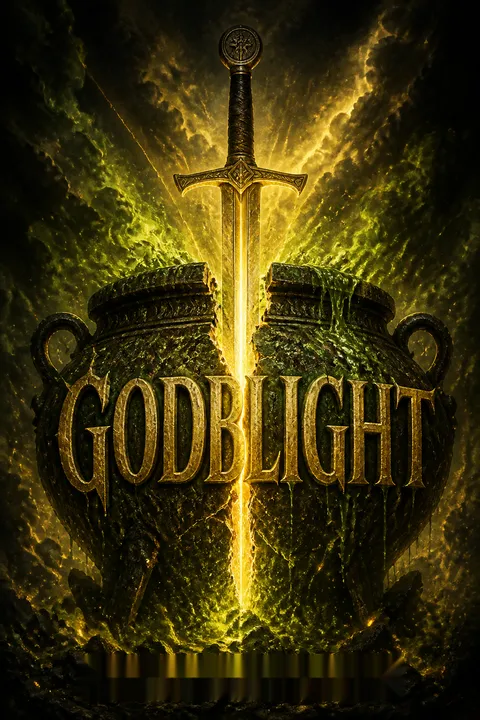


Plot Summary
Felix Challenges the Regent
Decimus Felix, Ultramar’s tetrarch of the eastern worlds, reaches Guilliman’s flagship after a warp-fast journey from the front. He has come to stop the primarch from questioning Interrogator Remo, a prisoner Felix captured after Inquisitor Tjejren bound a daemon into him. Felix remembers losing six Space Marines while subduing Remo and believes the creature should be destroyed without another chance to spread its influence.
Guilliman explains that Iax, the last major world held by Mortarion in Ultramar, may be slipping into the warp. He needs information before the assault, and Remo’s daemon may be the only source. Felix sees the choice as a dangerous compromise. Guilliman sees delay as a risk to millions.
Felix’s opposition begins in loyalty, not rivalry. He fears that a single expedient act will open a door that cannot be closed, while Guilliman accepts that refusing dangerous knowledge can also condemn innocents. Their disagreement establishes the novel’s central pressure: leaders must act without certainty, yet their decisions can turn caution into catastrophe. Felix’s bluntness also matters because Guilliman has deliberately chosen advisers who can resist him. The primarch’s authority is immense, but he wants counsel capable of saying no.
Nine Questions to a Daemon
Inside a warded cell, Guilliman questions Remo while Grey Knight Ionan Grud, Space Marine Librarians and the aeldari seer Illiyanne Natasé hold the daemon in check. The creature grants nine answers, identifying Ku’Gath’s cauldron as the source of corruption spreading through Ultramar, but its clues are evasive and warn that Iax has become something other than an ordinary world.
Remo briefly regains control of his body and begs for release. The daemon then tears through Natasé’s bindings and attacks the cell. Guilliman kills it with the Emperor’s Sword, but Remo dies with it. Grud condemns the interrogation and withdraws his Grey Knights from the fleet. Guilliman gains a lead, but the price is a lost ally and a dead servant.
The interrogation gives information without granting mastery. The daemon’s answers are useful precisely because they remain treacherous, forcing Guilliman to interpret rather than simply obey them. Remo’s brief return makes the cost personal: the captive is not merely a container for intelligence but a suffering man whose remaining agency is vanishing. Grud’s departure gives the moral dispute institutional consequences. Guilliman has acted pragmatically, but pragmatism has made his coalition smaller and his command more exposed.
Noxia Opens to Tzeentch
On Noxia, a world warped by Nurgle, twelve-year-old Cherala argues with her friend Odifus that the rotting forest once held a human port. Their scavenging uncovers old cargo containers and a buried industrial machine, evidence that her grandfather’s account of the past is true. A clean chime draws Cherala to a crystal growth spreading from a ruined landing site.
Its light briefly shows her a beauty she has never known, then a Tzeentchian daemon emerges and turns her body to crystal. Daemons pour through the growing breach, and Odifus is killed trying to flee. The crystal spreads across the landscape as the forces of Tzeentch enter Nurgle’s domain. The conflict Guilliman faces is part of a wider war among the gods.
Cherala’s discovery makes cosmic conflict legible through a child’s confused sense of history. To her, the containers are both proof of a buried human world and objects her community has misnamed as divine gifts. The brief crystal beauty is not a rescue; it is another power imposing its own reality. Her fate shows how the gods’ war converts ordinary lives into terrain. The scene also widens the novel’s stakes: Mortarion’s campaign is not an isolated military operation, but one front in a contest that can remake whole worlds.
Mortarion Defies Nurgle
Typhus tells Mortarion that Nurgle has ordered him back to the Scourge Stars, where Tzeentch and Khorne’s forces are attacking. Mortarion refuses to abandon his campaign against Guilliman, treating the war for Ultramar as a personal reckoning. Meanwhile, Ku’Gath prepares the Godblight, a disease designed to destroy both a body and its soul.
He has a drop of Guilliman’s blood from the battle at Hecatone, and uses part of it in the brew while keeping the remainder hidden. Rotigus warns that the wider divine war will make their local victory irrelevant, but Ku’Gath presses on. To learn Guilliman’s intentions, Ku’Gath summons the Tattleslug, a small daemon suited to spying among mortals.
Mortarion and Ku’Gath serve Nurgle, yet both cling to private motives. Mortarion wants Guilliman’s defeat to validate his own choices; Ku’Gath wants the Godblight to prove his worth to a god whose approval he doubts. Their rebellion is therefore not freedom so much as self-absorption wearing the language of service. Typhus’s warning exposes the hierarchy they resist, while Rotigus sees the wider war more clearly. The hidden blood reserve and the spy are practical preparations, but they also reveal how insecurity drives the enemy’s strategy.
The First Scripture
After Remo’s death, Guilliman meets with Donas Maxim and Natasé in private. He shows them an unusually old copy of the Lectitio Divinitatus and reveals that his traitor brother Lorgar wrote the original text. Guilliman admits he once rejected religion so completely that he tried to destroy every copy, yet the cult grew beyond his control.
He asks whether power, worship or an origin in the warp makes a being a god. Natasé argues that faith can shape reality and that humanity’s belief may be changing both the Emperor and Guilliman himself. Maxim distrusts the idea, but cannot dismiss the miracles reported on Parmenio. Guilliman leaves without a settled answer, carrying a question that threatens his old certainty.
The ancient book turns theology into a family history: the Imperium’s dominant faith began with a brother Guilliman once condemned. That revelation weakens the clean division between reason and superstition on which he built his identity. Natasé’s argument is disturbing because belief is not merely an error to correct; in this universe, collective conviction may have material force. Guilliman’s refusal to accept divinity does not settle the question. His difficulty is political as well as metaphysical: a leader may reject worship privately while relying on the hope it gives his people.
The Eagle Breaks Blockade
Guilliman leads Custodians and Space Marines aboard the Aquila Resplendum into Mortarion’s blockade, choosing a boarding assault to avoid further damage to Iax. He fights through a plague ship and destroys its daemon engines, while his companions find the resistance oddly thin.
The vessel is a delaying trap, and Guilliman orders the boarders out before it can destroy itself. As the fleet prepares to land, Frater Mathieu arrives first with the Crusade of the Witnesses, a congregation of soldiers, civilians and clergy.
Their gilded war train and fearless advance help them seize the First Landing spaceport from the enemy. Mathieu’s unauthorized landing has secured a foothold, but his growing religious army now operates beyond Guilliman’s control.
Guilliman’s boarding action is both a military maneuver and a deliberate performance. He wants the Death Guard to see him enter their vessel, and he accepts personal danger to make that image carry weight. The thin resistance confirms that Mortarion is shaping the battle rather than simply defending territory. Mathieu’s arrival answers the same crisis through a radically different method: collective faith supplies courage where command structure is absent. His success makes him useful and politically dangerous at once, because the people’s devotion gathers around a figure Guilliman cannot fully direct.
A Son Called Divine
After landing on Iax, Guilliman sees sick civilians crowded around the palace and promises to drive Mortarion from their world. He hears Mathieu preaching that the Emperor works through His returned son, then confronts the priest in the market square. Guilliman rejects worship and asks the people for service instead, careful not to shatter the hope that is holding them together.
Mathieu insists that he has witnessed the Emperor’s power and that Guilliman must accept his father’s divinity. Guilliman refuses to endorse the claim, but also refuses Colquan’s demand to silence Mathieu by force. The priest now commands a growing crusade, and Guilliman recognizes that suppressing it could turn his own subjects against him.
The encounter exposes a conflict between truth as Guilliman understands it and truth as his people need it. He cannot honestly call himself a god, yet he sees that sick civilians are treating his presence as evidence that salvation remains possible. Mathieu’s faith is politically potent because it converts suffering into action, but his certainty also leaves little room for dissent. Guilliman’s restraint is not simple tolerance. He is managing a movement that may protect morale while undermining his authority, and he knows that coercion would strengthen the very belief he opposes.
The Spy in Tefelius
Ku’Gath’s Tattleslug enters Captain Diamider Tefelius through a dream and begins steering the Iaxian officer’s body. Tefelius wakes with the daemon inside him, but conceals his nightmare and attends Guilliman’s strategic briefing. There, the Tattleslug learns that Guilliman intends to defend First Landing, draw Mortarion into battle and search for the source of the corruption.
The daemon escapes before the full plan is exposed, but Librarian Donas Maxim tracks it down and drives it from Tefelius. The captain survives the exorcism, though the experience leaves him badly injured. The information has already reached the enemy through Ku’Gath, but Felix suspects Guilliman expected a spy and allowed selected details to leak.
The possession works by exploiting an ordinary officer’s routines rather than overpowering a fortress. Tefelius’s fear of being treated as ill or disloyal helps the parasite remain hidden, showing how secrecy can be cultivated through shame and confusion. Maxim’s intervention saves the man but cannot undo the intelligence breach. Felix’s suspicion that some information was deliberately exposed reframes the leak as part of a larger contest of expectations. In this war, a plan is not only a route to action; it is also bait offered to an opponent.
The Witnesses March
Mathieu leads his followers away from First Landing toward the corrupted Hythia wetlands, despite disease, failing vehicles and a steady loss of pilgrims.
Colonel Odrameyer, commander of the Cadian 4021st, recounts how a priest named Othis once walked into a plague horde on Parmenio, clearing a path with a power the colonel believes came from the Emperor. The testimony strengthens the congregation’s resolve. At Odricus’ Cut, Mathieu rejects a safer route and takes the army through the mountains.
Beyond them, a vast, diseased creature crosses the highway, birthing smaller monsters as it goes. Mathieu orders the column onward rather than attacking it. His followers reach a landscape where ordinary military maps and weapons are becoming unreliable.
The march turns testimony into logistics. Odrameyer’s account does not merely inspire the crowd; it helps keep a mixed force moving through terrain that is steadily killing it. Mathieu’s leadership depends on translating individual memories into a shared explanation of danger. That confidence is sustaining, but it also narrows the space for prudence. The monstrous creature is allowed to pass because Mathieu believes the crusade has a destination beyond conventional risk calculation. Faith functions here as morale, interpretation and command, all at once.
A Mission Turns Dark
A Novamarines reconnaissance team, led by Sergeant Justinian Parris and accompanied by Mechanicus Magos Fe, descends through Iax’s storm to locate the corruption’s source.
Fe’s witch-finder points them toward a ruined medicae facility, though the landscape shifts around their vehicles and a daemon beast pulls one transport beneath the bog. On an island, the team encounters human refugees who have survived in a temple. To keep their covert mission secret, Lieutenant Edermo orders them killed.
Justinian and his second, Maxentius-Drontio, object, but obey after the refugees raise the alarm. The squad then spots Mathieu’s war train fighting near the same facility. Their hidden mission has found its target, but it has already cost them their innocence.
The killing of the refugees makes strategic necessity intimate and irreversible. Edermo treats secrecy as a condition for saving Ultramar, while Justinian sees the contradiction in murdering people who believe the Space Marines are rescuers. Both men understand the danger, but only one must carry the memory of pulling the trigger. The squad’s later cooperation with Mathieu does not erase that breach. The novel refuses to let military success function as moral absolution; it shows how institutions distribute responsibility while leaving individual combatants to live with its bodily reality.
The Library Opens
While Macragge’s Fortress of Hera endures a separate Death Guard assault, Historitor Fabian Guelphrain is injured fighting plague daemons in the rain. He recovers as the siege worsens, then sees a greater daemon enter the sealed Library of Ptolemy. Fabian follows it despite Guilliman’s ban. Rotigus, Nurgle’s Rainfather, tries to persuade him that Guilliman is hiding a truth in a protected book.
Chief Librarian Tigurius arrives and battles Rotigus, while the daemon’s nurgling guide leaves one volume untouched. Fabian takes it as the library burns. Its title describes a reign by Sanguinius that Fabian has never encountered in any accepted history. The daemon has failed to convert him, but it has placed a destabilizing question in his hands.
Fabian’s defining weakness is also his professional virtue: he cannot leave a mystery unopened. Rotigus understands that curiosity can be more effective than a promise of power, especially for someone tasked with uncovering suppressed history. The book’s survival amid destruction makes the temptation more precise, not less. Fabian refuses the daemon’s interpretation, yet still takes the object, so his resistance does not make him immune to manipulation. The episode links knowledge to agency: discovering a hidden past may correct an official story, or become the instrument by which an enemy fractures trust.
First Landing Under Siege
Mortarion’s forces begin a full assault on First Landing while Guilliman’s army holds the city’s tiered defenses. Plague Marines advance behind siege engines, artillery and daemon machines, and the bombardment breaks sections of the shields protecting the walls.
Decimus Felix and his Space Marines defend a plasma battery as Soul Grinders climb the cliffs; Felix destroys one by breaking its armored limbs, then Guilliman arrives and kills another with the Emperor’s Sword.
Across the planet, the warp storm blocks contact with the fleet and prevents reliable orbital targeting. Mathieu’s crusade has reached the medicae ruins, while the Novamarines converge on the same site. Mortarion’s army presses inward, forcing Guilliman to choose the moment for his counterstroke.
The siege makes visible what the novel’s earlier strategy has concealed: Mortarion is willing to spend bodies and machines to force Guilliman into a narrow set of choices. The storm isolates the defenders while making the battlefield itself unstable. Felix’s defense shows the cost of holding ground, but Guilliman’s arrival also reminds the army that its leader is not only a planner. His presence can change a local fight, though it cannot solve every front at once. The simultaneous movements toward the medicae ruins bring the scattered plotlines into the same contested space.
The Godblight Takes Hold
Guilliman sends tanks into the Death Guard army, then detonates a specially guided magma warhead to provoke Mortarion into a direct duel. Their fight is enclosed by Natasé and the psykers, but Mortarion gains the advantage and injects Guilliman with the Godblight.
As the primarch’s body and soul begin to fail, Justinian’s squad reaches the cauldron with Mathieu. Edermo wounds Ku’Gath before the daemon kills him; Odrameyer then drives his dying tank through the chamber and strikes Ku’Gath down.
Mathieu touches the cauldron, and a burst of power destroys it, collapsing the warp storm. The battlefield clears, and the Emperor’s power restores Guilliman, who banishes Mortarion into Nurgle’s domain. The plague campaign breaks with the destruction of its source.
The climax depends on several kinds of agency that cannot substitute for one another. Guilliman’s strategy draws Mortarion into reach, but does not protect him from the Godblight. Edermo and Odrameyer buy access to the cauldron through sacrifice, while Mathieu’s faith supplies the force that ends its influence. The Emperor’s intervention then saves Guilliman, though the novel leaves its nature unresolved. The victory is therefore neither a triumph of pure reason nor a simple miracle. It emerges from planning, bodily courage, belief and powers no participant can fully explain.
Mathieu’s Last Gospel
After the battle, Guilliman visits Mathieu aboard an isolation ship, where the priest survives under treatment despite a body ravaged by disease. Mathieu tells him that the Emperor is awakening through the increased psychic power and faith spreading across humanity, and that Guilliman must help bring Him back.
Guilliman remains unconvinced, but he recognizes that Mathieu’s survival and the destruction of the cauldron resist ordinary explanation. Mathieu dies after delivering his message. Guilliman allows that the Church may honor him as a saint. Elsewhere, Novamarine Justinian Parris chooses a tattoo of the refugee girl his squad killed, so he will remember the human cost of their mission. Neither man treats victory as a clean slate.
The aftermath preserves disagreement rather than resolving it. Mathieu’s final claim gives Guilliman a possible explanation for what happened, but not proof he can safely accept. The priest’s faith has helped save Iax, yet Guilliman still fears the political and metaphysical consequences of calling the Emperor a god. Justinian’s chosen remembrance offers a smaller, more concrete response: he cannot undo the killing, but he can refuse to let glory overwrite it. Both scenes insist that survival carries obligations beyond celebration.
A History That Shouldn’t Be
In Nurgle’s Garden, Rotigus finds Ku’Gath waiting to be reborn and claims the first place in Nurgle’s favor. He has a larger ambition than Ku’Gath’s attempt to seize Ultramar: to expose the history hidden in Fabian’s book and make doubt spread through the Imperium.
The volume bears a title describing an Emperor Sanguinius, a claim Fabian cannot reconcile with the history he knows. Guilliman, meanwhile, consults the Cawl Inferior.
Belisarius Cawl is pursuing the Pharos on Sotha to learn more about blackstone, while the machine warns that restoring the Emperor could bring back something other than the father Guilliman remembers. Guilliman ends the campaign with Ultramar saved, but with faith, history and the Emperor’s nature still unsettled.
The closing movement shifts the threat from territory to interpretation. Rotigus does not need to win the battle if he can make an empire distrust the account of its own past. Fabian’s book is dangerous because its claim is both specific and unexplained, a crack that may widen through inquiry or manipulation. Cawl’s warning echoes Guilliman’s earlier conversation with Natasé: even a successful restoration might alter what it means to be saved. The war ends, but the novel refuses a return to certainty. Guilliman leaves with a realm to govern and questions no victory can settle.
Analysis
Godblight makes the fate of Ultramar depend on several kinds of power that the Imperium cannot comfortably reconcile. Guilliman brings strategy, logistics and command, but those tools cannot locate a cauldron hidden by a world whose geography has become part of the warp. The decisive action requires Space Marines, a Cadian regiment, an unauthorized religious crusade and a psychic ally whose predictions remain uncertain. Victory is collective, yet its pieces do not share one explanation of what happened.
That disagreement is the novel’s deepest political problem. Guilliman rejects worship because he remembers the Emperor’s opposition to religion and fears that faith can become a force no ruler controls. Mathieu sees belief as evidence of the Emperor’s return and a source of action for people otherwise reduced to waiting and dying. Natasé complicates both positions by arguing that belief can alter reality. The book neither confirms a simple theology nor lets Guilliman dismiss the evidence. His own survival makes certainty harder, not easier.
The two historical mysteries extend this instability beyond religion. Lorgar’s authorship of the Imperium’s founding scripture shows that an enemy helped shape the empire’s central faith. Fabian’s unexplained volume suggests that even the record of the past may contain deliberate absences. Rotigus understands that a hidden fact can be weaponized without being false. Knowledge is therefore not automatically liberating; its meaning depends on who reveals it, why, and what institutions have concealed.
The novel also refuses to make victory morally clean. Justinian’s squad kills refugees to protect its mission, Odrameyer’s regiment spends itself in a charge, and Iax remains devastated even after the warp’s hold breaks. Guilliman wins the campaign but inherits damaged worlds, a growing religious movement and the possibility that restoring the Emperor could produce something changed. The practical lesson is severe: survival may demand compromise, but compromise does not erase responsibility. A leader must save what can be saved while remaining answerable for what the method costs.
Review Summary
Godblight receives mostly positive reviews, with an average rating of 4.24/5. Readers praise the epic battles, character development, and exploration of faith and godhood. Many consider it a strong conclusion to the Dark Imperium trilogy, with standout moments like Guilliman's fight with Mortarion and the Emperor's intervention. Some criticize pacing issues and predictability. The book is lauded for advancing the Warhammer 40K narrative and balancing humor with dark themes. Overall, fans appreciate the complex characters and philosophical discussions alongside action-packed scenes.
People Also Read
Characters
Roboute Guilliman
The burdened regentThe last loyal primarch and Lord Commander of the Imperium, Guilliman is a strategist forced to govern a collapsing realm as well as fight for it. He prizes order, evidence and competent administration, partly because systems can preserve lives when individuals cannot. Yet his return has made him a symbol of hope to people who increasingly treat him as divine, a role he resists even as he relies on the courage it inspires. His relationships with Felix, Colquan and Mathieu test different parts of his authority: familial trust, institutional suspicion and popular faith. Beneath his decisiveness lies grief for his fallen brothers and unease about whether the Emperor is still the father he remembers.
Decimus Felix
The primarch’s candid sonFelix is a Primaris Space Marine, tetrarch of Ultramar’s eastern worlds and one of Guilliman’s gene-sons. His service has been shaped by war, yet he has a practical concern for the people and institutions he is expected to protect. He challenges Guilliman when he believes expediency threatens the Imperium, but his loyalty is not blind obedience; Guilliman values precisely that capacity to disagree. Felix’s task of governing a damaged province gives him a perspective beyond battlefield victory. He measures plans against the lives and political conditions they leave behind, while privately wondering whether his engineered strength has cost him a full understanding of ordinary human beings.
Mortarion
The plague-bound brotherOnce a primarch beside Guilliman, Mortarion now leads the Death Guard under Nurgle’s influence. He is shaped by resentment, endurance and a lifelong habit of treating suffering as proof of strength. His campaign against Ultramar is strategic, but also personal: defeating Guilliman would validate Mortarion’s rejection of the Emperor and the path he chose afterward. He sees himself as independent, even when his actions serve a power larger than himself. That contradiction fuels both his cruelty and his blind spots. Mortarion’s relationship with Typhus is marked by dependence and distrust, while his rivalry with Guilliman draws old family grievances into a war that threatens entire worlds.
Frater Mathieu
The militant-apostolicMathieu is a poor, intensely devout priest appointed to serve alongside Guilliman. He believes the Emperor acts directly in human affairs and reads the primarch’s return as part of a divine plan. His humility of appearance contrasts with his confidence, and his sermons give frightened civilians a language for courage and collective action. Mathieu is not a conventional military commander, but he can gather followers and move them where formal authority has failed. His relationship with Guilliman is both reverent and confrontational: he admires the primarch while insisting that Guilliman misunderstands his own place in the Emperor’s design. Faith gives Mathieu purpose, but also makes him difficult to restrain.
Fabian Guelphrain
The restless historitorFabian is a Historitor Majoris whose work is to uncover and preserve the Imperium’s history. He is intelligent, impatient and easily frustrated by closed doors, especially when he believes knowledge is being withheld for political convenience. His curiosity is not detached scholarship; he feels that history gives ordinary people a claim on the truth of their own lives. Fabian is also anxious and self-doubting, traits that make his courage feel earned rather than effortless. His friendship with Black Templar Racej Lucerne steadies him, while his desire to investigate Guilliman’s secrets puts him in tension with the very authority that established his profession.
Justinian Parris
The burdened NovamarineJustinian is a Primaris Space Marine and sergeant of the Novamarines, originally formed among the Unnumbered Sons before joining a Chapter. He is disciplined, capable and more reflective than his combat role might suggest. His sense of brotherhood has been shaped by repeated losses and by the difficult transition from one military culture to another. Justinian takes responsibility seriously, but he does not confuse obedience with moral innocence. His exchanges with Maxentius-Drontio reveal a dry humor beneath his restraint, while his choices under pressure show how he weighs mission success against the human beings caught in its path.
Ku’Gath Plaguefather
The anxious plague alchemistKu’Gath is one of Nurgle’s Great Unclean Ones, a daemon whose immense skill at crafting diseases is matched by chronic self-doubt. He grumbles, resents rivals and worries about his standing with his god, even while holding a powerful position among Nurgle’s servants. His ambition is personal as much as strategic: he wants his work to prove that his existence has value. Ku’Gath’s alliance with Mortarion is uneasy, because the daemon primarch’s pride and command leave little space for his partner’s needs. His comic irritability does not make him harmless; it makes his vanity and fear unusually visible.
Rotigus Rainfather
The rival schemerRotigus is a Great Unclean One who serves Nurgle and competes with Ku’Gath for favor. He is more socially perceptive than his rival, using genial manners, mockery and carefully chosen information to unsettle those around him. His apparent cheerfulness masks a long view of power: he looks beyond individual battles toward cultural and political collapse. Rotigus understands that people can be corrupted through ideas as readily as through disease. His interest in mortals is instrumental, but he studies their fears and ambitions with a predator’s patience. The rivalry with Ku’Gath reveals a world where even servants of the same god compete for status.
Donas Maxim
The candid LibrarianA Librarian of the Aurora Chapter, Maxim advises Guilliman on psychic dangers and serves in the Concilia Psykana. He is direct about the risks of daemonology, even when speaking to the primarch, and his caution comes from experience rather than timidity. Maxim is also willing to accept the dangers of the Rubicon Primaris so he can continue serving. His combination of discipline and candor makes him a useful counterweight to Guilliman’s urgency.
Illiyanne Natasé
The reluctant aeldari seerNatasé is a farseer of Ulthwé and an emissary of Eldrad Ulthran, bound by oath to advise Guilliman. He is perceptive, proud and often impatient with human thought, which he considers blunt beside the intricacies of his own people. His predictions are valuable but never simple guarantees; the warp’s shifting possibilities frustrate even his abilities. Natasé’s role as ally and outsider makes him a reminder that cooperation in this war does not require affection or cultural agreement.
Maldovar Colquan
The watchful CustodianColquan is a senior Custodian tasked with protecting Guilliman and scrutinizing his use of power. He distrusts the political implications of a primarch leading the Imperium, yet serves with exacting discipline. Colquan’s suspicion is not merely personal: he represents an institution built to guard the Emperor and prevent threats from reaching the heart of government. His growing respect for Guilliman develops through observing how the primarch bears risk, authority and dissent.
Marneus Calgar
The defender of MacraggeCalgar is Chapter Master of the Ultramarines and ruler of Ultramar in Guilliman’s absence. He is a proven commander whose long record of victories sits uneasily beside the damage Mortarion has inflicted on his home realm. Calgar feels the pressure of being compared with his returned gene-father, even while understanding why Guilliman must lead the wider war. His burden is to hold Macragge when he would rather bring his strength to the central campaign.
Varro Tigurius
The watchful Chief LibrarianTigurius is the Ultramarines’ Chief Librarian, a powerful psyker whose foresight helps Calgar assess threats to Macragge. He is careful not to mistake incomplete visions for certainty, and his warnings often concern dangers he cannot yet name. His partnership with Calgar is built on trust, shared service and an understanding of the costs each carries.
Diamider Tefelius
The conscientious captainTefelius is an officer of Iax’s planetary forces, a dutiful man whose military habits and affection for his family give him a modest, grounded life amid catastrophe. He is not a grand strategist, but he takes his responsibilities seriously and understands the strain disease places on his soldiers. His ordinary decency makes him a useful point of contact between the enormous figures directing the war and the people who must endure it.
Colonel Odrameyer
The Cadian witnessOdrameyer commands the Cadian 4021st Armoured Regiment, a veteran force displaced by the destruction of Cadia. He is disciplined, blunt and shaped by grief for the world he could not save. His account of surviving Parmenio gives the Crusade of the Witnesses a personal testimony rather than an abstract doctrine. Odrameyer’s faith grows from what he believes he has seen, while his soldier’s instincts continue to measure danger in practical terms.
Typhus
Nurgle’s stern heraldTyphus is Mortarion’s former First Captain and a powerful servant of Nurgle. He speaks with the authority of the god who commands him, a position that sharpens the resentment between himself and Mortarion. Typhus is pragmatic about the wider war and expects Mortarion to recognize the danger of defying Nurgle. Their relationship carries the intimacy of a gene-father and gene-son, but it is strained by pride, dependence and old grievances.
Interrogator Remo
The doomed inquisitor’s servantRemo is an Imperial interrogator whose body becomes the vessel for a daemon after Inquisitor Tjejren’s forbidden experiment. The surviving human will inside him gives Guilliman’s interrogation a human cost beyond military intelligence. Remo’s remaining wish is to serve the Imperium, even as possession strips away his control.
The Emperor
The silent sovereignThe Emperor is humanity’s ancient ruler, confined to the Golden Throne and traditionally silent for ten thousand years. His presence is felt through the Astronomican, the Imperium’s psychic beacon, and through the faith of the people who worship him. Guilliman remembers a father who rejected religion, while Mathieu and many ordinary citizens see a divine protector. The uncertainty over what the Emperor is, and whether he can act, hangs over every argument about faith and political authority.
Plot Devices
The Godblight
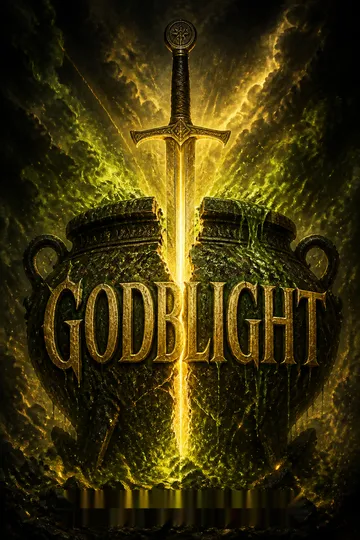
A plague aimed at soulsKu’Gath brews the Godblight using part of Guilliman’s blood, taken during an earlier battle. Unlike an ordinary disease, it attacks both bodily life and the soul, making even a primarch vulnerable. Mortarion uses it in their duel, where it threatens to kill Guilliman and pull Ultramar into Nurgle’s Garden. The plague’s potency makes it a weapon and a strategic trigger: it is tied to the fate of the region, not only to one victim. Destroying the cauldron that sustains Nurgle’s corruption becomes essential to breaking its power.
Nurgle’s Cauldron
The corruption’s living sourceThe cauldron is a manifestation of Nurgle’s power, used by Ku’Gath to brew the Godblight and intensify the warp’s influence on Iax. Its effects distort geography, poison the environment and feed the storm that isolates the planet from Guilliman’s fleet. Guilliman’s forces first learn of it through the possessed Remo, then use a covert reconnaissance mission to locate it. Conventional bombardment cannot reliably reach it through the storm. The cauldron must be approached directly, where Mathieu’s faith and the Space Marines’ assault converge.
The Emperor’s Sword
A weapon against daemonic soulsThe Emperor’s Sword is Guilliman’s most potent weapon against daemons. Its fire can destroy a daemon’s essence rather than merely forcing it out of the material world, making it especially dangerous to Mortarion’s forces. The weapon helps Guilliman kill the daemon bound to Remo and later gives him a means to fight his brother. During the final crisis, it is associated with the power that burns away the Godblight. The sword’s importance is not only martial: it links Guilliman’s authority to the Emperor while leaving the source and limits of that power uncertain.
The Warp Storm
A battlefield that defeats mapsAs Nurgle’s corruption spreads across Iax, the warp storm makes the planet’s geography unstable and blocks communication, orbital surveillance and accurate bombardment. Imperial forces cannot rely on familiar maps or ordinary lines of supply. The storm also cuts off both sides from reinforcements, turning the conflict into a contest of forces already on the ground. Its connection to the cauldron makes it more than weather: it is an expression of the enemy’s ritual strategy and a physical sign that Iax is slipping out of realspace.
The Sanguinius Volume
A crack in official historyThe surviving volume Fabian finds in the Library of Ptolemy bears a title describing an Emperor Sanguinius, a history that contradicts what Fabian believes to be established fact. Rotigus directs Fabian toward it because he understands that a concealed historical claim can destabilize trust more effectively than a battlefield attack. The book does not explain itself before the novel ends. Its function is to turn Fabian’s professional curiosity into a new uncertainty for the Imperium, while raising questions about what Guilliman has sealed away and how history can be shaped by power.
FAQ
Synopsis & Basic Details
What is Godblight about?
- Imperium's Desperate Stand: Godblight plunges the reader into the 41st millennium, where Roboute Guilliman, the resurrected primarch, leads the Indomitus Crusade to reclaim a galaxy fractured by the Great Rift. The narrative primarily focuses on his campaign to liberate Ultramar from the insidious grip of his daemon-primarch brother, Mortarion, and the forces of Nurgle.
- A War of Plagues: The core conflict revolves around Mortarion's attempt to drag Ultramar into Nurgle's Garden through a potent, primarch-killing disease called the Godblight, brewed by Ku'Gath Plaguefather. Guilliman must confront this existential threat, not just with military might, but by navigating the treacherous waters of faith, prophecy, and forbidden knowledge.
- Beyond Physical Conflict: The story delves into the psychological and spiritual toll of the war, exploring themes of divinity, sacrifice, and the blurred lines between reality and the warp. It sets the stage for future conflicts, leaving the Imperium's fate, and the Emperor's true nature, ambiguously poised.
Why should I read Godblight?
- Deep Character Exploration: Godblight offers unparalleled insight into the complex psyche of Roboute Guilliman, exploring his burdens, doubts, and evolving understanding of the Imperium's spiritual state. Readers gain a deeper appreciation for his struggle to reconcile reason with the burgeoning faith in his father.
- High-Stakes Narrative: The novel presents a pivotal moment in Warhammer 40,000 lore, with the fate of an entire sub-sector, and potentially the Imperium, hanging in the balance. The climactic duel between Guilliman and Mortarion, coupled with the destruction of a reality-warping artifact, delivers intense, high-octane action with profound consequences.
- Thematic Richness: Beyond the battles, the book is a philosophical exploration of faith, knowledge, and the nature of divinity in a grimdark universe. It challenges conventional notions of heroism and sacrifice, leaving readers with lingering questions about the true cost of survival and the ambiguous nature of the Emperor's power.
What is the background of Godblight?
- Post-Great Rift Imperium: The story is set after the galaxy-spanning cataclysm of the Cicatrix Maledictum (Great Rift), which has split the Imperium in two and unleashed unprecedented warp incursions. This event fundamentally reshaped the strategic and spiritual landscape, making the Imperium more desperate and reliant on faith than ever before.
- Ultramar Under Siege: Mortarion's Plague Wars have specifically targeted Ultramar, Guilliman's ancestral realm, aiming to corrupt it into a new domain for Nurgle. This personal vendetta between the primarchs adds a deep layer of historical and emotional context, harkening back to the Horus Heresy.
- Technological & Esoteric Blend: The Imperium's struggle is fought with a mix of ancient, lost technology (like the Macragge's Honour), new Primaris Space Marine enhancements from Belisarius Cawl, and the increasingly vital, yet dangerous, use of psychic and esoteric powers, often guided by alien allies like the Aeldari.
What are the most memorable quotes in Godblight?
Dark Imperium Series
About the Author

Download PDF
Download EPUB
.epub digital book format is ideal for reading ebooks on phones, tablets, and e-readers.








