

Key Takeaways
A 23-year mission can end with a security code, not a goodbye.
A sudden reversal. Andrew and Norine Brunson had spent 23 years in Turkey building churches, training believers, and helping refugees. They expected the police to finalize their residency papers. Instead, officers told them they were being deported as threats to national security. At a detention center, a second box was added to their paperwork, identifying them as supporters of a terrorist organization. What began as an administrative deportation had become a criminal accusation.
The work remained. The abrupt change threatened more than their home and livelihood. Their church and the people they had served were still in Turkey, and Andrew had no idea whether he would see them again. The memoir follows how that uncertainty deepened as he moved from detention into prison, and how he tried to hold on to faith, family, and purpose.
The opening makes institutional power visible through paperwork: a code and a checked box transform a settled life into a security case. That shift is more than a plot twist. It shows how quickly ordinary assumptions about law, work, and home can become unreliable when authorities control the process. The story also distinguishes a vocation from its location. Brunson’s ministry was rooted in Turkey, but his sense of responsibility was not reducible to a particular building or role. That distinction offers a useful way to understand disrupted work without pretending that its loss is painless.
Count the risks you know, but leave room for risks no one predicts.
Risk had a history. Before the arrest, the Brunsons had received death threats. A gunman once fired at Andrew outside the church, and Andrew tackled him before he could shoot again. The couple also worked near the Syrian border, where fighting and kidnapping were real concerns. They had discussed the danger with their children and decided to stay in Turkey unless they received a clear reason to leave.
Prison was different. They expected that trouble might mean deportation, not detention. After Turkey’s failed coup in July 2016, emergency powers and mass arrests changed the political climate. The couple returned to Turkey without expecting that shift to turn their lives into a prison case. Their earlier willingness to accept danger had not prepared them for indefinite confinement, separation, and opaque accusations.
The memoir draws a sharp line between chosen risk and imposed danger. The Brunsons could accept the possibility of threats while still believing they understood the likely consequences. Detention exposed the limits of that calculation. This distinction matters beyond missionary work: people often prepare for hazards they can imagine, while institutions or crises introduce a different category of risk altogether. The account does not suggest that courage prevents harm, or that staying was the only faithful choice. It shows instead that commitment can be sincere while foresight remains incomplete.
Use small routines to structure a day stripped of control.
A day needed a shape. In the detention center, Andrew had no Bible, little contact with the outside world, and almost no information about his case. He and Norine walked in a loop, prayed, sang remembered songs, and named things they were grateful for. Later, held alone in another facility, Andrew watched for Norine’s van and used his fingernail to write notes on discarded food plates. These small tasks gave the hours some order.
Routine was not a cure. Andrew still experienced panic, exhaustion, and despair. A friend’s short prayer book, secretly delivered inside a food bag, gave him words to return to when his own thoughts felt clouded. Routines did not restore control over his release or his conditions. They offered manageable actions inside a situation where most decisions belonged to someone else.
The useful insight is modest: routine can provide structure without promising emotional relief. Repetition narrows attention to a next action, a walk, a prayer, a note, rather than the whole unknowable future. That can preserve a person’s sense of agency when external control has nearly vanished. Yet the memoir carefully resists turning this into a formula for resilience. Andrew’s practices did not stop breakdowns, and a routine cannot compensate for deprivation or injustice. Its value here is not that it makes confinement acceptable, but that it helps him inhabit time without surrendering every choice.
Keep faith by continuing the relationship, not pretending certainty.
Belief did not feel steady. Andrew repeatedly wondered whether God had abandoned him or changed course. He had hoped to be released by December 12, 2016, after interpreting a private impression and other people’s predictions as signs. Instead, he was sent to prison. The disappointment intensified his doubts and, at his lowest points, thoughts of suicide. He did not describe himself as serenely confident; he argued with God, grieved, and asked questions he could not resolve.
He kept turning back. His response was not to manufacture certainty, but to keep praying and to choose continued trust even when he felt no comfort. At Buca Prison, he made a personal decision to follow Jesus whether or not he sensed God’s presence or understood his circumstances. The book presents faith as a relationship sustained through protest and uncertainty, not as an absence of either.
This account complicates the familiar idea that strong faith should produce calm. Andrew’s doubts are not a brief detour before a triumphant answer; they are part of the lived experience he records. The distinction between feeling abandoned and choosing continued relationship gives readers a more psychologically realistic picture of belief under pressure. The book also shows the danger of treating spiritual impressions as guarantees: anticipated release dates made later disappointment more painful. Norine’s caution about holding those predictions lightly suggests a valuable discipline, allowing hope without requiring certainty about when relief will come.
Treat panic as a real condition, not a spiritual failure.
The body was overwhelmed. During his imprisonment, Andrew lost 50 pounds, struggled to sleep, and experienced recurrent panic attacks. For months, he tried to manage the fear through prayer, pacing, and willpower. At one point he realized he could no longer trust himself to stay safe. He told the prison director plainly that he needed help and asked to see a psychiatrist.
Treatment helped him function. The first response was an injection of Valium, followed by prescribed medication for anxiety, depression, and sleep. The medication reduced the intensity of his panic enough for him to think beyond immediate survival and reconnect emotionally with Norine and their children. It did not erase grief or resolve the injustice of his imprisonment. The memoir treats seeking medical care as a necessary response to severe distress, not a betrayal of faith.
The account is important because it refuses to spiritualize away symptoms that had become dangerous. Andrew’s faith remained central, but it did not make medication irrelevant. His story separates meaning from treatment: prayer helped him orient himself, while medical care helped reduce a level of panic that he could no longer manage safely. That distinction is useful in any discussion of religious coping. A person can interpret suffering through faith and still need clinical support. The memoir’s most responsible lesson is not that medication solves despair, but that asking for help can be part of perseverance.
When freedom is out of reach, choose what your suffering will testify to.
A decision within his reach. At Buca Prison, Andrew could not control the court, the government, or when he would see his family. He decided to focus instead on whether he would keep faith and what he could still offer others. He wrote letters to his children, encouraging them and explaining how he hoped they would understand his ordeal. He also began playing guitar and dancing in the courtyard, even when he did not feel joyful.
A song took shape. In September 2017, a prayer became a song Andrew called his heartsong. It expressed sorrow alongside his desire to remain faithful. The song did not claim that imprisonment was good or that he had conquered fear. It marked a chosen response: he wanted his conduct to express devotion, even when his feelings and circumstances offered little support.
The distinction between controlling outcomes and choosing conduct is especially concrete here. Letters, music, and movement did not alter the prison sentence, but they kept Andrew connected to roles that confinement threatened to erase: father, musician, and believer. This is a form of agency, not proof that suffering has a hidden benefit in every case. The framing needs that limit. People should not be pressured to turn harm into inspiration for others. In this memoir, the meaning is personal and chosen, an effort to make his response his own rather than let the state define him completely.
Demand evidence when accusation replaces due process.
A case built on claims. Andrew’s indictment ran to 62 pages and accused him of terrorism, espionage, and efforts to destabilize Turkey through Christian ministry. The authorities cited secret witnesses, including people whose stories Andrew said were false. The government had assembled 40 binders about him, but his defense team found that 35 contained material about the Mormons, not Andrew. At trial, a witness claimed that publicly available railroad employee names were classified information; Andrew’s lawyer showed that the list could be downloaded online.
The court resisted scrutiny. The judges repeatedly accepted unsupported testimony while restricting defense evidence and witnesses. Andrew nevertheless answered the charges and used a later hearing to explain openly why he had come to Turkey. His account depicts a process in which the appearance of a hearing did not guarantee meaningful evaluation of the evidence.
The trial narrative clarifies a basic rule of fair procedure: an accusation should be testable, and the accused should be able to challenge its source and relevance. The details matter because they show how weak claims can acquire authority through official repetition. At the same time, a memoir is a participant’s account, not a substitute for a complete judicial record. The book’s strongest contribution is its specific description of what the defense encountered, including materials unrelated to Andrew and testimony contradicted in court. That specificity lets readers assess the alleged process rather than rely on abstract labels.
A captive’s release may require both prayer and political leverage.
Private suffering became public. Christians around the world prayed, fasted, and pressed for Andrew’s release. Alongside that effort, Norine, lawyers, diplomats, members of Congress, and US officials worked through political channels. The dispute reached the presidents of Turkey and the United States. When negotiations failed, the US imposed sanctions and increased tariffs, raising the economic cost of continued detention for Turkey.
Release was not simple justice. After 22 months in custody, Andrew was transferred to house arrest. At his final hearing, he was convicted and sentenced to a reduced term, but released pending appeal with permission to leave Turkey. He and Norine returned to the United States. The memoir interprets the global prayer effort as spiritually significant, while its events also show that advocacy and state pressure were part of the release campaign.
The ending refuses a tidy separation between spiritual solidarity and material power. Prayer gave distant communities a way to participate, while legal advocacy and diplomacy confronted the institutions holding Andrew. The memoir’s theological interpretation gives the prayer movement a central place in the story, but the political sequence matters too: officials negotiated, Turkey resisted, and economic pressure escalated. Recognizing both prevents a simplistic lesson that devotion alone secures freedom. It also raises an ethical question about unequal attention: many prisoners receive no international campaign. The account celebrates mobilization while implicitly revealing how rare such leverage can be.
Analysis
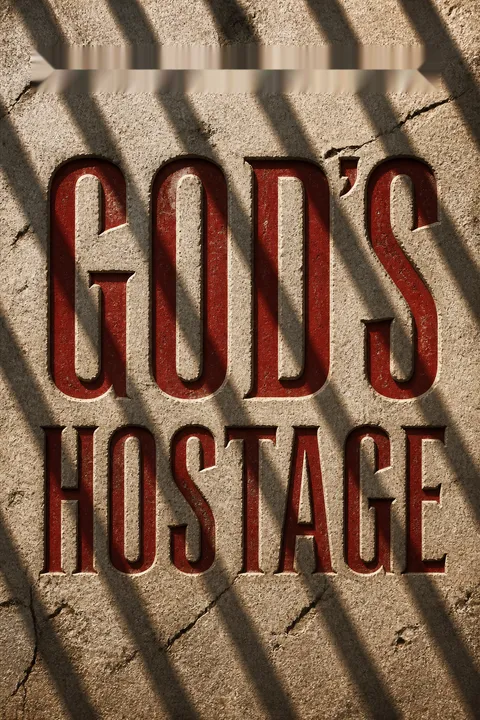
God's Hostage works as both a prison memoir and a record of political bargaining, but its deepest tension is theological: Andrew Brunson believes God is sovereign, yet repeatedly experiences events as abandonment, confusion, and betrayal. The narrative does not resolve that tension by presenting unbroken courage. Instead, its movement is cyclical. Andrew forms an expectation, suffers a reversal, collapses, and then makes another decision to continue. That pattern makes endurance less like a fixed personality trait and more like repeated, costly action.
The book is most persuasive when it stays close to specific experience: the missed visits, the confiscated Bible, the panic, the disputed testimony, and the small acts that restored a sense of agency. Its political account likewise gains force from concrete details, including the irrelevant binders and the shifting accusations. These are the kinds of particulars that allow readers to understand how an accusation can function as power even when evidence is weak.
The memoir also asks readers to distinguish meaning from justification. Brunson interprets imprisonment as serving a larger spiritual purpose and believes it helped prompt worldwide prayer for Turkey. That conviction gives his suffering coherence, but it should not be generalized into a claim that imprisonment or persecution is beneficial, or that victims should accept preventable harm. His account repeatedly shows the human cost: family separation, psychological crisis, and fear of death.
The final release depended on a coalition of prayer, family advocacy, legal work, diplomacy, and economic pressure. That combination complicates any single-cause explanation. The book’s enduring value lies in showing how a person can preserve a chosen identity inside systems designed to define him as a threat, while remaining honest about how fragile that effort can be.
Review Summary
God's Hostage receives mostly positive reviews for its raw, honest portrayal of Andrew Brunson's imprisonment in Turkey. Readers appreciate his vulnerability in sharing spiritual and emotional struggles, contrasting with typical triumphant missionary stories. Many find it inspiring and faith-affirming, though some criticize the heavy focus on his despair. The book is praised for its insights into Turkish politics and the power of prayer. While some found it difficult to read, most reviewers recommend it as a powerful testimony of perseverance and God's faithfulness in adversity.
People Also Read





Glossary
G-82
Security-based deportation codeA Turkish administrative code used to classify a foreigner as a threat to national security and support deportation. The Brunsons were initially told that their order carried this designation. At the detention center, officials added a separate allegation identifying them as supporters of a terrorist organization, changing the apparent basis of their detention.
FETO
Turkish label for Gulen movementThe Turkish government's designation for the movement associated with Fethullah Gulen, whom it blamed for the failed 2016 coup. In the book, suspected ties to FETO become a basis for arrests and accusations. Andrew denies any relationship with the movement, and several imprisoned cellmates are themselves accused of involvement.
ByLock
Secure messaging applicationA messaging app that had been freely available for ordinary use. After authorities connected its use to people accused of planning the coup, they treated possession of the app as evidence of links to FETO. Brunson describes a cellmate receiving a ten-year sentence despite arguing that his messages were ordinary personal communications.
CAMA
Alleged hidden power networkAn organization named in the indictment as a vast, secret network supposedly directing US intelligence agencies, churches, and other institutions. The book presents CAMA as part of the conspiracy claims used against Brunson, not as an established organization. The allegation helps illustrate how implausible narratives entered the criminal case.
heartsong
Prison-born personal worship songBrunson's term for a song that emerged from prayer during his imprisonment at Buca. Its words held together grief, fear, devotion, and his wish to remain faithful. He wrote it down, added guitar chords, and sang it regularly, treating the song as a personal declaration rather than evidence that he felt joyful or secure.
Download PDF
Download EPUB
.epub digital book format is ideal for reading ebooks on phones, tablets, and e-readers.








