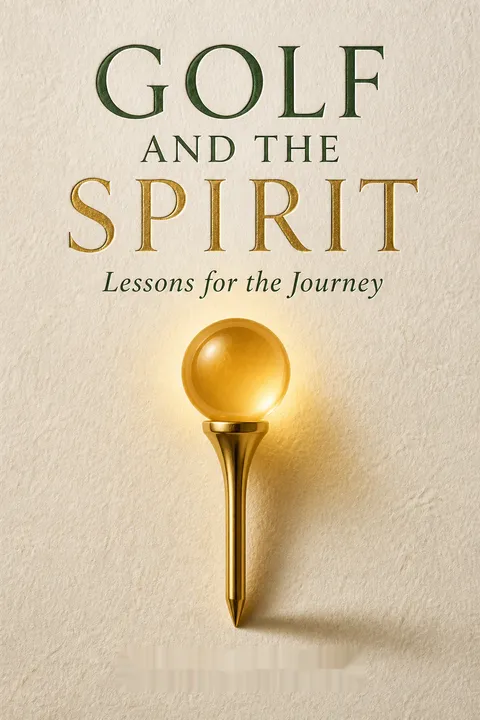


Key Takeaways
Use golf's humiliations to loosen the ego, not to prove your worth.
A humbling beginning. Peck took up golf at 32 after years avoiding it. On his first round in Okinawa, he scored 167, improved to 144 the next week, then shot 169. He kept playing, partly because golf exposed how painfully he reacted to failure. The book treats the course as a practice ground for kenosis, a theological term for the self-emptying of ego and self-importance.
Failure as instruction. Golf's humiliations are not valuable simply because they hurt. Their value lies in revealing habits such as anger, perfectionism, and blaming others, so a player can work on them. Peck does not promise a better score. He argues that learning to get out of one's own way can improve both the game and the person playing it.
What's striking is the distinction between humiliation as an event and humility as a skill. The first can shrink a person; the second allows an accurate view of strengths and limits. Peck's golfing mishaps make that difference tangible. The idea works best when embarrassment becomes information rather than a verdict on character. A reader should not assume that pain is automatically formative. Without reflection, a humiliating experience can simply reinforce avoidance.
Work on your weak side, and seek mentors who empower rather than correct.
The costly weak side. As a young tennis player, Peck avoided his backhand by running around to hit forehands. Better opponents exploited the weakness. At 31, he deliberately played to his backhand for three months, losing to people he could otherwise beat, until the weakness improved. He calls the effort kenotic because it required letting go of a comfortable pattern.
A mentor makes room. Peck's friend Norm invited him to play golf and patiently helped him navigate the unfamiliar course. He did not bury an overwhelmed beginner in technical advice. Peck describes good mentors as people who choose to support someone, build confidence, and do not mistake control for care. They may teach by waiting, encouraging, and allowing the learner to struggle productively.
The story joins skill development to relationship: people are more willing to expose weakness when they do not expect contempt. Norm's restraint is not passivity; it is a judgment about what the learner can absorb. The approach has a useful limit, however. Some beginners need explicit instruction to avoid frustration or unsafe habits. The practical question is not whether to teach, but when advice supports a learner's agency and when it replaces it.
Accept the penalty when reality makes your preferred shot impossible.
A tree-root problem. On a par-5 hole, Peck's ball landed among the exposed roots of a banyan tree. He could either attempt an almost impossible shot or declare the lie unplayable, take a penalty stroke, and move the ball to a more workable position. In earlier years, he would have kept hacking to avoid admitting failure. With experience, he accepted the penalty and made better progress.
Strength through limits. Peck applies the same judgment to life. Sometimes a person must leave a destructive situation; at other times, the harder choice is to stay committed through an unhappy period. Neither response is automatically virtuous. His point is that refusing to acknowledge limits can waste more than the penalty itself. The choice requires discernment, not a universal rule about when to quit or persist.
The banyan makes a subtle point about sunk costs: repeated effort is not necessarily evidence of courage if the conditions make success implausible. A penalty can be a deliberate reset rather than a moral failure. The same metaphor should be used carefully in life, where leaving a relationship or job involves people and obligations, not merely moving a ball. Peck's strongest lesson is the need to assess reality before pride chooses for the player.
Train eagerness into disciplined action through repeated, conscious practice.
The eager mistake. Peck identifies two common golf errors: swinging too hard and looking up too soon. Both come from wanting the result immediately. A player tries to force distance, loses balance, and mis-hits the ball. Or the player lifts their head to see where it went, disrupting the swing before impact. Peck's practical reminders are to swing smoothly, keep looking at the ball, and follow through.
Change takes repetition. He describes a three-part process: notice a pattern that is not working, decide to change it, and repeat the new behavior until it becomes more natural. His tennis backhand changed through deliberate practice, not insight alone. Peck argues that human nature is adaptable, but old habits return under stress. A setback is therefore a cue to practice again, not proof that change was impossible.
This is a useful account of the gap between knowing and doing. A person can understand sound technique and still fail when pressure makes the desired outcome feel urgent. Peck's emphasis on repetition helps explain why a single moment of resolve rarely changes a practiced response. Yet self-discipline is not a complete answer to every problem. Some habits require coaching, treatment, or changes in circumstance, not simply more effort.
Pair honest limits with confidence to make difficult skill look effortless.
Three games at once. Peck divides golf roughly into the long game, putting, and the short game. He estimates that putting accounts for about 40 percent of strokes, long shots about 40 percent, and short shots at least 20 percent. The short game includes chips, pitches, and shots from sand traps. It demands deftness more than raw power, because the player must judge distance, lie, sand, and obstacles with a controlled stroke.
Humility plus confidence. Peck defines deftness as realistic self-knowledge joined to confidence in practiced ability. A golfer who overestimates their skill may attack an impossible lie; one who only imagines failure becomes tense and ineffective. Sand traps make the balance vivid: the player cannot test the sand with a practice swing, and the ball's position may be unpredictable. Skilled play comes from recognizing the difficulty without surrendering belief in one's trained capacity.
The pairing is more precise than advice to simply believe in oneself. Confidence without calibration becomes bravado, while humility without confidence becomes paralysis. Peck's short-game example shows why competence is often quiet: it depends on adjusting to a specific situation rather than displaying power. His percentages are estimates, not a universal accounting of every course, but their function is clear: the dramatic drive is only part of the sport.
Look beyond the visible, and remember what experience has already taught you.
A hidden hazard. On his first visit to Mid-Ocean, Peck played three excellent shots toward a green whose pin appeared near the horizon. His ball rolled off the green's edge, which plunged into the ocean. He had not noticed the cliff. He later realized that he could have walked closer, investigated the green, and avoided the mistake. A course map might help, but it could not replace looking carefully at the actual ground.
Alertness has a timeline. Peck argues that being alert means bringing the past and future into the present. A golfer anticipates hazards ahead and remembers what previous shots have taught. On the course, memory also includes practical adjustments: changing grip length for an uneven lie, or recalling a green's subtle slope. Peck connects this attention to his spiritual belief in an unseen order, while insisting that direct experience remains essential.
The cliff story captures a common error in reasoning: treating the visible field as the whole situation. Better decisions often require checking what a first glance leaves out. Peck's emphasis on memory and anticipation also corrects a narrow idea of mindfulness as attention to the present alone. Still, attention can turn into anxious rehearsal. The useful balance is to gather relevant information, then act, rather than repeatedly imagining every possible failure.
Protect everyone's time with small acts of civility and shared judgment.
A moving social order. Golf's etiquette organizes who hits when, where players stand, and how they care for the course. Players move according to distance from the hole, which helps protect others from flying balls. They also replace divots, rake sand traps, and avoid distracting someone making a shot. A round in the United States is commonly expected to take about four hours and fifteen minutes, so slow play affects everyone behind the group.
Rules and consent. Some informal players agree to bend tournament rules through mulligans, a second tee shot without penalty, or gimmes, short putts that others concede. Peck sees these as harmless when the group agrees. The deeper principle is that civility depends on awareness and shared judgment. A rule can sometimes be waived to keep play moving, but doing so requires attention to the people affected.
Golf makes interdependence unusually visible: one player's pace, safety, or carelessness changes the experience of strangers nearby. Its small courtesies are meaningful because they are practical, not ornamental. The distinction between tournament rules and informal agreements is also important. Flexibility is cooperative only when people share the terms; unilateral exceptions are not generosity. The course offers a compact setting for practicing that difference.
Compete for pleasure, but never let a score become your measure of worth.
Unequal players, fair contest. Peck describes golf's handicap system as a way for players of different abilities to compete. A formal handicap reflects a player's better recent scores, not their average worst days. A player with a handicap of 36 subtracts 36 strokes from a gross score; a scratch golfer has no handicap and can generally play around par. In match play, players can also compete hole by hole, so one disastrous hole does not decide the entire round.
Competition is optional. Peck notes that golf has many formats, from strict tournament play to friendly games with small bets, mulligans, and conceded putts. Competition can focus attention and make the game more fun, but a player can stop competing when the stakes begin to distort behavior. The handicap analogy also has limits: golfers share the rules, and a handicap does not erase penalties or guarantee success.
The handicap system offers a compelling model of fairness that recognizes difference without pretending everyone starts at the same level. Its strength is that adjustment coexists with shared standards and accountability. The comparison to social policy should not be treated as a ready-made solution, since workplaces and societies have different histories, obligations, and measures of merit. Within golf, however, the system makes room for rivalry without requiring identical ability.
Study a bad shot, forgive yourself, and begin the next one clean.
Anger distorts the next move. Peck often turned frustration inward, calling himself names after poor shots. He recognized that self-attack did not improve his game; it deepened his anger and made him play worse. A fellow golfer offered a simple reminder: treat each hole as a fresh one. Peck extended the idea further: recover one shot at a time, not merely one hole at a time.
Forgiveness follows learning. Peck does not recommend excusing every mistake instantly. First, identify what went wrong and take its lesson seriously. Then forgive the error, rather than carrying it forward as proof of incompetence. He relates this to forgiving others: anger may be justified, but holding onto it after it has served its purpose can become an obstacle to growth. The practice is repeated because old reactions return.
The sequence matters: notice, learn, release. Forgiveness without learning can become evasion, while learning without release can become rumination. Peck's one-shot reset is useful precisely because it does not demand that the whole round be redeemed at once. The idea also avoids equating self-compassion with lowered standards. A mistake can be taken seriously without turning it into a permanent description of the person who made it.
Reject sexual scripts that turn partnership into dependence or martyrdom.
A game inside the game. Peck challenges the idea that golf belongs to men. He describes women playing on their own and with men, while noting how cultural expectations can shape behavior on the course. For example, a woman who asks a man which club to use may be performing helplessness, or may have learned to believe she is genuinely less capable. Peck argues that these roles can restrict both partners, even when they appear playful.
Marriage changes through acceptance. Peck recounts a long arc in his own marriage with Lily: denial, anger, bargaining, a painful period of discouragement, and finally greater acceptance. He says their relationship improved when they stopped trying so hard to remake one another. The sequence is his personal story, not a universal formula. He also rejects the idea that a spouse must be a martyr to a partner's golf, or to any pursuit that leaves no room for a life of their own.
The chapter's strongest insight is that apparently private habits can be rehearsals of larger roles: who gets to be competent, who is expected to serve, and whose interests count. Its gender analysis is less reliable when it treats women and men as predictably different by nature. Social norms vary, and behavior cannot be cleanly separated into biology and culture. The practical test is whether a couple can choose roles freely and revise them without resentment.
Treat golf's score as a signpost, not the destination of the round.
The fragile flow. Peck calls a rare stretch of unusually accurate play being in the flow. It can end when a golfer notices success and becomes anxious to protect it. He names this score-conscious anxiety scoritis. His response is paradoxical: care enough to stay attentive, but not so much that the score takes over. One practical adjustment was to stop taking unnecessary practice swings when he was already playing well.
A round can close well. Golfers often gather at the nineteenth hole after play, not only to eat or drink but to remember the round and finish the shared experience. Peck uses that ritual to point beyond golf: the score records performance, but it does not measure what a person learned. His central proposal is to see golf as one possible discipline within a larger spiritual journey, not as a substitute for family, work, friendship, or faith.
The flow discussion names a familiar trap: monitoring success can interfere with the activity that produced it. The nineteenth-hole ritual offers a quieter alternative to scorekeeping, turning attention toward shared memories and lessons. Peck's spiritual interpretation is a chosen lens, not a conclusion every golfer must adopt. Its value rests on whether it broadens attention and responsibility, rather than giving a recreational pursuit permission to consume the rest of life.
Analysis
Peck's central rhetorical move is to treat golf not as a neat metaphor for life, but as life compressed into a few hours: uncertainty, skill, luck, rules, competition, companionship, and repeated opportunities to fail. The course supplies concrete scenes for examining abstract spiritual claims. A buried ball becomes a lesson in limits; a lost ball becomes a prompt to consider attachment; a miss becomes a chance to observe anger. This method is memorable because the reader can picture the problem before considering the principle.
The book's strongest contribution is its refusal to make growth linear. Peck repeatedly returns to old habits, acknowledging that insight does not erase temperament. His remedy, kenosis, is less a single act of surrender than a repeated practice of relinquishing what blocks learning. That account is psychologically more persuasive than a simple promise of transformation. The book also gives unusual weight to the social dimensions of play: mentors, etiquette, time, and consensual competition shape the experience as much as individual technique.
Its limits are equally instructive. Peck often interprets errors as evidence of character, which can illuminate self-deception but can also moralize ordinary mistakes. Golf outcomes involve chance, physical capacity, access to instruction, and course design, not only humility or will. His reflections on gender sometimes rely on broad assumptions that the book itself does not establish. And his spiritual reading is a personal commitment, not proof that golf inherently teaches virtue. A person can play skillfully and remain inconsiderate, just as another can learn patience in a pursuit unrelated to sport.
The book is best read as an invitation, not a universal diagnosis. Peck asks readers to use frustration as evidence, then decide whether it reveals a habit worth changing. Golf becomes valuable not because every bad shot contains a divine message, but because repeated, emotionally charged situations make patterns visible. The deeper question is whether a person can carry that attention beyond the course, where the stakes and other people's needs are larger.
Review Summary
Golf and the Spirit received mixed reviews, with an average rating of 3.52/5. Some readers appreciated the spiritual insights and life lessons drawn from golf, finding it thought-provoking and enlightening. Others found the book repetitive, overly long, or too focused on the author's personal experiences. Many praised Peck's ability to connect golf with spiritual concepts, while some criticized the book's religious overtones. Several reviewers noted that the book's second half was weaker than the first, losing focus on the golf-spirituality connection.
People Also Read






Glossary
kenosis
Self-emptying of egoA theological term Peck uses for the process of emptying the self of self-importance, pride, or a pattern that blocks growth. In his account, kenosis is not the erasure of personality or desire. It is the repeated willingness to give up a habitual response, such as anger or excessive concern with score, in order to learn and act differently.
cathexis
Emotional investmentPeck uses this psychiatric term for the emotional energy invested in a person, object, activity, or memory. The investment may be loving or hostile. A person can remain strongly attached to something they claim to hate, such as an old grievance, if it continues to occupy their attention and shape their behavior.
de-cathexis
Withdrawing emotional investmentThe process of loosening or withdrawing a cathexis, or emotional investment, from a habit, person, or past event that has become harmful. Peck treats this as a practice rather than a one-time decision. It involves recognizing the attachment, choosing to release it, and repeatedly working against the reactions that keep it in place.
scoritis
Anxiety about scoring wellPeck's playful name for the psychological tension that can arise when a golfer notices they are scoring unusually well. The desire to preserve success can make the player tense and overcautious, disrupting the performance that produced the good score. He uses the term to describe how excessive self-monitoring can undermine an activity.
deftness
Humility joined with confidencePeck uses deftness to describe skill that is gentle, appropriate, and well judged, especially in golf's short game. It depends on realistic knowledge of one's strengths and limitations, together with confidence in abilities developed through practice. Deftness is neither timid self-doubt nor forceful overconfidence.
the flow
A temporary run of effortless skillPeck's term for a limited period when a golfer seems unusually accurate and unable to make a mistake. The experience is not simply a good score. It feels as if actions and results align with little conscious effort. Becoming anxious about maintaining it can interrupt the performance and end the flow.
shadow
Unacknowledged traits and impulsesBorrowed from Carl Jung, the shadow is the part of a person's character they would rather not recognize, including impulses such as envy, dishonesty, or aggression. Peck uses the idea to explain why people may react intensely to traits they see in others. Awareness of the shadow can support restraint and more honest self-knowledge.
FAQ
What's Golf and the Spirit: Lessons for the Journey about?
- Spiritual Growth Through Golf: The book uses golf as a metaphor for life, exploring how the game can lead to spiritual growth and self-discovery.
- Nonlinear Nature of Golf: M. Scott Peck highlights the complexities of golf, drawing parallels to life's hidden challenges and obstacles.
- Humor and Seriousness: The narrative balances humor with deep reflections on human nature, spirituality, and personal growth.
Why should I read Golf and the Spirit: Lessons for the Journey?
- Unique Perspective: It offers a blend of golf instruction and spiritual insight, appealing to both golfers and those interested in personal development.
- Encouragement for Non-Golfers: Peck invites readers to see golf as a potential avenue for spiritual exploration, even if they aren't initially interested in the sport.
- Humorous Asides: The book is filled with humorous anecdotes, making it an enjoyable read while conveying serious messages.
What are the key takeaways of Golf and the Spirit: Lessons for the Journey?
- Kenosis Concept: Introduces kenosis, or "self-emptying," as essential for spiritual growth, using golf as a practice ground.
- Embracing Paradox: Emphasizes the importance of accepting life's paradoxes, such as striving for perfection while accepting imperfection.
- Role of Mentors: Highlights the significance of mentors in guiding us through challenges in both golf and life.
What are the best quotes from Golf and the Spirit: Lessons for the Journey and what do they mean?
- “Golf is deceptively simple and endlessly complicated.”: Captures the essence of golf as a sport that appears straightforward but is filled with complexities, mirroring life.
- “In weakness, strength.”: Illustrates that acknowledging weaknesses can lead to greater strength and resilience, emphasizing vulnerability as part of growth.
- “One hole at a time.”: Encourages focusing on the present moment, promoting mindfulness in both golf and life.
How does Golf and the Spirit: Lessons for the Journey relate golf to spiritual growth?
- Golf as a Spiritual Discipline: Peck argues that golf offers opportunities for self-reflection and personal growth, encouraging humility and self-awareness.
- Lessons from the Course: Uses each hole on the imaginary Exotica course to represent different life lessons and broader spiritual truths.
- Reflection on Human Nature: Delves into complexities of human nature, using golf as a metaphor for navigating desires, fears, and the need for connection.
What is the significance of kenosis in Golf and the Spirit: Lessons for the Journey?
- Self-Emptying Process: Kenosis involves emptying oneself of ego and self-centeredness, with golf serving as a practice ground for this process.
- Overcoming Personal Obstacles: Tied to overcoming challenges and learning humility, as golf provides a platform to confront egos and learn from mistakes.
- Spiritual Growth: Through kenosis, individuals can achieve a deeper understanding of themselves and their relationship with the divine.
How does Golf and the Spirit: Lessons for the Journey address the theme of paradox?
- Understanding Opposites: Emphasizes life's paradoxes, such as striving for success while accepting failure, as part of the human experience.
- Paradox in Golf: Golf is presented as a paradox, requiring balance between eagerness and patience, leading to better performance and life understanding.
- Spiritual Insights: Encourages reflection on personal life complexities, suggesting that embracing paradox can lead to greater wisdom.
What role do mentors play in Golf and the Spirit: Lessons for the Journey?
- Guidance and Support: Mentors provide guidance and support during challenging times, empowering rather than just teaching.
- Learning from Experience: Good mentoring involves building relationships and helping individuals learn from experiences.
- Encouragement to Grow: Mentors encourage risk-taking and stepping outside comfort zones, crucial for personal and spiritual growth.
How does Golf and the Spirit: Lessons for the Journey address the challenges of human nature?
- Complexities of Human Nature: Explores paradoxes of human nature, including desires, fears, and self-control struggles, essential for personal growth.
- Eagerness and Impulsiveness: Discusses how eagerness can lead to impulsive decisions, encouraging balance between eagerness and patience.
- Learning from Mistakes: Emphasizes viewing failures as opportunities for growth and self-discovery.
How does M. Scott Peck use personal anecdotes in Golf and the Spirit: Lessons for the Journey?
- Relatable Experiences: Shares personal golfing stories, making concepts relatable and engaging for readers.
- Humor and Insight: Uses humor to lighten the mood while addressing serious themes, creating a connection with readers.
- Teaching Moments: Each anecdote serves as a teaching moment, illustrating lessons on personal growth and spirituality.
What insights does Golf and the Spirit: Lessons for the Journey offer about the relationship between golf and life?
- Golf as a Metaphor: Uses golf to illustrate how challenges on the course mirror those in daily life, encouraging parallels between golfing experiences and personal journeys.
- Spiritual Lessons: Highlights spiritual lessons like humility, patience, and self-awareness, suggesting they enhance life quality.
- Embracing the Journey: Emphasizes finding joy in learning and growing, rather than solely focusing on outcomes.
What are the challenges of aging in relation to golf, as discussed in Golf and the Spirit: Lessons for the Journey?
- Physical Limitations: Addresses physical challenges like decreased strength and flexibility, emphasizing adaptation in techniques and expectations.
- Mental Adjustments: Discusses mental adjustments needed to cope with aging realities, encouraging grace and acceptance.
- Continued Enjoyment: Highlights the importance of finding joy in golf despite physical limitations, suggesting ongoing personal growth opportunities.
About the Author
Other books by M. Scott Peck


Download PDF
Download EPUB
.epub digital book format is ideal for reading ebooks on phones, tablets, and e-readers.








